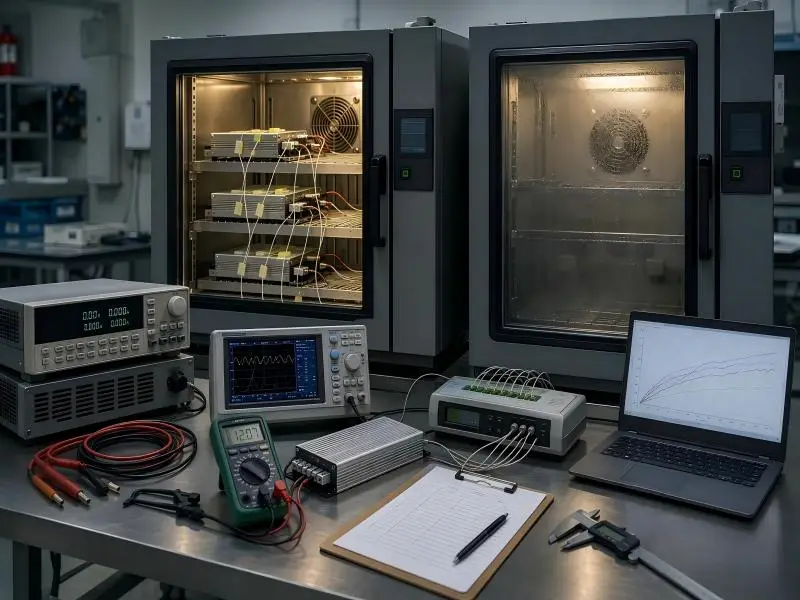
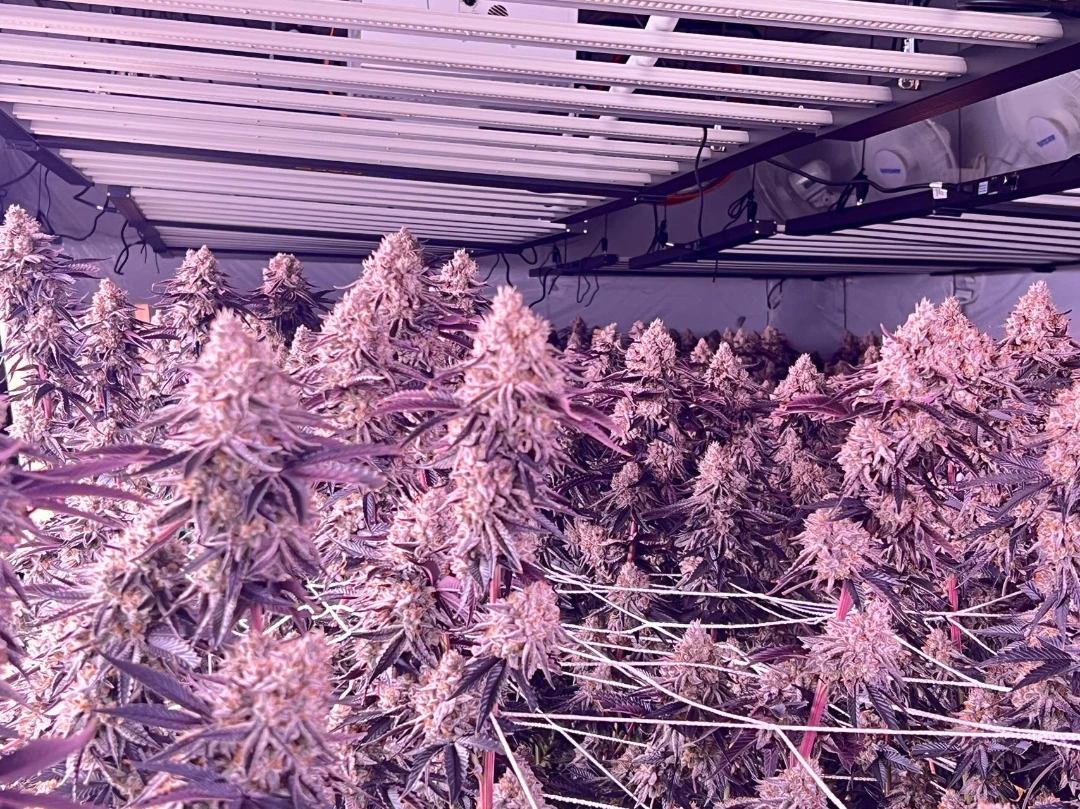
The landscape of horticultural lighting has undergone a seismic shift over the last decade. As we settle into 2026, the conversation is no longer about whether LED technology can surpass High-Pressure Sodium (HPS) or Ceramic Metal Halide (CMH) systems—that debate was settled years ago. Today, the conversation is entirely focused on precision, efficacy, and spectral control. As someone who has spent years in the R&D labs testing diode degradation rates and optimizing heat dissipation profiles for commercial manufacturing, I look at the market with a critical eye. We are no longer impressed simply by high wattage; we are looking for photon efficiency and uniform canopy penetration.
In this comprehensive guide, we will analyze the top LED grow lights of 2026. This isn’t just a list of popular brands; it is a deep dive into the engineering principles that separate professional-grade equipment from hobbyist toys. Whether you are running a multi-tier vertical farm or a boutique commercial facility, understanding the metrics behind the hardware is essential for your ROI. At SLTMAKS, we believe that an educated grower is our best customer, which is why we are pulling back the curtain on what actually makes a light a “market leader.”
Table of Contents
1. The Evolution of Horticultural Lighting: Where We Stand in 2026
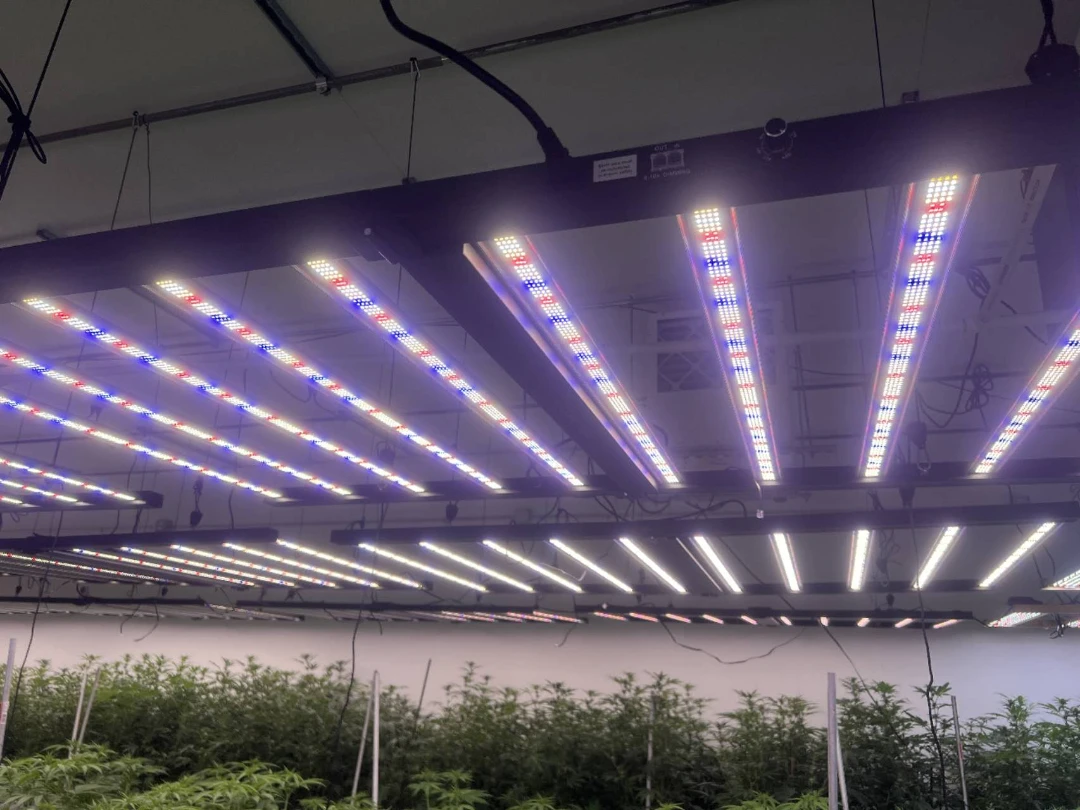
To understand what constitutes the top LED grow lights today, we must acknowledge the rapid evolution of the technology. Only five years ago, achieving a Photosynthetic Photon Efficacy (PPE) of 2.5 µmol/J was considered the gold standard. In 2026, that is the baseline entry-level requirement. The top-tier fixtures are now pushing boundaries toward 3.0 µmol/J and beyond.
The Shift from “Blurple” to Full-Spectrum Dominance
In the early days of LED adoption, manufacturers relied heavily on “blurple” (blue and red) spectrums. The logic was sound in theory—plants absorb chlorophyll A and B most efficiently at these peaks—but flawed in practice. We learned through extensive trials that plants require a complex interplay of green and yellow wavelengths to penetrate the canopy and regulate biological processes. Today’s top LED grow lights utilize broad-spectrum white light (usually a mix of 3000K and 5000K diodes) supplemented with deep red (660nm) and, increasingly, Far-Red (730nm) and UV diodes.
The Rise of Commercial Bar-Style Fixtures
The form factor has also stabilized. While “Quantum Boards” had their moment, the commercial sector has almost universally adopted the multi-bar design. This open-frame architecture prevents heat buildup directly over the canopy and allows for a much more uniform distribution of light. When we design fixtures at SLTMAKS, we prioritize this form factor because it mimics the sun’s spread more effectively than a concentrated single source.
2. Core Metrics: How to Evaluate the Top LED Grow Lights
When you are reviewing specifications for your facility, marketing jargon can be distracting. There are only three metrics that truly matter when determining the efficacy of a fixture. If a manufacturer cannot provide third-party data on these three points, you should look elsewhere.
Photosynthetic Photon Efficacy (PPE)
PPE is the measure of how efficient the light is at converting electricity (Joules) into photosynthetic light (micromoles). It is expressed as µmol/J.
- Legacy HPS: ~1.7 µmol/J
- Early LEDs: ~2.2 µmol/J
- 2026 Standard: 2.8+ µmol/J
The top LED grow lights in 2026 utilize top-bin diodes—typically from manufacturers like Samsung or Osram—to achieve efficiencies where every watt of electricity yields maximum photon output. High PPE directly correlates to lower operational costs, a crucial factor for commercial growers facing rising energy prices.
Photosynthetic Photon Flux Density (PPFD)
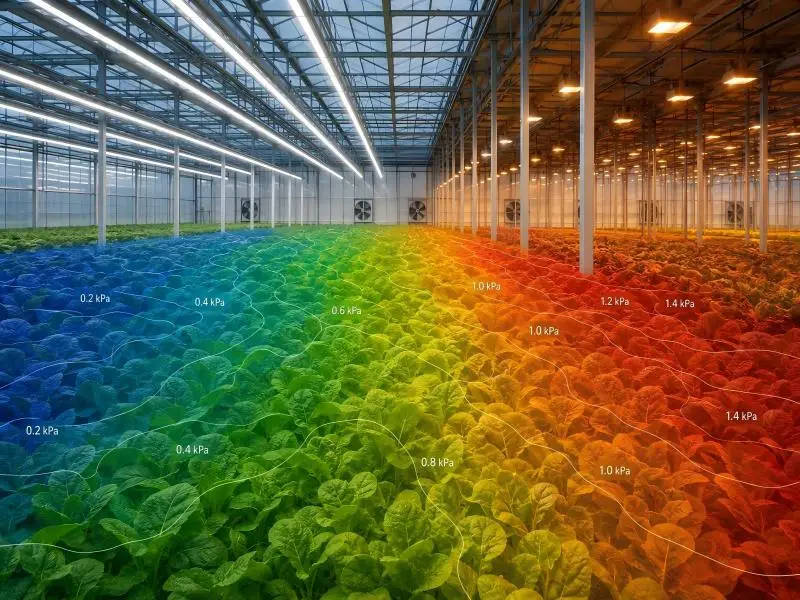
While PPE measures efficiency, PPFD measures the amount of light actually hitting your plants at a specific distance. It is measured in µmol/m²/s. The common mistake I see growers make is looking at the center reading. A cheap light can blast 1500 µmol/m²/s in the center but drop to 400 at the corners.
The mark of a true market leader is uniformity. You want a PPFD map that looks like a flat table, not a mountain peak. Consistent PPFD ensures that the plants in the corner of your grow tray yield just as much as the plants in the middle.
Spectral Distribution and The Emerson Effect
The best lights in 2026 are taking advantage of the Emerson Effect, which describes the increase in the rate of photosynthesis when chloroplasts are exposed to light of wavelength 680 nm (deep red) and more than 680 nm (far red) simultaneously.
| Spectrum Range | Wavelength | Function in Plant Growth |
| Blue | 400-500nm | Promotes vegetative growth, root development, and compact internodal spacing. |
| Green | 500-600nm | Penetrates deeper into the canopy than red or blue; essential for lower leaf photosynthesis. |
| Red | 600-700nm | The primary driver for photosynthesis and biomass production; critical for flowering. |
| Far-Red | 700-750nm | Triggers the shade-avoidance response (stretching) and accelerates the transition to flowering. |
| UV-A/B | 280-400nm | Increases resin production, trichome density, and secondary metabolite creation (terpenes). |
3. Technology Comparison: The Diodes Behind the Performance
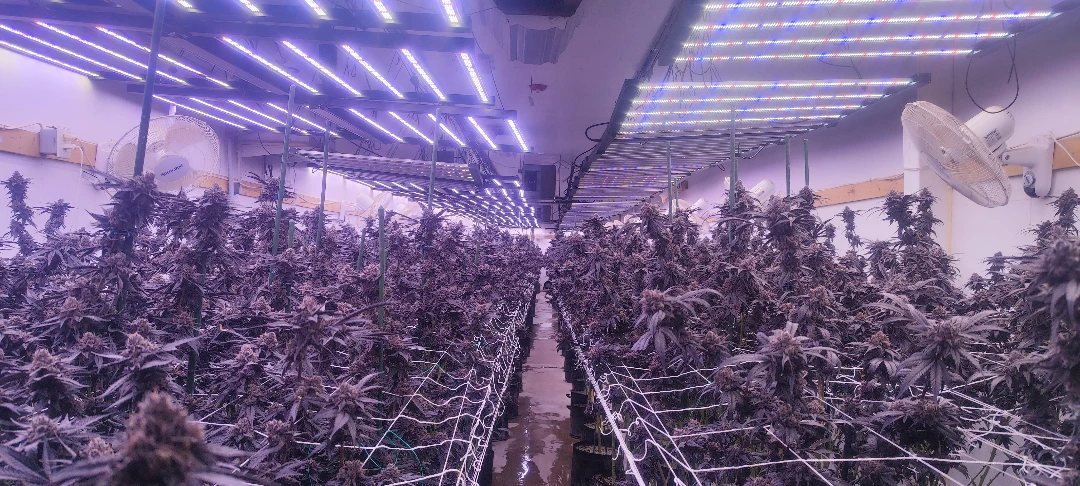
As an R&D engineer, I can tell you that a light is only as good as the sum of its parts. You can have the best aluminum heatsink in the world, but if you are using generic, low-bin diodes, the fixture will fail to perform over time.
Samsung LM301H EVO vs. The Rest
In 2026, the Samsung LM301H EVO remains the king of horticultural diodes. It was specifically engineered to withstand the humidity and sulfur environments found in greenhouses. Many budget manufacturers will claim to use Samsung diodes, but they often use the LM301B or lower “bins” (lower brightness tiers).
The top LED grow lights use the EVO series because of its superior efficacy (3.14 µmol/J at the diode level) and its shifted blue peak (437nm), which is proven to be more effective for plant pigment activation than the standard 450nm blue.
The Role of Drivers: Mean Well and Inventronics
The driver is the heart of the LED system. It converts AC power from your wall to the DC power the diodes need. Cheap drivers flicker, generate excess heat, and fail prematurely.
At SLTMAKS, and among our high-end competitors, the standard is utilizing drivers from Mean Well or Inventronics. These drivers offer 0-10V dimming capabilities, high surge protection, and efficiencies above 95%. When selecting a top-tier light, always check the driver brand. If it is unbranded or proprietary to a budget company, it is a point of failure waiting to happen.
4. Top LED Grow Lights: Category Leaders for 2026
The market is segmented based on application. A light designed for a vertical rack system has different constraints than a light designed for a high-bay greenhouse. Here is how the market leaders stack up in the current landscape.
1. The Commercial Powerhouse (High-Bay / Open Room)
Ideal for: Large scale commercial facilities, CO2 supplemented rooms.
Top Contenders: Fluence SPYDR 2i (updated 2026 model), Gavita Pro 1700e Gen3, and the SLTMAKS “Titan” Series.
In this category, raw power is necessary. These lights typically pull between 600W and 1000W. The goal here is to saturate the canopy with 1000-1200 µmol/m²/s of light, necessitating the use of CO2 supplementation (1200-1500ppm) to allow the plants to process that much energy.
The trend in 2026 for this category is detachable drivers. By allowing the driver to be mounted remotely (outside the grow room), growers can reduce the thermal load in the room by 10-15%, significantly lowering HVAC costs.
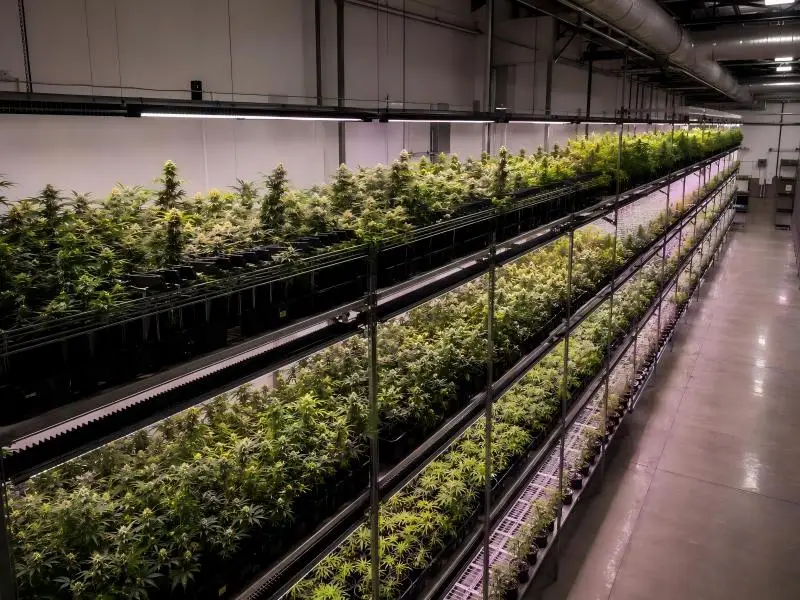
2. The Vertical Farming Specialist (Rack Systems)
Ideal for: Multi-tier shelving, leafy greens, propagation.
Top Contenders: Current Culture, SLTMAKS “Verti-Gro” Bar, Philips GreenPower.
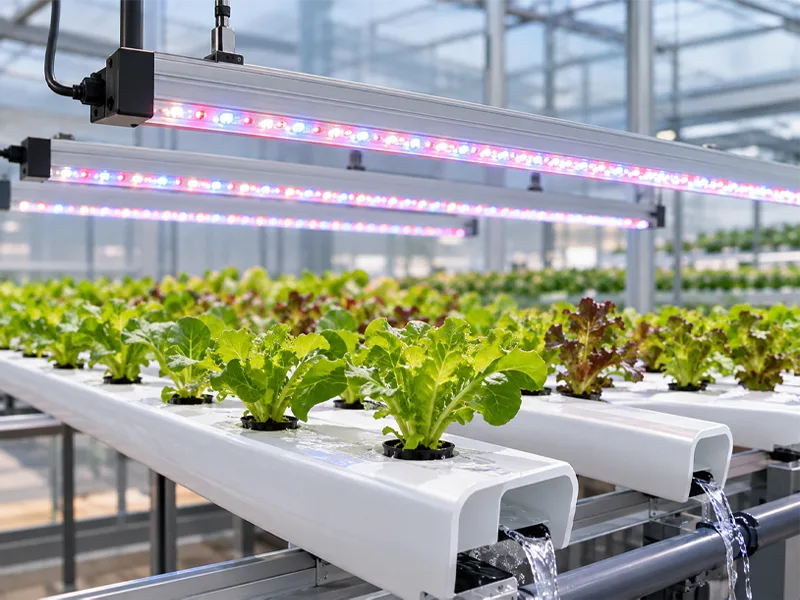
Space is the enemy in vertical farming. With only 6 to 12 inches between the light and the canopy, heat management is critical. The top LED grow lights in this sector run cooler and feature a very wide beam angle (120° to 150°) to ensure light spreads outward immediately, preventing “hot spots” that would bleach the plants directly below the diodes.
We have seen a massive surge in demand for lights with “tunable spectrums” in this sector, allowing growers to switch from a vegetative-heavy blue spectrum to a flowering red spectrum without moving the plants.
3. The Greenhouse Supplemental Solution
Ideal for: Supplementing natural sunlight, extending photoperiods.
Top Contenders: Signify (Philips), SLTMAKS Linear High-Output.
Greenhouse lights must be slim. You do not want the fixture to cast a shadow and block natural sunlight during the day. Therefore, the top lights here are linear “toothpick” styles. They rely heavily on passive cooling and IP65 or IP66 waterproofing ratings, as greenhouse environments are notoriously wet and humid.
5. Heat Management: The Silent Killer of Efficiency
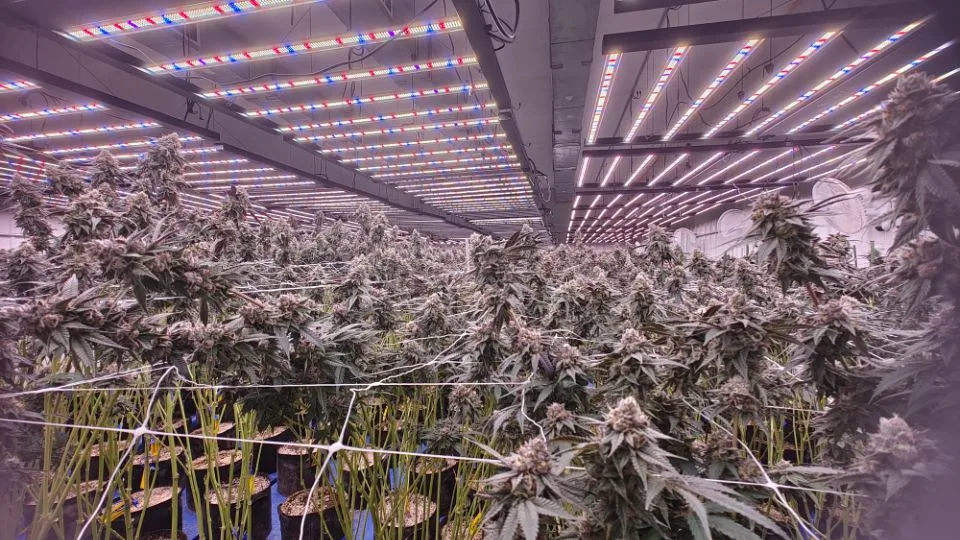
One of the topics I frequently discuss with our engineering team at SLTMAKS is thermal dynamics. Heat is the enemy of LED longevity. For every 10°C increase in junction temperature, the lifespan of an LED diode decreases significantly.
Passive vs. Active Cooling
In 2026, passive cooling is the undisputed champion for top-tier lights.
- Active Cooling: Uses fans. Fans fail. Fans collect dust. Fans make noise. If a fan dies, the light overheats and burns out.
- Passive Cooling: Uses substantial aluminum heatsinks. It is silent and failsafe.
The best lights on the market use thick, extruded aluminum bars. The mass of the aluminum absorbs the heat from the diodes and dissipates it into the air via convection. When comparing lights, heavier is often better. A light that feels flimsy or plastic likely lacks the thermal mass to run at high power for 50,000 hours.
The Impact on HVAC
Choosing a high-efficiency LED fixture isn’t just about the light; it’s about the air conditioning. Efficient LEDs emit less waste heat per photon generated compared to HPS.
However, don’t be fooled—a 1000W LED still puts out 3412 BTUs of heat. The difference is that the heat is not radiant (infrared) aimed at the plant, but ambient heat rising from the fixture. This allows you to run your room temperatures higher (around 82°F-85°F / 28°C-29°C), which correlates with optimal leaf surface temperatures under LED lighting.
6. The “Smart” Revolution: Connectivity in 2026
A “dumb” light that simply plugs into a timer is becoming obsolete in high-end commercial applications. The top LED grow lights of 2026 are fully integrated IoT devices.
Master Controllers and Dimming
Leading manufacturers have moved away from manual dimmer knobs on every fixture. Instead, they utilize RJ14 or RJ45 ports for daisy-chaining hundreds of lights to a central Master Controller.
This allows for features such as:
- Sunrise/Sunset Simulation: Gently ramping up light intensity over 30 minutes to mimic nature, preventing plant shock and condensation issues.
- High-Temp Shutoff: Thermal probes in the room communicate with the lights. If the AC fails and the room hits 95°F, the lights automatically dim or turn off to save the crop.
- Spectrum Tuning: Adjusting the ratio of Red to Blue light via an app or controller interface.
At SLTMAKS, our R&D focus has been heavily invested in compatibility. We ensure our drivers are compatible with major control systems like TrolMaster and Telos, ensuring that our clients are not locked into a proprietary ecosystem.
7. Why SLTMAKS Stands Among the Market Leaders
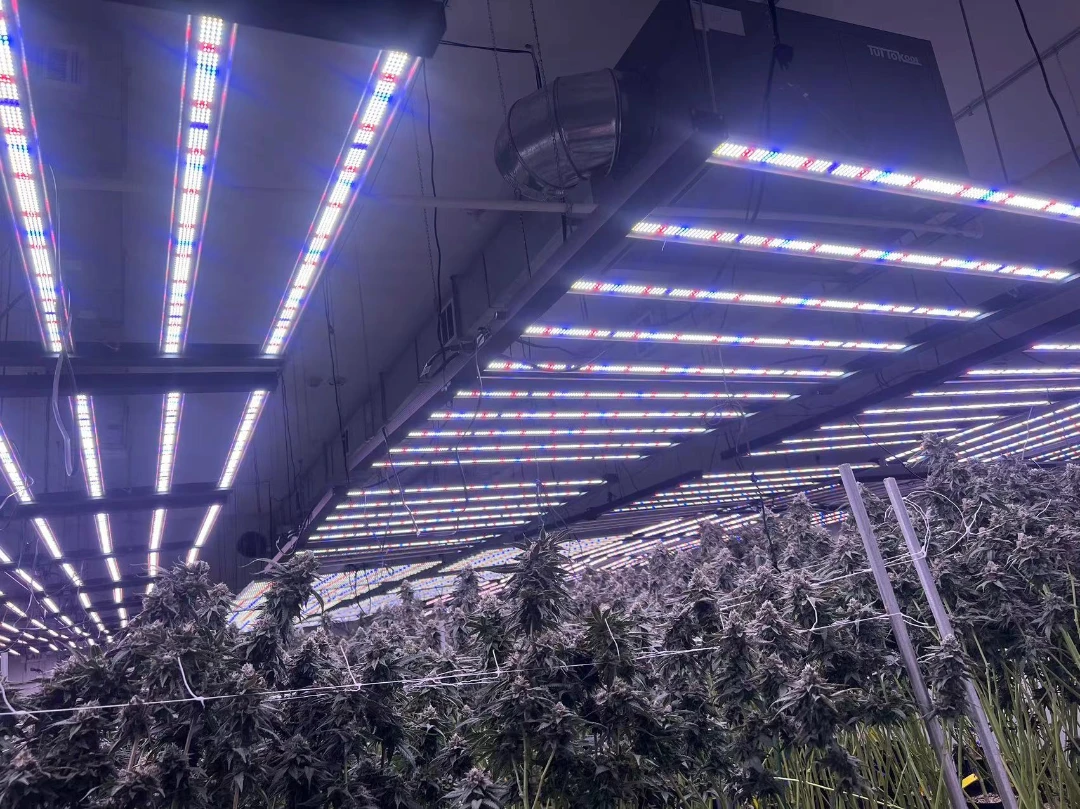
While we respect competitors like Fluence and Gavita for paving the way, SLTMAKS occupies a unique position in the market. We are not just a brand; we are a manufacturer. Many “top brands” in the US and Europe are actually marketing companies that outsource their production to OEM factories in Asia.
We are the factory.
The OEM Advantage
Because we control the supply chain from the PCB board soldering to the final assembly, we offer a level of customization that resellers cannot.
- Custom Spectra: Do you need a specific UV booster for a niche medicinal crop? We can engineer that.
- Direct Pricing: By cutting out the middleman distributor, we offer fixtures that compete with $1,500 units for a fraction of the price, without sacrificing component quality (Samsung/Mean Well).
- Quality Control: Every single fixture that leaves our line undergoes a 48-hour “burn-in” test to ensure zero dead diodes upon arrival.
Our commitment to the “Top LED Grow Lights” standard is not just about sales; it is about advancing the industry. We use the same integrating spheres and goniophotometers as the big labs to verify our PPFD charts. Transparency is our currency.
8. Return on Investment (ROI) Analysis
Let’s talk numbers. Upgrading to the top LED grow lights is a significant capital expenditure (CapEx). However, the Operational Expenditure (OpEx) savings are undeniable.
Scenario: Replacing 50 units of 1000W Single-Ended HPS lights with 50 units of 650W SLTMAKS LED Bar Lights.
- HPS Power Draw: 1050W (including ballast inefficiency) x 50 = 52,500 Watts.
- LED Power Draw: 650W x 50 = 32,500 Watts.
- Energy Savings: 20,000 Watts per hour.
If you run a flower cycle (12 hours/day) for a year:
- 20kW x 12 hours x 365 days = 87,600 kWh saved per year.
- At an average commercial rate of $0.15/kWh, that is $13,140 saved annually just on lighting electricity.
This does not include the roughly 30% reduction in HVAC cooling costs, nor does it account for the lack of bulb replacements (HPS bulbs need replacing every 9-12 months; LEDs last 5+ years). For most commercial growers, the ROI period for switching to top-tier LEDs is between 12 to 18 months.
9. Future Trends: What to Expect Beyond 2026

The industry is not stagnant. As we look toward 2027 and 2028, several emerging technologies are on our radar at SLTMAKS.
AI-Driven Photobiology
We are seeing the early stages of AI integration where cameras monitor plant health (leaf angle, color) and automatically adjust the light spectrum and intensity in real-time to correct deficiencies or accelerate growth.
Inter-Canopy Lighting (ICL)
Top lighting has limits. Once the canopy becomes dense, the lower leaves suffer. We are developing specialized LED bars designed to be placed inside the crop rows (Inter-Canopy Lighting). This illuminates the lower buds, significantly increasing the yield of “A-grade” product and reducing the amount of “larf” (popcorn buds) that usually goes to extraction.
Laser Lighting
While still experimental and expensive, laser diodes offer incredible efficiency and the ability to transport light via fiber optics. While not yet a contender for the general “top LED grow lights” list, it is a technology we are monitoring closely.
10. Making the Right Choice for Your Grow
Choosing the right lighting is the single most critical decision you will make for your facility. The top LED grow lights of 2026 are defined by high PPE (2.8+ µmol/J), uniform PPFD distribution, robust thermal management, and smart connectivity.
At SLTMAKS, we combine these top-tier specifications with the agility and value of a direct manufacturer. We understand that every photon counts, and every watt of electricity must be justified by yield. Whether you choose our fixtures or another market leader, we hope this guide has equipped you with the technical knowledge to look past the marketing hype and focus on the engineering.
For those ready to upgrade their facility with lights that meet the rigorous demands of modern horticulture, our engineering team is standing by to provide custom light plans and consultation. Let’s grow the future, together.
Frequently Asked Questions (FAQ)
Q: How far should I hang my LED grow lights?
A: For the powerful 2026 commercial bar lights, a distance of 6 to 12 inches is common during flowering if CO2 is being used. Without CO2, 18 to 24 inches is safer to prevent light stress. Always refer to the manufacturer’s PPFD map.
Q: Do I really need UV and Far-Red?
A: For general vegetative growth, no. However, for flowering and high-value medicinal crops, UV helps increase secondary metabolite production (potency), and Far-Red helps bulk up flowers and induce faster ripening.
Q: What is the lifespan of a top-tier LED light?
A: Most market leaders are rated for L90 > 50,000 hours. This means that after 50,000 hours of use, the light will still emit 90% of its original intensity.
Q: Why is SLTMAKS considered a top contender?
A: We utilize the same premium components (Samsung/Osram/Mean Well) as the most expensive brands but offer direct-from-factory pricing and customization options that resellers cannot match.