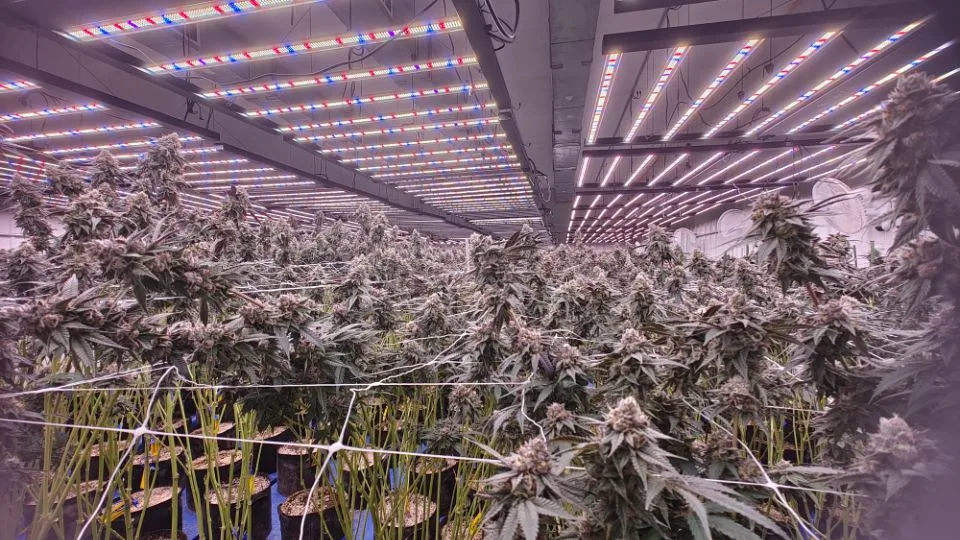
Navigating the modern horticulture market can feel like walking through a dense jungle without a map. Every time you search for an led grow light for sale, you are bombarded with thousands of options, ranging from incredibly cheap imports on generic marketplaces to high-end, commercial-grade fixtures. As someone who has spent years on the factory floor overseeing R&D and production at SLTMAKS, I have seen firsthand how easy it is for manufacturers to manipulate specifications to make a mediocre product look like a top-tier performer.
The transition from High-Pressure Sodium (HPS) to Light Emitting Diode (LED) technology has revolutionized indoor farming, but it has also introduced a complex vocabulary of acronyms and metrics. If you do not know the difference between PPFD and Lumens, or why a “1000W” sticker on a box might actually mean only 100 watts of power, you are at risk of wasting your money. This guide is designed to deconstruct the technical jargon and provide you with a transparent, professional checklist to ensure the next led grow light for sale you click on is actually worth the investment.
Table of Contents
Understanding the “Wattage Lie” and True Power Draw
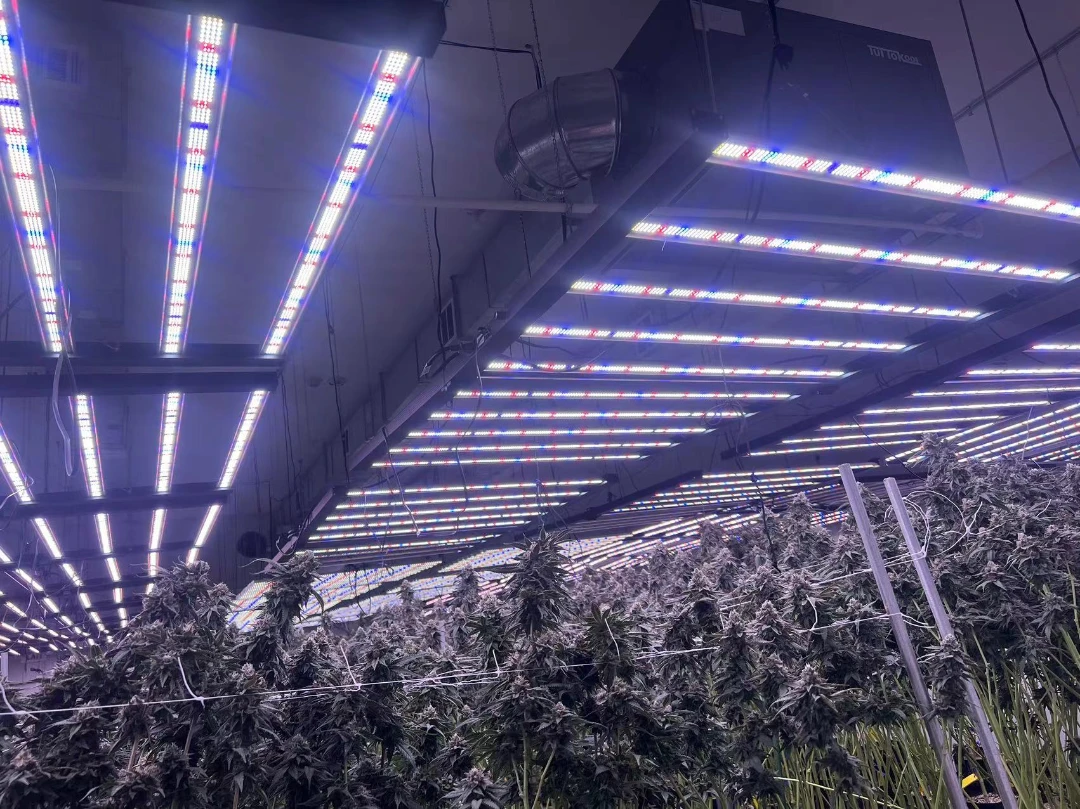
One of the most pervasive marketing tricks in the online LED industry is the inflation of wattage numbers. When you see an led grow light for sale labeled as “1000W” or “2000W” for a surprisingly low price, you are likely looking at a “marketing equivalent” rather than the actual power consumption. In the past, sellers used these numbers to compare LEDs to HPS lights, but today, they are largely misleading and often entirely fabricated.
The Difference Between Wall Draw and Rated Power
To truly understand the capability of a fixture, you must ignore the bold print on the box and look for the “Actual Power Draw” or “Wall Watts” in the technical specifications. This figure represents the actual electricity the unit pulls from your outlet. A deceptive seller might label a light as “1000W” because it contains 100 LED chips rated at 10 watts each. However, to prevent overheating and extend lifespan, those chips are driven at only 1 watt each. Consequently, the actual power is only 100 watts.
For a serious grower, rely on wall wattage to determine coverage. Generally, highly efficient modern LEDs require about 30 to 40 watts of actual power per square foot of flowering canopy. If you buy a light that claims 1000W but only draws 150W from the wall, your plants will suffer from insufficient photon energy during the critical bloom phase, leading to airy, underdeveloped buds.
Why “Equivalent” Numbers Are Obsolete
Comparing LEDs to HPS using “equivalence” is no longer accurate because the spectrums are fundamentally different. A 600W HPS light emits a lot of heat and infrared energy that plants cannot fully utilize for photosynthesis. A 600W LED fixture, conversely, directs significantly more usable energy into the Photosynthetically Active Radiation (PAR) range. Therefore, when evaluating an led grow light for sale, stop looking for HPS comparisons. Instead, look for the actual efficacy and total light output, which we will discuss in the next section.
Decoding Light Output: PPF, PPFD, and Efficacy
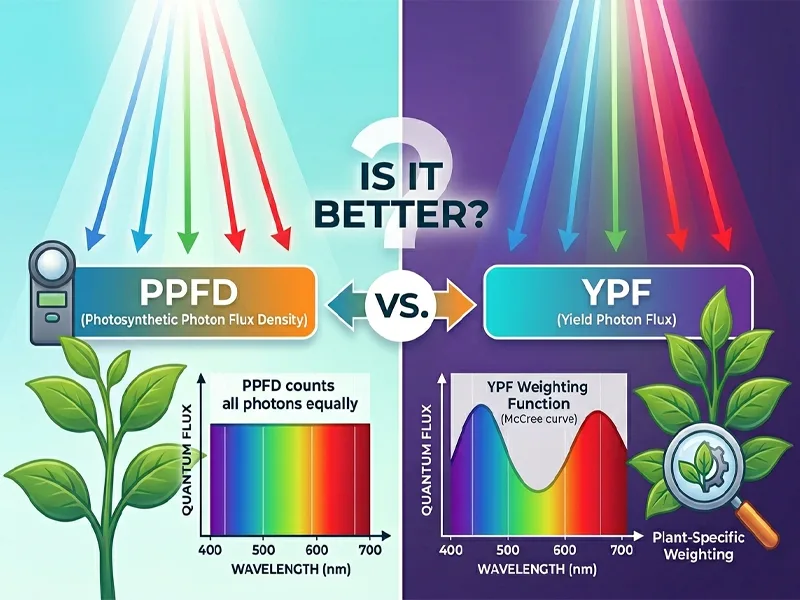
If you are buying a light based on “lumens,” you are using the wrong ruler. Lumens measure how bright light appears to the human eye, which is most sensitive to green and yellow light. Plants, however, “see” light differently. They rely on photons in the 400nm to 700nm range to drive photosynthesis. To evaluate an LED accurately, you need to understand three key acronyms: PAR, PPF, and PPFD.
PPF (Photosynthetic Photon Flux)
PPF measures the total amount of light (photons) emitted by the fixture every second, measured in micromoles per second (μmol/s). Think of this as the “horsepower” of the engine. A higher PPF means the fixture produces more light overall. However, PPF does not tell you where that light lands or how intense it is at the canopy level.
PPFD (Photosynthetic Photon Flux Density)
PPFD is the most critical metric for a grower because it measures how many photons actually hit a specific spot on your canopy per second (μmol/m2/s ). When you are browsing an led grow light for sale, look for PPFD charts (often called PAR maps). A good manufacturer will provide a grid showing intensity readings at different heights (e.g., 12″, 18″, 24″).
Be wary of lights that only advertise a single “center point” PPFD reading. It is very easy to manipulate a fixture to have a massive spike of intensity in the dead center—say, 2000 μmol/m2/s —while the corners drop to almost zero. This creates “hot spots” that can bleach your plants in the middle while starving the plants on the perimeter. You want a light with uniform distribution, ensuring edge-to-edge growth.
PPE (Photosynthetic Photon Efficacy)
Efficiency is determined by how effective the light is at converting electricity (Joules) into light (micromoles). This is expressed as μmol/J.
- Low Efficiency: < 2.0 μmol/J (Older technology, blurple lights).
- High Efficiency: >= 2.7 μmol/J (Modern, high-quality standards).
- Premium Efficiency: > 3.0 μmol/J (Top-tier commercial fixtures).
According to data from the DesignLights Consortium (DLC), horticultural lighting requirements are becoming stricter, pushing manufacturers to produce more efficient fixtures. Buying a high-efficacy light means a lower electricity bill and less heat generated per unit of light.
Table 1: Light Metric Comparison Guide
| Metric | Full Name | What It Measures | Target for Home Growers |
| Lumens | Luminous Flux | Brightness to human eye | Ignore completely. |
| PPF | Photosynthetic Photon Flux | Total light output of fixture | 600-800 μmol/s (for 4×4 tent) |
| PPFD | Photosynthetic Photon Flux Density | Light intensity at canopy | 800-1000 μmol/m2/s (Flowering) |
| PPE | Photosynthetic Photon Efficacy | Electrical efficiency | 2.7 μmol/J or higher |
The Spectrum Debate: Why “Full Spectrum” Matters

In the early days of LED technology, the market was dominated by “blurple” (blue + purple) lights. These fixtures only emitted red and blue wavelengths because scientists knew these were the peak absorption points for chlorophyll A and B. However, subsequent research, including studies on the McCree Curve, has shown that plants utilize the entire spectrum, including green light, which penetrates deeper into the canopy.
The Importance of White Light (Broad Spectrum)
Today, when you search for a premium led grow light for sale, you should look for “full spectrum” or “broad spectrum” white light. These fixtures use phosphor-coated white LEDs (usually a mix of 3000K and 5000K) to replicate natural sunlight. This allows you to inspect your plants for pests and deficiencies without wearing color-correcting glasses, and it provides the plants with the complex light signals they need for healthy morphogenesis (shape development).
The Role of Far-Red (730nm) and UV
Advanced fixtures, like those we design at SLTMAKS, often supplement the white diodes with specific bands of red (660nm) and Far-Red (730nm).
- 660nm Red: Supercharges photosynthesis during the flowering stage, increasing biomass.
- 730nm Far-Red: Triggers the “Emerson Effect,” which can boost photosynthetic rates when combined with deep red light. It also helps regulate the plant’s sleep cycle and can accelerate the transition to flowering.
- UV (Ultraviolet): Some high-end lights include UV diodes. While UV drives less photosynthesis, it can stress the plant slightly, causing it to produce more trichomes and essential oils as a defense mechanism, effectively increasing potency.
Analyzing Components: The Heart and Brain of the Light
An LED fixture is only as reliable as its weakest component. You might find a cheap led grow light for sale that boasts high wattage, but if the internal components are generic, the light may fail within a year. There are two main components you must scrutinize: the Diodes (chips) and the Driver (power supply).
LED Chip Brand and Binning
The brand of the LED chip is a major indicator of quality. The gold standard in the industry currently is Samsung, specifically the LM301B, LM301H, and the newer LM301H EVO series. These horticulture-specific chips are known for their incredibly high efficacy and resistance to sulfur and humidity.
- Top Tier: Samsung, Osram (known for excellent red diodes), Cree.
- Mid Tier: Epistar, Bridgelux (good value, but lower efficiency).
- Low Tier: Unbranded Chinese generic diodes.
However, brand isn’t everything. LED manufacturers sort chips into “bins” based on performance. Two lights can both use Samsung LM301B chips, but one might use “top bin” (highest output) chips, while the cheaper competitor uses “lower bin” chips that didn’t make the cut for premium performance. At SLTMAKS, we prioritize top-bin sourcing to ensure consistency.
The LED Driver: The Unsung Hero
The driver converts your wall’s AC power into the DC power the LEDs need. A cheap driver is efficient at generating heat and noise, but inefficient at powering your light. It is also the most common point of failure.
When evaluating an led grow light for sale, look for drivers from reputable brands like Mean Well, Inventronics, or Sosen. A Mean Well driver is widely considered the industry benchmark for reliability, offering typically 5 to 7 years of warranty and usually featuring dimming capabilities (0-10V) that allow you to lower the intensity for seedlings.
Thermal Management: Passive vs. Active Cooling

Heat is the enemy of LED longevity. Although LEDs run cooler than HPS, they still generate heat that must be dissipated away from the diode junction. If the chip gets too hot, its efficiency drops, and its lifespan shortens drastically—a phenomenon known as “lumen maintenance depreciation.”
Why Passive Cooling Wins
In the past, many LED lights used internal fans to cool the heatsinks. We call this “active cooling.” The problem with active cooling in a grow room environment is dust and humidity. If the fan fails (which it eventually will), the light overheats and dies instantly.
Modern, high-quality fixtures utilize “passive cooling.” They rely on heavy, aluminum heat sinks (often made of 6063 aluminum) with substantial surface area to dissipate heat naturally.
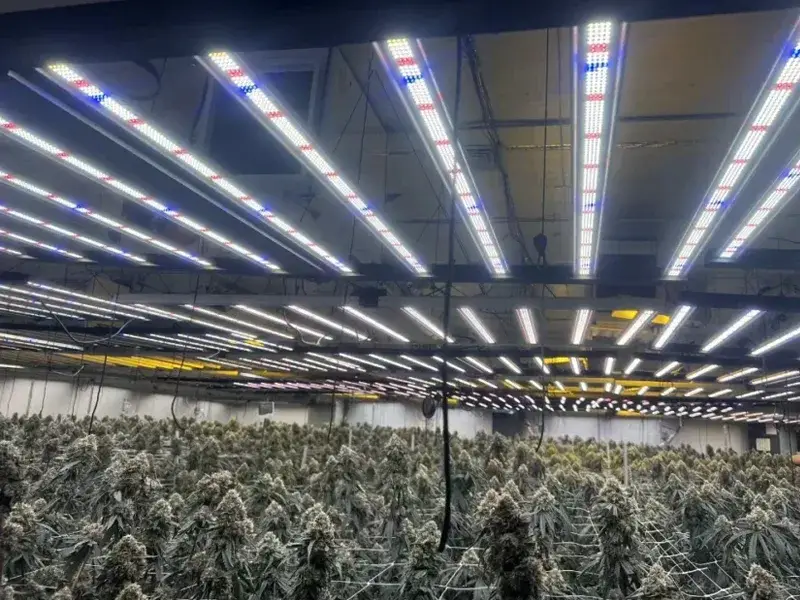
- Bar Style Lights: These open-frame designs are excellent for thermal management. The spaces between the bars allow heat to rise and air to flow freely, preventing heat buildup directly under the fixture.
- Quantum Boards: These flat boards rely on a thick aluminum backplate. Ensure the plate is thick enough (at least 4mm usually) to handle the wattage without warping or overheating.
Form Factor and Coverage Area
The physical shape of the light should match your grow space. A mismatch here leads to uneven growth.
Quantum Board Style
These are solid, flat boards. They are excellent for smaller spaces (2×2 or 3×3 tents). They are usually more affordable and compact. However, in larger tents, a single central board can struggle to push light to the edges.
Bar Style (Spider Style)
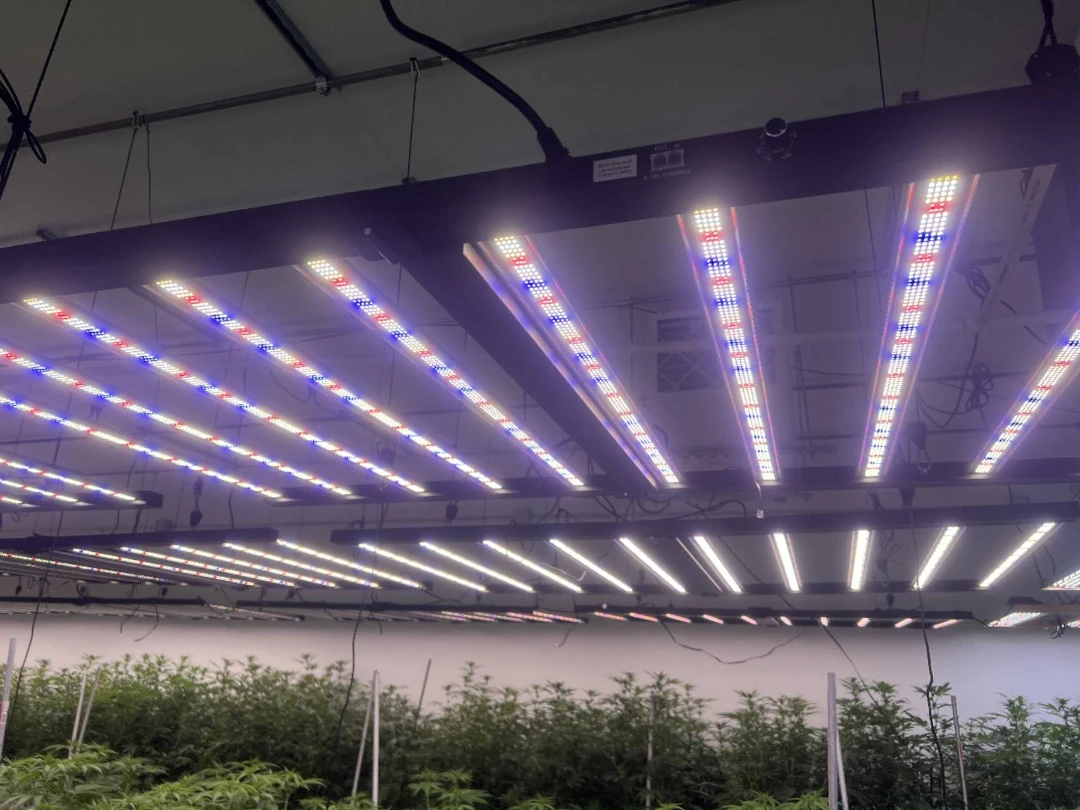
For 4×4 or 5×5 flowering spaces, the multi-bar style is the superior choice. Because the diodes are spread out over a larger physical area (often 40 inches by 40 inches), the light comes from multiple angles. This leads to:
- Better Canopy Penetration: Light hits lower leaves from angles that a centralized source cannot reach.
- Uniformity: The PPFD at the corners is almost as high as the center.
- Heat Dissipation: The open design keeps the driver and the canopy cooler.
Table 2: Recommended Wattage by Grow Space
| Tent Size (ft) | Recommended Wattage (Actual Draw) | Recommended Style |
| 2′ x 2′ | 100W – 150W | Small Board |
| 2′ x 4′ | 200W – 320W | Rectangular Board or 2-Bar |
| 3′ x 3′ | 240W – 300W | Medium Board |
| 4′ x 4′ | 480W – 650W | Bar Style (6-8 bars) |
| 5′ x 5′ | 720W – 1000W | Commercial Bar Style |
Safety Certifications and Build Quality
A grow room is a harsh environment. It is humid, sometimes wet, and often runs unattended for long periods. Safety should be your non-negotiable priority. A cheap led grow light for sale that lacks proper certification is a fire hazard.
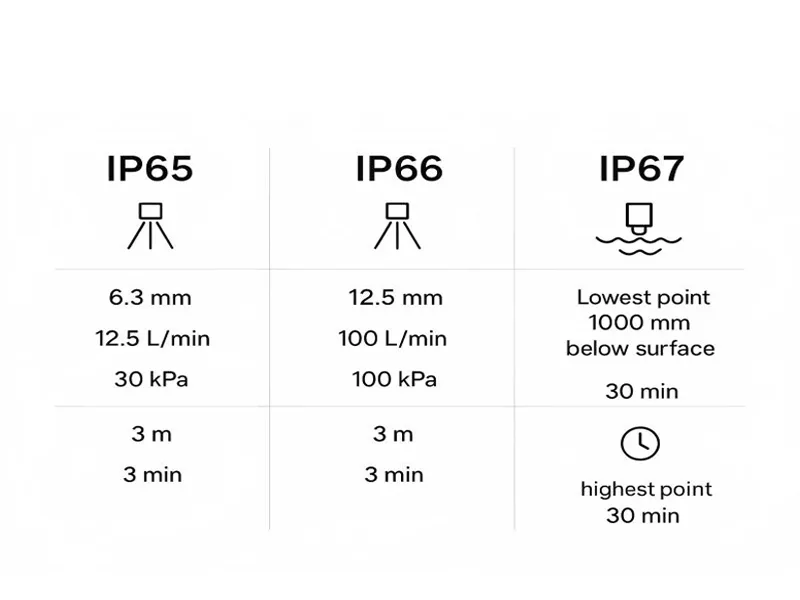
IP Ratings (Ingress Protection)
Look for an IP65 rating or higher.
- IP: Ingress Protection.
- 6: Dust Tight (No dust can enter).
- 5: Protected against water jets (You can accidentally spray it while watering plants).Many budget lights have exposed diodes with no protective coating. These are highly susceptible to sulfur corrosion and humidity damage. At SLTMAKS, we ensure our diode boards are coated to resist moisture, significantly extending the fixture’s life.
Safety Standards (ETL, UL, CE)
Never plug a high-wattage device into your home’s electrical grid if it hasn’t been tested by a recognized safety laboratory.
- UL (Underwriters Laboratories) / ETL: essential for North American growers. It means the device has been tested for fire and electrical safety.
- CE: Essential for European compliance.
- RoHS: Ensures the product is free from hazardous materials like lead and mercury.
Return on Investment (ROI) and Warranty
Finally, consider the economics. A $200 light that fails in 18 months is more expensive than a $400 light that lasts 5 years.
Calculating the True Cost
When comparing prices, calculate the Price per Micromole. Divide the total price of the light by its total PPF output. This tells you exactly how much you are paying for every “unit” of plant-growing power. Often, you will find that “expensive” lights are actually cheaper per unit of light output than budget models because they are so much more efficient.
The Warranty Fine Print
A credible manufacturer stands behind their product. Look for a warranty of at least 3 years, with 5 years being the standard for commercial-grade lights. Read the fine print: Does the warranty cover the driver? Do you have to ship the light back to China, or does the company have a local service center? At SLTMAKS, we understand that downtime kills crops, which is why responsive support is part of the package.
Conclusion
Finding the perfect led grow light for sale is about looking past the flashy stickers and analyzing the data. It requires balancing spectrum science, thermal engineering, and component quality. Remember, your light is the “engine” of your indoor garden. You can have the best nutrients, the best genetics, and the perfect environment, but if your light engine is underpowered or inefficient, your results will always be limited.
By focusing on actual wall wattage, high efficacy (PPE), recognized brand components (Samsung/Mean Well), and proper safety certifications, you ensure that your investment yields bountiful harvests for years to come. Do not settle for “good enough”—your plants certainly won’t.
If you are ready to stop guessing and start growing with professional-grade equipment, [Click here to explore the SLTMAKS High-Performance LED Series] tailored for serious home and commercial growers.
FAQ: Common Questions When Buying LED Grow Lights
1. Can I use regular LED shop lights for growing plants?
Technically, yes, plants will grow under regular shop lights, but they will likely be spindly and yield poorly. Shop lights lack the intensity (PPFD) and the specific spectrum required for dense flowering. An led grow light for sale specifically designed for horticulture provides the high photon energy required to produce dense buds and fruit.
2. How high should I hang my LED light?
This depends on the intensity of your light and the stage of growth.
- Seedling: 24-30 inches high (at 25-50% dimmer).
- Vegetative: 18-24 inches high (at 50-75% dimmer).
- Flowering: 12-18 inches high (at 100% power).Always consult the manufacturer’s PAR map for specific recommendations.
3. Do purple (blurple) lights work better than white LEDs?
No. While blurple lights were efficient a decade ago, modern full-spectrum white LEDs are superior. They offer better canopy penetration, allow for easier visual inspection of plant health, and generally have higher efficacy ratings (more light for less electricity).
4. What is the “Veg” and “Bloom” switch found on some lights?
Some older or budget LED models have switches to turn off red or blue diodes.
- Veg Switch: Turns on mostly blue/white light for leafy growth.
- Bloom Switch: Adds red diodes for flowering.Most modern high-end fixtures simply use a single, tuned full spectrum that works for the entire cycle (seed to harvest), often controlled by a dimmer rather than toggle switches.
5. Why do my plants look like they are suffering from “light burn”?
LEDs are powerful. If the leaves at the top of the canopy are turning yellow or bleaching white, but the veins remain green, your light is likely too close. Unlike HPS, which burns via heat, LEDs can cause “photon burn” where the metabolic rate of the leaf exceeds its ability to process the light energy. Raise your light or dim it immediately.