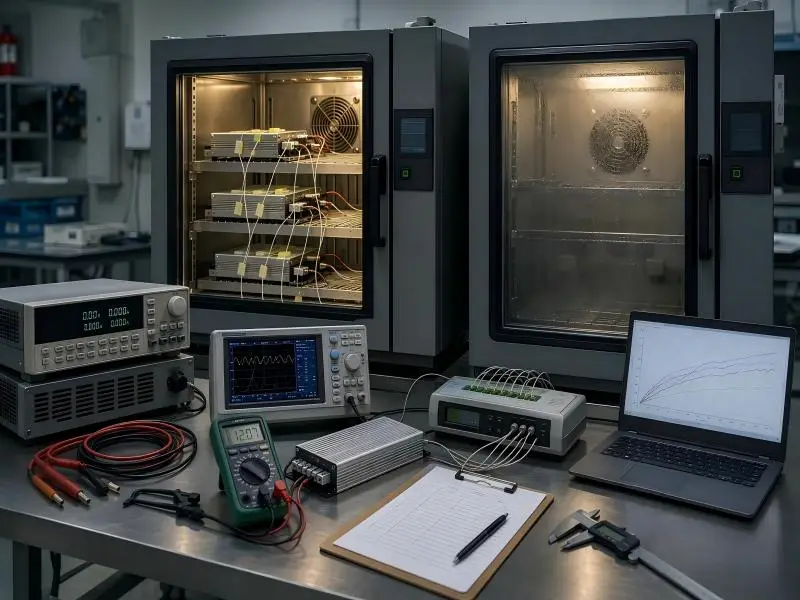

If you’re searching for professional LED grow light products, you’re probably past the “does it work?” stage and into the “will it perform every day, at scale, without surprises?” stage. Professional growers care about consistency, safety, controllability, and total cost of ownership—not just a big watt number on a box.
This guide breaks down what “professional” actually means in commercial cultivation, how to compare fixtures using grower-friendly metrics, and how to plan a lighting layout that supports yield, quality, and operational efficiency. Along the way, you’ll see references to recognized standards and extension resources so your decisions are grounded in real horticultural and safety guidance.
Table of Contents
What “Professional” Really Means in LED Grow Lighting
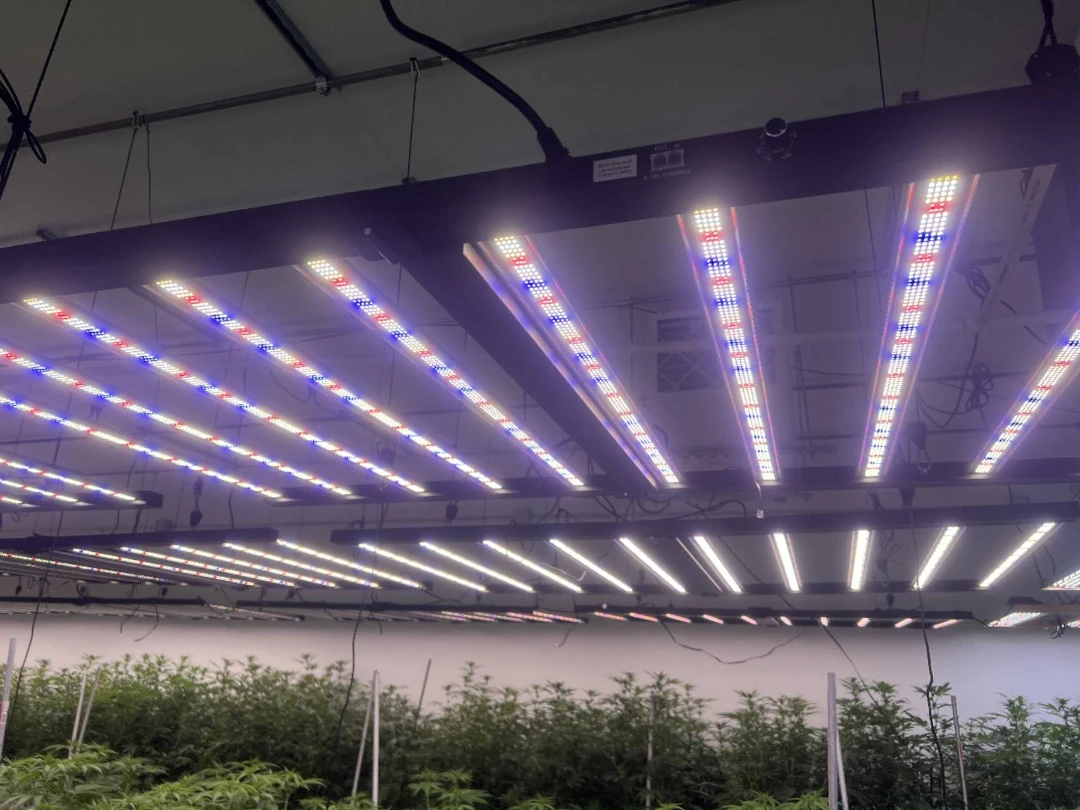
Professional fixtures are designed for duty cycle, not occasional use
A professional grow light is built to run long photoperiods day after day, often in warm and humid rooms, without output drifting or components degrading early. That’s why commercial-grade fixtures focus on thermal design, driver quality, strain relief, sealed connections, and serviceability instead of just maximizing the first-day PPFD.
In practical terms, “professional” usually means the fixture is engineered as a system—LEDs, board or bar layout, optics, driver, wiring, and housing are matched to keep temperatures stable and performance predictable. Standards and certification bodies also treat horticultural environments as unique, because cultivation spaces can be damp, corrosive, and operationally demanding. UL Solutions
Professional lighting is about repeatable results across the canopy
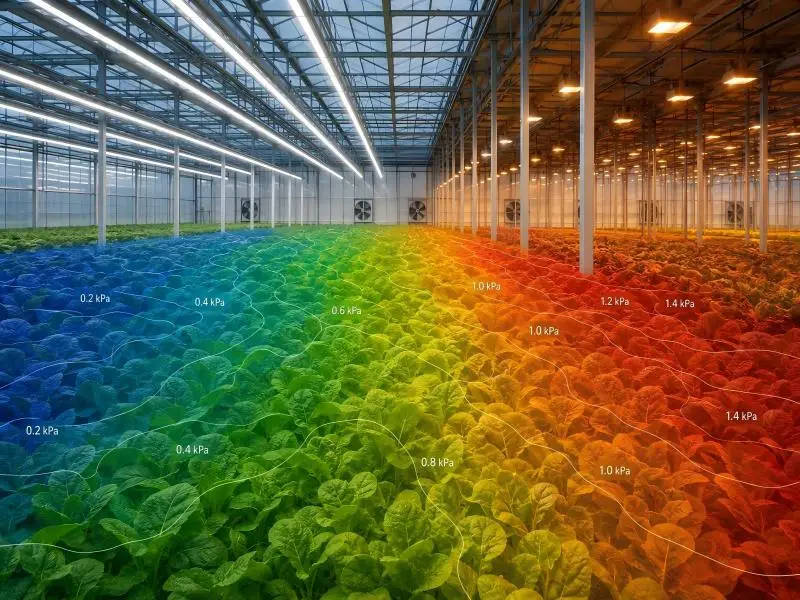
Serious growers don’t just want high peak PPFD in the center of the map. They want uniformity across the entire grow area so plant height, transpiration, nutrient uptake, and maturity timing stay consistent from edge to edge.
Uniformity is what makes your room easier to manage and your harvest easier to predict. It also reduces the need to “chase hot spots” with extra training, shading, or constant dimming adjustments, which saves labor and reduces crop stress over time.
Professional products align with recognized testing and performance frameworks
In commercial procurement, “professional” often implies the fixture is tested using established photometric and horticultural reporting methods, and the manufacturer can provide credible data. Programs such as the DesignLights Consortium (DLC) Horticultural Lighting Technical Requirements exist specifically to define performance criteria and listing eligibility for horticultural luminaires and modules. designlights.org
When a vendor can’t explain how their PPFD map was produced, what conditions were used, or how the spectrum is specified, that’s a red flag for commercial deployments. Professional growers need documentation they can trust when building a room, a budget, and a crop plan.
The Metrics Serious Growers Use to Compare Commercial Fixtures
Efficacy (PPE) is the starting point for operating cost
For cultivation, the most useful efficiency metric is typically photosynthetic photon efficacy (PPE), expressed as µmol/J. It tells you how many plant-usable photons you get per joule of electricity, and it directly impacts how much light you can afford to run over a full cycle.
Higher efficacy doesn’t automatically mean “better,” but it does mean you can reach a target PPFD (or DLI) with fewer watts, which helps with electrical capacity planning and heat load management. This is one reason many professional buyers look to DLC’s horticultural criteria and listings as a baseline reference for performance expectations. designlights.org
PPFD maps matter more than headline PPFD
A single PPFD number is incomplete without a map. What you need is the distribution: center, midpoints, corners, and the average over the area you actually grow.
Commercial-grade brands usually provide PPFD maps at specific mounting heights over common footprints (e.g., 4×4, 5×5, 4×8). That’s what lets you design spacing and decide whether you need more fixtures, different optics, or a different fixture architecture.
Spectrum is a strategy, not a buzzword
Most modern professional fixtures use “full spectrum” as a foundation, but spectrum still matters depending on crop goals. Red/blue ratios, the presence of green, and far-red handling influence morphology, flowering response, and canopy penetration, so professional growers treat spectrum as part of a cultivation recipe.
If you want a science-oriented place to sanity-check spectrum and light planning concepts, extension publications on LED grow lighting can help translate the terminology into grower decisions. For example, Oklahoma State University Extension discusses LED grow lights for plant production in practical terms, including factors like light quality, quantity, and duration. OSU Extension
Dimming and controls separate “serious” fixtures from “bright” fixtures
In commercial rooms, you almost never run one fixed intensity for the entire crop cycle. You ramp, you zone, you balance rooms with different cultivars, and you adjust around HVAC capacity and CO₂ strategy.
A professional fixture should dim smoothly and predictably, ideally with widely used control methods (often 0–10V in commercial environments). You want stable output, no flicker issues that affect cameras or worker comfort, and controls that scale beyond a single room.
Professional Fixture Architectures: Bars, Panels, and Modular Systems
Bar-style fixtures are built for uniformity and scalability
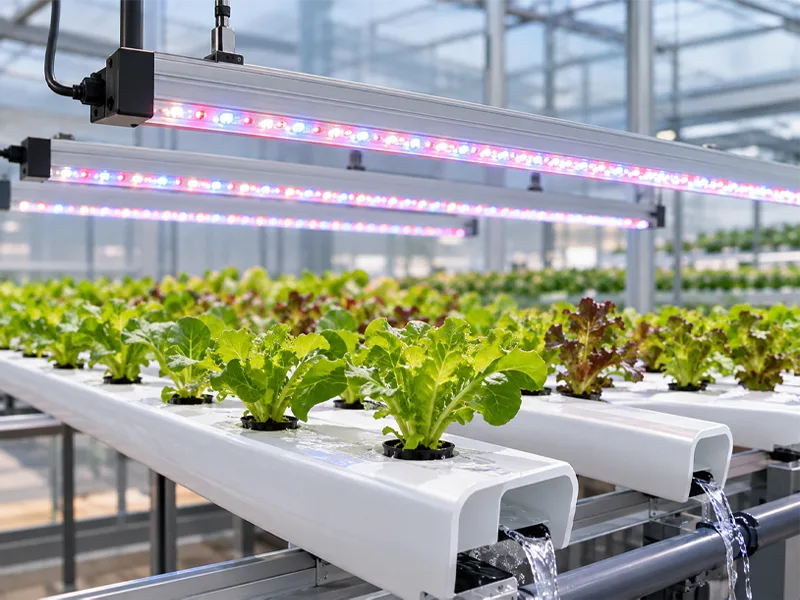
Bar fixtures distribute diodes across multiple linear bars, which helps spread light evenly over the canopy. This architecture often produces better edge performance than a single dense board, especially at commercial mounting heights.
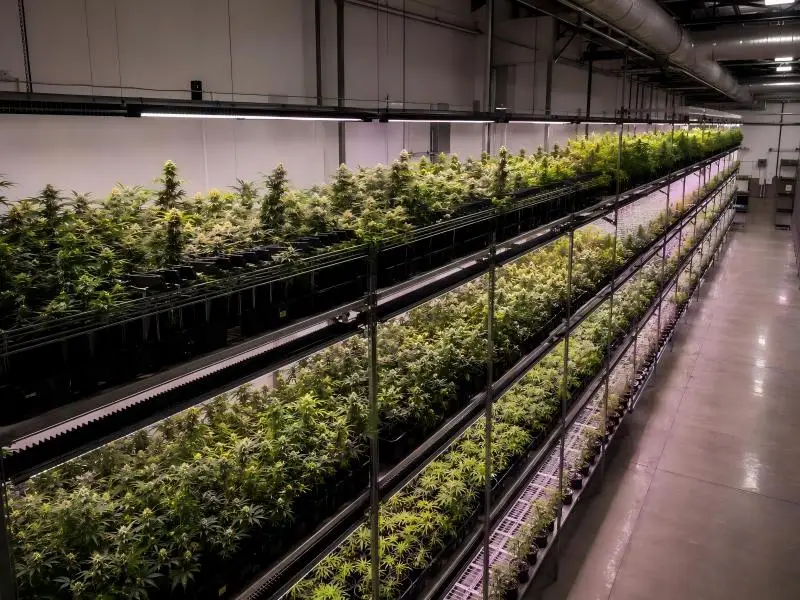
For professional growers, bar designs also make cleaning and airflow easier, and they can be arranged to match room geometry. If you’re running rolling benches, multi-tier, or long flower bays, the ability to scale in a modular pattern becomes a real operational advantage.
High-density panels can be excellent in the right footprint
Panels (including “board-style” fixtures) can deliver strong performance for smaller footprints or where mounting height is constrained. They can be simple to install and can be cost-effective when the room design doesn’t require long linear coverage.
The key is to look carefully at uniformity data and thermal design. A panel that runs hot or has uneven distribution may force you to dim more often, which can undermine the initial value proposition.
Modular and interlighting approaches support advanced canopy strategies
In some crops and setups, interlighting or side lighting is used to push photons deeper into dense canopies. While not every grow needs it, professional operations consider these tools when they’re chasing consistent lower growth, faster finishing, or improved quality at the bottom sites.
If a manufacturer offers modular options, professional buyers also ask about cable management, connector ratings, and how the system is certified when components are combined. A “modular” product should still behave like one reliable system when deployed at scale.
Reliability Under Real Conditions: Heat, Humidity, and Daily Operations
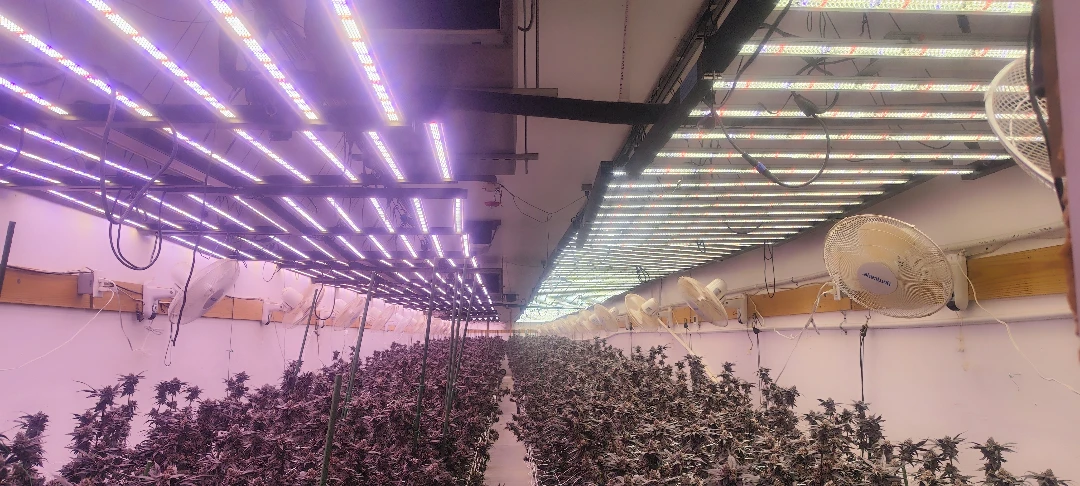
Thermal management is the quiet engine behind long-term output
LEDs are efficient, but they still generate heat at the junction. If the fixture can’t move that heat effectively, output can droop, spectrum can drift, and component life can shorten.
Professional fixtures usually focus on heat spreading, high-quality thermal interfaces, and conservative driver design. This is the kind of engineering you don’t see in a marketing photo, but you feel it months later when your room still hits the same numbers you designed for.
Driver quality matters because drivers live in the real world
In commercial grows, drivers experience long run times, temperature swings, and sometimes power quality issues. A professional grow light should use reputable drivers, offer stable dimming behavior, and protect against surges in a way that fits your facility’s electrical realities.
If you’re building multiple rooms, you’ll also care about driver serviceability. Replacing a driver should be straightforward, and the manufacturer should be able to support spare parts and consistent revisions over time.
Wet, dusty, and corrosive environments demand practical protection
Cultivation spaces can be humid, and cleaning is routine. That’s why many professional buyers prioritize sealed connections, robust coatings, and designs that don’t trap grime.
Safety organizations explicitly recognize these environmental challenges in horticultural settings, which is one reason specialized safety standards for horticultural lighting exist. UL’s materials on horticultural lighting and UL 8800 highlight that horticultural lighting systems are evaluated with environmental conditions like damp or wet areas in mind. UL Solutions
Planning Light Like a Pro: Coverage, PPFD, and DLI
Start with the crop stage and a realistic intensity target
Professional planning starts with crop needs and room constraints, not with fixture wattage. Seedlings, veg, and flower/fruiting all have different optimal ranges, and the right target is also influenced by CO₂ enrichment, cultivar, and temperature management.
If you’re aligning your strategy with plant-centric units, you’ll usually work in PPFD for instantaneous intensity and DLI for the total daily photon delivery. Extension resources such as Virginia Tech’s guide on calculating and using DLI explain how these measurements connect to real crop decisions. pubs.ext.vt.edu
Use DLI to connect “light today” to “growth over time”
DLI is the total amount of photosynthetically active light delivered per day, typically expressed as mol/m²/day. It helps you design a schedule (photoperiod) and intensity (PPFD) that match your crop goals without wasting energy.
A practical relationship many growers use is:
DLI = PPFD × photoperiod (seconds) ÷ 1,000,000.
You don’t need to memorize the math if you build a simple calculator, but you do need to treat DLI as the bridge between lighting hardware and plant performance.
Layout and mounting height are where professional planning pays off
Two rooms with the same fixtures can perform very differently depending on spacing, height, and reflectivity. A professional layout aims for uniformity first, then uses dimming and zoning to fine-tune intensity.
This is also where bar-style fixtures often shine: you can reduce “center hot spots” and raise corner performance without relying on walls or reflective tricks. When you plan for uniformity up front, you reduce constant mid-cycle corrections that cost labor and introduce risk.
CO₂, airflow, and temperature change what “enough light” means
As you push higher light levels, the rest of the environment must keep up. CO₂ enrichment, leaf temperature control, and airflow become increasingly important, because plants can only convert photons into biomass efficiently when other limiting factors are addressed.
Professional growers treat lighting as part of a system with HVAC, irrigation, and nutrient strategy. That’s why a “professional” fixture isn’t only about photons—it’s about predictable integration into a commercial cultivation process.
Controls and Commercial Integration: Running Rooms, Not Just Lamps
0–10V dimming and zoning enable real operational control
In professional facilities, you may run different cultivars side by side, or run multiple stages in the same building. Zoning lets you keep conditions optimized without moving plants constantly or compromising the schedule.
Good dimming isn’t only about going lower. It’s about repeatability, so your “70%” today behaves like “70%” next week, and your team can rely on settings across rooms and cycles.
Scheduling and ramping reduce stress and improve consistency
A sudden jump from dark to full intensity can stress plants and can also create peak load challenges. Many professional operations ramp intensity gradually to mimic sunrise and sunset behavior, which can make transitions smoother and reduce operational surprises.
If you use sensors and data logging, you can correlate lighting settings with climate and plant response. That’s where professional lighting starts to feel like process control rather than “turning lights on.”
Documentation and data support training and SOPs
When a facility grows beyond one or two rooms, staff training and standard operating procedures become as important as fixture specs. A professional lighting provider should offer clear manuals, wiring guidance, and recommended settings that help your team run the system safely and consistently.
This also supports compliance and inspection readiness, because you can demonstrate how your equipment is installed, controlled, and maintained. In commercial environments, that kind of documentation reduces downtime and reduces the chance of costly mistakes.
Safety, Certification, and Compliance: What Professional Buyers Check

Look for credible safety certification pathways for horticultural environments
Professional buyers typically want third-party safety certification (commonly UL/ETL pathways in North America) and clear documentation of what’s covered. Specialized horticultural lighting standards like UL 8800 exist to address safety issues that are specific to horticultural luminaires and systems. UL Solutions
That matters because your grow room isn’t a dry office ceiling. It can be humid, it can be washed down, and it can involve complex mounting and cable routing, so safety evaluation needs to match the real environment.
DLC listing and rebate readiness can change the business case
Many commercial growers care about rebate programs and energy policy frameworks, especially when building large facilities. DLC’s horticultural program provides technical requirements and a Qualified Products List structure that utilities may reference when offering incentives. designlights.org
Even if you don’t pursue rebates, the presence of standardized requirements and reporting can reduce the risk of buying “mystery performance.” It’s not a guarantee of perfection, but it is a meaningful filter in a crowded market.
Don’t ignore electrical code and workplace safety realities
Professional installations should be done to code, and facility managers should also consider general workplace electrical safety guidance. OSHA’s general electrical requirements include provisions related to illumination around electrical equipment and safe working spaces.
You don’t need to become an electrical inspector, but you do need to work with qualified installers and ensure your lighting system is safe, maintainable, and compliant. That protects your people, your crop, and your uptime.
Total Cost of Ownership: Why Professional Fixtures Often Win on ROI
Electricity cost is obvious, but heat cost is often underestimated
When comparing fixtures, growers focus on watts and efficacy, which is correct—but the room’s heat balance matters too. A more efficient fixture can reduce the watts needed for the same photon delivery, which can ease HVAC demand in many setups.
In some facilities, the HVAC impact becomes a major part of the ROI calculation. That’s why professional procurement looks at the system level: lighting + HVAC + dehumidification + controls, not lighting alone.
Uniformity supports yield consistency and reduces labor
Even a strong average PPFD can hide weak corners and excessive center intensity. When uniformity is poor, growers compensate with plant movement, canopy manipulation, and constant tuning, and those operational costs add up.
Professional-grade uniformity can improve consistency in plant size, finishing time, and quality grading. Over a year of cycles, that stability is often worth more than a small upfront price difference.
Reliability and serviceability protect uptime
Downtime in a commercial grow is expensive, and emergency replacements are rarely cheap. Professional fixtures are typically chosen not only for performance, but also for predictable support: warranty clarity, replacement part availability, and consistent manufacturing.
This is where “professional” becomes a business risk decision. A fixture that is slightly cheaper but fails unpredictably can cost far more in labor, crop risk, and operational disruption.
Common Mistakes When Buying “Professional” Grow Lights
Mistake 1: Chasing watts instead of photons
Watts measure input power, not plant-usable light. Professional growers buy photons and uniformity, because those are what plants respond to and what rooms are designed around.
If a product is marketed primarily by wattage, ask for PPE, PPFD maps, and reporting conditions. If the seller can’t provide them, you’re guessing, and guessing is expensive in commercial cultivation.
Mistake 2: Ignoring DLI and photoperiod strategy
Some growers try to hit a high PPFD number without considering photoperiod and DLI, and that can waste energy or cause plant stress. DLI-based planning makes it easier to match crop needs while staying efficient.
Extension resources that explain DLI and PPFD in practical terms can be invaluable for avoiding this mistake. Virginia Tech’s DLI guide is a straightforward reference for planning and decision-making. pubs.ext.vt.edu
Mistake 3: Treating controls as optional
In a serious operation, dimming and zoning are tools for quality control, not luxuries. Without good control, you may end up over-lighting to “be safe,” which increases operating cost and can create crop management problems.
Professional fixtures should support your workflow and your future scaling plans. If you might expand rooms, add stages, or change cultivars, controls and integration become essential.
Why Choose SLTMAKS for Professional LED Grow Lighting

Commercial-grade design focused on real cultivation environments
At SLTMAKS, our professional fixtures are engineered around the realities of commercial growing: long runtimes, high humidity, cleaning routines, and the need for stable output cycle after cycle. We focus on consistent photon delivery, thermal stability, and scalable layouts so your rooms run predictably.
Professional growers don’t need marketing gimmicks. They need lighting that behaves like dependable infrastructure, and that’s the design mindset we bring to every commercial-grade build.
Performance data and planning support for serious growers
A professional lighting purchase should come with more than a spec sheet. You should be able to request PPFD maps, discuss layout and mounting height, and plan intensity targets by stage and cultivar.
If you want a technical grounding for these planning conversations, you can cross-check concepts like PPFD and DLI using independent references such as Oklahoma State Extension’s LED grow light overview and Virginia Tech’s DLI calculation guide. OSU Extension
Scalable options for commercial rooms and multi-room facilities
Professional grows rarely stay static. You may add rooms, change genetics, adjust photoperiod strategies, or upgrade controls, and your lighting system should be able to evolve with your operation.
That’s why we prioritize fixtures and configurations that support practical scaling, consistent procurement, and stable operation. When your lighting platform is stable, your cultivation team can focus on plants instead of equipment troubleshooting.
A simple next step: build a professional lighting plan
If you’re evaluating led grow lights professional options for a commercial space, the fastest way to get clarity is to build a plan around your footprint, target PPFD/DLI, mounting height, and environmental strategy. Once the plan is clear, choosing fixtures becomes much simpler, and ROI becomes easier to estimate.
When you’re ready, you can share your grow area dimensions, crop type, target stage strategy, and whether you run CO₂ enrichment. We’ll help translate that into a commercial-grade lighting layout that fits serious production goals.
Closing Thoughts
Professional LED grow lighting is not just “brighter.” It’s more consistent, more controllable, safer to operate in real cultivation environments, and more economically predictable over many cycles. When you evaluate fixtures using PPE, PPFD uniformity, DLI strategy, control capability, and credible certification pathways, you make a buying decision that supports both crop outcomes and business outcomes.
If your goal is truly commercial-grade performance, choose a lighting system you can standardize across rooms, train your team on, and rely on without constant intervention. That’s the real meaning of LED Grow Lights Professional in serious cultivation.