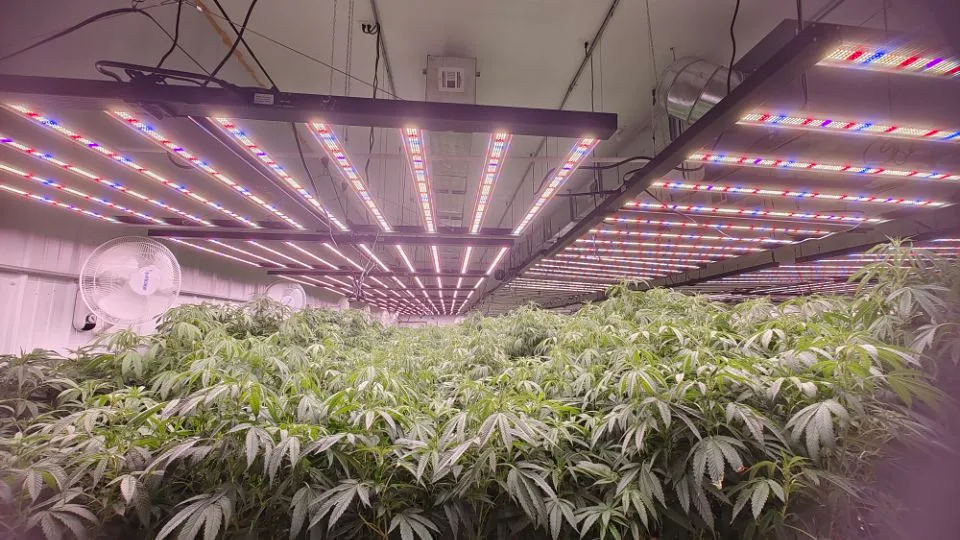
If you’re running led cannabis grow lights in a tent, a room, or a full-scale facility, your results will depend less on “what brand” you bought and more on how well you plan light levels across the entire grow cycle. Cannabis can use a lot of light, but only if the rest of the environment (CO₂, temperature, VPD, nutrition, and canopy structure) is aligned. When light is planned stage-by-stage, you get faster rooting, tighter vegetative structure, heavier flowers, and fewer “mystery” problems like bleaching, foxtailing, or airy buds.
This guide explains the lighting metrics that actually matter (PPFD, DLI, photoperiod, and uniformity), then gives practical target ranges for each growth stage. It’s written for real growers who want simple, repeatable steps—not confusing theory—and includes science-backed references you can click as you read.
Table of Contents
Why light planning matters for cannabis
Light is “yield potential,” not just brightness
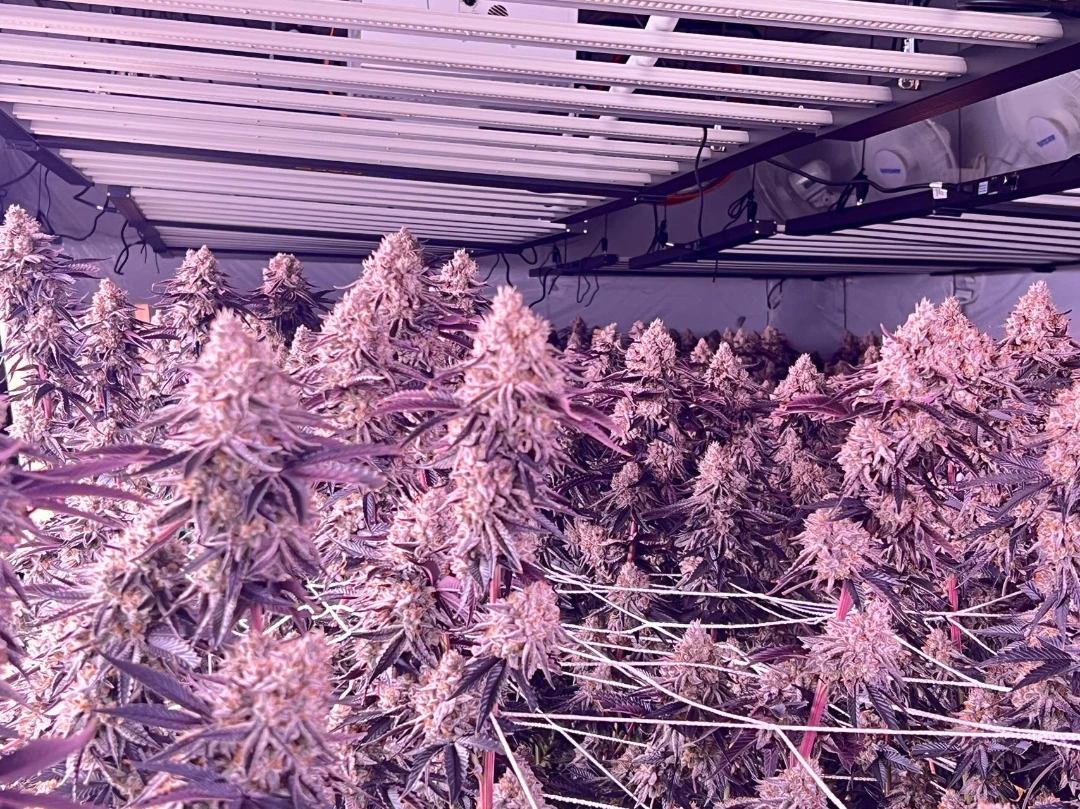
Cannabis yield is strongly tied to how many photosynthetic photons the canopy receives each day and how efficiently the plant can use them. Research in controlled environments shows inflorescence yield can increase with higher light intensity across a wide range when other factors are managed well. For example, controlled studies have observed yield responses continuing into very high PPFD ranges under LED conditions, which helps explain why modern indoor grows often target higher canopy light than older “HPS-era” norms. (Rodriguez-Morrison et al., 2021) PMC
Stage-specific light prevents expensive mistakes
The same PPFD that makes flowering explode can stress clones, stall roots, or cause leaf taco and bleaching in early veg. The goal is not “max light all the time,” but the right dose at the right time, matched to the plant’s capacity. When you plan stage-by-stage, you spend fewer kWh per gram and get more consistent harvests.
The 4 light metrics you should plan around
PPFD: the intensity at canopy level
PPFD (photosynthetic photon flux density) is measured in µmol/m²/s and tells you how much usable light hits the canopy each second. It’s the number most growers talk about, but PPFD alone is not enough because photoperiod changes the daily dose.
DLI: the daily dose that drives growth
DLI (daily light integral) is the total light delivered in a day, measured in mol/m²/day. Michigan State University’s greenhouse resources explain DLI as a daily photon total, which is a practical way to compare “18 hours at lower PPFD” vs “12 hours at higher PPFD.” (MSU Extension: DLI defined) Agri & Natural Resources College
A simple working conversion used in horticulture is:
DLI (mol/m²/day) = PPFD (µmol/m²/s) × hours × 0.0036
This lets you translate stage targets into real dimmer settings and hanging heights.
Photoperiod: the schedule that controls flowering
Cannabis is a short-day plant, meaning flowering is triggered by long nights (dark period length). Research literature commonly describes indoor vegetative photoperiods around 16–18 hours of light, while flowering schedules are typically 12 hours light / 12 hours dark, because uninterrupted darkness is part of the trigger. (Example discussion in controlled-environment cannabis photoperiod research: Plants (MDPI), 2025) MDPI
Uniformity: the hidden lever for quality and consistency
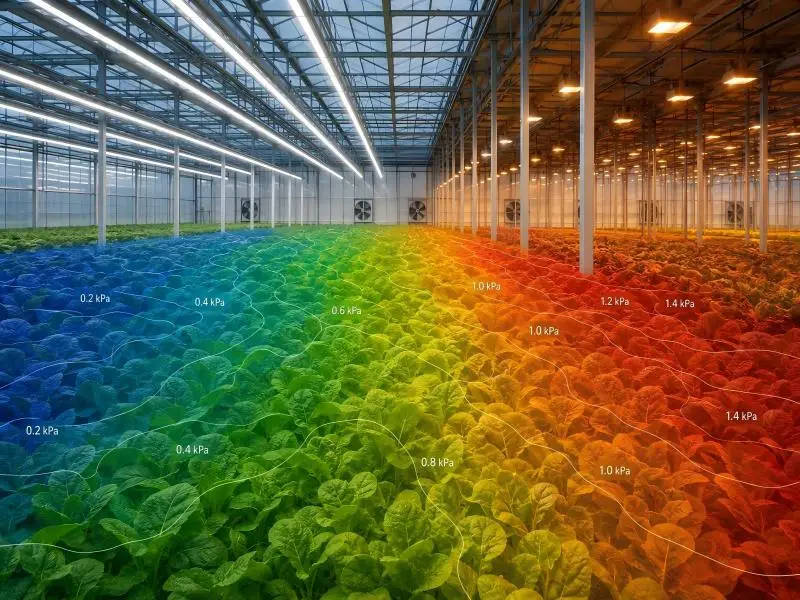
Two grows can have the same “average PPFD,” yet one harvest is dense and even while the other has larf and hot spots. Uniformity is about minimizing extremes across the canopy so every top receives a similar dose. This is where fixture layout, optics, mounting height, and good mapping habits matter more than marketing specs.
Quick reference: typical target ranges by growth stage
A practical stage-by-stage snapshot
Use this as a starting point, then fine-tune by cultivar, training style, and CO₂ strategy. The most reliable approach is to ramp light gradually and watch plant response for 48–72 hours after each change.
| Stage | Typical PPFD target (µmol/m²/s) | Typical Photoperiod | Approx. DLI target (mol/m²/day) |
|---|---|---|---|
| Clones / early seedlings | 80–250 | 18–24 h | ~5–15 |
| Late seedling / early veg | 250–500 | 18 h | ~16–32 |
| Vegetative (main) | 400–800 | 18 h | ~26–52 |
| Early flower (weeks 1–3) | 700–1000 | 12 h | ~30–43 |
| Mid flower (weeks 4–6) | 800–1100 | 12 h | ~35–48 |
| Late flower / finish | 700–1000 (often reduced) | 12 h | ~30–43 |
These ranges align with the general finding that cannabis can respond positively to higher light, but the “best” number is the one your environment can support. Peer-reviewed indoor studies have reported strong yield responses as PPFD increases under LEDs, helping justify why many commercial rooms target the upper part of these ranges when CO₂ and climate control are dialed in. (Rodriguez-Morrison et al., 2021; Llewellyn et al., 2022) PMC+1
Clones and seedlings: build roots first, not stress
Start low to protect tender tissue
Clones and seedlings have limited leaf area and weak transpiration control, so they don’t need intense PPFD to succeed. A gentle zone around 80–200 PPFD often keeps leaves perky without forcing the plant to “defend itself” against light stress. If you push PPFD too high here, you’ll commonly see curling, paling, stalled rooting, or droop that looks like overwatering.
Prioritize stability and diffusion
At this stage, your best “lighting upgrade” is often simply making light more even. Raise fixtures, dim slightly, and aim for soft uniform coverage rather than a tight hotspot. When plants are small, the difference between 150 PPFD and 300 PPFD can be the difference between fast rooting and slow recovery.
Use DLI to avoid accidental overdose
Because many growers run 18–24 hours of light during propagation, DLI can quietly climb even when PPFD looks “safe.” DLI framing helps you plan this correctly, and horticulture measurement tools often calculate it directly for you. (Example measurement approach and DLI/PPFD concepts in instrumentation documentation: Apogee DLI meter manual (PDF)) Apogee Instruments
Vegetative stage: shape the canopy with controlled intensity
Increase PPFD as the plant’s “engine” grows
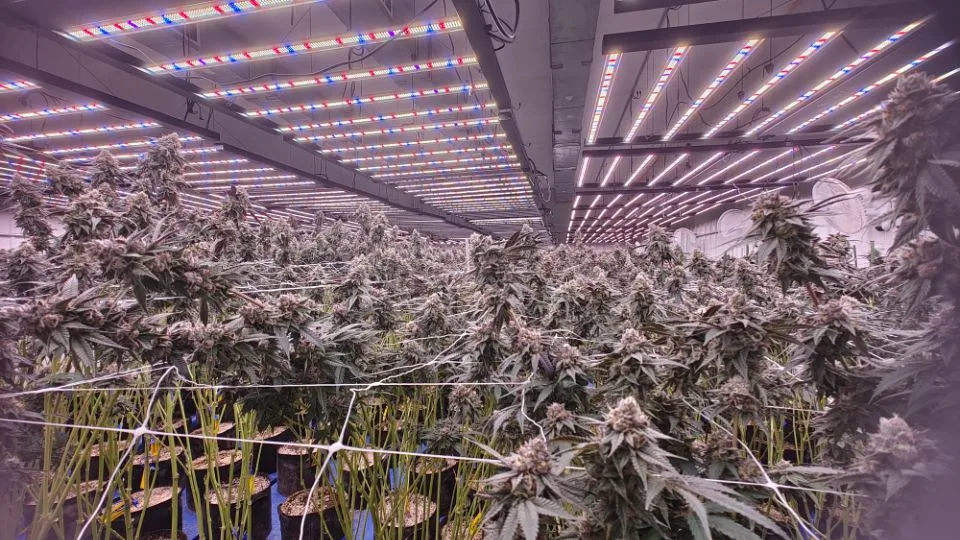
As leaf area expands, cannabis can use more light efficiently, and this is where led cannabis grow lights shine: strong PPFD with lower radiant heat compared to legacy HID setups. Many growers target 400–800 PPFD in veg, depending on plant density and how aggressively they want to drive growth. If you run long veg photoperiods (often 18 hours), even mid-range PPFD can produce a high DLI quickly, so your environment must keep up.
Veg light affects structure, not just speed
Higher veg PPFD often produces tighter internodes and a sturdier frame, which can be helpful for SCROG and high-density flowering. Research on vegetative cannabis under indoor production has reported that relatively high PPFD can produce compact, commercially relevant morphology, which matches what experienced growers see in practice. (See discussion and reported PPFD ranges in vegetative-stage research: “High Light Intensities…” (ResearchGate record)
Don’t out-run your VPD and nutrition
When you raise PPFD, plants transpire more and demand more water, calcium, and overall nutrient flow. If leaf edges crisp or tips burn right after a light increase, it may be a feeding/VPD mismatch rather than “too much light.” The fix is often to ramp intensity more gradually while stabilizing temperature and humidity.
Transition to flower: ramp the “daily dose” strategically
Week 1–2 is about stretch control and site setting
The first 10–14 days after flip are a unique window where plants stretch and set future bud sites. A common strategy is to move from veg PPFD into a flowering range gradually, rather than jumping instantly to maximum. This helps reduce stress while still shaping internodes and building a strong photosynthetic base for heavy flowering later.
Use uniformity to prevent uneven stretch
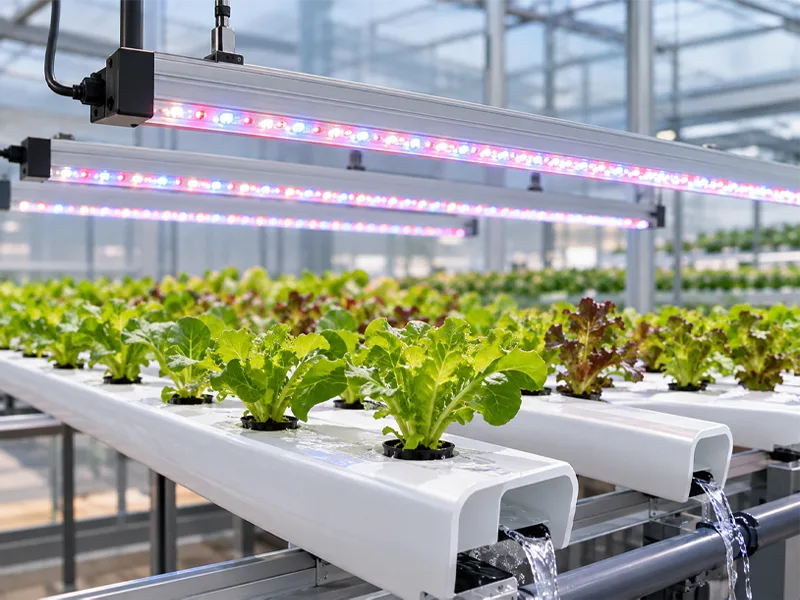
If your canopy has hot spots, plants under the hotspots often stretch differently and can become harder to manage. A simple mapping session with a quantum sensor (or a consistent phone-meter workflow) can identify these zones so you can adjust fixture spacing or hanging height. This is also where bar-style LED layouts often help because they spread photons more evenly across the grow footprint.
Flowering stage: high light, but only if the room supports it
Typical flowering targets (and why they work)
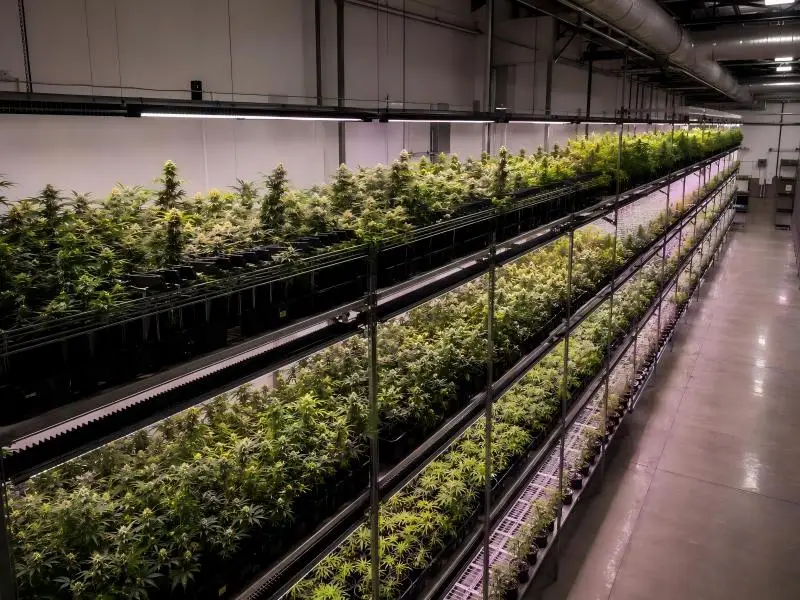
Many indoor rooms aim for 800–1100 PPFD during mid-flower, with some high-control facilities pushing higher when CO₂ enrichment and HVAC are strong. Controlled studies report that cannabis yield can increase with higher PPFD under LEDs, and large yield responses have been documented across a broad intensity range. (Llewellyn et al., 2022; Rodriguez-Morrison et al., 2021) Frontiers+1
Photoperiod is usually 12/12—protect the dark period
Flowering is normally run at 12 hours light / 12 hours dark, and the dark period should be uninterrupted. Research discussing cannabis as a short-day plant emphasizes the importance of maintaining a sufficiently long night period to trigger and maintain flowering. (Plants (MDPI), 2025 photoperiod discussion) MDPI
UV: be cautious with expectations
Some growers add UV hoping for major potency gains, but research results are nuanced. For example, controlled indoor work has reported that adding UV did not produce broadly “commercially relevant” improvements in outcomes, even when yield increased strongly with higher PPFD. That doesn’t mean UV is useless, but it does mean you should treat it as an experiment, not a guaranteed ROI lever. (Llewellyn et al., 2022) Frontiers
Late flower and finishing: when lowering light can improve quality
More light is not always better at the end
In late flower, some cultivars become more sensitive to light stress, especially if the canopy has grown closer to the fixtures. Dropping PPFD slightly (or raising fixtures) can reduce bleaching and foxtailing risk while maintaining strong ripening. The goal is to keep tops healthy and photosynthesizing, not to “blast” the final week and damage terpene expression.
Watch for canopy distance changes
Training, swelling buds, and net pressure can raise tops several centimeters over time. If you set hanging height once and never re-check, the effective PPFD at the top can climb a lot late in flower. A quick weekly map (even a simplified one) prevents this and helps keep quality consistent across the room.
Spectrum basics for led cannabis grow lights
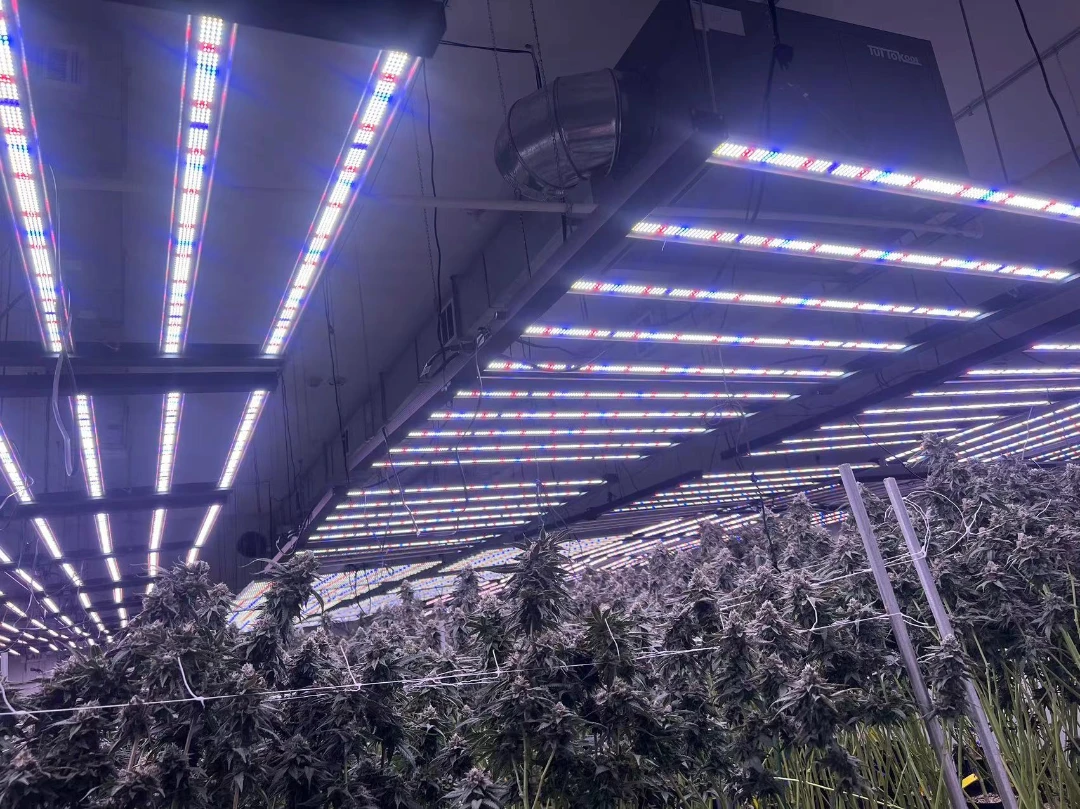
Full spectrum is the practical default
Most growers succeed with full-spectrum white LEDs that cover the core PAR region (400–700 nm). Full-spectrum fixtures tend to be easier to run because plants respond predictably, and it’s simpler to diagnose issues without extreme spectral quirks. When you add additional red, far-red, or UV channels, do it with a plan and verify results with small controlled tests.
Don’t confuse “spectrum claims” with real performance
Two fixtures can advertise similar spectrum charts yet perform very differently due to driver quality, diode efficiency, thermal design, and optical distribution. That’s why canopy-level PPFD mapping and DLI tracking are more reliable than relying on a brochure chart.
Planning fixture layout and hanging height for uniform PPFD
Use the “higher and wider” principle
If you mount LEDs too close, you create intense hotspots under each bar or panel. Raising fixtures generally reduces hotspot intensity and improves uniformity, which often increases whole-canopy yield even if the peak PPFD number goes down. Uniform light also helps keep EC and irrigation strategies simpler because plants across the room transpire more similarly.
Match fixture footprint to grow footprint
A common mistake is under-lighting the edges and over-lighting the center. Choose fixture sizes and counts that match your canopy area, then space them so the PPFD map is even at the working hanging height. Even without expensive tools, you can improve this by measuring a simple grid and adjusting layout until the spread tightens.
Plan for dimming, not just maximum power
Dimming is not a “nice extra” for cannabis—it’s a control tool for stage-based planning. Good dimming lets you start clones safely, ramp veg smoothly, and fine-tune flower intensity without constantly changing hanging height. In real operations, dimming also helps manage heat load and energy cost during seasonal changes.
Measuring light correctly: a simple workflow that works
Map the canopy on a grid
Pick a grid (for example, every 30–50 cm) and record PPFD at canopy level across the area. Do it the same way each time so you can compare maps week-to-week. This is the fastest way to identify hotspots, dead zones, and the real impact of moving fixtures.
Use DLI tracking to keep changes logical
Because DLI combines PPFD and photoperiod, it keeps you from making accidental jumps. If you know your target DLI and photoperiod, you can back-calculate the PPFD you should run. Practical DLI measurement is widely used in horticulture because it simplifies lighting decisions across different schedules. (MSU Extension: DLI defined; Apogee DLI meter manual) Agri & Natural Resources College+1
Treat “plant response” as part of measurement
Meters measure photons, but plants measure the whole environment. After any light change, check leaf posture, color, tip burn, and canopy temperature for 2–3 days before changing again. This habit alone prevents most lighting-related crashes.
Common light-planning problems and how to fix them
Bleaching on tops
Bleaching usually comes from excessive photon intensity at the top combined with heat or poor airflow. Raise the fixture, dim slightly, and increase air movement across the canopy. If only a few tops bleach, the issue is often non-uniformity rather than the room’s average PPFD.
“Taco” leaves and clawing after increasing PPFD
This often indicates the plant can’t transpire properly for the light level. Improve VPD balance, check root-zone moisture strategy, and confirm your canopy temperature is not spiking under the LEDs. If CO₂ is low, very high PPFD becomes harder for plants to use efficiently.
Larfy lower buds
This is often a combination of weak penetration and overly dense canopy structure. Improve spacing, defoliate strategically, and consider whether your overall uniformity is pushing too much light into the top while leaving mid-canopy under-served. Better distribution and training can outperform simply adding more watts.
Energy efficiency and ROI: planning for grams per kWh

Why LEDs can win—when planned correctly
The advantage of led cannabis grow lights is not only efficiency, but controllability. When you can dial PPFD by stage, maintain uniform maps, and hit DLI targets without excess heat, you reduce wasted electricity and stabilize quality. Research in controlled environments supports the idea that higher PPFD can increase yield, but your facility economics depend on how efficiently you deliver and use that light. (Rodriguez-Morrison et al., 2021) PMC
The cheapest photon is the one you don’t waste
Uniformity, dimming, and consistent mapping often produce bigger ROI than chasing a fixture with a slightly higher efficacy spec. When you reduce hotspots and raise the “weak zones,” you improve total canopy productivity without increasing peak stress. That is how professional rooms keep quality consistent while controlling cost.
Putting it all together: a simple stage-based lighting plan
A practical ramp schedule you can adapt
Start clones low, then increase PPFD in steps of about 10–20% as plants establish and environmental control proves stable. In veg, use PPFD to shape structure and aim for a strong but manageable DLI. In flower, ramp toward your target intensity by early-to-mid flower, then maintain consistency and protect tops as the canopy rises.
Use your data to refine cultivar targets
Different cultivars have different tolerance to high PPFD and different responses in terms of yield and secondary metabolites. Keep notes on PPFD/DLI, canopy temperature, and outcomes, and you’ll quickly find “sweet spots” that outperform generic charts. The best lighting plan is the one your room can repeat reliably.
Why choose SLTMAKS for LED cannabis grow lights
Built for stage-based control and uniform coverage
At SLTMAKS, we focus on practical performance that supports real cultivation workflows: controllable intensity, stable output, and coverage designed for uniform canopy PPFD. That matters because cannabis success is a system—lighting, climate, and canopy management—and your fixtures should make that system easier to run.
A better planning process = better harvests
Whether you’re building your first room or optimizing a production facility, planning light levels by growth stage is one of the highest-ROI improvements you can make. If you want help translating your target PPFD/DLI into a fixture count, layout, and dimming plan for your canopy size, SLTMAKS can support you with a straightforward, data-driven approach.