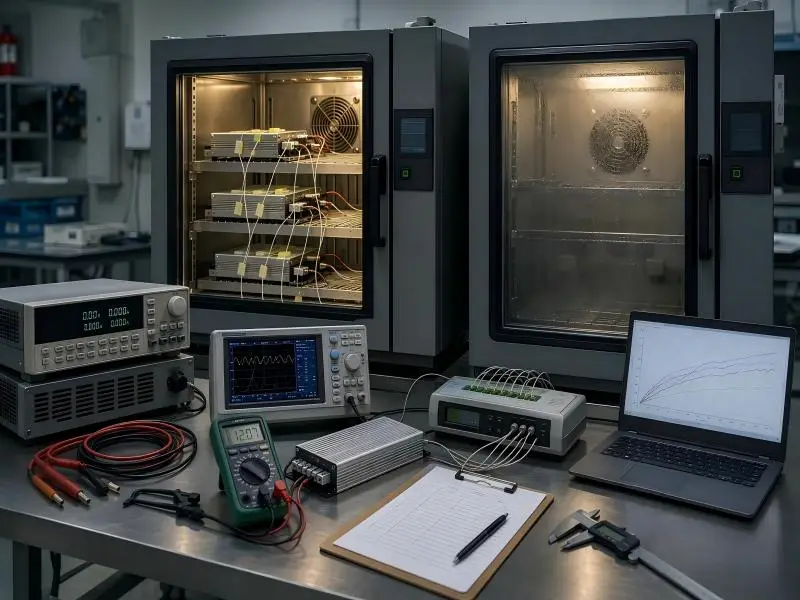
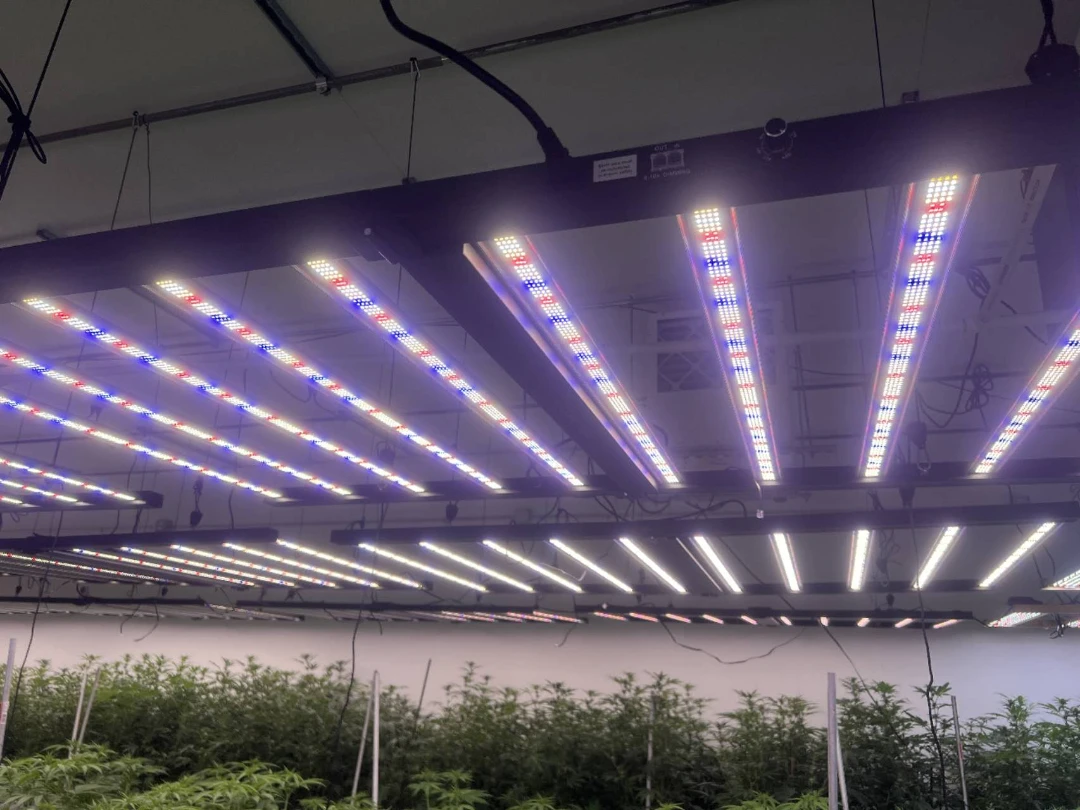
Indoor LED grow lights have made it possible to grow healthier plants year-round, even when your home, greenhouse corner, or indoor farm doesn’t get enough natural sunlight. The key is choosing the right type of fixture—panel, bar, or bulb—then matching its intensity and coverage to your plants and space. In this guide, you’ll learn how indoor LED grow lights work, how to compare the three main form factors, and how to set them up for strong, compact growth without wasting electricity.
Table of Contents
What Indoor LED Grow Lights Actually Do for Plants
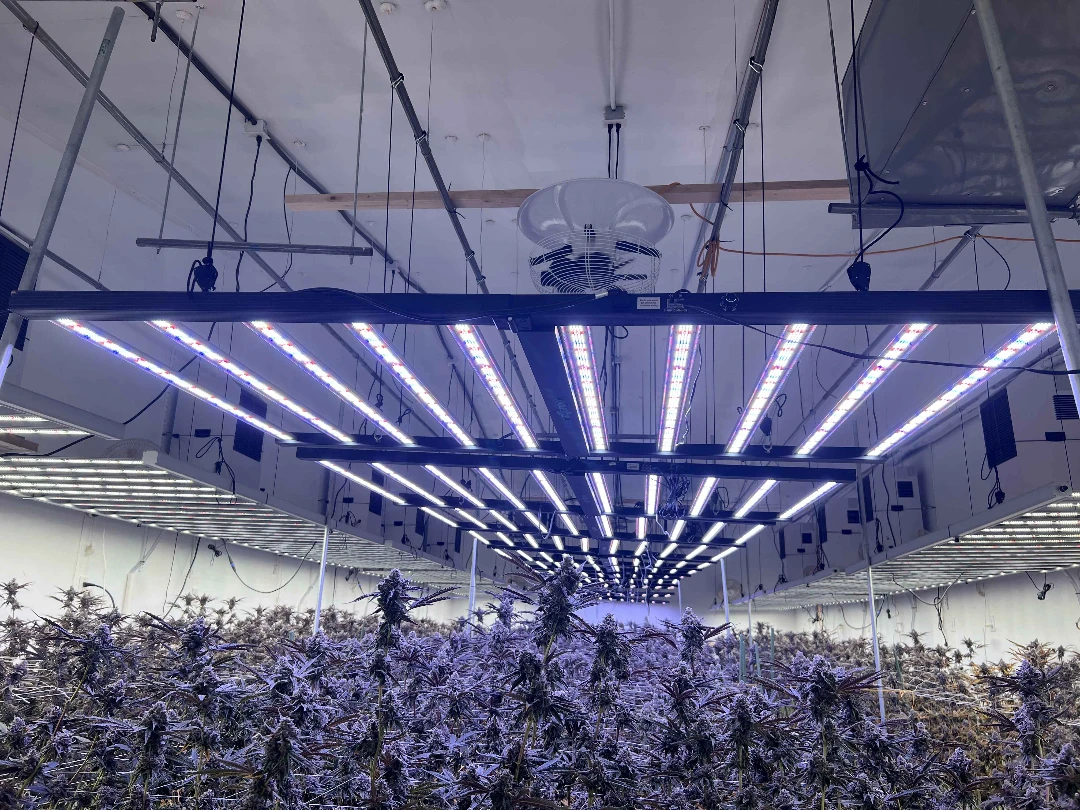
Plants don’t “see” light the way people do, and that’s why indoor LED grow lights are specified differently from household lamps. If you understand a few lighting basics, choosing between panels, bars, and bulbs becomes much easier. Once you can connect the numbers to real plant behavior, you’ll stop guessing and start dialing in consistent results.
PAR, PPFD, and DLI in plain English
When growers talk about effective indoor LED grow lights, they’re usually talking about photosynthetically active radiation (PAR) and how much of it reaches the canopy. Lux and lumens describe brightness to the human eye, but they don’t describe how much usable plant light is hitting your leaves. Iowa State University Extension explains why PPFD is a more accurate measurement for indoor plant lighting and defines PPFD as the amount of PAR reaching a surface, measured in µmol/m²/s. Yard and Garden
Daily Light Integral (DLI) is the daily light dose—how much photosynthetic light your plants receive over a 24-hour period. Think of PPFD as “light speed” and DLI as “distance traveled” in one day, combining intensity and time. Virginia Tech Extension describes DLI in simple terms and explains how it guides lighting schedules and plant selection. pubs.ext.vt.edu
If you want a standards-based definition of these quantities and units, the ANSI/ASABE S640 standard (“Quantities and Units of Electromagnetic Radiation for Plants”) is one of the most referenced documents in horticultural lighting. You can preview the standard here: ANSI/ASABE S640 preview PDF. ANSI Webstore
Spectrum: “Full spectrum” and what it really means
Most modern indoor LED grow lights use a white-light base (broad spectrum) and may add extra deep red or other wavelengths depending on the fixture’s goals. For most indoor growers, “full spectrum” means the fixture provides a broad PAR range that supports seedlings, vegetative growth, and flowering with one light. You don’t need a purple blur to grow great plants anymore, and white-spectrum LEDs also make it easier to spot nutrient issues, pests, and leaf color changes.
Spectrum still matters, but it matters most when you’re targeting specific outcomes like tighter internodes, leaf expansion, or flowering response. The best approach is to treat spectrum as the fine-tuning knob and treat PPFD/DLI and uniformity as the main engine of growth.
Intensity, uniformity, and the “canopy rule”
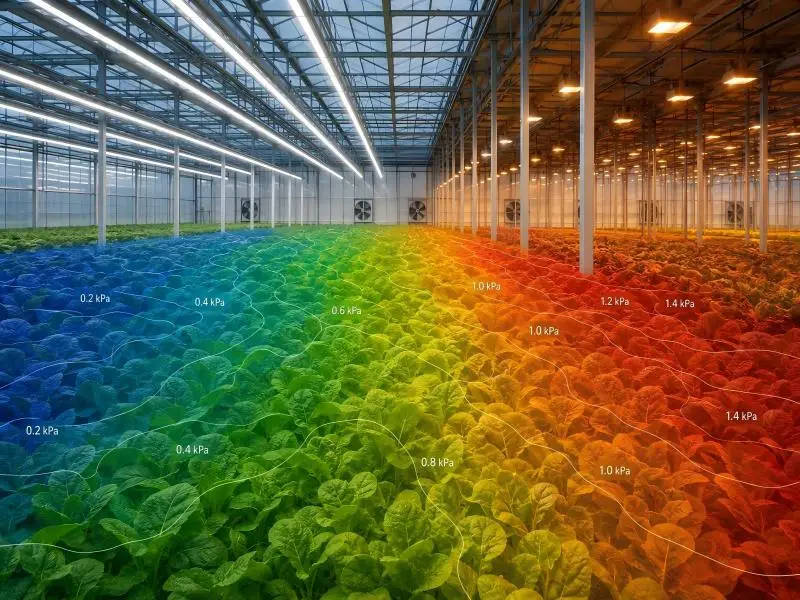
Plants respond to the light at the leaf surface, not the marketing claims on the box. Two indoor LED grow lights can have the same wattage and still grow differently if one delivers more PPFD to the canopy or distributes light more evenly. Uniformity is especially important indoors because you typically have limited height and reflective surfaces that can create hotspots.
A simple rule that holds up in practice is this: an even canopy under even light grows faster and more predictably. That’s why fixture shape—panel, bar, or bulb—often matters as much as raw power.
Panels vs Bars vs Bulbs: A Practical Comparison
It’s easy to get overwhelmed because each style of indoor LED grow lights can work well in the right context. The fastest way to choose is to start with your grow area, your mounting height, and whether you care more about wide even coverage or focused light in a small spot. Once you know those constraints, the best form factor often becomes obvious.
LED grow light panels: strong punch, compact footprint
Panels are the most common “serious grow” style for tents and indoor gardens. Many panel designs spread LEDs across a board (or multiple boards) to deliver strong PPFD with decent efficiency. Panels are popular because they’re simple to hang, easy to dim, and can deliver high intensity over a square footprint.
Panels are ideal when you want a single fixture to cover a defined area like 2×2, 3×3, or 4×4 feet. They also work well when your ceiling height is moderate and you can maintain a stable hanging distance through the grow cycle. If you’re buying one main light for a tent, indoor LED grow lights in a panel form are usually the easiest starting point.
LED grow light bars: best uniformity and flexibility
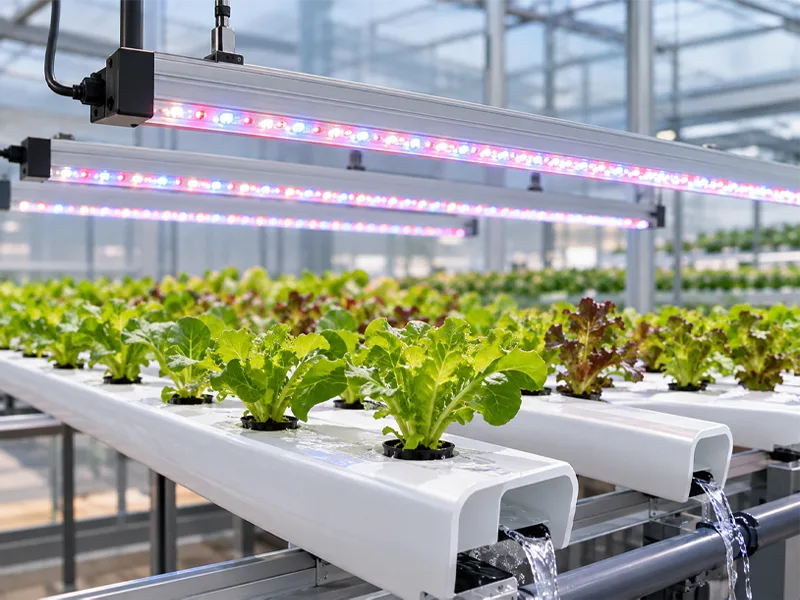
Bar fixtures use multiple linear light bars to spread photons evenly across the canopy. This makes bars excellent for uniform coverage, which is why they’re so common in professional indoor farms, large tents, and multi-light rooms. They also tend to have better edge-to-edge PPFD than many single panels, especially in wider footprints.
Bars shine in low-ceiling setups because the distributed layout reduces hotspots when the fixture must be close to the canopy. If you’ve ever struggled with “bright center, weak corners,” indoor LED grow lights in a bar layout can be a straightforward upgrade. They’re also easy to scale: you can add bars, expand coverage, or redesign the layout as your grow changes.
LED grow light bulbs: convenient for small plants and shelves
Bulbs (E26/E27 screw-in types and similar) are best for smaller spaces: shelves, propagation corners, seed-starting racks, and houseplant stations. They’re convenient and cheap to install, and you can aim them where you need light the most. The downside is that bulbs usually offer less uniformity and lower total PPFD compared to purpose-built panels or bars.
Bulbs are perfect when your goal is “better than a window” rather than “maximum yield.” They’re also useful as supplemental lighting to fill dark corners or boost one side of a plant that leans toward a window. If you need high intensity over a full canopy, bulbs are rarely the most efficient solution.
Which one should you choose first?
If you’re growing in a tent and want a single main fixture, start with a panel or a bar system sized to your footprint. If your priority is uniformity and professional-style coverage, bars usually win. If you’re lighting a shelf, a small propagation area, or decorative indoor plants, bulbs can be the simplest solution.
A helpful way to decide is to ask: “Do I need coverage (bars), punch in a square (panel), or targeted light for a small zone (bulb)?” Your honest answer will narrow the field quickly.
How to Choose Indoor LED Grow Lights for Your Space
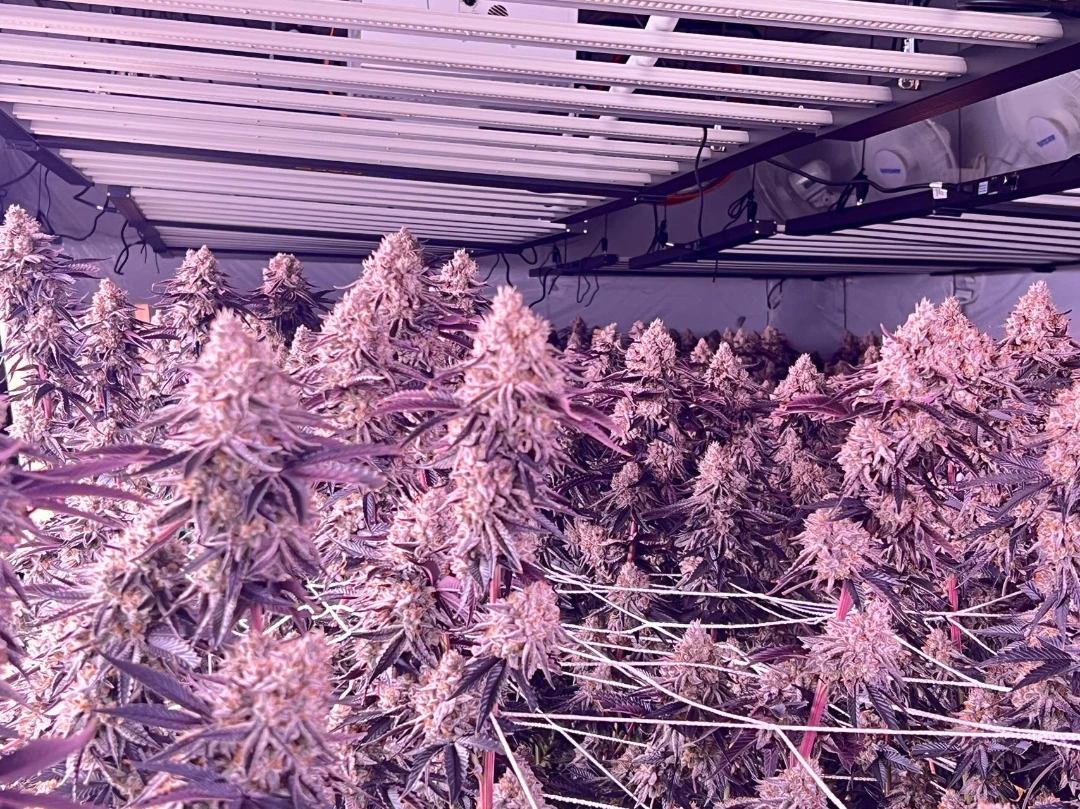
Choosing indoor LED grow lights is less about chasing the highest wattage and more about matching the fixture to your grow geometry. Your canopy size, your hanging height, your ventilation, and your plant stage all influence what “right” looks like. Once you map those variables, shopping gets easier and setup becomes repeatable.
Step 1: Measure your grow footprint and height
Start with the real usable canopy area: the space where leaves will actually sit, not the outer dimensions of the tent or shelf. Then measure the distance from where the light will mount to the top of your plants at peak height. Many indoor growers overestimate how much headroom they have, and that leads to lights being hung too close late in the grow.
If your height is limited, prioritize fixtures with better uniformity at short distances—this often points toward bars or larger, more distributed panels. If you have more vertical space, you can use tighter-beam fixtures and still maintain a safe hanging distance.
Step 2: Set a realistic PPFD/DLI target by growth stage
Seedlings and cuttings generally prefer gentler light than mature plants, and many indoor setups fail because the light is too intense too soon. As a broad indoor guideline, seedlings and clones often do well with lower PPFD, vegetative plants prefer moderate PPFD, and flowering/fruiting plants prefer higher PPFD when other factors (CO₂, nutrients, temperature) are also optimized. The “right” number depends on crop type, cultivar, and environment, so treat any chart as a starting point rather than a rule.
If you want crop-oriented guidance on daily light targets, Michigan State University’s floriculture resources provide DLI guidelines for producing plants at acceptable quality levels. Here is a useful reference: MSU Extension: DLI “requirements”. Ag & Natural Resources College
The reason DLI is so useful is that it connects light intensity to your timer settings. Once you know your approximate canopy PPFD and photoperiod, you can estimate daily dose and avoid extremes. Virginia Tech Extension provides practical DLI context and why it correlates with growth and yield. pubs.ext.vt.edu
Step 3: Match coverage style to canopy shape
If you’re growing a flat canopy (like in a tent with training), you’ll benefit from wide, even distribution. Bar fixtures are naturally good at this, and large distributed panels can also do well. If you’re growing a few tall plants with separated tops, you might prefer a fixture that concentrates more light into the center area.
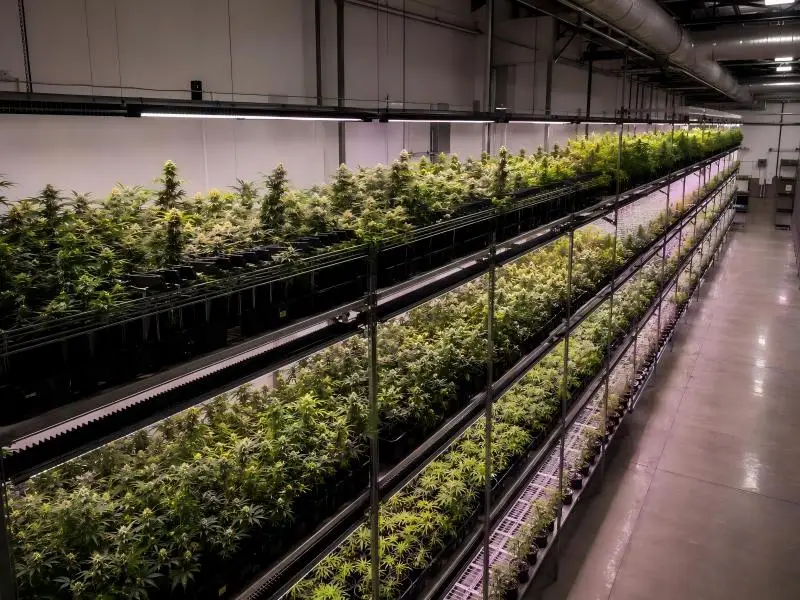
For shelves and vertical racks, linear bars are often the cleanest solution because you can place the light close without creating a single “hot spot.” For a single decorative plant, a bulb or small panel may be all you need.
Step 4: Don’t ignore dimming
Dimming turns one fixture into a flexible tool for multiple stages. It helps seedlings avoid stress, reduces wasted power when plants are small, and can help you adapt if your environment runs warm. Many growers buy a light that’s “barely enough” at full power, then have no flexibility and end up too close to the canopy to hit targets.
A dimmer also makes it easier to fine-tune indoor LED grow lights for mixed crops. When one shelf has seedlings and another has mature greens, dimming gives you control without constantly moving fixtures.
Understanding Specs Without Getting Tricked
Indoor LED grow lights are easy to market and hard to compare—unless you know what to look for. The goal is to focus on measurable performance (PPF, PPFD maps, efficacy) and reliability (drivers, thermal design, safety standards). When you learn these basics, you’ll avoid the most common buying mistakes.
True wattage vs “equivalent watts”
Some listings use “1000W” style labels that don’t reflect actual wall power. The number that matters for electricity cost is the real input power drawn from the wall, usually measured in watts. True performance is better measured by photon output (PPF) and how well that output is delivered to the canopy (PPFD distribution).
If two fixtures draw the same power, the one with higher efficacy and better distribution typically grows more with less waste. That’s why focusing only on a wattage label can lead to disappointment.
Efficacy: µmol/J is the performance language of growers
For horticultural fixtures, you’ll often see PPE (photosynthetic photon efficacy) expressed as µmol/J. This tells you how many usable photons you get per joule of energy, which is exactly what you want from indoor LED grow lights. Higher efficacy generally means lower operating cost for the same plant response, assuming the distribution is good.
If you want to see how professional programs set performance thresholds and reporting rules, the DesignLights Consortium (DLC) publishes horticultural lighting technical requirements and measurement resources. These pages are useful when you want third-party definitions and performance framing: DLC Horticultural Lighting Technical Requirements and DLC Measurement & Terminology PDF. DesignLights
Reliability: LM-80, TM-21, and what “50,000 hours” really means
LED lifetime claims can be meaningful, but only if the fixture is engineered to manage heat and uses quality components. In the lighting industry, LM-80 is a common method for measuring lumen maintenance of LED packages/modules over time, and TM-21 is a method for projecting long-term performance using LM-80 data. The ENERGY STAR TM-21 discussion document describes TM-21’s purpose and its relationship to LM-80 testing. ENERGY STAR
For growers, the practical takeaway is simple: a cooler-running, well-built fixture usually stays consistent longer. A good driver, good thermal design, and conservative operating temperatures often matter more than flashy marketing. If you’re comparing indoor LED grow lights for serious use, reliability is not an optional feature—it’s the difference between stable harvests and unpredictable declines.
Safety standards: why they matter in humid grow environments
Indoor grows often involve humidity, spray, and sometimes damp locations. That makes electrical safety and product testing more important than many hobbyists realize. UL publishes information on UL 8800, a safety standard designed specifically for horticultural lighting equipment and systems, and describes how it evaluates suitability for damp/wet environments and other conditions common in grow facilities. You can read more here: UL horticultural lighting testing and UL 8800. UL Solutions
Even if you’re not running a commercial facility, choosing indoor LED grow lights designed with appropriate safety considerations is smart. It reduces risk, protects your space, and usually correlates with better build quality overall.
Setup Tips: Getting the Best Results from Panels, Bars, and Bulbs
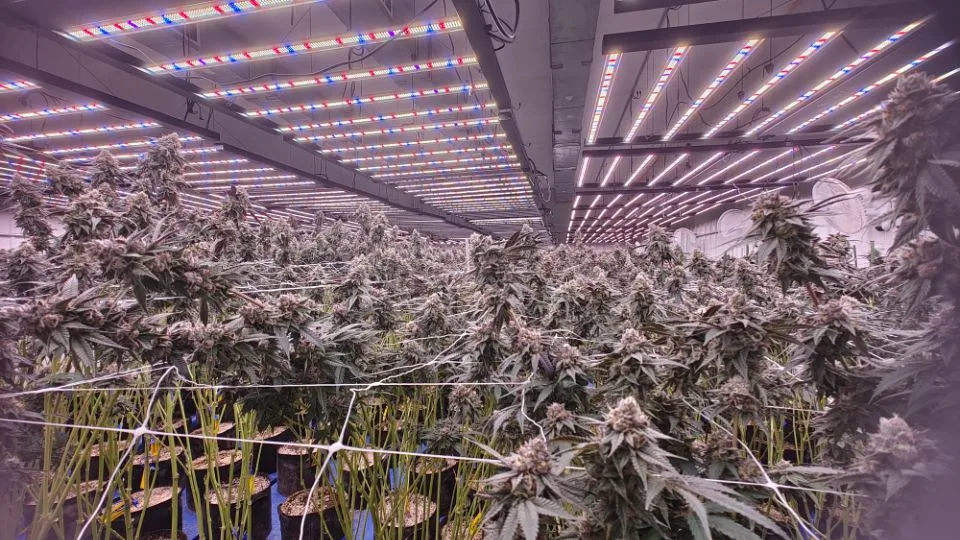
Great indoor LED grow lights can still underperform if setup is wrong. Most issues come down to distance, coverage, and timing. The good news is that small adjustments can create big improvements without buying anything new.
Hanging height: start higher, then dial in
A common mistake is hanging the light too close because the canopy looks “not bright enough.” Plants don’t need the light to look intense—they need the right PPFD at the leaves. Start higher than you think, watch plant response for several days, and then lower gradually or increase dimmer power.
If you see bleaching, crispy edges, tacoing leaves, or stalled growth, your PPFD may be too high for that stage or your environment may be too warm. If you see stretching, wide internode spacing, and slow growth, your PPFD may be too low or too uneven across the canopy.
Layout tips for panels
Panels often perform best when centered over the canopy and kept level. If your tent is larger than the panel’s intended footprint, you may get good growth in the center and weaker growth at the corners. In that case, either add supplemental lighting or consider a larger fixture or bar layout for better edge coverage.
Reflective walls can help, but they won’t fix a fundamentally mismatched footprint. Use reflectivity as a boost, not as a substitute for correct light size.
Layout tips for bars
Bar fixtures reward good spacing. If bars are adjustable, aim for even distribution across the canopy rather than clustering them in the center. In many indoor farms, bars are placed to reduce edge drop-off and to keep PPFD consistent across the full width of the bed or shelf.
Bars are also great for multi-tier racks because they run cool and distribute light over a short distance. If you’re building a propagation shelf, bar-style indoor LED grow lights often deliver the most uniform seedlings with the least fuss.
How to use bulbs without wasting energy
Bulbs work best when they’re close enough to deliver useful PPFD to the leaves. The farther away a bulb is, the more intensity drops, and the more uneven the coverage becomes. If you’re lighting a shelf, use multiple bulbs spaced evenly rather than one bulb blasting the center.
Bulbs are also ideal for “light supplementation” rather than primary high-intensity canopy lighting. If a plant is healthy but leaning, a bulb can correct the imbalance without redoing your whole setup.
Photoperiod: match the timer to the plant and your goals
Photoperiod is your easiest lever for controlling DLI. Longer light hours increase daily dose, but they also increase electricity cost and can stress sensitive plants if intensity is already high. For flowering plants that are photoperiod-sensitive, keep light schedules stable and avoid light leaks during dark periods.
For leafy greens and many houseplants, stable consistency matters more than chasing maximum intensity. Indoor LED grow lights are most effective when the environment is steady and predictable.
Matching Indoor LED Grow Lights to Different Plant Types
Not all crops want the same light strategy. A basil shelf, a seed-starting rack, and a fruiting grow tent have different priorities. When you match fixture type to crop behavior, you get healthier plants with fewer problems.
Leafy greens and herbs
Greens and herbs typically reward uniformity and consistency. They often do best under even PPFD rather than extreme peaks, especially when growing dense trays. Bar fixtures excel here because they distribute photons across the full tray, and panels can also work well if they’re sized correctly.
If you’re producing edible greens indoors, clean-spectrum white LEDs also help you evaluate leaf color and quality. That makes it easier to catch nutrient issues early and keep harvest quality consistent.
Fruiting crops and high-light plants
Fruiting crops and other high-light plants typically need higher daily light dose to reach their best potential. In these grows, indoor LED grow lights aren’t just about keeping plants alive—they’re about hitting a light target that supports yield and quality. That’s where properly sized panels or bar systems shine, especially when paired with good canopy management and environmental control.
If you aim for high intensity, remember that light interacts with temperature, CO₂ availability, and nutrition. Pushing light without supporting those factors can lead to stress rather than better results.
Houseplants and decorative indoor plants
Houseplants are often light-limited indoors, but they rarely need extreme intensity. Many people succeed simply by providing moderate, consistent supplemental light. Bulbs, small panels, and slim bars are common solutions because they’re easy to integrate into living spaces.
If you’re lighting houseplants, prioritize gentle distribution and stable schedules. The goal is compact, healthy growth and better leaf color, not maximum speed at all costs.
Energy Use, Heat, and Real Running Cost
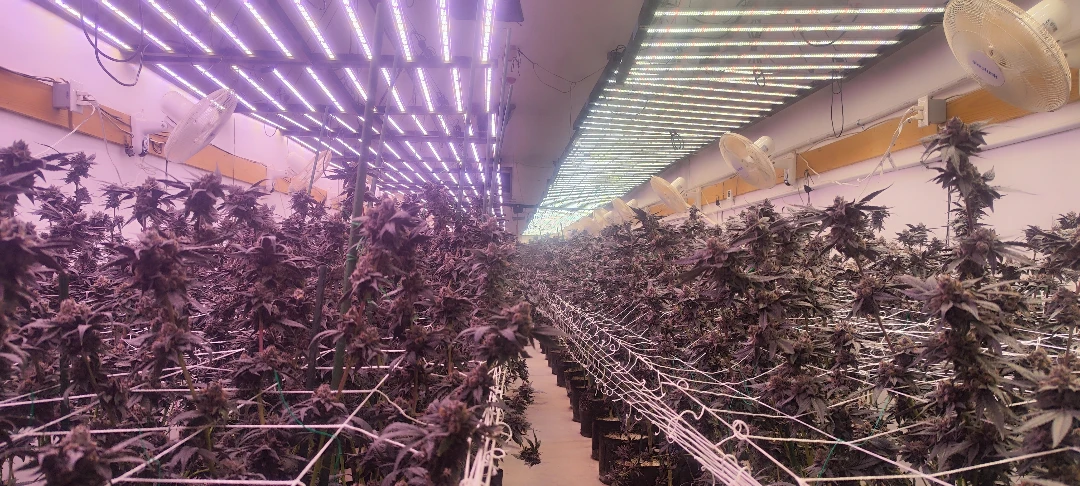
Buying indoor LED grow lights is a one-time cost, but operating them is ongoing. Understanding basic energy math helps you choose the right size and avoid paying for unnecessary wattage. It also helps you estimate how much lighting you can run before heat becomes a problem.
A simple electricity cost estimate
To estimate cost, multiply power (kW) × hours per day × cost per kWh × days per month. Even small differences in wattage add up over long photoperiods. If you’re running multiple shelves or a flowering room, a more efficient fixture can save meaningful money over time.
Efficiency matters even more when electricity rates are high. Choosing higher-efficacy indoor LED grow lights can reduce cost without reducing plant performance.
Heat and HVAC: LEDs are efficient, but not “cold”
LEDs produce less radiant heat toward plants than HID systems, but they still convert most input power into heat somewhere in the room. In a small tent, that heat can accumulate and raise leaf temperature, especially if ventilation is weak. If you’re close to the canopy, heat and light stress often show up together.
This is another area where bars can help, because distributed layouts reduce hot spots near the center. Dimming also helps you control both light dose and heat output in a straightforward way.
ROI thinking for growers
If your goal is consistent harvests, ROI comes from reliability, uniformity, and controllability—not just raw power. Stable performance reduces crop losses and avoids constant “fixing” mid-cycle. That’s why many experienced growers choose indoor LED grow lights that provide strong PPFD maps, dependable drivers, and predictable dimming behavior.
For hobby growers, ROI might mean healthier plants and fewer replacements. For commercial growers, ROI often means uniform product quality and lower labor spent troubleshooting.
Troubleshooting: When Indoor LED Grow Lights Don’t Perform as Expected
If your plants look “off,” don’t assume the light is wrong right away. Many symptoms can be caused by light intensity interacting with heat, watering, nutrients, or airflow. A systematic approach will help you fix the real cause faster.
Signs your light is too intense
Bleaching at the top leaves, tacoing, crispy edges, and stalled growth can all indicate excessive light intensity for that stage or environment. If your indoor LED grow lights are too close, hotspots can cause these symptoms even when average PPFD seems reasonable. Raising the fixture or dimming slightly often improves plants within days.
If you’re also running warm temperatures, plants may show stress earlier. Light stress and heat stress often look similar, so check ventilation and leaf temperature as well.
Signs your light is too weak or too uneven
Stretching, large internodes, weak stems, and slow growth often point to low PPFD or poor distribution. Uneven light can cause plants at the edges to stretch more while the center stays compact. If the canopy is uneven, consider training, moving plants, or switching to a fixture layout with better coverage.
Sometimes the “fix” is as simple as improving reflectivity or rearranging the footprint. Other times, it’s a sign that the fixture style isn’t matched to the grow area.
The canopy management connection
A flat canopy makes lighting easier and results more consistent. If you have tall tops and low bottoms, the top receives too much light while the bottom receives too little, and no fixture can perfectly fix that. Pruning, training, and spacing often improve results more than changing the light.
Indoor LED grow lights perform best when plants are arranged to receive light evenly. That’s why growers who train canopies often get better results with the same fixture.
A Buyer’s Checklist and Why Many Growers Choose SLTMAKS
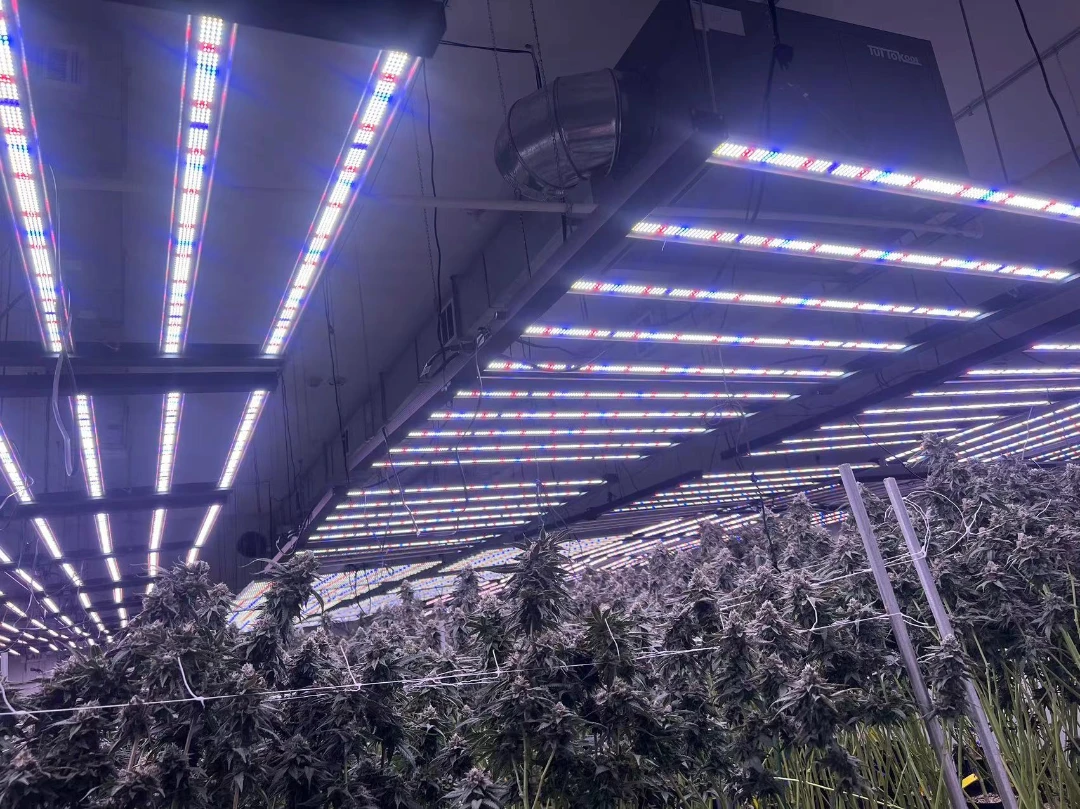
Shopping for indoor LED grow lights is easier when you evaluate performance, reliability, and usability together. Don’t buy based on a single number, and don’t assume the most expensive option is always best. Instead, focus on whether the fixture fits your footprint, can be controlled across stages, and is built for long-term stability.
Questions to ask before you buy
Ask for real power draw, intended coverage footprint, and a PPFD map at common hanging heights if available. Ask whether the fixture supports dimming and what driver is used, because the driver is one of the most important reliability components. Ask about warranty terms and how support works if something fails.
If a seller can’t explain performance in PPFD/PPF terms, they may not be designing specifically for plant growth. Indoor LED grow lights should be described in plant-light language, not only in household-light language.
What “quality” looks like in day-to-day use
Quality is stable output, predictable dimming, and consistent coverage across the canopy. It’s also safe operation in real grow conditions, including higher humidity and long run times. Standards and professional programs like ANSI/ASABE S640 (for quantities/units), DLC resources (for terminology and performance reporting), and UL horticultural lighting guidance (for safety considerations) help define what serious horticultural lighting should look like.
Why SLTMAKS indoor LED grow lights are built for indoor growers
At SLTMAKS, we design indoor LED grow lights to help growers get predictable results with less trial-and-error. That means emphasizing practical coverage layouts (panels and bars), reliable components, and straightforward control so one fixture can support multiple stages. Whether you’re lighting a tent, a rack, or a dedicated indoor room, the right fixture form factor—matched with correct hanging height and photoperiod—makes indoor growing simpler and more repeatable.
If you want help choosing between panels, bars, and bulbs for your exact footprint and crop, SLTMAKS can recommend a configuration based on your space, target intensity, and mounting height. The goal is not just to “light plants,” but to build a stable indoor lighting plan that grows healthier crops with consistent quality.