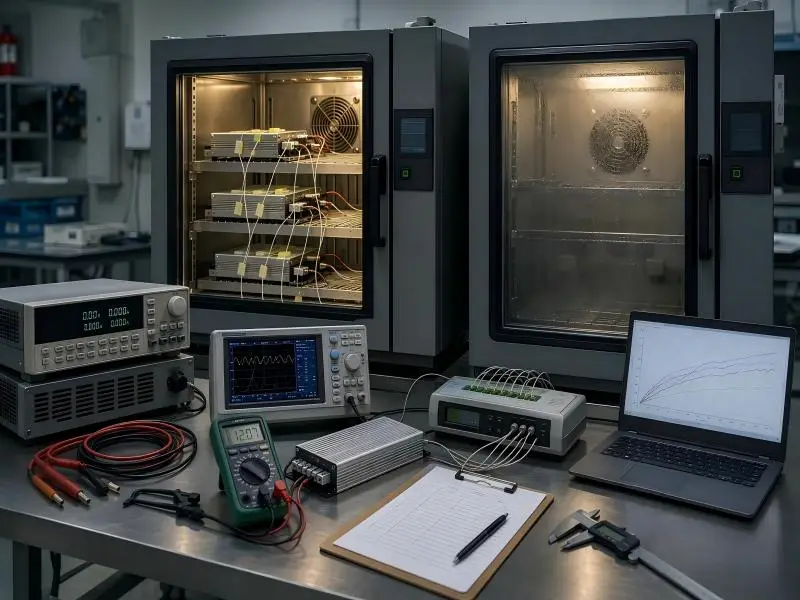

If you’re shopping for a 1000w full spectrum led grow light, you’re probably trying to solve one big problem: how to run one high-output fixture smoothly from seedlings all the way to harvest without guessing, burning plants, or wasting power. The good news is that a well-designed 1000W-class full spectrum LED can absolutely be a “one-fixture” solution—if you understand coverage, intensity, height, and how plants respond at each stage.
This guide is written for beginners and practical growers alike. You’ll learn how to evaluate a 1000W full spectrum fixture, how to set it up correctly, and how to adjust it through seedling → veg → flower/fruit with simple, repeatable steps.
Table of Contents
What “1000W Full Spectrum LED Grow Light” Really Means
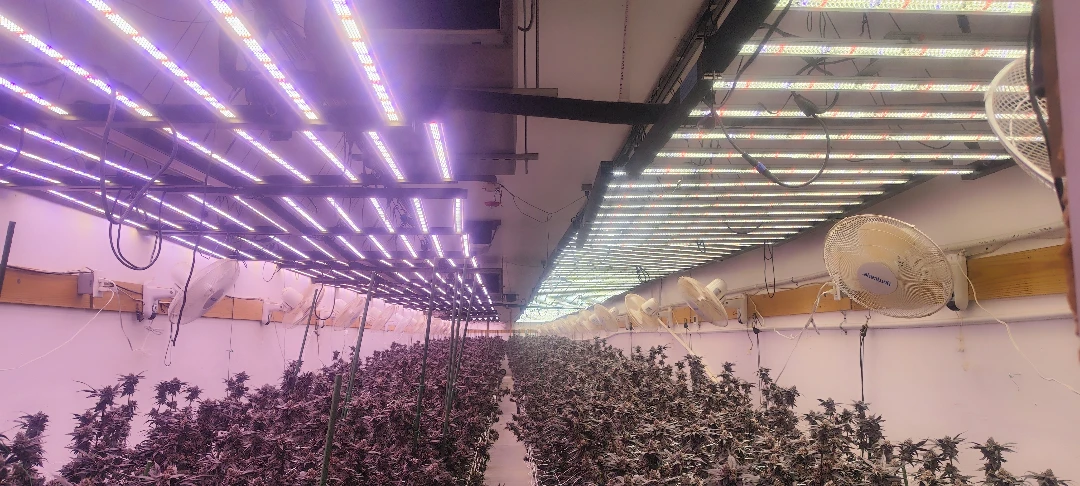
A “1000w full spectrum led grow light” label can mean different things depending on the brand and product category. Some fixtures truly draw around 1000 watts from the wall, while others use “1000W” as an “HPS-equivalent” marketing term. The difference matters because real watt draw impacts your electrical plan, heat load, and how much light you can actually deliver to the canopy.
For seed-to-harvest success, don’t anchor your decisions only on watts. Treat watts as the power budget, and evaluate the fixture based on how much usable plant light it produces and how evenly it delivers it.
True Power Draw vs “Equivalent Wattage”
A practical rule: if you want HID-like intensity across a serious canopy, a true 1000W-class LED fixture (high-output bar style or large board array) will typically draw hundreds of watts up to ~1000W depending on model and dimming. If a fixture claims “1000W” but only draws 100–200W, it may still work for small areas or seedlings, but it won’t replace a genuine high-intensity setup for fruiting crops.
When comparing fixtures, look for transparent specs like input power (W), PPF (µmol/s), efficacy/PPE (µmol/J), and a PPFD map. Programs like DLC emphasize standardized reporting around horticultural lighting performance and testing expectations, which can help you understand what “good data” looks like. designlights.org
The 3 Light Metrics You Actually Need: PPF, PPFD, and DLI
To use a 1000w full spectrum led grow light confidently, you need three simple concepts:
- PPF (Photosynthetic Photon Flux) = total plant-usable photons coming out of the fixture each second (µmol/s).
- PPFD (Photosynthetic Photon Flux Density) = photons landing on a surface area at the canopy (µmol/m²/s). This is what your leaves “feel.” designlights.org
- DLI (Daily Light Integral) = total photons received per day, which helps connect light intensity + hours into one practical target. Extensions like Virginia Tech and Michigan State explain DLI clearly for growers. pubs.ext.vt.edu
If you want a simple reference for terminology, the DLC measurement resources are a solid starting point: DLC Horticultural Lighting Resources: Measurement & Terms. designlights.org
Full Spectrum Explained in Plain English
Full spectrum is popular because it’s versatile. Instead of relying on only “blurple” red/blue LEDs, modern full spectrum fixtures typically use a broad white base plus targeted wavelengths to support different growth responses.
A useful baseline is the PAR range (often described as 400–700 nm) commonly referenced in horticultural lighting standards and resources. ANSI Webstore
Why Plants Like a Broad Spectrum
Plants don’t “see” like humans, but they respond strongly to light quality. A broad spectrum helps deliver balanced growth, consistent morphology, and better crop quality across many species.
In practice, a strong full spectrum LED often improves “ease of growing” because you don’t need to micromanage color channels just to get good results. You focus on intensity, distance, uniformity, and environment, which are the real drivers for most beginner success.
Do You Need UV or Far-Red?
Some fixtures add small amounts of UV (often UVA) or far-red. These can be beneficial in specific strategies, but they are not required to succeed from seed to harvest.
If you’re a beginner, prioritize:
- stable output,
- even PPFD map,
- dimming control,
- solid thermal design,
- reliable safety certification or testing documentation.
Everything else is “nice to have” after your fundamentals are right.
Choosing the Right 1000W Fixture for Your Grow Space
A 1000w full spectrum led grow light can be a powerhouse—or a waste—depending on how well it matches your canopy size and your ability to manage heat and airflow.
The goal isn’t “maximum PPFD everywhere.” The goal is target PPFD at the canopy with high uniformity, because plants hate hotspots and dark corners.
Coverage: Match the Fixture to the Canopy, Not the Room
For a true 1000W-class fixture, typical use cases include:
- medium-to-large tents,
- multi-shelf racks (with multiple fixtures),
- serious home grows,
- small commercial zones.
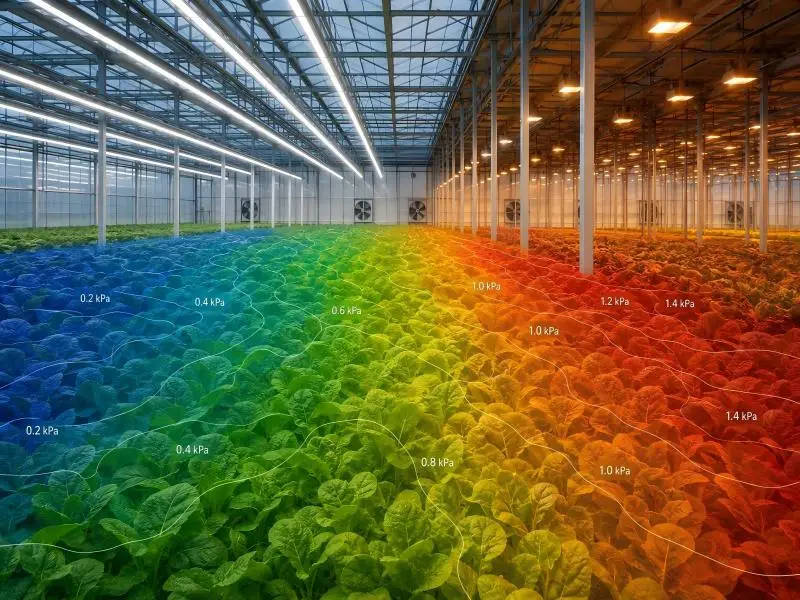
The most trustworthy spec is a PPFD map at a stated height over a stated footprint. If a brand doesn’t provide PPFD mapping, you’re forced to guess, and guessing is how beginners end up bleaching leaves or under-lighting flowers.
Bar Style vs Board Style (And Why Bars Often Win at 1000W)
At high power, bar fixtures often deliver better uniformity and canopy penetration because the light sources are spread across a larger area. That reduces the “laser hotspot” effect and makes height changes more forgiving.
Board fixtures can still perform well, but at 1000W-class intensity, thermal management and uniform coverage become more challenging unless the design is excellent.
Seedling and Clone Setup: Gentle Light That Builds Strong Roots
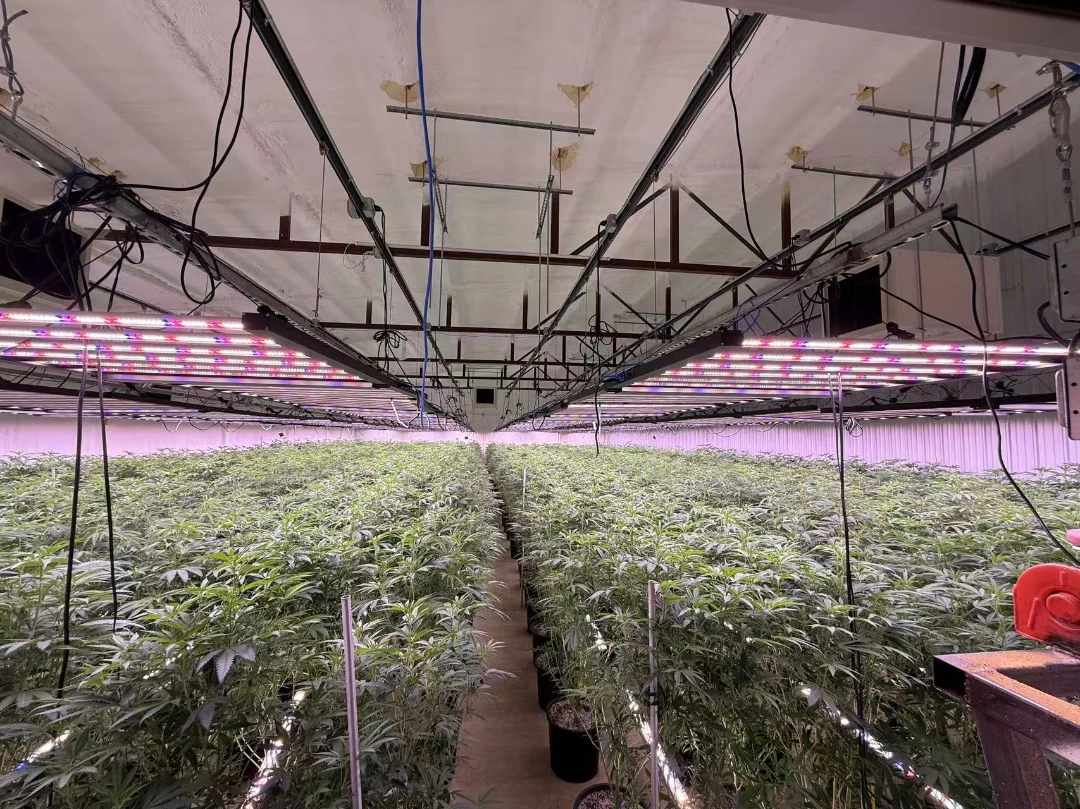
Using a 1000w full spectrum led grow light for seedlings is absolutely possible, but beginners often make one mistake: they run the light too strong too early. Seedlings need consistency and comfort, not intensity bravado.
Start with low PPFD, longer distance, and dimming. Think of seedlings as learning to “eat light” gradually.
Practical Seedling Targets (Simple Ranges)
Instead of obsessing over one perfect number, use safe ranges:
- Seedlings/clones: ~100–300 µmol/m²/s
- Early veg: ~300–500 µmol/m²/s
- Strong veg: ~500–700+ µmol/m²/s
- Flower/fruit: ~700–1000+ µmol/m²/s (often higher for advanced setups)
DLI is the “daily budget” version of PPFD. If you want a friendly explanation and how to calculate it, this Virginia Tech extension PDF is very usable: Calculating and Using Daily Light Integral (DLI). pubs.ext.vt.edu
Height and Dimming: Your Two Safety Knobs
For seedlings, use distance first, dimming second. A higher mounting height spreads light and reduces hotspots, while dimming reduces total intensity.
A beginner-friendly method is:
- Hang higher than you think you need.
- Dim down until seedlings show steady, calm growth.
- Increase slowly every few days rather than jumping.
You’ll know it’s too intense if leaves look washed out, curl upward aggressively, or growth stalls while the medium is fine.
Vegetative Growth: Build a Dense Canopy Without Stress
Vegetative growth is where a 1000w full spectrum led grow light starts to show its value. You can drive faster structure, tighter nodes, and stronger recovery after pruning—if you keep uniformity and airflow in check.
The biggest win is not “more watts.” It’s more usable photons delivered evenly across the canopy.
Uniformity Beats Peak PPFD
A plant under uneven light becomes uneven. Tops near the center race ahead while edges lag, which forces you into constant canopy correction.
A good 1000W fixture should make your grow feel calmer: fewer extreme hotspots, fewer “mystery problems,” and easier feeding/environment decisions because the light field is consistent.
DLI-Based Thinking Makes Veg Easier
If you keep veg PPFD moderate but run longer photoperiods, you can often hit a strong DLI without stressing plants. DLI is especially helpful when comparing “short intense days” vs “long moderate days,” and Purdue extension materials explain how DLI affects growth and quality in practical greenhouse terms: Measuring Daily Light Integral in a Greenhouse (Purdue Extension). Purdue University – Extension
Flowering and Fruiting: High Output Without Bleaching or Foxtailing
This is where people buy a 1000w full spectrum led grow light in the first place. Flowering and fruiting demand more photons, but the penalty for mistakes is bigger: bleached tops, stressed plants, reduced quality, and wasted electricity.
You want high PPFD, but you want it even, controlled, and supported by the environment.
Environment and Light Must Match
As you increase PPFD, plants transpire more and demand more CO₂ and proper VPD management. If your room is too hot, too dry, or poorly ventilated, extra light can become stress instead of yield.
The simplest beginner move is this: when you raise light intensity, also raise your attention to airflow and canopy temperature. A gentle breeze through the canopy and stable temperatures often solve more “light problems” than changing nutrients.
Distance Strategy for 1000W-Class Fixtures
At high power, small height changes can significantly affect PPFD. If you’re seeing bleaching at the top, don’t panic and change everything. Move in this order:
- Increase hanging height a bit.
- Reduce dimmer slightly.
- Improve airflow and lower canopy temperature.
- Re-check after 24–48 hours.
This approach avoids the “yo-yo” effect where you swing intensity wildly and never let plants settle.
Measuring Light Like a Pro Without Overcomplicating
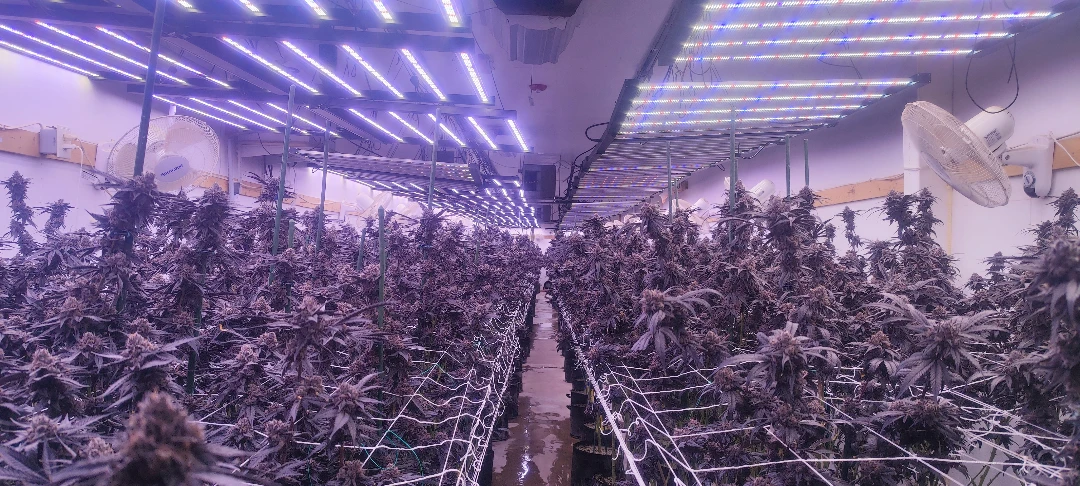
You don’t need a laboratory. You just need a repeatable method.
If you can measure PPFD, you can control the entire grow. If you can estimate DLI, you can plan stage targets with confidence.
Tools: PAR Meter, Borrowed Meter, or “Good Enough” Approach
A dedicated PAR meter is ideal, but not everyone wants to buy one right away. If you can borrow one even once, you can map your fixture at different heights and dimming levels, then reuse that setup data for future runs.
If you want an authority-backed explanation of measurement methods and why some tools are more accurate than others, extension resources discuss practical measurement choices and the tradeoffs. pubs.ext.vt.edu
Quick PPFD Mapping (Beginner Grid Method)
Use a simple grid:
- Mark a 3×3 or 4×4 grid on your canopy footprint.
- Measure PPFD at each point at canopy height.
- Adjust height/dimmer until the center is strong without the corners being too weak.
Your goal is a “flat field,” not a spotlight.
Electrical Safety and Compliance: Don’t Skip This With 1000W Lights
A true 1000W-class grow light is serious electrical equipment. That’s not scary—it just means you should treat it with respect.
When shopping, look for manufacturing practices and testing that align with horticultural environments. UL developed UL 8800 specifically for horticultural lighting equipment and systems, and UL describes it as a dedicated safety framework for this use case. UL Solutions
You can read UL’s overview here: UL – Horticultural Lighting Testing and Certification Services. UL Solutions
Wiring, Breakers, and Real-World Load Planning
A 1000W fixture can draw around 8–10 amps at 120V (and less at 240V), depending on driver efficiency and actual power. That means you must plan circuits properly, especially if you’re running multiple devices like dehumidifiers, fans, or heaters.
Use grounded outlets, avoid cheap extension cords, keep connections dry, and mount drivers and cables so they don’t sit in standing water or high-condensation zones.
Maintenance: Keep Your Output High for Years
LEDs are low maintenance, but “low maintenance” doesn’t mean “no maintenance.” Dust, humidity, and heat are performance killers over time.
A clean fixture runs cooler, lasts longer, and keeps its PPFD closer to spec.
Simple Cleaning Routine
Turn off power, let the fixture cool, and clean surfaces gently. If your grow is humid, inspect connectors and cable strain relief points periodically.
If you run CO₂ or foliar sprays, be extra careful about residue on lenses or diodes. Even a thin film can reduce output and create uneven light scatter.
Heat Management Is Longevity Management
LED lifetime is closely tied to operating temperature. Good fixtures are designed to move heat efficiently, but you still need adequate room airflow.
If the fixture is hot enough that you don’t want to touch the frame, your environment might be working against you. Improve exhaust, circulation, or mounting clearance.
Seed-to-Harvest Lighting Plans You Can Copy
Below are simple “starter recipes.” They’re not the only correct way, but they are safe, easy to follow, and work well with a dimmable 1000w full spectrum led grow light.
Leafy Greens and Herbs (Fast Cycles)
Start moderate and focus on uniformity. Greens often prefer “steady comfort” rather than extreme intensity.
- Seedling: ~150–250 PPFD, longer photoperiod
- Grow-out: ~250–450 PPFD, maintain even coverage
- Finish: adjust based on leaf thickness and temperature stability
If you track DLI, you can keep results consistent across seasons. Michigan State’s simple DLI explanation is a classic reference: Daily Light Integral Defined (MSU Extension). canr.msu.edu
Fruiting Crops (Tomatoes, Peppers, Strawberries)
These crops benefit from higher PPFD once established, but they also demand better environmental control.
- Early: moderate PPFD to build structure
- Mid: increase PPFD gradually as canopy fills
- Fruit: maintain high, even PPFD and stable canopy temperature
Your fixture’s PPFD map matters a lot here. Evenness makes feeding and irrigation more predictable.
Photoperiod Flowering Crops (General Approach)
If you’re growing any photoperiod flowering plant, your intensity strategy is usually:
- Build a strong canopy in veg with moderate-to-strong PPFD
- Transition to flower with careful increases
- Avoid pushing intensity so hard that tops bleach or stall
The key is gradual change. Plants respond best when you give them time to adapt.
Cost and ROI: Why a 1000W Full Spectrum LED Is a Serious Upgrade
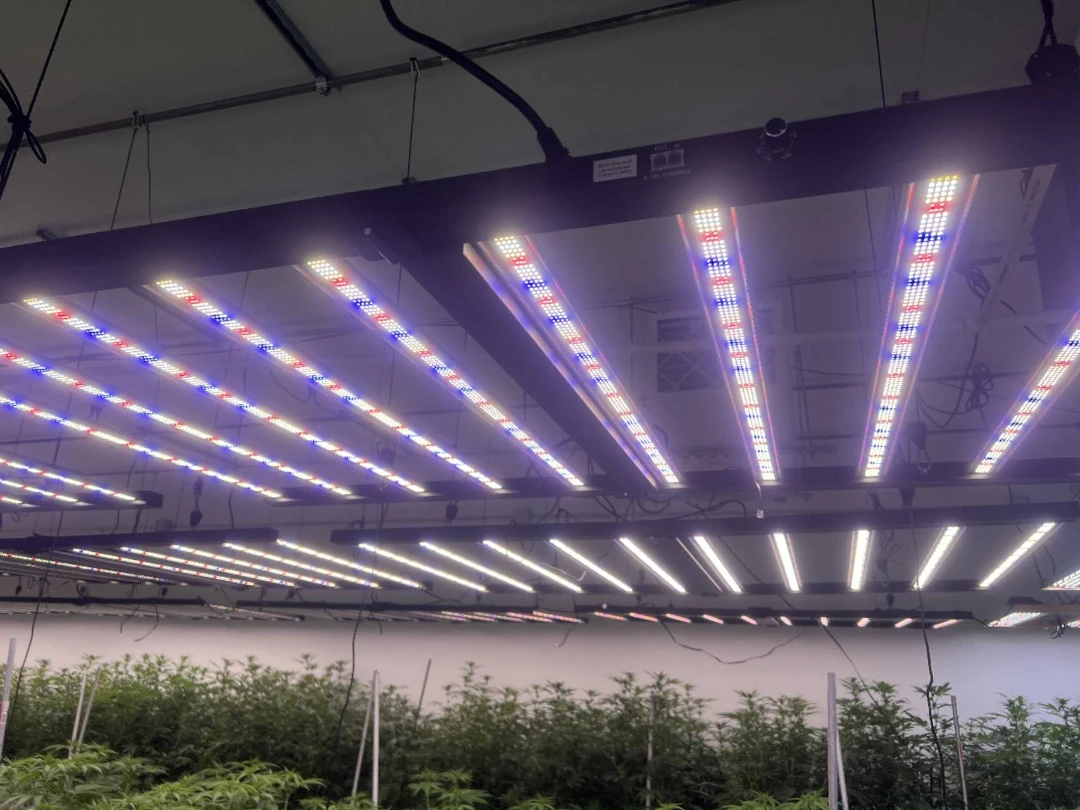
A true 1000W full spectrum LED fixture can replace high-intensity HID strategies for many growers, often with better controllability and less radiant heat on the canopy.
But ROI isn’t just “watts saved.” It’s also:
- fewer failed runs from light stress,
- more consistent quality,
- less time troubleshooting hotspots,
- better uniformity across the canopy.
Industry programs like DLC highlight performance thresholds and technical requirements that push fixtures toward higher efficacy and more transparent reporting. That makes it easier for growers to compare products using real metrics instead of vague claims. designlights.org
If you want to see how performance requirements are formalized, you can skim the DLC document here: DLC Horticultural Technical Requirements (PDF). designlights.org
Why Choose SLTMAKS for a 1000W Full Spectrum LED Grow Light
A 1000w full spectrum led grow light is only as good as its engineering and consistency. At SLTMAKS, we focus on what actually matters for seed-to-harvest growers: stable drivers, efficient thermal paths, uniform PPFD design, and real-world reliability.
You should expect a professional 1000W-class fixture to deliver:
- clear power and output specs,
- a PPFD map you can trust,
- dimming that’s smooth and repeatable,
- durable construction for humid grow environments,
- safety-first design choices aligned with horticultural lighting expectations. UL Solutions
If you want a fixture that’s easy to run (not just impressive on paper), SLTMAKS can help you select the right 1000W full spectrum configuration for your canopy size, mounting height, and target crops. You’ll spend less time guessing—and more time growing.
Closing: Your “No-Guess” Checklist Before You Turn It On
Before your first run with a 1000w full spectrum led grow light, do these simple steps:
- Confirm canopy footprint and mounting height.
- Start seedlings higher + dimmed.
- Increase intensity slowly, guided by plant response and (if possible) PPFD readings.
- Keep airflow strong and temperatures stable as you raise light levels.
- Track DLI if you want consistent results across seasons and grow spaces. pubs.ext.vt.edu
When your light plan is stable, everything else gets easier—watering, feeding, training, and diagnosing issues. That’s the real value of a well-built, properly used 1000W full spectrum LED fixture.