
For decades, the indoor horticulture industry was dominated by a singular pursuit: intensity. However, as our understanding of plant photobiology has evolved, so too has the technology we use to cultivate crops. We have moved past the era of energy-inefficient High-Pressure Sodium (HPS) bulbs and the early, ineffective “blurple” LEDs. Today, the gold standard for indoor cultivation is the led full spectrum grow light.
As someone who has spent years in the research and development labs of the LED industry, and later on the production floor overseeing the manufacturing of thousands of units, I have witnessed this technological revolution firsthand. I have seen how the right spectrum can not only increase yield but also elevate the terpene profile, density, and overall health of a plant. The shift toward full spectrum lighting isn’t just a trend; it is a scientific alignment with how plants have evolved to photosynthesize under the sun for millions of years.
At SLTMAKS, we understand that purchasing a grow light is an investment in your harvest. Whether you are a commercial facility manager maximizing square footage or a home grower looking for the highest quality tomatoes or medicinal herbs, understanding the physics and biology behind your lighting source is crucial. This comprehensive guide will dissect exactly what a led full spectrum grow light is, why “balanced” spectrums are superior, and how to interpret the technical data that often confuses buyers.
Table of Contents
The Evolution of Artificial Sunlight: Defining Full Spectrum
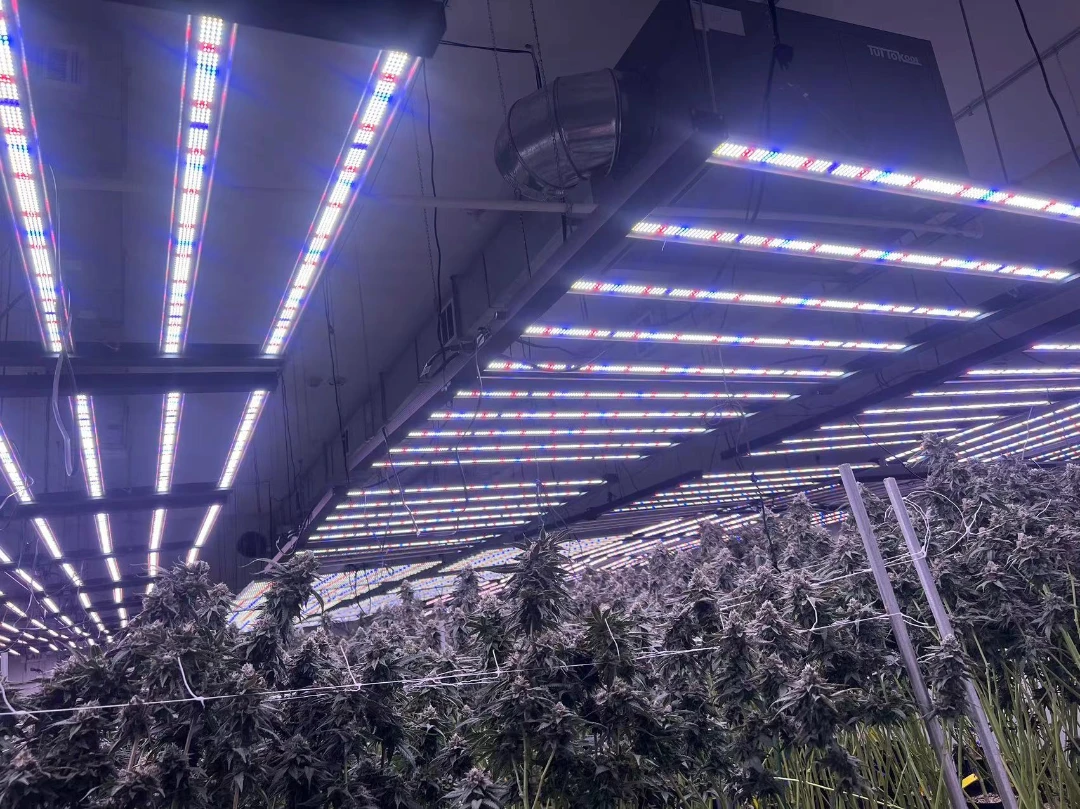
To truly appreciate the modern led full spectrum grow light, we must first define what “full spectrum” actually means in the context of horticulture. In the early days of LED technology, manufacturers focused heavily on two specific wavelengths: Blue (around 450nm) and Red (around 660nm). This resulted in the infamous pink or purple glow known as “blurple.”
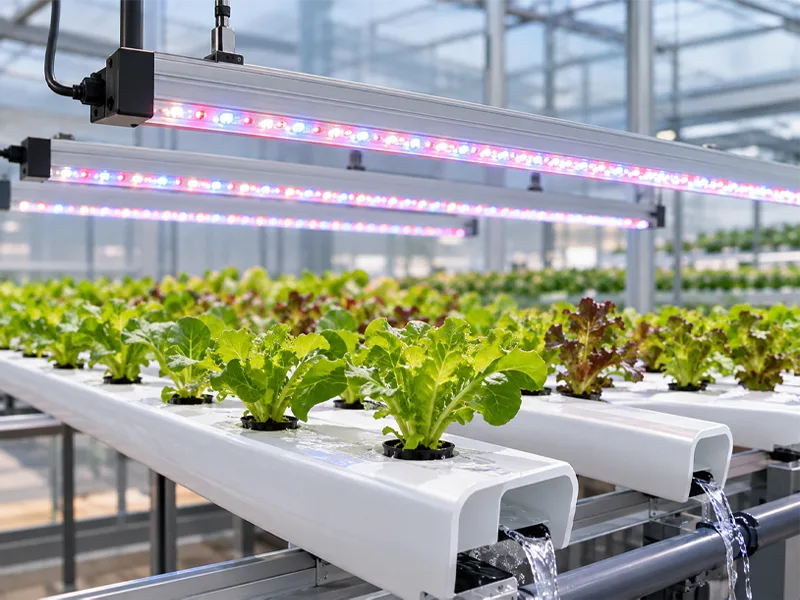
The logic was sound in theory but flawed in practice. While chlorophyll a and b peak in absorption at these wavelengths, plants utilize a much wider range of light for various physiological processes. A “full spectrum” light seeks to mimic the natural solar spectrum of the sun. It appears white to the human eye, typically ranging from a warm 3000K to a cool 5000K, but it contains a rich diversity of wavelengths including blue, green, yellow, red, and often far-red and UV.
The Problem with “Blurple” Lights
Early red/blue LEDs were efficient at driving basic photosynthesis, but they lacked the complexity required for healthy plant morphology. Plants grown exclusively under narrow-band red and blue light often suffer from issues like leaf curling, impossible visual inspection (you cannot spot nutrient deficiencies or pests under purple light), and poor canopy penetration.
A modern led full spectrum grow light solves these issues by filling in the “green gap.” Research from institutions like Utah State University’s Crop Physiology Laboratory has shown that while green light is absorbed less efficiently by chlorophyll, it penetrates deeper into the leaf structure and the plant canopy than red or blue light, driving photosynthesis in areas that would otherwise be shaded.
Color Rendering Index (CRI) and Grower Experience
Beyond plant health, full spectrum lights offer a high Color Rendering Index (CRI). Natural sunlight has a CRI of 100. Old HPS lights had a CRI of around 24, making everything look yellow/orange. Modern full spectrum LEDs often boast a CRI of 80 to 95.
Why does this matter? Because a grower needs to see their plants. Early detection of spider mites, powdery mildew, or nitrogen deficiency is impossible if your light source distorts the color of the leaves. A high-quality led full spectrum grow light allows you to work in your grow room comfortably, assessing plant health accurately without needing to turn off the grow lights and use a flashlight.
The Science of Spectrum: How Wavelengths Affect Growth Stages
When we engineer lights at SLTMAKS, we don’t just throw diodes onto a board; we carefully calculate the ratio of wavelengths. A truly balanced led full spectrum grow light caters to the plant’s needs from seedling to harvest. To understand this, we need to break down the visible and non-visible spectrum and its impact on plant physiology.
Blue Light (400nm – 500nm): The Foundation of Structure
Blue light is critical during the vegetative stage. It regulates stomatal opening (allowing the plant to breathe) and suppresses stem elongation. Plants grown with sufficient blue light result in compact, stocky structures with thick stems and short internodal spacing. This is vital for indoor growers where vertical space is often limited.
- Photoreceptor: Cryptochromes.
- Effect: Prevents stretching, encourages chlorophyll production.
If a led full spectrum grow light lacks sufficient blue energy, plants will think they are in the shade and stretch desperately to find light, resulting in weak, spindly growth that cannot support heavy fruit or flowers later on.
Green Light (500nm – 600nm): The Penetrator
For years, green light was considered “waste” light because plants reflect green (which is why they look green to us). However, this is a massive oversimplification. Green light is essential for overall canopy photosynthesis.
Because red and blue photons are absorbed so aggressively by the top layer of leaves, they often don’t reach the lower branches. Green photons, being less readily absorbed, bounce around inside the leaf tissue and pass through to lower leaves. A balanced led full spectrum grow light incorporates green wavelengths (usually via phosphor-converted white diodes) to ensure the entire plant, not just the top cola, contributes to biomass production.
Red Light (600nm – 700nm): The Biomass Driver
Red light is the most efficient wavelength for driving photosynthesis. It is heavily utilized during the flowering and fruiting stages. The interaction between red light and phytochrome receptors triggers the hormonal changes required to switch from vegetative growth to reproductive growth (flowering).
- Photoreceptor: Phytochromes (Pr).
- Effect: Stimulates flowering, fruit development, and massive stem elongation (if not balanced with blue).
Far-Red (700nm – 750nm) and UV (300nm – 400nm)
While technically outside the PAR (Photosynthetically Active Radiation) range of 400-700nm, these wavelengths are the “secret sauce” in high-end fixtures.
- Emerson Effect: Studies indicate that when Red (660nm) and Far-Red (730nm) are applied together, the rate of photosynthesis is higher than the sum of the two applied separately.
- UV Light: In small amounts, UV stresses the plant slightly, causing it to produce more trichomes, essential oils, and flavonoids as a “sunscreen” protection mechanism. This improves the potency and flavor of the crop.
Data Analysis: LED Full Spectrum vs. Legacy Lighting

To demonstrate why a led full spectrum grow light is the superior choice for modern cultivation, we must look at the data. Below is a comparison between a standard 1000W Double-Ended HPS fixture and a modern 650W LED Full Spectrum fixture—the two most common competitors in commercial setups.
Comparative Performance Table
| Feature | 1000W DE HPS (Legacy) | 650W LED Full Spectrum (Modern) | Impact on Grower |
| Power Draw | ~1050 Watts (w/ ballast) | ~650 Watts | 38% Energy Savings on lighting alone. |
| Spectrum | Heavy Red/Yellow (2000K) | Balanced (Blue, Green, Red, IR) | Better morphology and chemical profile with LED. |
| Efficacy (PPE) | 1.7 – 1.9 μmol/J | 2.7 – 3.0 μmol/J | LED produces significantly more light per watt of electricity. |
| Heat Output | Very High (>3000 BTU) | Low to Moderate | Reduces HVAC/Air Conditioning costs significantly. |
| Lifespan | 10,000 – 15,000 Hours | >50,000 Hours | No bulb changes required for 5+ years with LED. |
| Dimming | Limited | 0-100% Precise Control | Perfect spectrum management from seedling to bloom. |
The Efficiency Equation
The most critical metric in this table is Efficacy, measured in micromoles per joule (μmol/J). This tells you how many photons of light are produced for every watt of electricity consumed.
A 1000W HPS might produce a lot of light, but it wastes a tremendous amount of energy as infrared heat. A premium led full spectrum grow light runs much cooler, directing that energy into photon production. According to the DesignLights Consortium (DLC), shifting to high-efficiency LEDs can reduce lighting energy consumption by 40% to 50% in controlled environment agriculture.
Decoding the Metrics: PAR, PPFD, and DLI
When you browse sltmaks.com or any other retailer, you will be bombarded with acronyms. Understanding these is the key to not getting ripped off. A “1000W Equivalent” label on a cheap box means nothing; the physics metrics mean everything.
PAR (Photosynthetically Active Radiation)
PAR is not a measurement of amount; it is a description of the type of light (400-700nm) that plants use. When a company says they have “High PAR,” it is grammatically incorrect. They usually mean they have high PPF.
PPF (Photosynthetic Photon Flux)
Measured in μmol/s (micromoles per second), PPF tells you the total amount of PAR light emitted by the fixture in one second. It does not tell you where that light goes.
- Entry Level Light: 200-500 μmol/s
- Commercial Grade Light: 1600-2000+ μmol/s
PPFD (Photosynthetic Photon Flux Density) – The Most Important Metric
PPFD is measured in μmol/m²/s. This measures how many photons actually hit a specific spot on your plant canopy each second. This is what matters.
A led full spectrum grow light might have a high total output (PPF), but if the lenses are bad or the diodes are clustered too tightly, you will have a “hot spot” in the middle that burns plants, while the corners of your tent are dark.
Ideal PPFD Ranges by Stage (assuming no CO2 supplementation):
- Seedling/Clone: 100 – 300 μmol/m²/s
- Vegetative: 300 – 600 μmol/m²/s
- Flowering: 600 – 1000 μmol/m²/s
Uniformity is King
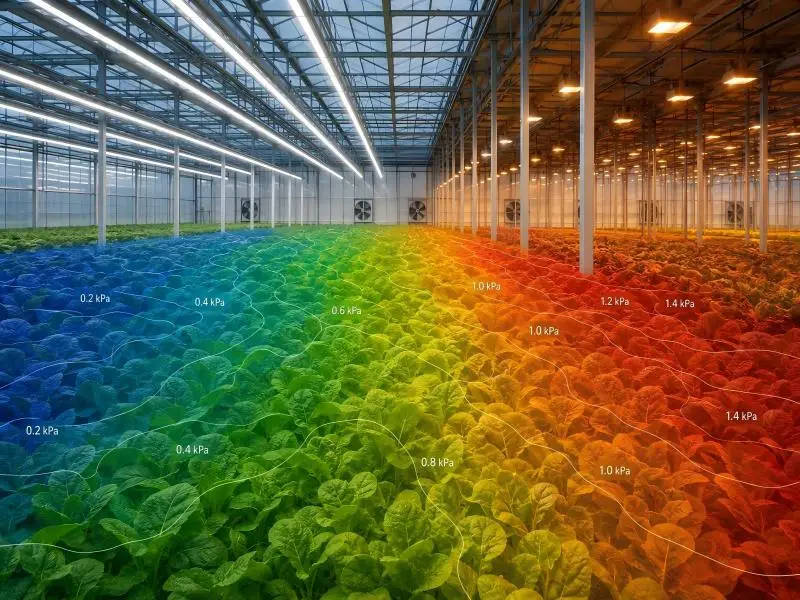
At SLTMAKS, we emphasize “Uniformity.” A good light spreads energy evenly. If you look at our PPFD maps, you will see that the difference between the center reading and the corner reading is minimized. This ensures that the plant in the corner yields just as much as the plant in the center.
Why “Balanced” Spectrum is the Best Approach for General Growers

There is a debate in the industry: Should you use “tunable” spectrums where you manually adjust red and blue channels, or a fixed “balanced” full spectrum?
For 95% of growers, a fixed, high-quality balanced led full spectrum grow light is the superior choice. Here is why:
- Complexity Management: Tunable spectrums introduce variables. If a grower accidentally leaves the light on “Veg Mode” (Blue dominant) during the flowering stage, the yield will crash. A balanced spectrum covers all bases effectively.
- The Sun Doesn’t Change (Much): While the angle of the sun changes, the actual spectral composition of sunlight remains relatively consistent for photosynthesis. Plants are adapted to receive a mix.
- Cost Effectiveness: Manufacturing a fixture with three separate driver channels for spectral tuning increases cost and potential failure points. A single, well-engineered balanced spectrum offers the best reliability.
A balanced spectrum typically consists of a baseline of 3000K or 3500K white diodes (providing the red/green/blue foundation) augmented with 660nm Deep Red diodes to boost flowering efficiency. This “Set it and Forget it” approach allows the grower to focus on nutrients, watering, and environment rather than fiddling with light channels.
Heat Management: The Silent Killer of Yield
One of the primary reasons growers switch to a led full spectrum grow light is heat. However, it is a myth that LEDs produce no heat. Thermodynamics dictates that any electrical device will produce heat. The difference lies in how that heat is managed.
Passive vs. Active Cooling
- Active Cooling: Uses fans inside the light. These are prone to failure. In a humid grow room, dust and moisture clog fans, leading to overheating and diode failure.
- Passive Cooling: Uses thick aluminum heat sinks. This is the standard for professional fixtures like those at SLTMAKS.
A well-designed aluminum heat sink dissipates heat upwards, away from the canopy. This allows you to place the light closer to the plants without causing heat stress or terpene degradation. Maintaining a leaf surface temperature (LST) of around 75°F-78°F (24°C-26°C) is ideal for LED growing, which is slightly warmer than HPS growing because LEDs do not emit infrared heat that directly warms the leaf surface.
Installation Guide: Optimizing Your LED Full Spectrum Grow Light
Buying the best light is only half the battle; installing it correctly is the other half. Because LEDs are so intense, “light burn” (bleaching of leaves due to photon overload) is a common mistake for new users.
Hanging Heights and Dimming Strategy
The goal is to maintain the correct PPFD without stressing the plant. Use the following guide as a baseline, but always watch your plants for signs of stress (leaves praying too hard or curling up).
Stage 1: Seedling / Clones
- Height: 24-30 inches above canopy.
- Dimmer: 25% – 40% intensity.
- Goal: Gentle light to encourage root development without drying out the medium.
Stage 2: Early Vegetation
- Height: 18-24 inches above canopy.
- Dimmer: 50% – 75% intensity.
- Goal: Rapid leaf expansion and stem thickening.
Stage 3: Late Vegetation / Pre-Flower
- Height: 12-18 inches above canopy.
- Dimmer: 80% – 100% intensity.
- Goal: Acclimatizing the plant to high light intensity before the bloom stretch.
Stage 4: Flowering
- Height: 6-12 inches (depending on fixture heat).
- Dimmer: 100% intensity.
- Goal: Maximum photon saturation for bud density.
Note: Always verify heights with the specific manufacturer’s manual, as lens angles (90° vs 120°) significantly affect the safe hanging distance.
The Economic Case: ROI of LED Technology

Let’s address the elephant in the room: Price. A high-quality led full spectrum grow light costs more upfront than an HPS setup. However, in the world of business and manufacturing—and indeed in your grow room—we look at Total Cost of Ownership (TCO).
Electricity Savings
A 650W LED replaces a 1000W HPS. That is a 350W saving per hour.
- 12 hours a day (Flowering cycle) = 4.2 kWh saved per day.
- At an average energy cost of $0.15/kWh, that is $0.63 saved per day per light.
- Over a typical 8-week flower cycle, that is roughly $35 savings per cycle.
HVAC Savings
This is where the real money is. For every watt of HPS lighting, you generally need roughly 3.4 BTUs of cooling power. Reducing the heat load by 35-40% means your air conditioner works less, wears out slower, and uses less electricity. For large commercial facilities, this capital expenditure reduction on HVAC sizing often pays for the LEDs immediately.
Bulb Replacement
HPS bulbs degrade rapidly. By 9 months of use, they have often lost 10-15% of their output and spectrum stability. They need replacing annually. A quality LED runs for 50,000+ hours (5-7 years of continuous use) with less than 10% degradation. The cost of buying 5-7 HPS bulbs over that period adds up significantly.
Common Misconceptions About LED Grow Lights
As an editor who interacts with customers daily, I hear many myths. Let’s bust a few regarding the led full spectrum grow light.
Myth 1: “Lumens are important for plants.”
False. Lumens are a measure of how bright a light looks to the human eye. Our eyes are very sensitive to green/yellow light but terrible at seeing red and blue. A light could have massive lumen output (very bright yellow) but very low PAR (plant food). Never buy a grow light based on lumens.
Myth 2: “More watts = Better.”
Not always. Efficiency matters. A 400W light with older diodes might produce less usable light than a 300W light with the latest Samsung or Osram diodes. Always look at the total PPF (μmol/s) output, not just the wall wattage. Furthermore, there is a biological limit to how much light a plant can take. Exceeding 1000-1200 PPFD without adding supplemental CO2 is a waste of electricity and can actually hurt yield.
Myth 3: “All White LEDs are the same.”
False. The “binning” of diodes matters. Top-tier manufacturers buy “top bin” diodes which are the brightest and most efficient of the production batch. Cheap “generic” LED lights often use lower bin diodes that produce more heat and less light, even if they look the same visually.
Future Trends in Horticultural Lighting
The industry is moving fast. At SLTMAKS, we are constantly monitoring the horizon. The future of the led full spectrum grow light lies in intelligence and integration.
Smart Controls and IoT
We are seeing a move toward wireless control where lights are integrated into a central building management system. Sensors measure the natural sunlight coming into a greenhouse, and the LEDs automatically dim or brighten to maintain a perfect DLI (Daily Light Integral) for the crop. This “Daylight Harvesting” maximizes energy savings.
UV Integration
While UV degrades plastic lenses and shortens diode life, the benefits for secondary metabolite production (flavonoids, terpenes, THC/CBD) are undeniable. We expect to see more robust, separate UV bars that can be toggled on specifically for the last 2 weeks of flowering, rather than being always-on in the main fixture.
Making the Right Choice for Your Garden
Selecting the right lighting is the single most critical decision you will make for your indoor garden. The soil feeds the plant, but the light powers the plant. The move to a led full spectrum grow light represents a commitment to quality, efficiency, and sustainability.
By providing a balanced spectrum that mimics the sun, you are allowing your plants to express their full genetic potential. You get tighter internodes, larger flowers, better chemical profiles, and a more pleasant working environment.
At www.sltmaks.com, we pride ourselves on transparency. We don’t just sell lights; we sell the science of growth. We test our products rigorously, ensuring that the PPFD maps we publish are the reality you will see in your tent or facility. Whether you are upgrading from HPS or starting your first grow, remember that light is food for your plants—don’t starve them.
Ready to upgrade your cultivation game?
Browse our catalog of high-efficiency, commercial-grade LED full spectrum grow lights today and see the difference that balanced science can make in your harvest.
Disclaimer: The information provided in this article is based on current horticultural science and industry standards. Always consult with a professional electrician when installing high-wattage equipment.