
For decades, the indoor horticulture industry was defined by a cumbersome rhythm: switching bulbs. Every grower, whether managing a commercial facility or a dedicated basement setup, knew the drill. You started with Metal Halide (MH) bulbs to provide the cool, blue-heavy spectrum needed for tight vegetative growth. Then, as the photoperiod shifted, you climbed up ladders or reached into tents to swap those out for High-Pressure Sodium (HPS) bulbs, bathing the canopy in the intense orange-red glow required for flowering. It was labor-intensive, risky for the equipment, and stressful for the plants.
Today, that narrative has changed fundamentally. As someone who has spent years in the R&D labs and on the production floor at SLT MAKS, I have witnessed the LED revolution evolve from the early days of inefficient “blurple” lights to today’s cutting-edge technology. The modern standard is the full spectrum grow LED light. This technology promises a “sun-like” quality that supports a plant through its entire lifecycle—from seedling to harvest—without ever needing to change a fixture. In this guide, we will explore the science, the economics, and the practical application of using one fixture for both the vegetative and blooming stages.
Table of Contents
The Science of Spectrum: What Does “Full Spectrum” Really Mean?

To understand why a full spectrum grow LED light is superior, we must first strip away the marketing jargon and look at photobiology. In the early days of LED lighting, manufacturers focused heavily on the absorption peaks of chlorophyll A and B, which sit in the blue (around 430-450nm) and red (around 640-660nm) ranges. This led to the production of lights that only emitted pink or purple hues. While plants can grow under this light, they are missing crucial information about their environment.
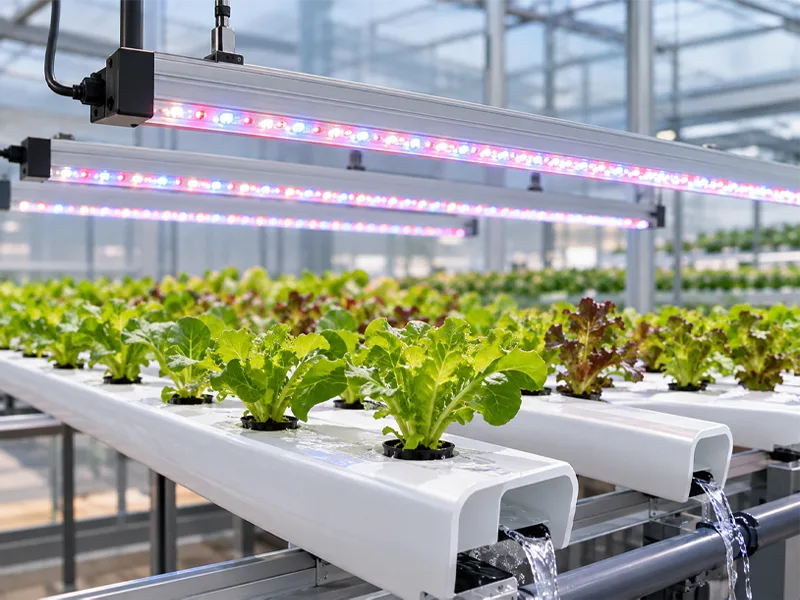
“Full spectrum” generally refers to a light source that covers the entire PAR (Photosynthetically Active Radiation) range, from 400nm to 700nm, and often extends slightly into Ultraviolet (UV) and Far-Red (IR). A true full spectrum fixture typically uses broad-spectrum white diodes (often 3000K to 5000K color temperature) supplemented with specific deep red (660nm) diodes.
The McCree Curve vs. The Human Eye
One of the biggest misconceptions in lighting is that “lumens are for humans, PAR is for plants.” While true, the nuance lies in the McCree Action Spectrum. Research by Dr. Keith McCree in the 1970s showed that while plants are most efficient at processing red and blue light, they utilize photons across the entire visible spectrum, including green light.
Green light, often thought to be reflected entirely by plants (hence why they look green), actually penetrates deeper into the canopy than red or blue light. By using a full spectrum grow LED light that includes a healthy amount of green wavelengths (inherent in white LEDs), you encourage photosynthesis in the lower leaves that would otherwise be shaded and unproductive. This leads to a higher total biomass compared to narrow-spectrum fixtures.
The Role of UV and Far-Red
Advanced full spectrum designs go beyond the visible. We are seeing more integration of UV-A (380-400nm) and Far-Red (730nm). UV light triggers a stress response in plants that can increase the production of secondary metabolites, such as trichomes, terpenes, and cannabinoids, acting as a natural sunscreen.
Conversely, Far-Red light plays a critical role in the Emerson Effect, where the simultaneous exposure to red and far-red light increases the rate of photosynthesis higher than the sum of the two lights alone. Furthermore, manipulating the ratio of Red to Far-Red influences the phytochrome system, signaling the plant to transition from veg to bloom faster.
One Fixture for Veg and Bloom: The Biological Mechanics
The core promise of the full spectrum grow LED light is versatility. Historically, we separated light sources because we believed plants needed only blue for veg and only red for bloom. The reality is more complex: plants need a balanced diet of photons, but their cravings shift slightly. Modern LEDs provide a base spectrum that satisfies both stages, often adjustable via dimming or spectral tuning.
Vegetative Stage Requirements
During the vegetative phase, plants focus on root expansion, stem structural integrity, and leaf production. Blue light is essential here because it suppresses stem elongation (preventing “stretching”) and encourages stomatal opening, which facilitates gas exchange.
A high-quality full spectrum fixture, such as the models we engineer at SLT MAKS, utilizes white LEDs (like Samsung LM301H or similar) that naturally contain a significant spike in blue wavelengths. This ensures that even without a dedicated metal halide bulb, your plants remain compact with tight internodal spacing. The continuous presence of broad-spectrum light also ensures that the plant develops a robust morphology capable of supporting heavy fruits or flowers later on.
The Flowering and Fruiting Stage
As the plant transitions to bloom, its energy requirements skyrocket. It needs intense photon energy to drive the synthesis of sugars required for fruit and bud development. While red light is the primary driver of photosynthetic efficiency during this stage, the plant still requires blue light to maintain healthy leaves and metabolic function.
If you were to switch to a pure HPS light, you often see plants stretch excessively as they reach for the light, a phenomenon partly due to the lack of blue spectrum. By keeping the same full spectrum grow LED light and simply increasing the intensity (or altering the photoperiod), you provide the red wavelengths needed for biomass production while retaining enough blue to keep the plant structure sturdy.
Comparative Analysis: LED vs. Legacy Lighting Technologies
To make an informed decision, we need to look at the hard data. The transition to LED is not just about spectrum; it is about thermal dynamics and photon efficacy. Below is a comparison of how a modern full spectrum LED stacks up against the traditional HPS/MH combination.
| Feature | Full Spectrum LED | Metal Halide (MH) | High-Pressure Sodium (HPS) |
| Spectrum | Continuous (400-700nm+), Sun-like | High Blue/UV, Low Red | High Yellow/Red, Low Blue |
| Efficacy (PPE) | 2.5 – 3.0+ µmol/J | 1.1 – 1.4 µmol/J | 1.7 – 1.9 µmol/J |
| Heat Output | Low (Radiated upwards) | High (Radiated toward plants) | Very High (Radiated toward plants) |
| Lifespan | 50,000+ Hours (L90) | 10,000 Hours | 15,000 – 20,000 Hours |
| Canopy Penetration | Excellent (due to diffuse light & green spectrum) | Moderate | High (due to intensity, but causes heat stress) |
| Dimming | 0-100% usually standard | Difficult/Not Standard | Possible but reduces efficiency |
As the table demonstrates, the efficacy of LEDs is significantly higher. For every watt of electricity you pay for, a full spectrum grow LED light produces nearly double the usable photons compared to MH and 50% more than HPS. According to the DesignLights Consortium (DLC), horticultural lighting requirements are becoming stricter, pushing growers toward these high-efficiency solutions to meet energy codes.
The Hidden Cost of Heat
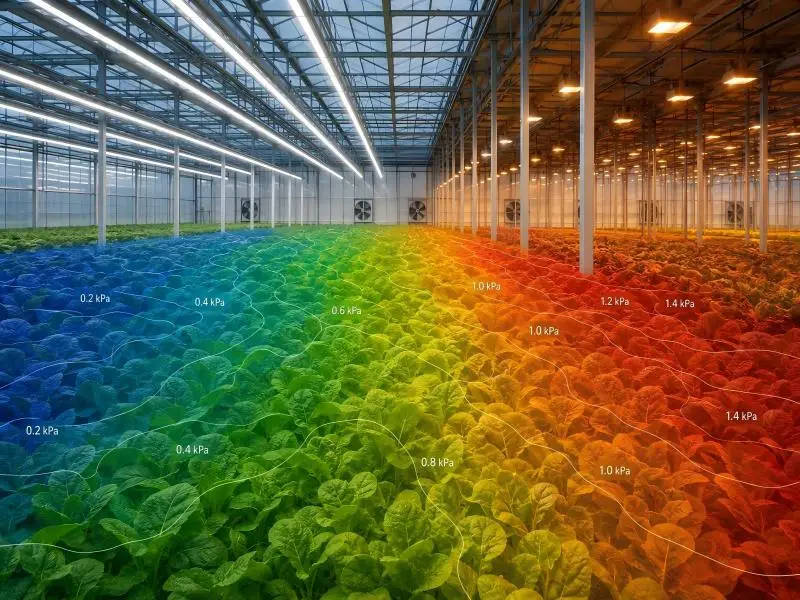
One factor often overlooked in the “Veg vs. Bloom” debate is HVAC load. HPS and MH lights emit massive amounts of infrared heat directly onto the plant canopy. Growers often have to run air conditioning at full blast to compensate.
LEDs, by contrast, emit very little forward heat. The heat they do generate is dissipated upwards via heat sinks. This allows growers to save significantly on cooling costs. Furthermore, because the leaf surface temperature is lower under LEDs, growers may need to run their grow rooms slightly warmer (82°F – 85°F) to maintain optimal Vapor Pressure Deficit (VPD), which can actually save on heating costs in winter or cooling costs in summer.
Key Performance Metrics: What to Look For
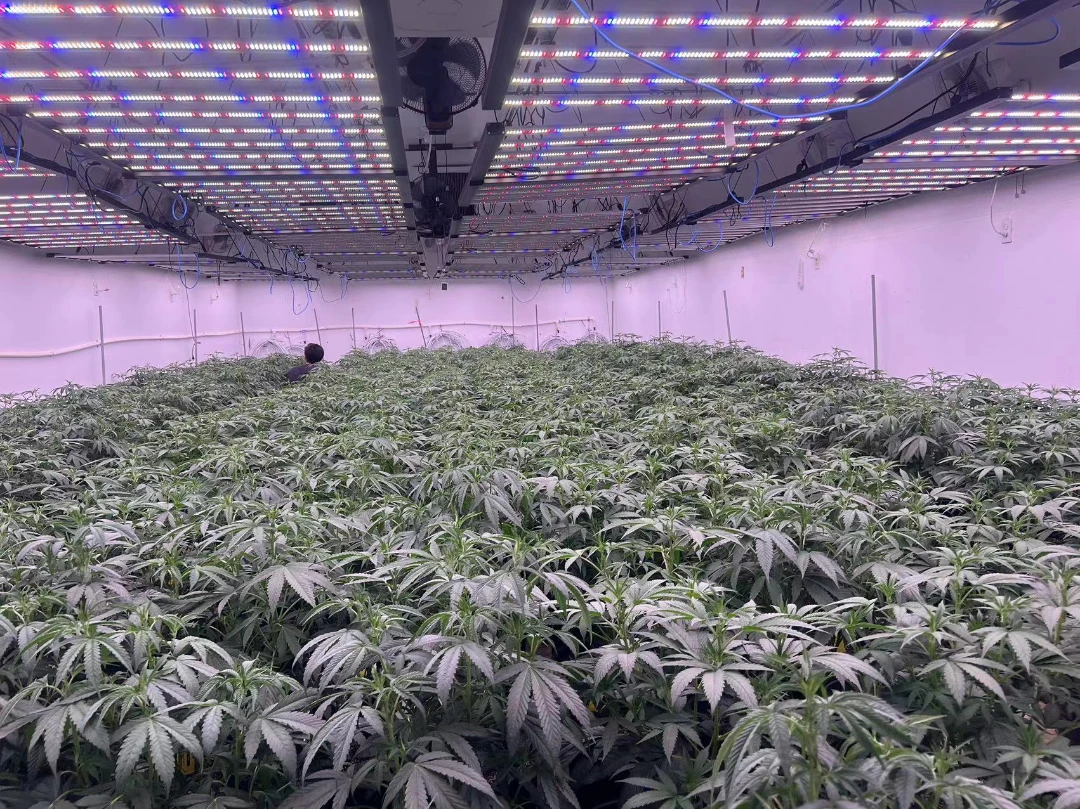
When you browse our catalog at SLT MAKS or look at the broader market, you will encounter several acronyms. Understanding these is crucial to selecting a fixture that truly works for both veg and bloom.
PPF and PPFD
PPF (Photosynthetic Photon Flux) measures the total amount of light produced by a fixture each second, measured in micromoles (µmol/s). However, PPF doesn’t tell you where that light lands.
PPFD (Photosynthetic Photon Flux Density) measures how many photons actually land on a specific spot on your canopy (µmol/m²/s). For a “one fixture solution,” you need a light that offers a uniform PPFD map.
- Veg Stage: Seedlings need 200-400 PPFD; vegetative plants need 400-600 PPFD.
- Bloom Stage: Flowering plants generally require 800-1000+ PPFD.
Because a full spectrum grow LED light is powerful enough for bloom, it is often too powerful for seedlings if run at 100%. This is why a high-quality driver with dimming capability is non-negotiable. You can run the light at 40% power for veg (saving electricity) and crank it to 100% for bloom.
Uniformity and Light Distribution
Old-school HPS bulbs acted as a point source, creating a “hot spot” directly underneath the bulb and rapid drop-off at the edges. This caused uneven growth. Modern LED bar styles distribute diodes over a large area. This creates a blanket of light that penetrates the canopy evenly.
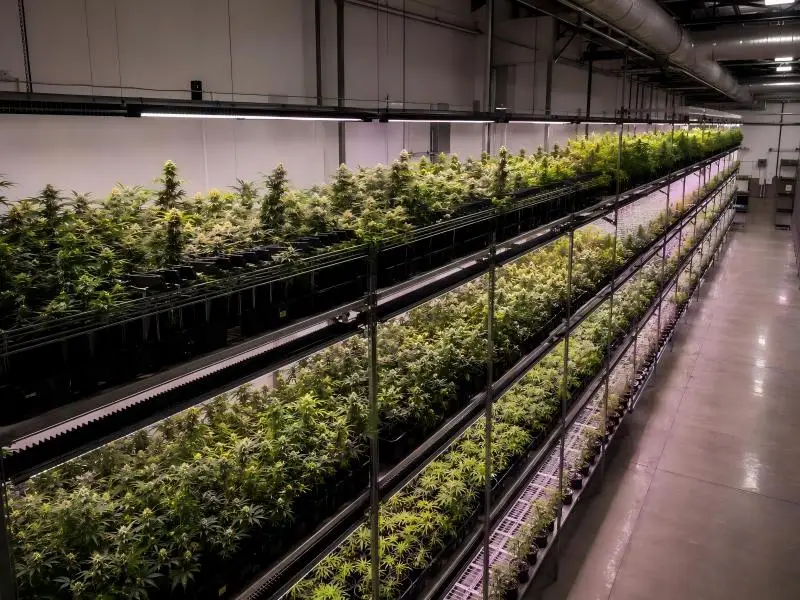
This uniformity is vital for commercial growers. It ensures that plants on the edge of the bench yield just as much as plants in the center. When evaluating a light, always ask for the PPFD map at different hanging heights.
Color Rendering Index (CRI)
While plants don’t care about CRI, you should. CRI measures how accurately a light reveals the true colors of an object, compared to natural sunlight (CRI 100). HPS lights have a terrible CRI (around 20-40), making everything look yellow/grey. This makes it incredibly difficult to spot nutritional deficiencies, pests like spider mites, or mildews early on.
A full spectrum grow LED light typically boasts a CRI of 80 to 95. This allows workers to inspect plant health accurately and comfortably without eye strain. Detecting a magnesium deficiency in the veg stage or spotting botrytis in the bloom stage early can save an entire crop.
Economic Implications of a Single-Fixture Strategy
Transitioning to a single-fixture philosophy is not just an agronomic decision; it is a financial one. Let’s break down the return on investment (ROI).
Capital Expenditure (CapEx)
Initially, purchasing high-end full spectrum grow LED lights is more expensive than buying HPS ballasts and bulbs. However, you must factor in the infrastructure. With HPS, you often need heavier gauge wiring, larger breaker panels, and significantly larger HVAC systems. When building a new facility, the savings on HVAC equipment alone often offset the higher cost of the LED fixtures.
Operational Expenditure (OpEx)
This is where the “one fixture” strategy shines.
- Energy Savings: You are using 30-50% less electricity to power the lights.
- Bulb Replacements: HPS bulbs degrade quickly. To maintain peak yields, they must be replaced every 6-9 months. A quality LED fixture lasts 50,000+ hours (5-10 years) with minimal degradation.
- Labor Reduction: No labor hours spent changing bulbs or switching fixtures between rooms. You simply turn a dimmer knob or adjust a controller.
The Reliability Factor
At SLT MAKS, we emphasize reliability. A fixture that fails during the critical weeks of bloom can be catastrophic. LED technology is solid-state. There are no filaments to burn out and no glass to shatter. The drivers are the most complex component, which is why we utilize top-tier drivers (like Mean Well or Inventronics) that are rated for high-humidity environments.
Optimizing the “One Fixture” Workflow
Having a full spectrum grow LED light is the hardware part of the equation; using it correctly is the software. Here is how to manage a single fixture through a full cycle.
Phase 1: Seedling and Clone (Weeks 0-2)
Young plants are sensitive. High intensity will bleach them.
- Dimming: Set your LED to 25-30%.
- Height: Hang the light 24-30 inches above the canopy.
- Goal: You want gentle, consistent light to encourage root development without inducing transpiration stress.
Phase 2: Vegetative Growth (Weeks 2-6)
As the root zone establishes, the plant can handle more photon pressure.
- Dimming: Increase to 50-75%.
- Height: Lower the light to 18-24 inches.
- Observation: Watch for “praying” leaves (leaves pointing upwards at a 45-degree angle). This indicates the plant is happy and processing the light well. If leaves droop or curl away, back off the intensity.
Phase 3: Transition and Early Flower (Weeks 6-9)
This is the critical stretch period.
- Dimming: Increase to 80-90%.
- Height: Maintain 12-18 inches (depending on manufacturer recommendations).
- Spectrum: If your fixture has a tunable spectrum (e.g., separate channels for UV or Deep Red), engage the Deep Red now to simulate the autumn sun and trigger rapid bud set.
Phase 4: Late Bloom and Ripening (Weeks 9-Harvest)
- Dimming: 100%. Push the plants to their limit.
- Height: 6-12 inches (monitor thermal stress).
- UV Supplementation: If your fixture has UV diodes, run them for short bursts during the last 2 weeks to boost trichome production.
Addressing Common Myths

In my years in the industry, I have heard every myth in the book. Let’s debunk a few regarding full spectrum LEDs.
Myth 1: “LEDs don’t penetrate deep enough.”
This was true for early 1W and 3W diode panels with lenses. Modern bar-style LEDs without secondary optics rely on physical proximity and diffuse light. Because you can hang LEDs much closer to the canopy than hot HPS bulbs, the effective light reaching the lower buds is often higher with LEDs.
Myth 2: “You need purple light for veg.”
While plants use blue/red efficiently, they thrive under broad spectrum. The “purple” era was driven by the high cost of green/white phosphors, not biological superiority. A full spectrum grow LED light provides a more natural growth pattern.
Myth 3: “LEDs run cool, so you don’t need ventilation.”
This is dangerous advice. While LEDs radiate less heat forward, they still produce heat (thermodynamics dictate that watts in = heat out). That heat must be removed from the room. However, the load is significantly less than HPS.
The Future of Horticultural Lighting
The industry is moving rapidly toward “Smart” spectrums. While the current gold standard is the fixed spectrum “one fixture does it all,” the next generation—which we are actively researching at SLT MAKS—involves dynamic spectral tuning. Imagine a light that automatically adjusts its blue/red ratio based on the time of day (mimicking sunrise and sunset) and the stage of plant life, all controlled via a smartphone app or a facility management system.
Research from institutions like Utah State University’s Crop Physiology Lab suggests that dynamic control of blue light can control cell expansion and plant height with incredible precision, potentially eliminating the need for chemical Plant Growth Regulators (PGRs).
Conclusion
The days of switching bulbs and managing dual inventories of lighting equipment are behind us. The full spectrum grow LED light represents the maturation of horticultural technology. It offers a scientifically superior spectrum that mimics the sun, drives robust photosynthesis in both vegetative and flowering stages, and offers operational efficiencies that legacy technologies simply cannot match.
For the modern grower, the question is no longer “Should I switch to LED?” but rather “Which full spectrum LED is right for my space?” Whether you are looking to maximize yield per watt, reduce your carbon footprint, or simply simplify your workflow, the single-fixture solution is the path forward.
At SLT MAKS, we are committed to helping you navigate this transition. Our R&D team works tirelessly to ensure that when you install our lights, you are installing a decade of agronomic science and engineering excellence.
Ready to upgrade your facility?
Explore our latest range of full spectrum solutions at www.sltmaks.com and see the difference a balanced spectrum can make for your harvest.
Glossary of Terms
To ensure this guide is fully accessible, here are definitions of key terms used in the article:
- PAR (Photosynthetically Active Radiation): The spectral range (wave band) of solar radiation from 400 to 700 nanometers that organisms use in the process of photosynthesis.
- PPF (Photosynthetic Photon Flux): The total amount of PAR produced by a lighting system each second.
- DLI (Daily Light Integral): The total amount of photosynthetically active radiation received by a plant surface in a 24-hour period. It is like a “light rain gauge.”
- Photomorphogenesis: Light-mediated development, where plant growth patterns respond to the light spectrum.
- Drivers: The electrical component that regulates the power to the LED or string of LEDs.