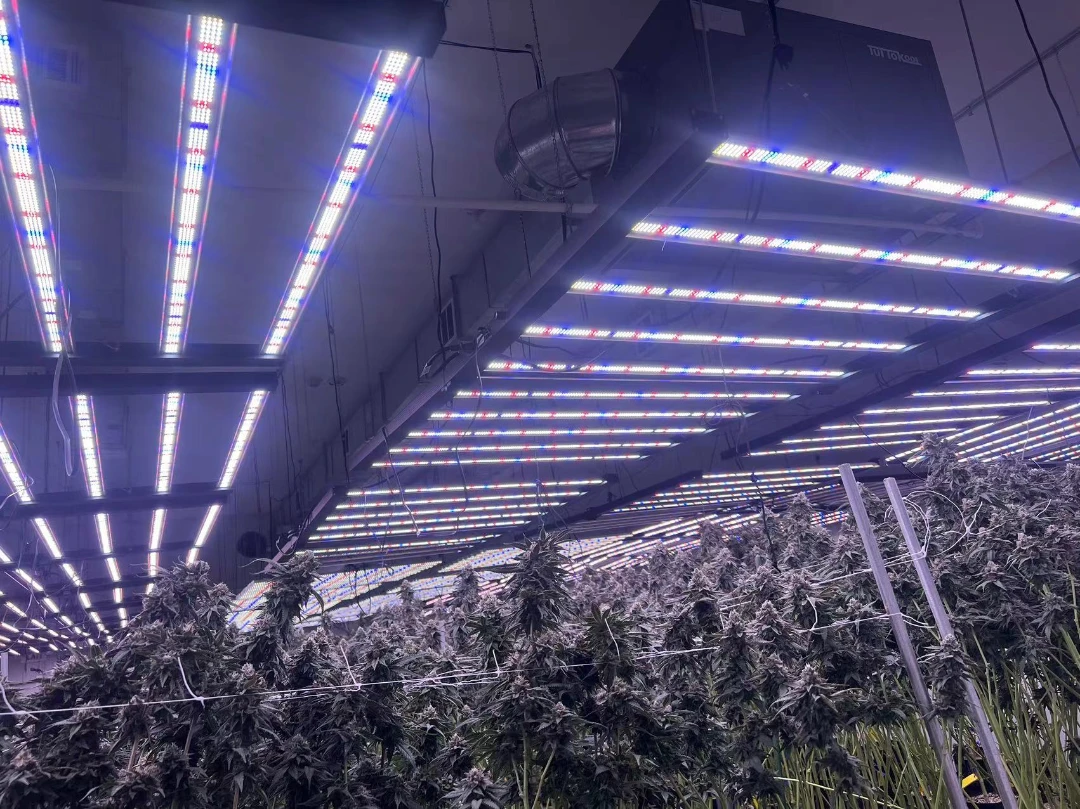
In the ever-evolving world of controlled environment agriculture, few technologies have caused as much disruption—and confusion—as full-spectrum LED grow lights. As someone who has spent years on the factory floor overseeing the R&D of diode configurations and analyzing harvest reports from commercial facilities globally, I have witnessed the transition first-hand. We moved from the era of hot, inefficient HPS (High-Pressure Sodium) lamps to the early days of “blurple” (blue and red) LEDs, and finally, to today’s sophisticated full-spectrum solutions.
For many growers, the term “full-spectrum” is thrown around as a marketing buzzword, often without a clear understanding of the underlying plant photobiology. You might be asking yourself: Do I really need to invest in these advanced fixtures? Is the white light actually better than the purple glow of the past? The short answer is yes, but the why is fascinating. This article will deconstruct the science, the economics, and the practical applications of full-spectrum LED grow lights, helping you determine exactly when they are necessary for your specific cultivation goals.
Table of Contents
Defining the “Full-Spectrum” Advantage

To understand why full-spectrum LED grow lights are the current gold standard, we must first define what we are actually talking about. In the early days of LED technology, manufacturers focused heavily on red and blue diodes. This was based on a simplified understanding of the McCree Action Spectrum, which showed that chlorophyll absorption peaks in the blue and red ranges. While true, this ignored the complexity of plant biological processes.
The Evolution from “Blurple” to White Light
Early “blurple” lights were efficient at driving basic photosynthesis, but they created a difficult working environment. Pests and nutrient deficiencies were hard to spot under purple light, and plants often grew differently—sometimes stretching or lacking canopy density—compared to those grown under sunlight.
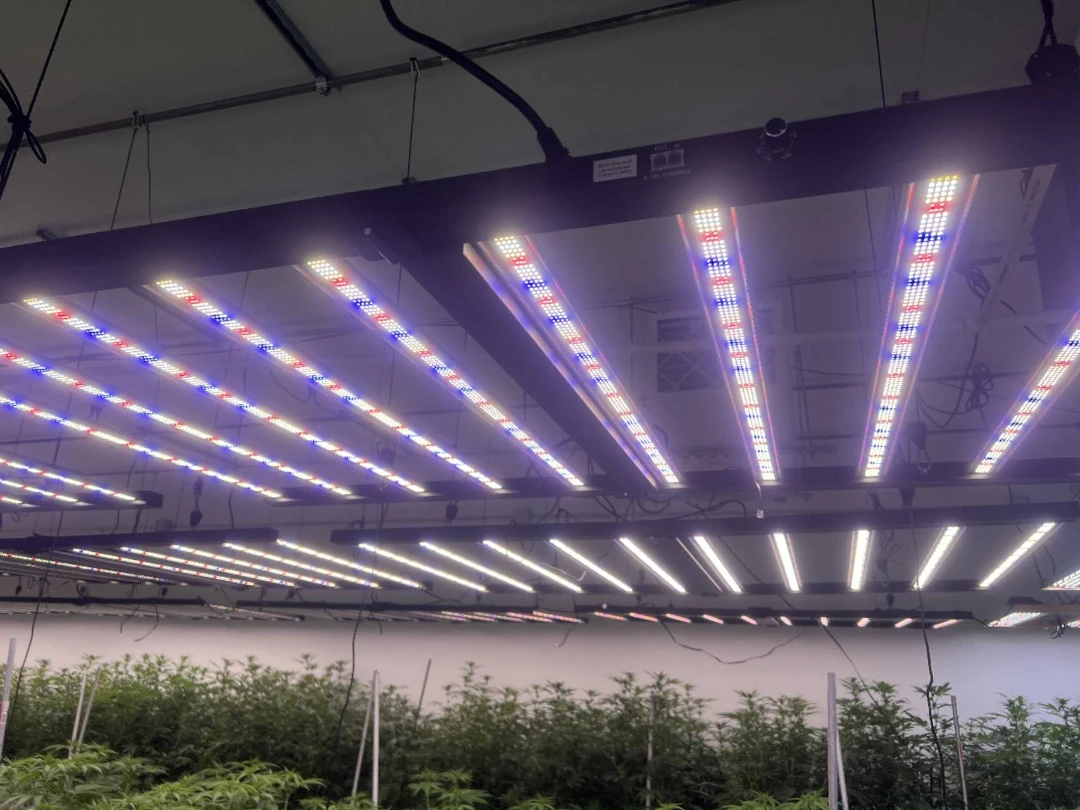
True full-spectrum LED grow lights emulate the sun. They utilize a combination of broad-spectrum white diodes (usually a mix of 3000K and 5000K) supplemented with specific red (660nm) and sometimes UV or Far-Red diodes. The result is a light that looks white to the human eye but delivers a rich, continuous stream of photons across the PAR (Photosynthetically Active Radiation) range (400nm-700nm) and beyond. This “sun-like” quality is not just about aesthetics; it is about mimicking the evolutionary environment in which plants have thrived for millions of years.
Understanding PAR and Beyond
When we discuss spectrum, we usually talk about PAR. However, the most advanced research, including studies from institutions like Utah State University, suggests that wavelengths outside this range are also vital.
- Ultraviolet (UV): Below 400nm. While not a primary driver of growth, UV light triggers stress responses that can increase the production of secondary metabolites (like terpenes and cannabinoids) and thicken leaf cuticles.
- Far-Red (700nm-750nm): This light triggers the Emerson Effect, where photosynthesis is turbocharged when red and far-red light are provided simultaneously. It also signals the plant regarding shading and time of day, influencing flowering times and stem elongation.
The Photobiology of Spectrum: How Plants See Light
Plants do not “see” light the way humans do; they use it as both fuel and information. Full-spectrum LED grow lights are designed to provide a balanced diet of this fuel while sending the correct signals for structural development.
The Role of Blue Photons (400-500nm)
Blue light is the regulator. It is essential for stomatal opening, which allows the plant to breathe and transpire. During the vegetative stage, high levels of blue light suppress stem elongation, resulting in compact, bushy plants with tight internodal spacing. If you have ever seen a seedling stretch desperately towards a weak light source, it was likely starving for blue photons. In a full-spectrum fixture, the blue component ensures that even as the plant stretches for yield, it maintains a strong structural integrity to support heavy fruits or flowers.
The Power of Red Photons (600-700nm)
Red light is the primary engine of photosynthesis. It is the most efficient wavelength for converting electricity into photosynthetic growth. During the flowering or fruiting phase, plants have a massive demand for red light. This is why HPS lights, which are very red-heavy, were the standard for so long. However, full-spectrum LED grow lights provide this red intensity without sacrificing the other wavelengths, ensuring that while the flowers swell, the plant remains healthy and metabolically balanced.
The “Green Light” Misconception
For years, it was believed that plants reflected all green light (hence why they look green) and that it was useless for growth. This has been debunked by researchers at Michigan State University. While green light is absorbed less efficiently at the leaf surface, it penetrates deeper into the canopy than red or blue light. In dense indoor gardens, green light drives photosynthesis in the lower leaves that would otherwise be shaded out. This is a critical reason why broad-spectrum white LEDs (which contain plenty of green) often outperform narrow-spectrum lights in real-world yield tests.
When Do You Really Need Full-Spectrum LED Grow Lights?

Now that we understand the science, let’s address the core question: When are these lights a “must-have” rather than a luxury? While almost any light can grow a plant, full-spectrum LED grow lights are essential in specific high-stakes scenarios.
Scenario 1: Sole-Source Lighting Environments
If you are growing in a windowless room, a basement, a shipping container, or a grow tent, your light fixture is the plant’s only connection to the universe. In these “sole-source” environments, the light must provide 100% of the spectral needs.
- The Risk: Using a narrow spectrum (like old blurple LEDs) in a sole-source room can lead to photomorphogenic issues. Plants may develop strange leaf deformations, lack vigor, or fail to produce secondary metabolites properly.
- The Solution: A full-spectrum fixture ensures the plant receives the complex signals it needs for normal development, from seed germination through to senescence.
Scenario 2: Full-Cycle Cultivation
Many growers use separate lights for vegetative (Metal Halide or Blue LED) and flowering (HPS or Red LED) stages. However, this requires moving plants or changing bulbs, which increases labor and stress on the crop.
Full-spectrum LED grow lights are designed to be “all-in-one” solutions. By providing a balanced baseline of white light with added deep red, these fixtures are heavy enough in blue to prevent stretching during veg, yet powerful enough in red to drive massive blooms. For the grower who wants one fixture to do it all efficiently, this technology is non-negotiable.
Scenario 3: High-Value Crops and Quality Control
If you are growing high-value crops where chemical profile (terpenes, flavonoids, cannabinoids, antioxidants) determines the market price, spectrum matters immensely.
Research indicates that the complexity of the light spectrum directly correlates to the complexity of the plant’s chemical profile. For example, growing basil under full-spectrum light typically results in a richer aroma and better flavor compared to basil grown under monochromatic light. If your end product is defined by its quality, aroma, or potency, you need the richness of a full spectrum.
Scenario 4: Vertical Farming
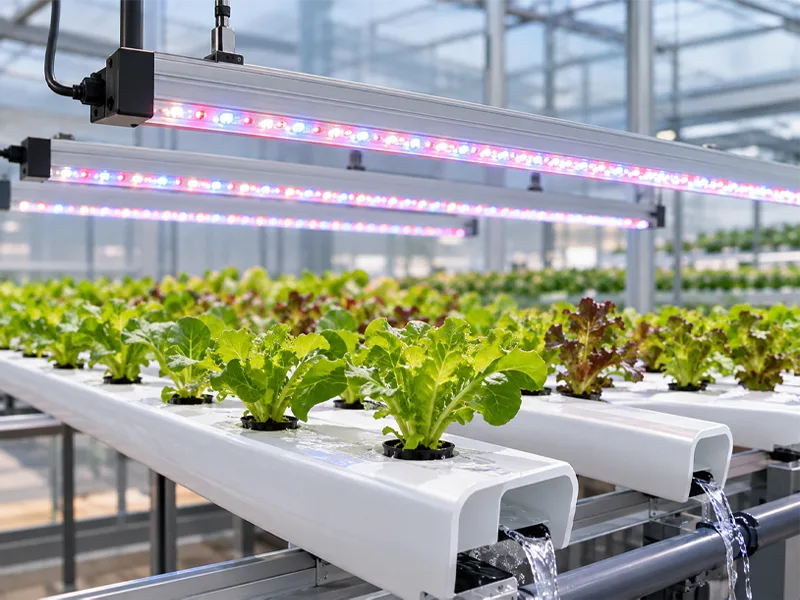
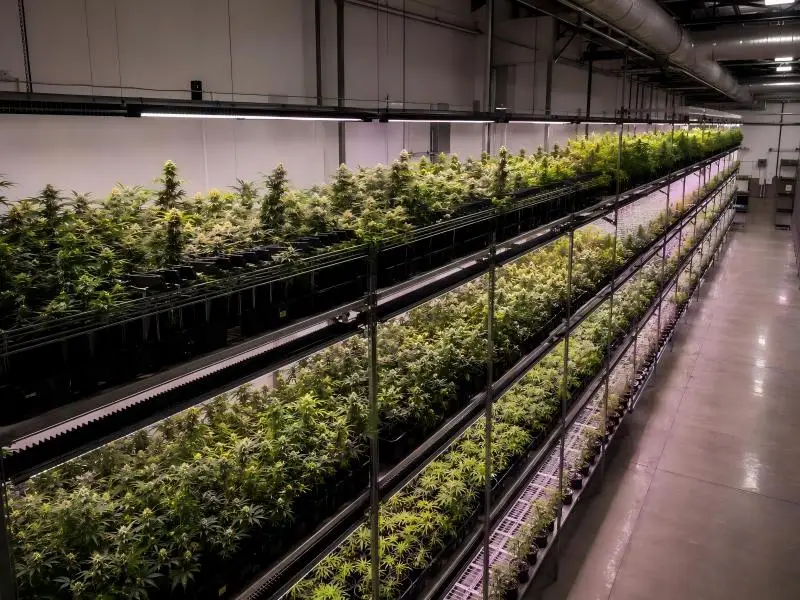
In vertical farming, heat management is just as critical as light quality. Because full-spectrum LED grow lights are highly efficient, they emit significantly less radiant heat toward the canopy compared to HPS. This allows for multi-tier racking systems where lights are positioned close to the crop surface without burning the leaves.
Technical Analysis: Comparing Light Technologies
To prove the superiority of modern LED technology, we must look at the data. Below is a comparison of the three most common lighting technologies found in commercial and serious hobbyist setups.
Comparison Table: HPS vs. Blurple LED vs. Full-Spectrum LED
| Feature | High-Pressure Sodium (HPS) | “Blurple” (Narrow) LED | Full-Spectrum (White) LED |
| Spectrum | Yellow/Red heavy (poor CRI) | Red/Blue heavy (Pink/Purple) | Sun-like Broad Spectrum (White) |
| Efficacy (PPE) | 1.7 – 1.9 µmol/J | 1.8 – 2.2 µmol/J | 2.6 – 3.0+ µmol/J |
| Heat Output | High (Radiant Heat) | Low to Medium | Low (Convective Heat) |
| Canopy Penetration | High (due to intensity) | Low to Medium | High (due to Green wavelengths) |
| Plant Diagnosis | Difficult (Yellow wash) | Very Difficult (Purple wash) | Easy (True Color) |
| Dimming Control | Limited | Often Limited | Precise (0-10V / PWM) |
| Lifespan | 24,000 Hours (Bulb degrades) | 30,000 – 50,000 Hours | 50,000 – 100,000 Hours |
The Efficiency Metric: µmol/J
In the table above, PPE (Photosynthetic Photon Efficacy) is the most critical number for your wallet. It measures how many micromoles of light are produced for every Joule of electricity consumed.
Older technologies waste vast amounts of energy as heat. Modern full-spectrum LED grow lights, such as those we engineer at SLT MAKS, often achieve efficiencies exceeding 2.8 µmol/J. This means you are getting roughly 40-50% more usable light for the same electricity bill compared to HPS. Over a year of continuous operation, this operational expenditure (OpEx) saving is massive.
Decoding the Spectrum: What to Look for in a Spec Sheet
As an editor and engineer, I often see customers confused by the graphs and charts on packaging. When shopping for full-spectrum LED grow lights, there are specific markers of quality you must identify.
The Spectral Distribution Chart
Every reputable manufacturer will provide a spectral graph. Here is what you should see for a high-quality full-spectrum fixture:
- A distinct spike in Blue (approx. 450nm): This comes from the blue diode base used to create white light. It ensures tight internodal spacing.
- A broad “hump” in Green/Yellow (500-600nm): This represents the phosphor conversion that turns blue light into white light. This is crucial for canopy penetration and human visibility.
- A strong peak in Red (660nm): The best fixtures add dedicated monochromatic red diodes to the white mix to boost photosynthetic efficiency during flowering.
- Minor bumps in Far-Red (730nm): (Optional but recommended) For the Emerson Effect.
Color Rendering Index (CRI)
While plants don’t care about CRI (which measures how accurate colors look to human eyes), you should. A high CRI (80-90+) makes it infinitely easier to spot spider mites, thrips, powdery mildew, or nutrient deficiencies early. Under old sodium lights (CRI < 25), a yellowing leaf just looked like a normal leaf under yellow light. Under full-spectrum LED grow lights, green looks green, and yellow looks yellow. This allows for earlier intervention, saving crops from disaster.
The Economics of Upgrading
The primary barrier to entry for full-spectrum LED grow lights is the upfront cost (CapEx). It is undeniable that a high-quality LED fixture costs more than a magnetic ballast HPS setup. However, the Return on Investment (ROI) usually occurs within 12 to 24 months, depending on energy rates.
HVAC Savings
One often overlooked factor is the reduction in HVAC (Heating, Ventilation, and Air Conditioning) costs. Because LEDs run cooler and emit less radiant heat, growers spend significantly less money cooling their grow rooms. In many commercial setups, the cost of cooling is almost equal to the cost of lighting. By switching to LEDs, you are attacking both sides of the energy bill.
Yield Increases
Data from multiple trials indicate that switching from HPS to optimized full-spectrum LED can increase yield by 10% to 25% per square foot, provided that other environmental factors (CO2, nutrients, VPD) are adjusted to match the higher light intensity. When you calculate the value of that extra yield over five years (the warranty period of many LEDs), the light pays for itself many times over.
Best Practices for Using Full-Spectrum LEDs
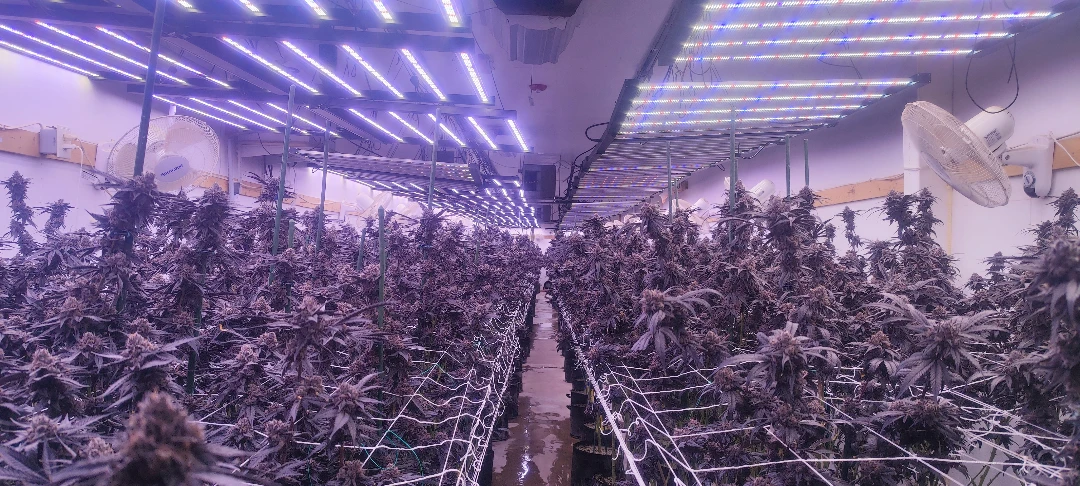
Owning the technology is only step one; using it correctly is step two. Because full-spectrum LED grow lights are so powerful, they can actually stress plants if not managed correctly.
Managing Intensity (PPFD)
Photosynthetic Photon Flux Density (PPFD) measures the amount of light hitting the canopy.
- Seedlings: Need low intensity (200-300 PPFD). Use the dimmer!
- Vegetative: Moderate intensity (400-600 PPFD).
- Flowering: High intensity (800-1000+ PPFD). CO2 supplementation is recommended once you exceed 1000 PPFD.
Hanging Heights
Unlike HPS, which had to be kept far away to avoid burning plants with infrared heat, LEDs can be closer. However, because LEDs act like “spotlights,” hanging them too close can cause light bleaching.
- General Rule: Keep 600W+ fixtures at least 18-24 inches above the canopy to ensure the light spreads evenly and blends the spectrum properly before it hits the leaves.
Temperature Adjustments
This is a pro tip that many new LED growers miss. Because LEDs emit less infrared heat, leaf surface temperature (LST) is lower under LEDs than HPS.
To compensate, you generally need to run your grow room ambient temperature 3-5°F warmer than you would with HPS lights. This keeps the plant’s metabolism high and transpiration rates in the optimal zone.
The Future of Grow Lighting
The industry is not standing still. As we look toward the future of full-spectrum LED grow lights, we are seeing the emergence of “tunable” spectrums.
Currently, most fixtures have a fixed spectrum. The future lies in smart controllers that allow growers to dynamically adjust the ratio of blue to red light via an app. Imagine simulating a sunrise (high far-red), a distinct midday (high blue), and a sunset, or signaling the plant to finish flowering faster by blasting it with far-red in the final weeks.
At SLT MAKS, our R&D team is constantly exploring these frontiers, ensuring that the lights we produce today are ready for the cultivation techniques of tomorrow.
Conclusion
The shift toward full-spectrum LED grow lights is not a trend; it is the maturation of agricultural technology. Whether you are a commercial facility manager looking to cut OpEx and boost consistent yields, or a home grower aiming for the highest quality harvest possible, the science is clear.
These lights offer the perfect balance of biological efficacy, energy efficiency, and operational ease. They allow you to see your plants in their true color, penetrate deep into the canopy with green wavelengths, and drive massive photosynthesis with efficient red and blue photons.
At SLT MAKS, we understand that choosing a light is a major commitment. It’s not just a purchase; it’s a partnership in your cultivation success. By understanding the “why” and “when” behind full-spectrum technology, you are empowered to make the right choice for your garden. If you are ready to upgrade your facility or start your journey with the best tools available, explore our range of precision-engineered LED solutions. Your plants—and your energy bill—will thank you.
References & Further Reading:
- Utah State University – Crop Physiology Laboratory: Research on LED Lighting
- Michigan State University Extension: Green Light usage in photosynthesis
- DesignLights Consortium (DLC): Horticultural Lighting Requirements