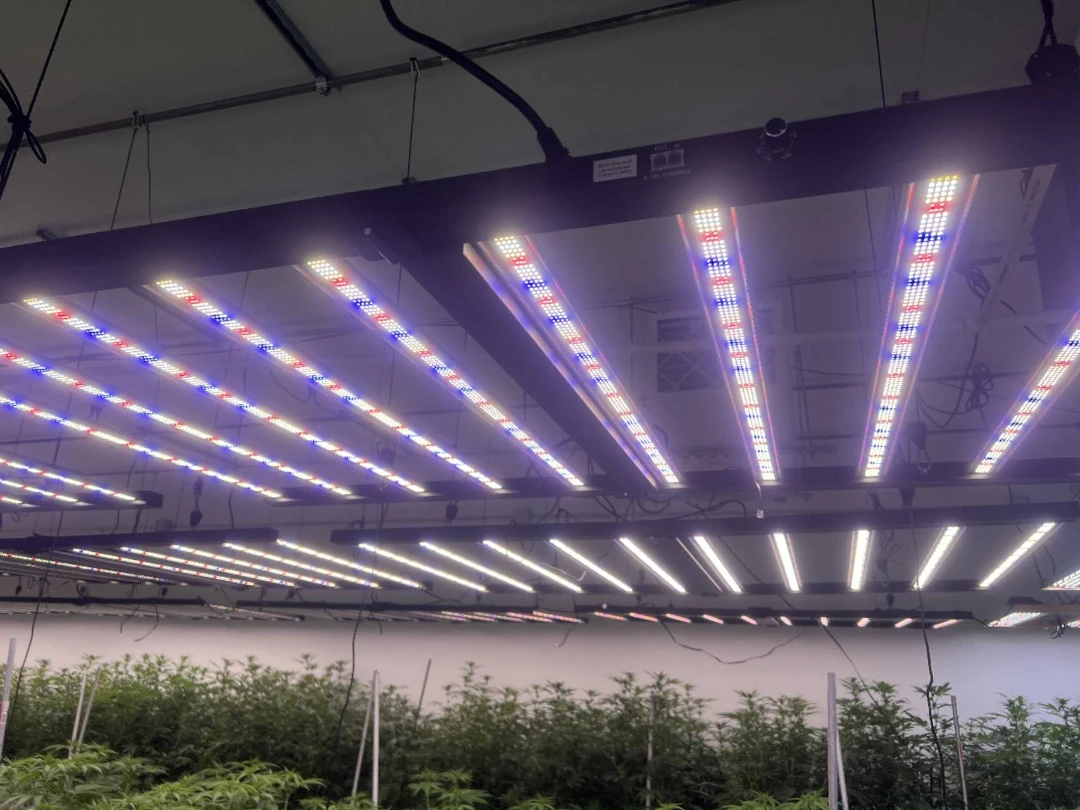
Indoor growing has never been more accessible, but it has also never been more confusing. If you search for full-spectrum LED grow lights, you’ll see everything from “sunlike” claims to rainbow charts and “high watt” stickers that don’t tell you what your plants truly receive. This guide strips away the hype and explains full-spectrum lighting in plain English, so you can choose a light that suits your space, crops, and goals.
The big promise of full-spectrum LEDs is simple: healthier plants with fewer compromises, from seedlings and leafy greens to flowering plants and fruiting crops. The reality is even better—when you understand spectrum, intensity, and photoperiod, you can dial in predictable results and avoid the most common indoor-growing mistakes.
Table of Contents
What “Full Spectrum” Really Means in Grow Lights
Full spectrum is not a single fixed recipe
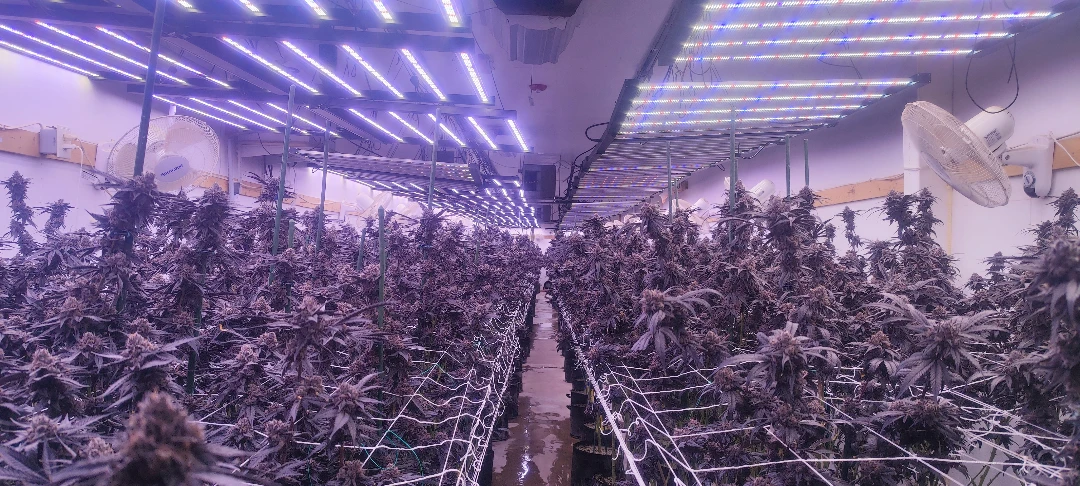
In lighting, “full spectrum” usually means the fixture produces a broad spread of wavelengths rather than just a narrow band of red and blue. However, there is no universal legal definition that forces every brand to meet the same curve, so “full spectrum” on a box is a starting point—not a guarantee. The best approach is to treat “full spectrum” as a design philosophy: broad coverage across the photosynthetically useful range, plus optional wavelengths that help plant form and quality.
The plant-relevant range is often described as PAR (400–700 nm)
For practical growing, you’ll see “PAR” referenced as the wavelengths most tied to photosynthesis, traditionally described as roughly 400–700 nm. That’s why most grow-light measurements focus on photon output in that band, rather than how bright the light looks to your eyes. A grow light can look “white” and still be weak for plants, or look “not that bright” and still deliver strong plant-usable photons.
Why white full-spectrum LEDs became the default for modern indoor grows
Older “blurple” lights (characterized by heavy red/blue) can support plant growth, but they make it more challenging to inspect plant health and often result in uneven canopies. White full-spectrum LEDs are popular because they are easier on human eyes, better for scouting pests and deficiencies, and can be engineered to perform well across multiple growth stages. When designed correctly, white-spectrum fixtures also deliver strong efficiency and consistent coverage.
Why Spectrum Matters for Indoor Plant Growth
Photosynthesis cares about photons, not “watts.”
Plants do not use electricity directly, so wattage is only a measure of power draw—not plant performance. What matters is how many photons reach the leaf surface and for how many hours per day. This is why two fixtures with the same “watt” rating can produce very different results in real grows.
The classic “plant action spectrum” is more nuanced than red + blue
Plants do respond strongly to red and blue light, but they also use other wavelengths, and the plant response changes depending on intensity, genetics, and environment. Foundational research by McCree measured photosynthetic response across a broad range and helped shape how horticulture thinks about usable light. If you want to go deeper than marketing charts, start with the original McCree work hosted on major scientific platforms like ScienceDirect.
Spectrum also influences morphology and quality, not just “growth speed.”
Even when two setups deliver the same total light, the spectrum can shift how plants look and perform. Blue tends to encourage compact growth and tighter internodes, while red can push faster biomass accumulation and flowering responses in many species. Balanced full spectrum helps you avoid extremes, so you get sturdy plants that transition smoothly from vegetative growth to flowering or fruiting.
A human-friendly spectrum is also a production advantage
If you manage an indoor garden or a commercial room, your eyes are part of the workflow. White full-spectrum LED grow lights make it easier to spot chlorosis patterns, pest damage, mildew, and canopy hotspots before they become expensive problems. That practical advantage is one reason many growers moved away from harsh blue lighting, even when blue fixtures were cheaper.
Key Light Metrics You Must Understand: PPFD, Photoperiod, and DLI
PPFD: “How much plant-usable light hits this spot right now?”
PPFD (photosynthetic photon flux density) is the photon rate arriving at a surface per second, usually shown in µmol/m²/s. A clear explanation of PPFD and how it’s measured with quantum sensors is available from Apogee Instruments, a widely referenced maker of horticultural measurement tools.
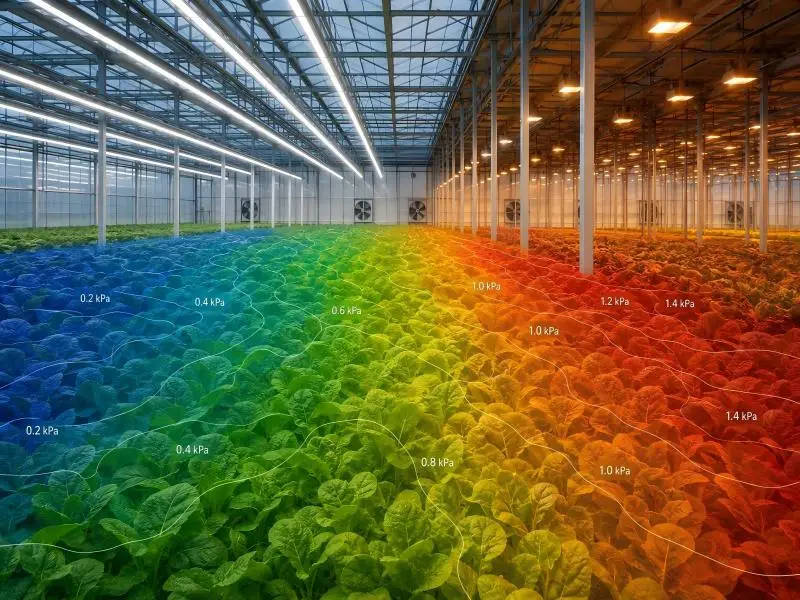
When you see a PPFD map, you’re looking at “brightness for plants” across the canopy, not brightness for people. Higher PPFD can increase growth, but only if you also manage temperature, CO₂ (if applicable), nutrients, and watering practices.
Photoperiod: “How many hours per day the light is on”
Photoperiod is simply how long your plants receive light each day. This single variable is powerful because it changes the daily total light without changing your fixture height or dimmer. For many indoor growers, adjusting photoperiod is the easiest lever to pull before you buy new equipment.
If you’re growing typical houseplants, herbs, or starting seeds, reputable extension guidance can help you match your lighting plan to plant needs and window conditions. The University of Minnesota Extension has a practical overview that’s useful even if you’re using LEDs instead of fluorescent fixtures.
DLI: “The total light your plant collects in one day.”
DLI (Daily Light Integral) is the total number of photosynthetic photons delivered per square meter per day, typically expressed as mol/m²/day. Michigan State University Extension provides a straightforward definition and explains that DLI represents the daily sum of plant-usable photons.
This is the metric that ties everything together, because DLI combines both intensity and time. If you remember only one thing from this guide, remember this: plants respond strongly to daily total light when other factors are adequate.
The simple relationship that helps you design your setup
You can think of it like this: PPFD is your “speed,” photoperiod is your “time,” and DLI is the “distance traveled.” If your plants look stretched and weak, the problem is often insufficient DLI, not a mysterious nutrient issue. Conversely, if leaves turn brown or curl upward, your DLI might be too high for your current environment.
Full-Spectrum LED Grow Lights vs. “Blurple” and Other Common Claims

“Full spectrum” is not automatically better than everything else
A bad full-spectrum light is still a bad light. Some low-end fixtures use the phrase as a label while delivering low PPFD, poor heat management, or uneven coverage that wastes photons on walls instead of leaves. You should always look for PPFD maps, real power draw, and a clear coverage recommendation for your grow area.
“Equivalent wattage” and “HPS replacement” claims can mislead buyers
You may see statements like “1000W equivalent” on a 200–300W LED. Those comparisons are often marketing shorthand and depend heavily on distance, reflector style, and measurement methods. It’s safer to compare grow lights using PPFD/DLI targets and energy efficiency, rather than using “equivalent wattage” labels.
White full-spectrum can still vary a lot in performance
Two white lights can both look similar to your eyes, but behave differently for plants. The difference often comes from diode quality, driver efficiency, thermal design, optical lensing, and how evenly the board spreads light across the canopy. When you evaluate full-spectrum LED grow lights, you are really evaluating a complete system—not just a spectrum chart.
How to Choose Full-Spectrum LED Grow Lights for Your Space
Choosing full-spectrum LED grow lights is easiest when you stop thinking in “wattage” and start thinking in “daily plant light.” Once you know your target DLI and your grow area, most marketing claims become irrelevant. You’ll quickly see which fixtures are truly capable of delivering uniform, usable photons at the canopy.
Start with your grow area, not the product listing
Measure the footprint you actually want to light (for example, a 2×4 shelf, a 4×4 tent, or a greenhouse bench). Then decide whether you want full coverage edge-to-edge or a stronger “hot center,” because uniformity affects yield consistency and plant shape.
Also, think about canopy height and plant density. A tight, even canopy (leafy greens, herbs) needs a different distribution than tall plants (tomatoes, peppers), where light must reach deeper into the canopy.
Pick a realistic DLI target before you compare fixtures
DLI targets vary by crop type and growth stage, and extension resources are often clearer than brand ads. Purdue’s DLI guidance explains low-light vs higher-light needs and how greenhouse conditions reduce light, which is directly relevant to indoor setups, too.
A practical starting framework looks like this, and each range is broad on purpose because varieties and environments differ. Use these as “first targets,” then adjust based on plant response and your temperature/airflow.
- Low-light foliage and shade-tolerant houseplants: roughly 3–6 mol·m⁻²·d⁻¹ is commonly treated as a low-light band in horticulture guidance. This level can maintain healthy growth without stressing plants that evolved under canopy shade.
- Young plants, plugs, and many propagation programs: research and industry extension materials often reference ~10–12 mol·m⁻²·d⁻¹ as a goal for high-quality young plants in commercial contexts. This helps reduce stretch and improve root/shoot balance. Greenhouse
- Leafy greens and herbs (commercial-style growth): peer-reviewed horticulture literature commonly discusses ~10–20 mol·m⁻²·d⁻¹ as a typical target band, depending on species and production goals. Higher DLIs can be used, but returns depend on temperature, CO₂, and cultivar.
- High-wire fruiting vegetables (tomato/cucumber) and high-light crops: extension economics guidance often targets at least ~25–30 mol·m⁻²·d⁻¹ for commercial fruiting crops, which is why serious fruiting indoors usually needs higher-output fixtures and excellent climate control.
Convert DLI into a PPFD + photoperiod plan
Once you choose a target DLI, you can “design” your light schedule. DLI is the daily total, PPFD is the intensity at the canopy, and photoperiod is the time the lights run.
A simple relationship is:
DLI (mol·m⁻²·d⁻¹) = PPFD (µmol·m⁻²·s⁻¹) × hours × 0.0036.
Virginia Tech’s DLI worksheet-style guidance is a good reference for how growers calculate and use DLI for planning.
Here are quick examples that help you sanity-check claims on a product page. Each example assumes your PPFD is measured at the canopy where leaves actually are, not at the lamp face.
- If you want DLI = 12 with 16 hours/day, then PPFD ≈ 12 ÷ (16 × 0.0036) ≈ 12 ÷ 0.0576 ≈ 208 µmol·m⁻²·s⁻¹. That’s a realistic target for many young plants and moderate-light crops.
- If you want DLI = 20 with 16 hours/day, then PPFD ≈ 20 ÷ 0.0576 ≈ 347 µmol·m⁻²·s⁻¹. This is commonly in the “productive leafy greens/herbs” zone when the rest of the environment is managed well.
These conversions instantly explain why some small “desk grow lights” can keep a pothos alive but struggle to fruit tomatoes. The daily photon budget just isn’t there, no matter what the box says.
Look for efficacy (PPE) and honest power draw
Two fixtures can produce the same PPFD, but the one with higher efficiency will do it using less electricity and less waste heat. In horticultural lighting, efficacy is commonly discussed as photosynthetic photon efficacy (PPE) in µmol/J, which directly connects to operating cost.
The DesignLights Consortium (DLC) publishes technical requirements for horticultural products and uses horticulture-specific metrics and thresholds, which is one reason DLC-style reporting is often more useful than generic “LED brightness” language.
Also, verify real power draw (watts from the wall) rather than “equivalent wattage.” Real power draw is what affects your electrical planning and your energy bill, while “equivalent” claims can vary wildly by marketing assumptions.
Demand PPFD maps and think about uniformity, not just peak numbers
A common trick is advertising a high center PPFD while the corners are weak. Your plants don’t grow only in the brightest square foot, so uniformity matters for yield consistency, canopy management, and avoiding “stretch zones.”
DLC’s measurement resources explain horticultural terms like PPF and PPFD and how they relate, which helps you interpret PPFD maps more accurately.
When comparing PPFD maps, always confirm:
- The hanging height used in the test. A map at 6 inches is not the same as a map at 18 inches.
- The grid size (how many measurement points). Sparse grids can hide weak zones.
- Whether the map is for one fixture or a multi-fixture layout. Commercial layouts often rely on overlap for uniformity.
Understand what “full spectrum” should include for real-world growing
Most modern full-spectrum LED grow lights are built around white diodes and then tuned with additional wavelengths. You do not need a rainbow of channels to grow healthy plants, but it helps to understand what’s optional versus essential.
- A strong, stable white base supports both vegetative growth and flowering transitions. It also improves visibility for scouting pests and deficiencies, which is a real production advantage in indoor gardens.
- Deep red can support flowering and fruiting intensity in many crops, especially when you’re pushing higher DLIs. You should still prioritize total photons and coverage before chasing “bloom boost” add-ons.
- Far-red (around 700–750 nm) can influence morphology and flowering responses, but it can also increase stretch if misused. Research literature shows far-red can accelerate flowering or change plant architecture depending on timing and dose, so it’s a tool—not a free upgrade.
If you are buying a fixture with adjustable far-red or specialty channels, ask for a recommended protocol (timing, percentage, and intended crop outcomes). Without guidance, it’s easy to trade “faster flowering” for weaker structure or lower quality.
Don’t ignore safety and certification in horticultural environments
Grow rooms combine electricity, humidity, metal racks, and frequent human exposure, so safety is not optional. UL developed UL 8800 specifically for horticultural lighting equipment, addressing requirements unique to plant-growth environments and including considerations like photobiological safety assessment and markings.
Even if you are not in the U.S., the idea still matters: choose products with credible testing, clear labeling, and documentation that matches your installation reality. A “powerful” light that fails early or creates electrical risk is never a bargain.
Practical Targets by Plant Type Using Full-Spectrum LED Grow Lights
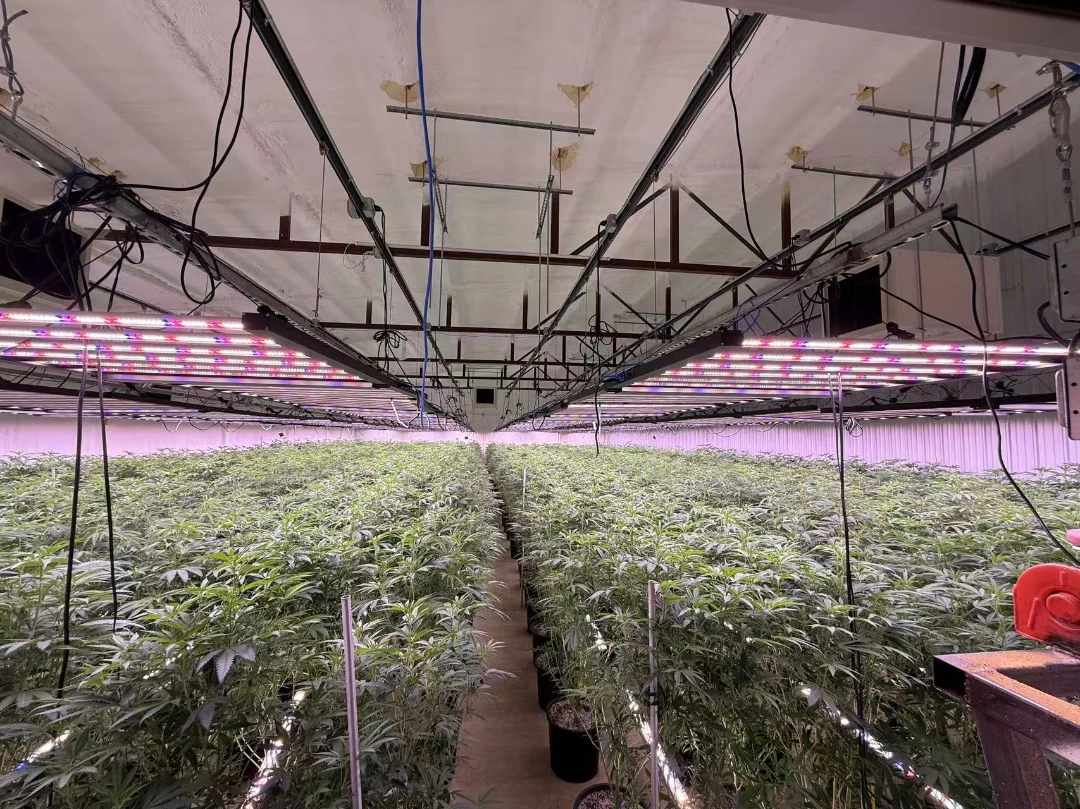
If you want reliable results, start with conservative targets and adjust upward. This protects plants from light stress and helps you learn your fixture’s real coverage in your specific space.
Seedlings, plugs, and early propagation
Young plants typically benefit from enough light to prevent stretching, but not so much that leaves bleach or curl. Research-based extension materials often point to 10–12 mol·m⁻²·d⁻¹ as a useful benchmark for producing high-quality young plants in commercial-style production, especially during low-sun seasons.
As a starting indoor plan, many growers run 16 hours/day and aim roughly around 200 µmol·m⁻²·s⁻¹ at the canopy for that DLI range. If you see thick stems and compact nodes, you’re usually in a good zone, and you can increase gradually if the temperature and nutrition are stable.
Low-light houseplants and “maintenance mode” growing
Not every plant wants intense light, and many popular foliage houseplants evolved under forest canopies. Purdue’s DLI guidance treats 3–6 mol·m⁻²·d⁻¹ as a low-light requirement range, which aligns with “healthy maintenance” for many shade-tolerant species.
If you run 14–16 hours/day, this can be achieved with relatively modest PPFD levels, and uniformity becomes more important than raw intensity. The goal is steady, gentle photons that keep growth balanced rather than forcing speed.
Leafy greens and herbs for productive indoor harvests
If you want dense, market-style leafy greens and herbs indoors, you usually need to step into higher DLI territory. Peer-reviewed horticulture work notes that leafy greens are often produced with DLIs in the 10–20 mol·m⁻²·d⁻¹ range, and higher targets are used when the environment supports it.
At 16 hours/day, DLI 15 corresponds to PPFD ≈ 15 ÷ 0.0576 ≈ 260 µmol·m⁻²·s⁻¹, while DLI 20 corresponds to about 347 µmol·m⁻²·s⁻¹. If your edges are 40% lower than the center, you will see uneven growth, so PPFD maps and layout matter as much as total output.
Fruiting crops and highlight goals indoors
Fruiting crops like tomatoes and cucumbers can demand much more light if you want heavy flowering and consistent fruit set. Michigan State’s lighting investment guidance states a target DLI for high-wire fruiting vegetables, such as tomato and cucumber, is at least 25–30 mol·m⁻²·d⁻¹, which explains why commercial fruiting often uses substantial supplemental lighting.
Scientific literature also references tomato DLI requirements in the ~25–30 mol·m⁻²·d⁻¹ range for optimal commercial production, which is a helpful reality check for small indoor fixtures.
For many home growers, the smart strategy is to be honest about their target. You can grow compact tomatoes at lower DLI with lower yields, or you can invest in higher-output lighting and climate control to chase commercial-style productivity.
Troubleshooting: What Plants Tell You About Your Light
Signs your light is too weak
If stems stretch, internodes lengthen, and plants lean hard toward the brightest side, the most common issue is insufficient DLI. Leaves may also become larger and thinner as the plant tries to capture more photons, which is a classic low-light adaptation.
Before you buy a bigger fixture, try increasing photoperiod (within reason) and improving reflectivity and uniformity. Measuring DLI and PPFD in a structured way is exactly what extension guides recommend for diagnosing light limitations.
Signs your light is too intense or too close
If new growth bleaches, leaf edges crisp, or leaves “taco” upward under the fixture, you may be delivering too much PPFD for your current conditions. High intensity can be perfectly usable, but only if you also manage leaf temperature, airflow, irrigation timing, and nutrition.
The easiest fix is to dim the light or raise it slightly, then watch new growth for improvement over several days. One-time damage won’t disappear, so always judge based on the newest leaves after you adjust.
Signs your coverage is uneven
If the center plants look great but the corners lag, you have a distribution problem, not a “plant problem.” This is why PPFD maps and horticultural measurement terms matter, and DLC’s measurement resources help clarify what those maps should represent.
Often, the solution is layout: raise the fixture, use multiple smaller fixtures, or overlap footprints. Uniformity usually improves when photons come from a larger emitting area rather than a single intense source.
A No-Regret Checklist for Buying Full-Spectrum LED Grow Lights
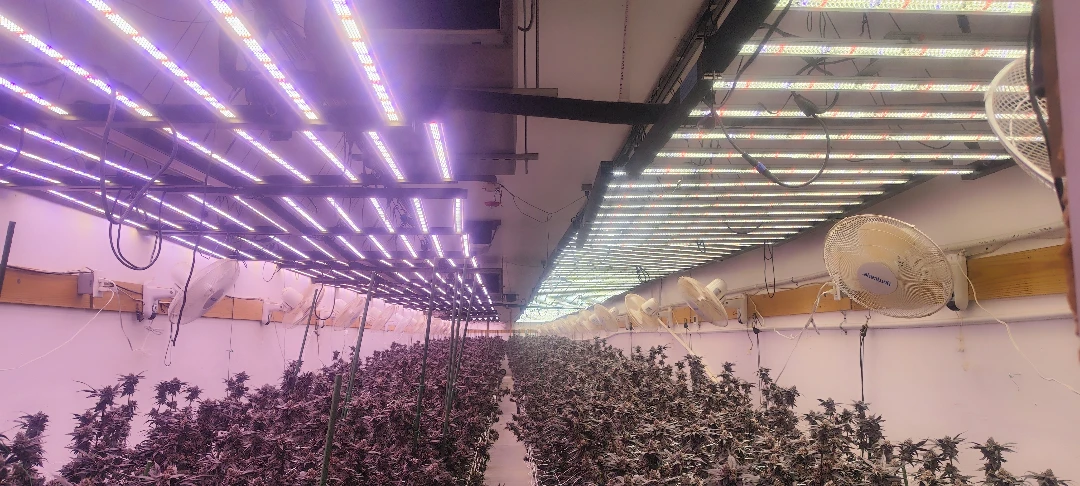
Spec sheet items that matter
Ask for real power draw, PPE (µmol/J), a PPFD map at a stated height, and a recommended coverage area tied to a crop scenario. If a seller cannot provide these, you’re buying based on hope.
Also, ask what measurement language they use and whether it aligns with horticultural metrics standards. ANSI/ASABE S640 is a key reference for horticultural radiation quantities and units, and DLC resources frequently point growers toward consistent terminology.
Certification, safety, and documentation
For professional or high-humidity grows, look for a credible safety evaluation and clear installation instructions. UL 8800 is specifically built around horticultural lighting equipment and includes requirements relevant to grow facilities.
Even for home use, documentation is a quality signal. A reliable manufacturer will provide wiring guidance, mounting instructions, thermal notes, and warranty terms that match real-world use.
Support and consistency matter more than “the highest number.”
Many growers lose money not from buying an underpowered light, but from buying an inconsistent one. Output drift, driver failure, or a poorly sealed fixture can derail a crop cycle faster than being 10% under target PPFD.
Choose suppliers that can provide repeatable PPFD maps, stable component sourcing, and predictable lead times. In B2B projects, that reliability is often more valuable than chasing marginal efficiency gains.
Why SLTMAKS Full Spectrum LED Grow Lights Fit Real Indoor Growing
At SLTMAKS, we treat “full spectrum” as an engineering deliverable, not a slogan. We focus on high usable photon output, uniform distribution, and practical controllability so growers can hit a target DLI without fighting hotspots and weak corners.
If you are sourcing full-spectrum LED grow lights for retail, greenhouse supplemental lighting, or controlled environment agriculture projects, we can support you with application-based recommendations, PPFD/coverage guidance, and stable manufacturing for long-term programs. A good grow light is a system, and our goal is to make that system easy to deploy, easy to control, and dependable across cycles.
FAQ
What is the difference between PPF and PPFD in LED grow lighting?
PPF (Photosynthetic Photon Flux) measures the total amount of light produced by a fixture per second, while PPFD (Photosynthetic Photon Flux Density) measures how much of that light actually reaches the plant canopy. When evaluating grow lights, PPFD is the more critical metric for growers as it represents the usable light intensity at specific distances.
How does the Red-to-Blue light ratio affect plant morphology?
The ratio of red to blue light acts as a growth regulator. Higher blue light (400-500nm) typically results in shorter, stockier plants with thicker leaves, which is ideal for the vegetative stage. Increased red light (600-700nm) promotes stem elongation and is essential for triggering the flowering and fruiting phases.
Can full-spectrum LED grow lights completely replace natural sunlight?
Yes. Modern full-spectrum LEDs are designed to mimic the sun’s natural spectrum, providing all the necessary wavelengths for photosynthesis. In indoor vertical farming or windowless grow rooms, high-efficiency LEDs can sustain a plant’s entire life cycle—from seedling to harvest—often with higher precision and consistency than outdoor sunlight.
What are the energy-saving benefits of switching to LED from HPS?
LEDs typically offer a 40% to 50% reduction in energy consumption compared to traditional High-Pressure Sodium (HPS) lamps. Beyond direct electricity savings, LEDs produce significantly less heat, which reduces the need for expensive HVAC and cooling systems in large-scale commercial facilities, further lowering operational costs.
What is “Daily Light Integral” (DLI) and why does it matter?
DLI measures the total amount of light (photons) a plant receives over 24 hours. It is essentially the “daily dose” of light. Understanding the specific DLI requirement for your crop (e.g., lettuce vs. tomatoes) allows growers to optimize lighting schedules, ensuring maximum yield without wasting electricity on excessive illumination.