
Welcome to SLTMAKS.com. If you have been cultivating plants indoors for more than a decade, you remember the days when High-Pressure Sodium (HPS) and Metal Halide (MH) lamps were the undisputed kings of the grow room. However, the landscape of horticultural lighting has undergone a seismic shift in recent years. As an industry veteran who has spent years in the research, development, and production lines of LED technology, I have witnessed the transition from the early, inefficient “blurple” lights to today’s sophisticated full-spectrum quantums and bar-style fixtures. Today, finding the best rated LED grow lights is not just about finding the brightest bulb; it is about finding the perfect balance of spectrum, efficiency, and thermal management.
The market is currently flooded with options, ranging from cheap, mass-produced units to high-end, commercial-grade fixtures. For the average grower—or even the commercial facility manager—deciphering the technical jargon can be overwhelming. Terms like PAR, PPFD, DLI, and PPE are often thrown around by marketing departments without proper context. This creates a disconnect between what the manufacturer claims and what the plant actually biologically requires for photosynthesis.
In this comprehensive guide, we are going to strip away the marketing fluff and look at the hard data. We will analyze what makes a grow light “best rated” in 2026, examining the critical metrics of PAR output and photon efficacy. Whether you are running a massive vertical farming operation or a dedicated 4×4 home tent, understanding the physics behind the light is the key to maximizing your Grams-Per-Watt (GPW) yield. Let’s dive deep into the technology that powers modern agriculture.
Table of Contents
Understanding the Core Metrics: Beyond Wattage
When we evaluate the performance of a grow light, the wattage draw from the wall is merely a measure of electricity consumption, not light output. To truly identify the best rated LED grow lights, we must look at the radiometric and photometric units that quantify how much usable light is actually reaching the plant canopy.
Photosynthetic Active Radiation (PAR) Explained
The human eye is sensitive to green and yellow light, which is why we use lumens to measure lights for home and office use. Plants, however, “see” light differently. Photosynthetic Active Radiation (PAR) refers to the range of light wavelengths between 400 and 700 nanometers (nm) that plants use for photosynthesis.
When we talk about PAR, we are defining the “fuel” for your crop. A light might look incredibly bright to you, but if it lacks sufficient photon flux in the blue (400-500nm) and red (600-700nm) regions, your plants will starve. High-quality LED fixtures are engineered to maximize emission within this specific range. However, simply having a high PAR value isn’t enough; we need to know how much of that PAR is actually landing on the leaves over time.
The Importance of PPF and PPFD
This is where many buyers get confused. PPF (Photosynthetic Photon Flux) measures the total amount of PAR light produced by a fixture each second, measured in micromoles per second (µmol/s). Think of this as the “horsepower” of the engine. A high PPF indicates a powerful light source.
However, PPFD (Photosynthetic Photon Flux Density) is the metric that truly matters for your canopy. PPFD measures how many of those photons actually hit a specific square meter of your grow space per second (µmol/m²/s). You can verify the importance of these metrics through resources like the DesignLights Consortium (DLC), which sets the standard for efficiency.
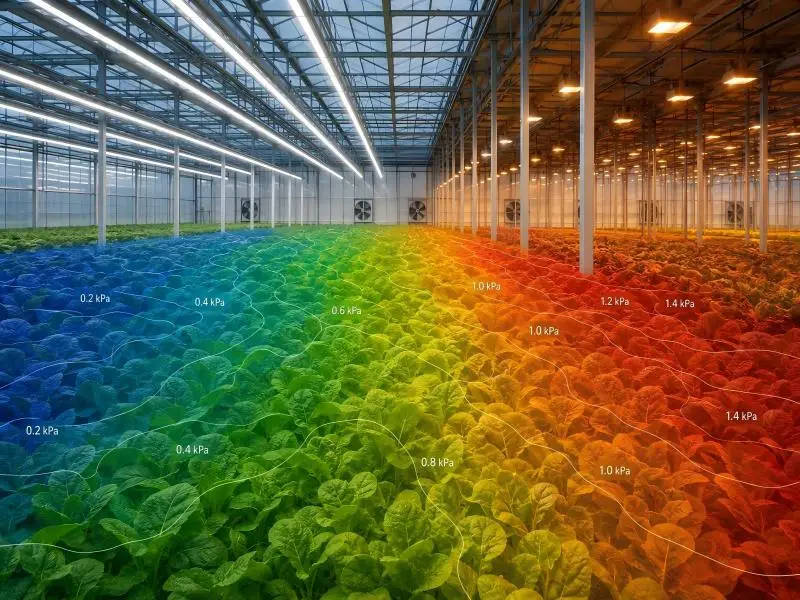
Editor’s Note: A common trick in the industry is to measure PPFD directly in the center of the light at a very close distance to get a massive number (e.g., 2000 µmol/m²/s). However, the best rated LED grow lights maintain a uniform PPFD across the entire canopy, ensuring that plants in the corners get the same growth energy as those in the center.
Photosynthetic Photon Efficacy (PPE)
Efficiency is the ratio of output to input. PPE measures how efficient a light is at converting electricity (Joules) into light (photons). It is expressed as µmol/J.
Five years ago, a PPE of 2.0 µmol/J was considered excellent. Today, the best rated LED grow lights utilize top-tier diodes (like the Samsung LM301H EVO) to achieve efficiencies of 2.7 to 3.1 µmol/J. This means you are getting significantly more light for the same electricity bill. For commercial facilities, a difference of 0.2 µmol/J can translate to thousands of dollars in energy savings annually.
The Spectrum Revolution: Full Spectrum vs. Targeted Spectrum
The debate between “Blurple” (Red/Blue dominant) and “Full Spectrum” (White light) has largely been settled in favor of full spectrum, but understanding the nuance is vital for advanced cultivation.
The Role of Full Spectrum White Light
Modern LED technology relies heavily on full-spectrum white diodes. These are essentially blue diodes with a phosphor coating that creates a continuous spectrum similar to sunlight. This is crucial because, while plants rely heavily on red and blue, other wavelengths like green play a significant role in penetrating the canopy.
Research from Utah State University’s Crop Physiology Laboratory has shown that green light penetrates deeper into the leaf and the canopy than red or blue light, driving photosynthesis in the lower leaves that would otherwise be shaded. Therefore, the best rated LED grow lights usually feature a baseline of 3000K to 4000K white light, supplemented with 660nm deep red diodes.
UV and IR: The Emerson Effect
To push yields to the limit, top-tier manufacturers are now integrating Ultraviolet (UV) and Infrared (Far-Red, 730nm) diodes.
- UV (Ultraviolet): Mild stress from UV-A and UV-B can trigger the production of secondary metabolites (like cannabinoids, terpenes, and flavonoids) as a defense mechanism, increasing potency and aroma.
- Far-Red (730nm): This wavelength triggers the “Emerson Effect,” a phenomenon where the rate of photosynthesis is enhanced when plants are exposed to both red light (660nm) and far-red light simultaneously. It also helps manipulate plant morphology, encouraging stretch or triggering faster flowering onset.
Top Categories of LED Grow Lights: Reviews and Applications
As a manufacturer, I have dissected countless fixtures. Based on component quality, heat dissipation, and spectral output, we can categorize the current market leaders.
1. Multi-Bar Fixtures (The Commercial Standard)
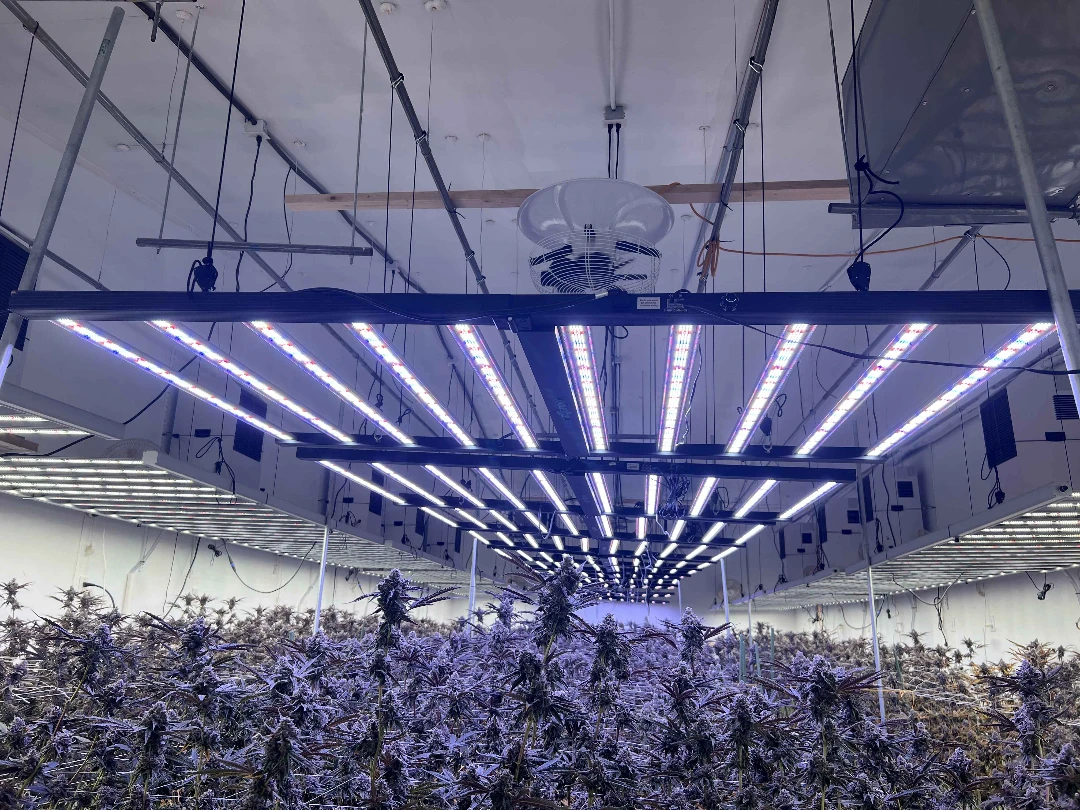
The “Bar Style” design has become the gold standard for coverage areas of 4×4 feet and larger. By spreading the diodes across 6, 8, or 10 bars, these lights offer superior heat dissipation without the need for internal fans.
- Pros: Incredible light uniformity (no hot spots), passive cooling (silent operation), modular design.
- Ideal For: 5×5 grow tents, commercial rolling benches, and vertical farming racks.
- Performance: These lights typically push 600W to 1000W and deliver PPFD readings averaging over 1000 µmol/m²/s across the canopy.
2. Quantum Boards (The Hobbyist Favorite)
Popularized by HLG and widely copied, these are flat boards loaded with hundreds of mid-power diodes.
- Pros: Lower cost per watt, compact profile, excellent efficiency.
- Cons: Heat is concentrated in one area rather than spread out; light intensity drops off significantly at the edges of the canopy compared to bar lights.
- Ideal For: Small tents (2×2, 3×3), closet grows, and budget-conscious growers.
3. COB (Chip on Board) LEDs
While falling slightly out of favor compared to SMD (Surface Mounted Device) LEDs, COBs provide intense penetration.
- Pros: Deep canopy penetration similar to HPS.
- Cons: Generates concentrated heat points; requires active cooling (fans) which can fail.
- Ideal For: High-bay greenhouse supplemental lighting where the light is mounted very high above the crop.
Data Analysis: Comparing the Best Rated LED Grow Lights

To help you visualize the differences, we have compiled data comparing standard specifications of high-performing lights in the current market. These specs represent the upper echelon of what is available in 2025-2026.
| Feature | Entry-Level Quantum Board | High-End Bar Fixture (e.g., SLTMAKS Pro Series) | Commercial Greenhouse Top-Light |
| Power Draw | 100W – 240W | 600W – 800W | 1000W+ |
| PPE (Efficiency) | 2.3 – 2.5 µmol/J | 2.7 – 3.0 µmol/J | 3.0 – 3.4 µmol/J |
| PPF (Total Output) | 400 – 600 µmol/s | 1700 – 2300 µmol/s | 3000+ µmol/s |
| Spectrum | 3500K + 660nm Red | Full Spectrum + UV + IR | Custom Spectrum (Tunable) |
| Thermal Management | Aluminum Plate | Heavy Aluminum Heatsink Bars | Liquid Cooled or Heavy Passive |
| Warranty | 1-3 Years | 5 Years | 5-7 Years |
Analysis of the Data:
As you can see from the table, while entry-level boards are sufficient for vegetative growth or small flowering footprints, they lack the raw photon punch required for maximum yield in a 5×5 space. The High-End Bar Fixtures represent the “sweet spot” for most serious growers, offering a balance of high efficiency (PPE > 2.7) and uniform coverage.
It is worth noting that at SLTMAKS, our R&D team focuses heavily on the middle column—providing commercial-grade bar fixtures that are accessible to the home grower but robust enough for industrial facilities. We utilize specific binning of diodes to ensure that our advertised PPE is what you actually measure at the wall.
Buyer’s Guide: Critical Factors When Choosing Your Light
When you are ready to invest in the best rated LED grow lights, do not just click “buy” on the first high-wattage lamp you see. Consider these technical factors that impact long-term success.
1. The “Wattage Lie” and Replacement Equivalence
Marketing claims often state “1000W Equivalent” when the light only draws 150W from the wall. This is a legacy marketing tactic comparing LEDs to incandescent or cheap HPS bulbs. Always look for the Actual Power Draw.
For a flowering photoperiod plant:
- 2×2 ft area: Needs ~150W actual draw.
- 3×3 ft area: Needs ~300W actual draw.
- 4×4 ft area: Needs ~480W – 650W actual draw.
- 5×5 ft area: Needs ~700W – 850W actual draw.
2. Driver Brand and Location
The LED driver is the heart of the system. It converts AC power from your wall to the DC power the diodes need. Cheap drivers are the #1 cause of fixture failure.
Look for reputable driver brands like Mean Well, Inventronics, or Sosen. furthermore, consider where the driver is mounted. Detachable drivers are a superior feature. They allow you to mount the driver outside the grow tent. This reduces the heat load inside the grow space by up to 15%, making climate control significantly easier and cheaper.
3. Diode Quality: The Samsung Standard
In the current market, Samsung horticulture diodes (LM301B, LM301H, and the newer LM301H EVO) are the benchmark for efficiency. Osram and Cree are the leaders for red (660nm) and Far-Red (730nm) diodes.
If a manufacturer does not list the brand of diodes they use, proceed with caution. It usually implies they are using generic Epistar or San’an chips, which, while functional, degrade faster and produce less light per watt. A light using generic chips might start at 90% output but drop to 70% within a year, whereas top-tier diodes maintain 90% output for 36,000+ hours (L90 rating).
4. Ingress Protection (IP) Rating
Grow rooms are harsh environments. High humidity, foliar spraying, and dust are constant factors. The best rated LED grow lights should have an IP65 or IP67 rating.
- IP65: Dust tight and protected against water jets (safe for accidental sprays).
- IP67: Dust tight and protected against temporary immersion (even more robust).A conformal coating over the diodes is essential to prevent sulfur corrosion, which can turn LEDs black and ruin their output.
Installation and Usage: Getting the Most from Your Light

Owning the best light is meaningless if it is not used correctly. The distance between the light and the canopy (hanging height) and the intensity (dimming) are dynamic variables.
The Inverse Square Law
Light intensity diminishes rapidly as distance increases. According to the Inverse Square Law, if you double the distance from the light source, the intensity drops to one-quarter. However, modern bar lights with multiple light sources mitigate this slightly, they still require careful height management.
Recommended Hanging Heights and Dimming Schedule
We recommend using a PAR meter or a reliable smartphone app (like Photone) to dial this in, but here is a general guideline for a powerful 650W LED Bar Light:
Seedling Stage
- Height: 24-30 inches
- Dimmer: 25% – 40%
- Target PPFD: 200 – 400 µmol/m²/s
- Reasoning: Seedlings are delicate. Too much light will cause photo-inhibition and stunt growth.
Vegetative Stage
- Height: 18-24 inches
- Dimmer: 50% – 75%
- Target PPFD: 400 – 600 µmol/m²/s
- Reasoning: Leaves are developing and can process more energy. You want to encourage tight internodal spacing.
Flowering Stage (Early to Mid)
- Height: 12-18 inches
- Dimmer: 80% – 100%
- Target PPFD: 600 – 900 µmol/m²/s
- Reasoning: The plant is focusing entirely on bud production. Maximum photosynthesis is required.
Flowering Stage (Late / Ripening)
- Height: 12-18 inches
- Dimmer: 100% (with potential UV supplementation)
- Target PPFD: 900 – 1100 µmol/m²/s (CO2 supplementation is recommended above 1000 PPFD).
ROI Analysis: LED vs. HPS
Many commercial clients at SLTMAKS ask if the higher upfront cost of LEDs is worth it compared to traditional lighting. The answer lies in the Return on Investment (ROI) calculation.
Energy Savings
A 1000W Double-Ended HPS fixture draws roughly 1150W from the wall when you account for ballast inefficiency. An LED fixture that replaces it (matching the PPF output) draws about 650W.
- Savings: 500 Watts per hour.
- Daily Savings (12 hour cycle): 6 kWh.
- Yearly Savings: ~2,190 kWh per fixture.At an average commercial rate of $0.15/kWh, that is a saving of $328 per fixture, per year just on lighting electricity.
HVAC Savings
This is the hidden bonus. HPS lights radiate massive amounts of infrared heat, forcing air conditioners to work overtime. LEDs run significantly cooler. A general rule of thumb is that for every watt of lighting power saved, you save roughly 0.3 to 0.5 watts in cooling load. This adds another 30% to your operational savings.
Bulb Replacements
HPS bulbs degrade quickly. To maintain professional yields, HPS bulbs must be replaced every 9-12 months. LED fixtures are rated for 50,000+ hours (5-7 years of continuous use) with minimal degradation. When you factor in the cost of labor and new bulbs for HPS, the ROI period for high-quality LEDs is typically 12 to 18 months.
Future Trends in LED Technology
As we look toward 2026 and beyond, the best rated LED grow lights are becoming smarter and more dynamic.
Variable Spectrum Control
Currently, most lights have a fixed spectrum. The future lies in fully tunable spectrums where the grower can adjust the ratio of Blue to Red via a controller.
- Veg Mode: High Blue for compact, bushy growth.
- Flower Mode: High Red for biomass production.
- Finishing Mode: High UV/Far-Red for terpene enhancement.
Smart Integration
IoT (Internet of Things) integration allows lights to communicate with environmental sensors. Imagine a system where your lights automatically dim if the room temperature exceeds a safe threshold, protecting your crop from heat stress without human intervention. This is the direction SLTMAKS R&D is heading.
Frequently Asked Questions (FAQ)
Q: Do I need CO2 supplementation with LED lights?
A: If you are pushing your plants with high PPFD (over 1000 µmol/m²/s), yes. Photosynthesis requires light, water, and CO2. If light is very high, CO2 becomes the limiting factor. Ambient CO2 is ~400ppm. Supplementing to 1200-1500ppm allows plants to utilize the intense light of modern LEDs.
Q: Can purple (Blurple) LEDs still be considered “Best Rated”?
A: Generally, no. While they work, they are outdated. White full-spectrum light offers better canopy penetration, easier plant health diagnosis (you can see the true color of the leaves), and generally higher efficacy.
Q: Why do my LED lights stay dimly lit when turned off?
A: This is usually due to a small amount of voltage leaking through the neutral wire or the timer. It is common with mechanical timers. Using a double-pole timer usually fixes this issue.
Conclusion: Making the Right Choice for Your Garden
Selecting the best rated LED grow lights is an investment in your harvest’s quality and quantity. The shift from generic metrics to precise data like PPFD, PPE, and spectral analysis marks the maturation of the hydroponics and indoor gardening industry.
At SLTMAKS, we understand that every photon counts. Whether you are looking for a commercial installation of hundreds of fixtures or a single high-efficiency light for your home project, the principles remain the same: prioritize uniform coverage, high efficiency, and quality components.
Do not settle for outdated technology. Examine the PAR maps, check the diode specifications, and ensure the thermal management is up to the task. If you have specific questions about lighting layout or need a custom consultation for your facility, our engineering team is ready to assist.
Invest in quality light, and your plants will reward you with unparalleled growth.
Ready to Upgrade Your Grow?
Browse our catalog of high-efficiency, commercial-grade LED fixtures at www.sltmaks.com and experience the difference that precision engineering makes.