In the past decade, the landscape of indoor horticulture has undergone a seismic shift, moving away from the energy-guzzling High-Pressure Sodium (HPS) systems of the past toward the precision engineering of Light Emitting Diodes (LEDs). As the Editor-in-Chief of SLTMAKS, and having spent years in the laboratory and on the production floor, I have witnessed this evolution firsthand. We have moved from the early days of “blurple” lights—which were often inefficient and lacked spectrum depth—to today’s sophisticated full-spectrum solutions that mimic the sun with uncanny accuracy.
For both commercial facility managers and home hobbyists, the challenge today is no longer finding a light that works; it is navigating an oversaturated market to find the best recommended led grow light for their specific application. The difference between a mediocre harvest and a record-breaking yield often comes down to the photon flux density and spectral quality your plants receive. This guide is not just a product list; it is a deep dive into the science of lighting, designed to help you understand what makes a fixture truly “recommended” by industry experts.
At SLTMAKS, we believe in transparency and data-driven cultivation. Whether you are growing leafy greens, medical herbs, or ornamental flowers, understanding the relationship between electrical efficiency (Watts) and photosynthetic output (PPF) is crucial. In this comprehensive guide, we will dismantle the technical jargon, analyze the metrics that actually matter, and provide you with a roadmap to selecting the perfect lighting system for your grow space.
Table of Contents
The Science of Spectrum: Beyond the Human Eye
Understanding PAR and the McCree Curve
When we discuss a recommended led grow light, we must first understand that plants do not “see” light the same way humans do. Humans are sensitive to green and yellow light (measured in lumens), but plants care about Photosynthetically Active Radiation (PAR), which falls within the 400nm to 700nm range. To evaluate a light effectively, we look at the McCree Action Spectrum, which outlines the specific wavelengths that drive photosynthesis most efficiently.
A high-quality LED fixture must provide a balanced spectrum. While red light (660nm) is most efficient for driving photosynthesis during the flowering stage, and blue light (450nm) is essential for vegetative growth and morphological compactness, a strictly red-blue spectrum is outdated. Modern research from institutions like Utah State University’s Crop Physiology Lab suggests that green light penetrates deeper into the canopy than previously thought, aiding in photosynthesis for lower leaves. Therefore, the most highly recommended fixtures today utilize “white light” full-spectrum diodes (3000K to 5000K) supplemented with deep red and IR (Infrared) to create a holistic environment.
The Role of UV and IR in Plant Morphology
Advanced growers often ask about the inclusion of Ultraviolet (UV) and Infrared (IR) diodes. While these wavelengths fall outside the standard PAR range, they play a critical role in secondary metabolite production. UV light can trigger stress responses in plants that increase trichome density and oil production, acting as a natural sunscreen. Conversely, Far-Red (730nm) influences the Emerson Effect, which can speed up flowering times and increase leaf expansion.
When we design lights at SLTMAKS, we carefully calibrate the ratio of Red to Far-Red. A recommended led grow light should not just blast random wavelengths; it must feature a scientifically formulated recipe. If the Far-Red is too high during the vegetative stage, your plants may stretch excessively (etiolation). However, used correctly during the flowering phase, it can significantly boost biomass. We recommend looking for fixtures that either have a dedicated switch for UV/IR or have integrated them at safe, background levels that mimic the rising and setting sun.
Decoding the Metrics: PPF, PPFD, and PPE
Photosynthetic Photon Flux (PPF) vs. PPFD
Marketing materials often confuse buyers with big numbers, but as an engineer, I look at the data. PPF (Photosynthetic Photon Flux) measures the total amount of light produced by a fixture each second, expressed in micromoles per second (μmol/s). However, PPF doesn’t tell you where that light is going. This is why PPFD (Photosynthetic Photon Flux Density) is the superior metric for the end-user.
PPFD measures how many photons actually hit a specific spot on your canopy per second (μmol/m²/s). A recommended led grow light for a 4×4 tent might have a high total PPF, but if the lens design is poor, you might get a “hot spot” in the center where plants burn, while the edges remain in darkness. We always advise checking the PPFD map of a fixture before buying. You want an even distribution—typically an average of 800-1000 μmol/m²/s for flowering plants without CO2, and up to 1500 μmol/m²/s if you are supplementing with CO2.
Photosynthetic Photon Efficacy (PPE)
Efficiency is where LED technology leaves legacy lighting like HPS in the dust. PPE refers to how efficiently a light converts electricity (Joules) into photosynthetically active light (micromoles). This is expressed as μmol/J.
Five years ago, a PPE of 2.0 μmol/J was considered excellent. Today, the industry standard for a recommended led grow light is typically above 2.7 μmol/J, with top-tier commercial fixtures reaching up to 3.0 μmol/J or higher. This metric directly correlates to your electricity bill. A fixture with a high PPE runs cooler and uses less power to produce the same amount of light as a less efficient unit.
Table 1: Efficiency Comparison of Lighting Technologies
| Metric | High-Pressure Sodium (HPS) | Ceramic Metal Halide (CMH) | Budget LED | Premium Recommended LED (SLTMAKS Standard) |
| Spectrum | Yellow/Orange heavy | Balanced but limited | Often “Blurple” or low CRI | Full Spectrum (Sun-like) |
| Efficacy (PPE) | 1.3 – 1.7 μmol/J | 1.5 – 1.9 μmol/J | 1.8 – 2.2 μmol/J | 2.7 – 3.1 μmol/J |
| Heat Output | Very High (Radiant Heat) | High | Moderate | Low (Dispersed via Heatsink) |
| Lifespan | 10,000 – 24,000 Hours | 20,000 Hours | 30,000 Hours | 50,000 – 100,000+ Hours |
| Dimming | Limited/Difficult | Limited | Sometimes | 0-10V or Knob Precise Dimming |
Sizing Your Light: Matching Wattage to Space

The 2×2 and 3×3 Hobbyist Setup
For smaller spaces, such as a closet grow or a 2×2 foot tent, you do not need a massive commercial fixture. Over-lighting a small space can lead to light bleaching and heat stress. For a 2×2 area, we usually suggest a board-style or compact bar light drawing between 100W to 150W actual power. The goal here is to achieve that sweet spot of roughly 30-40 watts per square foot of canopy.
Moving up to a 3×3 foot space, the requirements increase. A recommended led grow light for this coverage should draw between 240W and 320W. This ensures that the edges of the tent receive adequate light for photosynthesis. At SLTMAKS, we often recommend bar-style lights for these spaces because the spread is superior to Quantum board styles, reducing the center hotspot issues and allowing for a more even canopy.
4×4 and 5×5 Commercial Footprints
The 4×4 and 5×5 footprints are the standard units of measurement for commercial facility planning. For a flowering 4×4 area, the industry “gold standard” used to be a 1000W HPS DE lamp. Today, we replace that with a 600W to 720W LED fixture. This massive reduction in wattage (approx. 30-40% savings) is accompanied by a reduction in HVAC costs because LEDs produce significantly less radiant heat directed at the plants.
For a 5×5 space, or for growers utilizing high-frequency fertigation and CO2 supplementation (1200-1500ppm), you need a powerhouse. A recommended led grow light for this application would be in the 800W to 1000W range. However, caution is advised: utilizing this much light without CO2 will likely damage your plants. It is a balance of limiting factors; light is the gas pedal, but CO2 and nutrients are the fuel. You cannot press the gas pedal if the tank is empty.
Component Quality: What is Under the Hood?
The Importance of Brand Name Diodes
In my years of sourcing components for SLTMAKS, I have learned that not all LEDs are created equal. The market is flooded with cheap, generic diodes that degrade quickly, losing up to 20% of their luminosity within the first year (a phenomenon known as L90 depreciation). To ensure longevity, a recommended led grow light should utilize top-tier diodes from manufacturers like Samsung (specifically the LM301H or LM301B series) or Osram (for red wavelengths).
Samsung diodes are renowned for their high efficacy and thermal management. When a manufacturer specifies they are using “Samsung LM301H Evo,” they are signaling that the fixture is built for professional horticulture. These diodes are chemically resistant to sulfur and humidity, common elements in a grow room environment. Avoid generic descriptions like “SMD 3030” without a brand name attached; this is often a red flag for lower-bin components that will reduce your ROI over time.
Drivers and Thermal Management
The LED driver is the heart of the system—it converts AC power from your wall into the DC power the diodes need. A failing driver is the number one reason for fixture failure. We strongly advocate for fixtures using Mean Well or Inventronics drivers. These brands offer high surge protection, high power factors (>0.95), and typically come with 5 to 7-year warranties.
Furthermore, thermal management is critical. LEDs do not emit heat downwards like HPS bulbs, but the diodes themselves generate heat backward. A recommended led grow light must have a substantial aluminum heat sink. Passive cooling (no fans) is generally preferred in horticulture because fans are failure points and can get clogged with dust or humidity. A thick, finned aluminum body dissipates heat efficiently, keeping the junction temperature of the diodes low, which directly extends the lifespan of the unit.
Installation and Uniformity: The Bar Light Advantage

Why Bar Designs are Taking Over
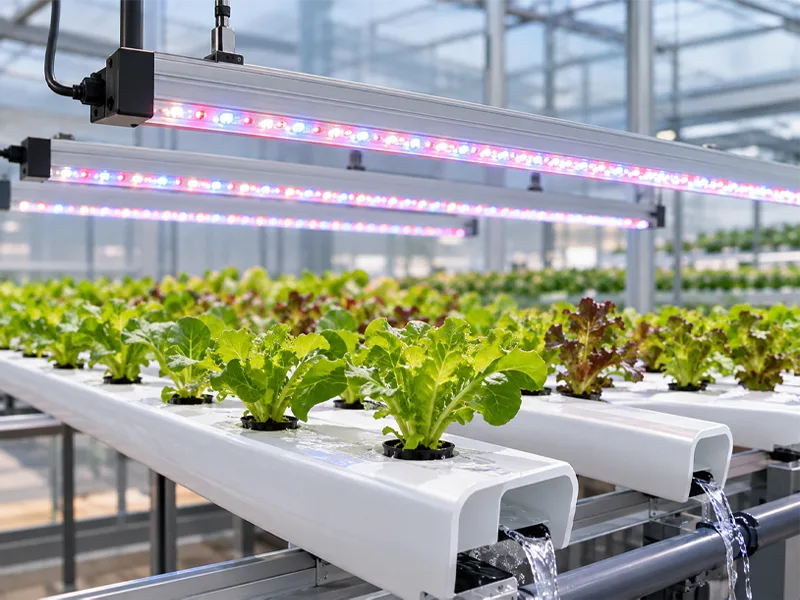
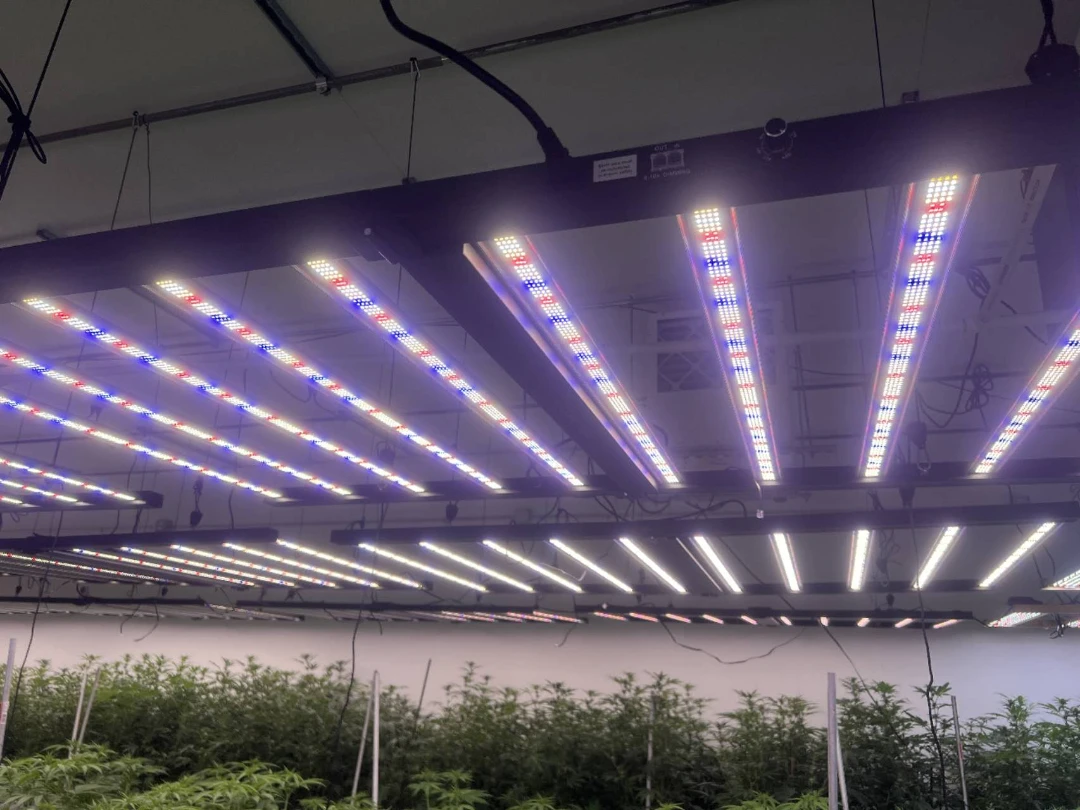
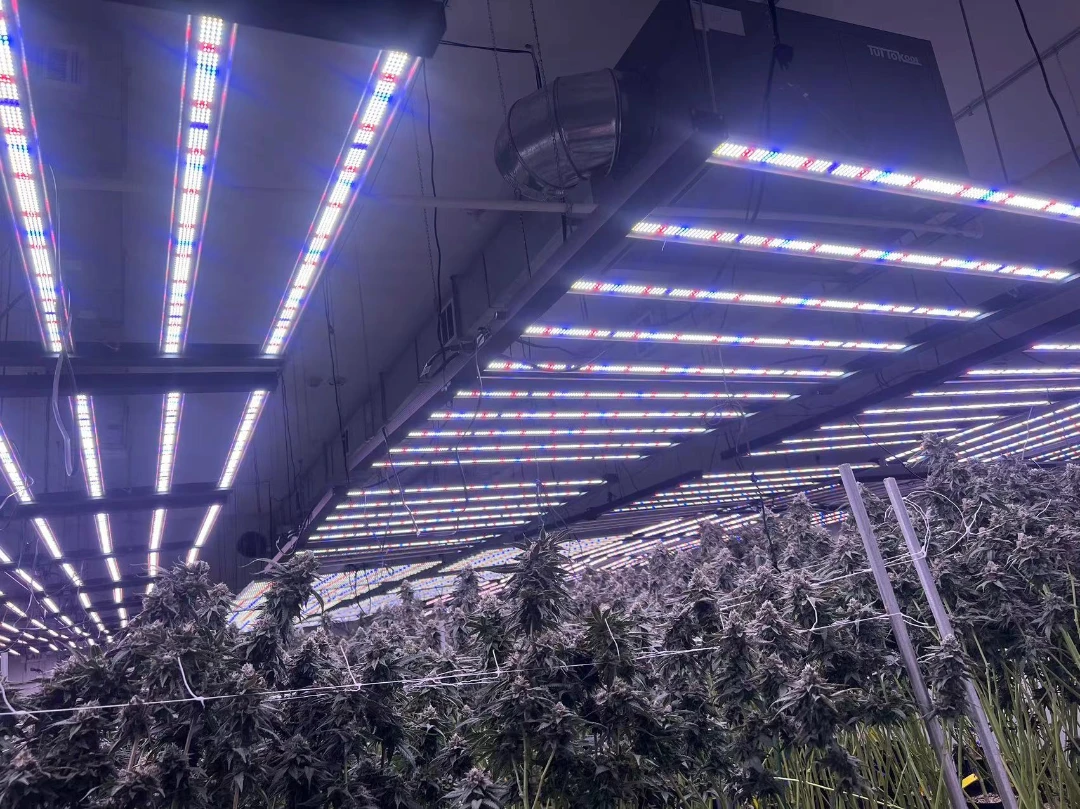
You may have noticed a shift in form factor over the last few years. Early LEDs were boxy “panels.” Then came the “Quantum Boards.” Now, the most recommended led grow light design is the “Multi-Bar” style. This looks like a ladder of light bars. Why the shift? It comes down to uniformity and canopy penetration.
In a panel or board design, the light originates from a central point or a flat plane, creating a high intensity in the middle and a sharp drop-off at the edges. Bar lights spread the diodes out over a larger physical area, often matching the size of the canopy itself. This allows light to hit the plants from multiple angles, leading to better penetration into the lower branches and less shadowing. For the grower, this means fewer “larfy” (fluffy/underdeveloped) buds on the lower stems and a more consistent crop quality from top to bottom.
Hanging Heights and Dimming
One of the most common mistakes I see customers make is hanging their lights too close or too far. Because modern LEDs are so powerful, hanging them 12 inches from a young seedling will likely kill it. A recommended led grow light should always include a dimmer knob or a digital controller port (RJ11/RJ14).
- Seedling Stage: Dim to 25-40%, hang at 24-30 inches.
- Vegetative Stage: Increase to 50-75%, hang at 18-24 inches.
- Flowering Stage: Crank to 100%, lower to 12-18 inches (monitor for heat stress).
Having a dimmer allows you to keep the light at a fixed height and simply adjust the intensity as the plants grow, which is much easier than constantly raising and lowering heavy equipment.
Cost Analysis and ROI: Investing in Your Harvest
Upfront Cost vs. Long-term Gains
It is undeniable that a high-quality LED fixture has a higher upfront cost than a traditional HPS setup. However, the calculation for a commercial grower or a serious hobbyist must include operational capability (OpEx). Let’s look at the math. A 1000W HPS system requires bulb replacements every 9-12 months. An LED fixture rated for 50,000 hours can run for over 5 years on a 12/12 cycle without maintenance.
Furthermore, the heat load reduction is massive. According to energy reports from organizations like the DesignLights Consortium (DLC), switching to LED can reduce HVAC cooling loads by 30-50%. When you combine the energy savings from the light itself (roughly 40%) with the HVAC savings and the elimination of bulb replacement costs, the Return on Investment (ROI) for a recommended led grow light is typically achieved within 12 to 18 months of operation.
Certifications Matter
When browsing for lights, look for safety certifications. In the US and Canada, UL 8800 or ETL certifications are crucial, especially for commercial facilities that require inspections. In Europe, CE and RoHS compliance is mandatory. These marks prove that the fixture has been tested for electrical safety, fire resistance, and humidity ingress protection (IP65 is the standard recommendation for wet environments). At SLTMAKS, we ensure our global product lines meet these rigorous standards to protect your facility and your insurance coverage.
Making the Final Decision
Selecting the right lighting is the single most important equipment decision a grower will make. It dictates the potential of your genetic stock, the speed of your metabolism, and the quality of your final product. A recommended led grow light is one that balances high efficiency (PPE > 2.7 μmol/J), a robust full spectrum (including UV/IR), premium components (Samsung/Mean Well), and an even distribution form factor (Bar style).
At SLTMAKS, we have poured our years of engineering and agronomy experience into creating fixtures that meet these high standards without the inflated markup of some “hype” brands. We understand that whether you are running a vertical farm facility or a home tent, reliability is paramount.
We invite you to explore our catalog and compare our specifications against the data points discussed in this article. Don’t just buy a light; invest in a photon engine that will power your garden for years to come. If you have specific questions about your grow space dimensions or crop requirements, our technical support team—comprising fellow growers and engineers—is ready to assist you in calculating the perfect lighting layout.
FAQ
What is an LED grow light?
An LED grow light is a special type of light designed to help plants grow indoors. Unlike regular light bulbs, these lights use a technology called Light Emitting Diodes (LEDs) to produce light. They are energy-efficient and can provide the right kind of light that plants need, which helps them grow strong and healthy.
How do I choose the right LED grow light for my space?
When picking an LED grow light, consider the size of your growing area and the types of plants you want to grow. You want a light that provides the right amount of brightness, or “lumen,” across the entire area. Think about how high you can hang the light and if it has a dimming feature for adjusting brightness as your plants grow.
What does PPF and PPFD mean?
PPF stands for Photosynthetic Photon Flux, which measures how much light a grow light emits, while PPFD, or Photosynthetic Photon Flux Density, measures how many of those light particles actually hit your plants’ leaves in a specific area. For healthy growth, pay attention to the PPFD ratings when selecting your light.
Why is the spectrum of light important for plants?
Plants need different colors of light for various growth stages. For example, blue light helps plants grow leaves, and red light helps them flower. A good LED grow light offers a full spectrum that includes blue, red, and even green light, providing the best overall support for plant growth throughout their life cycle.
How much power does an LED grow light use?
The power consumption of an LED grow light varies based on its size and design. Generally, you want to look for lights that provide a good amount of light while using less electricity, often measured in watts. A good rule of thumb is around 30-40 watts per square foot of growing space.
Can I use an LED grow light for any type of plant?
Yes! LED grow lights can support a variety of plants, including vegetables, flowers, and herbs. However, the light needs to be adjusted according to the type of plant and its growth stage (such as seedling, vegetative, or flowering) to ensure they receive the best light for their needs.
How do I maintain my LED grow light?
Maintaining your LED grow light is fairly simple. Ensure it is clean from dust and debris to keep it functioning well. Additionally, check the hanging height and adjust it as needed as your plants grow. Most LED grow lights don’t require bulb replacements, which makes them low-maintenance.
What factors should I consider when budgeting for an LED grow light?
When budgeting for your LED grow light, consider the initial cost of the unit and how much you’ll save on electricity over time. LEDs typically have longer lifespans and lower operational costs compared to older lighting methods, which can lead to savings within a year or two of use.
What certification should I look for in LED grow lights?
Look for safety certifications such as UL, ETL, or CE when buying an LED grow light. These certifications indicate that the light has been tested for safety and efficiency, giving you peace of mind that it won’t cause electrical hazards.
Can LED grow lights help with plant health?
Yes! LED grow lights can significantly improve plant health when used correctly. They provide the necessary light spectrum for photosynthesis, which helps plants grow more robustly and yield better harvests. Proper use of LED lights can also reduce stress on plants by providing consistent and optimal lighting conditions.