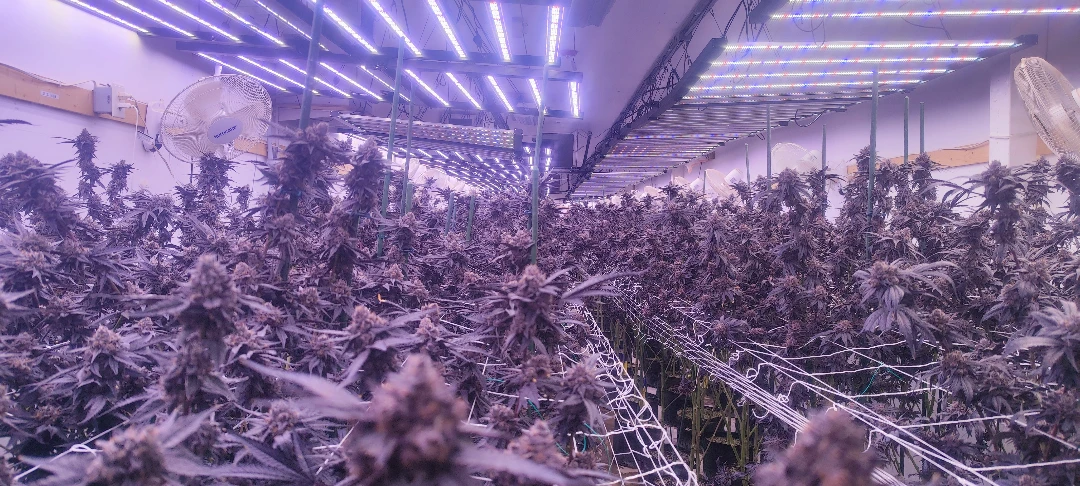
Engineer the perfect light spectrum for optimal plant growth. Boost your yields and cultivate year-round with our energy-efficient LED solutions. Tell us your needs for a customized lighting strategy and quote.
Finding the best LED grow lights for weed is no longer just about picking the brightest bulb on the shelf; it is about understanding the intersection of physics, botany, and engineering. As the Editor-in-Chief at SLTMAKS, and drawing from years of experience in the R&D and production of horticultural lighting, I have witnessed the industry shift from inefficient HPS systems to precision-engineered LED solutions. For the home grower, the market can be overwhelming, filled with jargon and conflicting claims about spectrums and wattage.
This guide is designed to cut through the noise and provide a definitive resource for selecting the lighting system that will maximize your cannabis yields, potency, and terpene profiles. We will explore the science behind Photosynthetic Photon Flux Density (PPFD), the importance of thermal management, and why the specific diode arrangement matters for your canopy. Whether you are setting up a discreet closet grow or a dedicated 5×5 tent, understanding these technical nuances is the key to transitioning from an amateur hobbyist to a master cultivator.
Table of Contents
The Evolution of Indoor Cannabis Lighting
In the early days of indoor cultivation, High-Pressure Sodium (HPS) and Metal Halide (MH) lamps were the undisputed kings of the grow room. While they were effective at producing raw intensity, they were plagued by excessive heat generation, massive power consumption, and a rigid spectrum that couldn’t be adjusted. Growers spent nearly as much money on air conditioning and ventilation as they did on the lights themselves, just to keep their plants from burning.
Today, the landscape has changed entirely with the advent of high-efficiency Light Emitting Diodes (LEDs). The best LED grow lights for weed utilize full-spectrum white light, often supplemented with specific red and UV diodes, to mimic the sun more closely than any HID bulb ever could. This technological leap allows growers to push the boundaries of genetic potential, achieving higher cannabinoid concentrations while consuming significantly less electricity.
Why LED Technology is the Gold Standard for Weed
The primary reason LED technology has taken over the cannabis industry is “Efficacy,” measured in micromoles per joule (µmol/J). A standard HPS lamp might operate at around 1.7 µmol/J, meaning a significant portion of the electricity you pay for is wasted as heat rather than converted into usable light for the plant. Modern LEDs, particularly those we engineer at SLTMAKS, often exceed 2.7 to 2.9 µmol/J, delivering more photons to your canopy for every watt of electricity consumed.
Furthermore, the spectral output of LEDs is tunable, allowing manufacturers to create a “recipe” of light that is perfectly optimized for photosynthesis. Unlike the harsh yellow glare of HPS, full-spectrum LEDs allow you to see your plants in true color, making it much easier to spot nutrient deficiencies or pest issues early on. This combination of efficiency, spectral control, and diagnostic visibility makes LEDs the superior choice for any serious grower.
Key Metrics to Evaluate the Best LED Grow Lights for Weed
When shopping for grow lights, marketing fluff often obscures the data that actually matters. To identify the best LED grow lights for weed, you must learn to read the technical specifications like a professional engineer.
Understanding PAR, PPF, and PPFD
The human eye perceives light in lumens, but plants do not care about lumens; they care about PAR (Photosynthetically Active Radiation). PAR refers to the range of light wavelengths (400nm to 700nm) that plants use for photosynthesis. However, knowing the range is not enough; we need to measure the quantity of light.
PPF (Photosynthetic Photon Flux) measures the total amount of PAR light produced by a fixture each second, measured in micromoles per second (µmol/s). While this tells you how powerful the light engine is, it doesn’t tell you how much light actually hits your plants.
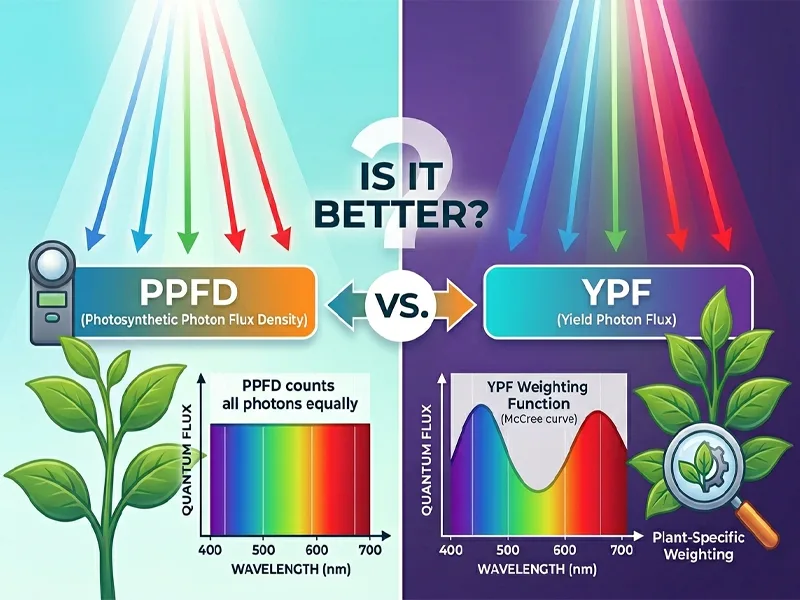
PPFD (Photosynthetic Photon Flux Density) is the critical metric for growers. It measures the amount of PAR light that arrives at a specific spot on your canopy each second, measured in µmol/m²/s. The best LED grow lights for weed maintain a high and uniform PPFD across the entire footprint, not just in the center directly under the fixture.
Editor’s Note: A common trick in the industry is to advertise a massive PPFD number taken from the dead center of the light at a very close distance. Always look for “PPFD Maps” or “PAR Maps” that show the distribution of light across a 4×4 or 5×5 grid. A light with a center reading of 2000 µmol/m²/s but only 400 on the edges will result in uneven growth and popcorn buds on the perimeter.
The Role of PPE (Photosynthetic Photon Efficacy)
PPE describes how efficient a grow light is at converting electricity into PAR light. It is calculated by dividing the PPF by the input wattage. The higher the number, the better the efficiency.
Light Type
Average PPE (µmol/J)
Heat Output
Lifespan (Hours)
Single-Ended HPS
1.0 – 1.3
Very High
10,000 – 15,000
Double-Ended HPS
1.5 – 1.8
High
15,000 – 20,000
CMH / LEC
1.5 – 1.9
Moderate
20,000
Budget LED (Blurple)
1.2 – 1.6
Moderate
20,000 – 30,000
High-End LED
2.5 – 3.0+
Low
50,000+
As shown in the table above, high-end LEDs offer superior efficiency. This means that a 600W LED can often replace a 1000W HPS fixture, resulting in a 40% reduction in electricity costs while producing equal or better yields. For more on energy efficiency standards, you can refer to resources like the [DesignLights Consortium (DLC)](https://www.designlights.org/ horticultural-lighting/), which sets the bar for commercial-grade horticultural lighting efficiency.
Spectrum Analysis: What Cannabis Plants Actually Need
The “spectrum” refers to the different wavelengths of light emitted by the fixture. In the past, “blurple” lights (a mix of red and blue diodes) were popular, but research has shown that cannabis plants thrive under full-spectrum light that mimics the sun.
The Importance of Full Spectrum White Light
The best LED grow lights for weed utilize a base of white diodes (usually 3000K, 4000K, or 5000K) to provide a rich background of green and yellow wavelengths. While early science suggested plants didn’t use green light, modern botany has proven that green light penetrates deeper into the canopy than red or blue, driving photosynthesis in the lower leaves that would otherwise be shaded.
By using a full-spectrum approach, we ensure that the plant receives energy at every level. This results in sturdier stems, tighter internodal spacing, and more vigorous growth compared to narrow-spectrum lighting.
Enhancing Yields with Deep Red (660nm) and Far-Red (730nm)
While white light is the foundation, specific red wavelengths are the turbochargers for flowering. Deep Red (660nm) is the most efficient wavelength for driving photosynthesis (the Emerson Effect).
Far-Red (730nm) plays a crucial role in the “phytochrome” system of the plant, which regulates the sleep/wake cycle and the transition to flowering. Including Far-Red light can help shorten the flowering cycle and increase leaf size during the vegetative stage. At SLTMAKS, our advanced fixtures integrate these specific wavelengths to trigger the “Emerson Effect,” where the simultaneous application of red and far-red light increases the rate of photosynthesis exponentially.
The Role of UV Light (UVA and UVB)
Some of the most advanced fixtures also include Ultraviolet (UV) diodes. UV light stresses the plant slightly, which triggers a defense mechanism: the production of more trichomes and cannabinoids as a “sunscreen.”
However, UV diodes degrade faster than standard LEDs. Therefore, the best LED grow lights for weed often use a separate UV channel or carefully sourced UV chips to ensure longevity. Proper use of UV during the final weeks of flowering can significantly increase THC percentage and terpene production.
Form Factors: Bar Styles vs. Quantum Boards vs. COBs
The physical design of the light fixture dictates how the light is distributed over your plants. Choosing the right form factor is just as important as the spectral output.
The Rise of the Multi-Bar “Spider” Design
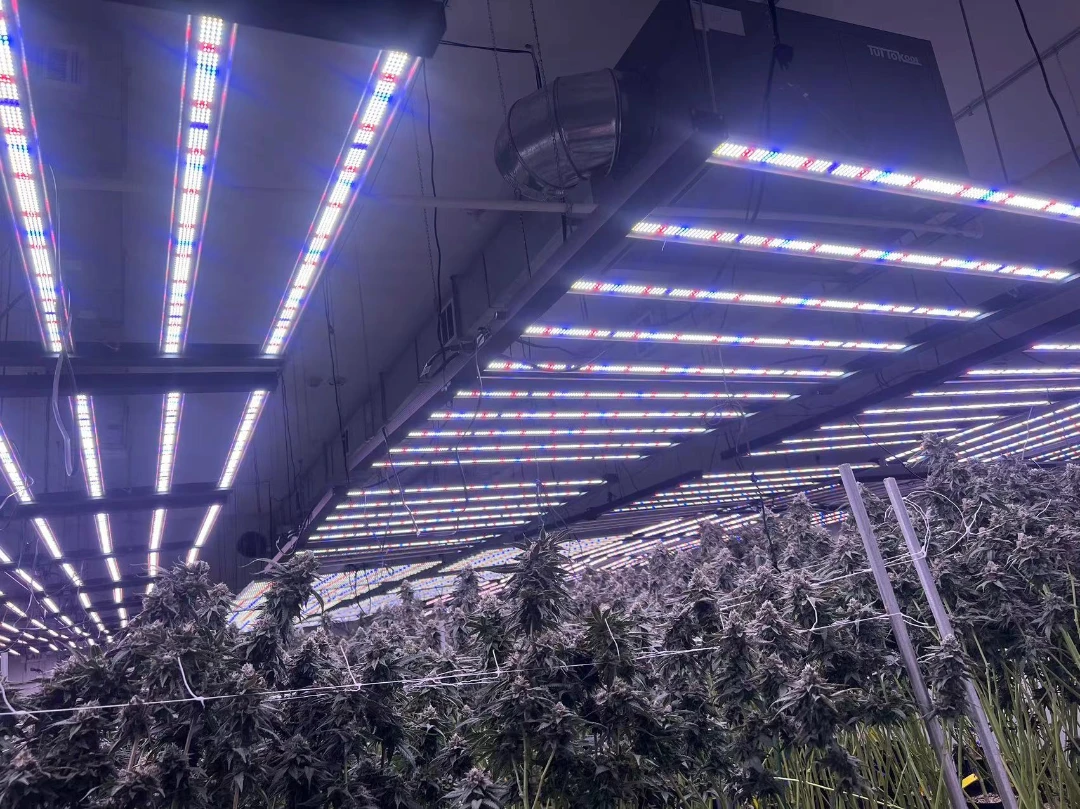
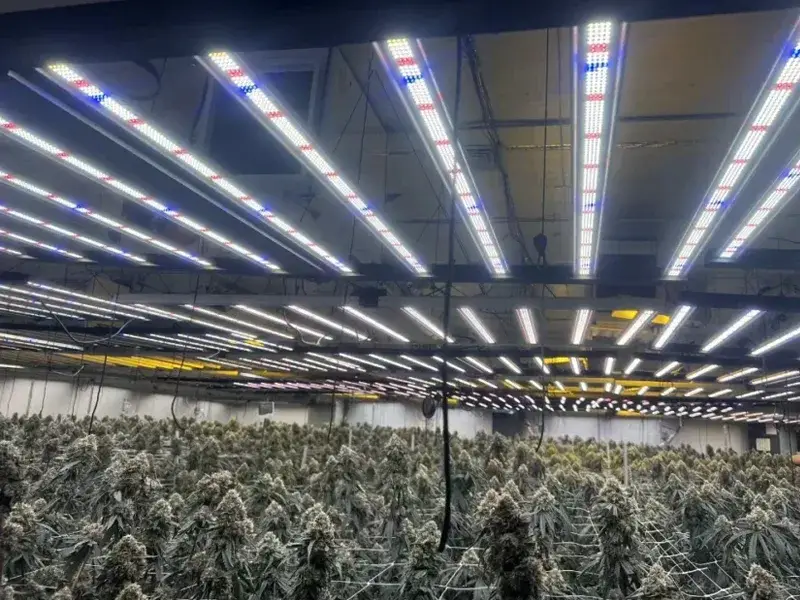
Currently, the bar-style LED is considered the premium choice for commercial and serious home growers. By spreading the diodes across 6, 8, or 10 bars, the heat is dissipated more effectively without the need for noisy fans.
More importantly, this design creates the most uniform light spread. Because the light source is physically larger, it hits the plants from multiple angles, reducing shadows and ensuring that buds on the edges of the tent receive almost as much light as those in the center. For a 4×4 or 5×5 tent, a bar-style fixture is undoubtedly the best LED grow light for weed cultivation.
Quantum Boards and Panel Lights
Quantum boards are flat panels covered in hundreds of mid-power diodes. They are excellent for smaller spaces, such as 2×2 or 3×3 tents, and are generally more affordable than bar lights.
The downside of quantum boards is that the light originates from a more centralized point compared to bar lights. This can create a “hotspot” directly in the center and significant drop-off at the edges. However, for budget-conscious growers or those with limited vertical height, they remain a very viable and popular option.
COB (Chip on Board) LEDs
COB LEDs pack many diodes into a single, small chip, creating an incredibly intense point source of light. They are excellent for canopy penetration, pushing light deep down to the soil.
However, because they are point sources, they require careful management to avoid light burn. They are often less efficient than the spread-out designs of modern bar lights and are becoming less common in high-end cannabis cultivation as the industry favors the uniformity of bar fixtures.
Sizing Your Light: Matching Wattage to Tent Size
One of the most common mistakes home growers make is buying a light that is either too weak for their space or too powerful to manage the heat. Here is a breakdown of the power requirements for standard grow tent sizes.
2×2 ft (0.6×0.6m) Grow Space
For this small footprint, you generally need between 100W to 150W of actual power draw. The goal is to achieve a PPFD of roughly 600-800 µmol/m²/s during flowering.
Recommendation: A compact quantum board or a small bar light.
Target PPFD: 300-500 for Veg, 600-800 for Flower.
4×4 ft (1.2×1.2m) Grow Space
This is the standard size for a home grower aiming for a substantial yield (often 1lb+ per harvest). To light a 4×4 area effectively for flowering cannabis, you need significantly more power.
The best LED grow lights for weed in a 4×4 space typically draw between 480W and 650W. Anything less than 480W will likely leave the corners of the tent underlit. A 600W bar light is the sweet spot, providing high intensity without requiring an industrial HVAC system to manage the heat.
5×5 ft (1.5×1.5m) Grow Space
A 5×5 tent offers 56% more growing area than a 4×4, so it requires a proportional increase in light. You should be looking for fixtures in the 700W to 1000W range.
At this power level, carbon dioxide (CO2) supplementation becomes a consideration. Cannabis plants can only process a certain amount of light (around 800-1000 PPFD) at ambient CO2 levels. If you push the light intensity to 1200+ PPFD without adding CO2, you risk stressing the plants without gaining extra yield. High-power LED bars designed for 5×5 spaces often come with dimmers, allowing you to run them at 80% efficiency or crank them to 100% if you introduce CO2.
Thermal Management and Component Quality
As a manufacturer, I cannot stress enough that the quality of the components defines the longevity of the light. An LED fixture is an investment that should last for 5 to 10 years.
The Critical Role of the Driver
The driver is the “heart” of the LED system, converting AC power from your wall into the DC power the diodes need. Cheap drivers are the number one cause of fixture failure. They also generate excess heat and electrical noise.
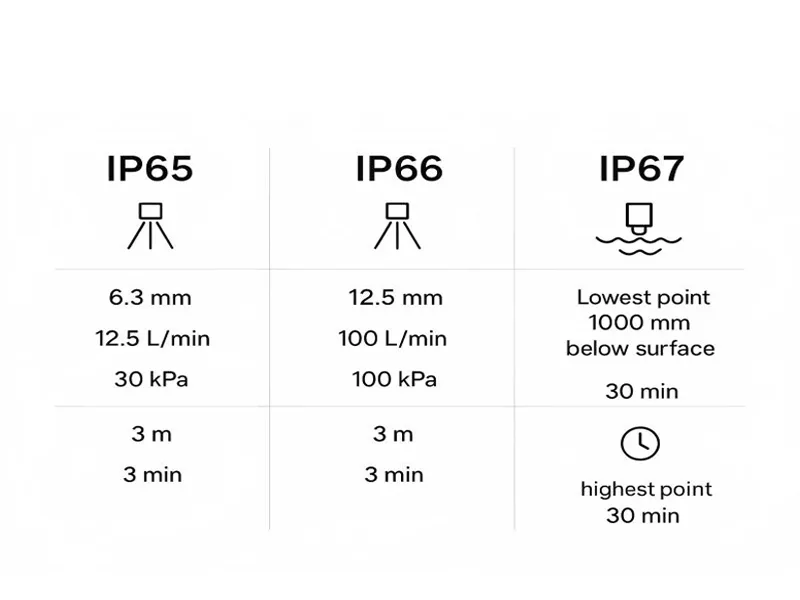
Top-tier manufacturers use drivers from reputable brands like Mean Well or Inventronics. These drivers are rated for high efficiency (often >94%), are IP67 waterproof, and offer smooth dimming capabilities (0-10V or PWM). When selecting the best LED grow light for weed, always check the spec sheet for the driver brand.
Diode Selection: Why Samsung Reigns Supreme
The diodes are the “engine” of the light. Currently, the industry standard for high-efficiency white horticultural lighting is the Samsung LM301 series (LM301B or the newer LM301H/EVO).
These diodes are chemically engineered to withstand the humidity and sulfur environments often found in grow rooms. They maintain their brightness (L90 rating) for over 36,000 to 50,000 hours. Cheaper, generic diodes may look bright initially but can lose 20-30% of their output within the first year of operation. For red diodes, Osram is widely considered the leader in efficiency and stability.
Passive vs. Active Cooling
In the past, LED lights used internal fans (active cooling) to keep the heatsinks cool. However, fans are a mechanical point of failure. If the fan dies, the LEDs overheat and burn out.
Modern, high-quality fixtures utilize passive cooling. This involves using heavy-duty aluminum heatsinks with significant surface area to dissipate heat naturally. While this makes the fixture heavier, it makes it silent and significantly more reliable.
Maximizing Yields: How to Use Your LED Light
Buying the best LED grow lights for weed is step one; using them correctly is step two. LEDs are intense, and improper usage can lead to light bleaching or stunted growth.
Hanging Heights and Dimming
Unlike HPS lights, which needed to be kept far away to avoid heat stress, LEDs can be positioned much closer to the canopy—but they can still cause light stress due to photon intensity.
Seedling Stage: Keep the light high (24-30 inches) and dimmed to 25-40%. Seedlings are delicate and do not need intense light.
Vegetative Stage: Lower the light to 18-24 inches and increase power to 50-75%. Watch for “praying” leaves (leaves pointing upwards), which indicates happy plants.
Flowering Stage: Lower to 12-18 inches (depending on manufacturer recommendations) and increase to 100% power.
Understanding DLI (Daily Light Integral)
DLI measures the total amount of light a plant receives in a 24-hour period. It is calculated based on the PPFD and the number of hours the light is on.
Since cannabis in the vegetative stage gets 18+ hours of light, the intensity (PPFD) doesn’t need to be as high as in the flowering stage, where the light is only on for 12 hours. Using a DLI chart or calculator helps you adjust your dimmer to save electricity while maximizing growth. You can learn more about photobiology and DLI from agricultural extension resources like University of Massachusetts Amherst Greenhouse Crops and Floriculture Program, which offers excellent technical data on light integrals.
Calculating the ROI: Is the Upgrade Worth It?
For many growers, the upfront cost of a premium LED fixture ($400 – $1000+) can be a barrier. However, when we analyze the Total Cost of Ownership (TCO) over 5 years, the LED is invariably cheaper than HPS.
Electricity Savings
A 1000W HPS system draws roughly 1100W from the wall (including ballast inefficiency). To get the same light output, a modern LED draws about 650W. That is a 450W saving per hour.
If you run your lights for an average of 12 hours a day:
450W x 12 hours = 5.4 kWh saved per day.
5.4 kWh x 365 days = 1,971 kWh saved per year.
At an average US electricity rate of $0.15/kWh, that is $295 saved per year just on lighting electricity.
HVAC and Bulb Replacement Savings
HPS bulbs degrade quickly and need replacement every 9-12 months to maintain yields. That costs roughly $50-$80 per year. Furthermore, the heat load from HPS often requires running air conditioning or powerful inline fans constantly.
LEDs emit significantly less radiant heat. This reduces the load on your cooling system, which can save another $100-$200 per year depending on your climate. Over a 5-year period, the best LED grow lights for weed essentially pay for themselves through operational savings alone.
Common Pitfalls to Avoid When Buying
As an insider in the manufacturing world, I see many growers fall for misleading marketing tactics. Here is what to avoid.
The “Wattage Equivalent” Trap
Many cheap lights on marketplaces are labeled as “1000W LED” or “2000W LED,” but when you look at the fine print, they only draw 150W from the wall. This is deceptive advertising. Always look for the “True Draw” or “Actual Power Consumption.” If a light claims to be 1000W but costs $100, it is a lie.
Ignoring Safety Certifications
Electricity and water are a dangerous combination. Cheap, uncertified lights can be fire hazards. Look for UL, ETL, or CE certifications. These marks indicate that the fixture has passed rigorous safety testing regarding electrical insulation and heat management.
Why SLTMAKS is Your Trusted Partner in Cultivation
At SLTMAKS, we don’t just sell lights; we engineer growth solutions. Having spent years on the production line and in the R&D lab, we understand that the best LED grow lights for weed must balance high PPFD, uniform coverage, and spectral precision.
Our fixtures are built with top-bin Samsung diodes and reliable drivers, encased in robust aluminum bodies designed for passive cooling. We test every batch in integrating spheres to verify our efficiency claims, ensuring you get the µmol/J you paid for. We focus on B2B and B2C solutions that bring commercial-grade technology to the home grower at a price point that makes sense.
Lighting the Way to Better Harvests
Selecting the best LED grow lights for weed is the single most impactful decision you will make for your indoor garden. It determines the density of your buds, the complexity of your terpene profile, and the weight of your final harvest. By prioritizing high efficacy (PPE), uniform light distribution (PPFD maps), and a full spectrum rich in red and far-red wavelengths, you set the stage for success.
Don’t settle for outdated technology or deceptive marketing. Invest in a lighting system that respects the science of botany and the engineering of efficiency. Your plants will reward you with vigorous growth and a harvest that reflects the true genetic potential of your seeds.
Ready to upgrade your grow room with professional-grade lighting?
Browse our catalog of high-performance LED grow lights at www.sltmaks.com today. Whether you are outfitting a small closet or a commercial facility, our team of experts is here to help you calculate the perfect lighting plan for your specific needs. Contact us now for a free consultation on optimizing your PPFD and spectrum for your next cycle.