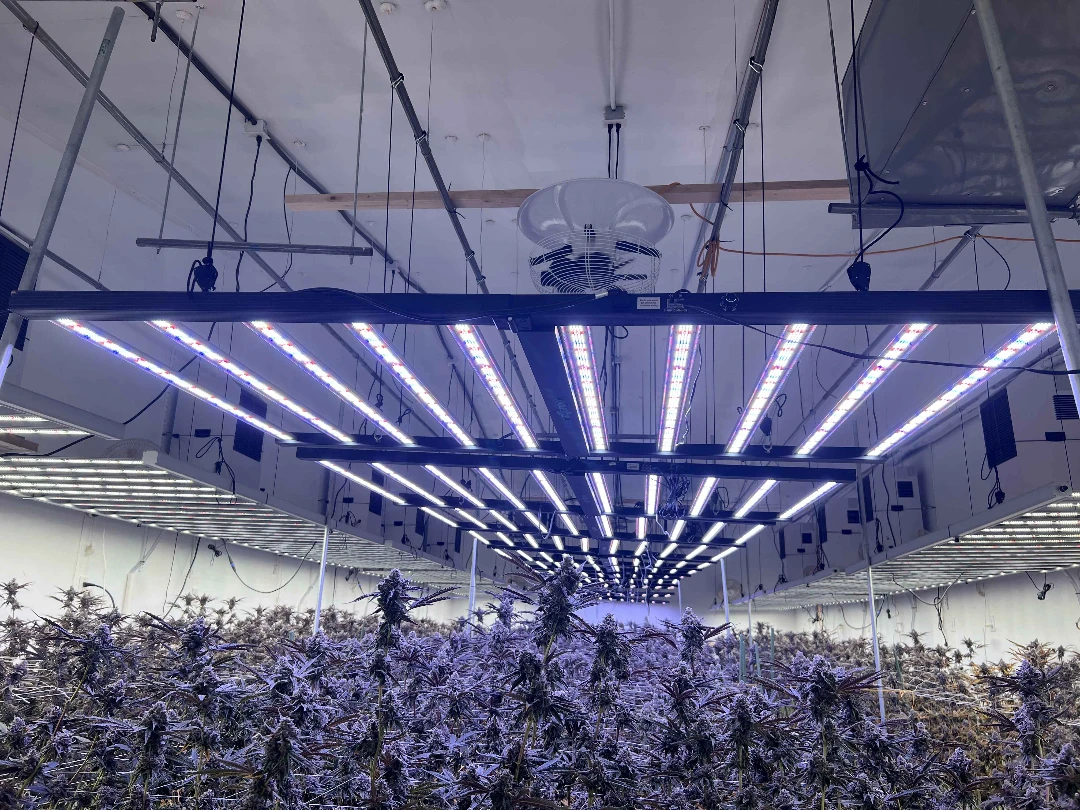
Welcome to the definitive guide on selecting the best illumination for your indoor cultivation setup. As the Editor-in-Chief of SLT Maks and a veteran with years of hands-on experience in the R&D, production, and sales of horticultural lighting, I have witnessed the dramatic shift in the industry firsthand. Gone are the days when hot, energy-inefficient High-Pressure Sodium (HPS) lamps were the only viable option for serious growers. Today, the best LED grow lights for cannabis offer a sophisticated blend of spectral science, thermal management, and raw photon power that allows cultivators to achieve record-breaking yields with a fraction of the electricity.
In this extensive guide, we will dismantle the technical jargon and dive deep into what makes an LED fixture truly effective for cannabis cultivation. Whether you are setting up a discreet 2×2 tent in your closet or managing a commercial facility, understanding the physics behind the light is crucial. We will explore spectrums, efficacy metrics like PPE, heat dissipation, and how to choose the right model to ensure your plants thrive from seedling to harvest.
Table of Contents
The Evolution of Indoor Cannabis Lighting

The journey of indoor farming has always been dictated by the limitations of artificial light sources. For decades, growers relied on HID (High Intensity Discharge) lights, specifically Metal Halide (MH) for vegetation and HPS for flowering. While effective, these lights were cumbersome, dangerous due to high heat, and expensive to operate. The introduction of Light Emitting Diode (LED) technology revolutionized this landscape, but it wasn’t an overnight success. Early LEDs, often referred to as “blurple” lights (a mix of red and blue), were often underpowered and lacked the canopy penetration needed for dense buds.
However, modern engineering has solved these early issues. The best LED grow lights for cannabis in the current market utilize full-spectrum white diodes, often enhanced with specific red (660nm) and far-red (730nm) wavelengths. These fixtures mimic natural sunlight more closely than any predecessor, providing the plants with the exact photons they need for photosynthesis without wasting energy on heat. According to data from the DesignLights Consortium (DLC), horticultural LEDs have improved in efficacy by over 40% in the last five years alone, marking a pivotal moment for indoor agriculture.
Why Efficiency Matters More Than Ever
Efficiency in grow lighting is not just about lowering your monthly utility bill, although that is a significant benefit. Efficiency refers to the conversion of electrical watts into usable photons (PAR). In the past, a “600-watt” light meant it drew 600 watts from the wall, but a large portion of that energy was lost as heat. Today, high-quality LEDs convert a much higher percentage of that electricity directly into light that plants can use.
This efficiency reduces the strain on your cooling systems. Because the best LED grow lights for cannabis run significantly cooler than HPS lights, you spend less money on air conditioning and ventilation. This creates a stable environment where humidity and temperature are easier to control, which is critical for preventing mold and maximizing terpene production in cannabis.
Decoding the Technical Specifications
To choose the right light, you must learn to read the technical specifications like a professional. Many cheap manufacturers will advertise “1000W equivalent” lights that only draw 100 watts from the wall. This is a marketing gimmick. As an industry insider, I advise you to ignore “equivalence” numbers and focus on the three pillars of light metrics: PAR, PPFD, and PPE.
PAR, PPF, and PPFD Explained
PAR stands for Photosynthetically Active Radiation. It is the range of light (400nm to 700nm) that plants use for photosynthesis. However, PAR is just a description of the range; it doesn’t tell you how much light is being produced. That is where PPF (Photosynthetic Photon Flux) comes in. PPF measures the total amount of PAR produced by a light source each second, measured in micromoles per second (µmol/s). Think of PPF as the “horsepower” of the light engine.
However, PPF tells you how much light comes out of the fixture, but not how much actually hits your plants. For that, we need PPFD (Photosynthetic Photon Flux Density). PPFD measures how many photons land on a specific area (usually one square meter) per second. When looking for the best LED grow lights for cannabis, you need to look at PPFD maps, not just a single number. A good light will have a uniform PPFD distribution, meaning the corners of your grow tent receive almost as much light as the center.
Efficacy: The PPE Metric
Photosynthetic Photon Efficacy (PPE) is the true measure of a grow light’s efficiency. It is calculated by dividing the total light output (PPF) by the input power (Watts), resulting in µmol/J (micromoles per joule).
| Light Type | Average PPE (µmol/J) | Heat Output | Lifespan (Hours) |
| Single-Ended HPS | 1.0 – 1.2 | Very High | 10,000 – 15,000 |
| Double-Ended HPS | 1.7 – 1.8 | High | 15,000 – 20,000 |
| “Blurple” LED | 1.3 – 1.6 | Low | 30,000 |
| Modern Full-Spectrum LED | 2.5 – 3.0+ | Low | 50,000+ |
As seen in the table above, modern LEDs are drastically more efficient. A fixture with a PPE of 2.7 µmol/J or higher is considered excellent. This high efficacy ensures that you are getting the maximum amount of plant growth for every dollar spent on electricity.
The Importance of Full Spectrum for Cannabis

Cannabis is a complex plant that requires different spectrums at different stages of life. In nature, the sun provides a continuous spectrum. The best LED grow lights for cannabis attempt to replicate this full-spectrum sunlight, appearing white to the human eye. This allows growers to spot nutrient deficiencies and pests easily, something that was nearly impossible under the harsh yellow glow of HPS or the purple haze of early LEDs.
The Role of Blue and Red Wavelengths
While “white” light is the base, specific wavelengths drive specific behaviors. Blue light (around 450nm) is crucial during the vegetative stage. It promotes stout stems, strong roots, and tight internodal spacing. Without enough blue light, cannabis plants tend to stretch and become lanky, unable to support heavy buds later in life.
Red light (around 660nm) is the primary driver of photosynthesis and is essential during the flowering stage. It signals the plant to produce flowers and fruit. The top-tier fixtures we engineer at SLT Maks often utilize a balanced white spectrum (3000K to 4000K) enriched with 660nm deep red diodes. This combination ensures the plant receives the structural support of blue light and the biomass-generating power of red light simultaneously.
The Emerson Effect and Far-Red Light
Advanced growers often look for the inclusion of Far-Red (730nm) and Ultraviolet (UV) diodes. Far-Red light triggers the “Emerson Effect,” a phenomenon where the rate of photosynthesis increases when plants are exposed to both red and far-red light simultaneously. Furthermore, Far-Red can manipulate the plant’s sleep cycle (phytochrome manipulation), potentially shortening the flowering time.
UV light, particularly UV-A and UV-B, acts as a stressor. In controlled amounts during the late flowering stage, it forces the cannabis plant to produce more trichomes (resin) as a defense mechanism, effectively acting as a “sunscreen.” This results in higher cannabinoid and terpene content, increasing the overall quality and potency of the harvest. Research from Utah State University suggests that proper spectral manipulation is key to optimizing secondary metabolite production in hemp and cannabis.
Form Factors: Bars vs. Boards vs. COBs
When shopping for the best LED grow lights for cannabis, you will encounter three main design types: Quantum Boards, Bar-style lights, and COBs. Understanding the physical construction of these lights is just as important as the internal tech, as it dictates heat management and light spread.
Bar-Style LED Fixtures
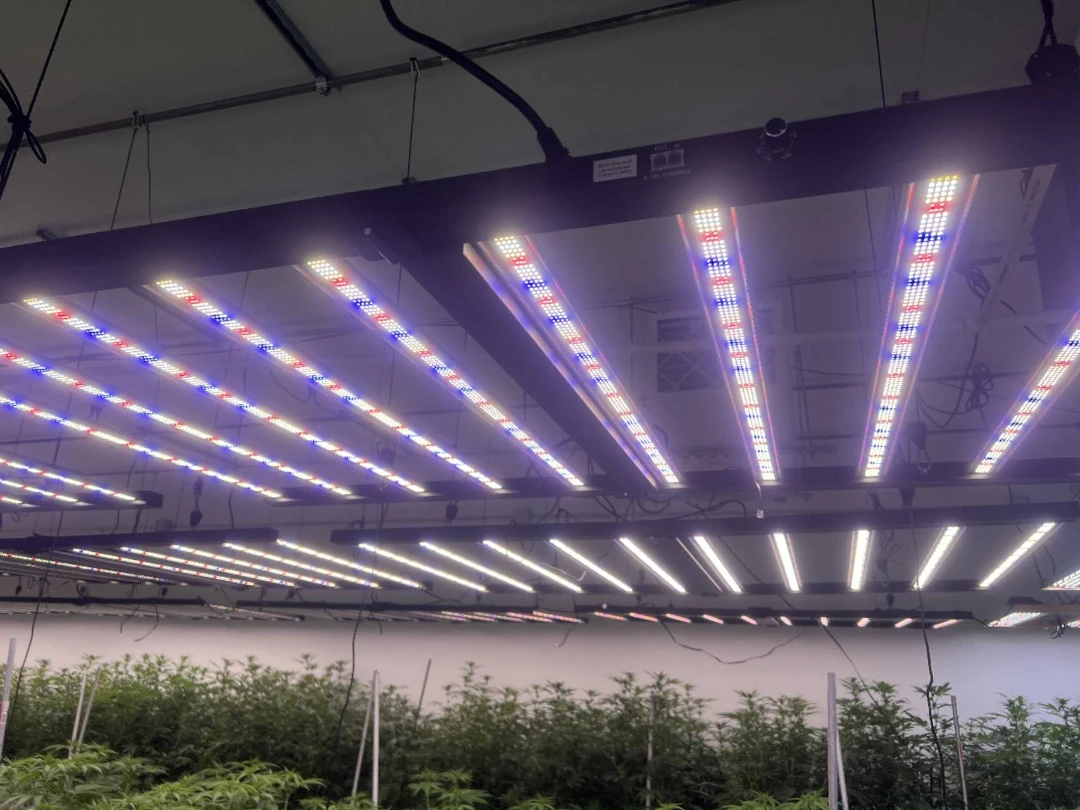
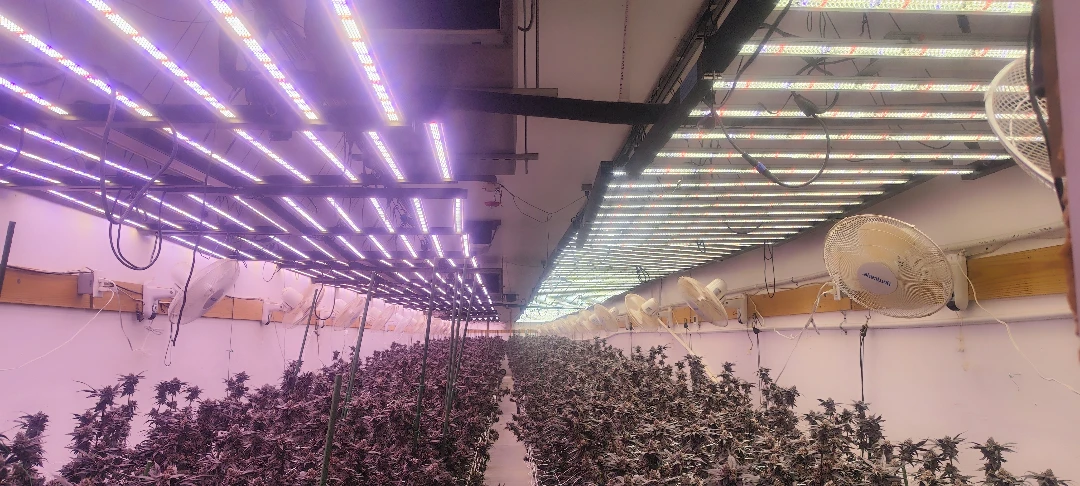
Bar-style LEDs, often resembling a spider or a grid, are currently the industry gold standard for coverage areas of 4×4 feet and larger. The primary advantage of this design is heat dissipation and light uniformity. By spreading the diodes across multiple bars, the heat is not concentrated in one spot, allowing for passive cooling (no noisy fans).
Furthermore, the physical spacing of the bars allows light to hit the canopy from multiple angles, improving penetration into the lower branches. This design ensures that the PPFD is consistent across the entire canopy, reducing “hot spots” in the center and shadowy corners. For commercial growers or serious home hobbyists, the bar style is usually the superior choice.
Quantum Boards
Quantum boards are flat, circuit-board-style lights where hundreds of diodes are mounted on a single plate. These are exceptionally popular for smaller grow tents (2×2 or 3×3) due to their lower cost and compact profile. They are highly efficient and provide excellent full-spectrum light.
However, because the diodes are concentrated on a single board, thermal management is critical. High-quality quantum boards use thick aluminum heatsinks to pull heat away from the diodes. If you choose a board style, ensure it has a reputable driver (like Mean Well) and adequate heatsinking to prevent diode burnout over time.
COB (Chip on Board) LEDs
COB LEDs feature multiple LED chips packaged together as a single lighting module. They look like small, intensely bright spotlights. COBs are known for their deep canopy penetration because they act as a point source of light.
While they are powerful, COBs generate significant heat in a small area and typically require active cooling (fans). They are excellent for deep cultivation but can be harder to manage in terms of heat distribution compared to the spread-out nature of bar lights or quantum boards.
Sizing Your Light for Your Grow Space
One of the most common mistakes I see in my years of consulting is growers buying a light that is either too weak for their tent or wildly overpowered. Matching the wattage and footprint of the light to your grow space is essential for maximizing yield without burning your plants.
Lighting for Seedlings and Clones
In the early stages of life, cannabis plants are delicate. They do not need high intensity; in fact, too much light can stunt them. For seedlings and clones, you only need a PPFD of roughly 200-300 µmol/m²/s.
Because the light requirement is low, you do not necessarily need a high-wattage fixture here. However, if you are using your main grow light, it must have a dimmer. The best LED grow lights for cannabis always feature a 0-100% dimming knob. This allows you to turn a 600W fixture down to 20% intensity, saving electricity while providing the gentle light young plants need.
Lighting for the Vegetative Stage
As the plant establishes its root system and begins to grow true leaves, its appetite for light increases. During the vegetative stage, you should aim for a PPFD of 400-600 µmol/m²/s. This intensity encourages rapid stem and leaf growth.
For a standard 3×3 grow tent, a light drawing roughly 240 to 300 watts is usually ideal. For a 4×4 tent, you should be looking at fixtures in the 400 to 500-watt range. It is crucial to monitor the distance between the light and the canopy. LEDs can be placed closer than HPS lights, but they can still cause light burn if they are too close.
Lighting for the Flowering Stage
This is where the magic happens, and where your light fixture proves its worth. During flowering, cannabis plants can handle very high light levels. Standard recommendations are between 800 and 1,000 µmol/m²/s. Some advanced growers who supplement with CO2 can push this even higher, up to 1,500 µmol/m²/s.
For a 4×4 flowering footprint, the best LED grow lights for cannabis are typically 600W to 730W bar fixtures. These lights ensure that every square inch of the canopy receives enough photons to produce dense, resinous buds. If you use a light that is too small (e.g., a 200W light in a 4×4 tent), you will likely end up with “larf”—airy, fluffy buds that lack density and potency.
Heat Management and Discreet Growing
For many home growers, discretion is a top priority. A noisy fan or a sudden spike in room temperature can be undesirable. This is where the engineering of modern LEDs shines.
Passive vs. Active Cooling
Active cooling involves fans built into the light fixture. While this helps keep the diodes cool, fans are a mechanical point of failure. If the fan dies, the light overheats and fails. Furthermore, fans generate noise, which can be annoying in a home setting.
The best LED grow lights for cannabis utilize passive cooling. This means the fixture is designed with substantial aluminum heatsinks that dissipate heat naturally via convection. These lights are completely silent, making them perfect for bedroom or closet grows. Additionally, the lack of moving parts increases the longevity of the fixture.
Managing Driver Heat
The LED driver (the power supply) is often the hottest part of the fixture. Many premium designs allow the driver to be detached and mounted outside the grow tent. This is a massive advantage for temperature control. By moving the heat source outside the grow environment, you reduce the temperature inside the tent by several degrees, further reducing the need for powerful, noisy exhaust fans.
ROI: Calculating the True Cost of Ownership
When browsing SLT Maks or other retailers, you might notice that high-end LEDs have a higher upfront cost compared to HPS setups. However, looking at the sticker price alone is a rookie mistake. You must calculate the Return on Investment (ROI) based on energy savings, bulb replacements, and yield increases.
Energy Consumption Analysis
Let’s compare a standard 1000W HPS setup against a 650W LED, which provides comparable light output.
- HPS: 1000W bulb + ballast inefficiencies = ~1100W draw. Run for 12 hours a day = 13.2 kWh per day.
- LED: 650W draw. Run for 12 hours a day = 7.8 kWh per day.
If you pay $0.15 per kWh, the HPS costs roughly $1.98 per day to run, while the LED costs $1.17. That is a savings of $0.81 per day. Over a standard 90-day flowering cycle, you save roughly $73 on electricity alone. This doesn’t account for the savings on air conditioning, which can be equally substantial.
Bulb Replacements vs. Diode Longevity
HPS bulbs degrade quickly. Their spectral output shifts, and their intensity drops significantly after 6-9 months of use. To maintain peak yields, you must replace HPS bulbs twice a year.
In contrast, the best LED grow lights for cannabis are rated for 50,000+ hours of use. Even if you run them 18 hours a day, that is over 7 years of operation without needing to change a single component. When you factor in the cost of buying 14+ HPS bulbs over that 7-year period, the LED pays for itself multiple times over.
Key Features to Look for in 2026 Models
As we move further into the decade, technology continues to refine. If you are buying a light today, there are specific “smart” features and build qualities you should demand.
Daisy Chain and Smart Control
If you plan on expanding your grow, look for lights with “daisy chain” functionality. This allows you to plug multiple lights together and control them all from a single master dimmer or controller. This is essential for scaling up from a single tent to a larger room.
Furthermore, compatibility with smart controllers is becoming standard. These controllers allow you to program sunrise/sunset modes, where the light slowly ramps up intensity over 30 minutes, simulating the natural morning sun. This reduces stress on the plants and prevents the “shock” of instant full brightness.
IP Ratings and Durability
Grow rooms are humid environments. The best LED grow lights for cannabis must have a robust Ingress Protection (IP) rating. Look for IP65 or IP67 ratings. This ensures that the fixture is dust-tight and protected against water jets.
Why does this matter? Because eventually, you will need to clean your lights. Dust and residue accumulation can reduce light output by 5-10%. An IP65-rated light can be wiped down with a damp cloth or even lightly sprayed without risk of electrical failure, ensuring your investment remains clean and efficient.
Common Mistakes to Avoid When Buying

With the market flooded with cheap imports and misleading advertising, it is easy to make a bad purchase. Here are a few red flags to watch out for based on my experience in manufacturing.
The “Wattage” Lie
As mentioned earlier, beware of “1000W LED” lights that sell for $50. These are often driven at very low currents and use inferior diodes. Always look for the “Actual Power Draw” in the specifications. If the title says 1000W but the draw is 150W, it is a 150W light. Period.
Ignoring the Brand of Diodes and Drivers
The heart of an LED fixture is the diode, and the brain is the driver. The top-tier manufacturers use diodes from Samsung (specifically the LM301H or LM301B series) or Osram (for reds). These diodes have the highest efficacy and longevity data to back them up. For drivers, Mean Well and Inventronics are the industry leaders for reliability. If a listing doesn’t specify the brand of components used, it is often because they are using generic, lower-quality parts.
Conclusion: Investing in Your Harvest
Selecting the best LED grow lights for cannabis is the single most important decision you will make for your indoor garden. The light is the engine of plant growth; without high-quality fuel (photons), even the best genetics and nutrients will fail to perform.
By transitioning to high-efficiency, full-spectrum LED lighting, you are not just saving money on electricity—you are providing your plants with a superior environment. You gain tighter density, higher terpene profiles, and significant yield increases, all while operating a cooler, quieter, and more discreet grow space.
At SLT Maks, we understand the science because we have lived it. We design our lights to meet the rigorous demands of both the hobbyist aiming for top-shelf personal supply and the commercial cultivator demanding consistent, massive harvests. We invite you to explore our catalog, check the PPFD maps, and see the difference that professional-grade engineering makes.
Your plants have huge potential. Don’t limit them with inferior lighting. Illuminate your grow with the precision it deserves.
Frequently Asked Questions (FAQ)
Q: How high should I hang my LED grow light?
A: Generally, for the vegetative stage, hang lights 18-24 inches above the canopy. For flowering, lower them to 12-18 inches. However, always refer to the specific manufacturer’s manual as intensity varies by model.
Q: Do I need purple (blurple) lights for cannabis?
A: No. Modern full-spectrum white LEDs are far superior to the old purple lights. They provide a better spectrum for plant health and make it easier to inspect your plants for issues.
Q: Can I use a standard LED household bulb?
A: Standard household bulbs lack the intensity and specific spectrum required for vigorous cannabis growth. While a plant might survive, it will not produce significant buds. Specialized grow lights are necessary for worthwhile results.
Q: What is the lifespan of an LED grow light?
A: Quality LED grow lights are rated for 50,000 hours or more. If you run your lights for 12 hours a day, that equates to over 11 years of use before the light output degrades significantly.