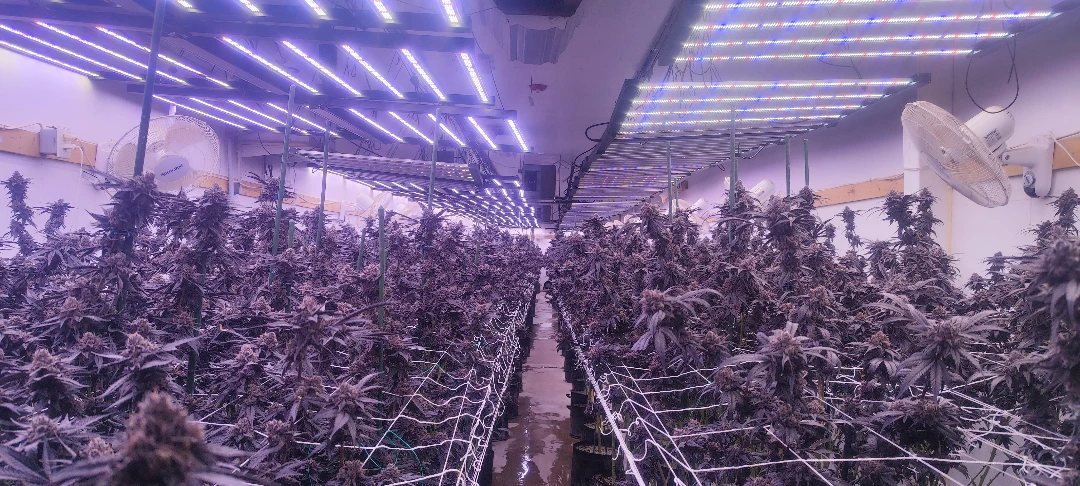
In the rapidly evolving world of controlled environment agriculture (CEA), the transition from bulky, heat-intensive lighting systems to streamlined, energy-efficient solutions has been nothing short of revolutionary. As an editor at SLTMAKS and having spent years in the trenches of R&D and production, I have witnessed the LED revolution firsthand. Gone are the days when growing high-quality plants required massive High-Pressure Sodium (HPS) fixtures that turned grow tents into ovens. Today, the versatility of LED grow light strips has democratized indoor gardening, allowing hobbyists and commercial cultivators alike to grow in spaces previously thought impossible.
LED grow light strips represent the pinnacle of adaptability in horticultural lighting. Unlike quantum boards or COB (Chip on Board) fixtures, which act as centralized point sources of light, strips offer a distributed light source that can be manipulated, bent, and adhered to almost any surface. Whether you are retrofitting a bookshelf for succulents, setting up a vertical farm for microgreens, or looking for supplemental side-lighting for a dense cannabis canopy, these flexible solutions provide the photons you need exactly where you need them.
This article serves as a comprehensive guide to understanding, selecting, and maximizing the potential of LED strip lighting. We will delve deep into the physics of spectrums, the engineering of thermal management, and the practicalities of installation. By the end of this guide, you will understand why these slender ribbons of light are becoming the go-to solution for modern growers worldwide.
Table of Contents
Understanding the Technology Behind LED Grow Light Strips
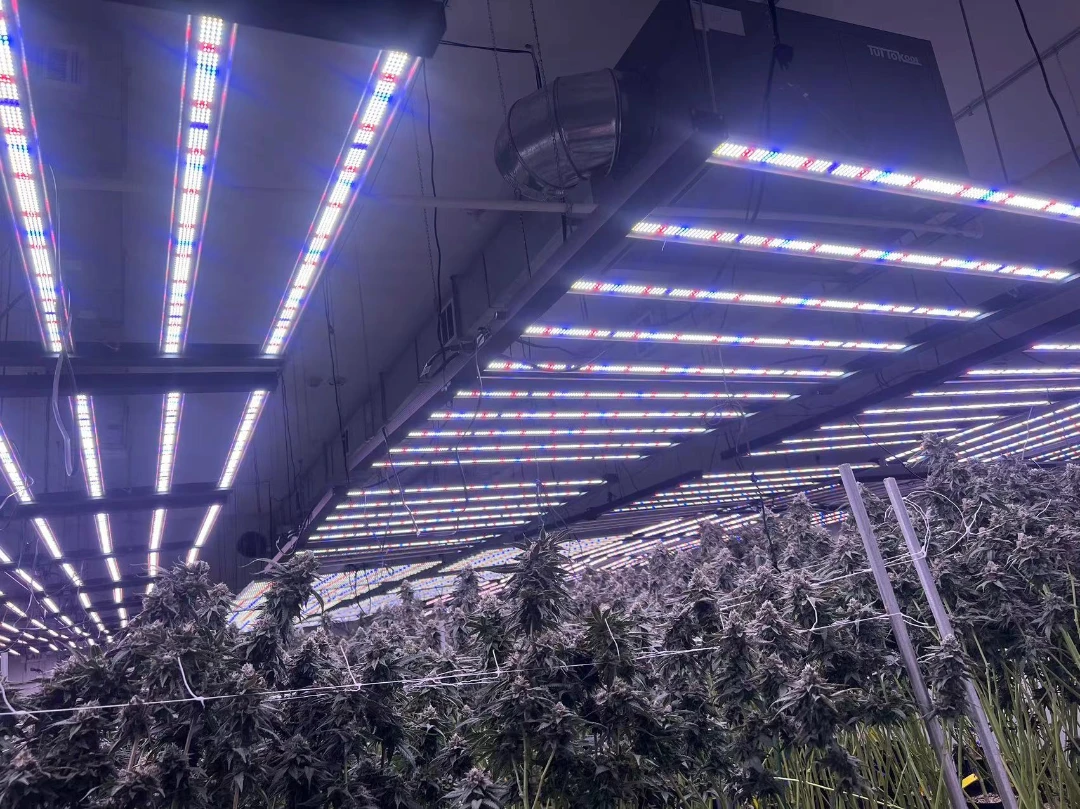
To truly appreciate the value of LED grow light strips, we must first look under the hood—or rather, under the silicone coating. At their core, these strips are flexible printed circuit boards (PCBs) populated with Surface Mounted Device (SMD) light-emitting diodes. The technology has matured significantly over the last decade, moving from low-output novelty lights to high-performance horticultural tools.
The Components of a High-Quality Strip
A professional-grade grow strip is not simply a string of Christmas lights. It consists of three critical components: the emitter (LED chip), the resistor or current regulator, and the substrate.
- The Emitter: Top-tier manufacturers (including our standards at SLTMAKS) utilize high-efficiency chips, often rated for 50,000+ hours of use. These chips are designed to convert electricity into photons with minimal heat waste.
- The Substrate: The copper thickness in the flexible PCB determines how well the strip handles heat and electrical current. Cheaper strips use thin copper, leading to voltage drop and overheating.
- Ingress Protection: For horticultural use, the coating is vital. It must protect against humidity and sulfur evaporation without blocking essential wavelengths of light.
Voltage and Efficiency: 12V vs. 24V
One common point of confusion for growers is the difference between 12V and 24V systems. In professional settings, 24V LED grow light strips are generally preferred. The higher voltage allows for longer runs of light with less “voltage drop”—a phenomenon where the lights at the end of the strip are dimmer than those at the start. Consistent voltage ensures that every plant in the row receives the same PPFD (Photosynthetic Photon Flux Density), ensuring uniform growth.
Editor’s Note: When selecting a strip, always look for “Constant Current” technology rather than just “Constant Voltage.” Constant current strips have onboard IC drivers that regulate the flow to each LED, ensuring they don’t burn out if the power supply fluctuates.
The Science of Spectrum: Why Strips Work
The effectiveness of any grow light is dictated by its spectrum—the specific wavelengths of light it emits. Early generations of LED grow light strips were famously “blurple” (a mix of red and blue). While efficient, science has shown us that plants thrive best under a full-spectrum light that mimics the sun, especially when used in residential settings, where the light color impacts the human eye.
The Role of Full-Spectrum Light
Modern strips utilize full-spectrum white LEDs, typically ranging from 3000K to 6500K, often supplemented with deep red (660nm) diodes.
- 3000K (Warm White): Rich in red wavelengths, ideal for the flowering and fruiting stages.
- 5000K-6500K (Cool White): Heavy in blue wavelengths, perfect for vegetative growth, seedlings, and clones to prevent stretching.
- 660nm (Deep Red): This specific wavelength targets the Chlorophyll A absorption peak, supercharging photosynthesis during the bloom phase.
By using LED grow light strips, you can customize this spectrum blend. For example, a shelf devoted to vegetative propagation might use exclusively 6500K strips, while a flowering chamber might mix 3000K with added 660nm red strips.
PAR and PPFD Explained for Strips
It is crucial to understand that watts do not grow plants; photons do. We measure this using PAR (Photosynthetically Active Radiation). However, because strips are often placed much closer to the canopy than high-bay lights, the PPFD (the amount of light hitting a specific spot) can be surprisingly high.
Because strips distribute light over a large area, they reduce “hot spots.” A traditional bulb might scorch the plant directly beneath it while starving the plants on the perimeter. LED grow light strips create a blanket of light, ensuring an even canopy. This uniformity is critical for commercial consistency.
For more on the science of light measurement, the DesignLights Consortium (DLC) provides excellent resources on horticultural lighting standards.
Applications: Where Flexibility Meets Functionality

The primary selling point of LED grow light strips is their form factor. They can go where no other light fixture can fit. Drawing on my years of experience helping clients design grow rooms, here are the most effective applications for these versatile lights.
1. Vertical Farming and Shelving Systems
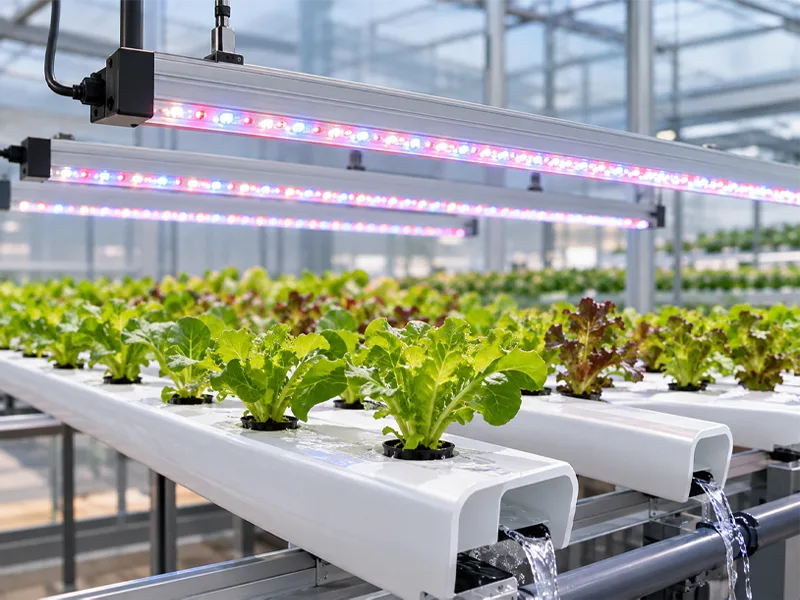
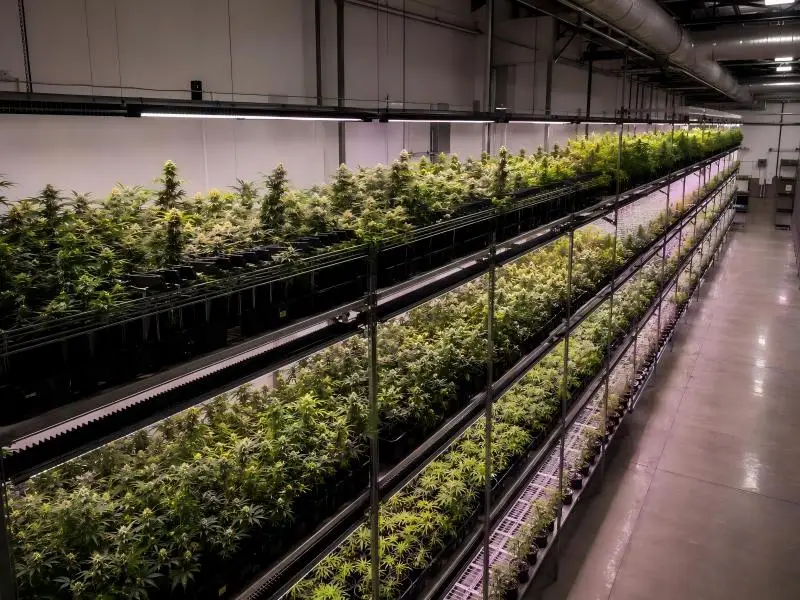
This is the “killer app” for LED strips. In a vertical farm, every inch of vertical space counts. Traditional fixtures might be 4-6 inches thick and require another 12 inches of clearance to prevent burning the plants.
LED strips are paper-thin. When mounted on a thin aluminum profile, the entire fixture is less than 0.5 inches thick. This allows growers to add extra shelves to their racks, potentially increasing yield by 33% or more in the same footprint.
2. Inter-Canopy Lighting (Side Lighting)
In growing large plants, such as tomatoes, cucumbers, or cannabis, the top canopy often blocks light from reaching the lower branches (the “larf”). These lower bud sites usually develop poorly due to a lack of light.
LED grow light strips can be mounted vertically on the corners of the tent or even suspended between plant rows. This technique, known as inter-lighting, delivers photons directly to the lower leaves and fruits. Studies have shown that inter-lighting can significantly increase the harvest weight and quality of the lower canopy.
3. Propagation and Tissue Culture
Seedlings and clones are fragile. They do not need the intensity of a 1000W grow light; in fact, intense light can kill them. Strips provide a gentle, even light that is perfect for humidity domes. Because they run cool, they do not dry out the delicate rooting media.
4. Stealth and Aesthetic Grows
For the home hobbyist who wants to grow herbs in the kitchen or a decorative plant in a living room cabinet, industrial grow lights are an eyesore. LED strips can be hidden behind cabinet lips or recessed into furniture, providing life-sustaining light without ruining the interior design.
Comparison: LED Strips vs. Traditional Lighting
To help you understand where LED grow light strips fit into the market, we have compiled a comparison of common lighting solutions.
Table 1: Lighting Technology Comparison
| Feature | LED Grow Light Strips | T5 Fluorescent | HPS / MH | Quantum Boards |
| Form Factor | Ultra-thin, Flexible | Tube, Rigid | Bulky, Heavy | Flat, Rigid Panel |
| Heat Output | Very Low | Moderate | Very High | Moderate |
| Energy Efficiency | High (2.0 – 2.8 umol/J) | Low (<1.0 umol/J) | Medium (1.5 umol/J) | High (2.3 – 2.9 umol/J) |
| Spectrum | Customizable / Full | Fixed | Fixed | Full Spectrum |
| Lifespan | 50,000+ Hours | 20,000 Hours | 10,000 Hours | 50,000+ Hours |
| Best Application | Shelves, Side-light, DIY | Clones, Seedlings | Large Commercial | Tents, Open Rooms |
As the data shows, while Quantum Boards rival strips in efficiency, they lack the physical versatility. T5 fluorescents, once the king of propagation, have been rendered obsolete by strips that last longer, use half the power, and contain no mercury.
Critical Engineering: Thermal Management

There is a myth that LEDs produce no heat. While they are far more efficient than incandescent bulbs, they do produce heat as a byproduct of converting electricity to light. If this heat is not dissipated, the junction temperature of the LED chip rises, leading to a permanent decrease in brightness and a shortened lifespan.
The Role of Aluminum Profiles
Do not stick high-power LED grow light strips directly onto wood or plastic. These materials act as insulators. Instead, you must adhere the strips to a thermally conductive surface.
Aluminum channels (or profiles) are the industry standard. They serve three purposes:
- Heat Sink: They pull heat away from the LED chips and dissipate it into the air.
- Protection: They usually come with a diffuser cover that protects the LEDs from dust and water splashes.
- Aesthetics: They provide a clean, finished look.
For growers using high-wattage strips (above 14W per meter), using an aluminum profile is not optional—it is mandatory for the longevity of the product.
Installation Guide: Setting Up Your Grow Strips
Installing LED grow light strips is often a DIY project, but it requires attention to detail to ensure safety and performance. Here is a step-by-step workflow based on best practices.
Step 1: Planning and Sizing
Measure your grow space meticulously. If you are lighting a 4-foot shelf, you generally want strips that are slightly shorter (e.g., 3.5 to 3.8 feet) to allow room for wiring connectors. Determine your target PPFD. For lettuce and leafy greens, you might need two parallel strips per shelf. For flowering small plants, you might need four or five strips.
Step 2: Power Supply Calculation
This is where many fail. You must calculate the total wattage of your system.
Formula: Length of strip (meters) × Wattage per meter = Total Wattage.
Safety Margin: Always choose a power supply (driver) that is rated for at least 20% more than your total wattage. If your strips consume 100W, buy a 120W or 150W driver. Running a driver at 100% capacity generates excess heat and reduces its lifespan.
Step 3: Preparing the Surface
The adhesive backing (usually 3M VHB) on LED grow light strips is strong, but it requires a clean surface. Wipe down your aluminum profiles with isopropyl alcohol to remove any oils or dust. This ensures a permanent bond that facilitates heat transfer.
Step 4: Wiring and Connections
Soldering is the most reliable method for connecting wires to strips, as it creates a solid electrical connection that won’t corrode. However, for those uncomfortable with soldering, “solderless connectors” are available. Be aware that in high-humidity grow environments, these clip-on connectors can sometimes oxidize, leading to flickering lights.
Ensure all connections are insulated with heat-shrink tubing to prevent short circuits, which can be a fire hazard in wet environments.
Advanced Strategies: Maximizing Yields with Strips

Once you have the basics down, you can utilize LED grow light strips for advanced cultivation techniques.
Light Recipes and Photoperiodism
Because strips often run on separate drivers, you can set up “sunrise/sunset” simulations. By having some strips turn on 30 minutes before the others, you wake the plants up gently. While the biological benefit of this is debated, it certainly reduces the sudden spike in temperature and humidity load on your HVAC system.
Distance Control
The inverse square law of light states that light intensity drops off dramatically as distance increases. Because strips are low-heat, you can place them very close to the plants (often 6-12 inches).
- Seedlings: Keep strips 12-18 inches away or dim them to 50%.
- Veg: 8-12 inches.
- Bloom: 6-8 inches (monitor for heat stress). Keeping the lights close ensures that you are utilizing the photons efficiently rather than lighting up the walls of your room.
Spectral Tuning DIY
Advanced growers often build their own fixtures by mixing strips. You can mount three strips of 4000K white and one strip of 660nm red on a single heat sink. This allows you to create a “bloom booster” switch where you only turn on the red strip during the flowering phase. This level of customization is simply not possible with pre-made fixtures.
The Economics of LED Strips: ROI Analysis
Switching to LED grow light strips is an investment. Let’s look at the Return on Investment (ROI).
Energy Savings
A typical 4-foot T5 fluorescent setup consumes about 216 watts (4 bulbs x 54W). An equivalent LED strip setup might consume only 100 watts to produce the same amount of usable light (PAR).
- Running 18 hours a day:
- T5: 3.8 kWh per day.
- LED: 1.8 kWh per day.
- Savings: 2 kWh per day. Over a year, this equates to 730 kWh saved. At an average energy cost of $0.15/kWh, that is nearly $110 saved per shelf, per year. The LEDs pay for themselves in energy savings alone within 12-18 months.
HVAC Savings
Because LEDs run cooler, your air conditioning and ventilation fans do not need to work as hard. This “hidden” saving is significant, especially in larger operations.
Maintenance Savings
Fluorescent tubes need replacing every 9-12 months as their output degrades. Quality LED grow light strips last 5-7 years before hitting L90 (90% brightness). The labor and replacement cost savings are substantial.
For more information on energy efficiency in agriculture, the U.S. Department of Energy offers extensive reports on solid-state lighting.
Selecting the Right IP Rating

The environment of a grow room is hostile to electronics. High humidity, condensation, and occasional water splashes from irrigation are common.
- IP20 (Non-waterproof): Only the bare chips are exposed. These are suitable only if installed inside a sealed waterproof profile. Do not use these in a grow tent.
- IP65 (Splash-proof): Usually coated in silicone or encased in a heat-shrink sleeve. These can handle humidity and accidental splashes. This is the standard recommendation for most home growers.
- IP67/IP68 (Submersible): Encased in a thick silicone tube. While extremely durable, the thick silicone can sometimes reduce light transmission by 5-10% and trap heat. Use these only in extremely wet environments, like aeroponics mist chambers.
At SLTMAKS, we rigorously test our strip coatings to ensure they resist sulfur and fertilizer corrosion, which are common killers of lesser LEDs.
Common Troubleshooting and Maintenance
Even the best systems require care. Here is how to keep your LED grow light strips running at peak performance.
Cleaning
Dust and mineral deposits (from humidifier mist) can accumulate on the strip coating or diffuser. This layer of grime can block up to 10% of your light.
- Action: Once a month, wipe down the strips with a microfiber cloth dampened with water or a mild glass cleaner. Ensure the lights are off and cool before cleaning.
Flickering Lights
If your strips start flickering, it is rarely the LEDs themselves.
- Cause 1: Loose connection. Check your wiring terminals.
- Cause 2: Overloaded Driver. If the driver is overheating, it may cycle on and off.
- Cause 3: Voltage Drop. If the far end of the strip is flickering or dim, you may have run too long a strip for the voltage. You may need to inject power from both ends of the strip.
Section Failure
Sometimes, a group of 3 or 6 LEDs will go dark while the rest remain lit. This happens because strips are wired in “series-parallel” segments. If one resistor or chip fails in a segment, that specific segment dies.
- Solution: The beauty of strips is that you can cut out the dead section and solder in a new piece, or use a connector to bridge the gap. It is a modular repair.
Future Trends in LED Strip Technology
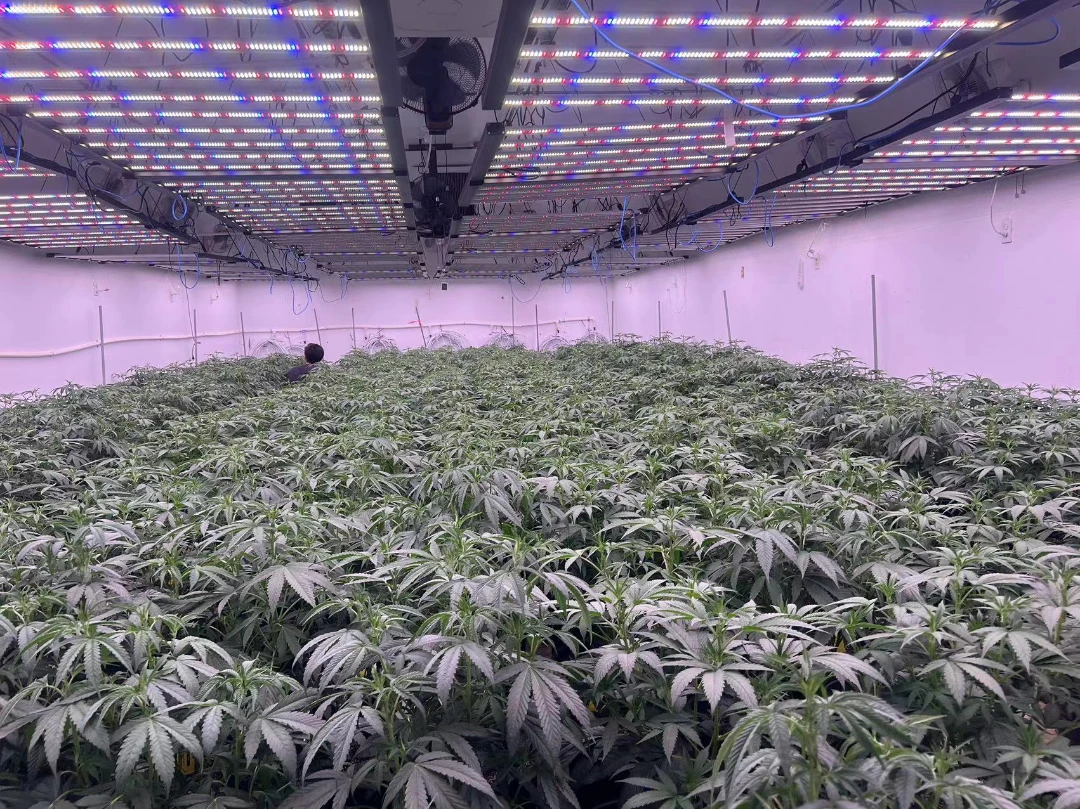
The industry is not standing still. As we look toward 2026 and beyond, several trends are emerging in the LED grow light strips sector.
- UV and Far-Red Integration: We are seeing more strips that include UV-A diodes (to increase terpene production) and Far-Red (730nm) diodes (to trigger the Emerson Effect and speed up flowering).
- Smart Connectivity: Drivers are becoming smarter, integrating with Wi-Fi and Bluetooth mesh networks. Soon, you will be able to control the spectrum and intensity of your strips via a smartphone app, adjusting the light recipe based on the exact day of the grow cycle.
- Higher Efficiency Chips: We are approaching the theoretical limits of LED efficiency, but incremental gains are still happening. We expect to see strip efficiencies pushing past 3.0 umol/J in the mainstream market soon.
The Flexible Future of Growing
In conclusion, LED grow light strips have graduated from being a novelty accessory to a cornerstone of modern horticultural lighting. They solve problems that traditional bulky fixtures simply cannot address: space constraints, heat management, and precise light distribution.
For the commercial grower, they offer a way to maximize vertical density and yield per cubic foot. For the home grower, they offer a stealthy, efficient, and highly effective way to bring the joy of gardening indoors, regardless of space limitations.
Whether you are building a small herb garden in your kitchen or outfitting a warehouse with multi-tier racking, the flexibility of LED strips provides a solution. At SLTMAKS, we are committed to providing the highest quality components to help you succeed. We understand that your harvest depends on our lights, and we take that responsibility seriously.
By understanding the science, installation, and maintenance outlined in this guide, you are now equipped to leverage this technology to its fullest potential. The future of farming is not just in the fields; it is on the shelves, in the corners, and in the customized spaces that only LED grow light strips can illuminate.
Ready to upgrade your grow space? Evaluate your current lighting setup today and consider how the versatility of LED strips could improve your energy efficiency and crop quality. If you have specific questions about customizing a spectrum for your unique plants, reach out to our technical team—we are here to help you grow.
FAQ
How does the PPFD distribution of these LED grow lights impact commercial crop yields?
High PPFD (Photosynthetic Photon Flux Density) ensures that the plant canopy receives sufficient light intensity for photosynthesis. Our fixtures are engineered for uniform light distribution, preventing “hot spots” and ensuring consistent growth across the entire bench or vertical rack, which directly leads to higher marketable yields.
What are the primary energy-saving benefits of switching from HPS to SLTMAKS LED systems?
Our LED solutions typically offer an efficacy of 2.8 µmol/J or higher, reducing electricity consumption by up to 40-50% compared to traditional HPS lamps. Furthermore, because LEDs emit significantly less heat, they lower the cooling load on your HVAC system, further reducing operational costs.
Can the light spectrum be customized for different growth stages, such as veg or flower?
Yes. While our full-spectrum designs are optimized for the entire life cycle, we incorporate specific ratios of Deep Red (660nm) and Far-Red (730nm) to trigger the “Emerson Effect.” This promotes faster transitions between growth stages and enhances secondary metabolite production in high-value crops.
Do your commercial lighting fixtures support automated dimming and group control?
Absolutely. Most of our models feature 0-10V dimming and are compatible with centralized controllers via RJ14 or Daisy-chain connections. This allows growers to simulate sunrise/sunset or adjust light intensity based on the specific DLI (Daily Light Integral) requirements of the crop.
Are these LED grow lights durable enough for high-humidity greenhouse environments?
Yes, our commercial-grade fixtures carry an IP65 waterproof rating. They are built with industrial-grade aluminum heat sinks and protective coatings to withstand the high humidity, dust, and occasional splashing common in professional greenhouses and vertical farms, ensuring a long lifespan with minimal maintenance.