
In the rapidly evolving world of horticultural lighting, few names command as much respect and authority as Samsung. As we navigate the transition from traditional High-Pressure Sodium (HPS) systems to modern solid-state lighting, the “engine” driving this revolution is often a tiny diode manufactured by Samsung. At SLTMAKS, we have spent years researching, testing, and manufacturing fixtures, and we have witnessed firsthand how Samsung’s LED technology has reshaped the parameters of indoor cultivation. For commercial growers and serious hobbyists alike, understanding the nuances of these chips—specifically the LM301 series—is no longer optional; it is a prerequisite for maximizing ROI.
The market is currently flooded with fixtures claiming to use “Samsung Diodes,” but this label can be misleading without context. Are they the latest generation? What “bin” are they from? How are they driven? In this comprehensive guide, we will strip away the marketing hype and dive deep into the technical architecture of Samsung LED grow lights. We will explore why the LM301B and LM301H are the industry benchmarks, how the new EVO series changes the game, and why the supporting cast of deep red chips is just as vital for your harvest.
Table of Contents
The Evolution of White Light Efficiency
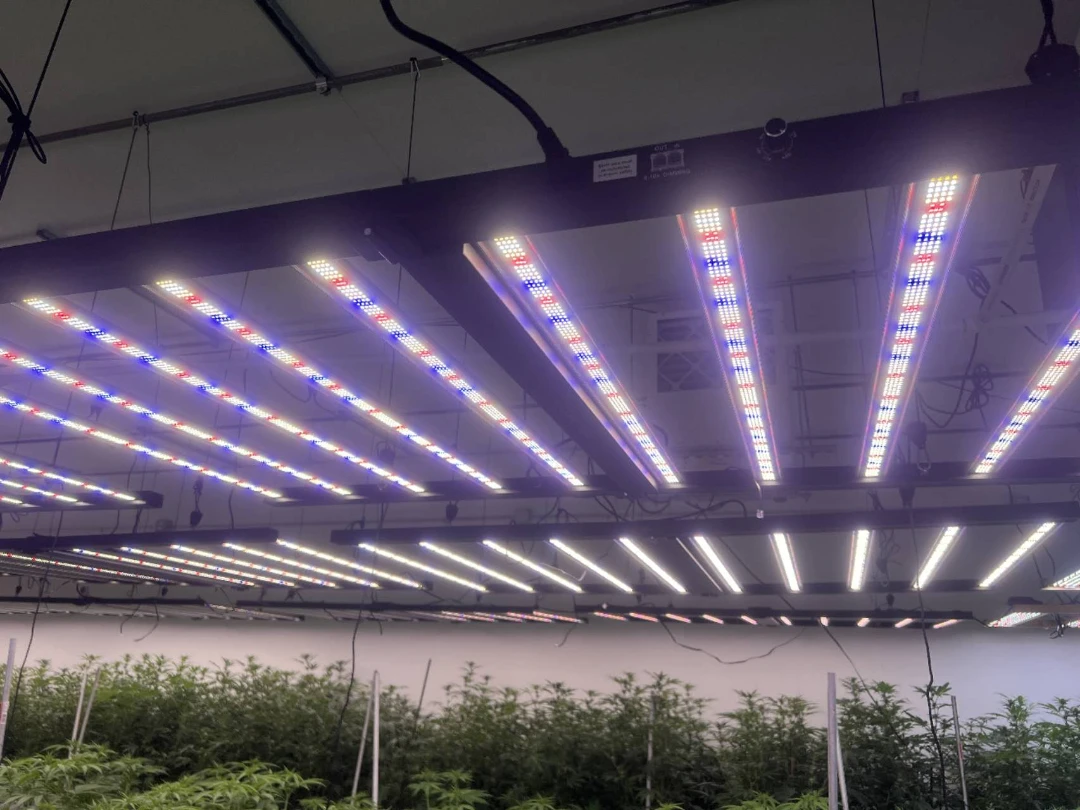
To truly appreciate where we are today, we must look back at where we started. In the early days of LED grow lights, the market was dominated by “blurple” lights—fixtures that emitted only narrow-band red and blue wavelengths. While scientifically sound in theory (chlorophyll absorption peaks are in red and blue), these lights made plant inspection difficult and often lacked the canopy penetration of HPS.
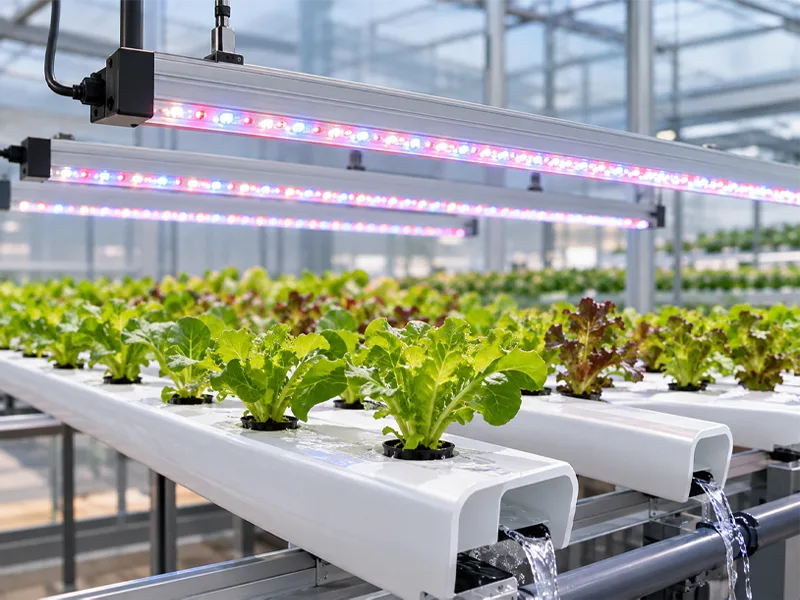
Samsung revolutionized this by perfecting mid-power white LEDs. By utilizing a blue pump diode coated with advanced phosphor layers, they created a full-spectrum white light that mimics the sun. This shift didn’t just make growing environments more pleasant to work in; it unlocked unprecedented levels of Photon Efficacy (PPE).
Efficiency in our industry is measured in micromoles per Joule ($\mu mol/J$). A decade ago, hitting 2.0 $\mu mol/J$ was a dream. Today, thanks largely to Samsung’s engineering, we are seeing fixture efficiencies pushing past 3.0 $\mu mol/J$. This metric is critical because it dictates how much electricity is converted into usable plant light versus waste heat. For a commercial facility running hundreds of lights, the difference between a generic chip and a top-tier Samsung chip can amount to tens of thousands of dollars in energy savings annually.
The Mid-Power Revolution
Samsung’s strategy focused on “mid-power” LEDs (like the LM301 series) rather than “high-power” COBs (Chip on Board).
- Heat Management: Spreading hundreds of mid-power diodes across a large board (Quantum Board style) dissipates heat more effectively than concentrating it in a single high-power point source.
- Uniformity: This distribution creates a blanket of light, eliminating hot spots that can burn leaves and shadow zones where lower buds fail to develop.
Decoding the LM301 Series: The Gold Standard
When you search for high-end grow lights, you will inevitably encounter the alphanumeric code “LM301.” This series represents the pinnacle of mid-power LED technology. However, there is significant confusion regarding the differences between the B, H, and H EVO versions. Let’s break down the technical distinctions.
LM301B: The Original Game Changer
The Samsung LM301B was the chip that effectively retired HPS lighting for many indoor growers. Released initially for general lighting applications, savvy manufacturers quickly realized its potential for horticulture due to its incredible efficacy—peaking at around 220 lumens per watt (lm/W) or roughly 2.92 $\mu mol/J$ under specific test conditions.
The genius of the LM301B lies in its “Flip-Chip” design. In traditional LEDs, the electrodes are on top, requiring gold wire bonding that blocks a small portion of the light. In the LM301B, the electrodes are flipped to the bottom.
- No Wire Bonding: This removes the obstruction, allowing for unimpeded light emission.
- Better Thermals: Direct connection to the PCB allows heat to escape faster, keeping the junction temperature lower and the diode brighter for longer.
For years, the LM301B was the undisputed king. It provided a broad spectrum that covered the PAR (Photosynthetically Active Radiation) range effectively, and its low forward voltage meant it ran cool.
LM301H: Built for Horticulture
Following the massive success of the “B” version in the grow light sector, Samsung released the LM301H. The “H” stands for Horticulture. A common question we receive at SLTMAKS is: “Is the LM301H actually brighter than the LM301B?”
The technical answer is nuanced. In terms of raw photon output from the die itself, the early batches were nearly identical. However, the LM301H introduced critical improvements specifically for the harsh environments of grow rooms:
- Anti-Sulfurization Coating: Grow rooms, especially those using certain fertilizers or sulfur burners for pest control, can be corrosive. Sulfur can penetrate standard LEDs, tarnishing the silver lead frame and causing lumen depreciation (dimming). The LM301H features a robust coating designed to resist this chemical attack.
- Horticulture-Specific Binning: Samsung began binning (sorting) these chips based on PPF (Photosynthetic Photon Flux) rather than lumens. This ensures that when you buy an LM301H fixture, you are getting diodes guaranteed to perform high in the metrics plants care about, not just what the human eye sees.
Editor’s Note: While the efficacy gains of the H over the B are marginal in dry lab settings, the H series offers superior longevity in real-world, humid, and chemically active grow room environments.
LM301H EVO: The New Apex
The most recent advancement is the Samsung LM301H EVO. This is not just a rebrand; it involves a fundamental change in the spectral output.
Standard white LEDs use a 450nm blue pump. The EVO series shifts this peak to 435nm.
- Why 435nm Matters: Research suggests that plant photoreceptors (specifically Chlorophyll a and b) have absorption peaks that align better with this shorter wavelength blue.
- Higher Efficiency: The EVO series boasts an efficacy of 3.14 $\mu mol/J$, setting a new world record for this class of LED.
- Better Quality of Light: By shifting the blue peak, the overall spectrum promotes tighter internodal spacing and more robust secondary metabolite production (terpenes and cannabinoids) compared to standard 450nm pumps.
Below is a comparison of the key specifications for these market-leading chips:
| Feature | Samsung LM301B | Samsung LM301H | Samsung LM301H EVO |
| Primary Application | General Lighting | Horticulture | Advanced Horticulture |
| Efficacy (PPE) | ~2.92 $\mu mol/J$ | ~3.10 $\mu mol/J$ | ~3.14 $\mu mol/J$ |
| Blue Peak Wavelength | 450nm | 450nm | 435nm |
| Anti-Sulfurization | Standard | Enhanced | Enhanced |
| Flip-Chip Design | Yes | Yes | Yes |
For more detailed technical specifications, you can verify data directly through the Samsung LED Horticulture Website.
The Unsung Hero: LM281B+ Pro
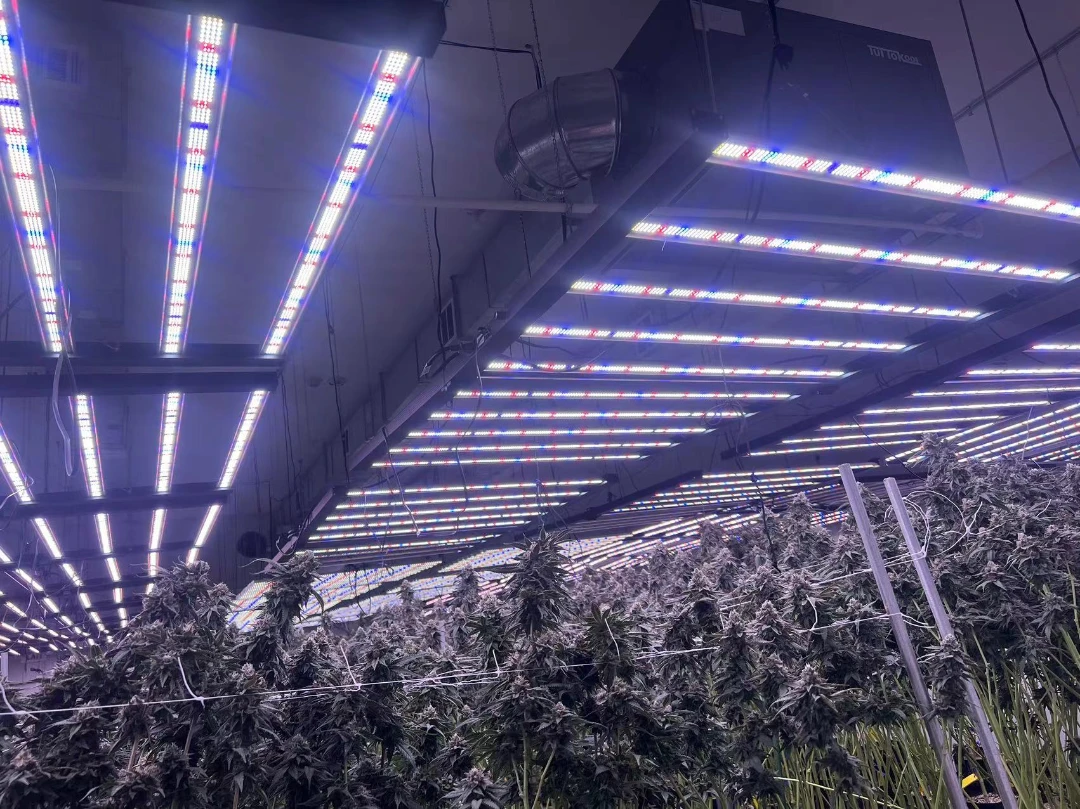
While the LM301 series grabs the headlines, we must address the “elephant in the room”—cost. Not every grower needs the absolute theoretical maximum efficiency, especially if it comes at a premium price point. This is where the Samsung LM281B+ Pro enters the conversation.
The LM281B+ is often found in budget-friendly fixtures. It is slightly less efficient than the LM301 series (hovering around 2.6 to 2.7 $\mu mol/J$ in fixture implementation), but it is significantly cheaper to manufacture.
- Cost vs. Performance: For vegetative rooms or home growers on a budget, a fixture with LM281B+ diodes is often a smarter financial choice. You might use 5% more electricity, but the upfront capital expenditure is 30% lower.
- Reliability: It still carries the Samsung pedigree of reliability and thermal management, far outstripping generic knock-off diodes from lesser-known manufacturers.
At SLTMAKS, we believe in transparency. If a fixture uses LM281B+ chips, it should be marketed as a high-value, cost-effective solution, not disguised as a top-tier flagship.
Full Spectrum: Why White Light Isn’t Enough
Samsung’s white LEDs are incredible, but they are not a standalone solution for the flowering stage. White light is essentially blue light converted by phosphor; while it contains red, it often lacks the intensity in the deep red (660nm) and far-red (730nm) regions that flowering plants crave.
The LH351H Deep Red
To solve this, top-tier LED grow lights pair Samsung white chips with dedicated monochromatic red chips. The Samsung LH351H Deep Red (660nm) is the standard partner for the LM301 series.
- Photosynthesis Efficiency: The 660nm wavelength sits directly on the peak of the McCree Action Spectrum, meaning it is the most efficient wavelength for driving photosynthesis (Quantum Yield).
- The Emerson Effect: When 660nm (Deep Red) is combined with 730nm (Far Red), it creates a synergistic effect that boosts photosynthesis rates higher than the sum of the two parts.
- Robust Packaging: Unlike the mid-power LM301, the LH351H is a high-power ceramic LED. It is designed to handle higher currents and harder driving, providing the “punch” needed to penetrate the canopy.
A “Full Spectrum” fixture is usually a mix of 3000K (warm white) and 5000K (cool white) LM301 diodes, supplemented by roughly 10-15% LH351H red diodes. This combination creates a spectrum that supports the plant from seedling to harvest.
Understanding Binning: The Hidden Variable

One of the most critical aspects of LED manufacturing that is rarely discussed with customers is “Binning.” When Samsung manufactures millions of LED chips, they do not all come out of the oven identical. Due to microscopic variances in the semiconductor wafer, some chips are brighter, some have slightly different voltages, and some have slightly shifted color temperatures.
Samsung sorts these chips into “Bins.”
- Top Bin: These are the highest performing chips with the lowest voltage and highest light output.
- Lower Bins: These chips are functional but less efficient.
Two manufacturers can both truthfully claim to use “Samsung LM301H LEDs,” but Manufacturer A might use top-bin diodes, while Manufacturer B uses bottom-bin diodes purchased at a discount. The result? Manufacturer A’s fixture might be 10% more efficient than Manufacturer B’s, despite looking identical on paper.
At SLTMAKS, our procurement policy is strict. We utilize top-bin allocations for our flagship lines to ensure that the performance data we publish matches the reality in your grow room. We verify our batches to ensure they fall within tight MacAdam Ellipses (steps of color consistency), ensuring that every light in your facility emits the exact same spectrum.
Thermal Management: The Life of the Diode
You can have the best Samsung chips in the world, but if you mount them on a poor substrate, they will fail. LEDs are cool to the touch compared to HPS, but they still generate heat. This heat comes from the back of the diode, at the junction point.
If this heat is not wicked away immediately, two things happen:
- Efficiency Droop: As an LED gets hotter, it produces less light. A Samsung LM301H running at 85°C produces significantly less light than one running at 50°C.
- Permanent Degradation: Chronic overheating causes the phosphor layer to degrade and the silicone encapsulation to crack.
The PCB and Heatsink Factor
This is where fixture design becomes an art form. We utilize thick, aluminum-core PCBs (Printed Circuit Boards) with high thermal conductivity ratings. By under-driving the LEDs (running them at less than their maximum rated current) and using substantial aluminum heatsinks, we keep the Samsung diodes in their “sweet spot.”
Many cheap fixtures overdrive their LEDs to get a high initial brightness reading. This is sustainable for a month, but after a year, the light output drops dramatically. By using more Samsung diodes but running them softer, we achieve higher efficiency and a lifespan rated for over 50,000 hours (L90).
Choosing the Right Spectrum: 3000K vs. 5000K

When configuring Samsung-based lights, the ratio of color temperatures is vital. The “K” stands for Kelvin.
- 5000K (Cool White): Contains more blue light. This mimics the spring/summer sun. It keeps plants compact, promotes strong roots, and tight internodes. It is ideal for the vegetative stage.
- 3000K (Warm White): Contains more red light. This mimics the autumn sun. It triggers hormonal responses in plants to stretch slightly and focus energy on fruit and flower production.
For a true “Cycle-to-Cycle” fixture, we typically blend these. A common ratio is roughly 60% 3000K and 40% 5000K, plus the 660nm reds. This provides enough blue to prevent stretching in veg, but enough red to bulk up flowers in bloom.
Counterfeits and the “Samsung Inside” Label
As the demand for Samsung LED grow lights has exploded, so has the market for counterfeits. It is distressingly common to find unbranded fixtures on third-party marketplaces claiming to use LM301B diodes, when in reality they are using look-alike chips from generic manufacturers.
These fake chips often have:
- Poor Color Rendering: They look greenish or harsh.
- High Failure Rates: Segments of the board will burn out within months.
- Low Efficiency: They pull the same wattage but deliver 20-30% less PAR.
How to verify?
Always look for reputable manufacturers who provide photometric test reports (like sphere tests or goniophotometer reports). While it is hard to visually distinguish an LM301B from a high-quality copy without a microscope, the performance data doesn’t lie. If a 600W fixture claims to produce 1800 $\mu mol/s$ of PPF for $200, be skeptical. Quality Samsung silicon costs money.
The Future: Beyond Visible Light
Samsung continues to innovate. The next frontier in LED grow lights involves wavelengths outside the standard PAR range (400-700nm).
UV (Ultraviolet)
While Samsung focuses heavily on visible light, they are researching UV integration. UV-A and UV-B can stress plants in beneficial ways, increasing trichome density and altering chemical profiles to act as a “sunscreen” for the plant. Currently, most UV is added via separate separate chips (often Seoul Viosys or similar), but we expect Samsung to push into this space as efficiencies improve.
Far-Red (730nm+)
We are seeing a trend toward separate control of Far-Red channels. By manipulating the ratio of Red to Far-Red (R:FR), growers can trigger the “shade avoidance response” to stretch plants or, conversely, put plants to sleep faster (phytochrome cycling), potentially shortening the flowering cycle by days.
Why SLTMAKS Chooses Samsung
At SLTMAKS, our reputation is built on the results our clients achieve. Whether you are outfitting a vertical farm in New Jersey or a boutique medical grow in Thailand, the reliability of your lighting is the single point of failure you cannot afford to ignore.
We choose Samsung LM301H and LM301H EVO chips because they offer the mathematical best balance of:
- Efficacy: Highest $\mu mol/J$ available.
- Spectral Stability: The light color does not drift over time.
- Chemical Resistance: Essential for commercial IP65-rated environments.
However, we don’t just “use” Samsung. We engineer around them. We design our drivers to match the diode’s optimal current curve. We design our heatsinks to ensure the junction temperature stays low. We design our spectral ratios based on the latest photobiological research.
Conclusion
The transition to LED growing is complete. The debate is over; LEDs have surpassed HPS. But within the LED market, the stratification is clear. Samsung LED grow lights, specifically those utilizing the LM301H and EVO series, represent the tier of technology that serious growers gravitate toward.
When you invest in a fixture, you are buying a machine that converts electricity into biomass. Samsung chips are simply the most efficient engines for that machine. They lower your operational costs (OPEX) via reduced electricity and HVAC loads, and they increase your revenue via higher yields and better quality profiles.
At SLTMAKS, we invite you to explore our range of commercial grow lights. We don’t hide our components. We are proud to feature Samsung technology because we know that when you plug our lights in, you are getting the very best photon output the physics of 2026 has to offer.
Are you ready to upgrade your facility with the power of Samsung LM301H technology? Contact our engineering team today for a custom light plan tailored to your specific canopy footprint.