Indoor gardening should feel simple: put a plant near a window, water it, and watch it thrive. In reality, light is usually the limiting factor, which is why LED grow lights for indoor plants have become a “secret weapon” for healthier foliage, stronger seedlings, and more reliable flowering.
Below is a chapter-style guide that walks you through how to choose the right LED grow light and how to use it correctly—without getting lost in confusing specs.
Table of Contents
Understand What Your Plants Actually Need
Why indoor light is often “not enough.”
Window light drops dramatically with distance, and the seasonal changes in day length can push even “easy” plants into slow growth. Many indoor plants survive in low light, but they don’t necessarily thrive, and the symptoms can look like weak stems, small leaves, and dull color.
A more useful way to think about light is not “bright vs. dim,” but how much photosynthetic light a plant receives over a whole day. Extension guidance often points gardeners toward DLI (Daily Light Integral) as the best “big picture” metric for plant growth planning. Virginia Tech Extension explains DLI and why it correlates strongly with plant growth.
Common signs your plant is light-starved
Plants will “reach” for light when they don’t get enough of it, stretching internodes and leaning toward windows. Leaf size may shrink over time, and variegated plants often lose patterning because the plant reduces the energy-costly variegation.
If you’re growing seedlings, low light typically shows up as leggy stems that won’t correct themselves later. The University of New Hampshire’s seedling lighting fact sheet describes this stretching response and ties it directly to insufficient daily light.
The 3 levers: spectrum, intensity, and duration
Most indoor plant lighting problems can be solved by adjusting one (or more) of these three levers. Iowa State University Extension breaks supplemental lighting into quality (spectrum), intensity, and duration—and treats them as the practical foundation for successful indoor growing.
Spectrum: “What colors does your light contains
Plants use a broad band of light for photosynthesis, with red and blue being especially influential. That’s why you’ll see everything from “blurple” grow lights (red+blue heavy) to white “full spectrum” fixtures.
For most home and display situations, white/balanced LEDs are easier to live with and still effective, and the University of Minnesota notes that white/mixed lights are generally suitable across plant stages.
Intensity: how much light reaches the leaves
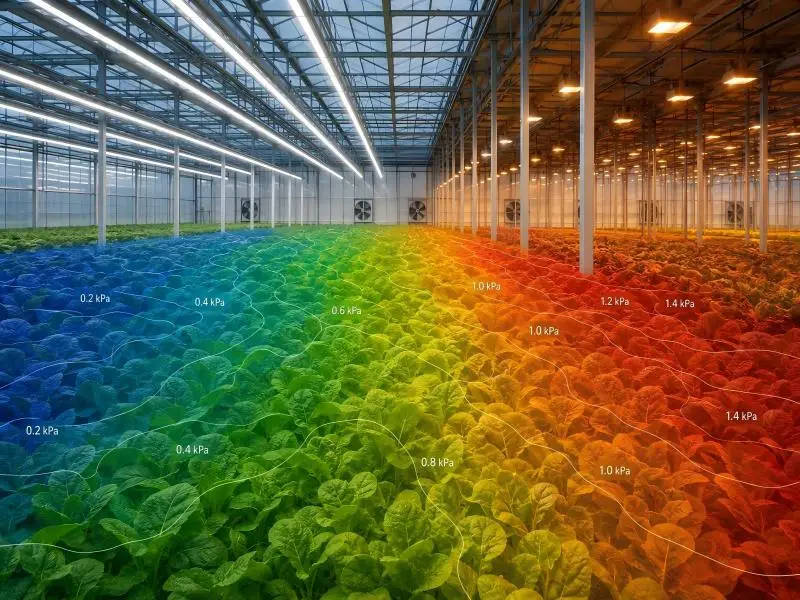
Intensity is where most buyers get tricked—because many product listings emphasize human-lighting numbers (lux, lumens) instead of plant-lighting numbers. For plants, intensity at the canopy is better described by PPFD (photosynthetic photon flux density), not lumens.
Duration: the daily light schedule
Duration is often the cheapest lever to adjust, because it’s “free” once you own the fixture. But more is not always better, and many plants need a dark period to develop normally; University of Minnesota guidance provides practical hour ranges for seedlings, herbs, foliage, and flowering houseplants.
Learn the Specs That Matter (and Ignore the Noise)
PPFD and DLI: the two numbers you can actually use
PPFD tells you how much photosynthetic light hits a surface each second (µmol/m²/s). DLI tells you how much a plant receives over 24 hours (mol/m²/day). Virginia Tech Extension explains DLI plainly and even shows how it is used in real crop planning.
A simple DLI shortcut you can remember
You don’t need advanced math to use DLI. As a quick approximation:
- DLI (mol/m²/day) ≈ PPFD × hours × 0.0036
So if you deliver 200 µmol/m²/s for 12 hours:
- DLI ≈ 200 × 12 × 0.0036
- DLI ≈ 8.64 mol/m²/day
This lets you translate “light intensity” into “daily plant energy,” which is usually the missing piece for indoor growers.
Why “watts” and “lux” confuse indoor plant buyers
Watts tell you energy draw, not useful photons. Lux is weighted for human vision, not plant photosynthesis, which is why extension resources push growers toward plant-centric metrics (PPFD/DLI) rather than human-centric ones. Iowa State’s indoor supplemental lighting guidance explicitly points growers to PPFD/DLI as the more useful metrics for plants.
If a listing only shows “lux,” treat it as incomplete information rather than proof of performance. For LED grow lights for indoor plants, you want either a PPFD map or enough validated data to estimate real canopy intensity.
Efficacy (µmol/J): how to spot energy-efficient fixtures
For LED horticultural lighting, efficacy is commonly expressed as µmol/J (micromoles per joule). A peer-reviewed overview in Horticulture Research (Nature) explains why horticultural efficacy is expressed this way and how it relates to photon output per electrical input.
When comparing two fixtures that deliver similar PPFD over the same area, the one with higher µmol/J will usually cost less to run. The U.S. Department of Energy’s SSL program also discusses photosynthetic photon efficacy and how LEDs have improved this metric compared with older technologies.
How to Choose LED Grow Lights for Indoor Plants
Step 1: define your growing goal (not just your plant name)
“Houseplant” is not a lighting category, because a fern on a shelf and basil on a countertop are very different jobs. Start with your goal:
- Maintain & look good: foliage plants, décor greenery, overwintering
- Grow fast: seedlings, cuttings, leafy greens, herbs
- Flower/fruit indoors: flowering houseplants, peppers, tomatoes (high demand)
Once you define the goal, you can choose the right intensity and schedule instead of guessing.
Step 2: match the fixture type to your space
Different forms of LED grow lights for indoor plants are better for different layouts. Pick the format that makes it easiest to put light where leaves actually are.
LED bars and linear fixtures
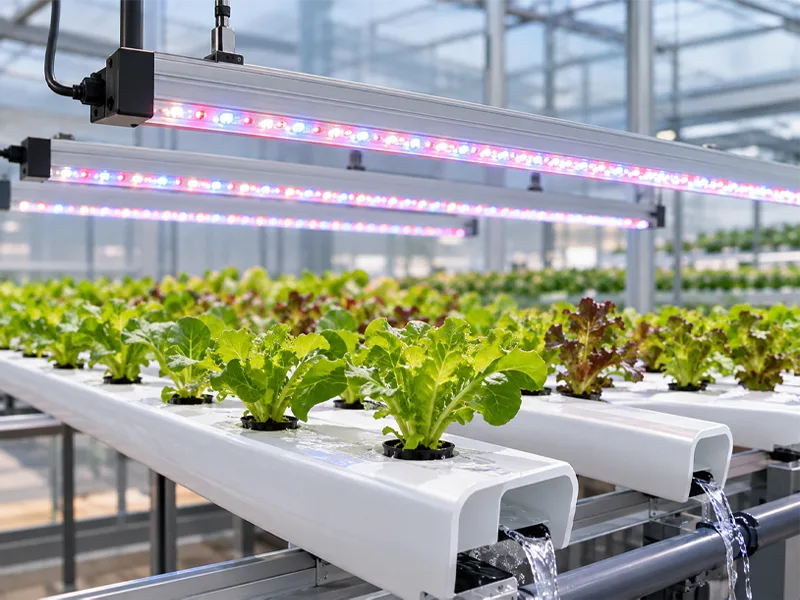
Bars are excellent for shelves and multi-tier racks because they spread light evenly. They’re also easy to scale: add more bars if your canopy area expands.
Panel-style fixtures
Panels work well for a single “grow zone,” like a plant corner or a tabletop garden. Look for evenness (uniform PPFD), so you don’t get one scorched plant directly under the center and weak plants at the edges.
Screw-in bulbs
Bulbs are convenient, but they often create hot spots and uneven coverage. They can be fine for one plant, but they are harder to use well for multiple plants unless you use multiple bulbs and reflectors.
Step 3: Choose “trust signals” that indicate real testing and safety
For quality-focused buyers, third-party frameworks matter because they force consistent reporting.
Safety and listing for horticultural environments
UL developed UL 8800, a safety standard designed specifically for horticultural lighting equipment and systems, which UL describes as the first set of standardized requirements built for horticultural lighting environments.
Even if you’re a home user, choosing fixtures with credible safety marks (and using proper mounting and wiring practices) reduces risk and improves reliability over years of daily operation.
Performance reporting expectations (DLC-style thinking)
Many professional buyers use the “testing and reporting” mindset popularized by programs like the DesignLights Consortium (DLC), which has detailed horticultural reporting requirements and focuses on horticultural metrics rather than human-lighting metrics.
You don’t need to buy only “rebate program” fixtures at home. But you can borrow the same logic: demand horticulture metrics, not vague marketing.
Lifetime credibility: LM-80 and TM-21
Long-life claims should be backed by recognized methods. In the LED world, LM-80 covers how LED packages are tested for lumen and color maintenance over time, and TM-21 is used to project long-term lumen maintenance based on LM-80 data.
For indoor plant setups that run 12–18 hours per day, build quality and thermal design matter because you’re accumulating hours quickly.
Practical Targets for Indoor Plants (Simple, Usable Numbers)

You can run LED grow lights for indoor plants successfully without chasing perfect numbers. Still, having a target range prevents the two most common mistakes: too little light (no progress) and too much light (stress, bleaching, wasted electricity).
Photoperiod hours you can start with
A straightforward starting point from the University of Minnesota Extension is:
- Seedlings: 16–18 hours/day
- Hydroponic lettuce & herbs: 12–14 hours/day
- Foliage houseplants: 12–14 hours/day
- Flowering houseplants: 14–16 hours/day
Iowa State Extension similarly warns against running lights endlessly and suggests staying roughly within the 10–16 hour window, depending on goals and conditions.
DLI examples from research and extension resources
DLI targets vary by species and cultivar, but real-world examples help you anchor expectations.
Virginia Tech Extension uses lettuce as an example and notes it grows well at a DLI close to 15 mol·m⁻²·d⁻¹. Virginia Tech Publications. A controlled-environment study also describes lettuce DLI needs in a similar band (with variation among cultivars).
For higher-light “vine crops,” Michigan State University materials suggest higher minimums than lettuce, and discuss how higher DLI targets demand stronger lighting intensity.
A friendly “good enough” PPFD approach for home growers
If you don’t have a quantum sensor, use your plants as feedback and focus on consistency. Start with conservative settings, then increase intensity or duration in small steps every few days until growth looks compact and healthy.
For seedlings specifically, the UNH fact sheet emphasizes keeping lights close and explains how intensity drops quickly as distance increases.
How to Set Up and Use LED Grow Lights for Indoor Plants
Mounting height and spacing: the easiest performance upgrade
Distance is a bigger deal than most people think. University of Minnesota Extension provides simple distance guidance (and it’s a great starting point):
- Seedlings: 4–6 inches
- Lettuce & herbs: 6–12 inches
- Foliage houseplants: 12–24 inches
- Flowering houseplants: 6–12 inches
If your fixture is dimmable, you can combine distance and dimming to avoid stress while still delivering useful DLI. This is often better than mounting too high and running too long.
Use a timer (and respect darkness)
Timers remove guesswork and stabilize growth. Many flowering responses depend on day length, and some plants need long, uninterrupted dark periods to trigger blooms.
Oregon State University Extension explains how day length influences flowering (short-day vs. long-day responses), which is exactly why indoor lighting schedules can affect blooming outcomes.
Reflective surfaces and “free photons.”
Before you buy a bigger fixture, reduce wasted light. White walls, reflective grow tent material, and even simple side reflectors can meaningfully improve canopy light capture in indoor corners.
This matters because PPFD maps are usually measured in controlled conditions, but real rooms absorb and scatter light differently. Improving the environment can make your existing LED grow lights for indoor plants feel stronger without increasing power.
Avoid the 5 Most Common Indoor Grow Light Mistakes
Mistake 1: believing “equivalent watts.”
A “1000W equivalent” label is marketing shorthand and often meaningless for plants. Focus on real draw (watts), real output (PPF/PPFD), and real efficiency (µmol/J) when comparing products.
Mistake 2: hanging too high, then overcompensating with hours
Long runtimes can help, but only if the plant is receiving enough intensity to use that time effectively. The UNH seedling guide illustrates how run-time requirements can double when the mounting height increases.
Mistake 3: blasting full intensity on day one
Plants acclimate to light. If you move a low-light plant under strong LEDs suddenly, you can see bleaching or scorched patches.
Start lower, then increase intensity or duration gradually over 1–2 weeks. This “ramp-up” habit is one of the simplest ways to prevent stress.
Mistake 4: ignoring heat and airflow
LEDs run cooler than HID, but they still create heat at the fixture and can dry the canopy zone. Leaf edges can crisp, not because the light is “wrong,” but because the microclimate became too dry.
Add gentle airflow and monitor watering frequency after installing grow lights. You’re changing both photosynthesis and transpiration.
Mistake 5: Poor electrical habits in wet areas
Indoor growing often involves water, humidity, and metal shelving. Safety standards for horticultural equipment exist for a reason, and UL’s horticultural lighting work highlights unique safety considerations in plant growth environments.
Use properly rated equipment, follow manufacturer instructions, and avoid risky DIY wiring if you’re not qualified. A safe setup is part of a “high-quality grow light.”
A Simple Cost and ROI Check (So You Don’t Overspend)

Cost fears keep many people from buying proper LED grow lights for indoor plants, even though the math is usually manageable.
Electricity cost in one line
- Monthly kWh ≈ (Watts ÷ 1000) × hours/day × 30
Example: a 200W fixture running 12 hours/day:
- (200 ÷ 1000) × 12 × 30 = 0.2 × 12 × 30 = 72 kWh/month
Multiply by your electricity rate to get your monthly lighting cost. This helps you decide whether you should buy a more efficient fixture (higher µmol/J) or simply optimize height and reflectivity first.
Why efficacy matters for long photoperiods
If two lights give you similar canopy PPFD, the more efficient one reduces operating cost over time. DOE’s SSL discussions emphasize how LED horticultural efficacy has improved, which is why modern LEDs are so widely adopted for plant growth.
For home growers, the “ROI” may be healthier plants, faster propagation, better blooms, and fewer replacements of weak, light-starved plants. That’s a value even if you’re not selling crops.
A Buyer’s Checklist You Can Use in 5 Minutes
When you’re scanning listings for LED grow lights for indoor plants, use this checklist to filter out the noise.
Must-haves
- Clear coverage area and either a PPFD map or enough data to trust the intensity claims
- A spectrum description that matches your goal (balanced white is safest for mixed indoor setups)
- A real power draw (watts), not just “equivalent.”
- Thermal design that looks built for long daily runtimes
Strong quality signals
- Mention of horticultural metrics and testing methodology (PPF/PPFD/DLI, efficacy in µmol/J)
- Safety/listing signals aligned with horticultural environments (for example, UL’s UL 8800 context as a relevant horticultural safety framework)
- Warranty terms that match the reality of daily 12–18-hour use
Nice-to-haves
- Dimming and daisy-chain features for flexibility
- Replaceable drivers or serviceable parts for long-term ownership
- Better uniformity optics if you’re lighting multiple plants at once
Quick Start Plan (If You Want Results This Week)
If you want a simple, reliable setup process for LED grow lights for indoor plants, do this:
- Group plants by light appetite (low, medium, high). Keep similar plants together so one schedule makes sense.
- Start with 12–14 hours/day for most indoor plants, using a timer for consistency.
- Set distance using extension guidance (closer for seedlings, farther for foliage plants), then observe for 7 days.
- If growth is still weak, increase either intensity (if dimmable) or duration by small steps, not all at once.
- Watch for success signals: tighter growth, better color, stronger new leaves, and more predictable watering needs.
Choose with metrics, use with habit
The best LED grow lights for indoor plants are not the ones with the loudest watt-equivalent claims. They’re the ones that deliver the right PPFD/DLI, with a sensible spectrum, stable daily scheduling, and credible safety and testing signals.
If you build your indoor lighting around spectrum + intensity + duration—and use real plant-centered metrics like PPFD and DLI—you’ll get healthier plants with less trial and error.
FAQ
Why is natural window light often insufficient for indoor plants?
Window light drops significantly with distance, and seasonal changes often result in shorter daylight hours. While many indoor plants can survive in low light, they rarely thrive. Common signs of light deprivation include leggy stems (stretching toward the light), smaller leaves, and loss of variegation (color patterns) as the plant tries to conserve energy.
Why are PPFD and DLI better metrics than Watts or Lux for plants?
Watts measure energy consumption, and Lux measures brightness for human eyes, but neither tells you how much “food” the plant is getting.
• PPFD (Photosynthetic Photon Flux Density) measures the actual amount of light reaching the plant surface per second.
• DLI (Daily Light Integral) measures the total amount of light delivered over 24 hours. These are the “real” numbers that correlate directly with plant growth and yield.
How do I choose the right type of LED fixture for my space?
Your choice should match your layout:
• LED Bars/Linear Fixtures: Best for shelves and multi-tier racks because they distribute light evenly over a long area.
• Panel-style Fixtures: Ideal for specific “grow zones,” like a dedicated plant corner or a tabletop garden.
• Screw-in Bulbs: Convenient for single plants, though they can create “hot spots” and uneven coverage if not used with reflectors.
How long should I keep my grow lights on each day?
For most indoor foliage plants, herbs, and seedlings, a schedule of 12 to 14 hours per day is a reliable starting point. It is important to use a timer for consistency, as many plants require a dark period to develop normally and complete their biological cycles.
How can I calculate the monthly electricity cost of my grow lights?
You can estimate your monthly usage with this simple formula:
Monthly kWh ≈ (Watts ÷ 1000) × hours per day × 30
For example, a 200W fixture running 12 hours a day uses 72 kWh per month. Multiply this number by your local electricity rate to find your monthly cost.
What are the “Must-Haves” on a buyer’s checklist?
When shopping for an LED grow light, look for these quality signals:
• A PPFD Map: Shows actual light intensity at different heights.
• True Power Draw: The actual wattage used, not just “equivalent” marketing claims.
• Spectrum Description: Balanced “white” light is generally safest for mixed indoor setups.
• Safety Certifications: Look for standards like UL 8800, which are specifically designed for horticultural environments.