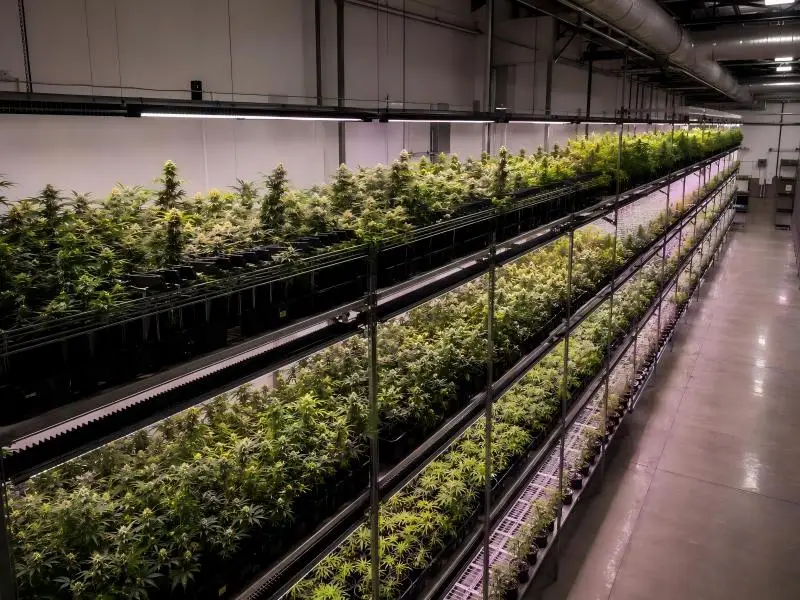
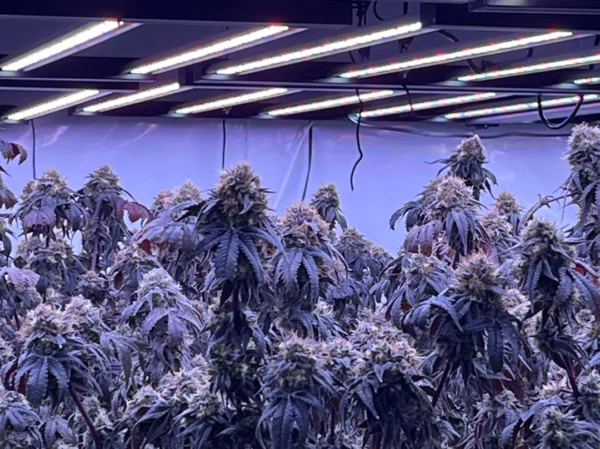
For commercial cannabis cultivators, the flowering stage is the ultimate crucible. It is the defining phase where months of meticulous vegetative care culminate in the final product, and where the most critical financial metric is decided: the balance between total biomass (yield) and premium quality (cannabinoid and terpene profiles). Historically, cultivators have been forced into a frustrating compromise. High-Pressure Sodium (HPS) fixtures delivered the brute-force intensity needed for massive yields but often fell short in stimulating the complex secondary metabolites that drive modern market value. Conversely, early-generation fixed-spectrum LEDs improved terpene retention through lower heat emission but lacked the precise spectral control needed to truly steer crop development.
Today, the paradigm has shifted. The introduction of tunable spectrum LED grow lights has revolutionized commercial cultivation. By allowing growers to dynamically adjust the light recipe—manipulating specific wavelengths to mimic the natural progression of the sun—it is now entirely possible to maximize both heavy, dense yields and explosive terpene production.
As a professional plant grow light manufacturer, SLTMAKS engineers lighting solutions designed specifically to meet these exacting commercial demands. This comprehensive, deep-dive guide will explore the advanced plant physiology of the flowering stage, decode the science of specific light wavelengths, and provide actionable, stage-by-stage light recipes to help you leverage tunable LED technology for unprecedented harvest success.
Table of Contents
The Science of the Bloom: Plant Physiology and Light Requirements During Flowering

To master tunable spectrum lighting, we must first understand what is happening inside the cannabis plant during its most critical 8 to 10 weeks of life. The flowering stage is not a monolithic period; it is a highly dynamic biological journey divided into three distinct physiological phases. Each phase demands a unique environmental approach, particularly concerning photomorphogenesis (how light shape and spectrum affect plant architecture) and photosynthesis (how light intensity drives growth).
1. The Three Core Phases of Cannabis Flowering
- Phase 1: Transition and stretch (weeks 1-3). When you flip your light cycle to 12/12 (12 hours on, 12 hours off), you trigger a massive hormonal shift within the plant. Detecting the shortening of the “days,” the plant enters a panic mode, rushing to gain as much height and structural volume as possible to support future flowers. This “stretch” phase can cause plants to double or even triple in height. If left unchecked by the wrong light spectrum, plants will develop long internodal spacing, resulting in weak, spindly branches that cannot support heavy colas, ultimately reducing your canopy’s efficiency and overall yield.
- Phase 2: Flower development and bulbing (weeks 4-6). By week 4, vertical growth effectively ceases. The plant shifts 100% of its metabolic energy into reproduction—specifically, building the calyxes and pistils that form the buds. During this “bulking” phase, the demand for Daily Light Integral (DLI) and Photosynthetic Photon Flux Density (PPFD) reaches its absolute peak. The plant is incredibly hungry for photons to drive the photosynthesis required to pack dense biomass into the floral structures.
- Phase 3: Ripening and secondary metabolite accumulation (weeks 7-9+) In the final weeks, the plant realizes its lifecycle is ending. Calyxes swell to their maximum size, pistils begin to darken and recede, and most importantly, the plant focuses heavily on defense mechanisms. It ramps up the production of trichomes—the microscopic, crystalline resin glands that house cannabinoids (THC, CBD) and terpenes. This stage requires a delicate balance: pushing too much raw light intensity can degrade these volatile compounds, while the right spectral stress can cause them to multiply exponentially.
2. The Tug-of-War: Photosynthesis vs. Photomorphogenesis
Many growers make the mistake of focusing solely on PPFD—the sheer volume of light hitting the canopy. While high PPFD drives photosynthesis (fueling the bulking phase), it is only half the equation.
Photomorphogenesis is driven by the quality (spectrum) of the light. Photoreceptors in the plant, such as phytochromes (sensitive to red and far-red light) and cryptochromes (sensitive to blue and UV light), act as biological switches. They dictate whether the plant stretches, how densely it stacks its buds, and how much energy it diverts away from basic growth into synthesizing complex terpenes. Maximizing yield and quality requires mastering the interplay between high-intensity photosynthetic fuel and precision photomorphogenic steering.
Decoding the Light Recipe: How Specific Wavelengths Affect Yield and Terpenes
To utilize a tunable spectrum LED grow light effectively, you must understand the individual “ingredients” of your light recipe. SLTMAKS commercial LED fixtures are e
Engineered with independent channel control, allowing you to manipulate these specific wavelengths to steer your crop precisely.
1. Blue Light (400-500nm): The Compactness and Terpene Trigger
Blue light is heavily absorbed by chlorophyll a and b, but its primary value in commercial flowering lies in photomorphogenesis.
- Controlling the stretch: High ratios of blue light during the initial transition to flower suppress cell elongation. This results in tighter internodal spacing and a shorter, bushier, more structurally sound plant capable of holding massive colas without trellising failure.
- Stomatal opening and transpiration: Blue light strongly triggers the opening of stomata (the pores on the leaves), increasing the plant’s transpiration rate. This facilitates greater nutrient uptake from the roots, which is crucial during heavy feeding schedules.
- Secondary metabolites: Blue light stimulates cryptochrome receptors, signaling the plant to increase the production of protective compounds. A higher blue light ratio, particularly late in flower, directly correlates with increased trichome density and a richer, more robust terpene profile.
2. Red Light (600-700nm): The Unrivaled Engine for Yield
Red light is the undisputed king of photosynthetic efficiency. Because red photons carry less energy than blue photons, they require less electricity to produce, making them the most efficient way to deliver high PPFD to your canopy.
- Biomass accumulation: Red light aligns perfectly with the McCree curve (the standard measure of photosynthetic response). Pumping high levels of red light during the bulking phase (Weeks 4-6) directly translates to rapid CO2 assimilation, larger calyx development, and heavier final dry weights.
- The stretching caveat: The danger of red light is that, if used without the balancing effect of blue light, it triggers a “shade avoidance” response, causing the plant to stretch uncontrollably. This is why older LED models that were heavily red-dominant often resulted in lanky, structurally weak plants.
3. Far-Red Light (700-750nm): The Emerson Effect and Canopy Penetration
Far-red light falls just outside the standard PAR (Photosynthetically Active Radiation) range of 400-700nm, but modern horticulture science (now utilizing the ePAR range up to 750nm) has proven its absolute necessity.
- The emerson enhancement effect: When far-red light is combined with deep red light, the plant’s photosynthetic rate increases dramatically—far more than the sum of its parts. Far-red light excites Photosystem I, while red light excites Photosystem II, creating a highly efficient, synergistic loop that supercharges bulking.
- Canopy penetration: Far-red wavelengths are longer and penetrate much deeper into the dense cannabis canopy than blue or red light, helping to develop the lower “B-grade” buds into dense, sellable flowers.
- Flowering acceleration: A pulse of far-red light at the end of the day cycle (often called “putting the plants to sleep”) manipulates the phytochrome state (converting Pfr back to Pr rapidly). This tricks the plant into sensing a longer dark period, potentially shaving days off the total flowering time.
4. Ultraviolet Light (UV-A / UV-B): The Ultimate Stressor for Flavor
While invisible to the human eye, UV radiation is a powerful tool in advanced crop steering.
- The sunscreen defense: In nature, UV light damages plant DNA. To protect itself, the cannabis plant acts exactly like a human putting on sunscreen: it produces a thick layer of resin (trichomes) rich in THC and complex terpenes to shield its reproductive organs (the flowers).
- Explosive frost: Introducing controlled doses of UV light via tunable LED channels in the final weeks of flowering forces the plant to express its absolute maximum genetic potential for resin production. This results in the highly sought-after “frosty” bag appeal and pungent, loud aromas that define top-shelf commercial cannabis.
Why Tunable Spectrum LED Grow Lights are the Ultimate Commercial Game Changer
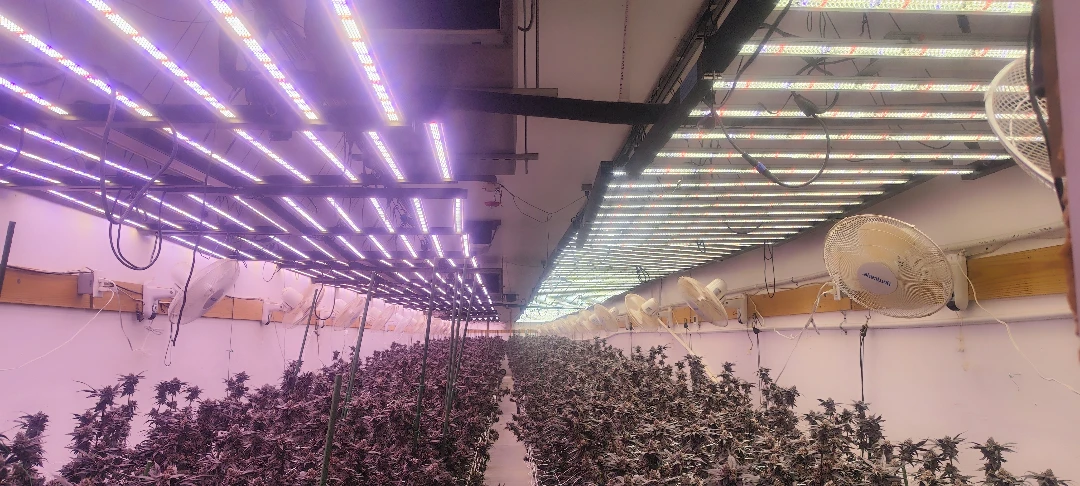
For years, commercial growers relied on fixed-spectrum LEDs. While these were a massive upgrade over HPS in terms of heat management and electrical efficiency, they represented a “one-size-fits-all” compromise. A spectrum designed to grow a plant from clone to harvest will inherently be suboptimal at specific micro-stages of development.
Here is why upgrading to tunable spectrum technology, like the advanced systems developed by SLTMAKS, is a non-negotiable requirement for modern, competitive cultivation facilities:
1. Dynamic Seasonal Mimicry
In nature, a cannabis plant transitioning into autumn experiences shifting light conditions. The intense, blue-heavy light of the summer solstice gradually gives way to the lower-angle, red-heavy light of late summer, eventually transitioning to cooler, UV-rich light as the atmosphere changes in late autumn. Fixed spectrums cannot replicate this. Tunable LEDs allow cultivators to program exact seasonal shifts, constantly providing the biological signals the plant expects to receive to trigger maximum flower swelling and resin production.
2. Strain-Specific Customization (Cultivar Steering)
Every cannabis genetic (cultivar) is unique. An equatorial Sativa landrace hybrid has vastly different photomorphogenic responses compared to a broad-leaf Afghan Indica. An Indica may not need heavy blue light to control its stretch, while a Sativa might require aggressive blue light to keep it out of the grow room ceiling. Tunable spectrums allow you to create custom, proprietary “light recipes” tailored to the specific genetics you are running, maximizing the ROI on every individual strain in your facility.
3. The SLTMAKS Engineering Advantage
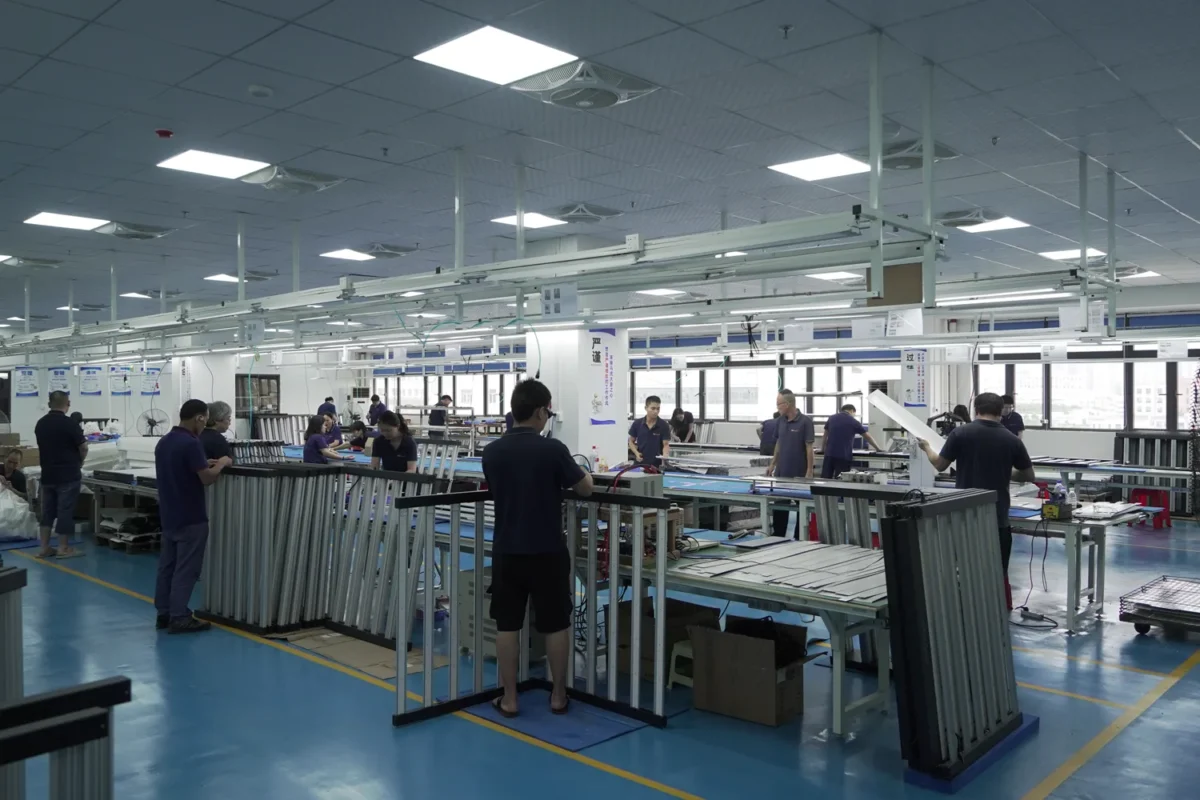
At SLTMAKS, we understand that a tunable spectrum is only as good as the hardware delivering it. Our commercial-grade, tunable LED grow lights are engineered with core advantages designed to protect your bottom line:
- Independent channel control: SLTMAKS fixtures allow precise, granular control over individual diode arrays (Blue, Deep Red, Far-Red, and UV), allowing you to write complex light recipes without losing overall intensity.
- Industry leading PPE (Photosynthetic Photon Efficacy): Tuning your spectrum shouldn’t mean wasting electricity. Our lights operate at peak micromoles per joule (µmol/J) efficiency across all spectral settings, drastically reducing your HVAC and electrical overhead.
- Superior thermal management: Passive cooling dynamics ensure that even when pushing maximum red/far-red intensity during the bulking phase, diode degradation is minimized, guaranteeing uniform PPFD distribution across your entire canopy year after year.
The Practical Guide: Stage-by-Stage Tunable LED Strategies for Maximum ROI
Knowing the science is important; applying it is profitable. Below is a highly detailed, actionable blueprint for manipulating your tunable LED spectrum throughout the 9-week flowering cycle to maximize both yield and terpene content.
(Note: These are baseline commercial recommendations. Always monitor plant response and adjust based on your specific cultivar, CO2 supplementation, and VPD/temperature controls.
Phase 1: The Transition and Stretch (Days 1 – 21)
The goal: Halt excessive vertical elongation, build a rigid structural frame, and encourage dense, tight node spacing where the future colas will form.
- Intensity (PPFD): Gradually increase from 600 to 800 µmol/m²/s.
- The light recipe:
- Blue light: HIGH (20% – 30%). Keep the blue channels pushed high. This actively suppresses the plant’s instinct to stretch vertically when the light cycle shifts to 12/12.
- Red light: MODERATE (40% – 50%). Provide enough red to fuel the aggressive vegetative growth required to build the frame, but do not max it out, as excessive red will trigger shade-avoidance stretching.
- Far-red / UV: LOW to OFF. Keep far-red to an absolute minimum during this phase to prevent elongation. UV is not yet needed.
Pro-tip: If you are running a notoriously stretchy Sativa, you can run an almost pure blue spectrum for the first 3 days of flower to “shock” the plant into a short, bushy structure before reintroducing red light.
Phase 2: Peak Bulking and Weight Gain (Days 22 – 45)
The Goal: Maximize photosynthetic rates, pack on massive dry weight, and swell the calyxes. This is where your yield is made.
- Intensity (PPFD): Maximum output. Push to 1000 – 1200+ µmol/m²/s (Requires elevated CO2 levels around 1000-1200ppm and proper VPD).
- The Light Recipe:
- Red Light: MAXIMUM (60% – 75%). Turn your deep red channels up to their absolute limit. This drives the McCree curve to its peak, forcing the plant to turn high PPFD and CO2 directly into floral biomass.
- Blue Light: LOW (10% – 15%). Drop the blue channels. The plant’s structure is already set; it no longer needs high blue light to control shape. Reducing blue allows you to push more energy into the highly efficient red diodes.
- Far-Red: MODERATE to HIGH. Introduce far-red to trigger the Emerson Effect, supercharging the efficiency of your red light and driving photon energy deep into the lower canopy.
Pro-Tip: Watch your canopy temperatures closely. High red/far-red concentrations increase leaf surface temperature. You may need to lower your ambient room temperature slightly to maintain an optimal Vapor Pressure Deficit (VPD) and keep stomata open.
Phase 3: Ripening, Terpene Boosting, and Senescence (Days 46 – Harvest)
The goal: Simulate the harsh, cold reality of late autumn. Induce controlled stress to force the massive production of terpenes, flavonoids, and cannabinoids while preserving volatile compounds.
- Intensity (PPFD): Taper down from 1000 back to 600 – 750 µmol/m²/s. (High intensity late in flower burns off delicate monoterpenes).
- The light recipe:
- Red light: LOWER (30% – 40%). Dial back the red. The bulking phase is over. Continuing to pump maximum red light late in flower can cause “foxtailing” (spongy, ugly new growth on top of mature buds) due to light/heat stress.
- Blue light: HIGH (25% – 35%). Spike the blue channels back up. This simulates the high-energy, cooler light of late autumn, signaling to the plant that winter is coming, which accelerates the maturation of the trichome heads (turning them cloudy/amber).
- UV (UV-A/UV-B): INTRODUCE AND ESCALATE. If your tunable fixture supports UV, now is the time to deploy it. Start with 1-2 hours of UV exposure in the middle of your light cycle and gradually increase. This extreme “sunburn” stress will cause the plant to aggressively exude sticky, terpene-rich resin.
- Far-red: LOW. Taper off the far-red to prevent loose, airy bud structures in the final days.
Pro-tip: In the final 48 to 72 hours before harvest, some commercial growers use tunable LEDs to run a pure blue/UV cycle at low intensity, combined with drastically lowered room temperatures. This “cold shock”, combined with blue spectrum stress, maximizes anthocyanin production (bringing out deep purple and black colors in the leaves and buds) and solidifies the terpene profile right before chopping.
Avoiding the Pitfalls: Common Mistakes with Tunable LED Grow Lights
While tunable spectrums offer incredible power, that power must be wielded carefully. Misunderstanding how to apply dynamic lighting can lead to stunted crops or destroyed quality. Here are the most common pitfalls commercial growers face, and how to avoid them:
1. The “Spectrum Shock” Syndrome
Plants are living organisms that acclimate to their environments. Making drastic, abrupt changes to your spectrum (e.g., dropping blue from 30% to 5% overnight) can cause severe light stress, stalling growth for days while the plant struggles to adapt its photoreceptors.
- The fix: Always “fade” your light recipes. When transitioning from the Stretch phase to the Bulking phase, adjust your channels gradually over a period of 3 to 5 days rather than flipping a switch instantly.
2. Ignoring the VPD and Environment Synergy
A light spectrum is essentially the accelerator pedal for a plant’s metabolism; the environment is the engine. You cannot push a heavy red, maximum-PPFD bulking spectrum if your environment is out of balance. If your humidity is too low or temperatures are too high, the plant’s stomata will close to conserve water, effectively shutting down photosynthesis regardless of how perfect your light recipe is.
- The fix: When adjusting your tunable LED—especially when increasing red light intensity—religiously monitor your Vapor Pressure Deficit (VPD). Ensure your HVAC and dehumidification systems can handle the increased transpiration rates.
3. UV and Far-Red Abuse
More is not always better. UV-B radiation is literally destroying plant tissue to force a defensive response. Too much UV will scorch leaves, destroy chlorophyll, and actually lower your total cannabinoid content by degrading the compounds faster than they can be synthesized. Similarly, too much far-red late in flower can cause loose, airy buds (often referred to as “larf”).
- The fix: Treat UV and Far-Red like powerful fertilizers. Use them in precise, calculated doses. Never run UV for the entire 12-hour light cycle, and strictly limit far-red during the final ripening phase.
Conclusion: Take Control of Your Harvest
The days of leaving crop development to the static output of old lighting technology are over. Maximizing cannabis yield without sacrificing the highly lucrative terpene and cannabinoid profiles requires finesse, science, and the right equipment. By understanding the distinct physiological needs of the cannabis plant during its transition, bulking, and ripening phases, and by utilizing tunable spectrum LED technology to precisely meet those needs, commercial cultivators can achieve a level of crop steering previously thought impossible.
With the right light recipe, you are no longer just growing plants; you are engineering premium, top-shelf medicine with absolute consistency, cycle after cycle.
Ready to upgrade your commercial cultivation facility?
At SLTMAKS, we don’t just sell lights; we engineer competitive advantages for commercial growers. Our professional-grade, fully tunable LED grow light systems are designed to deliver the high-efficiency PPFD your yields demand and the precision spectral control your quality requires.
Stop compromising between weight and flavor.
[Explore the SLTMAKS Tunable Commercial LED Series Today]
FAQ
Why do commercial growers choose tunable spectrum LED grow lights over fixed-spectrum?
Fixed-spectrum lights represent a “one-size-fits-all” compromise. Tunable spectrum LED grow lights allow cultivators to dynamically adjust specific wavelengths (like Blue, Red, Far-Red, and UV) to mimic natural seasonal shifts. As a leading LED grow light manufacturer, we provide smart fixtures that let you control photomorphogenesis, maximizing both heavy yields and premium terpene content during the flowering stage.
How do different light wavelengths affect cannabis yield and terpenes?
Different growth phases require different light recipes. High red light (600-700nm) acts as an engine for biomass accumulation and bud swelling. Conversely, blue light controls stretching, while UV light acts as an environmental stressor that triggers explosive resin and terpene production. High-quality commercial LED grow lights feature independent channel control so you can perfectly balance these elements.
Can I customize the light spectrum for different plant strains (cultivars)?
Yes! Every cannabis genetic responds differently to light. A Sativa hybrid may need aggressive blue light to control height, while an Indica may not. Partnering with an advanced plant grow light supplier gives you the ability to create proprietary, strain-specific light recipes tailored to the exact genetics in your facility, ensuring maximum ROI for every crop.
Do tunable spectrum LED fixtures consume more electricity?
No, they are highly energy-efficient. An innovative LED grow light factory engineers fixtures with industry-leading PPE (Photosynthetic Photon Efficacy). You can adjust your light spectrum and push maximum red/far-red intensity during the bulking phase without wasting electricity, which drastically reduces your facility’s HVAC and overall energy overhead.
What is the recommended hanging height for tunable LED grow lights during flowering?
For optimal canopy penetration and to avoid light burn, the typical hanging height is 12 to 24 inches (30–60 cm) above the canopy. Since every grow room is unique, a professional LED grow light manufacturer will always provide tailored PPFD maps and hanging recommendations based on your desired DLI (Daily Light Integral) and whether you are supplementing CO2.