Introduction
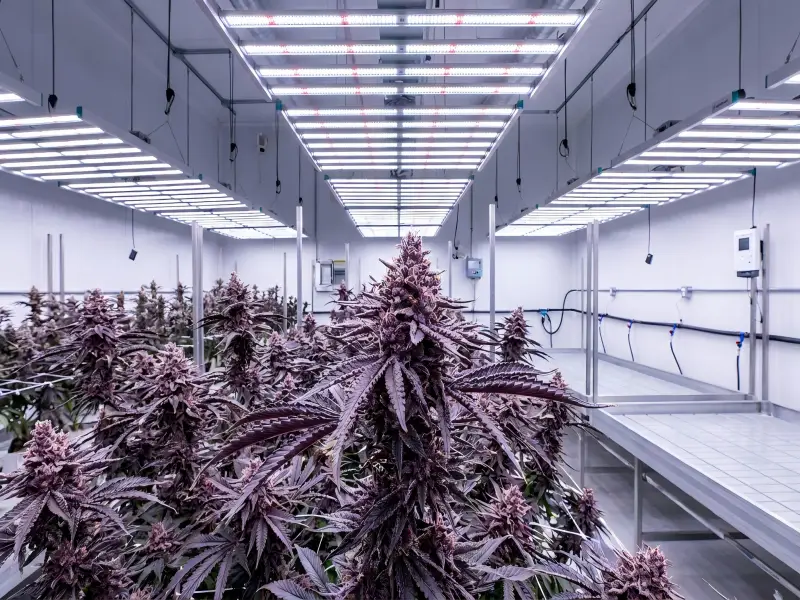
In the highly competitive commercial wholesale cannabis market, visual appeal drives purchasing decisions. Dense, resinous flowers displaying deep violet, rich lavender, and midnight-purple hues command a distinct wholesale premium—often fetching a 15% to 30% price uplift over standard green phenotypes of similar potency. For multi-site indoor operators, producing consistent, vibrant purple flower across thousands of square feet of canopy is no longer a matter of luck or novelty; it is a critical driver of gross margin and brand differentiation.
A common misconception among legacy cultivators is that purple coloration is strictly a random genetic lottery or the result of extreme, yield-damaging frost events. In reality, deep flower pigmentation is a controlled physiological response to targeted environmental stress. While genetic predisposition sets the physiological ceiling, targeted environmental manipulation determines whether a crop reaches its full color expression.
To reliably trigger high-density color finishing without sacrificing flower mass or cannabinoid yield, commercial operators rely on two primary environmental levers: air temperature and light spectrum. When deployed independently, temperature drops or spectral shifts offer modest gains. However, when integrated into a unified late-flower finishing protocol, cold thermal stress and short-wavelength photon signaling act synergistically to maximize the anthocyanin production cannabis crops can achieve.
Table of Contents
The Science Behind Anthocyanin Production in Cannabis
Anthocyanins are a class of water-soluble flavonoid pigments synthesized via the plant’s phenylpropanoid pathway. Responsible for generating vivid red, purple, and blue hues across the plant kingdom, anthocyanins accumulate within the vacuolar sap of plant epidermal cells—specifically within the calyxes, sugar leaves, and bracts of the cannabis inflorescence. Under standard vegetative and early-flowering conditions, these rich purple pigments are masked by dominant green chlorophyll molecules, which absorb light primarily in the blue and red wavelengths for photosynthesis.
While every cannabis plant possesses the fundamental metabolic machinery to synthesize flavonoids, genetics set the ultimate boundary. Cultivars lacking specific functional alleles responsible for encoding key anthocyanin-biosynthesizing enzymes will remain green regardless of environmental exposure. However, in color-capable phenotypes, environmental signals act as genetic switches that unmask and accelerate pigment accumulation.
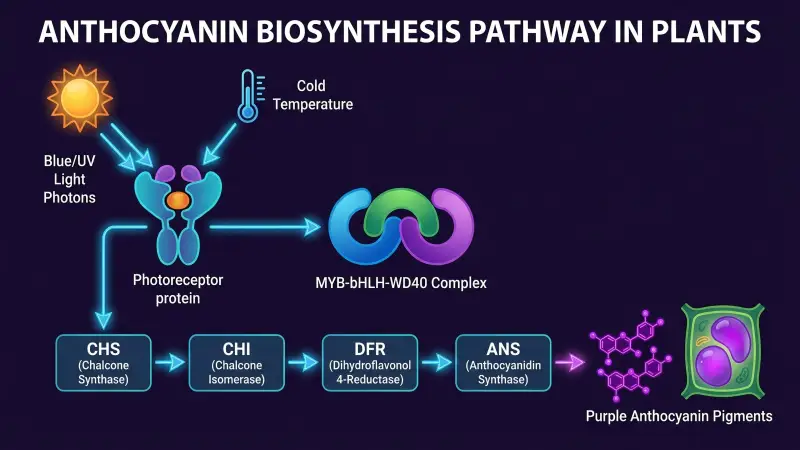
Cold Temperature / UV & Blue Photons
Photoreceptors & Stress Sensors MYB-bHLH-WD40 (MBW) Complex CHS → CHI → F3H → DFR → ANS → UFGT Anthocyanin Vacuolar Accumulation
At the molecular level, this biosynthetic cascade is regulated by a tripartite transcription factor complex known as the MYB-bHLH-WD40 (MBW) complex. Environmental stress signals—specifically thermal drops and high-energy photons—upregulate the expression of R2R3-MYB transcription factors (such as CsMYB1). Once activated, the MBW complex binds directly to the promoter regions of downstream structural genes, triggering a sequential enzymatic cascade:
- Chalcone synthase (CHS) and chalcone isomerase (CHI) initiate the precursor phenylpropanoid conversion.
- Flavanone 3-Hydroxylase (F3H) and dihydroflavonol 4-Reductase (DFR) synthesize leucocyanidin intermediates.
- Anthocyanidin Synthase (ANS) converts leucocyanidins into unstable anthocyanidins.
- UDP-glucose: flavonoid 3-O-glucosyltransferase (UFGT) stabilizes the molecules into anthocyanins, which are actively transported into the cell vacuole.
As nighttime temperatures drop and photon quality shifts during late flower, chlorophyll synthesis declines while the MBW complex drives accelerated anthocyanin production, converting green canopy sites into deep purple flowers.
Temperature: The Strongest Lever for Color Expression
The Evidence-Based Temperature Window
Air temperature is the single most powerful environmental trigger for upregulating anthocyanin biosynthesis. Cold thermal stress slows enzymatic reactions associated with chlorophyll production while activating protective cold-shock proteins that upregulate the phenylpropanoid pathway.
Recent academic literature confirms the exact thermal parameters required for optimal pigment yield. According to PMC research on cannabis environmental stress (2025), inflorescence anthocyanin concentration exhibits peak accumulation at constant temperatures between 8°C and 15°C (46.4°F to 59°F). In contrast, plants maintained at warm ambient temperatures of 22°C (71.6°F) and above exhibit significant pigment suppression, as elevated heat accelerates enzymatic degradation of anthocyanins and downregulates the MBW complex.
Pro tip: Maintaining a ambient day-to-night temperature differential (DIF) of 8°C to 12°C (15°F to 20°F) during late flower triggers anthocyanin synthesis while preserving metabolic rate during light hours.
While laboratory trials demonstrate that constant 8°C (46.4°F) temperatures maximize pigment density, subjecting commercial crops to extreme cold throughout the entire 24-hour cycle severely stifles photosynthetic rate, stomatal conductance, and nutrient transport. Moderate, controlled thermal drops during nighttime hours strike the ideal balance between dense color expression and robust commercial yields.
Timing: The Final Two to Three Weeks
Attempting to force color early in the flowering cycle (Weeks 1 to 5) severely compromises final yield and bud structure. During early and mid-flower, cannabis plants require warm daytime temperatures (25°C to 28°C / 77°F to 82°F) to maximize cell division, photosynthetic capacity, and floral expansion.
The proven commercial protocol window opens during the final two to three weeks of flower (typically Weeks 6 to 8 for an 8-week strain), after floral structure and cell expansion are complete:
- Daytime temperature target: 21°C to 23°C (70°F to 73.4°F)
- Nighttime temperature target: 12°C to 15°C (53.6°F to 59°F)
- Ramp strategy: Avoid dropping temperatures abruptly overnight. Lower nighttime room setpoints by 1.5°C to 2°C (2.5°F to 3.5°F) per day over a 4-day ramp period. This gradual reduction prevents severe osmotic shock, leaf epinasty, and root-zone stalling.
Protecting Yield During Cool-Down
Cooling a commercial grow room introduces severe psychrometric challenges that threaten crop health if unmanaged. As air temperature drops, its moisture-holding capacity decreases rapidly, causing Relative Humidity (RH) to spike toward saturation (100% RH). In dense, late-stage floral canopies, this moisture spike causes condensation on bud tissue, creating prime conditions for Botrytis cinerea (bud rot) and powdery mildew outbreaks.
⚠️ Warning: A 5°C drop in air temperature without active dehumidification can push room Relative Humidity above 85%, triggering rapid Botrytis germination in dense flower canopies within 12 hours.
To protect commercial yields during late-flower cool-downs, facility operators must implement strict environmental safeguards:
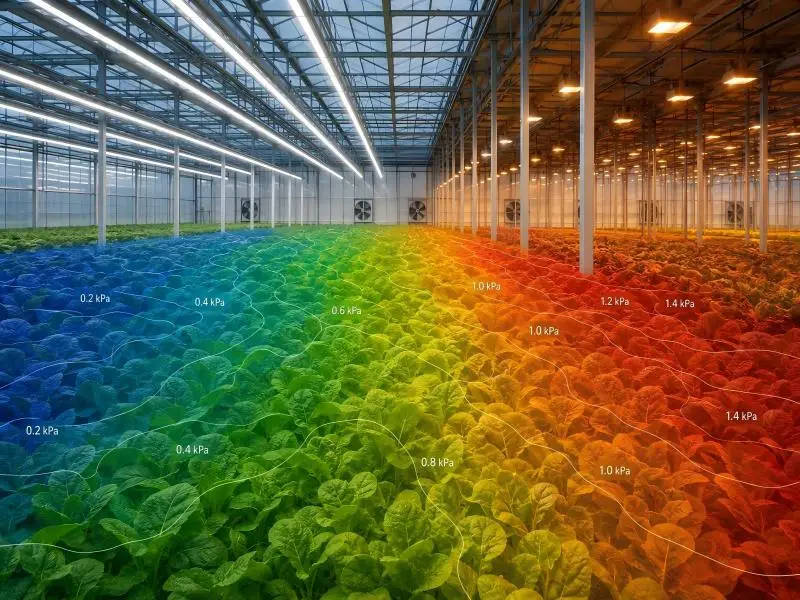
- Maintain Vapor Pressure Deficit (VPD): Target a late-flower VPD between 1.2 kPa and 1.5 kPa. When dropping night temperatures to 14°C (57.2°F), room RH must be pulled down to 45–50% to prevent dew point condensation.
- Coordinate HVAC dehumidification: Ensure commercial HVAC and dedicated dehumidifiers are staged to ramp up before light-off, counteracting the sudden humidity rise caused by cooling coils.
- Airflow velocity management: Maintain continuous canopy air movement at 0.3 m/s to 0.5 m/s using micro-climate circulation fans to eliminate stagnant microclimates around dense flower sites.
| Parameter | Standard Late Flower (Wks 1–5) | Color Finishing Protocol (Final 2–3 Wks) | Operational Priority |
|---|---|---|---|
| Day temperature | 25°C – 27°C (77°F – 80.6°F) | 21°C – 23°C (70°F – 73.4°F) | Maintain baseline photosynthesis |
| Night temperature | 18°C – 20°C (64.4°F – 68°F) | 12°C – 15°C (53.6°F – 59°F) | Activate MBW transcription complex |
| Night RH target | 55% – 60% | 45% – 50% | Dew point & Botrytis prevention |
| Target VPD | 1.1 – 1.3 kPa | 1.2 – 1.5 kPa | Transpiration balance |
| Canopy air velocity | 0.2 – 0.3 m/s | 0.3 – 0.5 m/s | Prevent microclimate humidity traps |
Light Spectrum: The Complementary Driver of Pigment Synthesis
Blue Light: The Most Effective Visible Wavelength
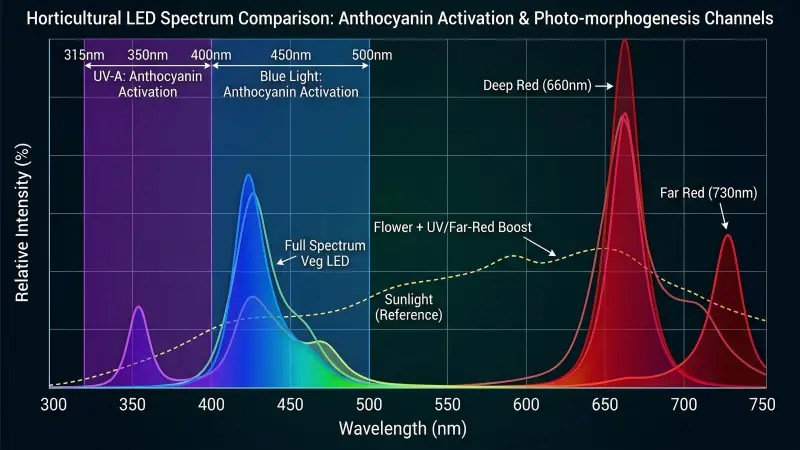
While temperature acts as the primary thermal trigger, photon spectrum provides the energy signals that regulate photomorphogenesis. Among visible wavelengths, blue photons (400 nm to 500 nm) are the most effective driver of secondary metabolite and pigment accumulation.
Blue light is perceived by plant photoreceptors called cryptochromes (CRY1 and CRY2). Upon absorbing blue photons, cryptochromes trigger downstream signaling pathways that directly stimulate the expression of chalcone synthase (CHS)—the entry-point enzyme for anthocyanin biosynthesis.
As documented in a Cannabis Science and Technology report (2024), boosting the blue photon fraction during late flower significantly enhances flavonoid content and flower pigmentation. While standard full-spectrum LED fixtures operate at a baseline blue fraction of 8% to 12% of total Photosynthetic Photon Flux Density (PPFD), increasing blue light fraction to 15%–20% during the final two weeks provides the ideal photomorphogenic signal to maximize calyx color expression without reducing overall floral mass.
UV Supplementation: Gentle Boosts, Measured Risks
Ultraviolet radiation represents a high-energy abiotic stress that plants counteract by producing natural “sunscreens”—primarily phenolic compounds, THC, and anthocyanins that absorb harmful UV energy before it damages cellular DNA.
- UV-A wavelengths (315 nm to 400 nm): UV-A radiation is perceived by the UVR8 photoreceptor and cryptochromes. Deploying UV-A at a fraction of 2% to 5% of total photon flux during the final three weeks of flower acts as a safe, non-destructive trigger for anthocyanin synthesis.
- UV-B wavelengths (280 nm to 315 nm): UV-B photons carry significantly higher energy and directly stress cellular structures. While conservative dosing (<0.5% of total photon flux) during the final 10 to 14 days can induce rapid pigment upregulation, excessive UV-B causes severe photo-inhibition, leaf bronzing, and terpene degradation.
Combining high blue fractions (18% PPFD) with targeted UV-A supplementation creates a powerful light spectrum strategy that amplifies the cold-induced anthocyanin response.
Spectral Tunability in Modern LED Lighting
Legacy lighting systems, such as High-Pressure Sodium (HPS) or fixed-spectrum broad-white LEDs, lack the flexibility needed to manipulate specific wavebands dynamically during late flower. HPS fixtures emit a heavily red-orange skewed spectrum with under 5% blue photons and zero UV output, making spectral finishing impossible.
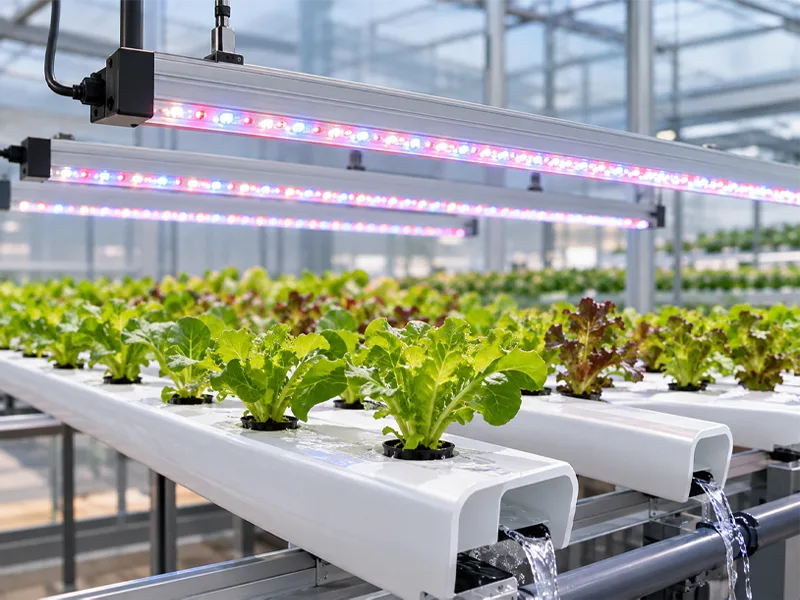
Modern spectrally tunable LED fixtures eliminate this limitation by providing independent control over individual color channels. Cultivators can maintain a high-efficiency spectrum during vegetative growth and early bloom, then dynamically increase blue and UV-A channels during the final finishing window.
When selecting commercial lighting infrastructure, deploying tunable spectrum LED grow lights allows operators to fine-tune blue and UV output without increasing ambient thermal loads. Furthermore, choosing high-efficiency full-spectrum LED grow light solutions equipped with passive aluminum heat sinks reduces ambient room heat, enabling facilities to achieve 12°C–15°C night setpoints with significantly lower HVAC compressor loads.
Operators should also consult an LED hanging distance and hanging heights guide to ensure uniform PPFD distribution across the canopy, preventing localized hotspots from degrading delicate surface anthocyanins.
Genetics: The Non-Negotiable Foundation
Environmental manipulation is a tool to unlock genetic potential, not create it from thin air. If a cultivar lacks the genetic alleles required to express anthocyanins, dropping room temperatures to 12°C or flooding the canopy with blue photons will merely stunt growth, bleach leaves, or delay maturity without producing a single purple calyx.
Commercial multi-site operations must approach color finishing through systematic pheno-hunting and genetic validation:
- Allele screening &small-scale validation: Before rolling out a cold-finishing protocol facility-wide, test new genetics in a dedicated 2-tier trial room. Subject 10 to 20 clones per pheno candidate to a 14°C night cool-down during Week 6.
- Color phenotype scoring: Evaluate candidates based on calyx color density, sugar leaf coverage, and post-drying pigment retention. True commercial purple genetics display deep coloration within the inner calyx structures, not just superficial sun-tan on outer fan leaves.
- SOP standardization: Group cultivars into “Cold-Responsive” and “Standard Green” zones within the facility. Apply aggressive cold and light finishing protocols exclusively to rooms housing verified color-capable cultivars.
Commercial Deployment: The Complete Color-Finishing Protocol
Building a Repeatable Cool-Down SOP
To ensure facility-wide consistency across cultivation cycles, commercial operators must translate environmental science into a standardized, step-by-step Standard Operating Procedure (SOP).
Step-by-Step Late-Flower Protocol (Weeks 6 to 8)
- Week 6 (initiation & ramp-down):
- Drop night temperature by 1°C per day, transitioning from 19°C (66.2°F) down to 15°C (59°F).
- Increase blue spectrum channel to 15% total PPFD.
- Introduce UV-A supplementation at 2% total photon flux for 4 hours during mid-day lighting.
- Tighten night RH to 50%; adjust dehumidifier staging.
- Week 7 (peak stress window):
- Hold night temperature at 13°C to 14°C (55.4°F to 57.2°F); maintain day temperature at 21°C to 22°C (69.8°F to 71.6°F).
- Boost blue spectrum channel to 18–20% total PPFD.
- Increase UV-A to 4% total flux; run for 6 hours daily.
- Taper CO₂ enrichment from 1,200 ppm down to ambient levels (400–500 ppm). Because lower temperatures reduce plant metabolic speed, high CO₂ concentrations cannot be utilized efficiently and unnecessarily raise operating costs.
- Reduce Daily Light Integral (DLI) by 10–15% to reflect lower metabolic demand.
- Week 8 (flush & final finishing):
- Maintain night temperature at 12°C to 13°C (53.6°F to 55.4°F).
- Hold night RH strictly at 45% to prevent condensation during final floral swelling.
- Turn off UV channels 48 hours before harvest to prevent oxidative stress on delicate surface trichomes.
| Item | Detail |
|---|---|
| Week 6 | Night Temp 15°C |
| Week 7 | Night Temp 13°C |
| Week 8 | Night Temp 12°C |
Conduct side-by-side A/B testing in identical cultivation rooms to validate purple intensity, dry weight yield, and total cannabinoid profile before commercial scale-up.
Managing HVAC Loads and Energy Costs
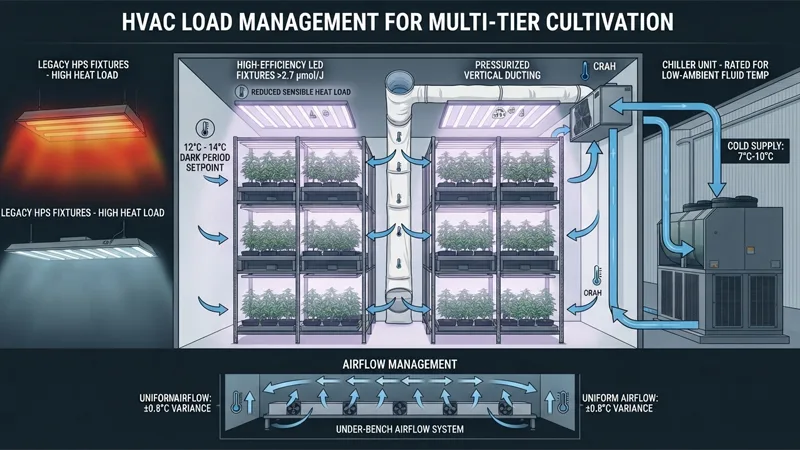
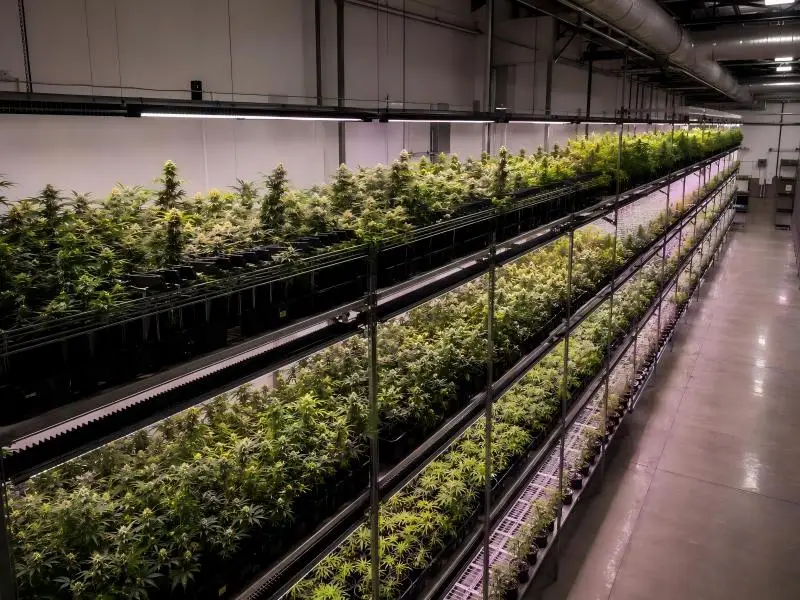
Chilling a commercial room to 12°C–14°C during dark hours places a massive thermal load on facility HVAC equipment—especially in warm geographic regions or multi-tier indoor rooms where heat builds up near upper racks.
- Refrigeration & compressor capacity: Standard comfort-cooling HVAC units lose efficiency when operating at lower temperature setpoints. Ensure facility chillers or CRAH units are rated for low-ambient fluid temperatures to avoid evaporator coil icing.
- LED efficiency impact: Modern LED grow lights with efficacy above 2.7 µmol/J emit 40% less sensible heat into the space compared to legacy HPS fixtures. This heat reduction significantly eases the load on cooling equipment during daytime hours and simplifies nighttime room chilling.
- Multi-tier air distribution: In multi-tier racks, cold air falls to the lower level while heat rises to the top tier. Implement pressurized vertical ducting and under-bench airflow systems to maintain consistent room-wide temperatures within ±0.8°C across all tiers.
Avoiding Common Pitfalls
Commercial cultivators must steer clear of several frequent operational errors when executing color-finishing protocols:
- Confusing nutrient deficiencies with anthocyanin expression:
- Phosphorus (P) Deficiency: Causes purple or reddish discoloration along leaf petioles and stems, accompanied by necrotic brown leaf spots and stunted flower growth.
- Nitrogen (N) Deficiency: Causes premature leaf yellowing (chlorosis) that moves from bottom leaves upward.
- Genuine Anthocyanin Expression: Targets calyxes, bracts, and sugar leaves uniformly during late flower, maintaining crisp, vibrant leaf margins and healthy trichome development.
- Chasing color at the expense of ripeness: Never extend a crop’s cycle purely to gain deeper purple tones if trichome ambering signals peak maturity. Over-matured flowers suffer from THC degradation into CBN, leading to diminished potency and stale aroma.
- Neglecting dew point physics: Dropping temperatures without simultaneously lowering room absolute humidity leads directly to hidden micro-condensation within dense colas, destroying commercial crop value through Botrytis outbreaks.
Conclusion
Maximizing the anthocyanin production cannabis plants achieve is a scientific, repeatable process driven by targeted environmental controls. By pairing verified purple genetics with a disciplined late-flower finishing SOP—dropping nighttime temperatures to 12°C–15°C while enriching light spectrums with 15%–20% blue photons and supplemental UV-A—commercial operators can reliably produce vibrant, top-shelf purple flower cycle after cycle.
When executing these protocols at scale, success relies on balancing thermal stress with rigorous psychrometric control. Maintaining low Relative Humidity (45–50%), precise VPD targets, and strong canopy airflow safeguards dense colas against mold risks during late-flower cooling.
Combining science-backed environmental setpoints with energy-efficient, spectrally tunable LED lighting infrastructure empowers commercial indoor operators to standardize premium purple phenotypes, maximize wholesale market value, and optimize facility profitability year-round.
FAQ
What is the best temperature to turn cannabis purple?
The optimal nighttime temperature for inducing anthocyanin production in color-capable cannabis strains is between 12°C and 15°C (53.6°F to 59°F) during the final 2 to 3 weeks of flowering. Maintaining a daytime-to-nighttime temperature differential (DIF) of 8°C to 12°C (15°F to 20°F) triggers purple pigment accumulation while preserving plant metabolism during light hours.
Does light spectrum affect anthocyanin levels in cannabis?
Yes. Short-wavelength photons—specifically blue light (400–500 nm) and UV-A radiation (315–400 nm)—stimulate plant cryptochrome and UVR8 photoreceptors. This upregulation activates key enzymes like chalcone synthase (CHS) in the phenylpropanoid pathway, accelerating anthocyanin accumulation in calyxes and sugar leaves.
Will cold stress during late flower reduce cannabis yield or potency?
Will cold stress during late flower reduce cannabis yield or potency?
If managed correctly during the final 2 to 3 weeks, targeted night cooling to 12°C–15°C does not significantly reduce dry weight or cannabinoid yield. However, dropping temperatures below 10°C (50°F) or introducing extreme cold stress earlier in flower (Weeks 1–5) can severely stunt growth, reduce photosynthetic efficiency, and lower overall yields.
How do I prevent bud rot (Botrytis) when dropping grow room temperatures?
As air cools, its relative humidity (RH) rises rapidly. To prevent condensation on dense flower tissue, lower room relative humidity to 45%–50%, maintain target Vapor Pressure Deficit (VPD) between 1.2 and 1.5 kPa, and ensure continuous canopy air velocity at 0.3 to 0.5 m/s using micro-climate circulation fans.
Can any cannabis strain turn purple with temperature adjustments?
Can any cannabis strain turn purple with temperature adjustments?
No. Genetics establish the physiological ceiling for pigment expression. Cultivars that lack functional alleles for key anthocyanin-biosynthesizing enzymes will remain green regardless of thermal or spectral triggers. Controlled cold and light finishing protocols only work on verified color-capable genetics.