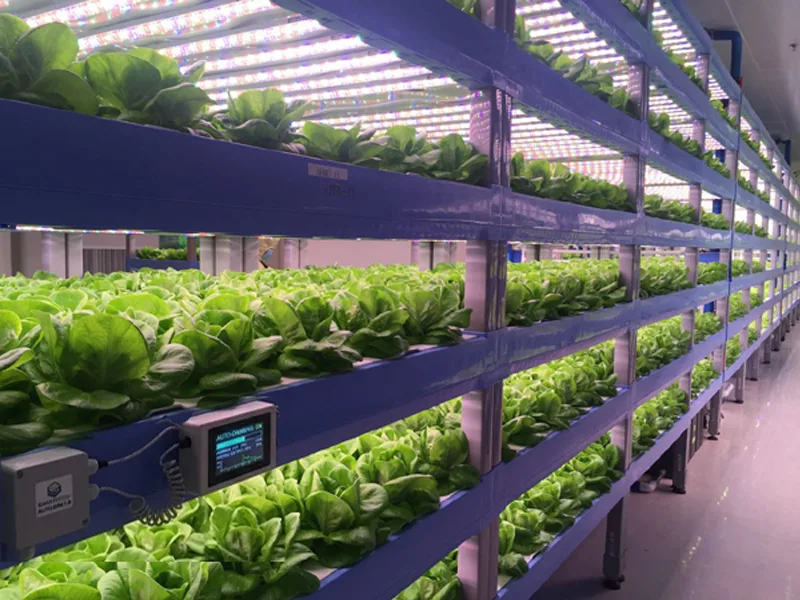
The landscape of Controlled Environment Agriculture (CEA) has undergone a radical transformation. As the global demand for hyper-local, pesticide-free, and year-round produce skyrockets, vertical farms have moved from experimental concepts to massive, industrialized operations. However, this rapid scaling has exposed a critical vulnerability in the indoor farming business model: the crushing weight of Operational Expenses (OPEX). Within these expenses, electricity consumption—primarily driven by horticultural lighting and climate control—stands out as the most formidable barrier to profitability.
For years, commercial growers relied on binary, “on/off” static lighting. While the transition from High-Pressure Sodium (HPS) to LED technology marked a massive leap in energy efficiency, operating commercial LED grow lights at 100% capacity from day one of a crop cycle is a fundamentally flawed and financially draining strategy. The modern vertical farm requires precision, adaptability, and an unyielding focus on resource optimization.
This is where Automated Dimming Systems emerge not merely as an optional upgrade, but as the cornerstone of CEA lighting efficiency. By dynamically adjusting the light output to precisely match a plant’s biological needs at every micro-stage of its life, automated dimming fundamentally alters the economics of indoor farming.
Authored by the horticultural lighting engineering team at SLTMAKS, a premier professional plant grow light manufacturer, this comprehensive guide will dissect the absolute advantages of automated dimming. We will explore the deep technical mechanics, the biological benefits from seed to harvest, and the undeniable financial ROI that vertical farming lighting solutions can achieve when integrated with intelligent control.
Table of Contents
The Core Challenge of Vertical Farming: The Paradox of Yield and Energy Consumption
To understand the value of automated dimming, we must first examine the inherent contradictions in commercial indoor farming. The ultimate goal is always to maximize yield and crop quality per square foot. However, pushing for maximum yield traditionally meant blasting the canopy with maximum light, leading to a cascade of spiraling costs.
The High OPEX Reality in Controlled Environment Agriculture
Operating a commercial vertical farm is an energy-intensive endeavor. Unlike traditional agriculture, which relies on the free power of the sun, indoor farms must artificially synthesize every photon required for photosynthesis. Depending on the geographic location and local utility rates, electricity can account for 30% to 50% of a facility’s total operational costs.
As utility rates fluctuate and carbon taxes loom in various jurisdictions, the pressure on profit margins is intense. Facility managers are tasked with an impossible balancing act: reduce the energy footprint without compromising the Photosynthetic Photon Flux Density (PPFD) required for aggressive commercial growth. Every wasted kilowatt-hour (kWh) eats directly into the net profit of the harvest.
The Limitations of Static LED Grow Lights
Static LED fixtures, which run at full intensity whenever they are turned on, represent a massive inefficiency. The fundamental flaw is a misunderstanding of plant biology. A newly sprouted seedling does not possess the foliar surface area (canopy) or the root structure to absorb and process the same volume of photons as a mature, flowering plant.
When seedlings or vegetative clones are subjected to the intense 1000+ µmol/m²/s PPFD designed for the peak flowering stage, several detrimental things happen:
- Energy waste: The plant simply cannot photosynthesize the excess light. The photons hitting the floor, the walls, or bouncing off small leaves represent completely wasted electrical expenditure.
- Light stress and photoinhibition: Excessive light can overwhelm the plant’s photosystems (Photosystem I and II). Instead of growing faster, the plant enters a state of photoinhibition, where it expends vital energy repairing damaged cellular structures rather than building new tissue. This leads to bleaching, stunted growth, and nutrient lockouts.
- Thermal overload: Even highly efficient LEDs produce heat. Running lights at 100% unnecessarily dumps excess thermal energy into the room, forcing the HVAC system to work overtime to cool a room that shouldn’t be that hot in the first place.
Static lighting is the equivalent of driving a car with the accelerator pinned to the floor at all times, using only the brakes to control speed. It is inefficient, damaging to the engine, and expensive.
Demystifying Automated Dimming Systems in Commercial Grow Lights
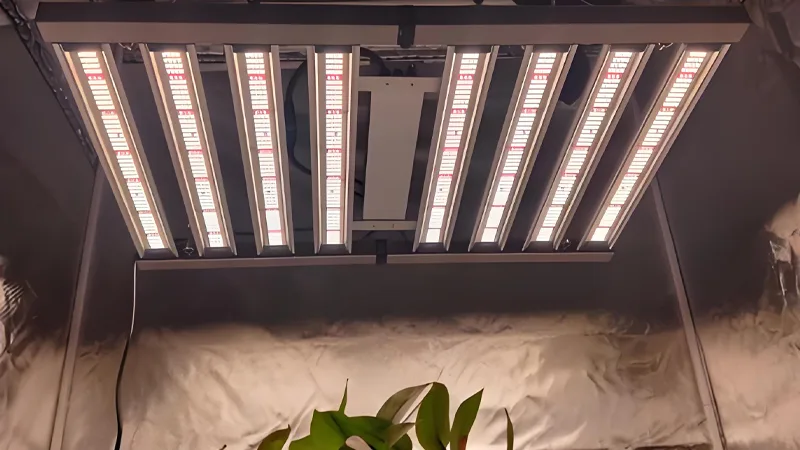
Automated dimming grow lights represent the shift from brute force to precision agriculture. These systems allow growers to program specific light intensities across a 24-hour cycle and throughout the entire multi-week crop cycle, ensuring the plant receives exactly what it needs, and nothing more.
How Does Dimming Technology Work?
At a technical level, dimming in commercial horticultural lighting is achieved through sophisticated communication protocols between a central master controller and the LED drivers housed within or attached to the light fixtures. As a professional manufacturer, SLTMAKS integrates the most reliable and universally recognized protocols:
- 0-10V dimming: This is the industry standard for analog control. A low-voltage control signal is sent to the LED driver. At 10 volts, the light output is at 100%. At 5 volts, the output drops to 50%, and approaching 0 volts, the fixture turns off or drops to its minimum dimming threshold (often 10%). It is reliable, cost-effective, and easy to daisy-chain across massive vertical racks.
- PWM (Pulse Width Modulation): Instead of lowering the voltage, PWM rapidly turns the LED on and off at a frequency imperceptible to the human eye (and the plant). The ratio of “on” time to “off” time determines the perceived brightness. This allows for incredibly precise control, often down to 1% intensity, without color shifting the light spectrum.
- Digital protocols (DALI / RS485): For highly advanced, data-driven facilities, digital protocols allow two-way communication. Not only can the central computer tell the light to dim to 63%, but the light can report back its operating temperature, power draw, and any fault codes. This is crucial for predictive maintenance in large-scale operations.
Integration with Environmental Control Systems
The true magic of automated dimming grow lights is realized when they are integrated into a facility’s overarching Building Management System (BMS) or centralized environmental controller.
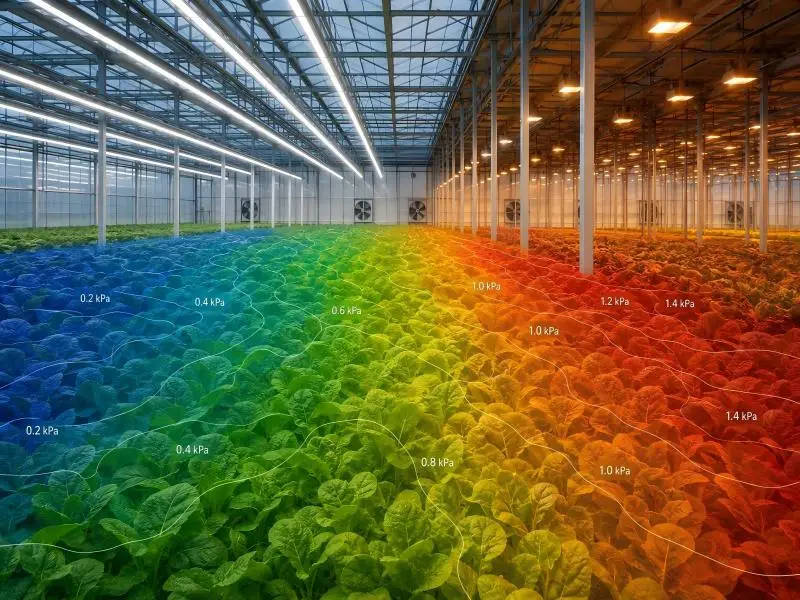
Plants do not interact with light in a vacuum. The rate of photosynthesis is dictated by the interplay of light (PPFD), temperature, humidity (Vapor Pressure Deficit, or VPD), and CO2 concentration. With an automated system, if the room temperature spikes due to an HVAC anomaly, the environmental controller can automatically dim the SLTMAKS grow lights by 15%. This instantly reduces the thermal load in the room, protecting the crop from heat stress until the cooling system catches up. Similarly, light intensity can be ramped up precisely in tandem with automated CO2 enrichment, ensuring the plant has the exact building blocks necessary to utilize the increased photon energy. This creates a synchronized, closed-loop microclimate that maximizes CEA lighting efficiency.
Stage-by-Stage Optimization: Matching Dimming to Plant Growth Cycles
The most profound application of automated dimming is the ability to master the Daily Light Integral (DLI). DLI is the total number of photosynthetically active photons delivered to a specific area over 24 hours (measured in mol/m²/day). Different growth stages require drastically different DLIs.
Let’s explore how automated PPFD control transforms the cultivation process from seed to harvest.
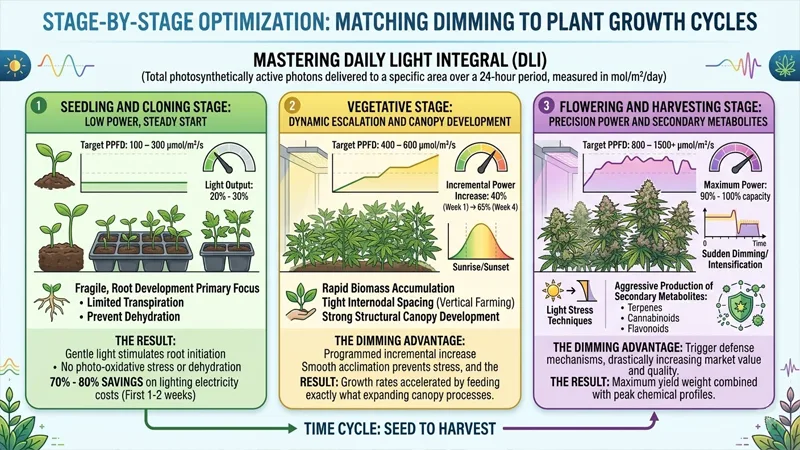
Seedling and Cloning Stage: Low Power, Steady Start
- Target PPFD: 100 – 300 µmol/m²/s
- Biological need: Young seedlings and unrooted clones are incredibly fragile. Their primary objective is root development, not aggressive foliar growth. They have thin cuticles and a limited capacity to transpire water to cool themselves.
- The dimming advantage: By utilizing automated controllers, growers can set their SLTMAKS fixtures to operate at just 20% to 30% capacity.
- The result: The plants receive the gentle, precise light required to stimulate root initiation without the risk of photo-oxidative stress or dehydration. Financially, the facility is saving 70% to 80% on its lighting electricity costs for the first 1-2 weeks of the crop cycle. There is absolutely no reason to pay for photons that the plant cannot use.
Vegetative Stage: Dynamic Escalation and Canopy Development
- Target PPFD: 400 – 600 µmol/m²/s
- Biological need: As plants establish their root zones and transition into the vegetative stage, their demand for light increases exponentially. The goal here is rapid biomass accumulation, tight internodal spacing (crucial for vertical farming where vertical height is limited), and the development of a strong, structural canopy capable of supporting heavy yields later.
- The dimming advantage: An automated system allows for a “Sunrise/Sunset” simulation. Instead of shocking the plants with an instant blast of high-intensity light, the system gradually ramps up power over 30 to 60 minutes. Throughout the weeks of the vegetative phase, the grower can program the system to incrementally increase the maximum daily intensity (e.g., from 40% in Week 1 to 65% in Week 4).
- The result: This smooth acclimation prevents stress. By feeding the plant exactly what its expanding canopy can process, growth rates are accelerated. The progressive ramping up of power ensures that energy is only consumed precisely as the plant’s metabolic rate demands it.
Flowering and Harvesting Stage: Precision Power and Secondary Metabolites
- Target PPFD: 800 – 1500+ µmol/m²/s (depending on crop and CO2 supplementation)
- Biological need: This is the generative phase. The plant is focusing all its energy on reproduction (fruiting or flowering). This requires massive amounts of photon energy.
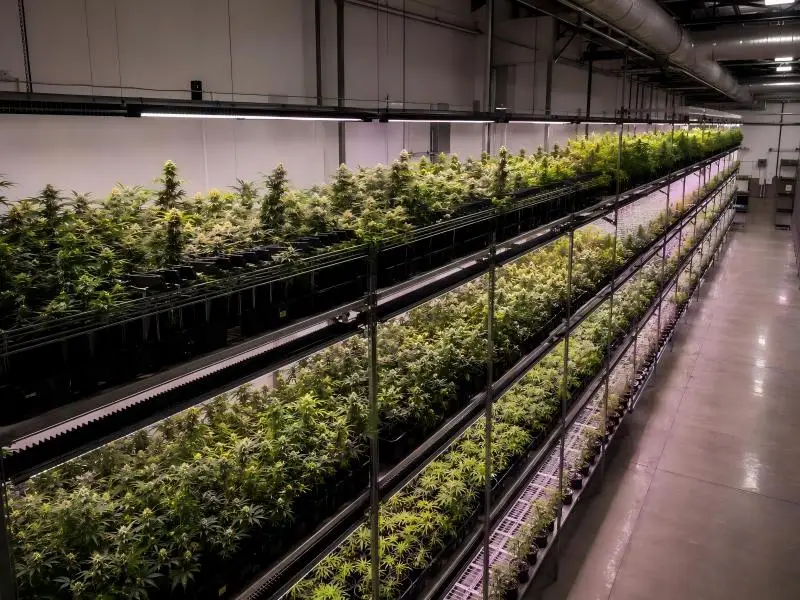
- The dimming advantage: This is where the commercial LED grow lights earn their keep, operating at 90% to 100% capacity to push yields to their absolute genetic limit. However, automated dimming still plays a vital role here. In the final days before harvest, many master growers utilize “light stress” techniques. By manipulating the photoperiod or suddenly dimming/intensifying the light, growers can trigger defense mechanisms in the plant. In crops like medicinal cannabis or high-end herbs, this stress response forces the plant to aggressively produce secondary metabolites—such as terpenes, cannabinoids, and flavonoids—drastically increasing the final market value and quality of the crop.
- The result: Maximum yield weight combined with peak chemical profiles, achieved through deliberate, programmed light manipulation rather than static exposure.
The “Absolute Advantages”: A Deep Dive into Cost Reduction and Efficiency
While the biological benefits are clear, B-end commercial operators make decisions based on the bottom line. The implementation of automated dimming systems generates a multi-faceted reduction in OPEX that reverberates throughout the entire facility.
1. Direct Energy Savings (The Core ROI Driver)
The math is undeniable. Let’s consider a medium-sized vertical farm utilizing 1,000 LED fixtures, each rated at 600 watts. If these run statically at 100% for an 18-hour veg cycle and 12-hour flower cycle, the power draw is immense.
By implementing an automated dimming schedule where lights average 40% power during veg, 80% during early flower, and only hit 100% during peak flower, the overall energy consumption of the lighting array can plummet by 25% to 35% annually. In regions with high commercial electricity rates ($0.15 – $0.25+ per kWh), this singular efficiency translates to hundreds of thousands of dollars saved per year. It directly lowers the Cost Per Pound/Kilo of the final harvested product, instantly widening profit margins.
2. The Ripple Effect: Massive HVAC Load Reduction in Indoor Farming
This is the hidden goldmine of automated dimming. The relationship between lighting and HVAC is inextricable. Every watt of electricity consumed by a light fixture ultimately converts to heat (BTUs). In an indoor farm, the HVAC system must actively run compressors to remove this sensible heat load to maintain optimal room temperatures.
When you dim a 600W light to 300W (50%), you are not just saving 300 watts of lighting power; you are removing approximately 1,024 BTUs of heat generation per hour, per fixture. By systematically dimming lights during the early growth stages, the facility dramatically reduces the cooling load on the air conditioning systems. This “ripple effect” means the HVAC compressors run less frequently, consuming less power, and experiencing less mechanical wear and tear. In many CEA facilities, the energy saved on cooling through intelligent light dimming equals or exceeds the energy saved on the lighting itself. It is a compounding economic advantage.
3. Extending Fixture Lifespan and Reducing CAPEX Amortization
Heat is the enemy of all electronics, and LEDs are no exception. The longevity of a commercial LED fixture is dictated by the operating temperature of its diodes and its driver. When a fixture is run at 100% constantly, the thermal management system (heat sinks) works at maximum capacity, and the diodes slowly degrade over time (measured as L90 or L70 lifespan).
By running SLTMAKS grow lights on automated dimming schedules, the average operating temperature of the fixture is drastically reduced. This thermal relief preserves the integrity of the LED chips, preventing premature color shift and photon degradation. A fixture rated for 50,000 hours at full power might easily exceed 75,000 hours of effective life when subjected to a smart dimming lifecycle. This pushes back the facility’s replacement cycle, reducing long-term Capital Expenditures (CAPEX) and lowering maintenance labor costs.
4. Enhancing Crop Uniformity and Eliminating Edge Effects
In a massive vertical rack system, light distribution is rarely perfect. Plants in the direct center of the rack often receive more overlapping light than plants on the edges. With advanced zoned dimming systems, growers can actually program perimeter lights to run at a slightly higher intensity (e.g., 90%) while the center lights run slightly lower (e.g., 80%).
This levels out the PPFD across the entire canopy, ensuring that every plant, regardless of its physical location on the rack, receives the same DLI. Uniform light creates uniform crops, making harvesting, processing, and packaging vastly more efficient and predictable for the business.
ROI Analysis: Is Upgrading to Smart Dimming Systems Worth the Investment?
For procurement managers and farm owners, the transition from basic lighting to advanced automated dimming systems requires a slightly higher initial capital investment. The controllers, the daisy-chain wiring, and the dimmable drivers carry an upfront cost. However, the Payback Period is astonishingly short.
Calculating the Payback Period for Commercial Facilities
The ROI calculation involves comparing the baseline (static lighting) against the optimized model (dimming).
- Added cost: Incremental cost of dimmable fixtures + Master Controller system.
- Monthly savings: (Reduced kWh from lighting) + (Reduced kWh from HVAC cooling) + (Reduced demand charge penalties from utility companies due to lower peak loads).
Because the savings happen 12 to 18 hours a day, 365 days a year, the math works rapidly in the grower’s favor.
A Typical SLTMAKS Success Scenario
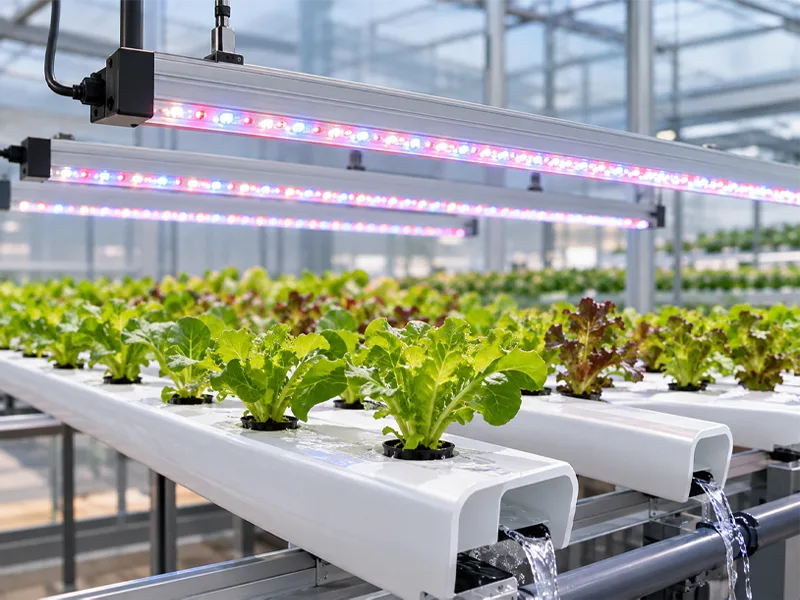
Consider a retrofitted 10,000 sq ft leafy green vertical farm that was upgraded to SLTMAKS automated dimming systems. Previously running static LEDs, their utility bills were crippling. By implementing a stage-specific dimming protocol (running lights at 35% for propagation, ramping to 75% for mature growth), they achieved a direct 28% reduction in lighting energy costs.
More importantly, their HVAC cooling runtime decreased by 22%. Because the plants were no longer suffering from early-stage light stress, the overall crop cycle was shortened by two days, allowing for an extra harvest rotation per year. The combined savings in OPEX and the increase in annual yield resulted in the intelligent control system paying for itself in just 10.5 months. From month 11 onward, those energy savings became pure net profit.
How to Choose the Right Automated Dimming LED Grow Lights
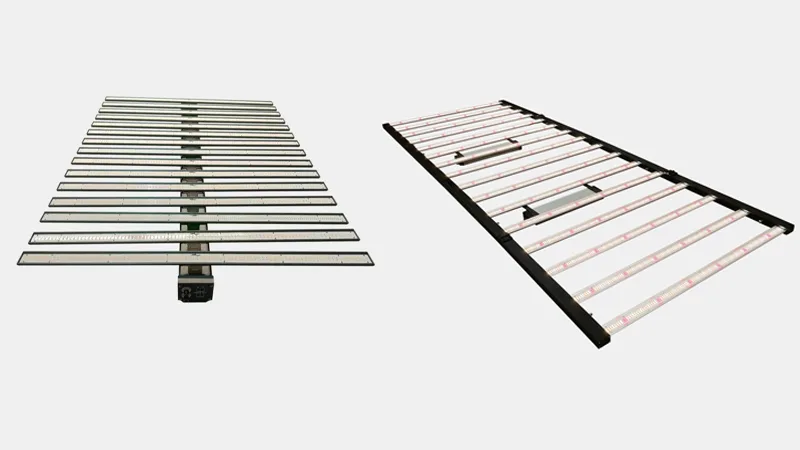
Not all commercial LED grow lights are built equal, and the integration of dimming requires robust engineering. When selecting vertical farming lighting solutions, B-end buyers must evaluate several critical criteria:
- Photosynthetic photon efficacy (PPE): Look for fixtures with a high µmol/J rating (e.g., 2.8 to 3.2+ µmol/J). A highly efficient light that is then dimmed provides the ultimate compound energy savings.
- Daisy-chain capability: In vertical farms, managing cables is a logistical nightmare. Ensure the fixtures allow for simple plug-and-play daisy-chaining for both power and the 0-10V/RJ14 data cables, allowing hundreds of lights to be controlled from a single master hub.
- Broad compatibility: The lights must be agnostic and compatible with major commercial climate controllers (like TrolMaster, Argus, or Priva).
- Driver quality: The LED driver is the heart of the dimming system. It must provide smooth, flicker-free dimming down to at least 10% without burning out prematurely.
Why Partner with SLTMAKS?
As a dedicated, professional plant grow light manufacturer, SLTMAKS engineers fixtures explicitly for the rigors of commercial CEA. We control the supply chain, allowing us to offer unparalleled OEM/ODM customization for massive facility build-outs. Our fixtures feature aerospace-grade thermal management, top-tier diodes, and seamless integration with all major automated environmental control systems. We don’t just sell lights; we deliver engineered horticultural efficiency.
Conclusion: The Future is Automated
The era of static, “always-on” agricultural lighting is over. For vertical farms aiming to survive and thrive in a highly competitive market, squeezing every drop of efficiency out of their infrastructure is mandatory.
Automated dimming systems represent the absolute advantage. By perfectly harmonizing photon delivery with the biological timeline of the plant, commercial growers can drastically slash electrical consumption, ease the burden on HVAC systems, extend equipment lifespan, and ultimately produce higher-quality, more uniform yields. It is the definitive bridge between aggressive agricultural output and sustainable, profitable business operations.
Ready to transform your facility’s OPEX? Stop paying for wasted light. Contact the lighting engineering team at SLTMAKS today. Would you like me to help you draft an email template or a contact form that you can use to offer prospective clients a free custom lighting layout and energy audit for their vertical farm?
What is an automated dimming system in vertical farming?
An automated dimming system is a smart lighting control setup that dynamically adjusts the intensity (PPFD) of commercial LED grow lights based on a pre-programmed schedule or real-time environmental data. Instead of running lights at 100% power all the time, it delivers the exact amount of light the crop needs at any given moment.
How much energy can automated dimming systems save?
By lowering light output during the early growth stages (seedling and vegetative) when plants cannot absorb maximum photons, commercial indoor farms can typically reduce their direct lighting electricity consumption by 25% to 35% annually.
Do I need to dim LED grow lights for seedlings and clones?
Yes. Young seedlings and unrooted clones are fragile and only require a low light intensity (around 100-300 µmol/m²/s). Dimming your grow lights to 20% or 30% prevents photo-oxidative stress (light burn), encourages healthy root development, and stops you from wasting electricity on unutilized light.
How do dimmable grow lights lower HVAC cooling costs?
Every watt of electrical power consumed by a light fixture ultimately converts to heat. When you dim a grow light, it draws less power and emits significantly less heat into the grow room. This directly reduces the cooling load on your HVAC system, leading to massive secondary energy savings.
Are automated dimmable grow lights compatible with my existing climate controller?
Professional vertical farming lighting solutions, like those manufactured by SLTMAKS, are designed with broad compatibility in mind. They typically use industry-standard 0-10V analog connections or digital protocols (like DALI or RS485), allowing them to integrate seamlessly with most major commercial master controllers and Building Management Systems (BMS).