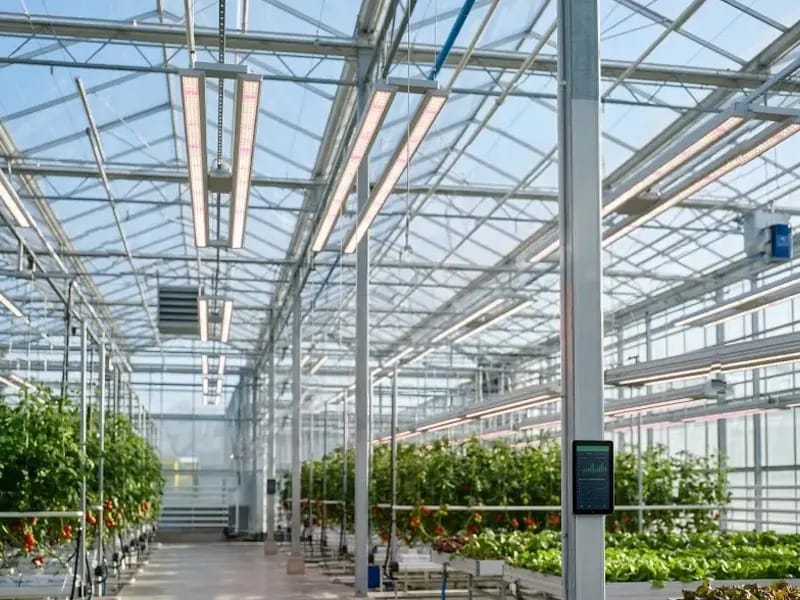
In modern commercial horticulture, the sun is your greatest asset, yet it remains your most unpredictable variable. For commercial greenhouse operators, the ultimate goal is achieving consistent, high-yield, and high-quality harvests year-round. However, fluctuating weather patterns, seasonal changes, and cloudy days can severely disrupt crop growth cycles. Historically, growers compensated for this by blasting high-pressure sodium (HPS) lights on simple timer switches—a rudimentary strategy that guaranteed high electricity bills and frequent light stress for the plants.
Welcome to the era of precision agriculture. Today, the most successful growers are abandoning static timers in favor of Smart Greenhouse Supplemental Lighting Strategies. By implementing dynamic control strategies based on the Daily Light Integral (DLI) and utilizing advanced LED top lighting fixtures, modern commercial greenhouses are striking the perfect balance between maximizing crop yield and drastically minimizing operational expenses (OpEx).
As a leading commercial greenhouse lighting manufacturer, SLTMAKS is dedicated to engineering the future of controlled environment agriculture (CEA). This comprehensive guide will deeply explore the science of DLI, the engineering behind commercial LED grow lights, and the precise control strategies you need to implement to optimize your greenhouse’s energy efficiency and profitability.
Table of Contents
The Science of Light – Understanding DLI and Its Critical Role in Commercial Greenhouses
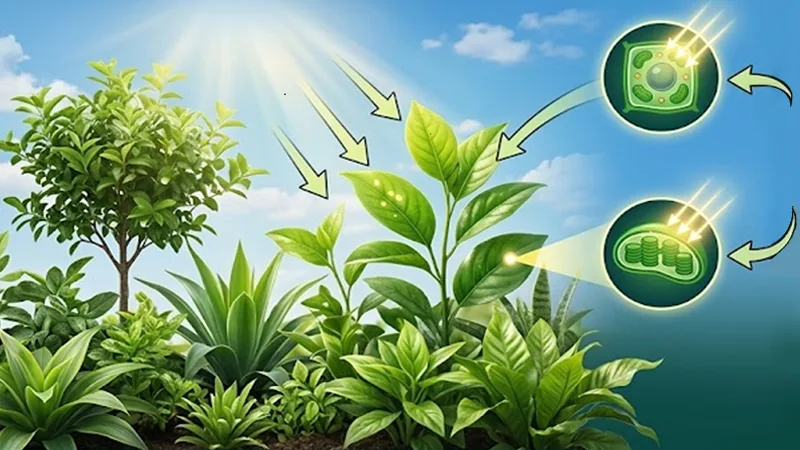
To master greenhouse lighting, we must first speak the language of the plants. Plants do not perceive light in terms of lumens or lux, which are measurements based on human eye sensitivity. Instead, plants respond to Photosynthetically Active Radiation (PAR), which encompasses the photons of light in the 400 nm to 700 nm wavelength range.
What is Daily Light Integral (DLI)?
While Photosynthetic Photon Flux Density (PPFD) measures the instantaneous intensity of PAR light hitting a square meter every second (expressed in µmol/m²/s), PPFD alone does not tell the whole story. Imagine PPFD as the intensity of rainfall at a given moment.
The Daily Light Integral (DLI), on the other hand, represents the total cumulative amount of PAR light that reaches the plant canopy over 24 hours. To continue the analogy, DLI is the total volume of rain collected in a rain gauge by the end of the day. DLI is expressed in moles of photons per square meter per day.
Understanding and calculating DLI is the foundation of any smart grow light energy efficiency strategy. The fundamental relationship between instantaneous light (PPFD) and cumulative light (DLI) is calculated using the following formula:
Where:
- 3600 is the number of seconds in an hour.
- 1,000,000 is the conversion factor from micromoles (㎛mol) to moles (mol).
Optimal DLI Targets for Different Commercial Crops
Different crops have vastly different metabolic engines. Providing a low-light plant with a high DLI wastes expensive electricity and can cause photoinhibition (damage to the photosynthetic apparatus). Conversely, depriving a high-light crop of its target DLI results in internode stretching, poor fruit development, and massive yield reductions.
Here are the optimal DLI targets for common commercial crops:
- Microgreens and leafy greens (lettuce, spinach): 12 to 17 mol • m-2 • d-1
- Herbs (basil, mint): 15 to 22 mol • m-2 • d-1
- Vine crops (tomatoes, cucumbers, peppers): 25 to 35 mol • m-2 • d-1 (During peak fruiting stages)
- Cannabis (vegetative stage): 30 to 45 mol • m-2 \ • d-1
- Cannabis (flowering stage): 40 to 65+ mol • m-2 • d-1
The B2B Grower’s Pain Point: How do you guarantee your tomatoes receive exactly 30 mol • m-2 • d-1 every single day, whether it is a bright summer afternoon or a dreary winter week, without wasting thousands of dollars over-illuminating them? The answer lies in replacing outdated technology with highly controllable commercial LED grow lights.
Why LED Top Lighting is the Preferred Choice for Greenhouse Supplemental Lighting
For decades, High-Pressure Sodium (HPS) lamps were the industry standard. However, HPS technology has reached its physical limits regarding efficacy. Furthermore, HPS lamps cannot be effectively dimmed without shifting their spectral output and drastically reducing their lifespan. This makes them fundamentally incompatible with modern, dynamic DLI control strategies.
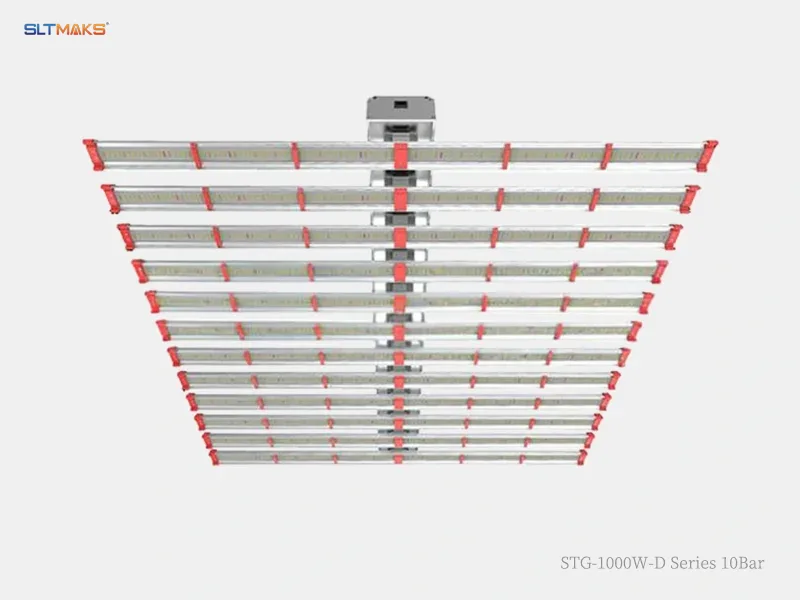
HPS vs. LED: The Shift in Horticulture Lighting Solutions
The transition to LED top lighting fixtures is driven by physics and economics.
- Radiant heat vs. convective heat: HPS lamps emit massive amounts of radiant heat (infrared radiation) directly onto the plant canopy. This forces growers to elevate fixtures high above the crop and run expensive HVAC and venting systems to prevent leaf burn. LEDs emit significantly less radiant heat. The heat generated by LEDs is primarily convective, managed by heavy-duty aluminum heat sinks, allowing the fixtures to be placed closer to the canopy and decoupled from the greenhouse’s temperature control strategies.
- Luminous efficacy: High-quality HPS fixtures peak around 1.8 to 2.1 µmol/J. Premium commercial LED grow lights, such as those engineered by SLTMAKS, routinely exceed 3.0 µmol/J to 3.5 µmol/J. This means LEDs produce up to 70% more plant-usable light for every watt of electricity consumed.
- Spectral tuning: Unlike the fixed, yellow-heavy spectrum of HPS, LEDs allow for targeted spectral recipes. By adjusting the ratio of deep red (660nm), blue (450nm), and broad-spectrum white diodes, growers can steer crop morphology, improving leaf thickness, rooting speed, and secondary metabolite production.
Key Features of Professional LED Top Lights for Greenhouses
When sourcing wholesale plant grow lights, procurement managers and senior engineers must look beyond basic wattage. A true commercial greenhouse lighting manufacturer builds fixtures designed for harsh, high-humidity environments.
Key specifications to mandate include:
- IP65 or IP67 Ratings: Utmost protection against dust, high-pressure water jets, and corrosive foliar sprays.
- 0-10V or DALI Dimming Protocols: This is non-negotiable. Without seamless dimming capabilities, dynamic DLI control is impossible.
- Passive Thermal Management: Fan-cooled fixtures are prone to mechanical failure in dusty greenhouse environments. High-grade extruded aluminum heat sinks offer reliable, zero-maintenance cooling.
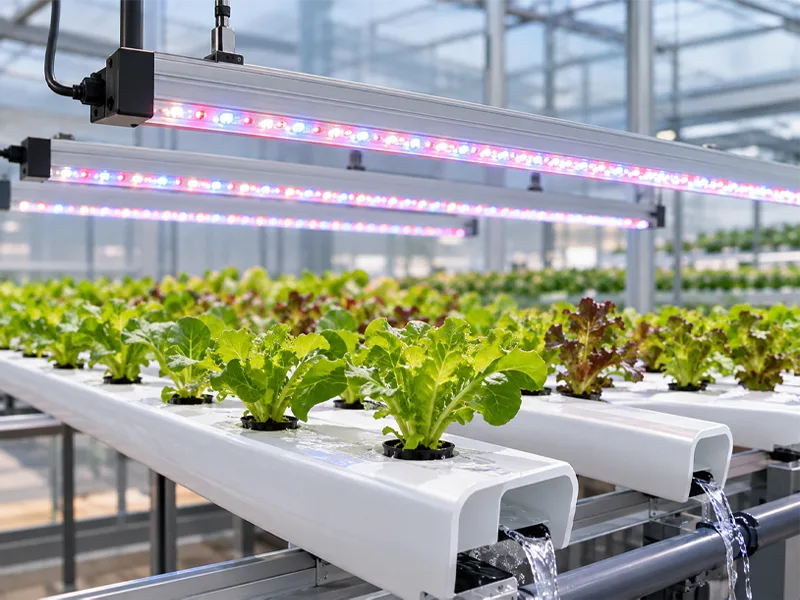
- Form Factor: Slim, linear profiles are critical for LED top lighting to minimize shading (blocking natural sunlight from the glass roof).
The Core Strategy – How to Dynamically Adjust LED Top Lighting Based on DLI
We have established the target (DLI) and the hardware (dimmable LED top lights). Now, we must integrate them into a cohesive, automated system. A smart greenhouse supplemental lighting strategy operates on a simple premise: Only use electrical lighting to fill the gap between what the sun provides and what the crop demands.
Implementing this requires a robust environmental control system (ECS) and a three-step algorithmic approach.
Step 1: Real-Time Sunlight Monitoring and Data Collection
You cannot manage what you do not measure. The foundation of dynamic control is accurate, real-time data collection.
- External weather stations: Pyranometers mounted on the greenhouse roof measure total solar radiation.
- Internal quantum sensors: Highly calibrated PAR sensors are placed at the canopy level inside the greenhouse to measure the actual PPFD penetrating the glass and infrastructure.
These sensors continuously feed data back to the central control computer, calculating the naturally accumulated DLI minute by minute from sunrise.
Step 2: Predictive Control vs. Reactive Control
Older “smart” systems used Reactive Control (also known as threshold control). If the sun went behind a cloud and PPFD dropped below a certain setpoint for 5 minutes, the lights turned on to 100%. If the sun came back out, the lights turned off. This constant on/off cycling caused tremendous wear on electrical relays, created a strobing effect, and often resulted in overshooting the daily DLI target, wasting energy.
Modern systems rely on Predictive and Proportional Control.
The algorithm calculates the DLI Deficit:
DLIDeficit = DLITarget – (DLIAccumulate + DLIPredicted
Based on localized weather forecasts and historical solar data, the software predicts how much natural DLI the sun will provide for the remainder of the day. If a deficit is projected, the system does not simply slam the lights to 100%. Instead, it calculates the exact minimal dimming percentage required from the LED top lighting fixtures to slowly fill that deficit over the remaining photoperiod.
Step 3: Implementing DLI-Based Dimming Algorithms in Practice
Let us examine how this dynamic strategy plays out throughout a typical spring day in a commercial tomato greenhouse targeting a DLI of 30 mol • m-2 • d-1 with a 16-hour photoperiod.
- Early morning (6:00 AM – 9:00 AM): The sun rises, but the angle is low, and natural PPFD is weak. The control system calculates that natural light alone will fall short of the day’s target. The SLTMAKS LED top lights gently fade on, ramping up to 60% power to supplement the morning sun.
- Solar noon (11:00 AM – 2:00 PM): The sky clears, and intense natural sunlight floods the greenhouse. The internal PAR sensors detect that the natural PPFD has spiked. To prevent photoinhibition and save electricity, the control system seamlessly dims the LEDs down to 10% or shuts them off entirely, relying solely on free solar energy.
- Late afternoon (3:00 PM – 5:00 PM): Heavy clouds roll in unexpectedly. The system recognizes the sudden drop in natural PAR. It recalculates the accumulated DLI, realizes the crop is falling behind schedule, and proportionally ramps the LEDs back up to 80% power.
- Evening (6:00 PM – 10:00 PM): The sun sets. The system knows exactly how much DLI is left to hit the exact target of 30 mol • m-2 • d-1 before the end of the 16-hour photoperiod. It adjusts the LED output to a precise 45% capacity for the final hours, hitting the target perfectly as the lights turn off for the night.
Advanced Integration: Time-of-Use (TOU) Energy Pricing
The most sophisticated software algorithms integrate with the local utility grid’s Time-of-Use pricing. If electricity costs double during peak hours (e.g., 4:00 PM to 8:00 PM), the system will intentionally run the LEDs at 100% capacity during off-peak morning hours to pre-load the DLI, allowing the lights to remain off or heavily dimmed during expensive peak hours, drastically optimizing grow light energy efficiency.
The Financial Impact – Energy Savings, Yield Optimization, and ROI
Transitioning to a dynamically controlled, DLI-based LED system requires capital expenditure (CapEx). However, in commercial B2B operations, purchasing decisions are driven by Return on Investment (ROI).
Solving the Energy Cost Pain Point
When growers utilize commercial LED grow lights connected to a dynamic DLI controller, they stop paying for photons the plants don’t need.
- Baseline savings: Simply switching from HPS to high-efficacy LEDs generally yields a 40% reduction in lighting electricity costs.
- Dynamic savings: Layering a DLI-based dimming strategy on top of those LEDs cuts energy usage by an additional 20% to 30%, depending on the geographic location and local climate.
By eliminating the “over-lighting” that occurs with static timer systems, greenhouses can save tens of thousands of dollars annually per hectare.
Improving Crop Quality, Consistency, and Predictability
Beyond electricity bills, the greatest financial impact of precise DLI management is yield predictability. In the wholesale produce market, buyers demand strict delivery schedules and uniform fruit sizes.
When crops experience fluctuating DLI due to weather, growth rates become erratic. By using horticulture lighting solutions to guarantee a stable, perfectly flat DLI line every single day, growers can tightly control crop steering. This results in:
- Faster vegetative growth and shorter crop cycles.
- Tighter internodal spacing (more fruiting sites per square meter).
- Consistent fruit weight, Brix levels (sweetness), and morphology.
- Zero wasted days due to poor weather.
Calculating the ROI of Smart LED Systems
To calculate ROI, greenhouse operators must factor in:
- Hardware costs (Fixtures, sensors, cabling, controllers).
- Utility rebates (Many local governments and power companies offer massive cash rebates for upgrading to DLC-listed, high-efficacy LEDs).
- OpEx reduction (Electricity savings, reduced HVAC load, lower maintenance/bulb replacement costs).
- Revenue increase (Higher total yield, premium pricing for higher quality, faster time-to-market).
In most commercial scenarios involving high-value crops, a dynamically controlled LED top lighting system pays for itself within 18 to 36 months, after which the energy savings become pure profit margin.
Choosing the Right B2B Partner – What to Look for in an LED Grow Light Manufacturer
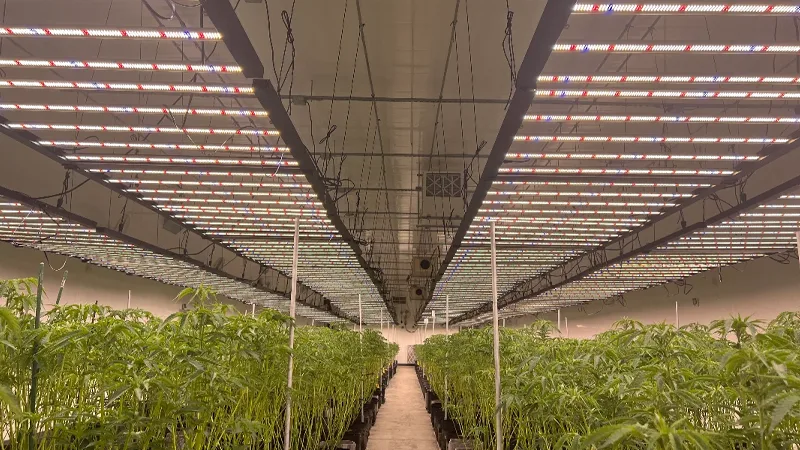
Not all wholesale plant grow lights are created equal. The B2B market is flooded with consumer-grade products masquerading as commercial fixtures. When outfitting a multi-acre facility, reliability and integration are paramount.
Critical Vendor Evaluation Criteria
When evaluating a commercial greenhouse lighting manufacturer, look for a partner that provides a complete engineering ecosystem, not just a box of lights.
- Tier 1 components: Ensure the manufacturer uses top-bin diodes from industry leaders like Samsung, OSRAM, or Seoul Semiconductor, paired with highly reliable drivers (e.g., Inventronics, Mean Well).
- Third-party certifications: Look for UL/ETL safety listings and DLC (DesignLights Consortium) Hort certification, which is often mandatory for securing utility rebates.
- Custom light planning: A professional manufacturer will not guess your needs. They should offer in-house engineering services to create 3D light-mapping simulations (Dialux) tailored to your greenhouse’s specific dimensions, truss heights, and crop requirements.
The SLTMAKS Advantage in Greenhouse Lighting
As a premier commercial greenhouse lighting manufacturer, SLTMAKS understands the complex intersection of plant biology, electrical engineering, and commercial profitability.
Our portfolio of LED top lighting fixtures is explicitly engineered for seamless integration with the world’s leading greenhouse climate control systems (such as Priva, Hoogendoorn, and Argus). Featuring industry-leading efficacy, customized spectrums tailored for specific cultivars, and robust 0-10V dimming architecture, SLTMAKS horticulture lighting solutions empower growers to execute precise DLI strategies flawlessly. We build the hardware that makes your smart software work.
Conclusion and Next Steps for Greenhouse Operators
The era of guessing your greenhouse lighting is over. By embracing the science of the Daily Light Integral (DLI) and coupling it with intelligent, dynamically controlled commercial LED grow lights, commercial operators can take absolute control over their production cycles. This strategy mitigates the risks of unpredictable weather, slashes exorbitant energy costs, and guarantees the consistent, high-yield harvests required to thrive in a competitive agricultural market.
Transitioning to an ASmart lighting system is a significant engineering upgrade, but you do not have to navigate it alone.
Ready to optimize your greenhouse’s energy efficiency and maximize your yield?
FAQ
What is Daily Light Integral (DLI) in greenhouse lighting?
Daily Light Integral (DLI) measures the total amount of Photosynthetically Active Radiation (PAR) that reaches a plant’s canopy over 24 hours. It is usually expressed in mol/m²/day. For commercial greenhouses, tracking DLI is crucial because it dictates the total daily “light engine” driving crop yield, helping growers determine exactly when and how much supplemental lighting is needed.
How does dynamic dimming save energy in commercial greenhouses?
Dynamic dimming uses environmental sensors to measure natural sunlight in real-time. Instead of running LED top lights at 100% capacity on a static timer, a smart control system continuously adjusts the light’s output. It only uses electricity to fill the exact gap between the natural solar radiation and the crop’s target DLI, which can reduce energy consumption by up to 40% compared to traditional methods.
HPS vs. LED grow lights: Which is better for supplemental greenhouse lighting?
LED grow lights are the superior choice for modern smart greenhouses. Unlike traditional HPS (High-Pressure Sodium) fixtures, commercial LEDs offer significantly higher luminous efficacy, emit far less radiant heat (reducing HVAC costs), and can be seamlessly dimmed from 0-100% without shifting their light spectrum. This makes LEDs the only viable option for precise, dynamic DLI control.
What is the optimal DLI target for commercial greenhouse tomatoes?
During their peak fruiting stages, commercial vine crops like tomatoes generally require a high DLI target of 25 to 35 mol/m²/day. Implementing smart greenhouse supplemental lighting ensures this target is consistently met, even during cloudy weeks or winter months, which is essential for maintaining uniform fruit size, brix levels, and a predictable harvest schedule.
Can LED top lighting completely replace natural sunlight in a greenhouse?
While indoor vertical farms rely 100% on sole-source artificial lighting, greenhouse supplemental lighting is specifically designed to assist the sun, not replace it entirely. The primary goal of a smart LED top lighting system is to act as an automated, responsive buffer—providing precise amounts of PAR only when natural solar radiation falls short of the daily requirement.
What technical features should I look for in wholesale plant grow lights?
When sourcing horticulture lighting solutions for a commercial facility, B2B buyers should demand IP65 or IP67 waterproof and dustproof ratings, passive thermal management (heavy-duty heat sinks instead of cooling fans), high-efficacy diodes (such as top-bin Samsung or OSRAM), and strict compatibility with 0-10V or DALI dimming protocols to ensure they work with greenhouse environmental control systems.
How long is the ROI period for smart LED greenhouse lighting systems?
The Return on Investment (ROI) for upgrading to smart LED top lighting typically ranges from 18 to 36 months for commercial high-value crops. This rapid payback period is driven by a combination of baseline energy savings (LED vs. HPS), dynamic dimming efficiency (DLI control), reduced bulb replacement costs, increased crop yields, and frequently available utility rebates for high-efficacy lighting.