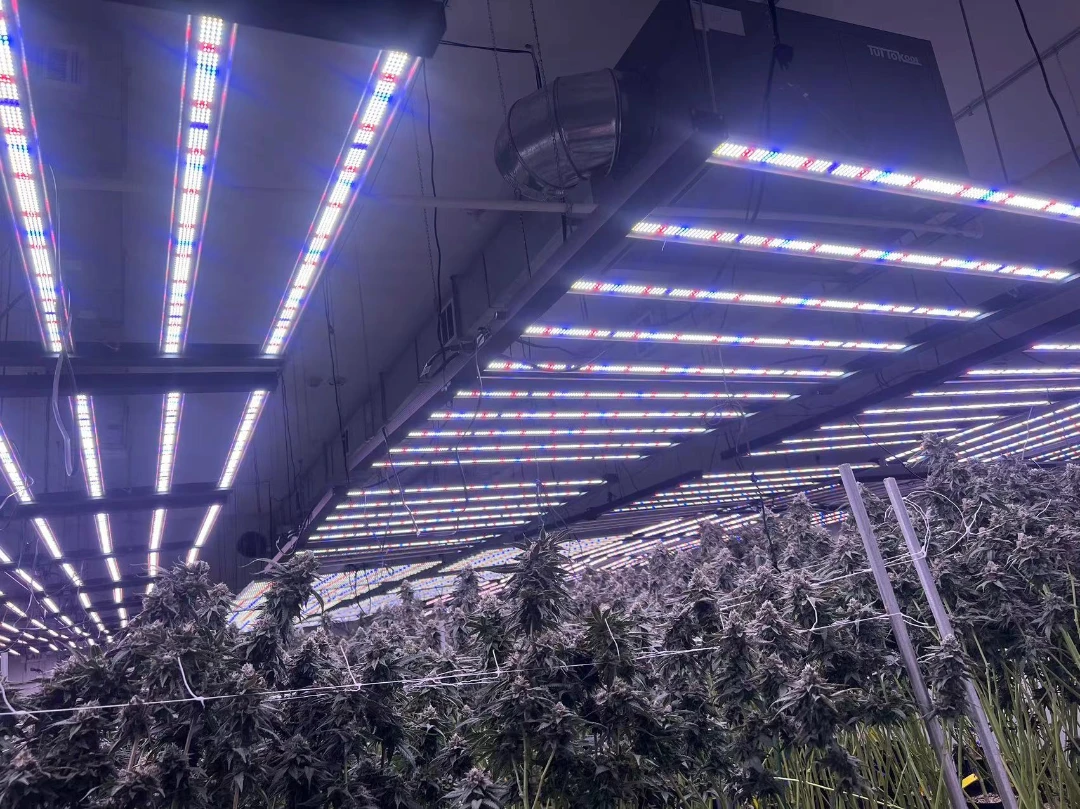
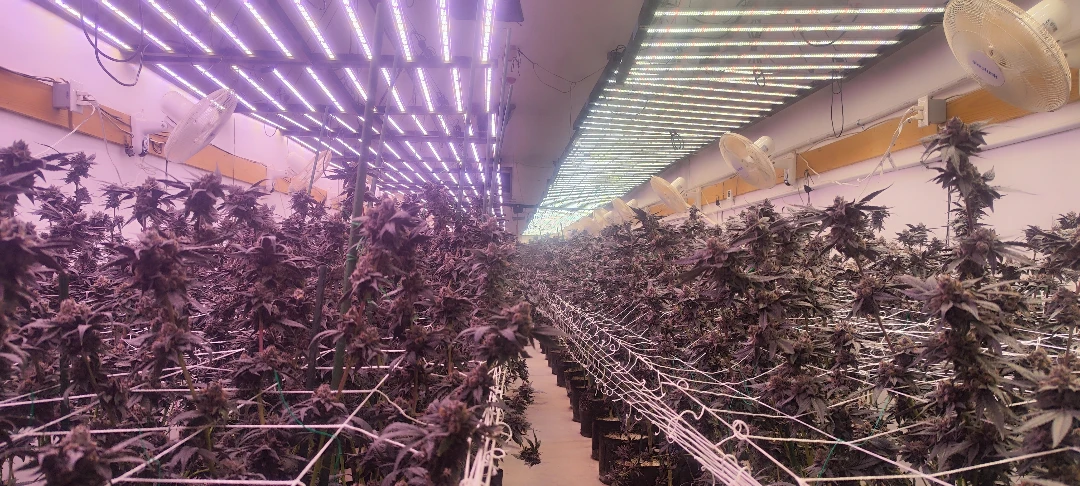
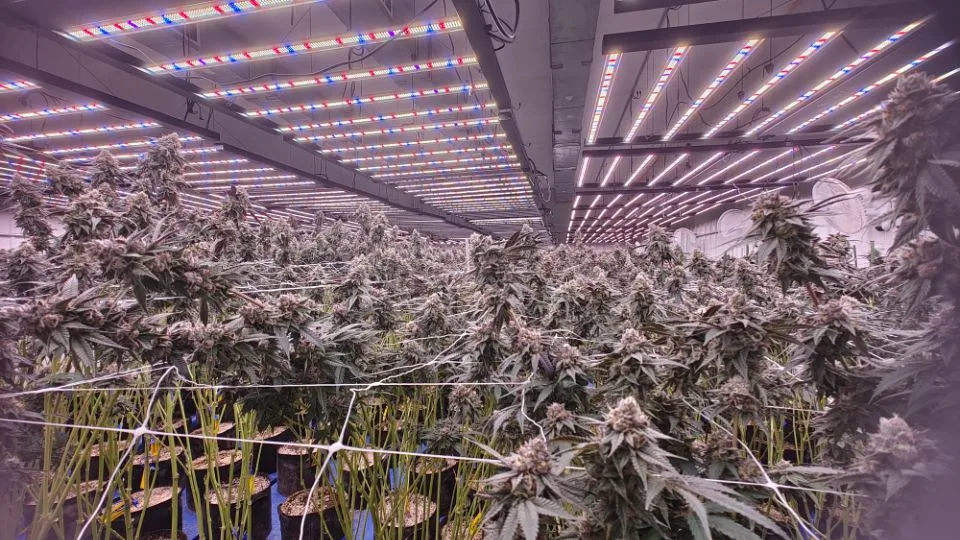
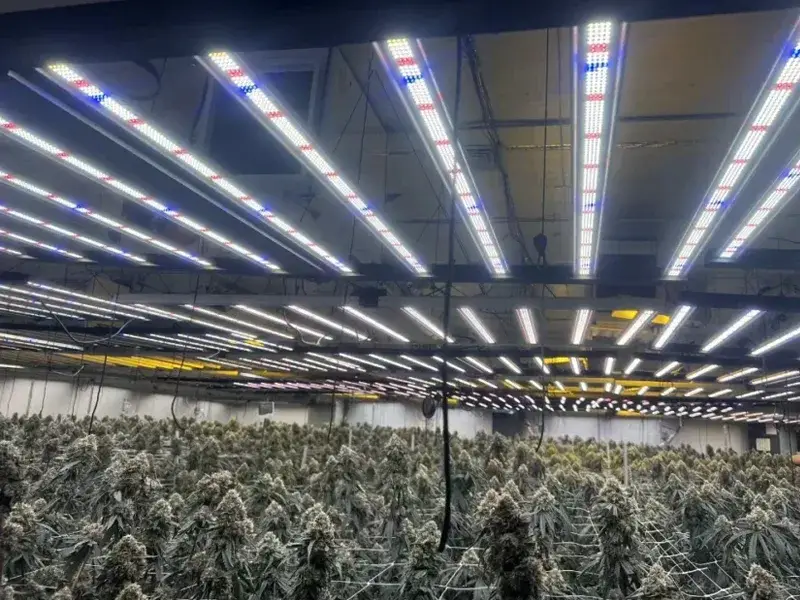
Engineer the perfect light spectrum for optimal plant growth. Boost your yields and cultivate year-round with our energy-efficient LED solutions. Tell us your needs for a customized lighting strategy and quote.
If you’re shopping for affordable LED grow lights, you’re probably walking a tightrope between price and performance. You want healthy plants, bigger yields, and stable quality—without burning through your budget or your electricity bill. At the same time, you’ve probably also seen suspiciously cheap “1000 W” panels online that promise the moon for the price of a pizza.
As a manufacturer of professional LED grow lights, SLTMAKSworks with both hobby growers and commercial clients who ask us the same question: Which budget-friendly LED grow lights actually work, and how do I choose them? This guide will walk you through the key specs, cost trade-offs, and real-world tips that help you find affordable LED grow lights that still perform—and how SLTMAKS designs fixtures that deliver reliable value.
Table of Contents
1. Why Affordable LED Grow Lights Matter More Than Ever
1.1 The Problem with “Cheap” vs “Affordable.”
There is a big difference between cheap LED grow lights and affordable LED grow lights. Cheap products cut corners on LEDs, drivers, and heat management, which can result in weak light output, uneven coverage, or early failures. Affordable options aim to lower cost without sacrificing the basics your plants need: enough light, the right spectrum, and safe operating temperatures.
When you choose the right affordable light, you save in two ways. You lower your initial investment compared with premium flagship fixtures, and you also reduce ongoing costs by using efficient LEDs that convert more electricity into usable plant light instead of heat. Over a few years of growing, this difference can be worth hundreds of dollars in saved energy and replacement bulbs.
1.2 Why LEDs Are Usually the Best Value
Compared with older HID or fluorescent systems, LED grow lights offer a strong balance of efficiency, lifespan, and spectrum control. Modern LED fixtures can consume significantly less power than HID while producing similar levels of usable light for plants, and they run cooler, which reduces your need for extraction fans or air conditioning.
Good LED fixtures also last dramatically longer. Many horticultural-grade LEDs are rated for 50,000 hours of operation or more, while typical HID or fluorescent lamps are often replaced after 10,000–20,000 hours to maintain light levels. Over time, this longer lifespan helps even relatively inexpensive LED grow lights deliver better cost per year of use than seemingly cheaper alternatives.
2. What “Affordable” Really Means: Cost vs. Value
2.1 Think in Total Cost of Ownership, Not Just Purchase Price
When you evaluate affordable LED grow lights, it’s useful to think in terms of total cost of ownership, not only the price shown on the product page. Two fixtures may cost the same at checkout, but their long-term cost can be very different. Consider at least four components:
Purchase price – What you pay today.
Electricity cost – How many watts the fixture uses and how long it runs each day.
Cooling cost – Extra energy required to remove the heat generated by inefficient lights.
Replacement and maintenance – How often bulbs or fixtures must be replaced.
An LED with higher efficiency (more light per watt) might cost a little more upfront, but it can save you meaningful money every month on your electricity bill. That’s why growers and energy experts often say LEDs are more economical over the lifetime of the equipment, even if the initial price is higher than for HID or fluorescent lights.
2.2 Cost per µmol: A Practical Way to Compare Value
If a manufacturer publishes PPFD maps or PPF values, you can estimate the cost per µmol (micromole of photons) to compare different lights. The idea is simple:
PPF (µmol/s) tells you how much usable plant light a fixture emits per second.
Divide the fixture price by its PPF to get a rough “dollars per µmol/s” number.
A truly affordable LED grow light will have a low cost per µmol while still delivering a spectrum and coverage pattern that fits your plants and grow area. It’s a more meaningful metric than just “watts” or price alone, because it connects cost directly to the light your plants can actually use.
3. Key Specs to Check Before You Buy
Not every grower needs laboratory-grade data, but understanding a few key metrics will help you avoid disappointing “bargain” lights and focus on affordable LED grow genuinely capable lights.
3.1 Light Output & PPFD
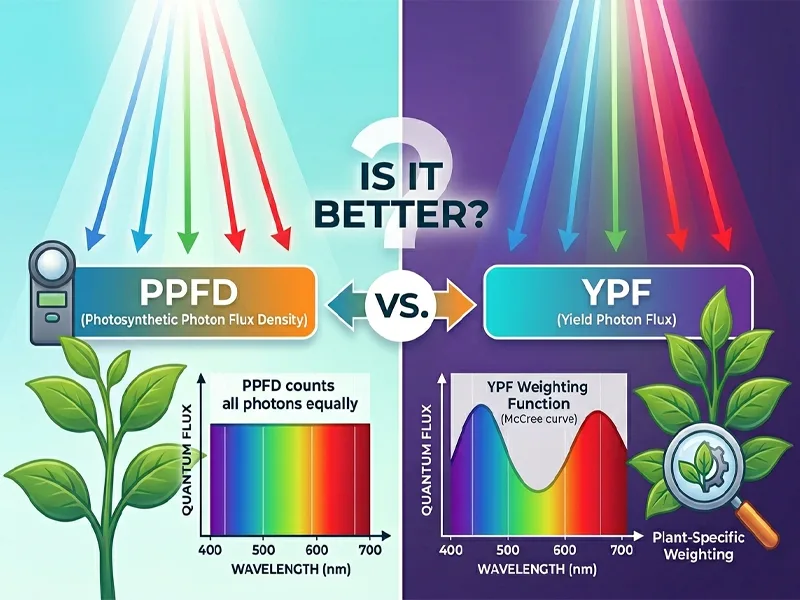
PPFD (Photosynthetic Photon Flux Density) measures how many photosynthetically active photons land on one square meter of plant canopy each second, expressed in µmol/m²/s. This is the most useful value for judging how much light actually reaches your plants.
For most home grows, you can roughly target:
100–300 µmol/m²/s for shade-tolerant houseplants and seedlings.
300–600 µmol/m²/s for herbs, leafy greens, and many ornamentals.
600–900 µmol/m²/s for light-hungry fruiting crops like tomatoes, peppers, or cannabis.
Affordable LED grow lights rarely publish ultra-detailed lab reports, but many reputable brands now share basic PPFD maps at different hanging heights. Look for honest, realistic values that match the fixture’s wattage, and be wary of tiny lights claiming to produce extremely high PPFD over large areas.
3.2 Spectrum & Color Quality
Plants use light mainly in the photosynthetically active radiation (PAR) range of 400–700 nm, with red, far-red, and blue wavelengths especially important for growth and development. University of Maryland Extension Modern LED grow lights usually combine these into a full-spectrum output that appears white or slightly warm to the human eye, which is easier to work under than the old “blurple” style.
External horticulture and university resources consistently recommend full-spectrum or mixed-spectrum lighting for most indoor plants. For example, guides from university extensions suggest that full or balanced white LEDs around 4000–6500 K work well for both seedlings and mature plants, with blue-leaning light encouraging compact growth and red-leaning light supporting flowering.
When you shop for affordable LED grow lights, look for:
“Full spectrum” or “broad spectrum” descriptions.
A CRI (color rendering index) above ~80–85, which usually indicates a more complete spectrum.
Spectrum charts that show a smooth curve with strong blue and red peaks, plus some green in between.
3.3 Wattage, Efficacy & Coverage Area
Wattage alone doesn’t tell you how powerful a grow light is, but it still matters for estimating potential output and electricity cost. Some university fact sheets suggest roughly 16–25 W of real LED power per square foot, depending on plant type and light demand.
Key points to check:
True power draw: Make sure you’re looking at real watts from the wall, not a fictional “equivalent wattage.”
Efficacy (µmol/J): Higher is better and indicates more useful light for each watt consumed.
Recommended coverage: Look for a clear statement like “optimal for 2×2 ft flowering / 3×3 ft veg.”
An affordable LED grow light should provide realistic coverage specs. If a 100 W bar claims to cover a 4×4 ft area, it’s probably marketing hype rather than physics.
3.4 Build Quality, Cooling & Safety
Even on a budget, you don’t want to gamble on electrical safety or premature failures. Pay attention to:
Heat sinks and thermal design: Aluminum boards or fins help distribute heat away from the LEDs and driver.
Driver quality: Reputable driver brands and protected, enclosed drivers last longer.
Certifications: UL/ETL/CE/ROHS marks add confidence that basic safety standards are met.
A slightly higher price for better thermal design and certified components often pays for itself because the light maintains output longer and is less likely to fail in the middle of a grow.
4. Matching Affordable LED Grow Lights to Your Grow Space
4.1 Small Shelf or Tent (1×1 ft to 2×2 ft)
If you’re growing herbs, microgreens, or a small collection of houseplants on a shelf or in a 2×2 ft tent, you don’t need a huge fixture. A compact bar light or a small quantum-board-style fixture in the 60–120 W range is usually enough.
Affordable LED grow lights in this category are easy to hang, often come with simple dimmers, and can be chained together as your collection grows. They are ideal for:
Seed starting trays and propagation domes.
One or two rails of herbs and leafy greens.
A handful of tropical houseplants in a low-light room.
4.2 Medium Grow Spaces (2×4 ft, 3×3 ft)
A 2×4 ft or 3×3 ft space is common for serious hobbyists. Here, you want more power and more even coverage, typically in the 200–350 W range for LED.
A budget-friendly approach is to choose:
One rectangular bar fixture designed for 2×4 or 3×3 coverage, or
Two smaller 100–150 W panels spaced apart for better uniformity.
This layout helps you avoid hotspots directly under the middle of the fixture and dark corners at the edges, which is a frequent issue with very cheap single-panel lights.
4.3 Larger Home Grows (4×4 ft and Beyond)
For a 4×4 ft area or larger, you can still stay affordable by using multiple mid-power fixtures instead of one massive high-end light. Total LED power in the 400–600 W range is common for dense flowering canopies in this footprint, depending on crop type and CO₂ levels.
Using two or three bar-style fixtures allows you to:
Spread light more evenly across the canopy.
Adjust height and dimming separately for different zones.
Start with one light and add more later as you grow.
SLTMAKS designs modular bar systems with this flexibility in mind, so growers can start with a cost-effective setup and scale up as their needs grow.
5. Affordable LED Grow Lights by Plant Type
5.1 Herbs & Leafy Greens
Herbs and leafy greens (basil, lettuce, kale, cilantro, etc.) are relatively forgiving and thrive under moderate PPFD. This makes them perfect candidates for affordable LED grow lights in the 60–150 W range per small area.
For these crops:
Aim for 300–500 µmol/m²/s at canopy height.
Run lights for 14–18 hours per day, targeting a healthy Daily Light Integral (DLI) as described in extension guides for indoor growing.
Choose full-spectrum white LEDs around 4000–5000 K, which provide a balanced mix of blue and red light and pleasant color rendering for your workspace.
Because these plants don’t demand extreme light intensity, a well-built budget fixture can easily outperform a cheap “blurple” panel that advertises high wattage but delivers poor uniformity.
5.2 Houseplants & Ornamentals
Most foliage houseplants are adapted to understory or indirect light conditions, so they often need less intensity but longer photoperiods under artificial lighting. University resources on indoor plants emphasize the importance of matching plant selection to light levels and using supplemental lighting in darker rooms.
For this category:
A small clamp light or LED strip system can be a very affordable solution.
Look for dimmable fixtures so you can avoid bleaching low-light species.
Choose full-spectrum LEDs in the 3000–5000 K range depending on whether you prefer warm, neutral, or cool ambience in your living space.
Here, aesthetics and energy efficiency matter just as much as raw output, and well-designed budget LED bars or panels are perfect for combining interior design with plant care.
5.3 Fruiting and High-Light Crops
Tomatoes, peppers, strawberries, citrus, and cannabis are more demanding. They need higher PPFD and a sufficiently high DLI to set flowers and fruits reliably.
Affordable LED grow lights can still handle these crops if you:
Choose appropriate wattage for your area (for example, 200–300 W in a 2×4 ft veg space, 400–600 W in a 4×4 ft flowering area).
Use reflective tent walls or white surfaces to minimize wasted light.
Position fixtures at the manufacturer’s recommended height and adjust carefully as plants stretch.
Instead of buying the cheapest “1000 W” panel, focus on a trusted mid-range fixture with honest specs and proven performance. Over a single harvest, the improved yield and quality can easily repay the price difference.
6. Affordable LEDs vs. Fluorescent & HID: Where You Really Save
6.1 Upfront Cost vs. Long-Term Payback
Fluorescent fixtures and basic HID kits often look cheaper at first glance. Many comparison articles point out that fluorescent lights can cost a fraction of a similarly sized LED fixture upfront. However, LEDs usually win over time because they:
Consume less electricity for the same or greater PPFD.
Last much longer before they lose significant output.
Require fewer bulb replacements and less maintenance effort.
Independent lighting guides and manufacturer data show that LED tubes or grow lamps are often 30–50% more energy-efficient than fluorescent lamps, while lasting several times longer. This means that even an “affordable” LED fixture can beat a very cheap fluorescent fixture when you look at the cost over several years.
6.2 Heat Output and Cooling Costs
HID systems (like HPS and MH) are powerful but notoriously hot. Modern comparison tests show that LEDs with similar PAR output use significantly less energy and emit less heat, making it easier to maintain comfortable temperatures in small indoor spaces.
Less heat brings several benefits:
Smaller or cheaper exhaust fans for grow tents.
Lower air-conditioning costs in warm climates.
Reduced risk of heat stress or leaf burn on plants.
For many home growers, this lower heat load is the difference between a manageable grow and a constant battle against high temperatures.
6.3 Maintenance, Safety & Environmental Impact
Replacing HID bulbs or fluorescent tubes every year or two is both a cost and a hassle. Some lamps also contain small amounts of hazardous materials, requiring special disposal.
LEDs simplify this:
Many fixtures can run for 5–10 years of typical home use before significant degradation.
You don’t have to track bulb hours or keep spare lamps on hand.
You handle fewer fragile glass tubes and hot bulbs.
For grow spaces in apartments or shared homes, using reliable LEDs with solid casings and cool operation is often the safest and most practical choice.
7. How to Save Money Without Sacrificing Plant Performance
7.1 Optimize Light Height and Dimming
Even the best affordable LED grow lights can underperform if they’re hung too high or too low. Too high, and plants stretch and lose vigor; too low, and you risk bleaching and wasted energy.
Follow these guidelines:
Start at the manufacturer’s recommended height for your plant stage.
Watch your plants for the first 3–5 days: if leaves reach up strongly and stay compact, you’re close; if they droop or curl, back off the intensity or raise the light.
Use built-in dimmers to fine-tune output instead of physically moving fixtures every time plants grow a few centimeters.
Proper height and dimming ensure you’re not paying for light your plants can’t actually use.
7.2 Use Timers and Match Photoperiod to Plant Needs
Running lights longer than your plants need wastes electricity. A simple plug-in timer is one of the cheapest tools you can buy for your grow room.
Typical ranges:
12 hours for many flowering crops that respond to short days.
14–18 hours for vegetative growth, herbs, microgreens, and leafy greens.
By matching photoperiod to crop type and growth stage, you maintain an appropriate Daily Light Integral while keeping your energy bill predictable. If your plants are thriving, there is rarely any benefit to adding a few extra hours of light “just in case.”
7.3 Combine Sunlight with LEDs When Possible
If you have access to a bright window, balcony, or sunroom, you can use smaller or fewer LED fixtures and run them for fewer hours. LEDs are then used to fill in during cloudy days, early mornings, evenings, or in winter when natural light is weak.
Many home growers find great success with:
A shelf unit near a window plus a few LED strips.
A small tent is placed in a naturally bright room so LEDs don’t need to run at full power.
This hybrid strategy lets you invest in one or two good, affordable LED grow lights instead of a larger, more expensive system.
8. How SLTMAKS Designs Affordable LED Grow Lights That Still Perform
At SLTMAKS, our goal is to give growers budget-friendly options that still deliver professional-grade performance. We engineer our fixtures around a few core principles that directly benefit cost-conscious customers.
8.1 Optimized Full Spectrum and High Efficacy
SLTMAKS fixtures use carefully selected LED packages that provide a full, plant-optimized spectrum with strong blue and red components plus enough green for better canopy penetration and natural color rendering. This aligns with independent recommendations that emphasize balanced red, far-red, and blue wavelengths for healthy indoor plants. In our mid-range and entry-level products. This means you can choose an affordable SLTMAKS light and still get impressive PPFD levels over realistic coverage areas—without paying a premium for exotic components that don’t add much value for most home and small commercial grows.
8.2 Smart Thermal Design and Reliable Drivers
Thermal management is one of the hidden secrets behind long-lasting, affordable LED grow lights. SLTMAKS uses:
Oversized aluminum substrates and heat sinks to keep junction temperatures low.
Efficient, certified constant-current drivers that maintain stable output over time.
Carefully tuned current levels that protect LEDs from over-driving, which can boost short-term output at the cost of lifespan.
These decisions allow us to build fixtures that stay stable and safe for years, instead of chasing unrealistically high “equivalent wattage” numbers that burn out quickly.
8.3 Factory-Direct Value and Customization Options
Because SLTMAKS is a manufacturer, not just a reseller, we can offer:
Factory-direct pricing that keeps our lights affordable.
Custom spectrum, footprint, or mounting options for B2B clients.
Responsive technical support on hanging height, dimming strategies, and energy optimization.
Whether you’re lighting a small home grow or a multi-shelf propagation system, our engineering and sales teams can recommend the most economical combination of fixtures to meet your goals.
9. Quick Buying Checklist for Affordable LED Grow Lights
Before you click “buy,” run through this simple checklist to make sure your chosen light is truly affordable and not just cheap:
Core keyword match: Does the product clearly describe itself as an LED grow light with full spectrum, not just a decorative lamp?
Honest wattage and coverage: Are real watts from the wall and realistic coverage areas clearly stated?
Spectrum: Is the spectrum full or broad, with strong blue and red components and a Kelvin rating around 3000–6500 K?
PPFD or PPF data: Does the manufacturer provide at least basic PPFD maps or PPF numbers at sensible heights?
Efficiency and heat: Are there visible heat sinks or bar designs that promote cooling, and does the fixture have good customer feedback on running temperatures?
Lifespan and warranty: Is the rated lifespan and warranty period reasonable (for example, 3–5 years of coverage)?
Total cost: Have you considered electricity use, typical run time, and the number of fixtures required for your grow area?
If you can confidently answer “yes” to most of these questions, you’re likely looking at affordable LED grow lights that truly perform—not just another cheap gadget.
At SLTMAKS, we believe that every grower, from first-time hobbyist to seasoned commercial producer, deserves lighting solutions that respect both their plants and their budget. When you’re ready to plan your next setup, our team is here to help you choose the most cost-effective combination of fixtures for your space, crop, and long-term goals.
FAQ
What are LED grow lights?
LED grow lights are special lights that help plants grow indoors or in greenhouses by providing the right spectrum of light they need. They use less energy than traditional lights and can last much longer.
Why are affordable LED grow lights a good choice?
Affordable LED grow lights are a great choice because they provide good performance without breaking the bank. They can save you money on electricity and produce healthy plants without the high cost of premium lights.
What should I look for when buying LED grow lights?
When buying LED grow lights, check for key specifications like wattage, light spectrum, and efficiency. Look for lights that offer good coverage for your space and are labeled as ‘full spectrum’ to ensure your plants get the light they need.
How much should I expect to spend on LED grow lights?
The price of LED grow lights can vary widely. You can find good options starting from around $50 up to several hundred dollars. It’s important to consider the long-term savings on energy bills when choosing your light.
How do I set up my LED grow lights?
Setting up LED grow lights is usually straightforward. Hang them at the recommended height above your plants and adjust as they grow. Make sure they are positioned for even light distribution across your growing area.
Can LED grow lights help all types of plants?
Yes, LED grow lights can be used for a variety of plants, from herbs to fruiting plants. It’s important to choose the right light spectrum and wattage based on the specific needs of the plants you are growing.
Do LED grow lights produce heat?
LED grow lights produce less heat compared to traditional lights, which means they won’t overheat your space as much. This can keep your plants safe from heat stress and cut down on air conditioning costs.
How long should I run my LED grow lights each day?
The running time for LED grow lights depends on the type of plants you’re growing. Generally, you can run them for 12 to 18 hours a day, adjusting based on the growth stage of your plants.
What is photosynthetic photon flux density (PPFD)?
PPFD is a measure of how much light reaches your plants, indicating the effectiveness of your grow lights. It tells you how many usable photons hit a square meter of plants every second.
How can I save money with LED grow lights?
You can save money by selecting energy-efficient LED grow lights. Additionally, using timers, optimizing light height, and matching the light duration to plant needs can help reduce electricity costs without sacrificing plant health.