A Comprehensive B2B Guide to Manufacturing, Engineering, and Global Procurement
The commercial horticultural lighting industry has undergone a radical transformation. As we navigate through 2026, the global supply chain for LED grow lights is no longer defined merely by the rapid displacement of High-Pressure Sodium (HPS) systems. That transition is largely complete. Today, the focus of the horticultural lighting industry has shifted toward extreme efficacy, hyper-customized spectral control, rigorous manufacturing tolerances, and unparalleled supply chain resilience. For international procurement managers, greenhouse project directors, and agricultural equipment distributors, understanding the intricate web of the LED grow light supply chain is the crucial differentiator between a highly profitable commercial cultivation facility and one plagued by inconsistent yields and catastrophic equipment failures.
In the modern B2B landscape, commercial LED grow lights in 2026 are highly sophisticated electro-optical instruments. They are the synthesis of advanced semiconductor physics, precision thermodynamics, and stringent quality control protocols. The days of purchasing off-the-shelf fixtures based solely on a “cost-per-watt” metric are obsolete. Today’s sophisticated commercial growers demand precision engineering evaluated on “cost-per-micromole” and long-term photon maintenance. This definitive guide, brought to you by the engineering and manufacturing experts at sltmaks.com, provides an exhaustive, fully transparent breakdown of the B2B grow light manufacturing process, component sourcing, compliance standards, and strategic procurement methodologies in 2026.
Table of Contents
The Core Components: Sourcing the “Heart and Brain” of the Fixture
The foundation of any high-performance commercial LED grow light rests on its bill of materials (BOM). The supply chain for these core components is highly specialized, requiring manufacturers to maintain strategic partnerships with top-tier semiconductor and electronic component fabricators globally.
LED Diodes (The Heart): Spectrum Customization and Binning
While names like Samsung and Osram remain industry benchmarks, the supply chain now revolves around Binning Precision. The LEDs are the engine of photosynthetic active radiation (PAR). In 2026, the sourcing of LEDs is categorized not just by brand (such as Samsung, Osram, or Seoul Semiconductor), but by highly specific flux and voltage bins. Top-tier manufacturers secure the highest flux bins to ensure maximum Photosynthetic Photon Efficacy (PPE), often exceeding 3.0 µmol/J in advanced configurations.
Furthermore, the modern supply chain must accommodate complex spectral requirements. Procurement managers are increasingly demanding custom horticultural LED spectrum optimization. This involves specific Blue/Red ratios to control plant morphology. A higher blue ratio (450nm) is essential during the vegetative stage to promote compact, robust growth and prevent internodal stretching. Conversely, the flowering and fruiting stages rely heavily on Deep Red (660nm) to drive massive biomass accumulation.
Beyond the standard PAR range (400-700nm), 2026 has seen a massive surge in the demand for Far- Red (730nm) diodes. Far-Red light triggers the Emerson Enhancement Effect, accelerating photosynthesis when combined with standard red light, and initiates shade-avoidance responses that are highly manipulated in commercial cannabis cultivation to induce rapid stretching and faster flowering cycles. Securing a reliable, high-volume supply of consistent 660nm and 730nm monochromatic diodes is currently one of the highest barriers to entry for new grow light manufacturers.
LED Drivers (The Brain): Industrial-Grade Power Conversion
If the diodes are the heart, the LED driver is the brain. Commercial greenhouses and indoor vertical farms present incredibly hostile electrical environments. Fluctuating grid voltages, massive inrush currents from daisy-chained lighting arrays, and the persistent threat of power surges require industrial-grade drivers. Brands like Inventronics and Mean Well remain staples in the supply chain, but top-tier manufacturers frequently co-develop custom LED drivers tailored specifically for horticultural applications.
Key procurement specifications for commercial grow light drivers in 2026 include a Power Factor (PF) strictly greater than 0.95, Total Harmonic Distortion (THD) below 10%, and full IP67 ratings. The drivers must be entirely potted in high-thermal-conductivity silicone compounds to protect the internal capacitors from the corrosive, high-humidity environments typical of cannabis grow rooms and hydroponic facilities. A weak link in the driver supply chain translates directly to a total fixture failure, making driver reliability the non-negotiable cornerstone of B2B horticultural lighting.
Advanced Thermal Management: The Intersection of Lighting and Machining Engineering
One of the most critical, yet frequently overlooked, aspects of LED grow light manufacturing is the physical chassis—specifically, the thermal management system. High-efficacy diodes generate substantial heat at the semiconductor junction. If this heat is not rapidly and efficiently dissipated away from the diode, the fixture will suffer from severe lumen depreciation, spectral shifts, and premature failure.
This is where the disciplines of photobiology and precision machining intersect. A professional grow light manufacturer does not simply bolt a printed circuit board (PCB) to a piece of scrap metal; they engineer a precise thermodynamic system.
Aluminum Extrusion and CNC Precision
The supply chain for raw aluminum (typically 6063-T5 or 6061-T6 alloys) is tightly controlled. These specific alloys are selected for their superior thermal conductivity and excellent extrusion characteristics. Once extruded, the heatsinks undergo precision CNC (Computer Numerical Control) milling. This machining process is not merely cosmetic; it is fundamentally vital to the thermal performance of the fixture.
Engineering Insight: Surface Roughness and Thermal Contact
To ensure the diode’s junction temperature remains strictly under optimal limits, the thermal path from the LED die, through the PCB, across the thermal interface material (TIM), and into the aluminum heatsink must be practically flawless. Precision CNC machining is utilized to achieve exceptional surface flatness on the heatsink mating surface. Professional manufacturers rigorously monitor surface roughness parameters—specifically Ra (average roughness) and Rz (mean peak-to-valley height). If the Ra value is too high (i.e., the surface is microscopically rough), microscopic air pockets will form between the PCB and the heatsink. Since air is a thermal insulator, this disrupts the thermal bridge, rendering the heatsink highly inefficient and rapidly degrading the expensive LEDs.
Managing Linear Thermal Expansion
Furthermore, commercial LED grow lights endure brutal 12-to-18-hour daily operational cycles. During these cycles, the fixture rapidly heats up and cools down. Engineering teams must carefully calculate the coefficient of linear thermal expansion differentials between the metal-core PCB (MCPCB) and the massive aluminum chassis. If the thermal expansion coefficients are not properly matched or mechanically compensated for (via slotted mounting holes or flexible thermal adhesives), the constant expansion and contraction will generate tremendous mechanical stress. Over time, this stress will shear the microscopic solder joints connecting the diodes to the PCB, resulting in dead diode strings and a catastrophic drop in fixture PPFD.
Manufacturing and Assembly: From Raw Materials to Guaranteed DLI
Once the raw materials and components are secured through the global supply chain, the focus shifts to the factory floor. The assembly process for an OEM/ODM grow light requires clean-room- level precision to ensure every single unit delivers its rated output.
Surface Mount Technology (SMT) and Soldering
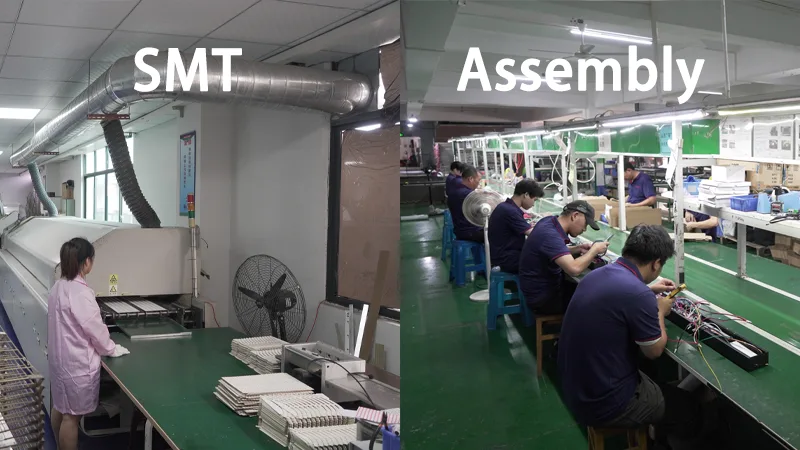
The manufacturing process begins with the SMT lines. Automated pick-and-place machines rapidly populate the customized aluminum PCBs with diodes. The precision of this process is paramount; a diode placed slightly off-center on its thermal pad will suffer from localized overheating. Following placement, the boards move through reflow soldering ovens with meticulously profiled temperature curves to ensure perfect wetting of the solder without thermally shocking the delicate semiconductor junctions. Solder Paste Inspection (SPI) and Automated Optical Inspection (AOI) systems are utilized to detect and reject any microscopic soldering defects before the board ever reaches the assembly line.
Integrating Spheres and PPFD Verification
A professional horticultural lighting factory is characterized by its testing equipment. Every product design must be validated inside a highly calibrated integrating sphere to verify its total spectral power distribution, Photosynthetic Photon Flux (PPF, measured in µmol/s), and overall efficacy (PPE, measured in µmol/J).
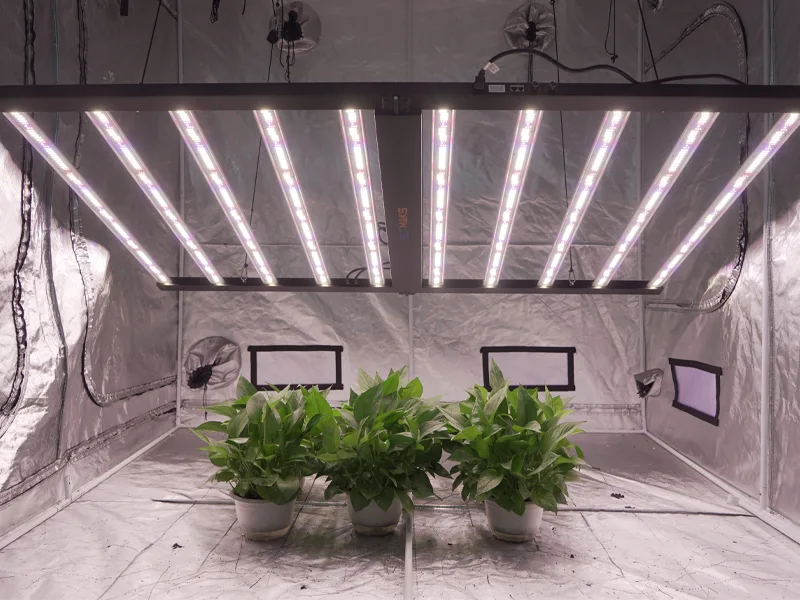
However, B2B buyers do not purchase raw PPF; they purchase biological results. They buy a specific Daily Light Integral (DLI). DLI is the cumulative amount of photosynthetically active photons delivered to a one-square-meter area over 24 hours (measured in mol/m²/d). For example, commercial cannabis requires an aggressive DLI of 35-45 mol/m²/d during the peak flowering stage to maximize terpene and cannabinoid production. The entire manufacturing and assembly supply chain is ultimately calibrated to guarantee that the final fixture, when hung at the specified height, delivers the precise grow light PPFD (intensity) required to hit the grower’s target DLI.
Quality Control and Compliance: Navigating the Certification Landscape
In the B2B sector, compliance is not optional—it is the gateway to market entry. North American and European markets have incredibly strict electrical safety and energy performance standards. Understanding these standards is critical for international buyers.
Electrical Safety: UL/ETL and CE
For a fixture to be legally installed in a commercial facility, it must possess recognized safety certifications. In North America, this means the fixture must be UL or ETL listed, specifically conforming to UL 8800, the standard tailored for horticultural lighting equipment. This standard covers risks unique to cultivation environments, including water ingress (drip tests), elevated ambient temperatures, and photobiological safety (protecting workers’ eyes from high-intensity blue and UV light). In Europe, the CE mark and RoHS compliance are mandatory.
The Critical Standard: DLC Horticulture
When it comes to performance verification and energy rebates, there is a widespread and persistent misunderstanding in the procurement community that must be explicitly corrected.
Crucial Compliance Correction: ENERGY STAR vs. DLC Horticulture
Many new commercial growers and facility procurement managers erroneously request ENERGY STAR ratings for their horticultural lighting build-outs. It must be stated with absolute clarity: ENERGY STAR is strictly a certification program designed for general, human-centric lighting (e.g., office spaces, residential lighting). It evaluates fixtures based on lumens and visual comfort, metrics that are entirely irrelevant to plant biology. Plants process photons, not lumens. ENERGY STAR holds absolutely no validity or relevance in commercial agricultural environments.
The definitive, recognized, and strictly mandatory standard for commercial agricultural lighting in North America is DLC Horticulture (DesignLights Consortium). To achieve a DLC Horticulture listing, a manufacturer must submit exhaustive third-party laboratory data, including LM-79 (electrical and photometric measurements) and LM-80/TM-21 reports (long-term diode lumen maintenance data). A DLC Certified grow light manufacturer guarantees that the fixture meets the highest industry standards for photon efficacy and longevity. Furthermore, utility companies across the US and Canada only accept DLC Horticulture-listed fixtures when granting lucrative commercial greenhouse lighting rebates, which can offset the capital expenditure of a lighting upgrade by up to 50%.
Global Logistics and Lead Time Management in 2026
Manufacturing the world’s best LED grow light is irrelevant if it cannot be delivered to the client’s facility on schedule and intact. In 2026, global supply chain logistics require strategic foresight to mitigate shipping delays, volatile freight costs, and geopolitical uncertainties.
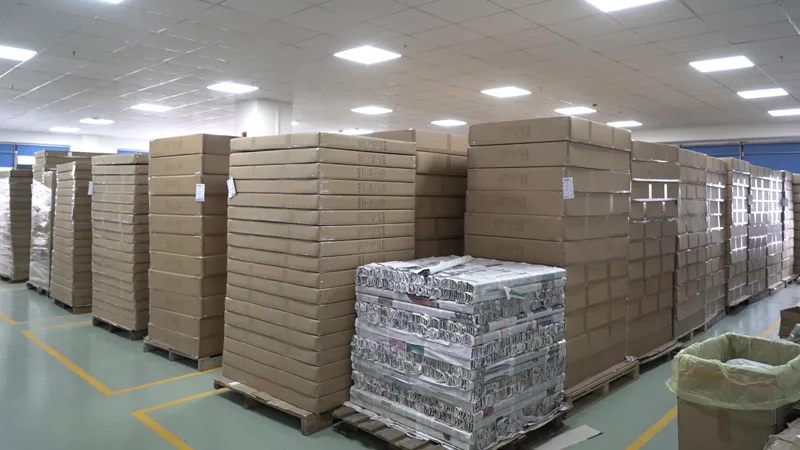
Packaging Engineering
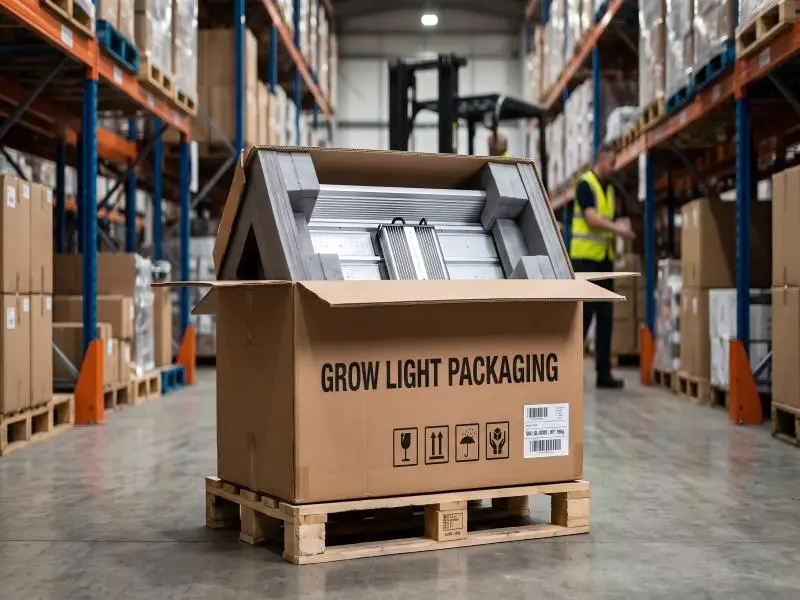
Commercial LED grow lights are heavy, bulky, and contain sensitive optics. Professional manufacturers invest heavily in packaging engineering. Utilizing custom-molded EPE (Expandable Polyethylene) foam and heavy-duty, double-corrugated export cartons is standard practice. The packaging must pass rigorous ISTA (International Safe Transit Association) drop and vibration tests to ensure that the fixtures survive the harsh realities of ocean freight and final-mile delivery without bent heatsinks or shattered diode covers.
Lead Time and Inventory Buffering
To manage grow light lead times, elite factories employ advanced ERP (Enterprise Resource Planning) systems. They maintain strategic buffer stocks of the most critical and long-lead-time components—specifically, LEDs and drivers. For a massive bulk order horticultural lighting project involving thousands of fixtures, a manufacturer with a robust supply chain can reduce standard lead times from 60 days down to 30 days simply because they do not have to wait for the diode fabricator to complete a new production run.
Additionally, some manufacturers offer SKD (Semi-Knocked Down) shipping arrangements for massive commercial projects. By shipping the fixtures partially disassembled, more units can fit into a standard 40HQ container, significantly reducing the per-unit ocean freight cost and potentially lowering import tariffs.
Strategic Procurement: Mastering the LED Grow Light Supply Chain
For a B2B procurement manager tasked with outfitting a multi-million-dollar greenhouse or vertical farming facility, vendor selection is a high-stakes decision. The 2026 market is flooded with trading companies posing as actual factories. Here is a professional checklist for evaluating a reliable LED grow light supplier:
| Evaluation Criteria | The “Trading Company” Red Flags | The True Manufacturer Standard (sltmaks.com) |
| R&D and engineering | Offers only pre-set spectrums; cannot provide custom IES files or perform thermal simulations. | Employs in-house photobiologists and structural engineers. Capable of tuning custom Blue/Red/Far- Red ratios and executing precise thermal expansion calculations for custom aluminum extrusions. |
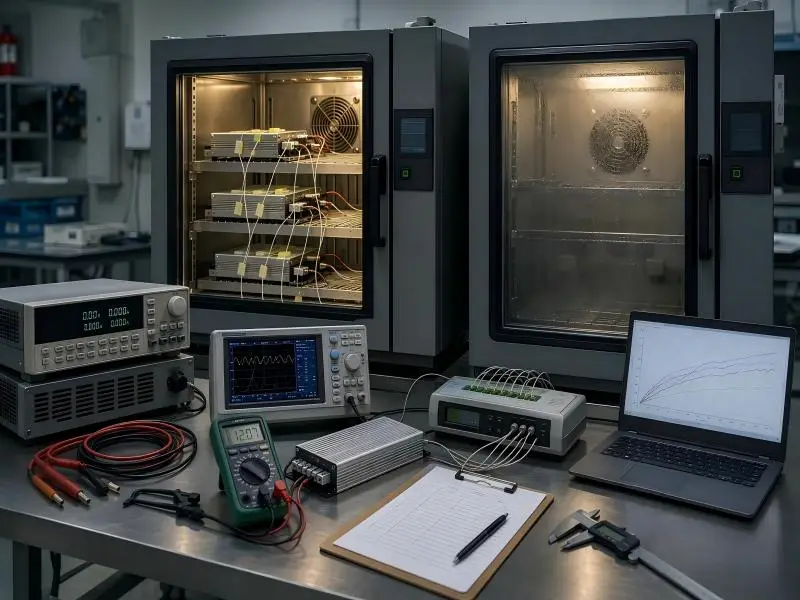
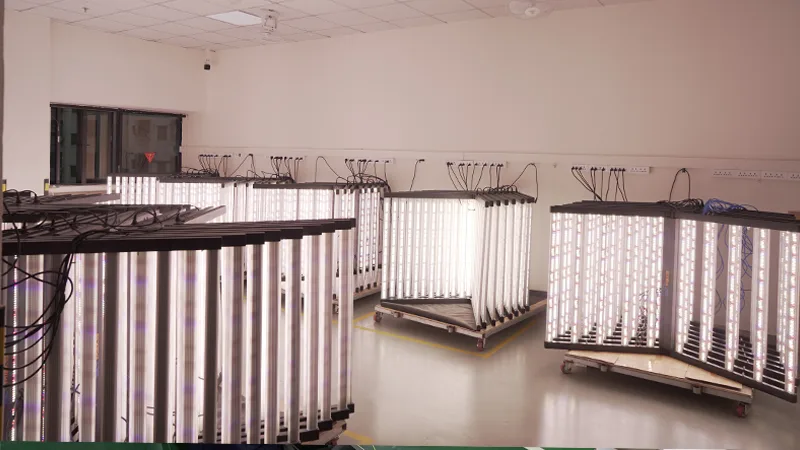
| Testing infrastructure | Relies solely on supplier datasheets; no internal verification equipment. | Owns on-site integrating spheres, goniophotometers, aging rooms, and thermal testing chambers to verify PPFD, PPE, and driver stability. |
| Compliance & certifications | Claims “ENERGY STAR” for grow lights (a clear sign of industry ignorance) or uses fake CE marks. | Provides verifiable DLC Horticulture listings, UL 8800 / ETL documentation, and transparent LM-80 test reports directly tied to the specific diodes used in the fixture. |
| Supply chain control | Experiences massive lead time fluctuations depending on the open-market component availability. | Maintains direct purchasing contracts with top-tier diode (Samsung/Osram) and driver (Inventronics) brands, ensuring stable pricing and prioritized allocation during global shortages. |
| Machining & assembly | Uses generic, thin sheet metal with poor thermal contact, leading to high diode junction temperatures. | Utilizes heavy-duty extruded aluminum with CNC- milled mating surfaces optimized for Ra/Rz surface roughness to guarantee flawless thermal transfer from the PCB to the heatsink. |
The Future of Horticultural Lighting Procurement
Looking beyond 2026, the supply chain will continue to integrate more advanced technologies, including IoT (Internet of Things) mesh networks for fixture-level wireless dimming and AI-driven predictive maintenance monitoring built directly into the LED drivers. However, the foundational pillars of exceptional horticultural lighting will remain unchanged: ultra-efficient diodes, indestructible drivers, thermodynamically perfect heatsinks, and uncompromising quality control.
Understanding these supply chain dynamics empowers commercial growers and B2B buyers to look past superficial marketing claims. By asking the right questions about thermal expansion differentials, diode binning, SMT precision, and DLC Horticulture compliance, buyers can identify the true manufacturing partners capable of delivering the exact Daily Light Integral required to maximize their crop yields and operational profitability.
Partner with a proven manufacturing powerhouse
Are you outfitting a new commercial cultivation facility or seeking an OEM/ODM partner capable of executing complex spectral recipes with uncompromising mechanical precision? Stop gambling with unverified trading companies and generic lighting standards.
Contact the engineering and manufacturing team at sltmaks.com today. As a premier factory-direct manufacturer with decades of combined engineering expertise, we provide fully DLC Horticulture-certified fixtures, comprehensive thermal and photobiological modeling, and highly stable global supply chain logistics. Let us engineer your yield.
FAQ
Why shouldn’t commercial LED grow lights be evaluated based on ENERGY STAR certification? What standard should be used instead?
This is a widespread misunderstanding in the procurement community. ENERGY STAR is strictly a certification program designed for general, human-centric lighting (e.g., office spaces, residential lighting). It evaluates fixtures based on lumens and visual comfort, metrics that are entirely irrelevant to plant biology. Plants process photons, not lumens. For commercial agricultural lighting in North America, the definitive and strictly mandatory standard is DLC Horticulture (DesignLights Consortium).
What are the specific functions of 660nm (Deep Red) and 730nm (Far-Red) in an LED grow light spectrum?
Different spectral ratios directly impact plant morphology and growth cycles. 660nm (Deep Red) is heavily relied upon during the flowering and fruiting stages to drive massive biomass accumulation. 730nm (Far-Red) triggers the Emerson Enhancement Effect, accelerating photosynthesis when combined with standard red light. In commercial cannabis cultivation, Far-Red is also manipulated to initiate shade-avoidance responses, inducing rapid stretching and faster flowering cycles.
How do CNC machining and heatsink surface roughness (Ra/Rz) affect the lifespan of LED grow lights?
The surface flatness of the heatsink is vital to the thermal performance of the fixture. Professional manufacturers rigorously monitor surface roughness parameters after CNC milling—specifically Ra (average roughness) and Rz (mean peak-to-valley height). If the Ra value is too high (microscopically rough), microscopic air pockets will form between the PCB and the aluminum heatsink. Because air is a thermal insulator, this disrupts the thermal bridge, rendering the heatsink highly inefficient and rapidly degrading the expensive LEDs.
When evaluating commercial LED grow lights, should buyers look at Lumens, PPFD, or DLI?
B2B buyers should not evaluate fixtures based on lumens or raw PPF output; they purchase biological results, which is a specific Daily Light Integral (DLI). DLI is the cumulative amount of photosynthetically active photons delivered to a one-square-meter area over 24 hours. The entire manufacturing and assembly supply chain is ultimately calibrated to guarantee that the final fixture, when hung at the specified height, delivers the precise PPFD (intensity) required to hit the grower’s target DLI.
How can B2B procurement managers distinguish between a true LED grow light manufacturer and a trading company?
In the 2026 market, many trading companies pose as actual factories. True manufacturers employ in-house photobiologists and structural engineers capable of tuning custom Blue/Red/Far-Red ratios and executing precise thermal expansion calculations. For testing infrastructure, true factories own on-site integrating spheres, goniophotometers, and thermal testing chambers to verify performance internally, rather than relying solely on supplier datasheets. Furthermore, a true manufacturer utilizes heavy-duty extruded aluminum with CNC-milled mating surfaces optimized for Ra/Rz surface roughness to guarantee flawless thermal transfer, whereas trading companies often use generic, thin sheet metal with poor thermal contact.