
If you’re shopping for cannabis LED grow lights, you’re probably trying to solve three problems at the same time: delivering the right spectrum, hitting the right intensity, and doing it all in a way that’s safe and compliant. That’s exactly what this guide covers, in plain English, with the key lighting terms explained so you can compare products confidently.
Important note: This article is written for legal, licensed cultivation and general horticultural education. Always follow your local laws, electrical codes, and workplace safety rules.
Table of Contents
Why Cannabis Lighting Decisions Matter

Cannabis is a high-value crop, and indoor yields and quality can swing dramatically when light is inconsistent. The good news is that modern LED technology makes it easier to control the spectrum and intensity than older HID systems, as long as you understand what the specs really mean.
A common mistake is buying based on “wattage” or “equivalent to HPS” marketing alone. What matters more is how many useful photons hit your canopy, how evenly they spread, and whether the fixture is built and certified for real horticultural environments.
Consistency is profit (and less stress)
In indoor rooms, light is your “sun,” so small differences repeat every day and compound across cycles. When intensity varies across the canopy, plants mature unevenly, trimming takes longer, and your final product tends to be less uniform.
LED systems also tie directly to HVAC loads and operating costs. Higher efficacy lighting (more photons per watt) usually means less heat per unit of usable light, which can reduce cooling pressure in many facilities.
The Only Grow-Light Metrics You Really Need
Grow-light spec sheets can look technical, but you only need a handful of terms to evaluate cannabis LED grow lights properly. Once these are clicked, comparing fixtures becomes far simpler.
PPFD: “How much light hits the canopy right now?”
PPFD stands for photosynthetic photon flux density. It’s the number of photons in the 400–700 nm band (the classic “PAR” range) that land on a square meter each second, measured as µmol·m⁻²·s⁻¹.
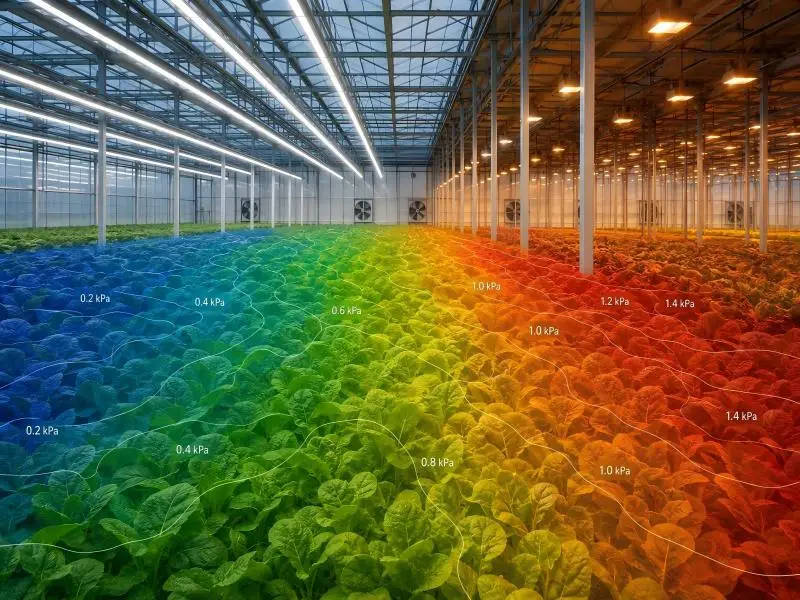
Think of PPFD like rainfall intensity. A PPFD map tells you whether the fixture creates hot spots and dark corners, which matters just as much as the average number.
DLI: “Total light delivered over a day.”
DLI (Daily Light Integral) is the total photosynthetic light a plant receives in a day, measured in mol·m⁻²·day⁻¹. a single moment. In practice, DLI connects your PPFD to your lighting duration and helps you talk about “enough light” in a more complete way.
PPF and efficacy: “How much usable light the fixture produces.”
PPF is the total number of PAR photons coming out of the fixture every second (µmol/s). PPFD is what the canopy receives, while PPF is what the light emits, so optics and hanging height strongly affect the relationship.
Efficacy (µmol/J) tells you how efficiently electricity turns into useful photons. Over time, higher efficacy usually lowers operating cost per harvest, especially when electricity and cooling are major expenses.
Spectrum Basics for Cannabis LED Grow Lights
When people say “spectrum,” they’re talking about the mix of wavelengths (colors) a fixture outputs. Spectrum influences morphology, leaf structure, flowering behavior, and how plants manage stress, but it’s not magic—intensity and uniformity still do most of the heavy lifting.
Full spectrum vs “blurple” (and why the industry moved on)
Early LED grow lights often used heavy red/blue (“blurple”) mixes. They can grow plants, but many cultivators prefer modern white/full-spectrum horticultural LEDs because they’re easier to work under, can support better visual inspection, and often provide a broader distribution of wavelengths.
A broad spectrum can also make it easier to standardize across rooms and staff. Consistency is a huge operational advantage when you’re running multiple tents, racks, or full commercial rooms.
Red, blue, and far-red in plain language
Blue light is often linked with tighter internodes and stronger vegetative structure, while red light is closely tied to photosynthesis efficiency and flowering-related responses. Far-red (just beyond 700 nm) can influence canopy behavior and perceived “light environment,” and it can change how plants allocate growth.
The important takeaway is that spectrum choices should support your production goals, but they can’t compensate for weak intensity or poor coverage. If a light doesn’t deliver uniform PPFD across your canopy, no spectrum tweak will fully fix that.
UV: Use caution and don’t chase hype
Some growers talk about UV for secondary metabolite strategies, but UV also raises safety and risk management issues. UV decisions should be made carefully, ideally with professional oversight, proper PPE, and a clear understanding of the tradeoffs.
If you’re building a scalable operation, prioritize repeatability and safety before experimenting. In most facilities, stable PPFD + uniformity + good environmental control will outperform “trendy” spectrum add-ons.
Intensity: How Bright Should Cannabis LED Grow Lights Be?

Intensity is where results are won or lost. Too little light can cap yield and quality, while too much can increase stress, push HVAC harder, and create inconsistent performance if your canopy isn’t uniform.
Use PPFD maps, not just “maximum PPFD.”
A “max PPFD” number is almost meaningless without context because it’s often measured at one spot directly under the fixture. What you really want is a grid map showing PPFD across the target footprint at a defined hanging height.
Uniformity is operational efficiency. When your PPFD is even, plants finish closer together, your workflow gets smoother, and your product grading is more consistent.
Convert intensity + time into DLI for a reality check
DLI lets you connect your lighting plan to daily photon delivery, which is more meaningful than chasing a single PPFD number. DLI is commonly described as total photosynthetic light received per day, measured in moles per square meter per day.
This is also where energy planning gets real. If you can hit your target DLI with a more efficient fixture (higher µmol/J) and better uniformity, you often reduce wasted light and wasted electricity.
Don’t forget canopy distance and plant structure
PPFD changes dramatically with hanging height, optics, and canopy shape. Two rooms with the same fixture can perform differently if one has uneven canopy management or poor spacing between fixtures.
That’s why professional setups often emphasize repeatable layout: consistent hanging points, consistent spacing, and measured validation at the canopy level. Treat PPFD measurement as a standard operating procedure, not a one-time test.
Coverage and Uniformity: The “Hidden Spec” Most Buyers Miss
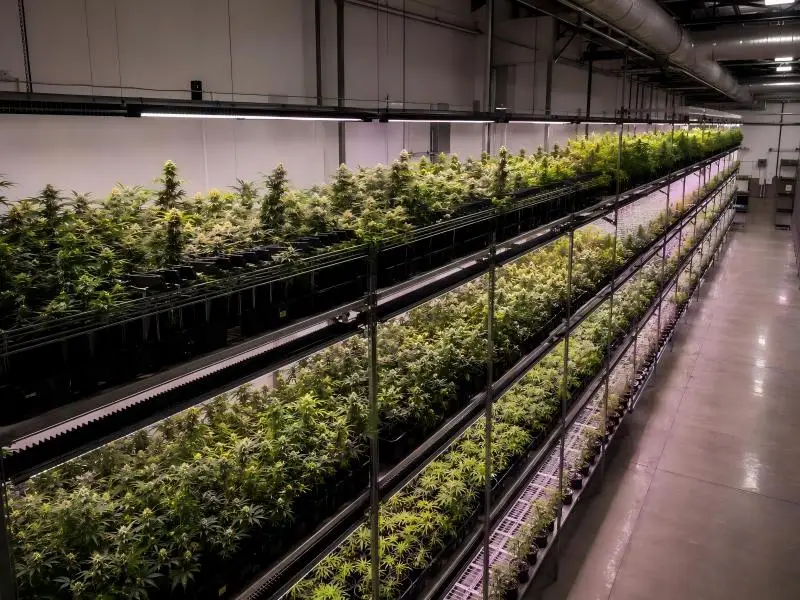
Many buyers focus on spectrum charts and ignore coverage, even though coverage drives day-to-day consistency. With cannabis LED grow lights, coverage is often the difference between a smooth harvest and a frustrating one.
Bar-style fixtures vs panel-style fixtures
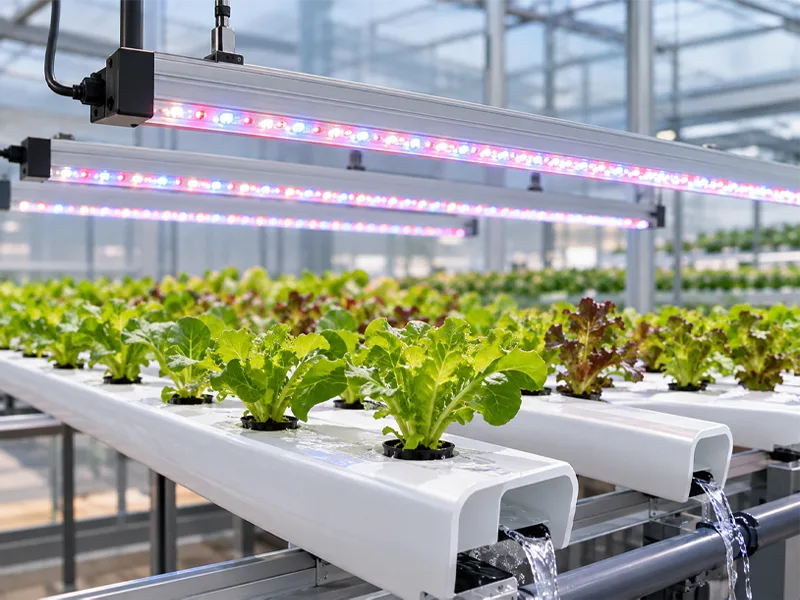
Bar-style designs can improve uniformity by distributing light sources across the footprint. Panel-style fixtures can also work well, but the real question is whether the fixture produces an even PPFD map at your intended hanging height.
Uniformity also impacts microclimates. When hot spots push certain areas harder, plants in those zones may transpire differently, which can create variability even if your HVAC is strong.
Look for honest photometric reporting
A trustworthy supplier should provide consistent testing conditions: mounting height, measurement grid size, and the tested area. Third-party programs and standardized definitions help reduce “creative marketing” in spec sheets.
If you’re running commercial operations, consider products that align with recognized evaluation frameworks. For example, DLC technical requirements for horticultural lighting include safety certification expectations tied to ANSI/UL 8800.
Safety Basics: Electrical, Fire, and Compliance
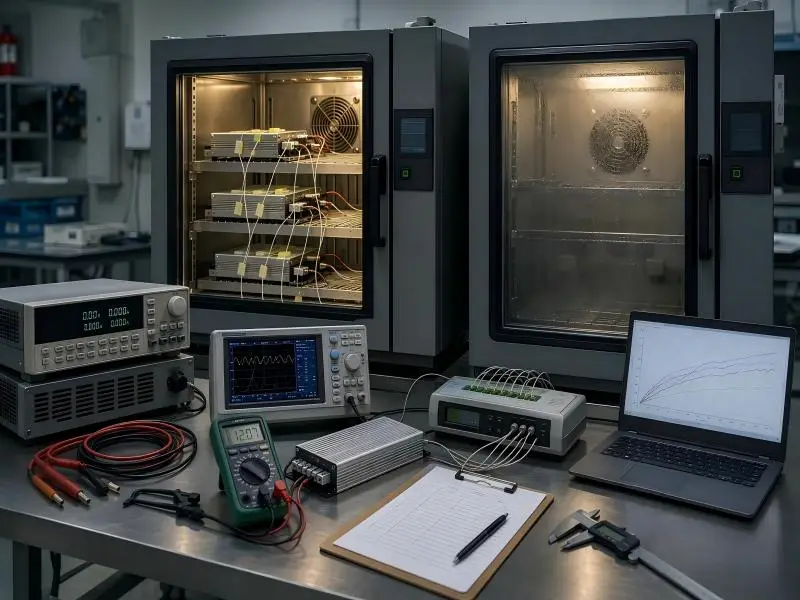
Safety isn’t an “extra”—it’s part of professional cultivation. Horticultural environments often include humidity, condensation risk, heavy power loads, and frequent maintenance activities, so fixture safety and certification really matter.
UL 8800 and why it exists
UL 8800 was created specifically to evaluate horticultural lighting equipment and grow systems for safety. UL describes UL 8800 as a published safety standard addressing horticultural lighting equipment, including for U.S. and Canadian installation contexts.
In plain language, certification helps verify that the product has been evaluated for real-world safety conditions, not just lab performance. For commercial buyers, that’s often essential for permitting, insurance, and risk control.
“Certified” should mean something specific
For horticultural lighting, certification is commonly done through recognized testing organizations, and programs like DLC explicitly reference certification to ANSI/CAN/UL 8800 as applicable for horticultural products.
Ask your supplier which lab tested the product and what the certification scope covers. If the answer is vague, that’s a red flag when you’re installing high-power equipment above valuable crops (and people).
Moisture, wiring, and installation discipline
Even great fixtures can become unsafe if installed poorly. Use qualified electricians, follow local electrical codes, keep drivers and connections protected, and plan cable routing to avoid water contact and mechanical strain.
Also, plan for maintenance access. A safe facility is one where staff can service fixtures without improvisation, unstable ladders, or exposed wiring.
Eye Safety and Photobiological Safety for Grow Rooms
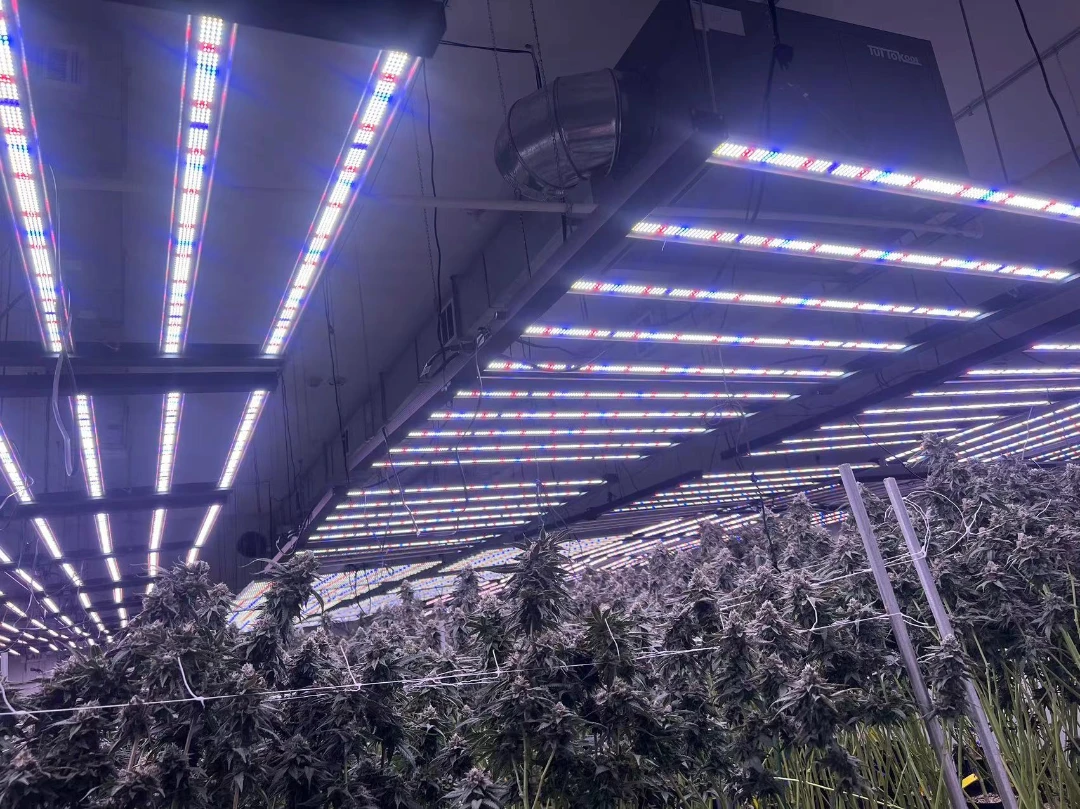
Grow rooms are bright, and modern LEDs can be intense enough to create glare and eye discomfort. This is not just about comfort—photobiological safety is a real evaluation category for lighting products.
IEC 62471: the key standard to know
IEC 62471 is widely used to assess potential photobiological hazards from lamps and lamp systems, including LED-based products.
This standard helps categorize risk and exposure limits, which are especially relevant for high-intensity horticultural lighting. For facility operators, it supports safer work procedures and PPE planning.
Blue light hazard: keep it factual
The CIE has published a position statement explaining that “blue light hazard” is often discussed imprecisely, and it refers specifically to a photochemical risk to the retina associated with staring at very bright light sources.
In practical terms: don’t stare at operating fixtures, reduce glare, and use appropriate eye protection for staff working under intense lighting. A good cannabis LED grow light plan includes not only crop performance, but also worker safety.
What to Look for When Buying Cannabis LED Grow Lights
Choosing the right fixture is about matching performance to your space and operating style. Instead of chasing “the strongest light,” focus on repeatable results, measurable coverage, and credible safety credentials.
A short buyer checklist that actually helps
Start with the footprint you need and ask for PPFD maps at that exact area and mounting height. Then confirm the fixture’s efficacy, thermal management approach, and certification status for horticultural use.
Next, evaluate the supplier’s support quality. For commercial users, warranty handling, spare parts availability, and technical documentation often matter as much as the light’s peak numbers.
Trust the data you can verify
Prefer suppliers that provide consistent test reporting and clear specs. If possible, validate performance in your own room with a PAR meter or by using third-party test reports.
Definitions matter, too. PPFD has a formal definition in recognized lighting terminology, which helps keep discussions grounded in the same units and wavelength bands.
How SLTMAKS Approaches Professional Grow Lighting
At SLTMAKS, we design LED grow lights for customers who need stable, repeatable results and straightforward deployment. That means focusing on spectrum balance, high photon efficacy, uniform coverage, and safety-minded engineering that fits real cultivation environments.
Built for operations, not just marketing numbers
Professional cultivation teams need lighting that performs consistently across cycles and rooms. That’s why we emphasize PPFD uniformity, thermal reliability, and clear documentation so teams can standardize setups and training.
We also support B2B buyers with practical logistics, including inventory and fulfillment options aligned with faster delivery needs. If you’re supplying projects in the U.S. West region, quicker lead times can reduce downtime and keep build schedules on track.
Wrap-Up: Get Spectrum + Intensity + Safety Right
The best cannabis LED grow lights aren’t defined by a single feature. They’re defined by a balanced spectrum, verified intensity and uniformity, and a safety/compliance story that stands up to real-world installation and daily work.
If you want help selecting the right fixture for your footprint and operating targets, SLTMAKS can recommend configurations based on measurable lighting metrics. You’ll get clearer comparisons, fewer surprises during installation, and a setup you can confidently scale.
FAQ
What are cannabis LED grow lights, and why are they important?
Cannabis LED grow lights are special lights designed to help cannabis plants grow indoors. They provide the right type of light that plants need to grow healthy and strong. Choosing the right LED lights is important because they can affect how much your plants yield and how healthy they look. Good lighting helps plants to grow evenly and reduces problems during harvesting.
What does ‘spectrum’ mean in relation to grow lights?
The term ‘spectrum’ refers to the different colors or wavelengths of light that a grow light emits. Each color has a specific role in plant growth. For example, blue light helps plants grow strong stems, while red light helps them blossom. A good grow light will have a mix of these colors to support your plants throughout their life cycle.
How do I know how bright my LED grow lights should be?
The brightness of grow lights is measured using something called PPFD, which tells you how much light reaches the plants at a specific spot. Ideally, you want your lights to be bright enough for your plants to thrive but not so bright that they become stressed. It’s helpful to look for a map that shows how light is distributed across the area where your plants are growing.
Why is safety important when using LED grow lights?
Safety is really important when using LED grow lights because these lights can get hot and use a lot of electricity. Proper installation is key to avoiding electrical hazards or fire risks. Always make sure your lights are certified for safety, and ensure that the setup is done by a professional to keep everything working safely.
What should I consider when buying grow lights for cannabis?
When buying grow lights for cannabis, you should think about the size of your growing area, the type of plants you’re growing, and the safety certifications of the lights. It’s also a good idea to ask about the light’s performance data, like its efficiency and distribution, to get the best possible results for your plants.
What is DLI, and why is it important for my plants?
DLI, or Daily Light Integral, measures the total amount of light that your plants receive in a day. It tells you if your plants are getting enough light over time, which is important for their growth and health. Monitoring DLI helps you understand whether to adjust your lighting schedule or change your light’s intensity.
What does ‘uniformity’ mean in grow light coverage?
Uniformity in grow light coverage means that the light is spread evenly across the area where your plants are growing. If the light is uneven, some plants may receive too much light while others get too little, which can lead to inconsistent growth. It’s best to choose lights that ensure an even distribution of light for all your plants.
How can I protect my eyes while working with grow lights?
Working around grow lights can be tough on your eyes because they can be very bright. To protect your eyesight, avoid staring directly at the lights and consider using eye protection such as sunglasses designed for bright light. Ensuring your grow room has proper shading and managing light intensity can also help reduce glare.
How do I maintain safety when using moisture around grow lights?
Moisture and lights don’t mix well, so it’s crucial to install your LED grow lights safely. Ensure that all electrical components are kept dry and avoid exposing wires to water. Always use qualified electricians for installation, and keep everything clean and well-maintained to prevent any hazards.
What resources or assistance are available when setting up grow lights?
When setting up grow lights, it’s helpful to connect with suppliers who provide clear support and reliable information. You can ask them for testing data, installation guidelines, and if they have experience with similar setups. Many suppliers also offer warranties to ensure that you get help if something goes wrong.