
Introduction: The “Space vs. Efficacy” Paradox in Vertical Farming
The global transition toward high-density indoor farming represents a paradigm shift in Controlled Environment Agriculture (CEA). As growers utilize multi-layer grow racks to exponentially increase crop yield per square foot of floor space, the demand for highly specialized vertical farm LED lights has never been greater. However, this architectural triumph introduces a severe set of physical constraints. In these highly compressed environments, the pursuit of extreme energy efficiency often collides with the unforgiving reality of spatial limitations.
For years, the commercial LED grow light industry has championed Photosynthetic Photon Efficacy (PPE) as the ultimate metric of a fixture’s value. While achieving high PPE is undeniably critical for reducing operational expenditures (OpEx), a myopic focus on this single metric can lead to systemic failures in high-density vertical farms. Why? Because the physical engineering required to push PPE to its absolute limits frequently results in bulky, heat-generating fixtures that consume the very space meant for crop production.
This comprehensive guide is designed for commercial growers, facility engineers, and vertical farm operators. We will explore the complex interplay between optical physics, fixture thermodynamics, and plant biology within restricted vertical spaces. By the end of this article, you will understand how to strike the perfect balance between high PPE and minimal installation volume, ensuring your multi-layer facility achieves maximum yield, superior light uniformity, and an optimized total cost of ownership (TCO).
Table of Contents
The Unique Physical Challenges of High-Density Vertical Agriculture
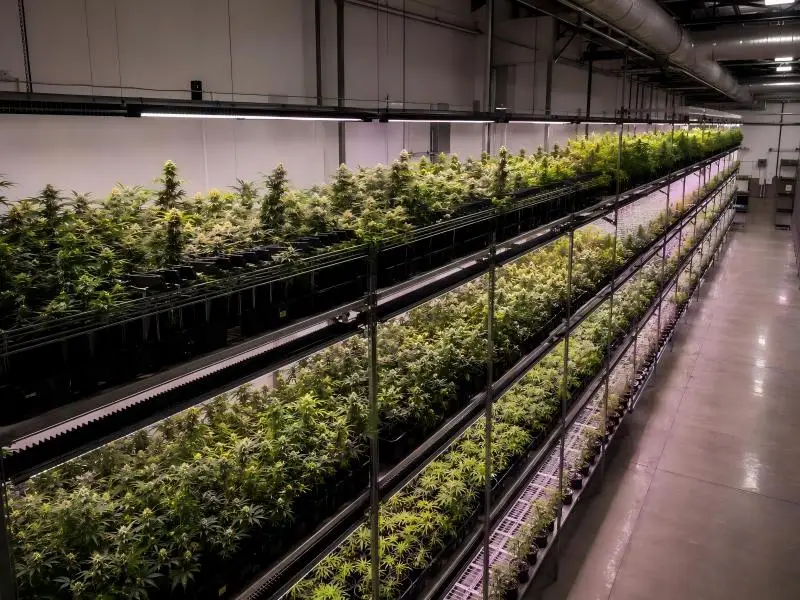
Operating a multi-layer indoor farm is fundamentally different from managing a traditional single-level greenhouse or a high-bay indoor warehouse. The architecture of vertical farming forces commercial LED grow lights to operate in extremely close proximity to the plant canopy, introducing a host of unique engineering and biological challenges.
The Unforgiving Z-Axis Constraint
In a multi-layer grow rack system, the vertical space (Z-axis) is your most expensive and scarce commodity. The distance between the LED fixture and the plant canopy—often referred to as the mounting height—is typically compressed to a mere 15 to 30 centimeters (6 to 12 inches).
Traditional greenhouse top-lighting fixtures, which are designed to project light from several meters above the canopy, are entirely obsolete in this scenario. If a commercial grow light is too thick, it drastically reduces the available height for plant growth. Even an extra two inches of fixture thickness can force a grower to eliminate an entire tier from a 10-tier racking system, resulting in an immediate 10% reduction in total facility output.
Microclimates and the Burden on HVAC Systems
Even the most efficient commercial LED grow lights convert a significant portion of electrical energy into heat. In the ultra-confined spaces between vertical racks, this heat cannot easily dissipate. Instead, it becomes trapped, creating localized microclimates.
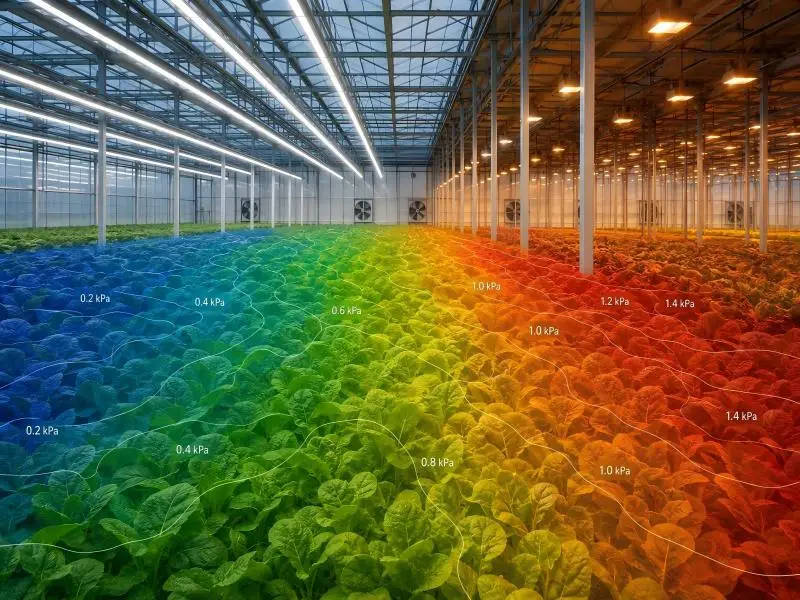
A microclimate is a small, specific area where the temperature and humidity differ significantly from the ambient room conditions. If the heat generated by the LEDs and the power driver is not properly managed, the temperature at the plant canopy will spike. This increases the vapor pressure deficit (VPD) to dangerous levels, forcing the plant to close its stomata, halting photosynthesis, and causing severe thermal stress. Furthermore, these trapped pockets of heat place a tremendous, uneven load on the facility’s Heating, Ventilation, and Air Conditioning (HVAC) system, leading to skyrocketing cooling costs and energy inefficiencies.
The Life-and-Death Metric: Light Uniformity
When a light source is positioned just a few inches above a plant, uniformity becomes a critical survival factor for the crop. In a high-bay setup, light beams have distance to mix and overlap, creating a relatively even spread of Photosynthetic Photon Flux Density (PPFD).
In high-density indoor farming, the lack of distance means that a poorly designed fixture will create intense “hot spots” directly beneath the diodes and severe shadowing at the edges of the tray. This leads to uneven crop growth, where plants in the center suffer from light burn and nutrient lockout, while plants on the perimeter experience stunted growth due to photon starvation. Achieving edge-to-edge uniformity in a restricted space is significantly more important—and more difficult—than simply achieving a high peak PPFD number.
Decrypting PPE (Photosynthetic Photon Efficacy) in Restricted Spaces
To make informed purchasing decisions, commercial growers must look beyond the marketing hype and understand the underlying physics of Photosynthetic Photon Efficacy.

The True Definition of PPE
PPE is the standard metric used to evaluate how efficiently a grow light converts electrical energy into photosynthetically active radiation (PAR). It is calculated by dividing the total light output (Photosynthetic Photon Flux, or PPF) by the total electrical power consumed (Wattage).
The formula is expressed as:
The resulting value is measured in micromoles per joule (㎛mol/J). For commercial operators, PPE is the bedrock of predicting electrical operational expenses. A fixture with a PPE of 2.8 ㎛ mol/J will produce more plant-usable light per dollar of electricity than a fixture rated at 2.2 ㎛mol/J.
The Hidden Physical Cost of “Ultra-High” PPE
As the industry pushes for increasingly higher efficacies—with some fixtures now boasting PPEs exceeding 3.0 ㎛mol/J—growers must ask: What is the physical cost of this efficiency?
The laws of thermodynamics and semiconductor physics dictate that achieving ultra-high PPE requires specific engineering trade-offs. To push diode efficiency to the absolute maximum, engineers typically utilize “under-driving” techniques. This means running a larger number of high-quality LED chips at a lower current. While this maximizes efficacy and minimizes individual diode heat, it requires a massive physical footprint.
Furthermore, to maintain the optimal junction temperature of these diodes (ensuring they operate at peak efficacy), the fixture requires extensive thermal management. This translates to massive, heavy aluminum heat sinks. Additionally, the high-efficiency power drivers required to convert AC to DC power with minimal loss are inherently bulky components.
The Conflict Between Efficacy and Installation Volume
This is where the paradox of vertical farming LED selection becomes apparent. The pursuit of maximum PPE inherently drives up the physical volume of the fixture. In a standard warehouse, a thick, heavy fixture is not a problem. But in a multi-layer vertical rack, cubic volume is strictly rationed.
If a grower selects a light with an incredibly high PPE but a bulky profile, the thick heat sinks and integrated drivers will intrude into the grow space. This limits the maximum height the plants can reach, restricts airflow, exacerbates microclimate formation, and ultimately reduces the total biomass that can be harvested per cubic meter of the facility. Thus, chasing the absolute highest PPE can inadvertently sabotage the fundamental economic model of a high-density vertical farm.
How Fixture Volume and Form Factor Dictate Vertical Farm Design
The physical design of an LED grow light is not merely an aesthetic choice; it is a structural determinant that dictates the entire architecture and profitability of a commercial CEA facility.
The Absolute Necessity of Low-Profile Design
In vertical agriculture, the phrase “low-profile” is a strict engineering requirement. The thickness of the grow light directly dictates the maximum number of tiers that can be stacked within a given ceiling height.
Consider a facility with a 20-foot ceiling. If a grower utilizes bulky fixtures that are 5 inches thick, combined with the necessary clearance for plant growth and tray depth, they might only fit 6 tiers of racks. However, by selecting an ultra-thin LED fixture that is less than 1.5 inches thick, the grower reclaims over 20 inches of vertical space across the entire rack. This reclaimed space is often enough to add a 7th tier—instantly increasing the entire facility’s production capacity by over 16% without altering the building’s footprint.
The Ultimate Driver Debate: Integrated vs. Remote
The power driver—the component responsible for converting line voltage to the DC power required by the LEDs—is a major source of both physical bulk and thermal energy. How a manufacturer handles the driver is a defining feature of vertical farm lighting.
- Integrated drivers: In this design, the driver is bolted directly onto the LED fixture. While this makes the light a simple “plug-and-play” unit, it is highly detrimental in vertical farming. It adds inches to the fixture’s thickness, significantly increasing installation volume. More critically, it places a major heat-generating component directly inside the microclimate of the plant canopy, forcing the HVAC system to work overtime to pull that heat out from between the tight shelving.
- Remote driver grow lights: This is the gold standard for high-density indoor farming. Remote driver setups separate the power supply from the LED light bars. The ultra-thin light bars are mounted above the plants, while the bulky drivers are consolidated outside the grow racks, often mounted on the walls, at the ends of the aisles, or even in a completely separate, easily ventilated utility room.
- Benefits: This instantly minimizes the installation volume within the rack. Crucially, it removes up to 30% of the thermal load from the cultivation area, drastically reducing the strain on air conditioning and dehumidification systems.
Cable Management and Daisy-Chaining Technology
In a commercial facility housing tens of thousands of light fixtures, cable management is a monumental task. Bulky, poorly designed wiring harnesses take up space, block vertical airflow, and create safety hazards. High-quality B2B LED systems utilize advanced daisy-chaining technology, allowing multiple ultra-thin light bars to be powered sequentially from a single remote driver using streamlined, low-profile interconnect cables. This reduces the total volume of copper wiring in the room, cutting down on installation labor costs and preserving critical aerodynamic flow within the racks.
Optical Physics in Confined Spaces: PPFD Distribution and Beam Angles
When the light source is inches away from the canopy, commercial growers must possess a deep understanding of optical physics to prevent catastrophic crop damage.

The Inverse Square Law in Close-Proximity Lighting
The Inverse Square Law states that the intensity of light is inversely proportional to the square of the distance from the source. In mathematical terms:
Where E is illuminance, I is the intensity of the source, and d is the distance.
In practical terms for vertical farming, this means that even tiny changes in the distance between the LED and the plant canopy cause massive fluctuations in light intensity. If a plant grows just 5 centimeters closer to a concentrated light source, the localized PPFD can double, causing immediate photo-oxidative stress (light burn). Therefore, vertical farm lighting cannot rely on highly concentrated light engines.
Beam Angle and the Art of Diode Distribution
Because of the Inverse Square Law, the physical distribution of diodes and their optical beam angle are paramount. Concentrated Chip-on-Board (COB) LEDs or tightly clustered panels are disastrous in vertical racks; they act like spotlights, burning the plants directly underneath while leaving the perimeters in darkness.
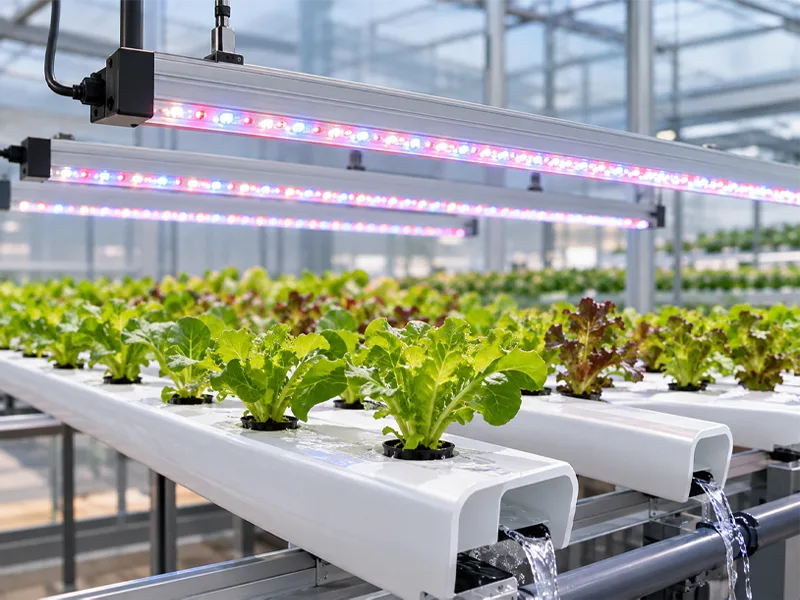
The optimal solution for limited spaces is the linear LED bar or strip design. By physically spreading the individual diodes across the entire length and width of the grow tray, the fixture creates a diffuse, highly uniform blanket of light. Furthermore, these diodes must utilize wide beam angles—typically 120 degrees or greater. A 120-degree optical spread ensures that light emitted from one diode intersects with light from adjacent diodes before reaching the canopy. This overlapping effect neutralizes hot spots, providing a smooth, even PPFD distribution that allows all plants on the tray to grow at identical rates.
Penetration vs. Canopy Coverage
A common misconception is that deeper canopy penetration requires focused, narrow-beam optics. In high-density settings, using narrow optics (like 90-degree lenses) simply burns the top leaves. Instead, deep penetration in a vertical rack is achieved through broad, multi-directional light distribution. When wide-angle light hits the canopy from multiple overlapping angles, photons can bypass the top leaves and reach the lower, secondary foliage, ensuring healthy development throughout the entire plant structure without increasing the physical bulk of the fixture.
Spectrum Selection: Controlling Plant Morphology with Photomorphogenesis
In vertical farming, light is not just a source of energy for photosynthesis; it is a biological remote control. Through a process called photomorphogenesis, plants use specific wavelengths of light to direct their architectural growth. When vertical space is severely limited, selecting the right spectrum is critical to keeping plants physically compact.
The Supremacy of Broad-Spectrum White Light
Early iterations of indoor grow lights relied heavily on targeted “blurple” (red and blue) spectrums. While technically efficient at driving photosynthesis, these spectrums are problematic for commercial operations. Narrow-band light makes it nearly impossible for agricultural workers to visually identify early signs of nutrient deficiencies, pests, or diseases.
Modern high-density indoor farming relies on broad-spectrum white light. White LEDs provide all the necessary photons for vigorous growth while rendering colors naturally (high CRI). This creates a safe, ergonomic working environment for employees and allows for precise visual crop inspection, which is critical for quality control in large-scale commercial facilities.
Utilizing Blue Light to Suppress Stem Elongation
When Z-axis space is restricted, preventing plants from growing too tall is a primary concern. This is where spectral tuning becomes vital. Blue light (typically in the 400-500 nm range) is highly effective at keeping plants compact.
Blue photons interact with plant photoreceptors called cryptochromes. When stimulated, cryptochromes inhibit the elongation of the internodes (the stem segments between leaves). By utilizing an LED spectrum with a carefully calibrated, higher fraction of blue light, growers can force crops like leafy greens, microgreens, and medicinal plants to grow dense, thick, and compact. This prevents the canopy from stretching up and touching the light fixtures, avoiding thermal damage and maximizing the yield within the tight vertical constraints.
The Double-Edged Sword of Far-Red Light
Far-red light (700-750 nm) has gained popularity for its ability to accelerate flowering and increase leaf expansion via the Emerson Effect. However, in limited spaces, far-red must be used with extreme caution.
Far-red light triggers a biological response known as the “Shade Avoidance Syndrome.” When a plant senses a high ratio of far-red to red light, it believes it is being shaded by taller competing plants. Its natural response is to rapidly stretch its stems to reach the sunlight. In a vertical farm with only 15 centimeters of headspace, triggering the Shade Avoidance Syndrome is catastrophic, causing the crop to rapidly stretch into the lights and ruin the harvest. Therefore, commercial vertical farm lights must feature meticulously balanced spectrums that prioritize compact growth over uncontrolled elongation.
Comprehensive Evaluation of ROI and Total Cost of Ownership (TCO)
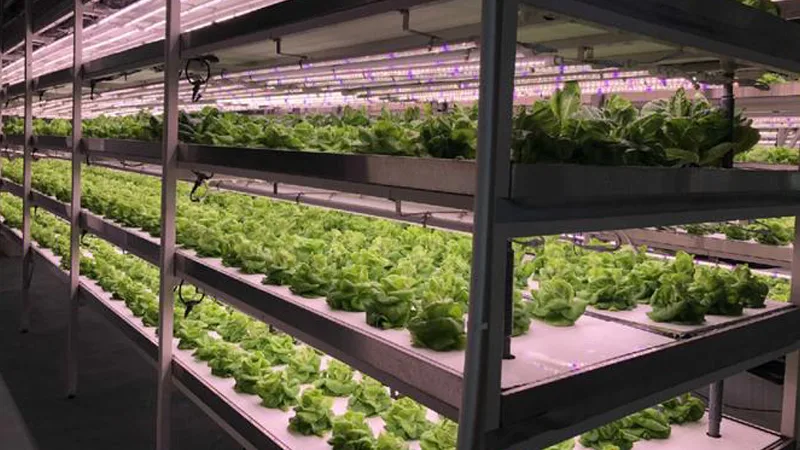
For commercial decision-makers, purchasing LED grow lights is a massive capital expenditure. However, evaluating a fixture based solely on its upfront cost or its peak PPE is a fundamentally flawed approach. True profitability in vertical farming requires analyzing the Total Cost of Ownership (TCO).
Shattering the “PPE-Only” Illusion
It is a common industry pitfall: a farm purchases the fixtures with the absolute highest PPE on the market, expecting incredible energy savings, only to see their overall profit margins shrink. How does this happen?
Because the “ultra-high PPE” fixtures were thick and bulky, the farm had to reduce its tier count, losing 15% of its total crop yield. Because the fixtures utilized heavy, integrated drivers, the localized heat in the racks spiked, forcing the farm to upgrade its HVAC systems and run its air conditioning 24/7. The marginal savings on the lighting electricity bill were completely wiped out by the lost crop revenue and the massive increase in HVAC operational costs.
Balancing CapEx and OpEx in the Real World
A true TCO analysis must weigh both Capital Expenditures (CapEx) and Operational Expenditures (OpEx) holistically:
- CapEx Considerations: * Fixture Cost: The upfront price of the LEDs.
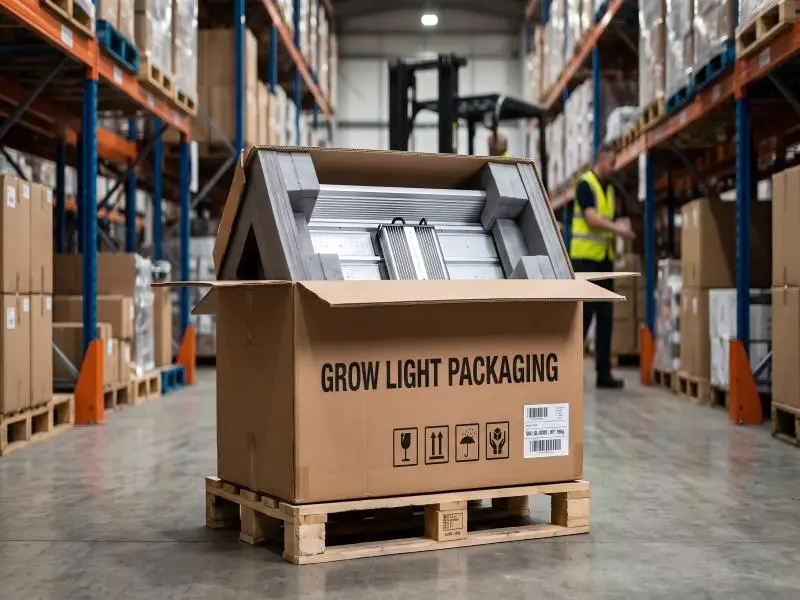
- Shipping and Logistics: Bulky, thick lights cost significantly more to ship and store than ultra-slim, lightweight fixtures.
- Installation Labor: Remote driver systems and daisy-chaining reduce the man-hours required by commercial electricians, drastically lowering installation CapEx.
- OpEx Considerations:
- Electrical Consumption: Dictated by the PPE, but must be balanced against yield.
- HVAC Load: The cost to remove the heat generated by the lights. Removing drivers from the grow room via remote driver setups is the most effective way to slash HVAC OpEx.
- Maintenance: Slim, fanless designs with high IP ratings (waterproof/dustproof) reduce ongoing maintenance costs in humid farm environments.
Compliance and Energy Rebates
Finally, TCO is heavily influenced by government and utility incentives. Commercial growers must ensure their selected fixtures are recognized by regulatory bodies. Utilizing DLC Certified grow lights (DesignLights Consortium) proves that the fixtures meet rigorous third-party standards for efficacy, longevity, and performance. In many regions, installing DLC-certified fixtures qualifies the commercial farm for substantial energy rebates, which can offset the initial CapEx by 20% to 50%, fundamentally transforming the ROI timeline of the facility.
Conclusion and SLTMAKS Custom Solutions
In the demanding environment of high-density vertical farming, the most intelligent engineering choice is rarely about chasing a single extreme metric. Success lies in finding the perfect intersection: a fixture that delivers highly efficient commercial PPE, but does so within an ultra-low-profile installation volume, featuring exceptional thermal management and flawless edge-to-edge light uniformity.
As a professional plant grow light manufacturer, SLTMAKS deeply understands the intricate physical and biological pain points faced by commercial operators. We do not just build lights; we engineer spatial solutions.
Our specialized LED grow lights for vertical farms are meticulously designed to maximize your Z-axis profitability. Featuring industry-leading ultra-thin profiles, advanced remote driver capabilities, and scientifically formulated spectrums for compact plant morphology, SLTMAKS fixtures deliver exceptional commercial-grade efficacy without stealing your valuable cultivation space or overburdening your HVAC systems.
Stop compromising between light quality and facility space. Contact the SLTMAKS lighting engineering team today to receive a customized, high-density optical layout and TCO analysis designed specifically to increase your operational yield and lower your energy footprint.
FAQ
What is a good PPE for vertical farm LED lights?
While a higher PPE (Photosynthetic Photon Efficacy) indicates better electrical efficiency, commercial growers should aim for a balanced PPE between 2.5 and 2.8 μmol/J for multi-layer racks. Pushing PPE above 3.0 μmol/J often requires oversized heat sinks and bulky fixture designs. In a vertical farm, these thick fixtures consume valuable Z-axis space and restrict airflow, meaning the marginal energy savings are negated by a reduction in total crop yield.
How far should LED grow lights be from plants in a vertical farm?
In high-density vertical farming, LED lights are typically mounted just 6 to 12 inches (15 to 30 cm) above the plant canopy. Because of this extremely close proximity, it is crucial to avoid concentrated light sources. Instead, growers should use low-profile linear LED bars with wide beam angles (120 degrees or more) to ensure uniform PPFD distribution across the canopy and prevent localized light burn.
Why are remote drivers better than integrated drivers for vertical farm LED lights?
Remote drivers are the gold standard for vertical farming because they solve two critical constraints: physical space and heat management. Integrated drivers add unnecessary thickness to the light fixture and emit heat directly into the tight microclimates of the grow rack. By utilizing remote drivers, facilities can mount the power supplies outside the grow area, allowing for ultra-thin light bars, maximizing vertical growing space, and significantly reducing the cooling load on the HVAC system.
What is the best LED spectrum for compact plant growth in vertical farms?
A broad-spectrum white light with a meticulously tuned, higher percentage of blue light (400-500 nm) is ideal for limited vertical spaces. Blue photons stimulate plant photoreceptors called cryptochromes, which inhibit stem elongation and promote dense, compact morphology. Conversely, high amounts of far-red light should be avoided in restricted spaces, as it triggers “shade avoidance syndrome,” causing plants to rapidly stretch and outgrow the rack height.