In modern commercial Controlled Environment Agriculture (CEA), whether in fully enclosed vertical farms or highly automated modern greenhouses, the cultivation models for leafy greens like lettuce have undergone a massive transformation. As a commercial grower, you may have already achieved leaps in overall crop yield through the implementation of advanced hydroponic systems and precision climate control equipment. However, in an increasingly competitive fresh produce market, sheer “biomass” is no longer the sole metric dictating the commercial success and profitability of an agricultural enterprise.
High-end supermarkets, premium restaurant chains, and highly health-conscious consumers are placing far stricter demands on the intrinsic “quality” of lettuce. This quality is primarily reflected in two core dimensions: low nitrate levels, which directly impact food safety and long-term health, and ultimate crispness and structural texture, which govern the eating experience and the post-harvest shelf life. When commercial cultivation facilities face persistent issues such as a mushy leaf texture, limp and easily damaged leaves, or failed authoritative laboratory tests due to excessive nitrate accumulation, facility managers often suspect underlying problems with their hydroponic nutrient solution formulation (water and fertilizer) or inconsistencies within their temperature and humidity controls.
In reality, once these foundational environmental factors are rigorously tested and ruled out, the “invisible switch” that truly determines the final morphological and biochemical quality of leafy greens is hidden directly in the supplemental lighting arrays suspended above the plant canopy. This is the core scientific and commercial topic we are diving into today: the critical importance of the red to blue light ratio. As a professional commercial LED grow lights manufacturer, SLTMAKS deeply understands that horticultural lighting is not merely a brute-force energy source designed solely for plant photosynthesis. Rather, light acts as a highly complex “information command” that fundamentally regulates plant photomorphogenesis at the cellular level.
This comprehensive guide will decode, from a professional photobiology and agricultural engineering perspective, how the precise red-to-blue light ratio controls nitrate levels and structural crispness in leafy lettuce at both the molecular and metabolic levels. We will thoroughly explore how to leverage this foundational scientific principle, synergistically combined with SLTMAKS’s highly efficient, spectrum-tunable lighting solutions, to help commercial growers break through persistent cultivation bottlenecks and consistently produce high-premium, top-tier agricultural products.
Table of Contents
Decoding Plant Photobiology: Why is Lettuce So Sensitive to “Red and Blue Light”?
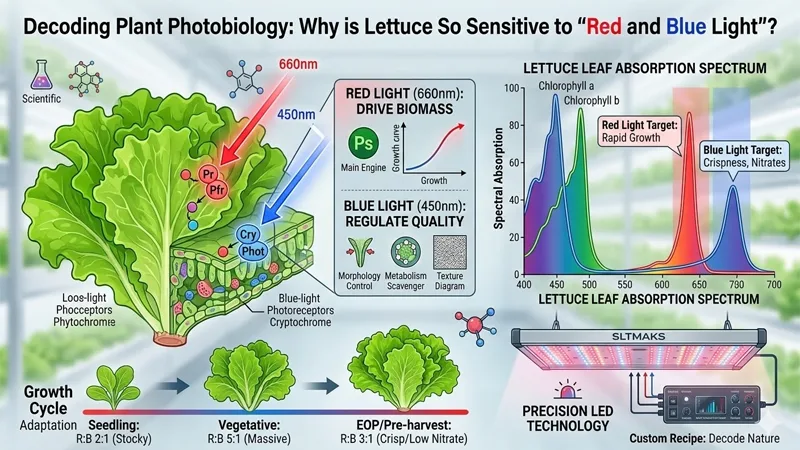
To truly understand how targeted red and blue light applications shape the ultimate commercial quality of lettuce, we first need to understand, at a microscopic and biochemical level, how plants essentially “see” and process light. While human eyes are evolutionarily adapted to be most sensitive to yellow-green light, the evolutionary path and photoreceptive mechanisms of plants are entirely different. Pigment molecules situated within plant leaves primarily absorb specific wavelengths restricted within the Photosynthetically Active Radiation (PAR) range, which typically spans from 400 nm to 700 nm.
Within the complex biological systems of plants, various specialized photoreceptors act as highly sensitive “eyes” and environmental “radars.” These receptors are strictly responsible for receiving different wavelengths of light signals from the environment and translating them into precise internal physiological and morphological commands—a fundamental biological process known as photomorphogenesis.
1. Red Light (600 nm – 700 nm): The “Main Engine” of Photosynthesis and a Double-Edged Sword
In the realm of commercial horticultural lighting science, red light is widely recognized as the most efficient and powerful waveband for driving active plant photosynthesis. The primary photosynthetic pigments, Chlorophyll a and Chlorophyll b, exhibit remarkably strong absorption peaks directly around the 660 nm wavelength. By targeting these peaks, red light effectively maximizes the efficiency of the photosynthetic electron transport chain, rapidly converting captured light energy into storable chemical energy, thereby aggressively driving up plant biomass—measured in both fresh and dry weight. Furthermore, specialized photoreceptors called phytochromes within the plant primarily react to the dynamic balance between red and far-red light.
However, in intensive commercial cultivation settings, utilizing a spectrum that is purely red, or one that features an excessively high and unbalanced proportion of red light, acts as a dangerous “double-edged sword.” While an abundance of red photons successfully forces the lettuce to grow rapidly and achieve a large physical footprint, it simultaneously triggers an evolutionary survival mechanism known as “Shade-Avoidance Syndrome.”
Under a heavily red-dominant spectrum, the lettuce biochemically misinterprets its environment, mistakenly believing it is being competitively shaded by neighboring plants. In response, it actively elongates its stems and drastically expands its leaf area in a desperate biological attempt to reach higher into the canopy and compete for available light.
This forced elongation results in incredibly thin, highly fragile, and loosely structured leaves characterized by an excessively high water content. This biological phenomenon directly leads to a highly undesirable mushy texture, making the harvested product highly susceptible to severe mechanical damage and rapid degradation during post-harvest handling and cold-chain transit. Even more severely for B2B commercial operations aiming for health-conscious markets, a strictly red-light cultivation environment severely inhibits the plant’s natural synthesis of crucial secondary metabolites and inadvertently leads to massive, unsafe levels of nitrate accumulation within the plant tissues.
2. Blue Light (400 nm – 500 nm): The “Quality Regulator” and High-Energy Signal
Compared to the longer wavelengths of red light, blue light photons carry significantly higher intrinsic energy. According to the fundamental photon energy equation (where h is Planck’s constant, c is the speed of light, and λ is the wavelength), the substantially shorter wavelength of blue light mathematically dictates that its single-photon energy is strictly higher than that of a corresponding red light photon. In the plant’s biological architecture, blue light is primarily absorbed and processed by highly specialized photoreceptors known as cryptochromes and phototropins.
In the highly optimized commercial cultivation of leafy greens like lettuce, blue light plays a fundamentally indispensable role, acting as the ultimate “quality regulator.” While it may not drive raw biomass accumulation as aggressively as red light, its presence is mandatory for premium crop outputs. It is primarily responsible for several critical morphological adjustments:
- Inhibiting excessive elongation of hypocotyls and stems: Blue light directly counteracts shade-avoidance, effectively creating a much more compact, structurally sound, and commercially viable plant architecture.
- Promoting stomatal opening: By signaling guard cells to open stomata, blue light actively enhances vital leaf transpiration and promotes the aggressive root absorption of water and crucial structural minerals, most notably calcium and magnesium.
- Increasing leaf thickness: Blue light actively promotes the rapid cellular division and highly tight, dense arrangement of internal mesophyll cells, fundamentally altering the leaf’s physical density.
- Stimulating secondary metabolism: It acts as an environmental stressor that promotes the aggressive synthesis of highly valued secondary compounds, including protective anthocyanins, ascorbic acid (Vitamin C), and a wide spectrum of health-promoting antioxidants.
Understanding these basic, yet profoundly impactful biological mechanisms clearly clarifies why professional horticultural lighting science isn’t simply about flooding a greenhouse with enough raw brightness. Rather, it is fundamentally about engineering and delivering the highly precise, mathematically calculated synergy of red and blue light to manipulate plant biology for maximum commercial gain.
Core Revelation: How Blue Light Becomes the “Nitrate Scavenger”
While naturally occurring nitrate (NO3–) is itself biologically harmless to human consumption, the danger arises when, within the human digestive system or during extended periods of vegetable storage, it can be biochemically reduced to reactive nitrite (NO2–). If significant quantities of nitrite enter the human bloodstream, it can cause critical hemoglobin molecules to lose their vital oxygen-carrying capacity, and, under certain specific chemical conditions, can readily convert into highly toxic and carcinogenic nitrosamines.
Because of these profound public health risks, the European Union and numerous other regulatory bodies worldwide have enacted and strictly enforced extremely rigorous limit standards governing the maximum allowable nitrate content in marketed, commercially sold leafy greens. In modern enclosed greenhouses and multi-tier vertical farms, where the artificial or supplemental light intensity (PPFD) is often inherently lower than the intense, naturally occurring summer sunlight, cultivated lettuce is highly prone to experiencing the severe commercial pain point of excessive, non-compliant nitrate accumulation.
To permanently solve the pressing industry issue of nitrate (NO3–) accumulation, plant scientists and ag-tech engineers must look deeply into the plant’s complex nitrogen assimilation pathway operating at a highly detailed transcriptomic level.
The Biochemical Mechanism: The CRY-HY5-NIA Pathway
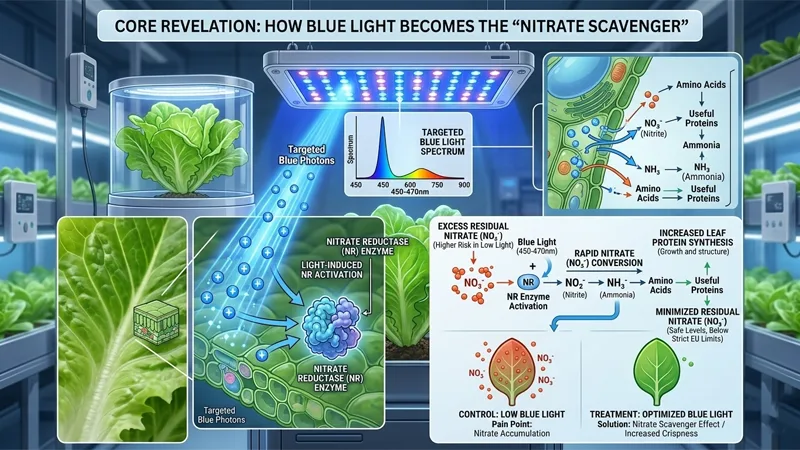
After the extensive root networks of the lettuce plant absorb raw nitrate directly from the hydroponic nutrient solution, this nitrate must be internally reduced to nitrite by a specific internal enzyme known as Nitrate Reductase (NR). This specific enzyme acts as the critical rate-limiting bottleneck in the entire biological process of nitrogen assimilation. In low-light indoor agricultural environments, or heavily shaded conditions under LED spectra engineered with an insufficient blue light fraction, the plant’s fundamental genetic ability to synthesize this crucial enzyme is severely suppressed, leading to dangerous nitrate stockpiling.
According to extensive, peer-reviewed photobiological research published in leading academic journals such as Frontiers in Plant Science and Horticulture Research, the vital activation of Nitrate Reductase is highly and specifically wavelength-dependent. When the upper lettuce canopy is directly exposed to targeted blue light (specifically engineered with peaks centered around 450 nm), the energetic blue light signal is instantly captured by the cryptochrome 1 (CRY1) photoreceptor located within the plant tissue.
This specific photoreceptor activation acts as a biochemical catalyst that stabilizes the HY5 transcription factor—a protein that serves as a master regulator for the plant’s overall photomorphogenesis. Once stabilized, the rapidly accumulated HY5 protein travels and directly binds to the specific genetic promoters of the NIA1 and NIA2 genes, massively and forcefully upregulating their biological expression to actively synthesize far greater quantities of Nitrate Reductase. Furthermore, the introduction of high-energy blue light stimulates the highly rapid dephosphorylation of already existing, dormant NR proteins, instantly switching them from a passive state into their highly active, nitrate-reducing state.
Experimental Thresholds and the EOP Strategy
From a strict yield perspective, relying on an aggressively high blue light ratio continuously throughout the entire vegetative growth cycle of the crop would inevitably decrease the total harvestable biomass, simply because blue light photons mathematically drive core photosynthesis slightly less efficiently than their red photon counterparts. To perfectly balance the competing commercial demands of maximum yield and premium biochemical quality, SLTMAKS highly recommends the strategic implementation of the End-of-Production (EOP) supplemental lighting strategy. This advanced protocol is heavily backed by highly rigorous controlled environment agriculture (CEA) trials and verified empirical data.
The Controlled Horticultural Trials of “Blue Light Shock”:
Methodical greenhouse trials conducted on Lactuca sativa explicitly demonstrate that actively treating maturing lettuce with a continuous spectrum of pure blue light acts as a profoundly powerful metabolic trigger. The standard operating procedure for this specific treatment involves applying a Photosynthetic Photon Flux Density (PPFD) strictly calibrated between 50 and 100 ㎛mol • m-2 • s-1 continuously during the critical final 48 to 72 hours immediately preceding the scheduled commercial harvest.
- The result: This highly precise EOP treatment has been empirically shown to effectively reduce dangerous vacuolar nitrate concentrations by a staggering margin ranging from 30% to over 50%, rapidly forcing the plant to metabolize and convert these stored nitrates into highly valuable, health-promoting amino acids.
- The bonus: Simultaneously, the same oxidative stress response that is deliberately triggered by the intense application of the blue light fraction effectively upregulates the plant’s VTC2 gene. This genetic upregulation can dynamically boost the plant’s Ascorbic Acid (Vitamin C) content by up to an impressive 40%, guaranteeing that the crop easily secures a highly premium, top-tier market grade.
Scientific research clearly indicates that overall nitrate reductase activity is highly and strictly dependent on available light, and is especially sensitive to specific, highly targeted wavelengths of blue light. Under generalized low light intensity scenarios, or when utilizing agricultural spectra designed with too much red and severely lacking blue light, the internal genetic expression levels of the crucial genes strictly controlling NR synthesis (specifically identifying the NIA1 and NIA2 genes) drop to extremely low baselines, directly resulting in highly degraded, poor enzyme activity across the plant system.
However, the moment we strategically supplement the targeted lettuce canopy with a highly sufficient volume of blue light (specifically calibrated to the 450 nm wavelength), the resulting high-energy blue light signal is immediately received by the highly sensitive cryptochromes (CRY). This complex signal transduction pathway then rapidly triggers and activates the relevant internal transcription factors, massively and forcefully upregulating the active expression of the NIA genes.
Thus, blue light acts in a dual capacity: it not only actively increases the total synthesized physical quantity of the crucial nitrate reductase enzyme, but it also directly and immediately activates the already existing NR enzymes through deeply complex protein phosphorylation and dephosphorylation biochemical mechanisms.
Commercial Application Strategy: End-of-Production (EOP) Lighting
Operating heavily based on this highly detailed, microscopic biological mechanism, and standing as a globally leading commercial LED grow light manufacturer, SLTMAKS offers highly engineered, intensely actionable technological solutions designed specifically for large-scale, enterprise-level commercial growers. This flagship solution is the implementation of Continuous EOP Blue Light Technology.
Because all photosynthetic plants fundamentally require heavy doses of red light to efficiently accumulate structural biomass, forcefully using a heavily disproportionate, high proportion of blue light throughout the entire multi-week growth cycle would inevitably lead to vastly wasted electrical expenditure and severely reduced total crop yields. The most financially and biologically smart approach for large-scale operators is to actively utilize the immense technological advantages provided directly by SLTMAKS’s premium spectrum-tunable fixtures.
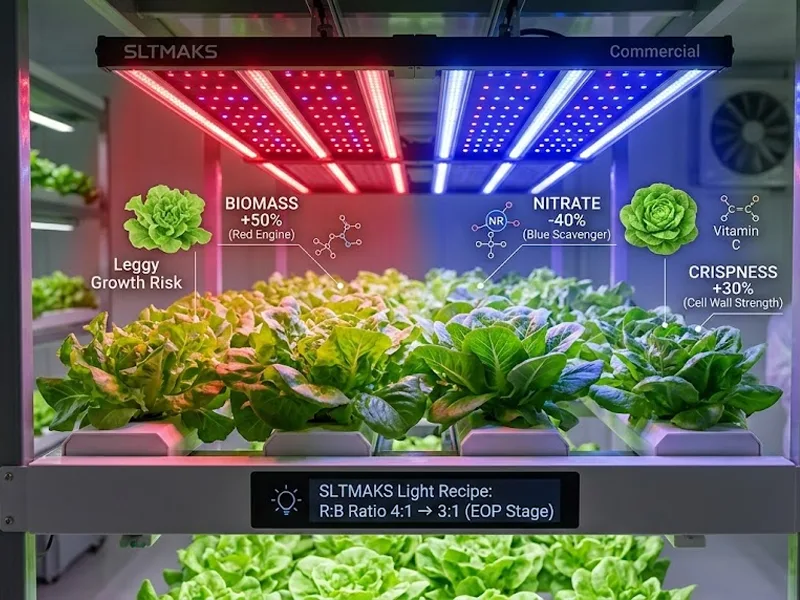
- Early to mid-growth stage: Growers are advised to configure their smart systems to use a heavily red-dominant recipe, maintaining a strict Red to Blue (R: B) ratio of 4:1 or higher. This leverages the fundamentally high photosynthetic quantum efficiency of red light to rapidly and aggressively accumulate core dry matter and vital fresh weight across the crop.
- 3-5 days pre-harvest (EOP stage): As the crop approaches maturity, operators use the central smart control system to significantly and rapidly increase the operational blue light ratio. Alternatively, they can actively supplement the existing canopy with highly targeted, low-intensity continuous blue light strictly scheduled during the natural dark period.
This brief, highly calculated “blue light shock” acts as an immediate biological catalyst, instantly activating the latent nitrate reductase existing within the lettuce tissues. It functions entirely like a biological “scavenger,” actively working to rapidly metabolize and strictly convert the densely stockpiled, dangerous nitrate stored deep in the cellular vacuoles directly into highly sought-after proteins and complex amino acids.
Verified commercial experimental data consistently show that applying this continuous blue light irradiation protocol strictly for 48 to 72 hours before the final harvest can reliably reduce the overall nitrate content of hydroponically grown lettuce by a massive 30% to 50%. Simultaneously, this protocol significantly boosts the crop’s Vitamin C content, perfectly and consistently meeting the rigorous, uncompromising safety and quality standards demanded by premium international agricultural markets, and definitively achieving a highly profitable, high-quality crop yield
Shaping the Ultimate Taste: The Perfect Equation of Red-to-Blue Light Ratio and Lettuce “Crispness”
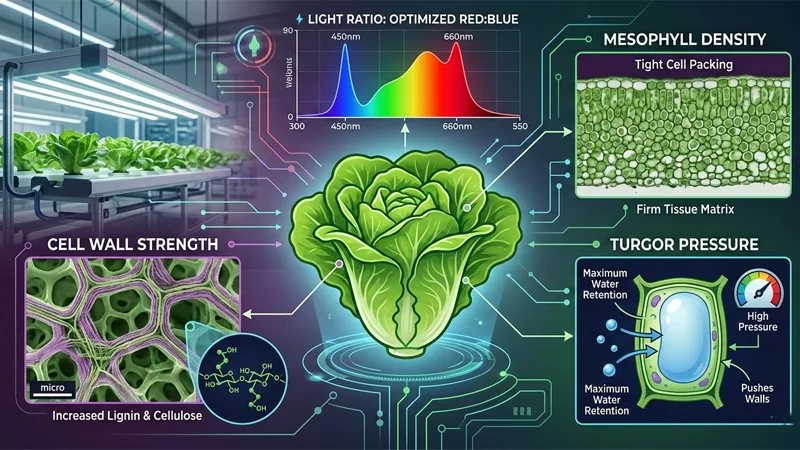
Moving strictly beyond the metrics of consumer food safety, the highly desired physical “crispness” of the lettuce leaf—defined scientifically as its structural, mechanical resistance to human chewing and its biological resistance to rapid wilting—heavily dictates the crop’s total functional shelf life and its ultimate wholesale commercial value. Commercial growers need to understand that crispness is definitely not a mere subjective, qualitative feeling. It is a highly quantifiable, measurable physical and morphological trait directly driven by complex cellular architecture, specifically cell wall thickness, internal mesophyll tissue density, and the maintenance of high turgor pressure.
When examining the plant morphologically under a microscope, leaf crispness is primarily determined by three critical structural factors:
- Cell wall thickness and mechanical strength: The presence of structurally thicker cellular walls, biochemically reinforced with higher concentrations of naturally occurring lignin and rigid cellulose, directly makes the plant leaves physically stiffer and highly resistant to mechanical deformation.
- Mesophyll cell density: A significantly tighter, more highly compacted physical arrangement of the internal plant cells directly results in a much firmer, more structurally sound leaf tissue.
- Turgor Pressure: This defines the individual plant cell’s fundamental, hydrostatic ability to aggressively retain internal water volume, keeping the tissue taut and biologically rigid
The Photomorphogenic Impact on Leaf Anatomy
When a lettuce crop is cultivated under a deeply unbalanced, purely red spectrum (for instance, utilizing solely 660 nm diodes), the plants consistently exhibit highly pronounced, detrimental “shade-avoidance” morphological characteristics. Highly detailed histological cross-sections taken of such compromised lettuce leaves clearly reveal wildly enlarged, physically swollen internal mesophyll cells constrained by extremely weak, heavily thinned cell walls. Furthermore, these cross-sections show massive, empty intercellular air spaces disrupting the tissue integrity.
This specific anatomical degradation results in a notably high Specific Leaf Area (SLA). (Note: In precise plant biology terminology, Specific Leaf Area is scientifically defined as the physical leaf area generated per unit of dry leaf weight. A high SLA mathematically indicates that the leaf is structurally expansive but incredibly thin and physically weak. Ultimately, this structural failure yields a highly undesirable, mushy agricultural product that is incredibly easily bruised, crushed, or damaged during routine packing and transport.
Conversely, the precise, highly calculated introduction of a specific fraction of blue light into the growth spectrum radically alters and reinforces this underlying cellular architecture. High-energy blue light actively and aggressively suppresses the problematic excessive cellular expansion commonly caused by red light, and strongly promotes the highly organized, structurally sound development of the dense palisade mesophyll layer. Furthermore, blue light acts as a direct genetic stimulant for the internal synthesis of vital structural compounds, specifically lignin and rigid cellulose, which work synergistically to significantly and visibly thicken the outer epidermal cell walls of the plant.
This complex biological reinforcement process effectively decreases the overall Specific Leaf Area (SLA), resulting in a substantially thicker, physically denser, and vastly more structurally robust plant leaf. This heavily reinforced leaf snaps crisply when subjected to mechanical force and heavily resists highly damaging moisture loss during the rigorous demands of modern, post-harvest commercial cold chain transit.
How Does the Spectrum Reshape Cellular Structure?
If a commercial lettuce crop is subjected to a heavily skewed high-red/low-blue light environment over its long-term growth cycle (a highly common scenario when operators utilize early-generation, cheap pure red-blue tube lights heavily dominated by an unbalanced red spectrum), the resulting plant inevitably exhibits classic, highly detrimental “shade-plant” anatomical characteristics. In a desperate biological attempt to capture more of the scarce, highly needed light photons, the lettuce rapidly expands its physical leaf footprint to become artificially large and dangerously thin.
At this compromised developmental stage, the internal mesophyll cells are highly swollen with water, but the critical structural cell walls remain extremely thin and fragile, and the empty intercellular spaces massively increase, creating an abundance of structurally weak spongy tissue. While this specific lettuce crop visually looks highly voluminous and heavy on the cultivation rack, it disastrously releases its internal water volume easily when slightly squeezed. The end product tastes highly mushy to the consumer, entirely lacking that highly satisfying, premium mechanical snap when actively chewed.
Conversely, when CEA operators actively introduce a biologically appropriate, scientifically calculated proportion of blue light into the daily growth spectrum, it acts as a powerful inhibitor, strictly preventing the excessive, problematic longitudinal elongation of the plant cells, and instead actively promotes dense lateral cellular division.
- At the cellular level: The application of targeted blue light directly causes the internal mesophyll cells to physically become smaller but vastly more densely packed together, creating a highly well-developed, structurally sound palisade tissue layer, while simultaneously heavily stimulating the outer epidermal cell walls to rapidly thicken.
- At the tissue level: The crucial Specific Leaf Area (SLA) significantly decreases, while the physical leaf mass area increases. The resulting leaves become physically thicker, remarkably dense, and highly upright in their physical posture.
- Extended shelf life: The heavily thickened structural cell walls and the highly compact, dense internal tissue structure definitely mean the harvested lettuce is vastly less prone to highly damaging water loss and rapid wilting during prolonged post-harvest cold chain transit, an improvement that drastically and permanently reduces commercial financial shrinkage for the operator.
Establishing the “Golden Ratio” Thresholds for Commercial CEA
Based directly on heavily aggregated, highly rigorous empirical data compiled from leading academic agricultural institutions like Wageningen University, alongside massive datasets from commercial horticultural lighting field trials, modern commercial growers should actively and dynamically shift their applied Red to Blue (R: B) spectral ratio, specifically based on the current biological growth phase of the crop. Through the implementation of SLTMAKS’s advanced multi-channel, highly spectrum-tunable commercial LED lighting systems, CEA growers can seamlessly implement these precise, heavily science-backed operational thresholds:
- Seedling/propagation stage: Target: The strict biological goal here is to forcefully prevent early hypocotyl elongation, prevent leggy seedlings, and aggressively build a massive, highly efficient root mass.
- Scientific threshold: Operators must apply a heavy blue light fraction strictly ranging from 15% to 25% (which mathematically translates to maintaining an R: B ratio strictly between 3:1 and 5:1). Maintaining a highly solid baseline PPFD of exactly 150 to 200 ㎛mol • m-2 • s-1 definitively ensures the development of highly compact, immensely sturdy plant plugs that are perfectly ready for immediate commercial transplant.
- Vegetative growth stage: Target: The primary operational focus shifts to heavily maximizing total photon capture to drive extremely rapid biomass accumulation, massively increasing both fresh and dry weight, while carefully maintaining basic, acceptable plant morphology.
- Scientific threshold: Operators should drastically reduce the applied blue light fraction down to a precise 5% to 10% (creating a highly red-dominant R: B ratio ranging roughly from 9:1 to an extreme 19:1). This specific configuration optimally leverages the naturally high photosynthetic quantum yield of red light to aggressively and rapidly push raw plant growth.
- Pre-harvest quality stage (the final 3-7 days): Target: The critical final objective is to massively increase physical leaf thickness, heavily boost the concentration of vital secondary metabolites, and drastically reduce accumulated dangerous nitrates.
- Scientific threshold: The automated system must forcefully shift the output spectrum to directly deliver a massive blue light fraction ranging from 20% to 30%, or the operator must employ the specialized EOP continuous blue light strategy explicitly detailed above. This highly specific, meticulously timed final “recipe” guarantees that the underlying cellular structure rapidly hardens, effectively maximizing the highly coveted commercial crispness perfectly in time for the scheduled harvest.
In the highly variable practical environment of commercial greenhouse lighting, if your specific agricultural greenhouse receives a partial influx of natural seasonal sunlight, you must rigorously and constantly account for this highly dynamic natural environmental supplementation. Because natural sunlight inherently already contains a highly abundant volume of natural blue light, during highly sunny summer seasons, your artificial supplemental lighting arrays may only need to provide a pure, highly efficient red light spectrum to maximize growth.
Conversely, during the heavily gloomy, highly overcast winter months characterized by deep low-light conditions, a much more robust supplemental lighting mode featuring a highly balanced, specifically engineered red-blue ratio is strictly required to prevent catastrophic crop failure. This highly variable environmental reality is exactly why SLTMAKS is so deeply dedicated to developing and engineering highly intelligent, responsive automated dimming control systems for the CEA industry.
Commercial Implementation: How SLTMAKS Turns “Light Recipes” into Grower Profits
No matter how utterly perfect or academically sound the underlying photobiological theory is, it must ultimately and reliably be implemented through physical, highly durable hardware operating within deeply harsh, highly demanding commercial agricultural environments.
Many frustrated B2B agricultural clients have previously complained to us that, despite fully knowing and understanding the complex theories of specific blue and red light ratios, after investing in heavily cheap, poorly engineered generic fixtures prevalent on the market, their total lettuce quality simply didn’t improve whatsoever. Instead of premium crops, they faced disastrously high electrical operating bills and suffered highly frequent, catastrophic hardware fixture failures mid-cycle.
This immense operational failure occurs precisely because successfully achieving and rigorously maintaining a highly precise, unchanging “light recipe” over years of continuous operation places incredibly high, uncompromising demands on the deep R&D engineering capabilities and the precision manufacturing craftsmanship of the contracted plant grow light manufacturer. SLTMAKS was strictly born and explicitly engineered precisely to permanently solve these massive commercial hardware pain points for the global CEA sector.
1. Rejecting “Spectral Drift”: The Core Technology of Precise Wavelengths
Highly inferior, heavily commercialized generic LED fixtures currently flooding the CEA market often suffer from a severely debilitating, highly destructive technological phenomenon known as “spectral drift” after extended periods of continuous high-intensity operation. An operator might initially purchase these lights properly rated for producing the exact 450 nm blue and the specific 660 nm red wavelengths required.
However, strictly due to inherently poor diode chip quality and disastrously inadequate thermal heat dissipation engineering (resulting in massively high, destructive junction temperatures), the emitted wavelengths can completely drift by a massive 5 to 10 nm after merely a few short months of use, and the critical light intensity (PPFD) output severely and rapidly degrades.
In commercial terms, this catastrophic failure directly means your highly researched “light recipe” has completely failed, and the required premium lettuce quality can no longer be guaranteed to buyers. To permanently combat this, SLTMAKS’s entire massive product line exclusively utilizes heavily customized, ultra-high-end horticultural-grade LED chips sourced strictly from top-tier, globally recognized international semiconductor brands.
Through the implementation of remarkably strict, proprietary chip binning technology and utilizing highly premium, heat-resistant packaging manufacturing processes, our engineering teams guarantee that the strict wavelength output of every single installed diode is pinpoint accurate out of the box, and critically, reliably maintains the incredibly demanding L90 industry standard (certifying strictly less than a 10% total light degradation) over a massive, heavily verified 50,000-hour operational lifespan.
2. Thermal Management and Efficacy (PPE): Lowering Your OpEx
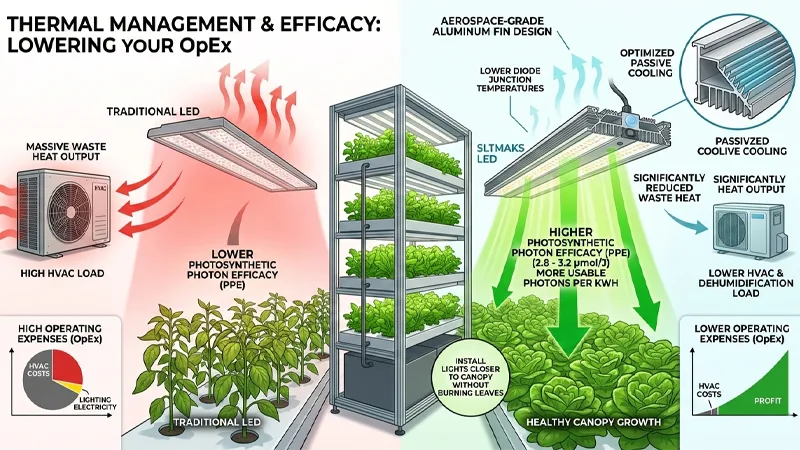
In highly intensive, massive-scale vertical farm LED solutions, total daily electricity consumption often constitutes a remarkably massive, highly problematic portion of a facility’s total operating expenses (OpEx). Crucially, this immense financial drain includes not only the raw electrical grid power directly required to actually power the massive arrays of lights, but it also includes the truly massive, crippling HVAC operational costs strictly required to physically cool and permanently remove the immense volume of waste heat constantly generated by those operating fixtures.
The physics are unavoidable: during the complex physical process of converting incoming electrical grid energy directly into usable light photons, absolutely whatever energy is not highly efficiently converted directly into light immediately becomes highly problematic, ambient waste heat.
Understanding this thermodynamic reality, SLTMAKS heavily and continuously invests massive capital into advanced thermodynamic design engineering. We utilize incredibly dense, aerospace-grade extruded aluminum alloy profiles heavily combined with vastly optimized, highly complex passive cooling fin designs to meticulously strip heat away and completely minimize internal diode junction temperatures.
According to the strict laws of semiconductor physics, structurally lower internal junction temperatures directly and mathematically result in much higher total Photosynthetic Photon Efficacy (PPE) outputs from the diode. Because of this fanatical dedication to thermodynamics, SLTMAKS’s premium professional-grade commercial grow lights consistently and reliably achieve incredibly high, globally industry-leading PPE performance levels strictly ranging from 2.8 to an incredible 3.2㎛mol/J.
For a commercial operator, this exceptional efficiency directly translates to immense, compounding financial benefits:
- Maximum photon delivery: For the same strictly measured kilowatt-hour of grid electricity utilized, highly efficient SLTMAKS fixtures mathematically deliver a vastly superior volume of highly usable photosynthetic photons directly down to your cultivation plants.
- Proximity cultivation: Because the physical exterior fixture surface temperature constantly remains incredibly low to the touch, operators are uniquely allowed to physically install these highly powerful lights remarkably closer to the delicate upper plant canopy (a crucial operational requirement on highly stacked, multi-tier vertical farm racks) without ever harboring the fear of catastrophically burning the sensitive crop leaves.
- HVAC load reduction: The total ambient waste heat physically exhausted into the strictly enclosed grow room environment is massively and heavily reduced. This immense thermal reduction significantly and permanently lowers the massive, highly expensive mechanical cooling and continuous dehumidification operational loads placed heavily on your facility’s central HVAC system, saving massive OpEx capital.
3. Smart Dimming and Custom Engineering Solutions
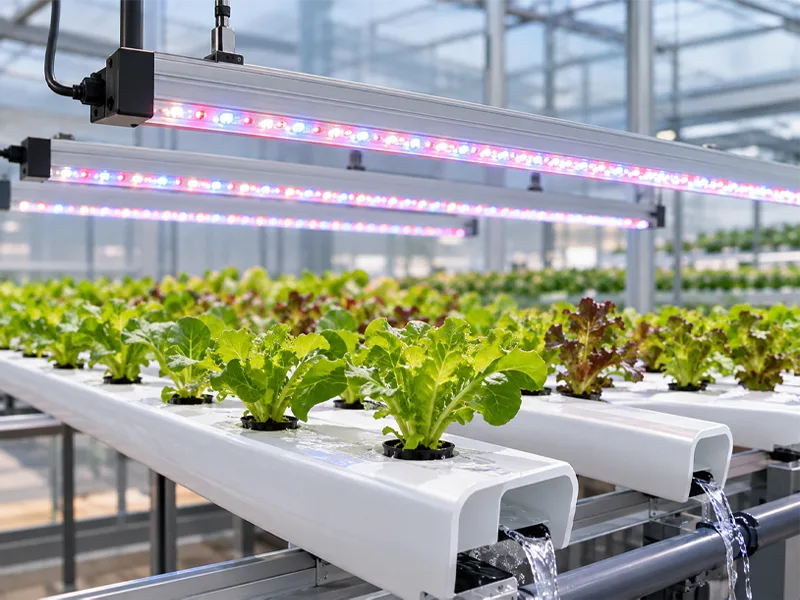
At SLTMAKS, we fundamentally understand that we are definitely not merely a basic, transactional hardware provider acting as a vendor of wholesale grow lights; we actively operate as your dedicated, highly integrated technical photobiology consultants and agricultural engineers. Every single one of the premium SLTMAKS commercial fixtures natively supports deep, multi-channel independent smart dimming control integrations (fully compatible with 0-10V, PWM, or highly advanced DALI protocols).
Commercial facility operators can seamlessly and deeply integrate our highly advanced lighting systems directly into their facility’s central, automated environmental control computer mainframe. This deep integration effortlessly allows for instant, highly precise one-click digital switching directly between entirely different, highly complex “red-blue light recipes” dynamically calculated based directly on the specific cultivated lettuce variety and its exact real-time biological growth cycle, finally achieving a state of truly automated, highly smart precision agriculture.
Whether your enterprise is currently actively building a massive, multi-acre, technologically advanced, fully enclosed indoor vertical farm from the ground up, or you are simply looking to vastly upgrade the severely outdated, inefficient supplemental greenhouse lighting infrastructure inside an already existing, massive commercial glasshouse facility, SLTMAKS’s highly dedicated professional CEA engineering team will actively provide your operation with a highly detailed, entirely free DIALux light environment 3D digital simulation.
Utilizing this highly advanced architectural mapping software, we will meticulously and accurately calculate the highly complex PPFD distribution uniformity perfectly across absolutely every single square inch of your specific cultivation canopy. This incredibly thorough engineering process guarantees absolute, perfect biological quality output for the crop under the absolute most heavily energy-efficient, OpEx-reducing conditions possible.
Conclusion: Defining Future Agricultural Standards with Technology
The global, highly commercialized lettuce and leafy green cultivation industry is currently actively undergoing a massive, highly profound paradigm shift, rapidly moving away from the outdated operational model of simply “extensively chasing raw volume and yield” directly toward a vastly more complex, modern standard of “precisely and strictly controlling biochemical and physical crop quality.” In this complex agricultural process, agricultural light is no longer viewed simply as a basic, brute-force illumination tool designed merely to keep plants biologically alive.
Instead, modern science strictly defines it as the absolute, masterful “conductor’s baton” that deeply and fundamentally controls complex plant gene expression, dictates vital internal metabolic pathways, and strictly guides highly complex physical morphological plant building.
Having a deep, foundational understanding of the incredibly complex synergistic effects generated by applying targeted red and blue light, and successfully mastering the precise, highly technical digital “light switch” that biologically regulates crucial nitrate reductase internal enzymatic activity, is an absolute, unavoidable necessity for every single modern commercial B2B grower desperately aiming to capture highly lucrative contracts within premium, high-end produce markets.
By meticulously and precisely dynamically tuning the applied red-to-blue light ratio across the growth cycle, operators can absolutely and reliably massively boost total overall production capacity. At the same time, they can successfully cultivate intensely high-end, premium leafy greens characterized by extremely low, entirely safe nitrate levels, highly satisfying crisp physical texture, and an incredibly long, commercially viable post-harvest shelf life.
However, successfully realizing absolutely all of this immense commercial potential mathematically and physically requires an incredibly highly reliable, massively efficient, and deeply spectrally accurate commercial hardware physical foundation. Operating deeply within this space as a globally recognized, premier Professional LED grow light factory, and acting directly as a highly advanced technological pioneer in the rapidly developing field of highly energy-efficient LED horticulture lights, SLTMAKS is completely and fanatically dedicated to directly translating highly complex, cutting-edge academic plant photobiology theories deeply into vastly durable, incredibly high-ROI, ruggedly industrial-grade physical commercial products.
We completely reject the idea that we simply supply raw lighting fixtures to farmers; rather, we strictly engineer and deliver fully complete, highly tested “light recipes” perfectly designed to immediately elevate your crop’s overall total commercial market value. Whether your specific operational challenge involves severely excessive, crippling daily energy consumption, highly problematic and completely unstable harvest yields, or an incredibly urgent, critical need to rapidly improve foundational crop quality strictly to successfully secure massive wholesale commercial contracts directly with highly demanding, top-tier high-end supermarket retailers, SLTMAKS’s immensely experienced B2B horticultural lighting expert engineering team is completely ready and fully equipped to actively provide you with highly customized, perfectly tailor-made advanced lighting operational solutions.
FAQ
As a professional horticultural lighting supplier, we are frequently asked the following technical and commercial questions:
For my large indoor lettuce facility, should I choose “Pure Red/Blue Light (Pink Light)” or “Full Spectrum White Light”?
It depends on your operational priorities. Pure red/blue light removes green light (which has lower photosynthetic efficiency), resulting in extremely high electrical-to-photon conversion efficiency (PPE), making it the most energy-efficient choice to minimize power bills. However, the purplish-pink light is very harsh on workers’ eyes and makes manual pest and disease inspection difficult.
Modern full-spectrum white light (essentially blue chips exciting yellow phosphors, supplemented with independent red chips) has slightly lower efficacy than pure red/blue, but provides a much more comfortable working environment. Furthermore, the green light included in white light has deeper canopy penetration, reaching lower leaves. The current mainstream trend is: fully automated, unmanned vertical farms lean toward pure red/blue; whereas greenhouses and indoor farms with human intervention highly recommend SLTMAKS’s high-efficacy full-spectrum white light solutions (with precisely tuned internal red/blue ratios).
What is Daily Light Integral (DLI), and how can I customize an SLTMAKS supplemental lighting plan based on my greenhouse’s existing DLI?
DLI (Daily Light Integral) refers to the total number of photons delivered to a plant canopy over 24 hours, measured in mol/m²/day. The formula is: DLI = PPFD × Light duration (hours) × 3600 / 1,000,000.
The optimal DLI for lettuce to achieve high yield and high quality is typically between 12 and 17 mol/m²/day. If your natural winter sunlight DLI is only 5 mol/m²/day, you will need SLTMAKS supplemental lights to provide the remaining 7-12 mol/m²/day to hit your target. Our engineers will utilize meteorological data and your greenhouse’s light transmission rate to precisely calculate the required fixture wattage, layout density, and operational strategy, providing you with professional custom grow light quotes.
Can adjusting the spectrum right before harvest really change lettuce quality within a week?
Yes. As previously explained, the synthesis of secondary metabolites (like Vitamin C and anthocyanins) and the reduction of nitrate are rapid stress responses by the plant to environmental pressures (such as intense light or high proportions of blue/UV light). Implementing an “End-of-Production” blue light shock strategy 3-5 days before harvest using SLTMAKS’s multi-channel tunable fixtures is not only backed by solid science but has also been validated by numerous commercial growers. It can significantly reduce nitrate levels and enhance leaf crispness in a very short period.
Will increasing the blue light ratio to lower nitrates negatively impact my overall lettuce yield?
This is a very common concern among commercial growers. While red light is the primary driver for biomass accumulation, relying solely on it compromises structural integrity and food safety. Continuously using a very high blue light ratio throughout the entire growth cycle might slightly reduce the total fresh weight compared to a high-red environment. However, this is exactly why SLTMAKS highly recommends the End-of-Production (EOP) lighting strategy. By maintaining a higher red-to-blue ratio (e.g., 4:1 or 5:1) during the vegetative stage to maximize rapid growth, and then shifting to a high-blue recipe only 3 to 5 days before harvest, you secure maximum crop yield while still triggering the rapid reduction of nitrates and the enhancement of crispness.
Besides the precise red to blue light ratio, do I need far-red or green light for my indoor lettuce farm?
While the red-to-blue ratio dictates the core morphology and secondary metabolism, other wavelengths play crucial supportive roles. Green light (500-600 nm) is highly effective at penetrating deep into the dense plant canopy, ensuring that lower leaves receive adequate photosynthetic energy to prevent early senescence. It also provides a white-light working environment for easier visual inspection of pests and diseases. Far-red light (700-750 nm) can promote leaf expansion, but excessive amounts will cause unwanted stem elongation (stretching). SLTMAKS’s premium full-spectrum LED solutions are meticulously engineered to include the perfect baseline of green and trace far-red light alongside your customizable red and blue peaks, ensuring comprehensive canopy health.
How does the hanging height of the LED fixtures affect the delivery of the targeted light recipe?
The effectiveness of any light recipe depends entirely on uniform delivery to the canopy. If lights are hung too high, the light intensity (PPFD) drops significantly, and the intended photobiological triggers (like activating nitrate reductase via blue light) may not be strong enough. If hung too low, inferior fixtures can cause heat stress or uneven growth. Thanks to our industry-leading thermal management (lowering junction temperatures) and optimized optical designs, SLTMAKS LED grow lights can be positioned remarkably close to the canopy—making them ideal for dense, multi-tier vertical farming racks—without causing heat burn. During our free DIALux simulation process, our engineers will calculate the exact hanging height and fixture spacing required for your specific facility to guarantee that the precise red-to-blue ratio hits every single plant uniformly.