Introduction
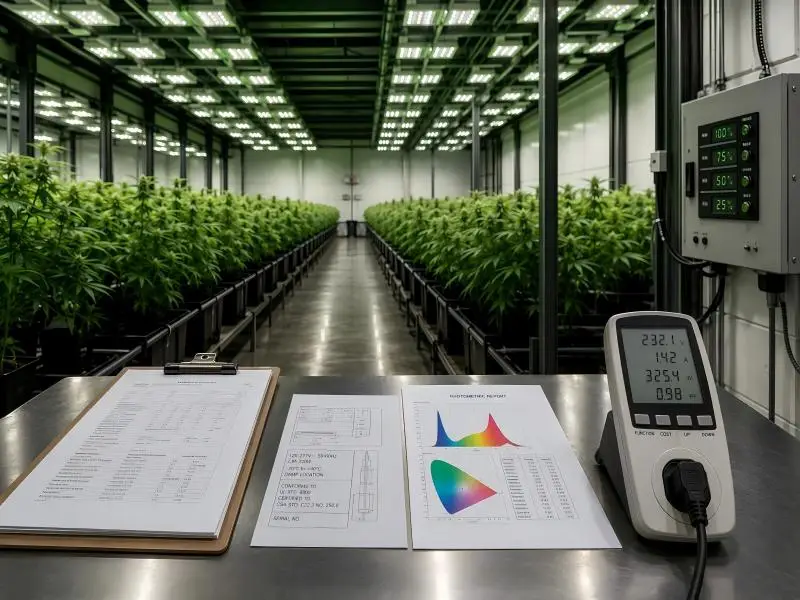
For commercial indoor cultivation, “fulfillment model” isn’t a back-office detail. It directly affects your ROI, your ability to keep rooms online (uptime), and whether your deployment can survive inspection, rebate paperwork, and warranty escalation without turning into a fire drill.
This is why the dropshipping vs. wholesale question shows up quickly once you manage more than a single site—or once you’re selling B2B into customers who expect documentation, predictable lead times, and consistent part numbers.
In this article, you’ll get a decision framework you can apply specifically to wholesale LED grow lights: unit economics, logistics control, compliance and incentives, and what changes when you’re rolling out across multiple facilities.
Table of Contents
Unit Economics of Wholesale LED Grow Lights
Margins and MOQs
At a high level:
- Dropshipping typically trades margin for flexibility. You avoid buying inventory up front, but you often pay a “convenience premium” in unit cost and per-order handling.
- Wholesale typically trades flexibility for margin control. You commit to a purchase (often with an MOQ), but your unit economics become something you can negotiate and improve as volume grows.
For LED fixtures, the margin picture is usually shaped by three practical variables:
- Unit cost spread between drop-ship pricing and wholesale pricing
- MOQ size (and the risk of overbuying the wrong configuration)
- Exception cost (damage, returns, replacements, and support time)
If you’re selling or deploying into commercial facilities, exception cost matters because a single damaged or failed fixture can cascade into labor, downtime, crop risk, and schedule slip.
Cash Flow and Payback Dynamics
Dropshipping can look attractive on a spreadsheet because it’s pay-as-you-sell. Your working capital stays liquid, and you can test multiple SKUs without betting on a forecast.
Wholesale changes the cash-flow profile:
- You pay earlier (inventory + inbound freight).
- You can ship faster once stocked.
- You can reduce unit cost—and often reduce replacement cycle time—if you stock spares and standardize configs.
For multi-site operators, payback isn’t just fixture efficacy and energy cost. It’s also how often you pay for:
- Expedited shipments when something goes wrong
- Emergency labor windows
- “Temporary substitutions” that break uniformity
Inventory Risk Curves
Inventory risk isn’t binary (“inventory is risky” vs “no inventory”). It’s a curve that depends on how predictable demand is and how standardized your deployment is.
- Early stage (low confidence): wholesale inventory risk is steep; dropshipping can be safer.
- Scaling stage (repeatable demand): inventory risk flattens—if you standardize SKUs, lock part numbers, and replenish based on real consumption.
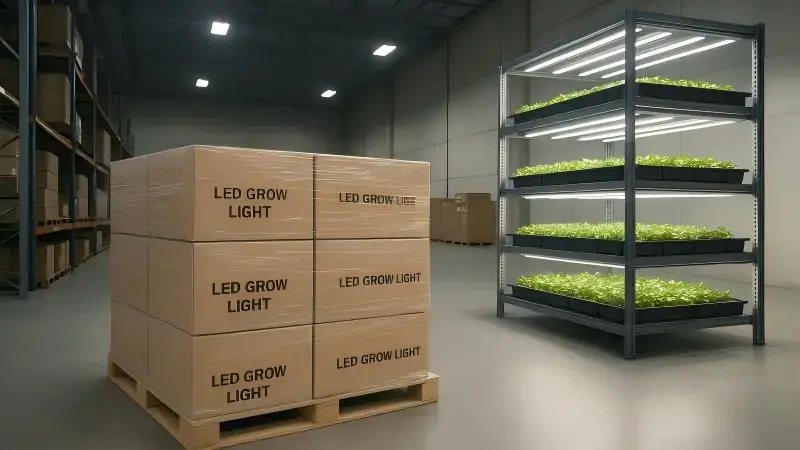
- Multi-site stage (rollouts): inventory becomes a control tool. You’re not just stocking to sell; you’re stocking to hit project schedules.
Operations and Logistics Control
Lead Times and Availability
With dropshipping, your lead time starts after the customer order. That’s fine—until you’re responsible for schedules across multiple sites or promised delivery windows.
With wholesale, you can stage inventory close to the install location and make lead time an operational choice (warehouse/3PL cutoff, carrier, routing).
The practical difference is variance:
- Dropshipping can be fast when the supplier is domestic, stocked, and disciplined about shipping.
- Dropshipping can also be unpredictable when upstream availability shifts, when packaging is rushed, or when the supplier’s warehouse is the bottleneck.
For facility rollouts, variance is often more expensive than average speed.
Freight, Packaging, and Damage Risk
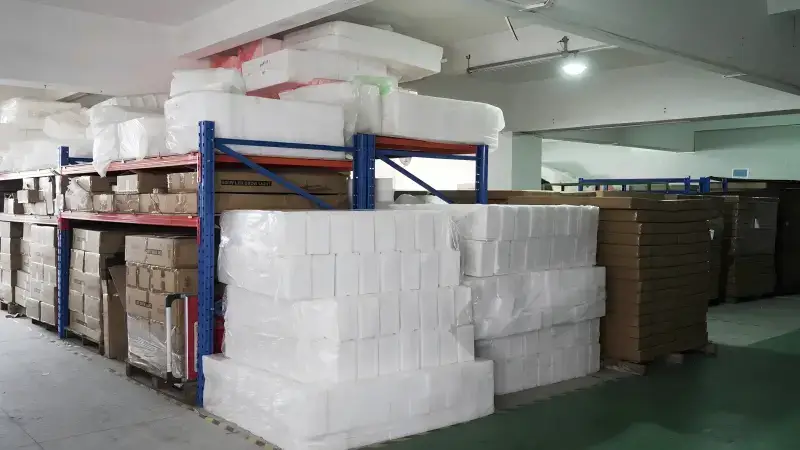
LED fixtures are bulky and damage-sensitive. Even if the product itself is robust, transit can create the problems that show up later as RMAs, flicker complaints, or driver failures.
Wholesale gives you tools dropshipping rarely does:
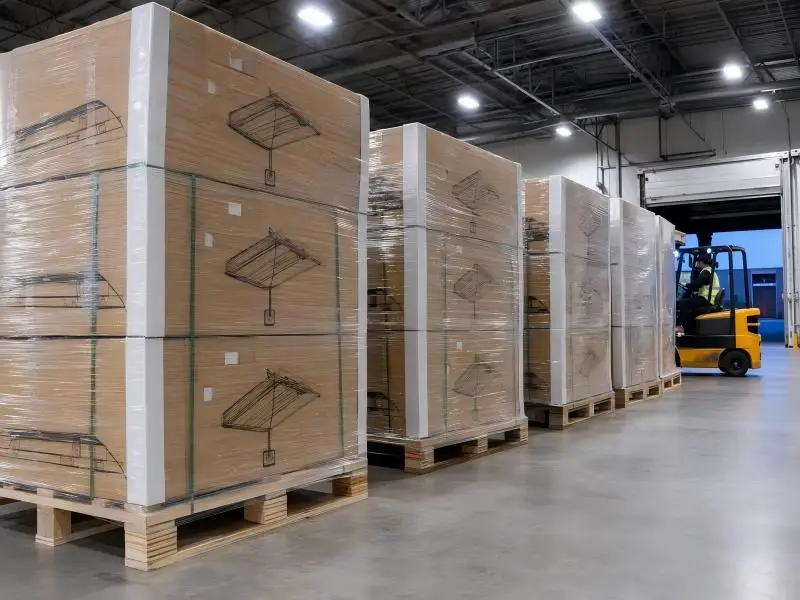
- Control over palletization, corner protection, and carton spec
- Ability to inspect inbound lots (and catch issues before deployment)
- Ability to re-pack or re-label for consistent installs across sites
Dropshipping inherits the supplier’s packaging and handling habits. If the supplier optimizes packaging for “good enough,” you’ll see that cost as returns, replacements, and support load.
Stocking Strategy for Multi-Site Rollouts
Multi-site planning is where wholesale tends to separate itself.
A workable stocking strategy often includes:
- Project stock (fixtures and mounting/accessories allocated per site)
- Spares stock (drivers, dimmers, cables, or full fixtures depending on failure tolerance)
- Change control (a process to prevent silent substitutions across sites)
This is also where you’ll want to align fixture selection with documentation and part-number discipline, especially if you’re pursuing incentives.
Compliance, Rebates, and Service
UL 8800/ETL, CE/RoHS, and FCC Basics
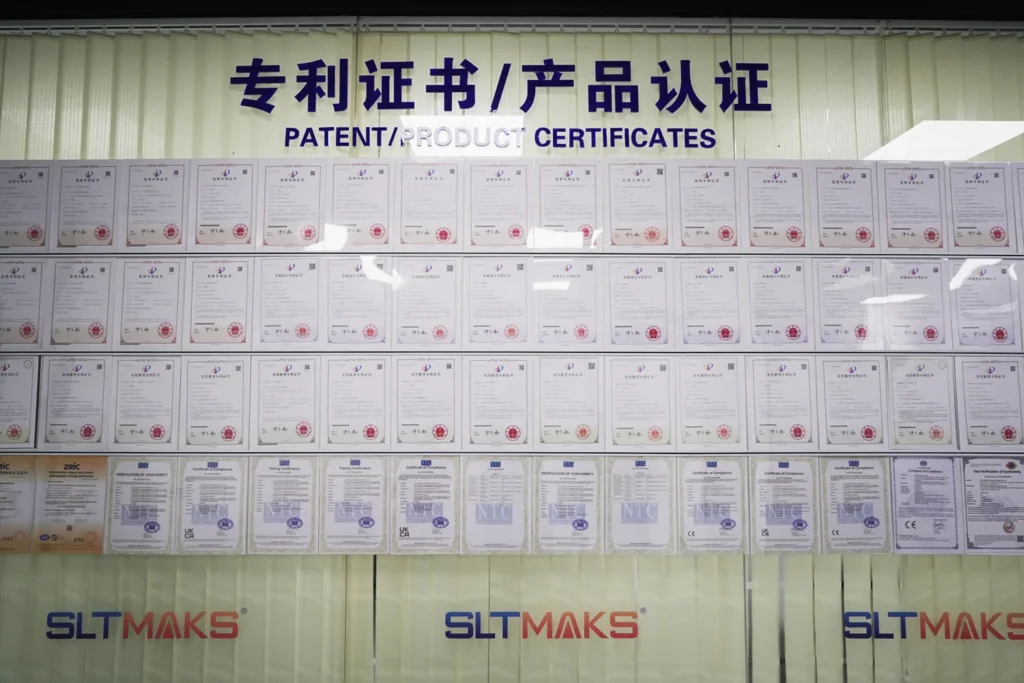
For U.S. commercial deployments, compliance isn’t a marketing badge—it’s a gate.
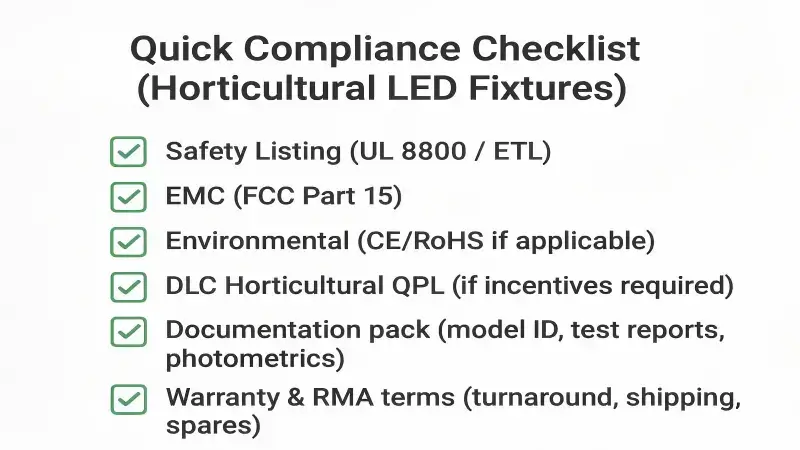
- UL 8800 is the horticultural lighting safety standard widely used to certify grow lights for the U.S. and Canada. UL positions it as the standard designed specifically for horticultural lighting equipment and systems, tied to NEC/CEC installation expectations (so you’re not relying on a generic luminaire pathway).UL’s horticultural lighting services
- ETL is a common route to an equivalent outcome: an OSHA-recognized NRTL listing to the applicable standard. What matters operationally is that you can verify the listing for the exact model number.
- FCC compliance matters because drivers and controls can create electromagnetic interference. For fixtures with electronics, request FCC documentation relevant to the model.
- CE/RoHS are more often relevant for EU markets, but they still show up in procurement packets and multi-region standardization.
If you want a code-inspection framing for commercial facilities, UL’s Code Authorities resource explains how NEC provisions require horticultural lighting equipment to be listed and why UL 8800 exists as a horticulture-specific pathway.UL Code Authorities: indoor horticulture lighting
DLC Horticultural QPL and Utility Incentives
If your projects depend on incentives, DLC Horticultural QPL status stops being “nice.” It becomes procurement-critical.
The DesignLights Consortium maintains a horticultural program and a Qualified Products List (QPL) that many utility programs use as a screening mechanism.DLC Horticultural Lighting
Procurement implications:
- Verify the exact brand + model number in the QPL
- Ensure the model identifier is consistent across quote, PO, packing list, and invoice
- Request the documentation packet early (test reports, spec sheets, identifiers)
DLC’s own testing and reporting requirements outline the documentation pathway and the expectation that products are appropriately safety certified by recognized bodies.DLC Testing and Reporting Requirements (PDF)
Warranty, RMAs, and Downtime Mitigation
Warranty is where economics turns into operations.
In dropshipping, RMAs often route back through the supplier with limited visibility. Cycle time is the enemy: if a replacement takes weeks, you’re either comping customers or eating downtime.
With wholesale, you can design a warranty workflow that actually protects uptime:
- Define what counts as a valid claim (serial number, install context, symptoms)
- Stock spares so you can swap quickly
- Build an RMA decision tree (repair vs replace vs scrap)
- Write cycle-time targets into your supplier or 3PL agreements
A brief, neutral example: SLTMAKS positions its commercial offering around certified fixtures (e.g., ETL/CE/RoHS), controls compatibility, and defined warranty practices (3-year warranty plus local warehousing). In this context, it’s less about brand preference and more about what your supplier should be able to document and execute reliably when you scale across sites.
Fit by Scenario
Large-Scale Growers and Multi-Site Operators
Wholesale tends to have the advantage when:
- You need rollout predictability across sites
- Downtime cost is high (and replacements must be fast)
- Incentives or inspection readiness require repeatable documentation
- Your team can support inbound QC and spares strategy
Dropshipping can still fit for:
- Pilot rooms
- Short-term stopgaps
- Limited-scope expansions where standardization isn’t yet enforced
B2B Resellers and Catalog Strategy
Resellers often start with dropshipping to broaden the catalog, then encounter the same constraints:
- Variable lead times create service risk
- Identical product content creates SEO and pricing pressure
- Warranty exceptions create support overhead
Wholesale becomes attractive when you’re ready to differentiate with:
- Consistent fulfillment
- Tighter SKU discipline
- Better documentation and service workflows
A Practical Hybrid Path
A hybrid path is common and rational:
- Dropship to validate demand and failure rate distribution (returns, damage, warranty claims).
- Move best-selling configurations into wholesale (standardize SKUs, stock spares, lock documentation).
- Keep long-tail or experimental SKUs in dropship until they prove they deserve inventory.
The “hybrid” goal isn’t to run two models forever. It’s to use dropshipping as a measurement phase, then use wholesale to scale with control.
Rollout and Procurement Plan
Controls and Systems Integration
Controls compatibility is an underpriced risk in procurement.
Before rollout, document:
- Dimming protocol and controls interface (and what you will standardize on)
- How fixtures are zoned per room/rack
- What happens during a controls failure (manual override, default dim level)
Even with certified fixtures, controls integration is where projects often lose time.
Incoming QC and Commissioning Steps
A simple inbound process reduces downstream cost:
- Verify cartons and pallet condition (damage indicators, water exposure)
- Spot-check model numbers against PO and (if applicable) DLC/QPL listing
- Run a basic functional check on a sample (power-up, dimming response)
- Document serial ranges by site for traceability
This is where wholesale is structurally stronger: you can inspect lots before they touch a grow room schedule.
Spares, Replacements, and SLAs
For multi-site operations, uptime is a system. Treat spares and SLAs as part of the lighting spec.
Define up front:
- What you keep as spares (full fixtures vs drivers vs components)
- Target replacement cycle time per site
- Who owns freight on replacements
- Escalation path for repeated failures
If your supplier can’t commit to cycle time and documentation, your TCO model will be optimistic by default.
Conclusion
Dropshipping tends to win when you’re optimizing for speed-to-market and cash preservation.
Wholesale tends to win when you’re optimizing for repeatability, logistics control, and predictable outcomes—especially for projects where compliance documentation, rebate eligibility, and downtime risk aren’t negotiable.
The reliable way to decide isn’t ideology. It’s a simple next step:
- Model TCO (unit economics + exceptions + downtime)
- Map a rollout timeline across sites (inventory staging, QC, commissioning)
- Confirm compliance requirements early (UL 8800/ETL listing verification, DLC/QPL alignment, warranty cycle time)
That combination is what turns “buying lights” into a controlled multi-site deployment.
FAQ
Is wholesale or dropshipping better for LED grow lights?
It depends on what you’re optimizing for.
Dropshipping is usually best when you want minimal upfront inventory risk, and you’re still validating demand.
Wholesale is usually best when you need repeatable lead times, tighter unit economics, and faster warranty replacement cycles, especially for multi-site rollouts.
As a practical rule: if downtime, inspection paperwork, or rebate eligibility is a real constraint, wholesale tends to be the more controllable model.
What’s the highest hidden cost in LED grow light dropshipping?
The highest hidden cost is typically exception handling: shipping damage, missing parts, slow replacements, and the time your team spends coordinating RMAs.
Even when the unit price looks fine, unpredictable lead times and limited packaging control can increase returns and support workload—costs that don’t show up clearly in “cost per fixture” calculations.
What is UL 8800, and do commercial grows need it?
UL 8800 is the North American safety standard written specifically for horticultural lighting equipment and systems installed under U.S. NEC and Canadian CEC expectations. In practice, many commercial facilities and inspectors expect grow lighting to be listed/certified to the applicable standard for the exact model being installed.
For background, see UL’s overview of horticultural lighting testing and certification and UL’s news release on the UL 8800 horticultural lighting safety standard.
Does DLC Horticultural QPL matter if you’re not applying for rebates?
It can still matter.
Many buyers use DLC Horticultural QPL as a shorthand filter for documentation quality and product consistency—even when rebates aren’t the immediate goal. If you are applying for incentives, QPL status often becomes procurement-critical and model-number accuracy matters across quotes, invoices, and packing lists.
DLC explains the program and requirements on its Horticultural Lighting program page and outlines the safety certification requirements that commonly show up in review checklists.