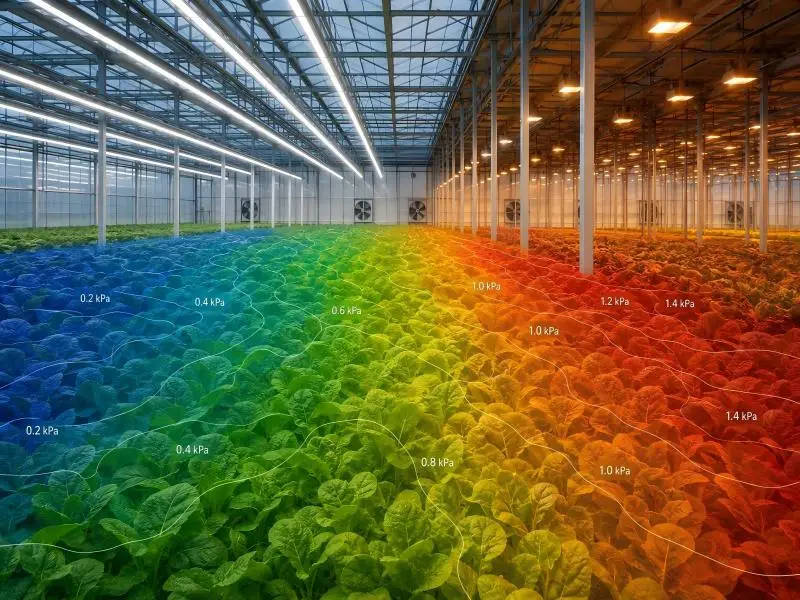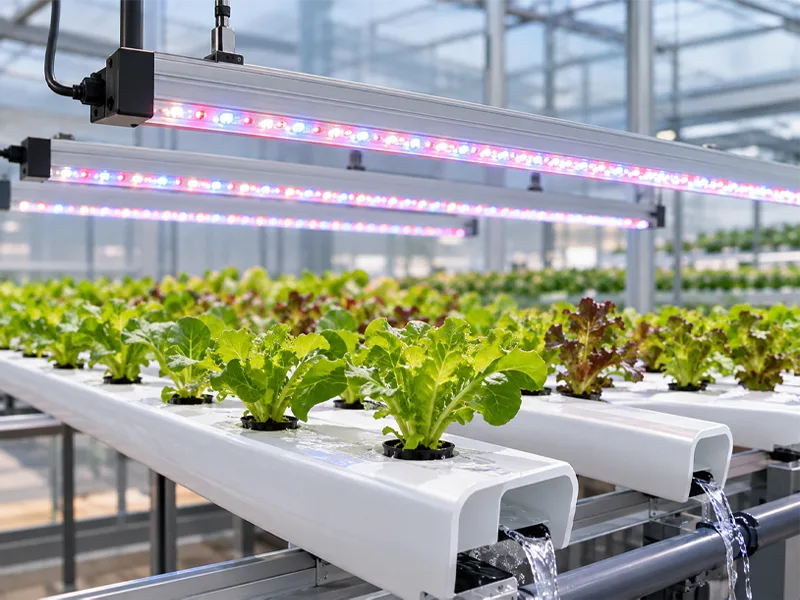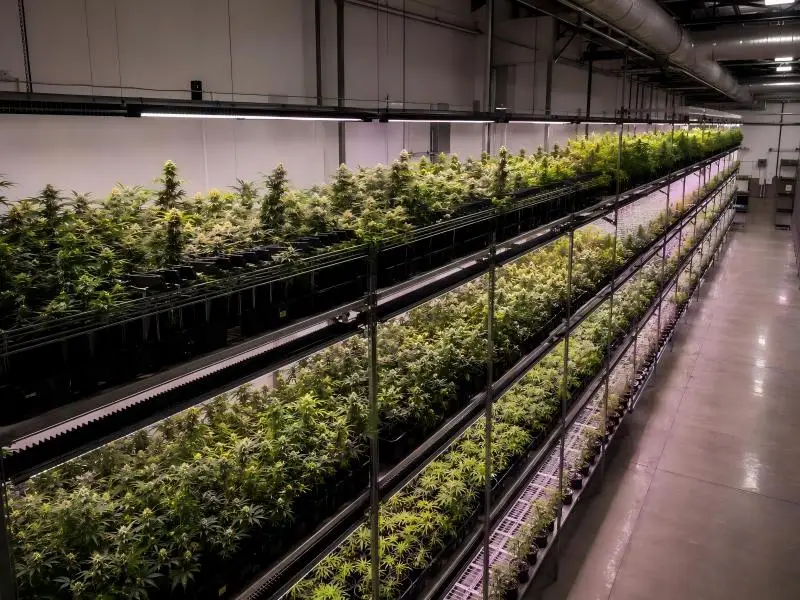
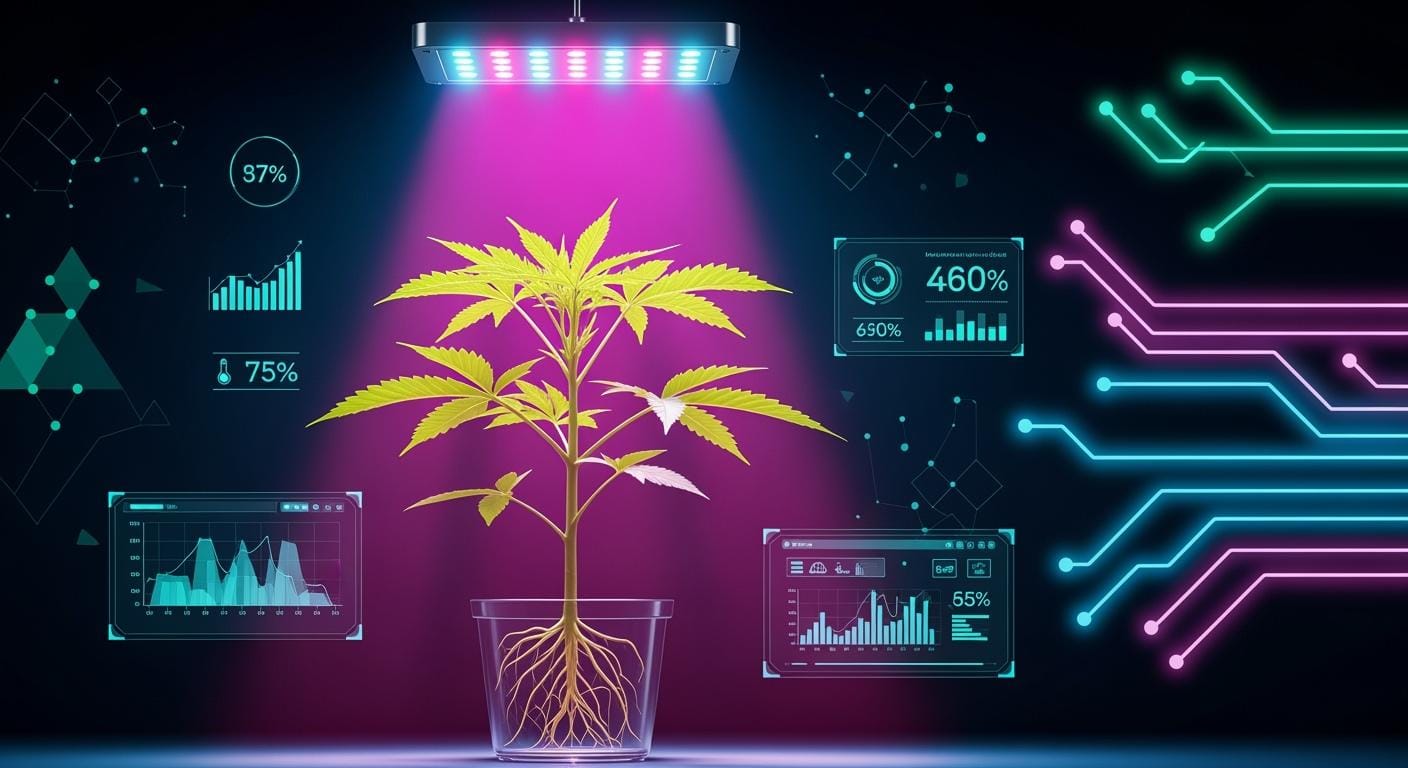
You want your indoor garden to thrive, but lack of sunlight often holds your plant back. LED grow lights change this by giving your plant the exact light spectrum it needs for strong photosynthesis and healthy growth. Unlike old bulbs, led plant lights like those from SLTMAKS use targeted wavelengths to boost yield and quality. When you understand how light affects your plant, you can make smarter choices for your garden.
Table of Contents
Key Takeaways
- LED grow lights give plants the right kind of light. This helps plants grow well inside your home.
- Each plant needs a different amount of light. Change the light’s strength and color for each plant.
- Full-spectrum LED lights help plants at every stage. They work for seedlings and flowering. This makes plants healthier.
- LED lights use less energy than old bulbs. They use about half as much power. This saves you money.
- LED lights do not get very hot. You can put them close to your plants. This stops plants from getting too hot and helps them grow better.
- Check the light’s strength often. Change the settings to help your plants grow their best.
- Use shiny materials in your grow area. This spreads the light everywhere. It helps all your plants get enough light.
- Pick trusted brands like SLTMAKS. They have good technology and strong warranties. This helps you with indoor gardening.
Plant Light Needs And Photosynthesis
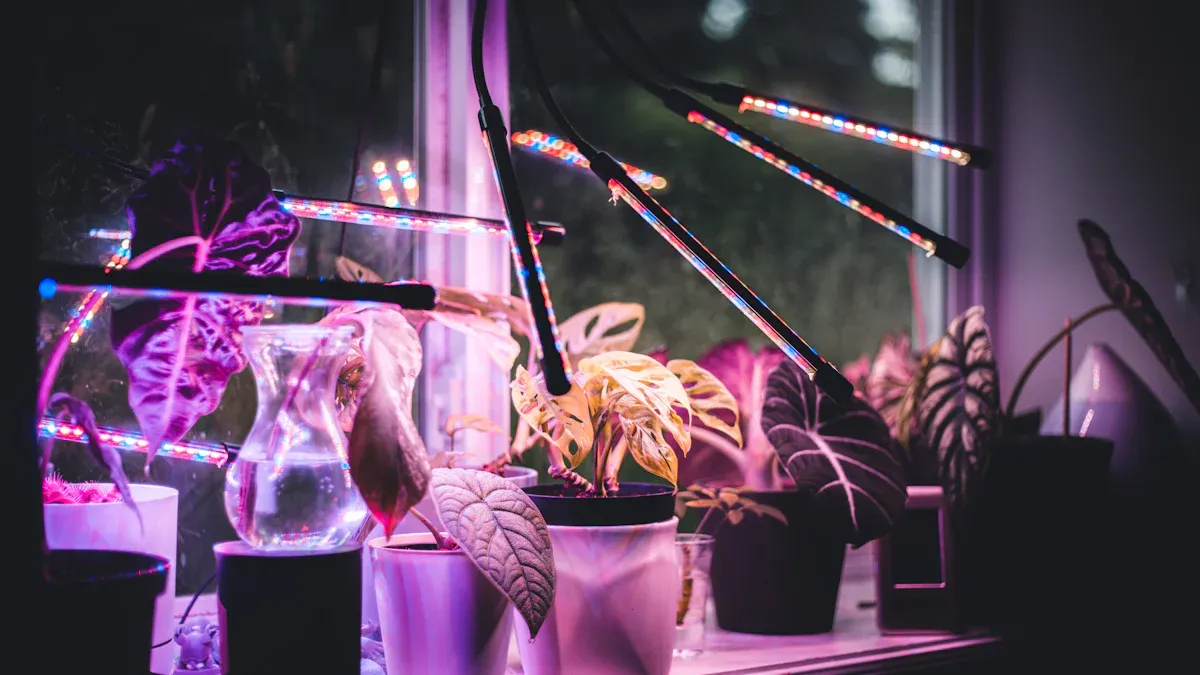
Why Plants Need Light
You give your plant light because it acts as fuel for life. Light powers the photosynthesis process, which lets your plant turn water and carbon dioxide into food. Without enough light, your plant cannot grow strong or healthy. Each plant needs a certain amount of light to thrive. Some plants, like succulents and cacti, need bright, direct light. Others, such as peace lilies or snake plants, do well in low-light spaces.
Here is a table that shows the light needs for common indoor plants:
| Light intensity | Number of footcandles | Light exposure | Indoor plant examples |
|---|---|---|---|
| Low light | 25-100 FC | North facing windows or rooms that are artificially lit | ZZ plant, Snake plant, Cast iron plant, Peace lily, Resurrection plant |
| Medium-bright light | 100-500 FC | East or west-facing windows | Chinese evergreen, Rubber plant, Dracena, African violet, Norfolk Island pine |
| High light | 500-1000 FC | South-facing windows or some west-facing windows | Croton, Hibiscus, Jade plant, Hoya |
| Direct indoor sunlight | Over 1000 FC | 4-6 hours of direct sunlight | Citrus, Succulents and Cacti, Gardenia, Tillandsia |
Most plants need a period of darkness each day. You should not keep your lights on for more than 16 hours daily. This rest period helps your plant develop properly.
Photosynthesis And Plant Growth
Photosynthesis is the process that lets your plant make its own food. When your plant absorbs light, it uses that energy to turn water and carbon dioxide into sugars. These sugars help your plant grow leaves, roots, and flowers. If your plant does not get enough light, the photosynthesis process slows down. Growth becomes weak, and leaves may turn yellow or drop.
Light intensity also affects how fast your plant grows. For example, some species like Acer mono grow bigger and stronger with higher light. Others, such as A. pseudosieboldianum, adapt to lower light but still need enough energy to thrive. If you use a led plant, you can control the amount and quality of light your plant receives, which helps you support healthy plant growth.
Light Spectrum Effects On Plants
Key Wavelengths For Growth
The light spectrum describes the range of colors in light. Your plant uses certain colors, or wavelengths, more than others. Blue and red light are the most important for photosynthesis. Blue light helps your plant grow strong stems and leaves. Red light encourages flowering and fruiting. Studies show that mixing red and blue light can increase yield and improve the shape of your plant. For example, cannabis and cilantro both grow better with a mix of these colors.
Light Quality And Development
Light quality means the type of light your plant receives. Sunlight gives a full spectrum, but artificial lights can focus on the most useful wavelengths. A led plant light can provide the exact light spectrum your plant needs. This helps you grow healthier plants indoors, even if you do not have much natural sunlight. By choosing the right light spectrum, you can boost photosynthesis and help your plant reach its full potential.
LED Grow Lights Technology
How LED Grow Lights Work
You may wonder how a led plant light helps plants grow inside. LED grow lights use a special process. When you turn them on, electricity moves through a semiconductor. This makes the light turn on. The parts inside the semiconductor pick which colors you see. You can change the electric current to adjust the light colors. This lets you give your plants the best light for photosynthesis and growth.
LED grow lights are different because they use less energy. They give your plants the right light for each growth stage. Full-spectrum LEDs can act like sunlight. Your plants can grow well from seed to harvest. You can check how good your light is by using par value. PAR means Photosynthetically Active Radiation. It covers light from 400 to 700 nanometers. These colors are important for photosynthesis. Blue light at 450 nm and red light at 660 nm matter most. LED grow lights focus on these colors to help plants grow strong.
Tip: Pick a led plant light that gives full-spectrum light. This helps your plants get both blue and red light for every stage.
Spectral Tuning For Led Plant Growth
Modern LED grow lights let you control the light colors. This is called spectral tuning. You can change the colors and brightness for your plant’s needs. Plants need different light at each stage. Seedlings like red and far-red light. This helps roots grow deep and strong. Blue light is best for stems and leaves during the vegetative stage. When your plant starts to flower, you add more red and far-red light. This makes flowers bigger and gives you more buds.
Here is a table that shows how spectral tuning helps at each stage:
| Growth Stage | Light Spectrum Characteristics | Effects on Plant Development |
|---|---|---|
| Seedling Stage | Red (660nm), Far-Red (730nm) | Strong roots, taller plants, fewer leaf nodes |
| Vegetative Stage | Blue (400-500nm) | Healthy roots and stems, vigorous growth |
| Flowering Stage | Red (610–700 nm), Far-Red (700–800 nm) | Flower initiation, bigger buds, higher yield |
Changing the light spectrum helps you get better results. You can use smart controls to change the settings as your plant grows. This makes indoor gardening easier and helps your plants do well.
Energy Efficiency And Sustainability
LED grow lights help you save energy and money. They use less power than old bulbs. The U.S. Department of Energy says LED grow lights use about 50% less energy than HID lights. You get the same or better light with lower bills. This helps the environment because you use less energy.
LED grow lights last longer too. You do not have to replace them as often. This means less waste and saves resources. Many brands, like SLTMAKS, use strong materials so the lights last. Some LED systems can connect to solar panels. This lets you use clean energy for your garden.
Here is a table that shows how LED grow lights help the planet:
| Benefit | Description |
|---|---|
| Reduced Environmental Impact | Energy-saving lights use less electricity, lowering carbon emissions. |
| Cost Efficiency | Lower energy use means smaller bills and better economic sustainability. |
| Longevity and Durability | LEDs last longer, so you throw away fewer bulbs and reduce manufacturing needs. |
| Spectral Efficiency | LED grow lights give plants the most absorbable light, wasting less energy. |
| Integration with Renewables | You can use solar power to run your lights, reducing reliance on the grid. |
When you pick SLTMAKS LED grow lights, you help the environment. The brand cares about being green, new ideas, and making good products. You get lights that help your plants and the Earth.
Low Heat Output Benefits
When you use LED grow lights, you notice your growing space stays much cooler. Traditional lights, like HID or fluorescent bulbs, give off a lot of heat. This extra heat can make your room too warm and stress your plants. LED grow lights, such as those from SLTMAKS, change this by producing much less heat. You gain better control over your indoor garden’s temperature.
Here are some important ways low heat output helps you and your plants:
- You can place LED grow lights closer to your plants without burning the leaves. This means your plants get more light where they need it most.
- Your plants face less heat stress. They grow stronger and healthier because the temperature stays stable.
- You do not need big cooling systems. This saves you money and lowers your energy use.
- Managing your grow room becomes easier. You spend less time worrying about overheating and more time watching your plants thrive.
Tip: When you use SLTMAKS LED grow lights, you create a safer and more comfortable environment for your plants. You also help the planet by using less energy for cooling.
LED grow lights give you a clear advantage. You keep your plants happy, save on costs, and support a sustainable way to garden indoors.
Full-Spectrum LED Lighting Science
Blue Light And Vegetative Growth
Blue light helps your plant grow strong. It is important during the vegetative stage. Blue light helps your plant use energy and fix itself. It helps your plant when there is too much light. Blue light turns on special sensors called photoreceptors. These sensors help your plant move toward light. They help your plant open its stomata. They help your plant shift its chloroplasts. Enough blue light helps your plant handle cold and frost. Blue light changes hormone levels inside your plant. This makes your plant tougher against stress.
| Role of Blue Light | Description |
|---|---|
| Photosynthesis | Blue light helps your plant absorb light and fix damage. It makes photosynthesis work better. |
| Growth Regulation | Blue light turns on sensors that help your plant move, open stomata, and shift chloroplasts. |
| Stress Response | Blue light changes hormones to help your plant handle cold and frost. |
You see your plant grow sturdy stems and thick leaves. A led plant with balanced light gives your plant energy. Blue light helps your plant grow healthy.
Red Light And Flowering
Red light helps your plant make flowers and fruit. It tells your plant to stop growing leaves and start blooming. More red light makes your plant shorter and stronger. Stems get thicker and leaves grow before flowers. Red light changes plant hormones. These changes help your plant bloom and make fruit.
- More red light at night makes plants 32.73% shorter.
- Stems get 27.09% thicker with red light at night.
- Leaves before flowers go from 8 to 11 with red light.
- IAA in leaves drops by 33.3% and GA3 by 41.29%.
- In stems, IAA drops by 56.04% and GA3 by 57.14%.
- Tomato yield goes up with red light at night. The first spica gets heavier.
You see more flowers and fruit with a led plant that has red light. Red light helps your plant do better when it is blooming.
Tip: If you want more flowers and fruit, use enough red light in your spectrum.
Far-Red, UV, And Plant Quality
Far-red and UV light help your plant grow better. Far-red light works with red light to control growth. Special sensors called phytochromes react to red and far-red light. These sensors help your plant know when to flower and stretch stems. UV light, especially UV-A, turns on other sensors called cryptochromes. These sensors help your plant make antioxidants and other compounds. These protect your plant and make it taste and smell better. They also make it more nutritious.
A led plant with far-red and UV light helps your plant grow and be healthy. Your plant makes more antioxidants and other good compounds. This makes your plant stronger and more valuable.
Note: A full-spectrum led plant helps every stage of growth and makes your harvest better.
Full-Spectrum For All Growth Stages
You want your plants to grow strong from seed to harvest. Full-spectrum led lighting gives your plants the right mix of colors for every stage. When you use full spectrum leds, you help your plants get the energy they need to build roots, stems, leaves, flowers, and fruit.
Plants need different colors of light as they grow. Blue light helps your plants make sturdy stems and healthy leaves. Red light supports flowering and fruiting. Far-red and UV light improve plant quality and boost antioxidants. You can adjust the light spectrum to match what your plants need at each stage.
You can see how different wavelengths affect plant growth in the table below:
| Key Findings | Description |
|---|---|
| Importance of Light Wavelengths | Different light wavelengths significantly affect plant development, with a balanced combination of blue and red light being ideal for most plants. |
| Customization of Light Spectra | The ability to customize light spectra allows for optimization based on specific plant needs, enhancing growth and nutrient content. |
| Role of UV Light | Moderate-intensity UV light can improve photosynthesis, especially when photo-protective molecules are present, indicating the importance of careful spectrum selection. |
You can use full-spectrum led lighting to support every stage of growth. This technology plays a critical role in photosynthesis. Your plants use blue and red light to make food and grow. You can also add UV and far-red light to improve plant health and quality.
Here are some important facts about full spectrum leds for all growth stages:
- Red light (600-700 nm) helps your plants flower and make fruit.
- A balanced mix of blue and red light gives your plants energy for every stage.
- Most plants need 12 to 16 hours of light each day for healthy growth.
You can control the light duration and spectrum with modern LED grow lights. This lets you create the best conditions for your plants. You help your plants grow faster, produce more flowers, and make better fruit.
Tip: When you use full-spectrum led lighting, you give your plants the best chance to thrive indoors. You can grow healthy vegetables, fruits, and flowers all year round.
Practical Guide To LED Plant Lighting
Understanding PAR And Light Intensity
You want your plants to get the best light for healthy growth. To do this, you need to understand PAR, or photosynthetically available radiation. PAR covers the light wavelengths from 400 to 700 nanometers. Plants use this part of the spectrum for photosynthesis. When you measure how much useful light your led plant gives, you look at the par value.
You will see two important measurements:
- Photosynthetic Photon Flux (PPF) tells you the total amount of PAR a light source emits.
- Photosynthetic Photon Flux Density (PPFD) shows how much PAR reaches a specific spot, measured in micromoles per square meter per second (μmol m-2s-1).
If you want your indoor garden to thrive, you must check the intensity of your lights. Too little light can slow plant growth. Too much light can stress or damage your plants. You can use a PAR meter to measure the light at the canopy level. This helps you adjust the height and number of lights for your setup.
Tip: Always check the par value and PPFD when setting up your indoor farms or vertical farming systems. This ensures your plants get the right amount of energy for each stage.
Customizing For Plant Types
Different plants need different light spectrums and intensities. You can use full-spectrum grow lights to match the needs of each plant. For example:
- Blue and white light help with vegetative growth.
- Red light supports flowering and fruiting.
Advanced LED grow lights let you control both the spectrum and the intensity. You can adjust the settings for seedlings, mature plants, or flowering crops. This flexibility helps you grow many types of plants in one space. You can also change the light for vertical or horizontal gardens.
When you customize your lighting, you give each plant the best chance to thrive. You can grow leafy greens, herbs, or fruiting plants by changing the light spectrum and intensity as needed.
Choosing LED Grow Lights (SLTMAKS)
When you choose a grow light, you need to think about several factors. The table below can help you compare options for your indoor setup:
| Factor | Description |
|---|---|
| Light Spectrum | Choose a light that matches your plant’s needs for each growth stage. |
| Intensity | Make sure the light is strong enough for your plant type and growing area. |
| Coverage Area | Check that the light covers your entire garden or vertical system. |
| Energy Efficiency | Pick lights that use less power to save money and help the environment. |
| Customizability | Look for lights that let you adjust spectrum and intensity for different plants and stages. |
SLTMAKS offers reliable LED grow lights that fit many indoor and vertical farming needs. Their lights provide a full spectrum, high par value, and easy customization. You can trust SLTMAKS to support healthy plant growth in any indoor space.
Installation And Setup Tips
Setting up your LED grow lights the right way helps your plants grow strong and healthy. You want to make sure every plant gets the light it needs. Here are some tips to help you get the best results:
- Choose the right spot. Pick a place where you can control the light and temperature. Avoid areas with drafts or direct sunlight from windows.
- Hang your lights at the correct height. Most plants do best when the lights hang 6 to 24 inches above the canopy. Use adjustable hanging systems so you can move the lights as your plants grow taller.
- Set the right light schedule. Most plants need 12 to 16 hours of light each day. Use a timer to keep the schedule consistent. This helps your plants know when to rest and when to grow.
- Check the light intensity. High-light plants, like tomatoes or cannabis, need stronger light. Low-light plants, such as ferns or peace lilies, do better with less intense light. Adjust the brightness if your LED grow light has a dimmer.
- Watch your plants closely. Look for signs of stress, like yellow leaves or burnt tips. If you see problems, move the lights farther away or lower the intensity.
- Use reflective materials. Place mylar sheets or paint the walls white to bounce light back onto your plants. This helps spread the light evenly and makes sure every leaf gets energy.
- Arrange your lights for full coverage. Make sure the light reaches all parts of your garden. Overlap the coverage areas if you use more than one light.
- Keep your LED system clean and safe. Dust the lights and check for loose wires. SLTMAKS grow lights start instantly and run quietly, so you can focus on your plants.
- Monitor and adjust as needed. Plants change as they grow. Check the setup every week. Move the lights or change the timer if you see your plants stretching or getting too much light.
Tip: SLTMAKS LED grow lights come with easy installation features. You get a sturdy frame, simple plug-and-play design, and adjustable mounting options. This makes setup quick and safe, even if you are new to indoor gardening.
You help your plants thrive when you follow these steps. You create a healthy environment and make sure your garden gets the best light every day. 🌱
SLTMAKS STG-1000W-D Series Overview
Product Features And Benefits
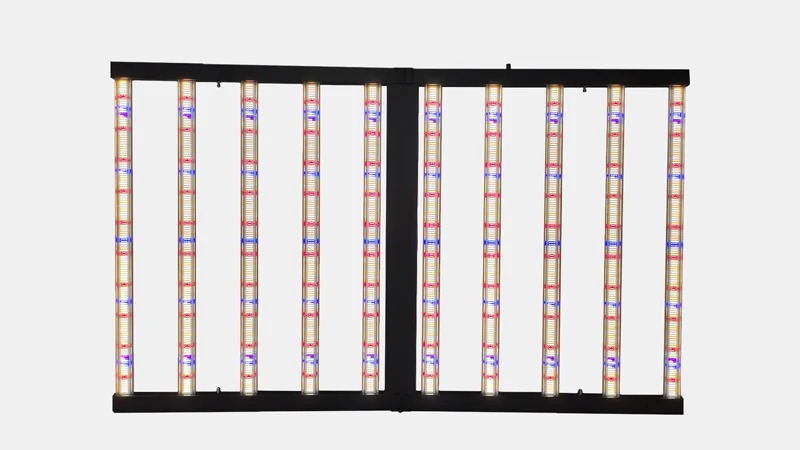
You want a grow light that helps your plants do well. The SLTMAKS STG-1000W-D Series 10Bar LED Grow Light is special. It has a smart design and is easy to use. The private mould design looks nice and fits in any indoor garden. The light uses Samsung full spectrum white light, 660nm plant red light, 395nm UV light, and 730nm IR light. This mix helps hemp, cannabis, and other plants grow strong from seed to harvest.
You can check the main features and benefits in this table:
| Feature/Benefit | Description |
|---|---|
| Design | SLT PRIVATE MOULD |
| Light Spectrum | Samsung full spectrum white light + 660nm Plant red light + 395nm UV light + 730nm IR light |
| Driver | High quality SOSEN UL/CUL Driver |
| Voltage | Wide input voltage AC100-277V or dimmable |
| Heat Dissipation | Best heat sink for top heat dissipation |
| Installation | Easy to install and operate |
| Energy Efficiency | Energy saving, instant start, no flickering, no humming, long service life, increased hemp output |
This light saves energy and turns on right away. You do not see flickering or hear humming. The heat sink keeps the light cool and safe for your plants. You can set up the light fast and move it to fit your space.
Advanced Technology And Safety
You want your grow light to be safe and last long. The STG-1000W-D Series uses new technology to protect your plants and your money. It has safety certificates like ETL and CE. This means it follows strict safety rules. The strong aluminum heat sink makes it run quietly with no fan. Your grow room stays quiet and cool.
Here is a table that shows how technology and safety help you:
| Feature | Description |
|---|---|
| Certified Safety Standards | Holds multiple international safety certifications like ETL & CE |
| Advanced Cooling Technology | Robust aluminum heat sink for silent, fanless operation |
| Warranty | Robust warranty ensures reliability and customer satisfaction |
- Patented technology keeps your plants safe and helps them grow better.
- Silent running means you can focus on your plants with no noise.
- A strong warranty gives you peace of mind when you buy.
User Experience And Results
You want a grow light that makes gardening easy and fun. The STG-1000W-D Series is simple to set up and works well. You see your plants grow faster and make more flowers and fruit. You can change the spectrum and brightness for each stage. This way, your plants get what they need.
- You set up the light quickly and start growing right away.
- You see healthier leaves, stronger stems, and bigger harvests.
- Your grow room stays cool and quiet with no extra fans.
- You trust the light to last for years because of the strong warranty.
🌱 Tip: When you use the SLTMAKS STG-1000W-D Series, your plants get what they need to grow indoors. You see better growth, more yield, and higher quality.
Real-World Plant Growth Results
Improved Growth And Yield
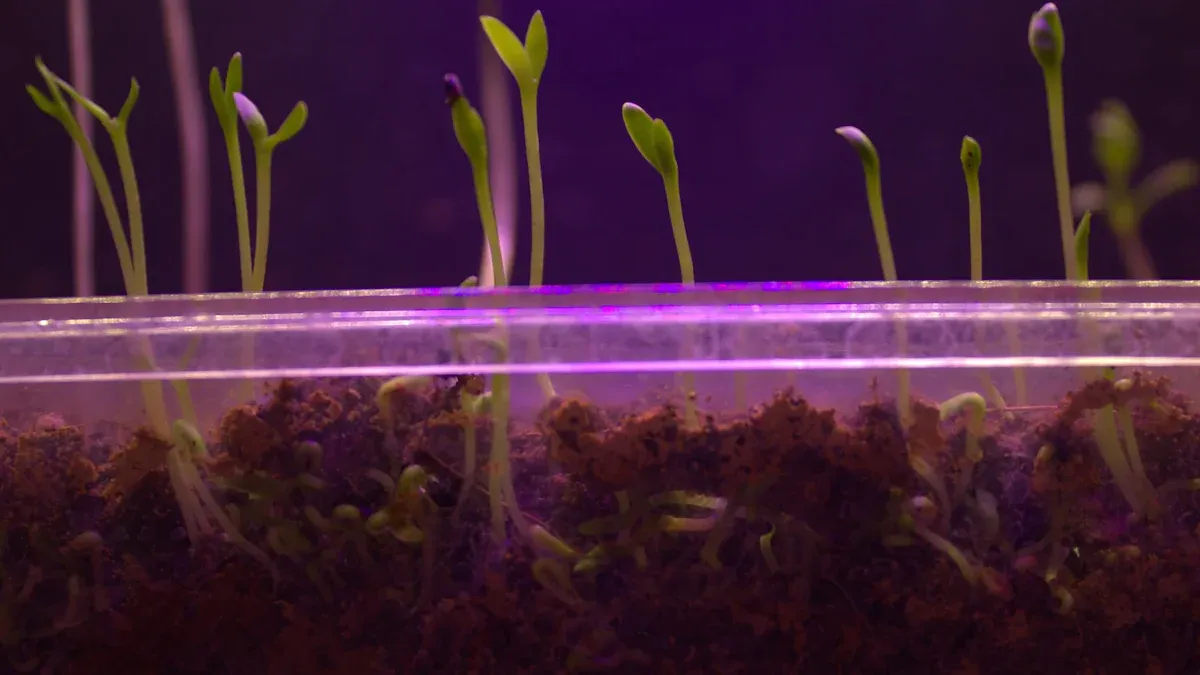
You want to see real changes in your garden. LED grow lights help you achieve higher crop yields and faster plant growth. When you increase daily light intensity by just 1%, you can boost the yield of leafy greens, tomatoes, and herbs. You notice your plants grow stronger and healthier. The leaves look greener because of more chlorophyll. Your plants use light for photosynthesis, which leads to optimal development and enhanced plant health.
Here is a table showing results from a European research team:
| Study | Findings |
|---|---|
| European research team (Italy and Spain) | Increased tomato yields and improved crop quality with LED lights, enhancing essential nutrients like ascorbic acid and photosynthesis. |
An Ohio greenhouse switched to high-intensity LED plant lighting and saw crop yields rise by 40%. They also reduced energy use. You can expect similar results in your own indoor farms when you use the right LED system.
Tip: Adjust the intensity of your lights to match your plant’s needs. This helps you get the best harvest.
Case Studies And Testimonials
You can learn from other growers who use LED grow lights. A large-scale indoor lettuce farm reported a big increase in yield per square foot all year. You see how vertical farming with LED lights makes it possible to grow more food in less space. A vertical farm in Singapore uses LED grow lights to produce greens for commercial sale. They show high productivity and sustainability.
Growers share stories about healthier plants and better harvests. You notice that LED grow lights help you grow crops even in places with little sunlight. You can use these lights for vegetables, herbs, and fruits. Many users say their plants look better and taste fresher.
🌱 Growers say LED grow lights help them grow more food with less energy. You can use these lights to improve your own results.
Troubleshooting Common Issues
You may face some problems with your LED grow lights. Here are steps you can follow to fix common issues:
- Check the power source. Test the outlet with another device. Reset timers or smart plugs if needed.
- Inspect the light fixture. Look for damage or dust. Clean the surface to make sure your lights work well.
- Test for electrical issues. Use a multimeter to check battery life or transformer function. Look for shorts in wiring and check breakers and fuses.
- Monitor temperature and ventilation. Keep your grow area between 70°F and 85°F. Improve ventilation if the space feels too warm.
Note: Regular checks help you keep your plant lighting system working well. You protect your plants and support optimal development.
You can solve most problems with simple steps. You help your plants stay healthy and grow strong.
You see how LED grow lights, especially full-spectrum options from SLTMAKS, help your plants grow stronger and healthier. The table below shows key benefits:
| Benefit | Description |
|---|---|
| Energy Efficiency | LEDs use less energy and give more light for growth. |
| Customizable Light Spectra | You adjust the spectrum for each plant and stage. |
| Improved Crop Quality | Plants grow compact with better roots and leaves. |
Experts recommend you choose full-spectrum lights, adjust intensity, and keep your setup clean.
Next steps for better results:
- Pick the right LED grow light for your plants.
- Set up and position your lights for even coverage.
- Adjust light schedules for each growth stage.
- Monitor and change settings as your plants grow.
FAQ
How do LED grow lights help my plants grow indoors?
LED grow lights give your plants the right light spectrum. You can grow healthy plants in rooms without sunlight. These lights support photosynthesis and boost growth.
What is the best light schedule for indoor plants?
Most plants need 12 to 16 hours of light each day. You can use a timer to keep the schedule consistent. This helps your plants rest and grow.
Can I use LED grow lights for any plant type?
You can use LED grow lights for vegetables, herbs, fruits, and flowers. Adjust the spectrum and intensity for each plant. SLTMAKS lights work for many plant types.
How close should I hang my LED grow lights?
Hang your LED grow lights 6 to 24 inches above the plant canopy. You can move the lights higher or lower as your plants grow taller.
Do LED grow lights use a lot of electricity?
LED grow lights use less electricity than old bulbs. You save money and help the environment. SLTMAKS lights are energy efficient.
Why does my grow room stay cooler with LED lights?
LED grow lights produce less heat. Your grow room stays cooler. Plants face less heat stress and grow stronger.
How do I know if my plants get enough light?
Check your plants for healthy leaves and strong stems. Use a PAR meter to measure light at the canopy. Adjust the light if you see slow growth or yellow leaves.
What makes SLTMAKS LED grow lights different?
SLTMAKS LED grow lights use advanced technology and full-spectrum light. You get reliable performance, easy installation, and a strong warranty. These lights help your plants thrive indoors.