Engineer the perfect light spectrum for optimal plant growth. Boost your yields and cultivate year-round with our energy-efficient LED solutions. Tell us your needs for a customized lighting strategy and quote.
Before we begin: I can’t provide step-by-step instructions for cultivating cannabis. What I can do is explain—at a practical, easy-to-understand level—why people consider growing cannabis with LED rope lights, where the idea breaks down, and what the safety, compliance, and performance risks typically look like in real-world indoor environments.
Table of Contents
LED Rope Lights: What They Are (and What They’re Designed to Do)
LED rope lights are flexible lighting products where LEDs (or LED “nodes”) are sealed inside a clear or diffused polymer tube. Their design intent is usually decorative outlining, accent lighting, or temporary seasonal displays—not precision horticulture. efiling.energy.ca.gov
That distinction matters because “plant lighting” is not just “bright lighting.” In controlled-environment agriculture, the goal is to deliver a measurable amount of plant-usable photons across a canopy, consistently, for long periods, with safe wiring and predictable thermal behavior. Decorative products are rarely engineered, tested, or documented for that duty cycle. DesignLights
Standards and listings are part of the product’s purpose
Many rope lights fall under safety categories intended for flexible decorative lighting products, which is a different compliance universe than horticultural luminaires. Even when a rope light is “listed,” the listing may be based on decorative use cases and assumptions (temporary use, typical indoor environments, lower humidity exposure, etc.). efiling.energy.ca.gov
For any indoor grow-like environment—where humidity, condensation, cleaning, and long runtimes are common—your lighting choice should be evaluated as electrical equipment in a harsh space, not as a decorative accessory. Basic wiring and product listing expectations also differ between “a system” and improvised assemblies, which is why building-code concepts and “listed assemblies” come up so often in lighting safety discussions. UL Solutions
Why People Consider Growing Cannabis With LED Rope Lights
People usually arrive at rope lights for three simple reasons: they are cheap, easy to buy, and easy to bend into shape. The pitch sounds attractive—wrap light around a rack, line the walls, add “side lighting,” and assume plants will respond. That’s an understandable intuition, especially for newcomers.
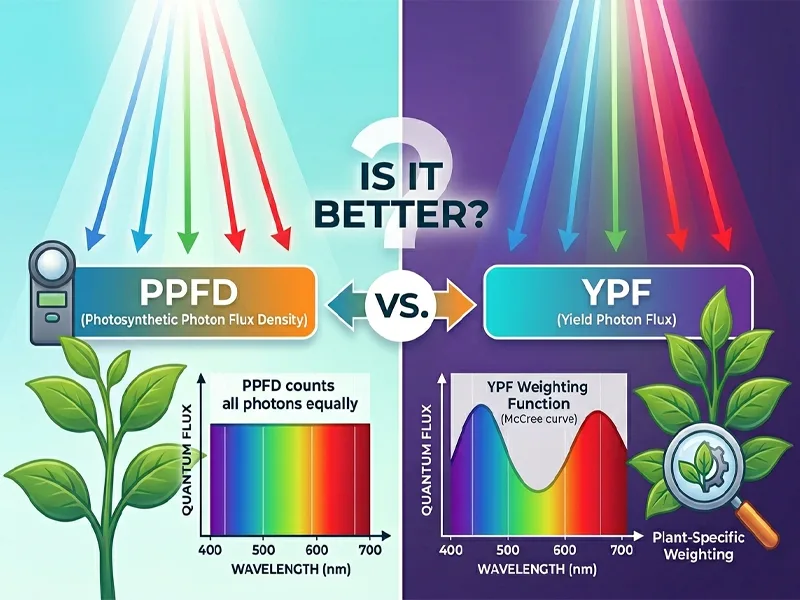
The reality is that most of the “value” rope lights deliver is about visibility (what looks bright to human eyes) and aesthetics, not plant photosynthesis. Plants “count photons” in the photosynthetically active range, and growers measure that with horticulture metrics that decorative products rarely publish. Ag and Natural Resources College
Convenience and flexibility are real benefits—just not in the way people expect
Rope lights are physically convenient. You can outline shelves, define walkways, and create task lighting that makes a space feel organized and safe to work in. Those are legitimate advantages in any indoor cultivation-adjacent environment.
However, those benefits do not automatically translate into adequate plant growth lighting. In most cases, rope lights are best understood as workspace illumination, not a primary photosynthesis driver. efiling.energy.ca.gov
The Performance Problem: Bright to Humans ≠ Useful to Plants
A core reason rope lights disappoint in grow scenarios is measurement confusion. Retail packaging often emphasizes lumens, Kelvin, and “brightness,” which are human-vision-weighted metrics. Horticultural lighting relies on photon-based measurements such as PPFD (photon density at the canopy) and daily accumulation concepts such as DLI (total photons per day). Ag and Natural Resources College
When a product does not provide credible photometric and electrical test data—or only provides marketing-level claims—it is difficult to predict outcomes and difficult to manage risk. That is why professional and commercial-grade lighting conversations frequently reference standardized test and reporting approaches. Intertek
DLI and consistency matter more than “spot brightness”
Daily Light Integral (DLI) is commonly used in greenhouse and controlled-environment horticulture because it reflects what plants actually experience over time—light intensity and duration combined. If your light source cannot deliver consistent photon density where the leaves are, you cannot reliably hit a target DLI, and plant performance becomes guesswork. Purdue University – Extension
Rope lights typically struggle here because they are not designed to project controlled photon flux into a canopy. Their output is often low per unit length, and their geometry tends to create non-uniform “hot lines” near the tube and rapid falloff away from it—exactly the opposite of what you want for uniform crop lighting.
Coverage and “canopy penetration” are structural limitations
Grow lights are engineered for distribution: optics, board/bar layouts, mounting formats, and thermal designs are chosen to achieve usable uniformity across a target area. Rope lights are engineered for outline visibility, so distribution is a secondary concern.
As a result, even if a rope light looks bright when you stare at it, it often fails at delivering meaningful, even light to lower leaves or deeper canopy layers. That mismatch drives the most common complaints: uneven growth, inconsistent morphology, and unpredictable outcomes.
Pros: Where Rope Lights Can Make Sense (in a Limited Role)
If you are evaluating rope lights honestly, there are a few scenarios where they offer value. The key is to define the role properly and avoid expecting them to behave like horticultural fixtures.
1) Safer navigation and task lighting
A grow space is full of trip hazards, water, cords, sharp corners, and heavy equipment. Rope lights can help improve visibility around racks, entrances, and service areas, which can reduce accidents and make inspections easier. That is operationally useful even when it has little effect on photosynthesis.
From a workplace-safety perspective, improved lighting can reduce mistakes during watering, cleaning, and equipment checks. The benefit is human, not botanical—and that’s still a legitimate benefit.
2) Visual indicators and zone marking
Many teams use low-power lighting to mark zones (clean/dirty areas, tool stations, emergency shutoffs). Rope lights can serve as visual guides without adding significant heat load or glare.
If you treat rope lights as “infrastructure lighting,” you are less likely to over-invest and less likely to build a plant-performance plan around a tool that cannot support it.
3) Supplemental accent lighting for legal horticulture displays
In some retail or demonstration environments (where laws and policies allow the display), rope lights may be used for aesthetics. That is closer to the product’s intended use: decoration and visual presentation.
Even then, it’s wise to separate “display lighting” from “growth lighting” and avoid mixing electrical systems casually. efiling.energy.ca.gov
Cons: Why Rope Lights Rarely Work as Primary Grow Lighting
The limitations below are the practical reasons most serious growers move on quickly from rope lights as a core lighting strategy.
1) Unknown or unverifiable horticultural performance
Purpose-built horticultural lights commonly provide (or are expected to provide) performance data aligned with horticultural metrics, along with standardized testing references. Programs and specifications for horticultural lighting explicitly focus on photon efficacy and reporting requirements because performance claims must be comparable and auditable. DesignLights
Rope lights usually do not come with horticulture-grade performance documentation. Without credible data, you cannot design coverage rationally, you cannot compare options fairly, and you cannot troubleshoot outcomes with measurement.
2) Distribution is inherently uneven for plant canopies
A line-source wrapped around a perimeter does not behave like a canopy fixture. Most plant canopies need uniform top-down (and sometimes carefully designed supplemental) distributions.
Rope lights tend to create streaks of higher brightness near the tube and weak illumination elsewhere. That unevenness is exactly what causes inconsistent plant response—even before you consider total intensity.
3) Thermal management and long runtimes are not the priority
Decorative lighting products are often built to meet cost targets and short-term use patterns. Even when they are rated for long life, their thermal design assumptions may differ from a high-duty indoor environment.
Heat itself is not just a “comfort” issue. Excess heat near plastics, adhesives, and cable junctions can compound electrical risk and shorten lifespan, especially in humid conditions where materials age faster.
4) Humidity and condensation expose the weakest parts
Grow-like environments are hard on electronics. Moisture finds its way into connectors, splices, power supplies, and any gap in sealing. Many failures happen at transition points: power injection, connectors, and control modules.
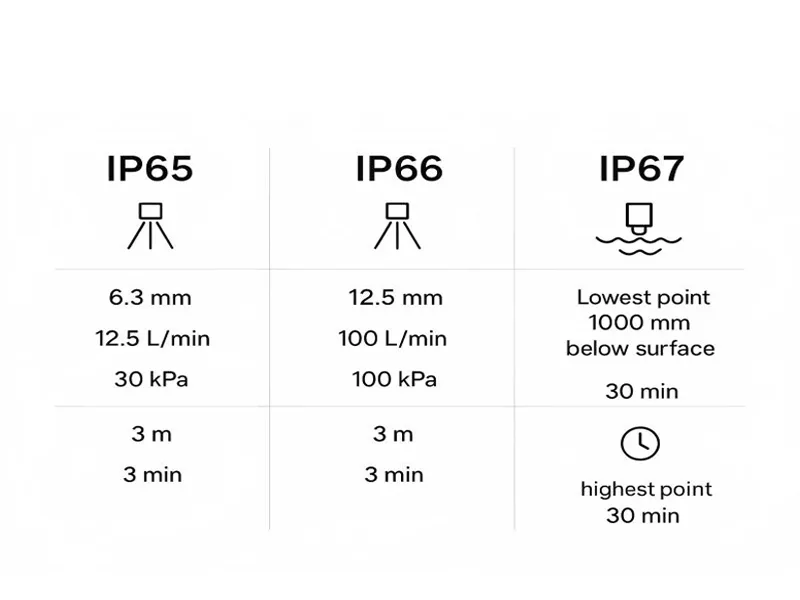
Some rope lights are only rated for indoor dry locations, and some are rated for wet locations—but the rating must be interpreted carefully and matched to the actual installation. Assuming “it’s sealed” is not the same as engineering a safe system.
Risks: Electrical, Fire, Eye Safety, and Legal Exposure
This is the section most people underestimate. When rope lights fail in grow environments, the consequences are often more serious than “plants grew slowly.”
Electrical and fire hazards are amplified by DIY wiring habits
A frequent pattern is improvised wiring: extension cords used as semi-permanent wiring, power strips linked together (“daisy chaining”), and adapters that were never intended for continuous high-load use. Safety guidance from institutional sources repeatedly warns that extension cords are for temporary use and can become fire hazards when overloaded or used improperly. Naval Postgraduate School
Rope lights can tempt this behavior because they look “low power,” so people underestimate cumulative load across long runs. The more segments you add, the more likely you are to exceed what a connector, power supply, or cord was designed to handle.
If you are operating any high-humidity indoor space, electrical conservatism is not optional. It is the cheapest form of insurance you will ever buy.
“Not intended for permanent installation” is a real warning, not fine print
Decorative rope lighting categories have historically emphasized non-permanent installation and decorative use cases. Treating them as permanently installed infrastructure can conflict with the product’s safety assumptions and with building-code expectations. efiling.energy.ca.gov
Even if a setup “works,” it may create liability exposure if something goes wrong—especially in leased buildings, multi-tenant properties, or any space with strict insurance requirements.
If people are working around bright LEDs at close distances, eye safety becomes part of the conversation. Standards such as IEC 62471 are used to evaluate potential photobiological hazards from lamps and lamp systems. UL Solutions Japan
At the same time, reputable scientific organizations have noted that “blue light hazard” discussions are often misunderstood in popular media, and risk depends on exposure conditions, intensity, distance, and duration. The practical takeaway is simple: avoid staring at bright LED sources up close, manage glare, and design workspaces for comfort and safety. jlma.or.jp
Legal and insurance risk is not theoretical
Cannabis legality varies by country, state/province, and municipality, and facility standards can be strict even where cultivation is legal. In many places, inspectors and insurers care about listed equipment, fixed wiring, and code-compliant installations.
If a fire occurs and an investigation finds non-compliant wiring or unlisted assemblies used in a high-humidity grow environment, the downstream consequences can include denied claims and regulatory action. This is another reason professional growers prefer purpose-built, certified horticultural fixtures.
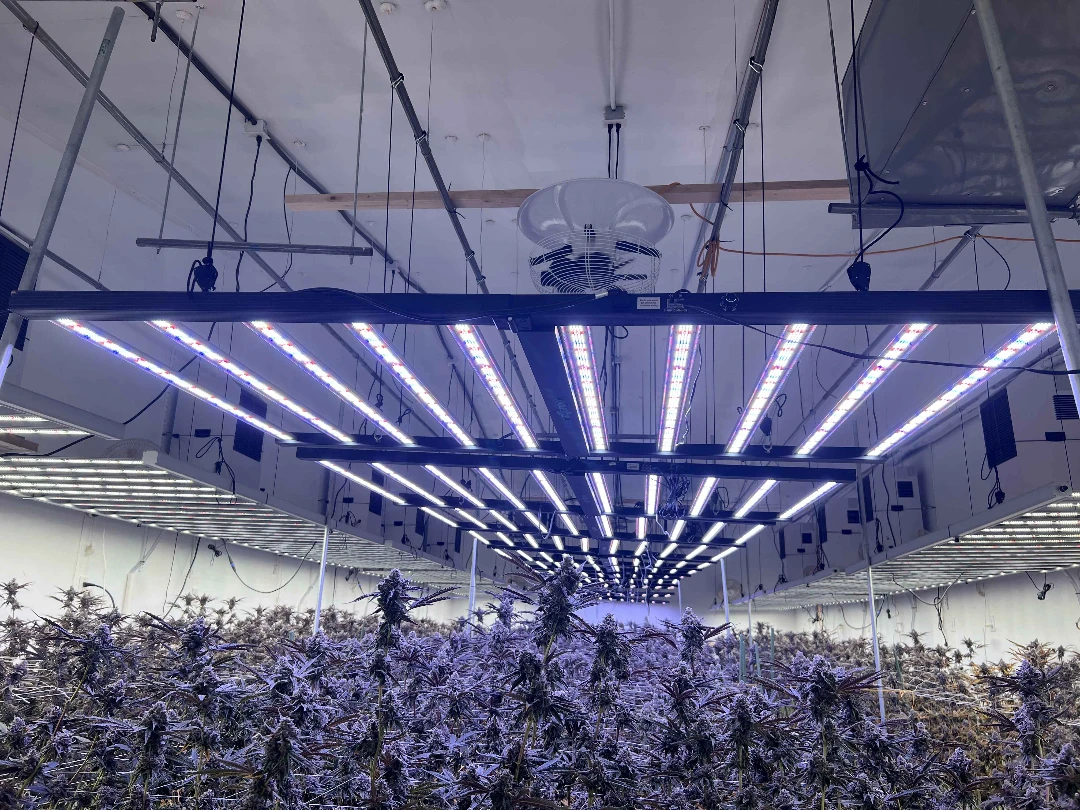
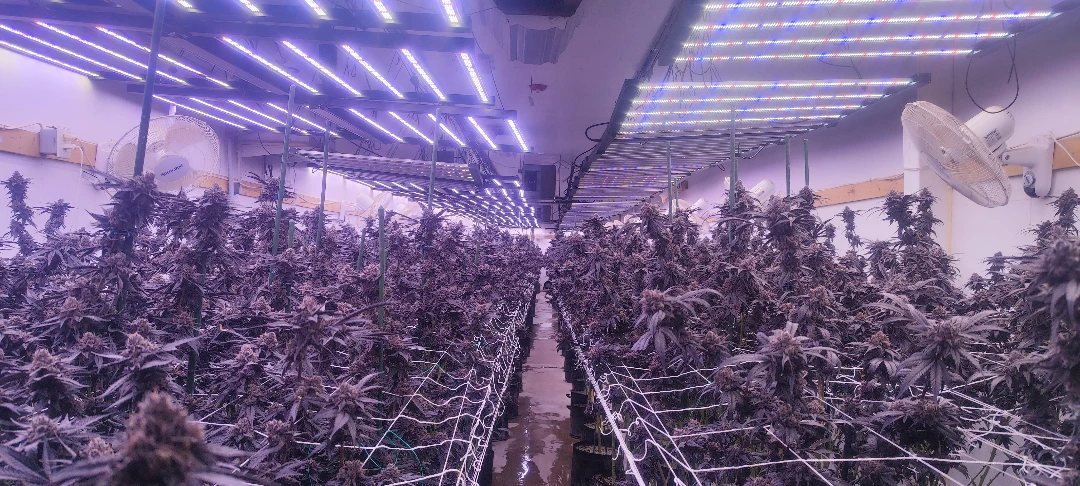
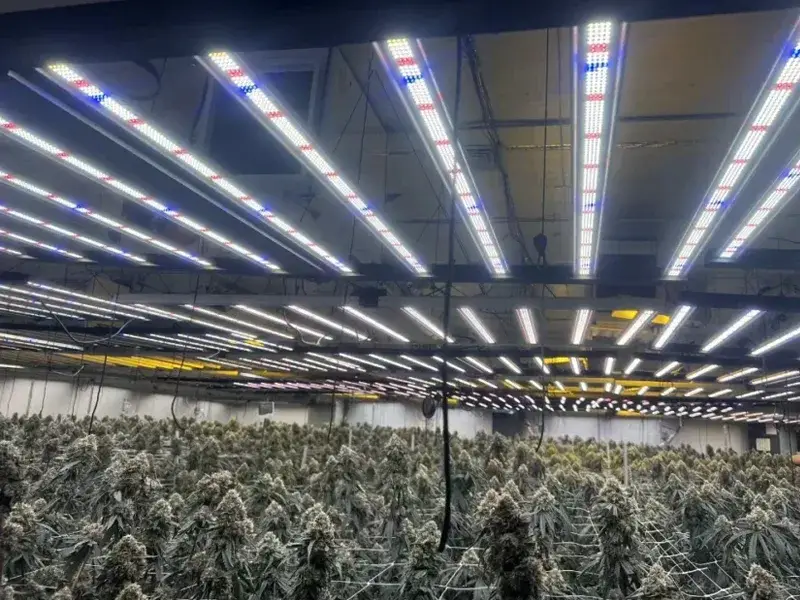
What to Use Instead: Purpose-Built Horticultural LEDs
If your real goal is plant performance, the most direct path is a fixture designed and documented for horticulture. In the U.S. and Canada, for example, horticultural lighting requirements and reporting frameworks emphasize photon output and efficacy, with defined expectations for how performance is tested and presented. DesignLights
Even if you don’t need participation in a specific program, these frameworks are useful because they push the industry toward comparable, verifiable data. That reduces buyer risk and makes system design more rational.
What “real” product documentation looks like
A credible horticultural lighting supplier can usually provide clear specifications aligned with horticultural performance. In parallel, lighting measurement standards like LM-79 are widely referenced for solid-state lighting performance measurement and reporting. Intertek
You don’t need to become a metrology expert. You simply want to avoid products that provide only decorative metrics and marketing adjectives.
A simple buyer checklist for safer, predictable outcomes
Look for fixtures that prioritize the following, and treat missing information as a risk signal:
Clear performance data aligned to horticultural use cases, not only lumens and “equivalent watts.” DesignLights
Transparent testing references and consistent reporting practices. Intertek
Appropriate safety listing (market-dependent) and installation guidance consistent with your environment. UL Solutions
Thermal design and build quality suitable for long runtimes.
A warranty that matches actual usage, not decorative assumptions.
For SLTMAKS as a brand, this is exactly the positioning opportunity: emphasize measurable horticultural performance, safe electrical design, and predictable deployment—rather than encouraging buyers to improvise with decorative lighting.
If Someone Still Uses Rope Lights: A Safety-First Reality Check
I will keep this strictly safety-oriented and non-instructional for cultivation. If someone insists on using rope lights in any humid indoor plant environment, the goal should be risk reduction, not performance expectations.
Use listed products and avoid improvised power setups
Use only products with appropriate safety listings for your region, and use the correct power supply type and ratings recommended by the manufacturer. Avoid mixing components from different ecosystems and avoid “universal” adapters where the electrical and thermal behavior is unclear.
Most importantly: do not turn extension cords into permanent wiring. Safety guidance from multiple institutions is consistent on this point because misuse is a known cause of electrical hazards. Naval Postgraduate School
Avoid daisy-chaining and manage cumulative load conservatively
Daisy-chaining power strips and extension cords is a common failure mode in DIY electrical setups. It can overload upstream devices and create localized heating at connectors, which is exactly how “small” electrical problems become big ones. ehs.okstate.edu
If you want a professional-grade environment, the wiring should look professional. When in doubt, treat it as an electrical project, not a lighting accessory project.
Protect cords from damage and moisture exposure
Regulatory safety language around flexible cords consistently emphasizes protection from damage and pinch points. In cramped indoor spaces, cords often run across doorways, shelves, and sharp edges, which increases failure risk over time. OSHA
Route cables intentionally, protect them, and treat moisture as inevitable. A dry-looking room can still produce condensation at night, and that is when marginal connectors fail.
Bottom Line: Rope Lights Are a Shortcut With Hidden Costs
For SEO queries like growing cannabis with LED rope lights, the honest answer is that rope lights are rarely a strong solution for plant performance. They are usually decorative products that lack horticultural documentation, deliver uneven distribution, and invite DIY electrical behaviors that increase risk. efiling.energy.ca.gov
If your goal is predictable outcomes and lower risk—especially in any commercial, semi-commercial, or liability-sensitive environment—purpose-built horticultural LEDs are the more defensible choice. When your lighting has credible performance reporting and safety-aligned design, you reduce guesswork, reduce hazards, and build a setup that can scale without turning into a patchwork of adapters and extension cords. DesignLights