Introduction
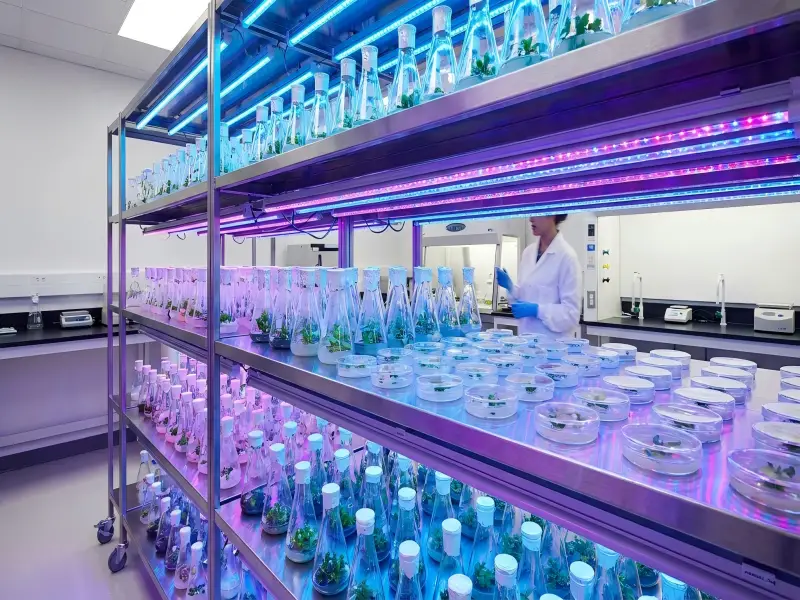
In plant micropropagation, achieving high multiplication rates and healthy plantlets depends on precise environmental control. While sterile nutrient media, plant growth regulators, and temperature management receive substantial attention, lighting conditions are equally fundamental to tissue culture success. In a closed growth room, in vitro cultures do not experience natural sunlight. Every photomorphogenic cue and photosynthetic photon must be delivered by artificial lighting fixtures.
Replacing traditional fluorescent tubes with an optimized tissue culture grow light system allows commercial laboratories to improve shoot proliferation, root formation, and plantlet survival during ex vitro acclimatization. Selecting the right light engine requires understanding how specific narrow-band wavelengths interact with plant photoreceptors inside sealed glass culture vessels.
This guide explores the biological mechanisms behind spectral selection in tissue culture, explains why a 3:1 red-to-blue light ratio serves as a reliable starting baseline, breaks down stage-specific PPFD and photoperiod requirements, and outlines key criteria for choosing high-efficiency LED grow lights for multi-tier micropropagation racks.
Table of Contents
Why Light Quality Matters in Micropropagation
The Science Behind In Vitro Plant Development
Plant tissue cultures operate under unique physiological conditions. Unlike field-grown crops or greenhouse plants that rely entirely on autotrophic photosynthesis, plantlets in sterile vessels grow mixotrophically. Because the culture medium supplies exogenous carbohydrates (typically sucrose), plantlets do not depend solely on light for total carbon assimilation.
Instead, light functions primarily as a developmental signal—a process known as photomorphogenesis. Specific photoreceptors inside plant cells absorb distinct narrow-band wavelengths to regulate gene expression, cell division, organogenesis, and physiological structure:
- Phytochromes (Pᵣ and P fr) respond to red (660 nm) and far-red (730 nm) light, regulating stem elongation, leaf expansion, shoot organogenesis, and adventitious root initiation.
- Cryptochromes and Phototropins absorb blue light (450–470 nm), controlling chloroplast movement, stomatal development, chlorophyll synthesis, and preventing excessive stem elongation (etiolation).
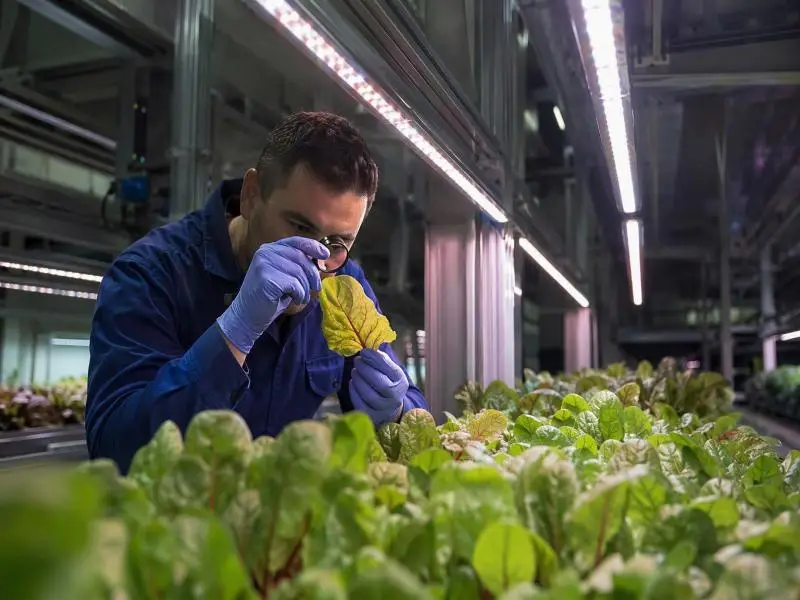
Because plant tissue culture vessels are sealed, improper light spectra can trigger severe physiological disorders. For example, excessive humidity combined with suboptimal light quality can lead to hyperhydricity (vitrification)—a state where plantlets appear glass-like, brittle, and unable to survive ex vitro transfer. Modern research on LED spectral quality in plant tissue culture demonstrates that precise narrow-band spectral delivery resolves these structural abnormalities.
Red and Blue Wavelengths as the Foundation
Red and blue light spectrums form the biological core of artificial illumination for in vitro plantlet development. Chlorophyll a and b show peak photosynthetic absorption in the blue (430–450 nm) and red (640–660 nm) regions.
| Wavelength Band | Peak Wavelength | Primary Morphogenetic & Physiological Roles |
|---|---|---|
| Deep Red | 660 nm | Drives phytochrome photo-equilibrium, promotes stem elongation, leaf area expansion, and adventitious root initiation. |
| Royal Blue | 450–470 nm | Triggers cryptochrome activity, prevents etiolation, promotes sturdy shoots, stomatal opening, and chlorophyll accumulation. |
| Far-Red | 730 nm | Modulates shade avoidance responses, accelerates flowering transitions, and enhances cell expansion when paired with red light. |
Red light at 660 nm provides the highest photosynthetic photon efficiency. It stimulates rapid cell expansion and biomass accumulation in developing plantlets. However, growing cultures under monochromatic red light alone causes “red light syndrome”—a condition characterized by weak, elongated stems, pale leaves, and abnormal stomatal function.
Blue light at 450–470 nm acts as the structural regulator. Supplying adequate blue photons keeps internodes compact, increases leaf thickness, and stimulates robust chloroplast development. Without sufficient blue light, shoots grown under artificial cover stretch unnaturally toward the light source, resulting in fragile plantlets that break easily during subculturing.
The Role of Mixed Spectra Versus Monochromatic Light
Combining red and blue wavelengths creates a synergistic light quality that outperforms single-wavelength illumination across nearly all micropropagation protocols. Bi-chromatic red-blue lighting supplies both the primary energy for photosynthesis and the necessary signals for balanced structural growth.
Monochromatic Red (660 nm) → Rapid stem elongation, high shoot length, but weak stems & low chlorophyll
Monochromatic Blue (450 nm) → Compact growth, thick leaves, but stunted shoots & reduced biomass
Mixed Red + Blue (3:1 Ratio) → Balanced shoot proliferation, sturdy stem anatomy, optimal rooting & high survival
Beyond standard red and blue combinations, adding supplemental far-red light (730 nm) fine-tunes plantlet development in specific protocols. When far-red light is applied alongside red light, it activates the Emerson enhancement effect, boosting photosynthetic rate beyond the sum of the individual wavelengths. Furthermore, a low red-to-far-red ratio signals density shade to the plantlet, triggering internode elongation when larger explants are needed before rooting.
Decoding Optimal Red: Blue Ratios and Light Recipes
The 3:1 Red: Blue Sweet Spot
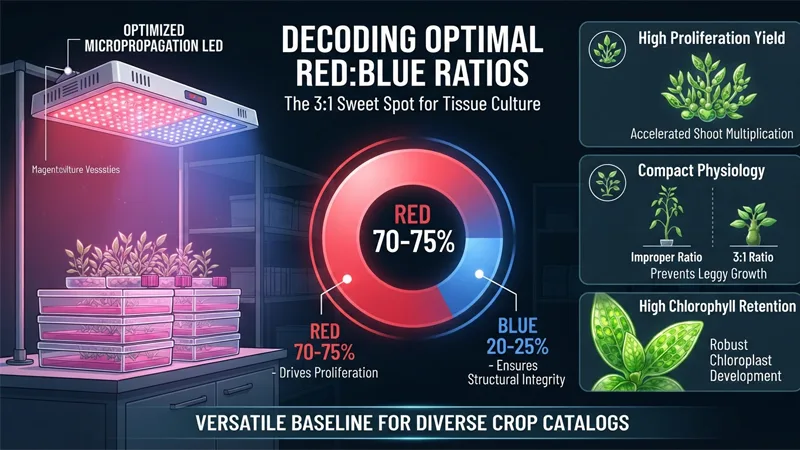
Across extensive micropropagation literature and commercial laboratory practice, a 3:1 red-to-blue light ratio (approximately 70–75% red and 20–25% blue) is widely recognized as the most effective starting light recipe for general tissue culture applications.
This red-biased ratio mimics the natural light cues required for vigorous vegetative proliferation while maintaining enough blue intensity to ensure structural integrity:
- High proliferation yield: The dominant red light fraction drives rapid shoot multiplication and node production across subculture cycles.
- Compact physiology: The 20–30% blue light fraction ensures shoot stems remain thick and upright, preventing fragile, leggy growth.
- High chlorophyll retention: The combined spectrum encourages functional chloroplast development, preparing the plantlet for autotrophic growth during the rooting phase.
For commercial laboratories propagating diverse crop catalogs on shared racking units, a fixed 3:1 red: blue micropropagation LED spectrum provides a versatile baseline that supports healthy development across multiple plant families without requiring custom fixture adjustments for every shelf.
Adjusting Ratios for Specific Growth Stages
While a 3:1 ratio provides a strong baseline, commercial facilities achieve higher propagation coefficients by tailoring the red: blue ratio to match specific micropropagation growth stages:
- Culture initiation & establishment: Lower red ratios with higher blue fractions (e.g., 1:1 or 2:1 Red: Blue) help fresh explants adjust to sterile culture without stretching, establishing compact basal shoots and reducing phenolic oxidation.
- Shoot multiplication & proliferation: Red-biased ratios (3:1 to 4:1 Red: Blue) accelerate axillary branching, node division, and total shoot count per vessel.
- Rooting & pre-acclimatization: Incorporating 10–15% far-red light alongside a 3:1 red: blue ratio stimulates root primordia development, increases root length, and hardens leaves before ex vitro transfer to soil or plugs.
Species-Specific Light Recipes Proven in Research
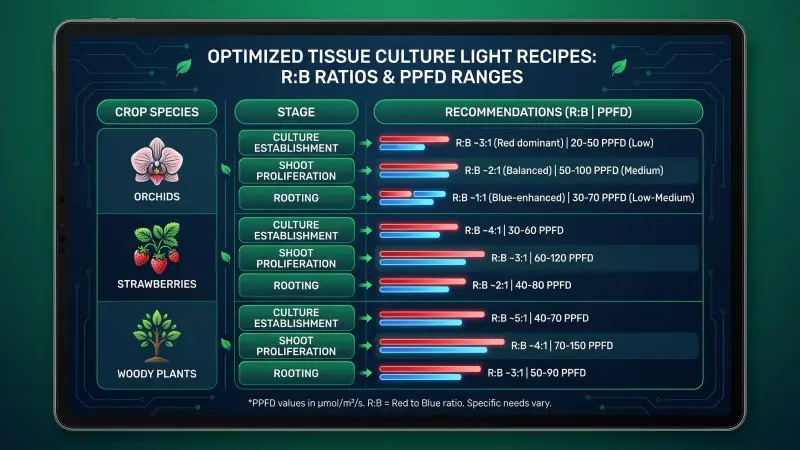
Different plant species display distinct photoreceptor sensitivities in vitro. Commercial operations rely on published literature to set crop-specific lighting parameters.
Orchids (Phalaenopsis, Dendrobium, Cattleya)
Orchids exhibit unique responses to light quality during protocorm-like body (PLB) formation and axenic seed germination. Specialized studies on orchid tissue culture light recipes indicate that orchids thrive under stronger red dominance:
- PLB proliferation: 80:20 to 90:10 Red: Blue ratio at 40–50 µmol/m²/s PPFD.
- Shoot Differentiation: 4:1 Red: Blue ratio, promoting leaf differentiation while avoiding premature leaf drop.
Strawberries (Fragaria × Ananassa)
Commercial strawberry micropropagation requires high shoot proliferation rates combined with sturdy petioles:
- Optimal recipe: 70:30 Red: Blue ratio (approx. 7:3 R: B) at 50–80 µmol/m²/s PPFD.
- Outcome: Promotes clean shoot multiplication, prevents hyperhydricity, and yields high root count before soil acclimatization.
Woody Plants & Fruit Rootstocks (Olives, Birch, Conifers)
Woody perennial explants often suffer from poor adventitious rooting under standard bi-chromatic red-blue spectrums. Research demonstrates that adding green or broad-spectrum white light improves light penetration through dense tissue culture clusters:
- Optimal recipe: Broad spectrum featuring 60% Red, 20% Blue, 10% Green, and 10% Far-Red (or an 8:1:1:1 custom blend) at 40–60 µmol/m²/s PPFD.
- Outcome: Green light penetrates deeper into culture vessel clusters, stimulating basal cell division and improving root initiation rates in recalcitrant woody species.
Setting the Right Intensity and Photoperiod
Finding the Optimal PPFD Range for Tissue Culture
Photosynthetic Photon Flux Density (PPFD) measures the number of photosynthetic photons striking a one-meter square surface per second (µmol/m²/s). In canopy lighting for mature indoor crops, PPFD levels often range from 600 to 1,200 µmol/m²/s. In plant tissue culture, however, light intensity requirements are significantly lower.
The standard operational range for tissue culture PPFD is 30 to 120 µmol/m²/s.
Exposing sterile cultures to excessive light intensity causes photoinhibition, leaf bleaching, media drying, and elevated temperatures inside sealed culture vessels. Conversely, insufficient light intensity results in weak, etiolated shoots with poor chlorophyll density.
| Growth Stage | Recommended PPFD Working Range | Operational Target |
|---|---|---|
| Initiation & establishment | 30–50 µmol/m²/s | Protect fragile explants from light stress; encourage stable callus formation or initial shoot sprouting. |
| Shoot multiplication | 50–80 µmol/m²/s | Maximize axillary shoot proliferation and node formation without raising vessel internal temperatures. |
| Rooting & pre-Acclimatization | 80–120 µmol/m²/s | Stimulate autotrophic photosynthetic enzyme activity (Rubisco) to prepare plantlets for greenhouse transfer. |
Choosing the Right Photoperiod
Photoperiod—the daily duration of light exposure—works together with PPFD to determine the Daily Light Integral (DLI) delivered to the cultures.
For most micropropagation species, a 16-hour light / 8-hour dark cycle serves as the standard industry photoperiod. This 16/8 schedule provides a balanced Daily Light Integral while granting explants a necessary dark period for cellular repair, carbohydrate transport, and natural dark-phase metabolic regulation.
- Continuous 24-hour lighting: While continuous light can accelerate shoot multiplication in select species like Dendrobium, it frequently causes physiological stress, leaf tip burn, and stomatal dysfunction in most horticultural crops over extended subcultures.
- Short-day cycles (12-hourlight): Used primarily when inducing tuberization or bulb formation in specific crops (e.g., microtuber induction in potato tissue culture).
Using Dimmable, Adjustable Spectrum Fixtures
Because micropropagation stages demand different light intensities, installing static single-intensity lighting fixtures forces operators to manually adjust shelf heights or move culture vessels between racks.
Modern multi-tier racking systems utilize dimmable LED grow lights for tissue culture with multi-channel spectrum control. Precision dimming (from 10% to 100%) allows operators to adjust PPFD outputs smoothly as vessels progress from initiation to rooting. This fine-tuning eliminates light shock when transferring delicate cultures and prevents heat accumulation in high-density shelving.
How to Choose Tissue Culture Grow Lights
LED Versus Fluorescent Lighting for Micropropagation
Historically, commercial tissue culture laboratories relied on T5 or T8 fluorescent light tubes. While fluorescent lamps provided acceptable light diffusion, their operational drawbacks hinder modern lab efficiency.
Fluorescent T5/T8 Lamps:
High Radiant Heat Towards Vessels → Glass Condensation → High Disease Risk & Bleaching
Fixed Spectral Output → Inflexible Light Quality across Culture Stages
High Energy Consumption & Decay → Frequent Bulb Replacement & Higher Operating Costs
Modern Tissue Culture LED Bars:
Cool Running Aluminum Heat Sink → Zero Vessel Condensation & Stable Ambient Temp
Tailored Red/Blue/Far-Red Channels → Dynamic Spectrum Control per Growth Stage
Low Power Draw & 50,000+ Hr Life → 50%+ Energy Savings & Minimal Maintenance
Comparing the key operational factors highlights why facilities are transitioning to specialized LED fixtures:
- Heat output & condensation: Fluorescent tubes emit substantial radiant heat directly toward culture shelves. Radiant heat warms the top of glass or plastic culture vessels, creating a temperature gradient that causes water condensation on vessel lids. Liquid condensation dripping onto culture media increases contamination risks and alters media osmolarity. LED light bars feature directional optics and extruded aluminum heat sinks that direct heat upward away from lower shelves.
- Energy efficiency: LED grow lights consume 40% to 60% less electricity than T5 fluorescent setups while delivering higher usable photosynthetic photon efficacy (PPE).
- Spectral decay: Fluorescent phosphors degrade rapidly, losing 20–30% of their light output within 10,000 hours. High-quality horticultural LEDs maintain stable spectral output for over 50,000 operational hours.
Key Features to Evaluate in a Tissue Culture Grow Light
When selecting lighting systems for high-density micropropagation rooms, lab managers should evaluate several critical engineering factors.
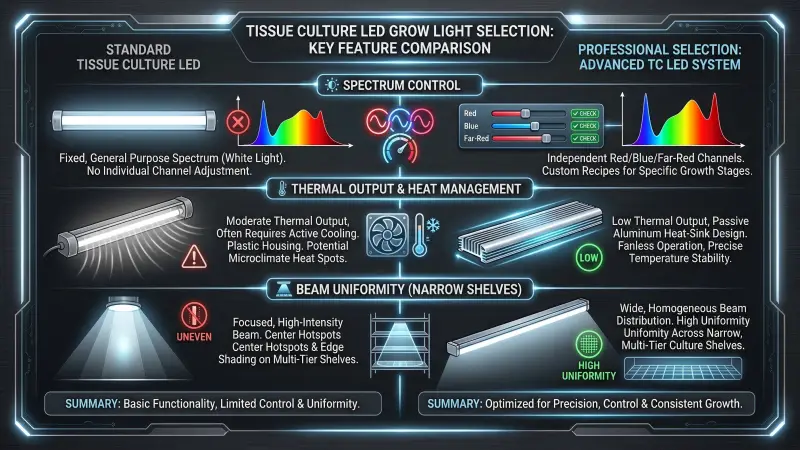
- Spectrum tunability and channel control: Look for multi-tier fixtures with independent channel control for red (660 nm), blue (450 nm), and optional far-red (730 nm) LEDs. Independent channel control enables custom light recipes across initiation, multiplication, and rooting shelves.
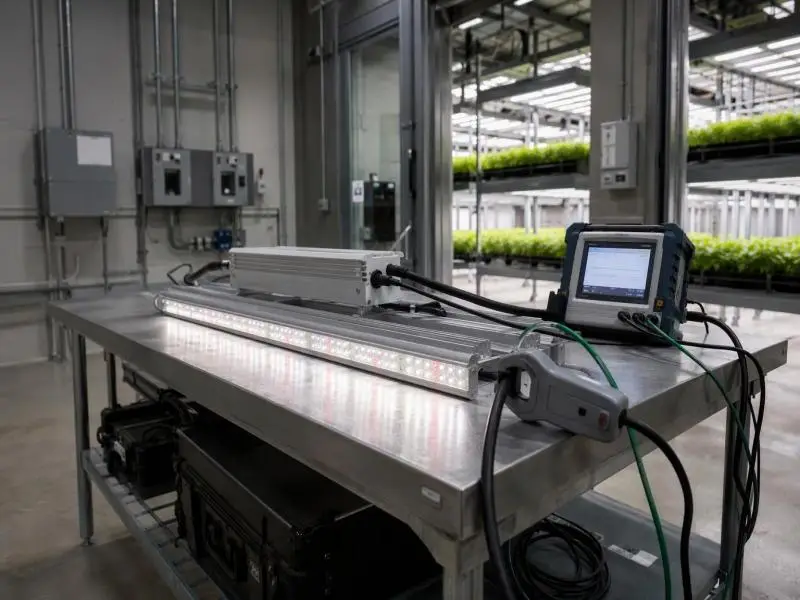
- Thermal management & low-profile heat sinks: Multi-tier culture racks typically feature narrow shelf clearances (20 cm to 35 cm). Fixtures with slim aluminum heat-sink profiles dissipate heat passively without requiring cooling fans that disrupt cleanroom airflow.
- High light uniformity across narrow shelves: Tissue culture shelves are long and narrow (typically 1.2 m to 2.4 m long and 0.5 m to 0.8 m wide). Fixtures must provide a wide, diffused beam angle (110° to 120°) to ensure uniform PPFD distribution across every culture vessel on the shelf, eliminating hot spots in the center and shadow zones at shelf edges.
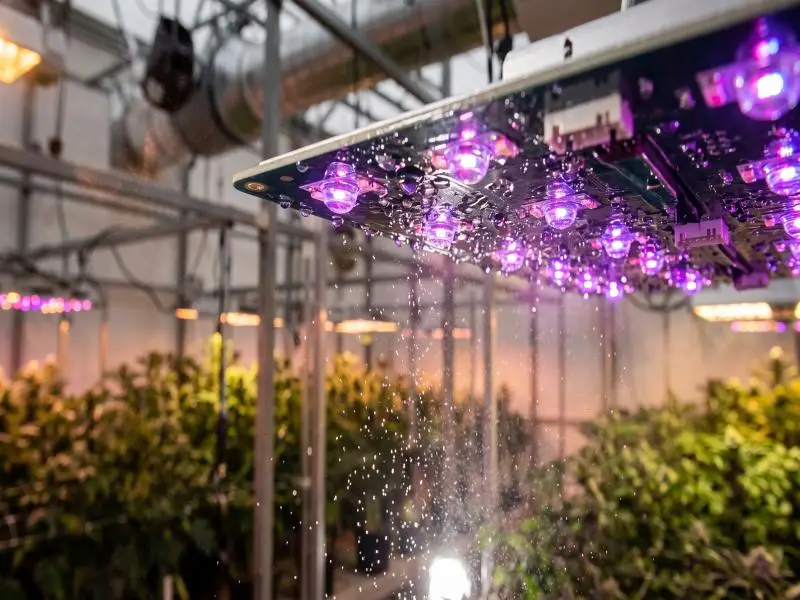
- Waterproof and IP-rated housing: Tissue culture growth rooms maintain high relative humidity (60% to 80%) to minimize media evaporation. Lighting fixtures should feature IP65 or higher ingress protection to withstand high moisture, cleaning chemicals, and routine cleanroom sterilization SOPs.
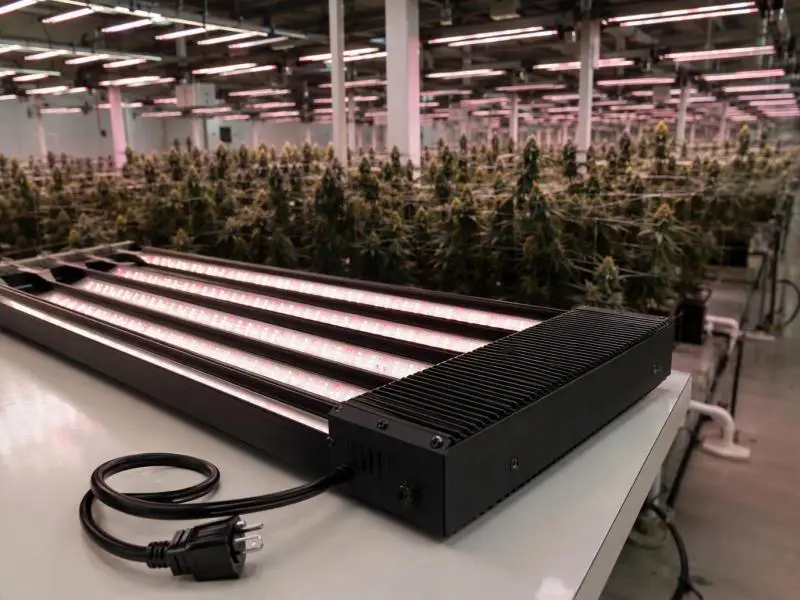
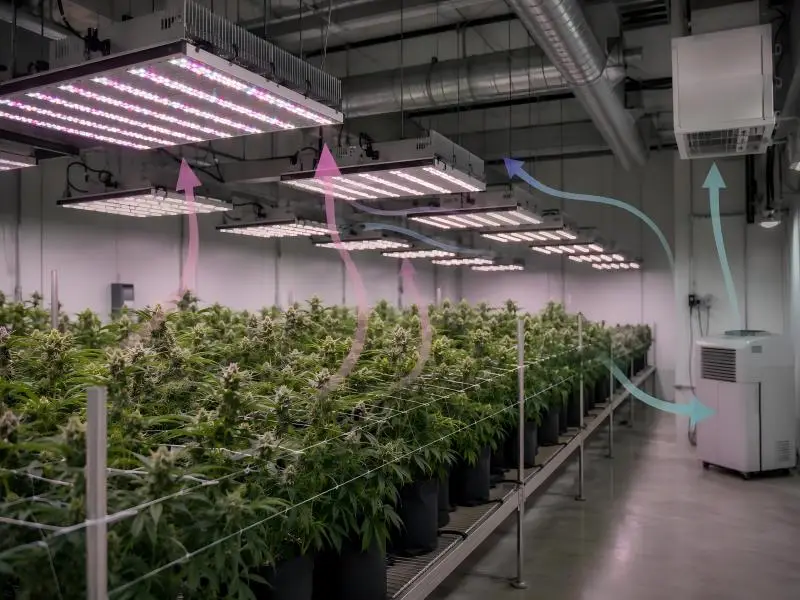
Facilities seeking high-performance lighting across both multi-tier racking and larger vegetation spaces often evaluate commercial LED grow light systems engineered with industrial-grade heat management and precise optics. For operations managing high-density indoor vegetation alongside tissue culture suites, utilizing high-efficiency indoor grow lights provides scalable, certified performance across all growth stages. Additionally, facilities with specialized crop requirements can leverage a custom LED grow light spectrum design process to engineer precise spectral ratios tailored to proprietary micropropagation protocols.
Common Mistakes to Avoid With Tissue Culture Lighting
Achieving consistent tissue culture yields requires avoiding several common operational pitfalls:
- Using household white LEDs: Standard residential or office LED fixtures are optimized for human visual perception (high green and yellow output) rather than horticultural photomorphogenesis. They lack sufficient 660 nm deep red and 450 nm blue photon flux, leading to slow shoot multiplication and weak explants.
- Over-exposing delicate cultures: Applying canopy-level PPFD (>150 µmol/m²/s) to tissue cultures causes rapid photo-inhibition, chlorophyll degradation, and severe tissue browning. Always maintain light intensity within the recommended 30–120 µmol/m²/s working window.
- Ignoring thermal condensation: Mounting lights too close to culture vessels without adequate heat dissipation creates temperature differentials between the vessel top and bottom. This drives moisture condensation, leading to media dilution and high hyperhydricity rates.
- Maintaining static light recipes: Applying the same light spectrum and intensity from culture initiation through rooting limits propagation efficiency. Adjusting spectra and PPFD levels to match stage-specific plantlet needs improves overall multiplication ratios and ex vitro survival rates.
- Neglecting edge uniformity: Placing single narrow-beam light strips over wide shelves creates uneven PPFD distribution. Vessels along shelf edges receive insufficient light, causing non-uniform growth rates across subculture batches.
FAQ
What is the optimal red-to-blue light ratio for tissue culture?
A 3:1 red-to-blue ratio (approximately 70–75% red and 20–25% blue) is widely considered the standard starting benchmark for micropropagation. Red light drives rapid cell expansion and shoot multiplication, while blue light prevents etiolation and ensures strong, compact stem structures.
Why are LED grow lights preferred over fluorescent T5/T8 lamps for micropropagation?
LEDs generate significantly less radiant heat toward culture vessels, virtually eliminating internal condensation that leads to tissue vitrification and high contamination risks. Additionally, LEDs consume 40–60% less energy, maintain precise spectral stability for over 50,000 hours, and allow stage-specific spectrum tuning.
What PPFD level should be used for plant tissue culture?
Tissue culture requires much lower PPFD than standard indoor canopy lighting, typically between 30 and 120 µmol/m²/s.
Initiation & Establishment: 30–50 µmol/m²/s
Shoot Proliferation: 50–80 µmol/m²/s
Rooting & Pre-Acclimatization: 80–120 µmol/m²/s
How does light spectrum prevent hyperhydricity (vitrification) in in vitro plantlets?
Hyperhydricity is often triggered by excessive humidity combined with poor photomorphogenic signaling. Incorporating sufficient blue light (450–470 nm) and managing heat dissipation with directional LED optics ensures healthy stomatal development, sturdy cell walls, and proper leaf cuticle formation.
Conclusion
Light quality is a decisive factor in successful plant tissue culture and micropropagation. By moving beyond traditional fluorescent tubes and adopting targeted LED grow lights, commercial laboratories gain precise control over the physiological development of in vitro plantlets.
A bi-chromatic red-to-blue light ratio of 3:1 (70% red / 30% blue) provides a versatile, science-backed baseline for general tissue culture applications. Adjusting these ratios—increasing red for shoot proliferation in orchids and strawberries, or adding far-red and green for root initiation in woody species—enables facilities to maximize multiplication coefficients and produce sturdy, high-quality plantlets.
To achieve consistent results across multi-tier culture racks, invest in slim-profile, dimmable LED fixtures designed for high beam uniformity and efficient thermal dissipation. Matching precise light recipes, optimal PPFD ranges (30–120 µmol/m²/s), and a consistent 16-hour photoperiod ensures long-term operational success, lower energy overhead, and higher ex vitro survival rates.
Optimize your tissue culture lighting setup: Looking to upgrade your commercial micropropagation facility or design custom light recipes for specialized crop varieties? Explore professional SLTMAKS LED Grow Light Solutions or consult with our spectral engineering team to configure high-uniformity, multi-tier lighting setups tailored to your production goals.