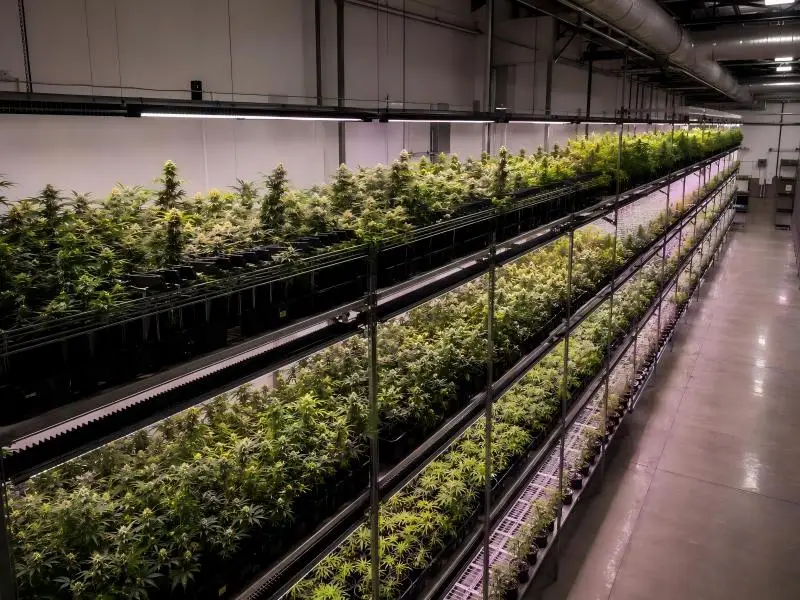
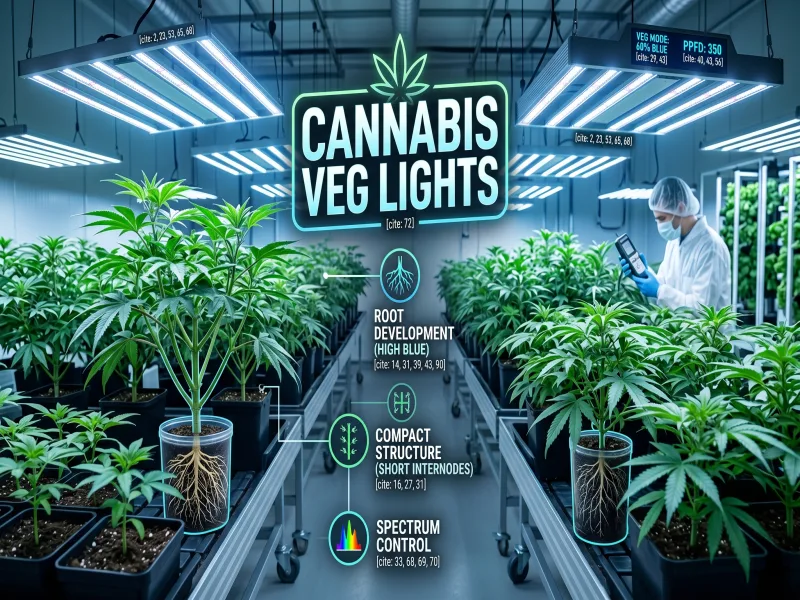
You want your commercial cannabis veg room to deliver strong plants and maximum returns. Your success starts with root development. You need to focus on blue light optimization throughout the vegetative stage. Blue light is one of the most important categories in plant grow lights, especially with cannabis. When you provide the correct blue light ratio with your plant grow lights, you improve root strength, plant health, and long-term yields.
You need a science-backed approach to managing veg room lighting. This guide uses current research and best-practice advice from horticultural professionals. You get clear steps for adjusting blue light ratios, controlling your LED grow lights, and avoiding common mistakes in commercial cannabis cultivation.
Table of Contents
Why Blue Light Is Essential for Cannabis Root Development
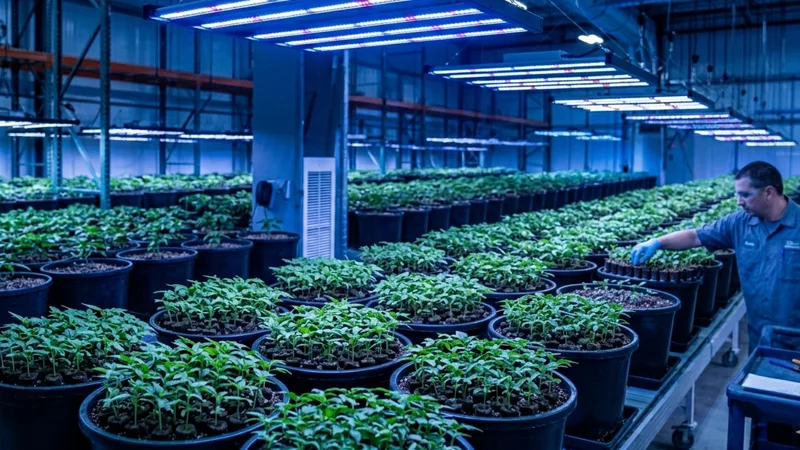
You want to maximize root growth in your commercial cannabis veg room. Your LED grow lights need to deliver the right mix of blue light. Blue light (400–500 nanometers) guides plant growth during the earliest stages. When you increase blue light ratios, you encourage plants to focus on healthy root structure instead of stretching.
- You need a strong root system for nutrient uptake.
- You get faster vegetative growth when roots are healthy.
- You want thick stems and strong cell walls for future flowering.
- You want more control over plant height and shape, especially in vertical setups.
Studies in cannabis cultivation and general horticulture show blue light is critical for root initiation and branching. One 2023 peer-reviewed study in Frontiers in Plant Science confirmed that high blue light ratios promote faster root growth in cannabis seedlings and cuttings, compared with red light–dominant setups.
Tip: Give your clones blue light immediately after planting to stimulate fast root development.
The Science of Blue Light in Plant Physiology
You want to understand how plants use blue light. Blue light has a short wavelength and high energy. Your cannabis plants sense blue light through photoreceptors called cryptochromes and phototropins. These receptors signal the plant to focus on rooting and robust vegetative structures.
- You need to know that cryptochromes control stem elongation and root growth.
- You see plants building thicker cell walls and stronger stems with blue light exposure.
- You improve internodal spacing, keeping branches close together to maintain a bushy plant.
- You get more efficient gas exchange when blue light opens stomata for CO2 absorption.
| Term | Meaning | Benefit to Grower |
| Cryptochrome | Light receptor in plant tissue | Controls rooting and stem growth |
| Stomata | Tiny pores on the underside of leaves | Allows efficient breathing and nutrient cycling |
| Nanometer | Measures light wavelength; blue = 400–500 nm | Lets you target blue light accurately |
You want to keep room humidity in the optimal range (55–70%) for fast stomata response. Stomata open wider under blue light, which means better CO2 uptake and photosynthetic output.
Tip: Manage relative humidity to keep the benefits of blue light at a maximum.
Optimizing Blue Light Ratios in Commercial Veg Rooms
You want to apply blue light science to your real-world veg room. Your commercial plant grow lights must let you control the spectrum output. Modern LED grow lights for cannabis let you dial in the exact ratio of blue and red light, unlike traditional HID lamps.
You need to mimic natural spring sunlight for young plants and clones. In spring, the outdoor sun gives more blue than red wavelengths. High blue and low red ratios prevent tall, thin plants and drive roots to expand.
- You want a 50–70% blue light ratio for cuttings, clones, and early vegetative growth.
- You need a 30–50% blue to red light balance for mid-to-late vegetative stages.
- You switch to higher red light (and lower blue) in the flowering phase to boost bud development.
| Light Ratio Mix | Veg Room Plant Stage | Outcome for You |
| High blue/low red | Clones, early veg | Fast rooting, short plants |
| Balanced blue/red | Late veg | Thick leaves, strong branches |
| Low blue/high red | Flowering | High yield, dense flowers |
You need to understand that too much red light in veg rooms leads to plant stretch. Stretched, weak plants are harder to support and produce weaker flowers.
- You need spectrum control for each growing phase.
- You want spectrum dials or programmable spectrum bars for your commercial LED grow lights.
Tip: Always match your grow light spectrum to your plants’ current growth stage for best results.
Rooting Cannabis Clones Using Blue Light
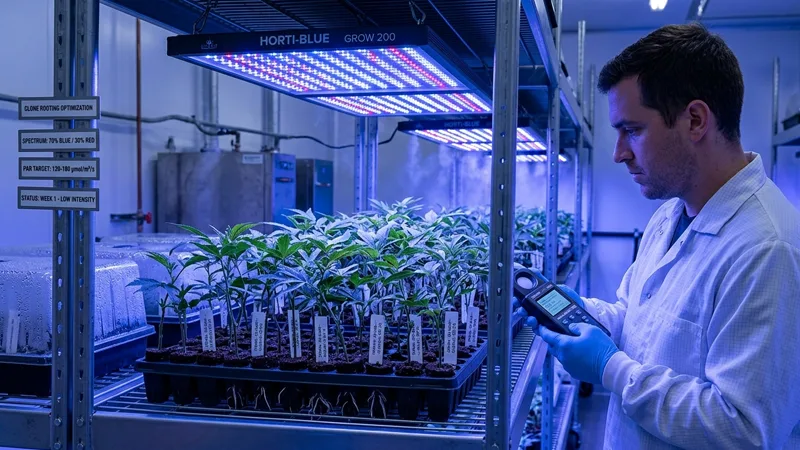
You want high clone success rates in your commercial operation. Strong clones mean bigger harvests and higher profits. Blue light in your grow room speeds up the rooting of cannabis cuttings and prevents early loss.
You need your clones to focus energy below the soil, not on new leaf or stem growth. High blue light exposure tells the plant to send sugars and nutrients to the roots.
- Start clones at a 70% blue and 30% red light ratio.
- Set the PAR (photosynthetically active radiation) at 120–180 μmol/m²/s (measured at canopy).
- Keep light intensity low to moderate for the first week to prevent leaf burn.
Use a clear dome or humidity tent to keep clones moist while they root.
| Stage | Recommended Blue Ratio | Light Intensity (PPFD) | Duration (Hours/Day) |
| Cloning | 70% | 120–180 | 18 |
| Early Veg | 60% | 180–300 | 18 |
Tip: Mist your clones several times daily, keeping leaves moist until visible roots develop.
Moving Plants to Larger Pots: Lighting for Healthy Transplanting
You want to avoid transplant shock when moving small veg plants to larger containers. Plant shock is common in commercial cannabis grow rooms, but you can minimize problems with careful blue light management.
- Reduce grow light intensity to 60–70% of normal levels for 2–3 days after transplanting.
- Keep the blue/red light ratio constant; don’t add extra red while plants recover.
- Slowly increase intensity back to standard levels after plants show signs of new growth.
A wide, well-branched root zone is essential for commercial cannabis operations. Using blue light to guide roots into new soil maximizes access to nutrients and water.
You want to water deeply and let the roots explore the pot. This increases anchorage and helps plants support heavy bud weight later.
Tip: After each transplant, monitor leaves for signs of stress. Adjust humidity and lighting as needed.
Practical Steps for Commercial Cannabis Growers
You want easy-to-follow, actionable advice for blue light management in your veg room. Most growers use LED grow lights for efficient spectrum control, energy savings, and targeted wavelength delivery.
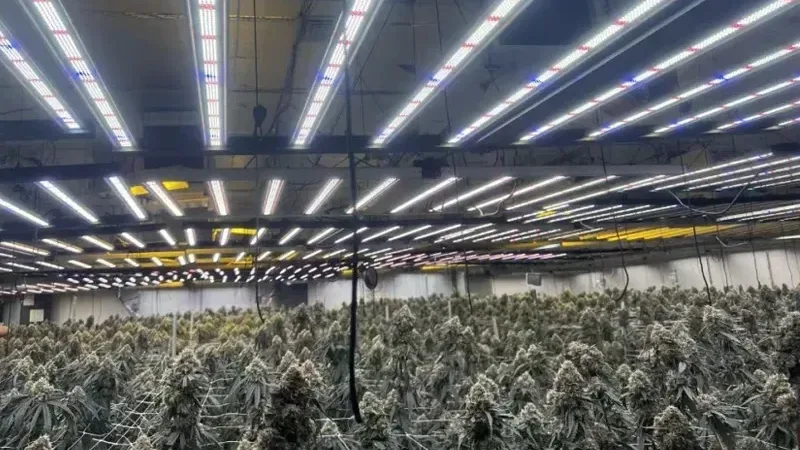
Adjusting Light Intensity (PPFD)
You need to measure and control the amount of light reaching your plant canopy. Use a PAR meter to check PPFD (photosynthetic photon flux density).
- Start clones at 120–180 μmol/m²/s PPFD.
- Increase to 200–400 μmol/m²/s as roots develop and leaves expand.
- Established, late veg cannabis plants tolerate 400–600 μmol/m²/s.
If you notice yellowing leaves or curling, your light is likely too aggressive. Dim your LED grow lights or raise them 4–6 inches.
Tip: Invest in a quality PAR meter to guide your lighting decisions every week.
Setting Light Duration and Photoperiod
You want to keep your plants in the vegetative growth phase as long as needed for your cycle. Photoperiod means how many hours your grow lights are on.
- Use 18 hours of blue-rich light followed by 6 hours of darkness.
- Consistent lighting prevents flower induction and maximizes vegetative size.
Strict timers remove human error from the equation. Missed cycles confuse plants and lower yields.
| Plant Stage | Light Hours (24hr) | Spectrum Mix |
| Clones | 18 | High blue |
| Veg | 18 | Blue/Red balanced |
| Preflower | 12–14 | Transition spectrum |
Tip: Always verify your grow light timers after power outages or after making room changes.
Selecting Advanced LED Grow Lights for Commercial Cannabis
You want to choose the best LED grow lights for your veg room. Only high-quality LED grow lights can deliver precise blue light ratios and full spectrum plant growth. Cheap, outdated grow lights lack spectrum control and waste energy.
Criteria for top-performing LED grow lights:
- Full spectrum coverage (400–700 nm) with adjustable blue/red ratio.
- High-performance Samsung, Osram, or LM301B diodes.
- Dimmable controls and programmable spectrum dials.
- Energy efficiency certification and strong safety standards.
| LED Attribute | Why You Need It | What You Get |
| Spectrum control | Adjust the blue/red ratio | Healthier, faster-growing plants |
| High efficiency | Save on energy bills | Lower operating costs |
| Durability | Long working lifespan | Fewer replacements, lower downtime |
| Wide light coverage | Even light at all points | Uniform canopy and growth |
You want LED grow lights backed by a strong warranty and customer support. Look for clear return policies and after-sales technical advice.
Tip: Map out your veg room using light-footprint charts. Make sure every plant gets even blue light exposure.
Avoiding Major Mistakes with Cannabis Veg Lights
You want to prevent small mistakes from causing expensive losses. The most common veg room grow light mistakes are easy to avoid if you follow science-backed steps.
- Using flower-optimized lights during the vegetative stage.
- Red-rich lights weaken stems and reduce root mass.
- Hanging grow lights too close to the canopy.
- Excess light causes bleaching and stress.
- Inconsistent light cycles due to timer or power problems.
- Interruptions can induce early flowering or halt growth.
- Neglecting to clean light fixtures.
- Dust blocks blue light, reducing plant growth potential.
- Not measuring and adjusting spectrum ratios.
- Plants may stretch or develop poorly formed roots.
Tip: Include a weekly lighting check in your facility SOPs (standard operating procedures).
Building Trust with Quality Equipment and Support
You want your investment in plant grow lights to pay off over multiple grow cycles. You need a supplier you can trust for consistent delivery, after-sales service, and parts.
Choose SLTMAKS LED grow lights for:
- Tested electromagnetic safety (UL, CE certifications).
- Warranty coverage for three years or more.
- Fast ship times and dedicated technical support.
| Supplier Attribute | What You Get | Why It Matters for You |
| Certified safety | Reduce fire/electrical risks | Safe operation; meets regulations |
| Long warranty | Protection on all purchases | Reduced replacement costs |
| Responsive support | Fast troubleshooting | Maximal room uptime |
You want to maintain trust with state regulators, auditors, and staff. Traceable equipment and documented maintenance help you pass inspections.
Tip: Keep all warranty paperwork and manuals easily accessible for every LED grow light.
Conclusion: Lighting Your Way to Commercial Cannabis Success
You want your commercial cannabis facility to deliver the best results. You need to optimize every aspect of your veg room, starting with the best blue light spectrum for root development. Strong roots, healthy stems, and compact plants drive your yield, profit, and facility reputation.
Blue light management is the foundation of your plant grow light program. You need to use advanced, energy-efficient LED grow lights that let you control the spectrum output by stage. Skilled use of blue light ratio improves rooting, plant health, and cannabis yields at scale.
You want technical support, warranty coverage, and supplier trust when you choose your plant grow lights. Partner with leaders in the industry—SLTMAKS and other reputable brands—to level up your commercial veg rooms.
You win when you combine research-driven lighting techniques with best-in-class equipment. Use this guide and its practical tables to direct your next lighting upgrade. Run lighting checks, document your lighting SOPs, and always keep learning. Your facility’s success depends on your decisions today.
Tip: Ready to set up or upgrade your commercial veg room? Visit the SLTMAKS website now to find the LED grow lights that fit your needs—backed by research, informed by experience, and proven to grow your business.
This guide reflects expert consensus and best practice from leading cannabis cultivators, plant physiologists, and the plant grow light industry. Always adjust plans for your facility and local regulations.
FAQ
What is the best blue-to-red light ratio for cannabis clones and early veg?
For cuttings, clones, and early vegetative growth, you should aim for a 50–70% blue light ratio. Starting clones specifically at a 70% blue and 30% red light ratio encourages the plant to direct its energy below the soil rather than focusing on new leaf or stem growth. High blue light exposure signals the plant to send essential sugars and nutrients directly to the roots.
Why do cannabis plants need blue light for root development?
Blue light, which falls between 400 and 500 nanometers, has high energy and guides plant growth during the earliest stages. Cannabis plants sense this light through photoreceptors called cryptochromes and phototropins. These receptors signal the plant tissue to focus on rooting and robust vegetative structures, helping plants build thicker cell walls and stronger stems while preventing unwanted stretching.
What PPFD (light intensity) is ideal for the cannabis vegetative stage?
You should start clones at a low-to-moderate intensity of 120–180 μmol/m²/s PPFD for the first week to prevent leaf burn. As the roots develop and leaves expand, you can increase the intensity to 200–400 μmol/m²/s. Once the plants reach the established, late vegetative stage, they can tolerate a PPFD of 400–600 μmol/m²/s.
How many hours of light do cannabis clones and veg plants need?
During the vegetative growth phase, cannabis plants require a strict photoperiod of 18 hours of blue-rich light followed by 6 hours of darkness. Maintaining this consistent 18-hour lighting cycle maximizes vegetative size and prevents early flower induction.
How should I adjust LED grow lights to prevent cannabis transplant shock?
To minimize plant shock when moving veg plants into larger containers, you should reduce your grow light intensity to 60–70% of normal levels for 2 to 3 days after transplanting. It is critical to keep the blue/red light ratio constant during this recovery period; do not add extra red light. Once the plants show signs of new growth, you can slowly increase the intensity back to standard levels.