Author: SLTMAKS Horticultural Research Team
Target Audience: Commercial Cultivators, Facility Directors, and Agronomists
Reading Time: 12 Minutes
Executive Summary
In the competitive landscape of commercial medicinal plant cultivation, high biomass yields are no longer the sole metric of success. Today’s pharmaceutical and wellness markets demand exceptional purity, high concentrations of active compounds, and strict batch-to-batch consistency. Achieving this requires moving beyond basic lighting to an advanced understanding of photobiology. This comprehensive guide explores how Specific Light Wavelengths in medicinal plant cultivation trigger complex biochemical pathways, significantly enhancing secondary metabolites, terpenes, and overall crop ROI. Discover why forward-thinking commercial facilities are partnering with professional LED grow light manufacturers like SLTMAKS to deploy custom-tailored spectrums.
Table of Contents
Introduction: Beyond Basic Yields in Commercial Cultivation
For decades, commercial indoor agriculture was dominated by High-Pressure Sodium (HPS) and Metal Halide (MH) fixtures. The primary goal was simple: provide enough Photosynthetic Photon Flux Density (PPFD) to drive photosynthesis and maximize plant biomass. However, for commercial cultivators of medicinal crops, biomass is only half the equation.
The true financial value of a medicinal crop lies in its chemical profile—the delicate balance of secondary metabolites, essential oils, alkaloids, and terpenes. These chemical compounds are not merely byproducts of growth; they are highly sensitive responses to environmental stimuli, specifically light quality.
This is where the paradigm shifts from traditional agriculture to precision photobiology. By manipulating Specific Light Wavelengths in medicinal cultivation facilities, growers can essentially “program” their crops. Through targeted light stress and spectral recipes, cultivators can trigger plants to produce higher concentrations of desired compounds. As a leading professional plant grow light manufacturer, SLTMAKS has dedicated extensive R&D to understanding this plant-light interaction, engineering commercial LED grow lights that empower growers to turn optical science into measurable profit.
The Science: Photomorphogenesis vs. Photosynthesis
To understand how light enhances medicinal value, we must first distinguish between two fundamental biological processes: photosynthesis and photomorphogenesis.
Photosynthesis: The Engine of Growth
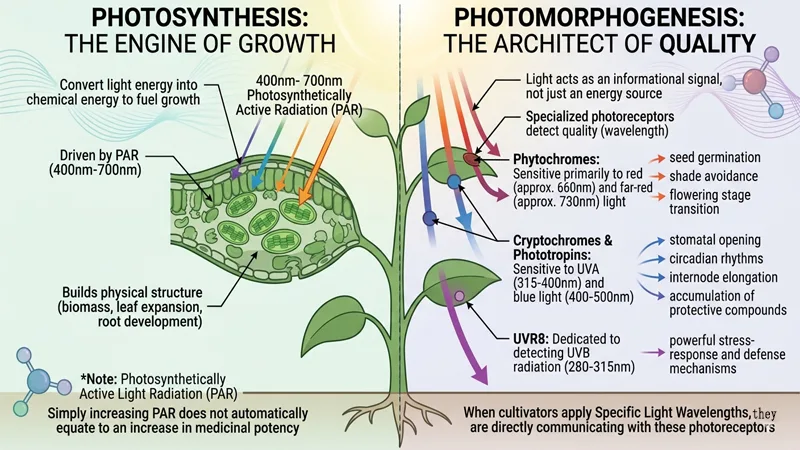
Photosynthesis is the process by which plants convert light energy into chemical energy to fuel their growth. This process is primarily driven by Photosynthetically Active Radiation (PAR), which falls within the 400nm to 700nm waveband. While essential for building the physical structure of the plant (biomass, leaf expansion, root development), simply increasing PAR does not automatically equate to an increase in medicinal potency.
Photomorphogenesis: The Architect of Quality
Photomorphogenesis refers to light-mediated development, where light acts as an informational signal rather than just an energy source. Plants possess specialized photoreceptors that detect the presence, intensity, duration, and specifically, the quality (wavelength) of light.
The most critical photoreceptors include:
- Phytochromes: Sensitive primarily to red (approx. 660nm) and far-red (approx. 730nm) light. They regulate seed germination, shade avoidance, and the crucial transition to the flowering stage.
- Cryptochromes and phototropins: Sensitive to UVA (315-400nm) and blue light (400-500nm). They govern stomatal opening, circadian rhythms, internode elongation, and the accumulation of vital protective compounds.
- UVR8: A specific receptor dedicated to detecting UVB radiation (280-315nm), triggering powerful stress-response and defense mechanisms.
When cultivators apply Specific Light Wavelengths in medicinal crop production, they are directly communicating with these photoreceptors.
What Are Secondary Metabolites?
Primary metabolites (like carbohydrates and amino acids) are required for basic survival. Secondary metabolites—such as terpenes, flavonoids, and specific medicinal alkaloids—are not strictly necessary for basic life functions. Instead, they serve as the plant’s sophisticated defense mechanism against environmental stressors, including pests, herbivores, and intense radiation. By strategically applying specific light spectrums, SLTMAKS LED systems simulate these environmental stressors in a controlled manner, forcing the plant to overproduce these highly valuable defensive compounds.
Decoding the Spectrum: Which Wavelengths Drive Medicinal Value?
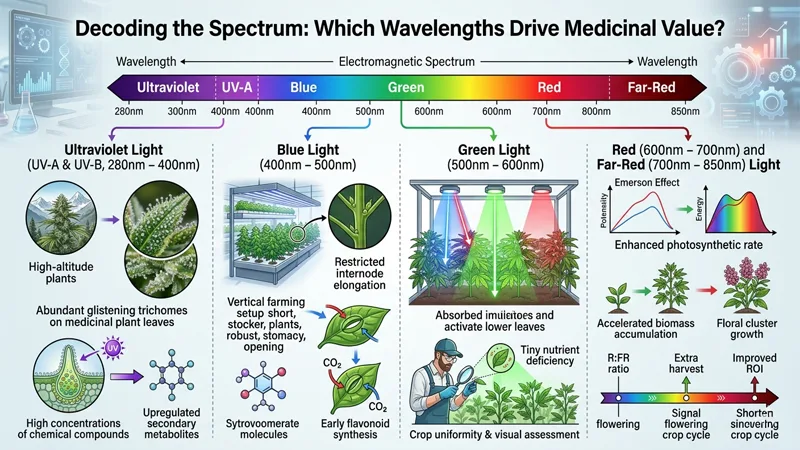
Different wavebands exert profoundly different effects on plant chemistry. Let’s break down the spectrum to understand how specific light wavelengths are utilized in commercial medicinal cultivation.
Ultraviolet Light (UV-A & UV-B, 280nm – 400nm): The Ultimate Defense Trigger
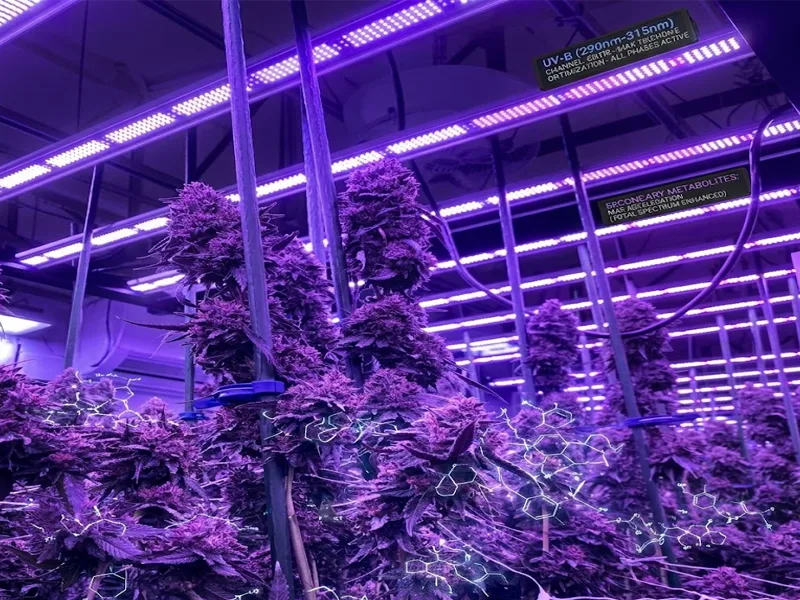
Ultraviolet light, particularly UV-B, is naturally present in high-altitude environments. Because UV radiation can damage plant DNA, plants have evolved a fascinating defense mechanism: they produce their own “sunscreen.”
- Trichome production: In medicinal plants, this sunscreen takes the form of increased trichome density. Trichomes are the microscopic resin glands where the highest concentrations of active medicinal compounds and terpenes are synthesized and stored.
- Chemical potency: Exposure to controlled UV stress in the late flowering stage signals the plant to rapidly upregulate the production of secondary metabolites. Commercial facilities utilizing SLTMAKS LED fixtures with integrated or supplemental UV channels consistently report measurable increases in total active compound percentages compared to crops grown under standard lighting.
Blue Light (400nm – 500nm): Structure and Early Chemical Accumulation
Blue light is heavily absorbed by chlorophyll and cryptochromes, playing a critical role in both the vegetative and reproductive phases.
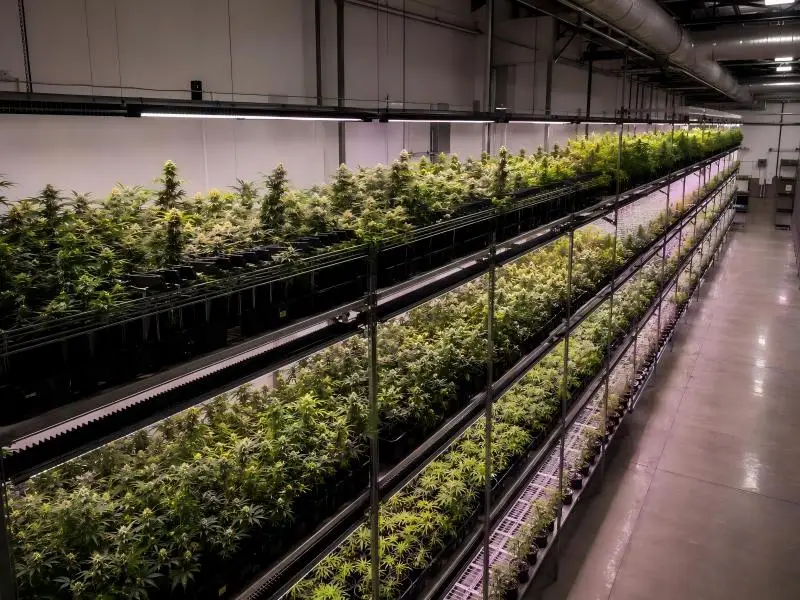
- Morphological control: Blue light acts as a growth inhibitor, restricting internode elongation. For indoor vertical farming and multi-tier commercial facilities, this is vital. It creates shorter, stockier, and more robust plants capable of supporting heavy floral clusters without the need for excessive physical trellising.
- Stomatal regulation: Blue wavelengths stimulate stomatal opening, enhancing transpiration and CO2 uptake, which is crucial for rapid vegetative growth.
- Flavonoid synthesis: Studies show that a higher percentage of blue light during the vegetative and early flowering stages promotes the initial synthesis of flavonoids and certain essential oils, laying the groundwork for a potent final harvest.
Green Light (500nm – 600nm): Deep Canopy Penetration
Historically, green light was dismissed in horticulture under the false assumption that plants reflect it entirely. Modern optical science has debunked this.
- Penetration power: While red and blue light are readily absorbed by the upper canopy leaves, green light penetrates deeper into the plant structure. It drives photosynthesis in the lower, shaded leaves that would otherwise senesce (die off) and drop.
- Crop uniformity: By ensuring the lower canopy remains active, green light contributes to a more uniform distribution of medicinal compounds throughout the entire plant, not just the top colas. Furthermore, green light is essential for human vision, allowing agronomists to accurately assess plant health, detect nutrient deficiencies, and spot early signs of pest infestations under the grow lights.
Red (600nm – 700nm) and Far-Red (700nm – 850nm) Light: The Engines of Biomass and Flowering
Red light is the most efficient driver of photosynthesis. However, its true power is unlocked when manipulated alongside far-red light.
- The Emerson effect: When plants are exposed to both red and far-red light simultaneously, the rate of photosynthesis is significantly higher than the sum of the two individual wavelengths. This synergistic effect accelerates growth rates and biomass accumulation.
- Flowering triggers and cycle times: The ratio of Red to Far-Red light (R: FR ratio) is the primary signal plants use to detect the length of the day and nearby competitors (shade avoidance). By precisely manipulating the far-red spectrum at specific times of the day, cultivators can force plants into the flowering stage faster and shorten the overall crop cycle. This means a commercial facility might squeeze an extra harvest into its annual production calendar, drastically improving ROI.
Why Commercial Facilities Must Optimize Light Spectra
For the modern B2B cultivation enterprise, migrating to intelligent, spectrum-tunable LED lighting is no longer a luxury; it is a strict operational necessity. Here is why the utilization of Specific Light Wavelengths in medicinal applications dictates market dominance:
1. Standardization and Pharmaceutical-Grade Consistency
The medical market requires exact dosing and predictable efficacy. Variability in active compounds from one batch to the next is unacceptable. Traditional HPS bulbs degrade over time, shifting their spectral output and leading to inconsistent harvests. SLTMAKS’s commercial LED grow lights offer precise, unwavering spectral consistency year after year. By locking in the exact wavelength recipe, cultivators guarantee that every batch meets stringent pharmaceutical standards.
2. Drastic Reductions in Operating Expenses (OPEX)
Profitability is defined by the cost of production per gram of active compound. Traditional lighting converts a massive amount of electricity into radiant heat (infrared), which does not contribute to photomorphogenesis but places an enormous burden on the facility’s HVAC (Heating, Ventilation, and Air Conditioning) systems. SLTMAKS LED fixtures are highly efficient, converting electrical energy specifically into the micromoles of PAR and biologically active wavelengths the plants actually need. This drastically reduces electricity consumption for lighting and slashes the energy required for cooling and dehumidification.
3. Targeted Spectrum Customization
Different medicinal plant strains and cultivars respond uniquely to light. A spectrum that maximizes terpene production in one cultivar might cause internode stretching in another. Commercial success requires a tailored approach, utilizing specific light recipes tailored to the facility’s specific genetics and end-product goals (e.g., maximizing biomass for extraction vs. maximizing visual appeal and terpene profile for premium whole-flower sales).
SLTMAKS B2B Solutions: Turning Spectrum Science into Commercial Profit
Understanding the science of light is one thing; engineering hardware capable of delivering it reliably in harsh, high-humidity commercial environments is another. SLTMAKS bridges the gap between advanced optical research and industrial agricultural manufacturing.
As a premier plant grow light manufacturer, SLTMAKS provides specialized solutions designed explicitly for the B2B sector:
- Proprietary spectrum engineering: Our R&D team does not rely on off-the-shelf “white light” solutions. We work closely with commercial partners to develop and deploy Specific Light Wavelengths in medicinal applications, ensuring your lighting infrastructure directly supports your crop’s chemical profile goals.
- Industrial-grade durability: SLTMAKS fixtures are built to withstand the rigors of commercial agriculture. Featuring IP65+ waterproof ratings, advanced passive thermal management, and premium diode selection, our lights guarantee long-term lumen maintenance and spectral stability, protecting your capital investment.
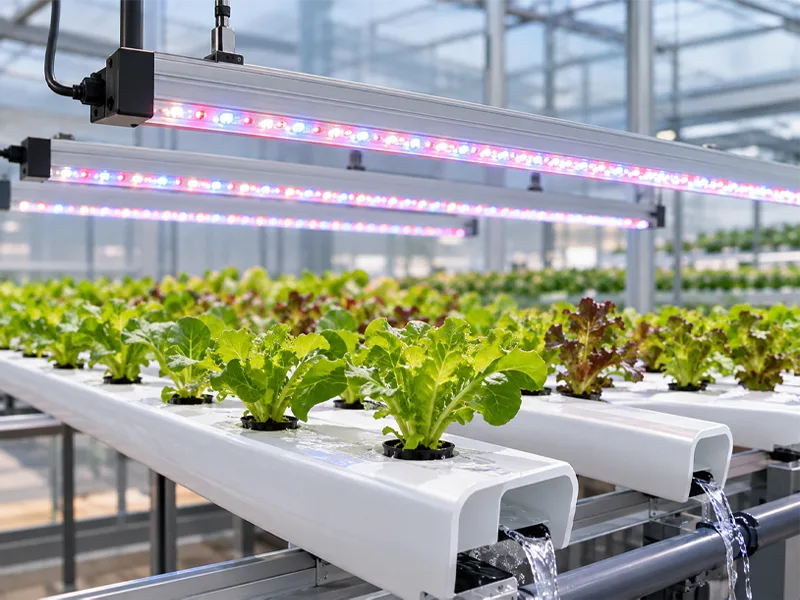
- Customizable and scalable ecosystems: Whether you are outfitting a single-tier greenhouse or a massive multi-tier indoor vertical farm, SLTMAKS offers scalable solutions. Our fixtures are fully compatible with advanced facility control systems, allowing cultivators to program dynamic light recipes, simulate sunrises and sunsets, and adjust spectrums throughout the crop’s lifecycle.
How to Choose the Right Commercial LED Grow Light Manufacturer
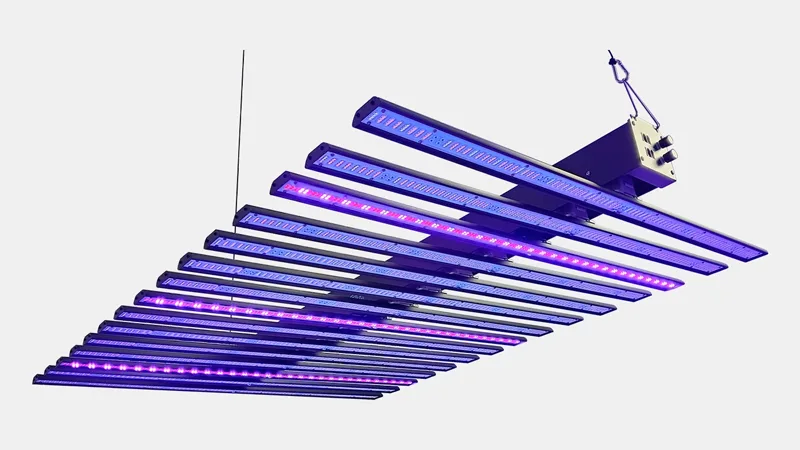
For commercial facility directors and procurement managers, selecting a lighting partner is a critical infrastructure decision. When evaluating manufacturers, consider these E-E-A-T-aligned criteria:
- Optical R&D capabilities: Are they merely assembling generic parts, or do they possess in-house photobiology R&D? Look for a manufacturer like SLTMAKS that actively researches how specific light wavelengths enhance medicinal value.
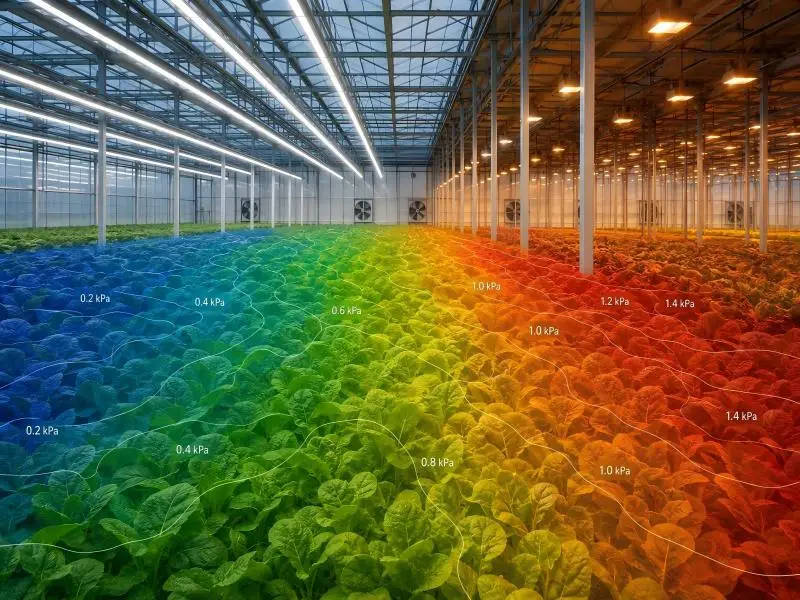
- Comprehensive lighting layout design: A professional manufacturer will not just sell you lamps; they will provide detailed, data-backed 3D lighting layouts. SLTMAKS engineers map out your facility to guarantee uniform PPFD distribution and eliminate micro-climates, ensuring every plant receives the same light energy.
- Supply chain stability and scalability: Commercial projects require reliable delivery timelines. Ensure the manufacturer has the robust manufacturing capacity to fulfill large-scale orders on time and the financial stability to honor long-term warranties.
- Certifications: Demand industrial safety and compliance certifications (UL, CE, ETL) to ensure integration with your facility’s electrical infrastructure is safe and up to code.
Conclusion: The Future of Medicinal Cultivation is Spectral
The era of “one-size-fits-all” agricultural lighting is over. The science is unequivocal: the application of Specific Light Wavelengths in medicinal cultivation is the most powerful tool available to modern agronomists for driving secondary metabolite production, enhancing terpene profiles, and ensuring pharmaceutical-grade crop consistency.
By transitioning from basic illumination to strategic photomorphogenic control, commercial facilities can lower their OPEX, increase their yield of active compounds, and secure a premium position in the medicinal market.
Ready to maximize the medicinal value of your crops? Do not let outdated lighting limit your genetic potential. Partner with the experts in horticultural lighting.
Contact the SLTMAKS engineering team today for a free commercial lighting audit and a custom spectrum consultation. Let us design a lighting solution that turns precise optical science into your competitive advantage.
FAQ
Why is biomass no longer the sole metric for success in medicinal cultivation?
In the modern pharmaceutical and wellness markets, purity, active compound concentration, and batch-to-batch consistency are just as critical as raw yield. The true financial value of a medicinal crop lies in its chemical profile (secondary metabolites and terpenes). High biomass without high potency fails to meet the stringent standards required for medical-grade products.
What is the difference between Photosynthesis and Photomorphogenesis?
Photosynthesis: The process of converting light (primarily 400nm–700nm) into energy to build the plant’s physical structure.
Photomorphogenesis: A process where light acts as an informational signal. Plants use specialized photoreceptors to sense specific wavelengths, which “program” growth patterns, flowering cycles, and the production of medicinal compounds.
How does Ultraviolet (UV) light specifically enhance medicinal value?
UV light (specifically UV-B) acts as an environmental stressor. To protect its DNA, the plant produces a biological “sunscreen” by:
· Increasing Trichome Density: Microscopic resin glands where medicinal compounds are stored.
· Upregulating Secondary Metabolites: Triggering a defense response that forces the plant to overproduce active chemical compounds and terpenes, significantly increasing potency.
What is the “Emerson Effect,” and how does it improve ROI?
The Emerson Effect occurs when plants are exposed to both Red and Far-Red light simultaneously. This synergy drives photosynthesis at a much higher rate than the two wavelengths could individually. By manipulating this ratio, commercial facilities can:
· Trigger the flowering stage faster.
· Shorten the overall crop cycle.
· Potentially add an extra harvest to the annual production calendar, drastically increasing Return on Investment (ROI).
Why should commercial facilities choose LED over traditional HPS lighting?
LED technology offers three main advantages for B2B operations:
· Spectral Consistency: Unlike HPS bulbs that degrade and shift spectra over time, LEDs provide unwavering light quality, ensuring pharmaceutical-grade consistency.
· Lower OPEX: LEDs convert electricity into light more efficiently and produce less radiant heat, significantly reducing electricity bills and the load on HVAC systems.
· Deep Canopy Penetration: Modern LED spectrums (including green light) penetrate deeper into the plant, ensuring high-quality medicinal compounds are distributed throughout the entire plant, not just the top.
What should I look for when choosing a professional LED manufacturer?
According to SLTMAKS, facility directors should evaluate:
· Optical R&D Capabilities: Does the manufacturer conduct in-house photobiology research?
· Customization: Can they provide data-backed 3D lighting layouts to ensure uniform PPFD distribution?
· Industrial Durability: Are the fixtures built for harsh environments (e.g., IP65+ waterproof ratings) and compliant with safety certifications like UL, CE, or ETL?