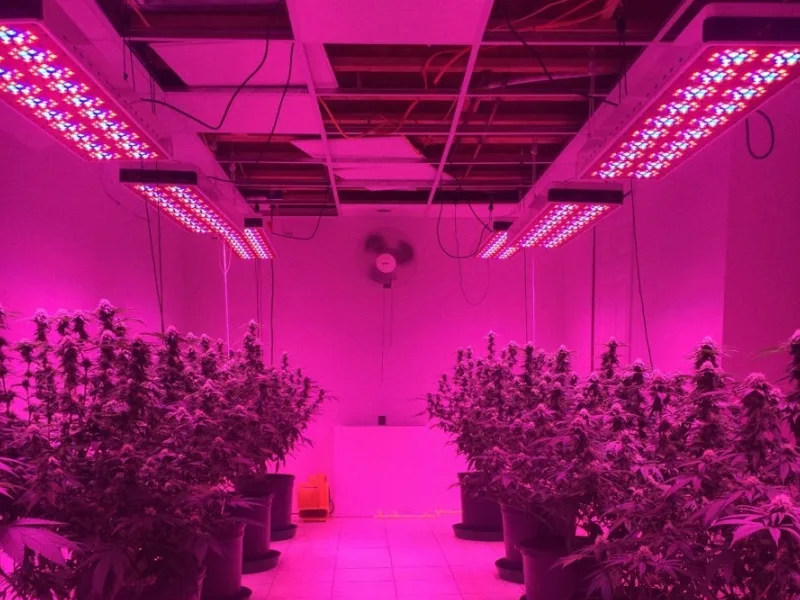
Selecting a commercial LED plant grow light for utility rebates starts with mastering stringent energy efficiency standards and complex local rebate rules. For industrial greenhouses and commercial indoor farming operations, transitioning to modern lighting is no longer just about crop yield; it is a vital financial strategy. Commercial growers choose LED plant grow lights primarily because they use significantly less electricity than HID fixtures such as High-Pressure Sodium (HPS) or Metal Halide (MH) lights.
Furthermore, an advanced LED plant grow light makes much less radiant heat, drastically reducing the demand on your facility’s HVAC (Heating, Ventilation, and Air Conditioning) system, which translates to needing less cooling and ongoing maintenance. High-quality commercial-grade LED grow lights can last between 50,000 and 100,000 hours, drastically reducing replacement cycles and labor overhead.
Utility programs across North America and Europe issue rebates to reward growers who deploy LED plant grow lights with high efficacy (PPE), the correct horticultural-specific DLC listings, and intelligent energy-saving features. Ultimately, these capital expenditure rebates help reduce upfront procurement costs and allow growers to put more operational cash flow back into expanding their plant factories. Rebates not only help growers increase profits but also push the horticultural industry to adopt LED plant grow lights that meet the toughest sustainability standards. However, securing these funds is complex. Rebates need you to pick the right certified product from a proven manufacturer and keep impeccable engineering records.
As a leading wholesale horticulture lighting manufacturer, SLTMAKS knows that these rebates help growers who want to dramatically save energy with cutting-edge technology. When navigated correctly, rebates make LED plant grow lights a smart pick for any commercial plant factory
Key Takeaways
- Master the Standards: Learn about rigorous energy-efficiency standards to pick LED grow lights eligible for utility rebates.
- Prioritize High PPE: Choose commercial LED lights with high Photosynthetic Photon Efficacy (PPE) ratings (2.7-3.0+ µmol/J) for greater energy savings and bigger financial rebates.
- Demand Proper Certification: Check for strictly horticultural certifications like DLC Horticulture QPL and UL8800 safety standards to make sure the lights follow exact rebate rules.
- Integrate Smart Controls: Use energy-saving tools like ambient light sensors and 0-10V dimming controls to lower energy use and trigger bonus rebate tiers.
- Maintain an Audit Trail: Keep all your technical paperwork neat, including manufacturer spec sheets, LM-79 reports, invoices, and certification records, to make the utility rebate process easier.
- Secure Pre-Approval: Buy early and engage utility representatives to see if rebate money is still allocated, ensuring you do not miss out on your facility’s savings.
- Monitor Policy Shifts: Watch closely for regulatory changes in utility rebate programs to follow the rules and capture as much capital as you can.
- Leverage Manufacturer Expertise: Ask your trusted LED suppliers and utility workers for dedicated help with picking products and filling out complex custom rebate forms.
Table of Contents
LED Plant Grow Light Standards
To position your commercial growing facility for maximum utility kickbacks, you must first understand the specific horticultural standards that govern the industry. Utilities do not hand out money indiscriminately; they rely on stringent, verified metrics to calculate anticipated energy reductions.
Key Energy Efficiency Criteria
When evaluating lighting for commercial cannabis, vertical farming, or traditional greenhouse supplementation, energy efficiency cannot be judged by human-centric lumens. Instead, the B2B LED grow light market relies on Photosynthetic Active Radiation (PAR) metrics.
Efficacy ratings (2.7-3.0+ µmol/J)
In the horticultural sector, efficacy ratings tell us exactly how well LED grow lights turn raw electrical watts into usable photons for plants. This metric is known as Photosynthetic Photon Efficacy (PPE), expressed in micromoles per joule (µmol/J). Many commercial rebate programs explicitly want LED grow lights to have high, proven PPE efficacy ratings to qualify.
Currently, professional-grade LED lighting with efficacy ratings from 2.7 to 3.0+ µmol/J fits most stringent prescriptive rebate rules. In fact, SLTMAKS commercial fixtures frequently push past the 3.0 µmol/J threshold. Growers who pick LED grow lights with these elite high efficacy ratings pay less for energy monthly and get significantly more money back from initial rebates.
Without a doubt, verified PPE efficacy ratings are important for getting energy rebates. As the technology curve advances, many regional rebate programs continuously raise the bar and need certain baseline efficacy ratings (often minimums of 2.5 µmol/J) just to enter the program. Remember, higher efficacy ratings directly mean better long-term energy savings and more robust utility rebates.
DLC Listings and Certifications
DLC listings prove that LED grow lights follow strict energy rules. Utilities usually require DLC certification before they approve a rebate. UL certification proves that the lights operate safely. You must always look for these two certifications before you buy any fixtures.
Additionally, standard safety marks are not enough. While general UL certification shows that the lights are safe and work well, commercial grow environments are wet and humid. Therefore, fixtures must meet the UL8800 standard, which is explicitly written for horticultural lighting equipment.
Expert tip: Always look for DLC Horticultural QPL and UL8800 safety certifications when picking wholesale LED grow lights for large-scale utility rebate programs.
Benefits Over Traditional Lighting
Commercial LED grow lights have many benefits over old types of HID lighting. The most profound difference is thermal management; LED lighting uses less energy and produces significantly less radiant heat directed at the plant canopy. Modern LED grow lights also give the exact right kind of tailored spectral light for specific plants, allowing growers to manipulate morphology.
Table 1: Quantitative comparison of lighting technologies
| Feature | LED Grow Lights | Traditional Lighting |
|---|---|---|
| Energy efficiency | High | Low |
| Light spectrum | Targeted | Broad |
| Heat output | Low | High |
| Fixture durability | Strong | Weak |
| Rebate eligibility | Yes | No |
B2B LED grow lights with high efficacy, verified DLC listings, help growers meet stringent regional energy efficiency rules. These established rules help grid operators save energy and allow commercial facilities to get more rebates. Modern LED lighting makes plant factories work far better financially and helps them aggressively grow in a green, sustainable way.
Understanding Energy Rebates for Plant Factories
Types of Energy Saving Rebates
Plant factories and commercial greenhouses can get different energy rebates to save capital money. The most common are “prescriptive rebates,” which give a simple, set dollar amount for each specific fixture upgrade.
On the other hand, “custom rebates” give much larger rewards for complex, special projects that save massive amounts of facility-wide energy. Public utilities and green government groups offer both kinds of rebates to incentivize indoor farming. Prescriptive rebates are excellent for straightforward, 1-to-1 common upgrades like swapping 1000W HPS for 600W LED grow lights.
However, Custom rebates help with complex, multi-tiered facility projects that need special networked controls, HVAC integration, or whole-facility operational plans. These energy-saving rebates directly help commercial growers pick the best capital upgrades for their plant factories. To summarize: Prescriptive rebates give a reliable, set reward for each upgrade, while Custom rebates give dynamic money for projects that mathematically show deep energy savings through baseline engineering studies.
How Rebates Reduce Operational Costs
Capital expenditure (CapEx) is the biggest hurdle for indoor farming. Energy rebates effectively make premium LED grow light installations cost much less at first. Beyond local utilities, federal programs like the USDA Rural Energy for America Program (REAP) can pay for up to half of total project costs, with an impressive limit of $500,000 for each commercial application.
For massive facilities, custom utility rebates can easily give between $74,000 and well over $170,000 for comprehensive commercial LED upgrades. These massive financial rebates mean large-scale growers spend considerably less private equity money at the start.
Furthermore, growers save substantially on electricity demand charges and energy bills every single month after they put in new high-PPE lights. These utility rebates and state incentives let growers keep more liquid cash for other vital things like labor, genetics, and nutrients. The sheer energy savings from replacing HID with SLTMAKS LED grow lights add up incredibly fast over a 5-year time horizon.
Technical Criteria for LED Grow Lights
Utilities require irrefutable proof that the equipment you install performs exactly as advertised. To guarantee a return on their incentive investment, they rely on rigid technical criteria.
Wattage and Power Consumption
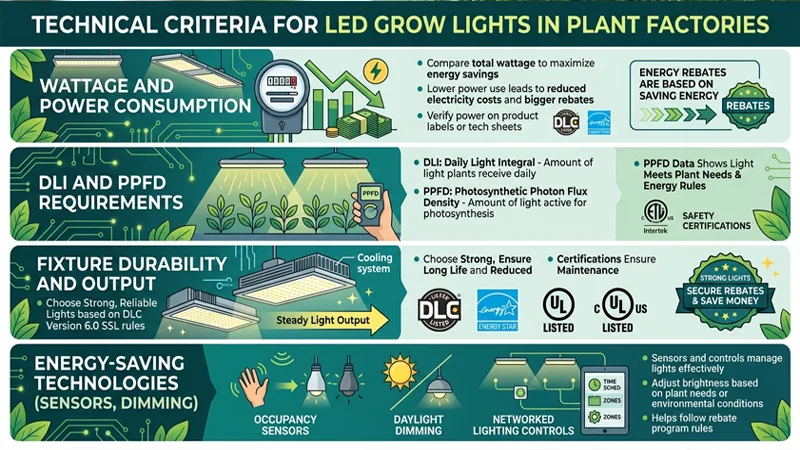
Before issuing a check, utility engineers require that growers closely look at true fixture wattage and overall facility power use. Energy rebates are exclusively given when you can mathematically prove you will save energy against a baseline.
Many custom engineering programs audit the total aggregated wattage of all legacy lights versus the proposed LEDs. To prevent fraud, utilities universally want DLC Horticulture certification for commercial lights to verify the wattage draw.
You can transparently check real energy use on the manufacturer’s product label, UL safety listings, or integrating-sphere tech sheets. Ultimately, using less energy means you pay the utility less monthly and get bigger initial rebates. Energy rebates are fundamentally based on the physics of saving energy. Utility rebate programs look very closely at the total active wattage of all operating lights. Consequently, most high-value rebates absolutely need DLC Horticulture certification.
DLI and PPFD Requirements
You must understand DLI (Daily Light Integral) and PPFD (Photosynthetic Photon Flux Density). These metrics prove your plants receive enough usable light. Rebate programs review this data to ensure the lights meet plant needs without wasting energy.
Table 2: Core horticultural lighting metrics
| Specification | Importance |
|---|---|
| PPFD data | Shows how much light plants need to grow. |
| Safety certifications | Proves the light is safe and reliable. |
| PPFD output | High numbers help plants all over the growing area. |
Master growers must carefully match their target DLI and PPFD to the specific plant species type and its current growth stage. This careful agronomic alignment makes sure the LED lights use energy exceptionally well and can confidently get utility rebates without risking crop yield.
Fixture Durability and Output
In a commercial environment running 12 to 18 hours a day, equipment failure is catastrophic. Industrial growers absolutely need to pick B2B lights that are mechanically strong and work flawlessly in high humidity.
The DesignLights Consortium (DLC) Horticulture standards define the correct rules for plant lights. You should not use the DLC Version 6.0 SSL rules. Many buyers mistakenly look for ENERGY STAR certification. However, ENERGY STAR only tests lights for homes and standard commercial buildings. ENERGY STAR does not certify lights for plant manufacturing. Therefore, valid plant grow lights must appear on the DLC Horticulture list.
Furthermore, UL8800 certification shows that the heavy-duty light is electrically safe and safely handles internal component heat. These rigorous testing certifications prove to the utility that the light works efficiently for a very long time. Professional growers should rigorously look for these exact credentials before signing a B2B buying contract.
Well-engineered, good lights need drastically less maintenance, fixing, and use less energy consistently. A stable, steady diode output means high-value crops get the exact right light every single day. Investing in strong, durable, and good industrial lights directly helps growers get capital rebates and save massive amounts of money.
Expert Insight: Always look for DLC Horticulture Qualified Product Lists and UL8800 certifications to make sure your commercial LED grow lights work flawlessly and can seamlessly get approved for rebates.
Energy-Saving Technologies (Sensors, Dimming)
Smart technologies help your plant factory use less power. Occupancy sensors turn off the lights when no one is in the room. Daylight dimming systems lower the artificial lights when natural sunlight is bright. Growers use these tools to cut lighting energy use by 30 to 50 percent. Utilities often provide extra rebate money if you install these controls.
Table 3: Common controls & rebate adders
| Control Type | Approximate Rebate | Key Qualification Criteria |
|---|---|---|
| Occupancy sensors (remote dual sensor) | $60 per control | Must automate LED drivers |
| Daylight dimming (integral fixture sensor) | $60 per fixture | Occupancy or daylight dimming |
| Networked lighting controls (LLLC/NLC) | $70 per fixture | Must support zoning and daylight harvesting |
| High/low bay dual sensors | $70 per fixture | Minimum 5,000 lumens |
| Outdoor occupancy sensors | $70 per fixture | Motion or photocell control |
| Networked outdoor controls | $80 per fixture | Dusk-to-dawn plus occupancy sensing |
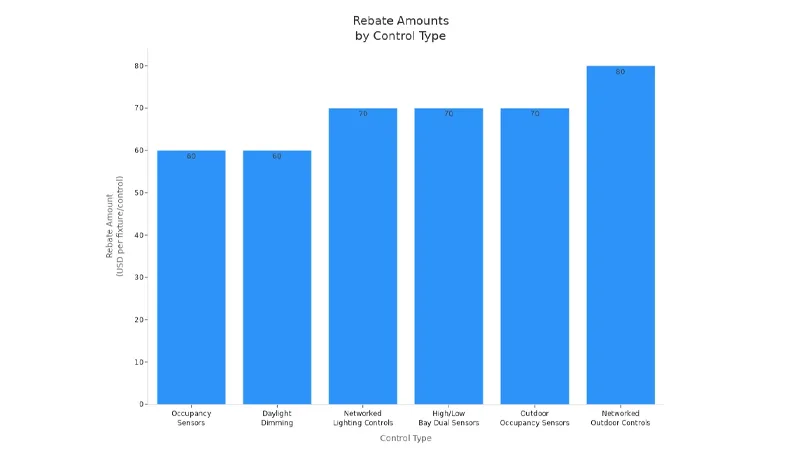
Growers who deploy advanced network sensors and automated dimming controls save a truly massive amount of energy. Through smart automation, they can dramatically cut lighting energy use by 30 to 50 percent beyond the LED efficiency itself. These smart controls also significantly help lower overall facility repair costs by reducing diode burn-in time.
When these sensors and dimming controls officially connect to enterprise Building Management Systems (BMS), they help seamlessly control all the HVAC and lights in unison. These enterprise systems use specialized industrial communication protocols like BACnet or Modbus. Cautious growers can beta-try these complex systems in a single cultivation area first. Then, upon verification of ROI, they can deploy them in more enterprise places. Standard prescriptive utility rebates for controls are usually $1 to $3 for each connected fixture.
In custom programs, sometimes, calculated rebates are a lucrative $0.10 to $0.20 for each verified kilowatt-hour (kWh) permanently saved. Furthermore, federal corporate tax incentives can strategically help offset costs and save even more corporate money.
Operations managers and growers can precisely follow these engineering steps to get the absolute most ROI from energy-saving technologies and utility rebates:
- Engage early: Aggressively plan CapEx upgrades early and formally get binding pre-approval from the utility rebate program.
- Verify compatibility: Only pick fully DLC-listed sensors, drivers, and master controls.
- Maximize sensor density: Intelligently add occupancy sensors and automated daylight dimming nodes to each viable fixture.
- Document everything: Meticulously keep digital records of all manufacturer products, commercial invoices, and electrical wiring diagrams.
- Hire professionals: Only work with licensed commercial electrical contractors who deeply know local rebate rules.
- Commission properly: Rigorously check that all digital controls work perfectly after physical installation.
- Audit performance: Use data-logging tools or third-party engineering checks to scientifically measure real energy savings.
- Stack capital: Strategically combine utility rebates, federal tax credits, and low-interest utility financing.
- Time the market: Watch carefully for end-of-year bonus rebate periods when utilities dump excess budget.
- Phase rollouts: Upgrade massive facilities in measured steps to adapt and keep up with rapidly evolving new rebate rules.
Verifying Compliance for Rebates
Product Labels and Documentation
Commercial growers absolutely need to aggressively get the right engineering papers organized before they officially ask for massive energy rebates. Every single state utility rebate program has its very own complex forms and bureaucratic rules. B2B growers and project managers should carefully read the legal rules for each specific program.
Project managers and growers must legally keep these critical papers completely safe for years:
- Signed utility application forms for the specific rebate program.
- Original OEM fixture specification sheets (cut sheets) and active DLC Horticulture QPL listings.
- Irrefutable proof that you actually put in the specified lights, like electrical contractor bills or commissioning reports.
Expert tip: Digitally keep all your facility papers in one secure cloud folder. This organizational habit makes it incredibly easy if the utility auditor or program inspector unexpectedly asks for more technical information.
Third-Party Certifications (DLC, UL)
Unbiased certifications from independent testing groups scientifically show beyond doubt that LED grow lights are legally safe and actually save grid energy. The DesignLights Consortium (DLC) critically reviews LM-79 and LM-80 testing data to give authoritative lists of genuinely good commercial lighting products. Power utilities and lucrative rebate programs overwhelmingly want to see active DLC Horticulture listings.
Growers should directly check the official DLC website portal for verified approved lights before issuing a PO. Likewise, strict UL8800 certification explicitly shows the high-voltage product is legally safe for farm workers. Depending on the jurisdiction, some utility programs also readily take equivalent Intertek ETL horticultural certification.
The compliance table below clearly shows critical common certifications and exactly what they mean to an auditor:
Table 4: required independent certifications
| Certification | What It Proves | Who Requires It |
|---|---|---|
| DLC | Energy efficiency | Utilities, rebate programs |
| UL | Product safety | Utilities, inspectors |
| ETL | Product safety | Some programs |
Working with Suppliers and Manufacturers
Suppliers and manufacturers can help you during the application process. Manufacturers can provide specification sheets and safety reports. Some suppliers will even help you fill out the rebate forms. You should ask for this help early to avoid mistakes.
B2B growers should aggressively ask these critical qualification questions before buying massive orders of LED grow lights:
- Does this exact SKU currently have an active DLC Horticulture listing on the QPL?
- Can your engineering department rapidly give me official UL8800 or ETL safety certification papers?
- Will your dedicated B2B sales team actively help me with my utility rebate forms?
- Does your company specifically know the rules about my local utility’s custom rebate programs?
Step-by-Step Guide to Qualifying for Rebates
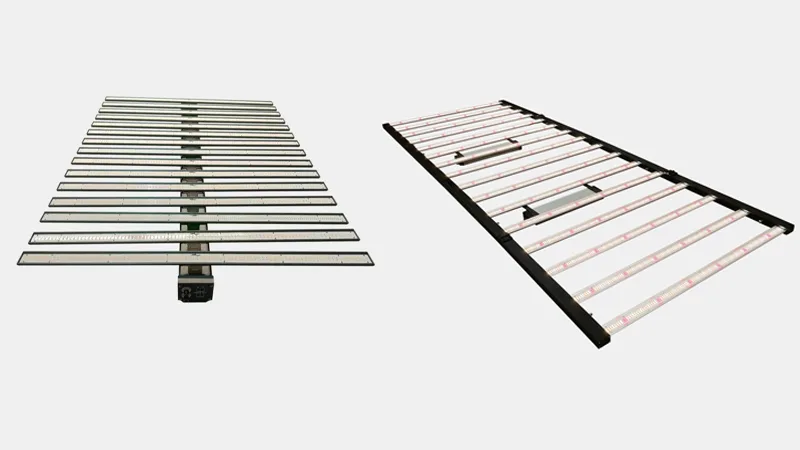
- Assess your needs: You must measure your plant area. This measurement helps you calculate how much light your plants need.
- Select compliant lights: You must choose lights that have DLC or ENERGY STAR certification. You should verify they have the correct efficacy ratings.
- Gather documents: You need to collect all utility forms, certifications, and invoices.
- Submit applications: You must read the program instructions first. You should fill out the form, attach your documents, and send the application before the deadline. You should secure pre-approval before you buy the lights.
Maximizing Energy Saving Rebates
Timing Purchases and Applications
State power utilities universally have a strictly capped amount of rebate grant money assigned each fiscal year. This finite budget pool of money can easily run out well before the calendar year is actually over. Thus, growers should explicitly ask their utility account manager if there is still budget money left before executing a massive purchase order.
Accurate Paperwork and Pre-Approval
Growers should aggressively collect all the exact engineering papers needed before they officially apply. The most universally requested technical papers are:
- A very recent, detailed commercial utility bill showing meter numbers
- Legal corporate proof that your commercial business is legally registered in the state.
- Detailed OEM LED fixture specification cut sheets.
- Active DLC Horticulture QPL listings or UL8800 safety certification test records.
- Paid, itemized commercial supplier invoices for the precise LED grow lights
- Other specialized utility papers, like a baseline running meter data log, are heavily needed.
To prevent rejection, growers should methodically follow these exact chronological steps to legally get the absolute most rebates:
- Officially get written pre-approval from the local utility or federal grant program.
- Verbally check if there is genuinely enough rebate budget money actually left.
- Mathematically make sure your specific lighting project can technically get a custom rebate.
- Exhaustively gather all the rigidly needed engineering and financial paperwork.
- Promptly send in your completed forms well before the strict utility deadline.
Leveraging Supplier and Utility Support
Elite LED suppliers and local utilities can actively help commercial growers legally get considerably more rebates. Many top-tier professional suppliers deeply know exactly which state-of-the-art commercial LED grow lights consistently get the absolute biggest utility rebates.
These manufacturing experts can instantly give you highly detailed engineering spec sheets, active DLC Horticulture QPL listings, and independent lab certification safety records. Some premium full-service B2B suppliers even proactively help facility managers meticulously fill out complex custom rebate forms and accurately answer utility auditor questions.
Furthermore, local utilities themselves very often have dedicated agricultural engineers who actively help commercial growers navigate the complex application steps.
Staying Updated on Rebate Changes
Utility rebate programs change very frequently. Regional utilities and federal green agencies quite often unilaterally change strict technical rules and application forms.
Growers can proactively do these specific strategic things to comfortably stay highly updated:
- Consistently look at local utility agricultural program websites every single month.
- Actively sign up for direct technical emails from the regional energy rebate programs.
- Actively join professional agricultural groups or B2B engineering forums for the commercial industry.
- Explicitly ask top-tier suppliers like SLTMAKS if there is any pending legislative rebate news.
- Carefully read the newest program PDF rules immediately before physically starting a massive project.
Common Mistakes with Rebates
- Overlooking Criteria: Many growers fail to use DLC Horticulture Listed products. Some growers apply for ineligible crops or lack a commercial electric account.
- Missing Deadlines: Some growers start their projects before they receive pre-approval. This mistake can void the rebate. Other growers lose important paperwork.
- Choosing Non-Compliant Products: You will not get a rebate if you buy lights with low efficacy ratings or missing certifications.
FAQ
What is a DLC listing for LED grow lights?
A DLC listing shows the light follows energy-saving rules. Utilities use DLC lists to see if you can get a rebate. You can look up DLC-listed lights on the DLC website.
How do I know if my LED grow light qualifies for rebates?
Look at the label for DLC or UL certification. Read the rebate program rules from your utility. Ask your supplier for proof. Check the utility’s list to make sure your light is approved.
Why do utilities require efficacy ratings for rebates?
Utilities use efficacy ratings to see how well a light converts power into plant light. Higher ratings mean the light saves more energy. Utilities want to give rewards to lights that save the most energy.
Can I get rebates for upgrading controls like sensors or dimmers?
Yes, you can. Many programs give rebates for controls. These controls are things like occupancy sensors, daylight dimmers, and networked controls. Look at the rebate program to see which controls are approved.
What documents do I need for a rebate application?
You need forms from the utility, bills, product spec sheets, DLC or UL certifications, and proof that you put in the lights. Keep all your papers in one folder so you can find them fast.
Do all crops qualify for lighting rebates?
No, not all crops can get rebates. Some programs only give rebates for certain crops. Read the rebate rules before you start. Ask your utility or supplier if your crop can get a rebate.
How long does it take to get a rebate after applying?
Most programs need a few weeks to check and approve your application. Watch your application status with the utility. Answer quickly if they ask for more information.
Can I combine federal tax credits with utility rebates?
Yes, you can use both together. Federal tax credits and utility rebates can be used at the same time. This helps you pay less for your project.