By Dr. Aris Thorne, Senior Plant Photobiology Engineer at SLTMAKS. With over 15 years of experience in horticultural lighting and controlled environment agriculture, Dr. Thorne leads the research and development of high-efficiency LED grow lights at SLTMAKS.
Photosynthetically active radiation affects how plants use energy. It helps plants grow by facilitating photosynthesis.
Commercial growers notice significant changes in crop yield when they effectively control photosynthetically active radiation using advanced lighting solutions. New studies indicate that photosynthetically active radiation helps plants cope with stress and grow robustly. Using photosynthetically active radiation the right way gives plants the best light at the best time. When optimizing these spectra, plants show better photosynthesis and higher yield. Furthermore, plants use photosynthetically active radiation to control important traits, dictating everything from leaf expansion to root development.
This methodical approach to light management works for all growers who want healthy plants, whether in a small indoor tent or a massive commercial greenhouse.
Key Takeaways
- Knowing about photosynthetically active radiation (PAR) is very important for plant growth. It lets plants do photosynthesis well.
- Check PAR levels often with specialized sensors. This makes sure plants get the right amount of light to grow healthy.
- Find and fix places where light does not reach. This helps all plants get enough light and grow the same way.
- Change light settings for different plant growth stages. Young plants need less light. Older plants need more light.
- Do not make mistakes with where you put lights. Putting lights in the right spot stops leaves from burning and keeps growth even.
- Use timers and machines to keep light schedules the same. This gives plants steady light every day so they grow better.
- Add shiny surfaces in your grow area. These surfaces reflect light to the plants and spread it better.
- Watch things like temperature and humidity. These things change how well plants use light energy.
Table of Contents
Optimizing PAR for Growth
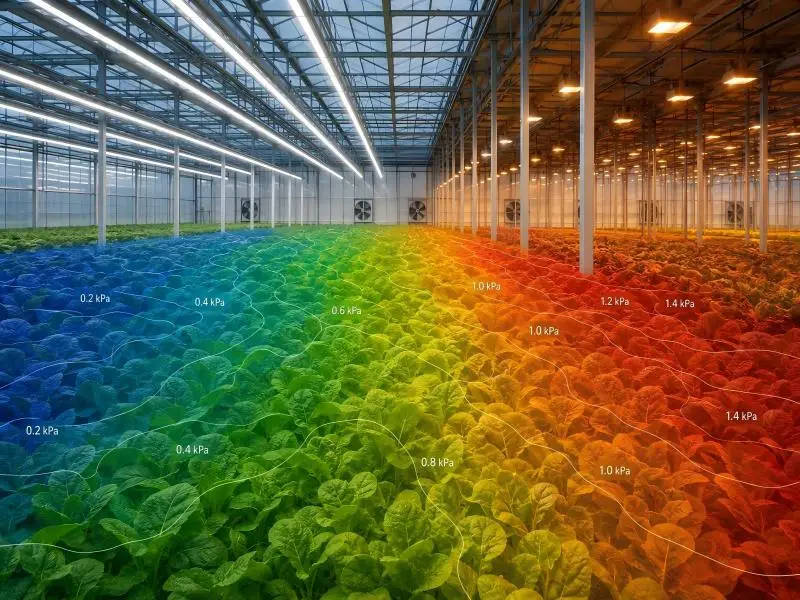
Assessing Current PAR Levels Using PAR Sensors
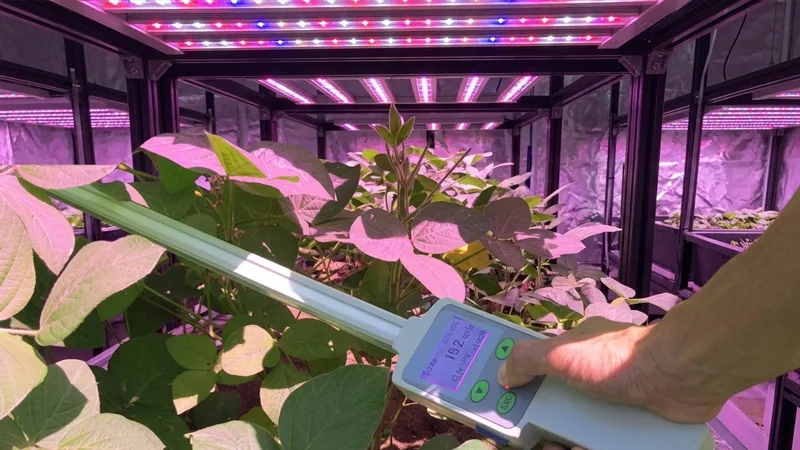
To maximize the return on investment for your SLTMAKS LED grow lights, growers must check the PAR output to know how much light plants get. PAR sensors find light that helps photosynthesis. These specialized sensors turn light into electric signals, which gives a clear PAR output number for immediate analysis. While some hobbyists use smartphone apps to check PAR output as PPFD, professional growers rely on dedicated quantum sensors.
SLTMAKS expert insight: Knowing things like PPFD helps growers pick the best LED grow lights for their specific canopy layout. It also makes sure each plant gets enough PAR output to grow well, preventing energy waste.
Identifying Light Gaps
In any cultivation facility, growers need to look for spots with low PAR output. These shadowed spots can significantly slow down plant growth and reduce overall harvest uniformity. To mitigate this, use a professional PAR sensor to check the whole area, ensuring you move the sensor over the plants across the entire canopy. Write down the PAR output at each spot. Find places where the PAR output is too low. These dark spots can happen if the lights are not set up right or if something blocks the light. Fixing these spots by adjusting your commercial LED grow lights helps more light reach every plant.
Setting Growth Goals
Growers should make clear, data-driven goals for plant growth using PAR output. Try these steps for optimal canopy management: Use a quantum meter to check PPFD directly at the leaves. Take readings at different times and heights to see changes.
Do the shadow test: look at the shadow each plant makes. This shows if the plant gets enough light penetration. While you can use a phone lux meter app to check light in lux and change it to PAR output, we recommend professional PPFD mapping. This helps match light to what the plant specifically needs. These steps help growers give the right PAR output for each plant’s developmental stage. Changing PAR output helps light reach deep into the foliage and stops too much light from causing photoinhibition.
Avoiding Common PAR Mistakes
Even experienced cultivators face challenges. Growers sometimes make mistakes with PAR output. These mistakes can hurt plants and slow growth. For instance, bad light placement can burn leaves; when this happens, leaves turn yellow and stop growing fast. Light cycles that change too much stress plants, meaning plants may grow incorrectly or have developmental problems. Not spreading light well makes plants grow unevenly, where some get too much light, and others get too little. Weak bulbs do not give enough PAR output for good growth.
Furthermore, not handling heat can hurt leaves. Heat from inefficient lights can cause trouble fast. Conversely, too much water under fake light can hurt roots because the soil dries more slowly with highly efficient LED lights. To stop these mistakes, growers should check the PAR output a lot. Change the lights to help light reach all plants and stop too much light. Make lights brighter slowly; this helps plants get used to it and lowers stress.
Tip: Check par output and light reach every week. Change lights a little at a time and watch how plants react. This stops too much light and helps plants grow steady.
Photosynthetically Active Radiation Explained
What is PAR?
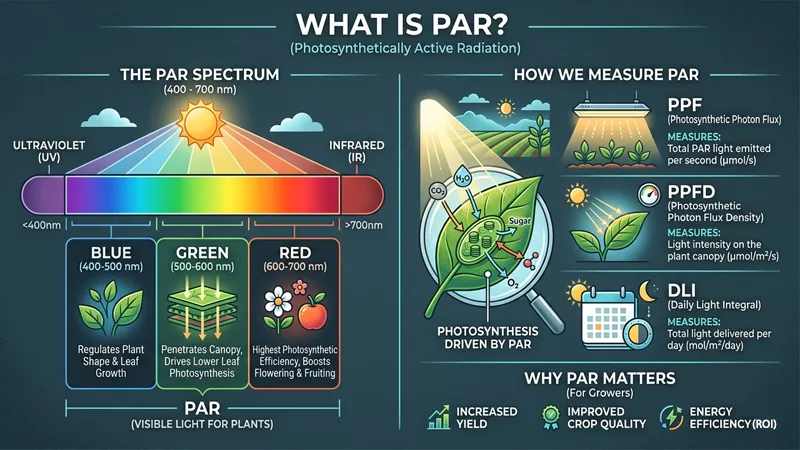
Photosynthetically active radiation, called PAR, is sunlight that plants use for photosynthesis.
PAR covers a certain range of light colors. Scientists measure PAR from 400 to 700 nanometers. This strictly matches the light plant pigments take in. PAR counts all photons in this range the same way. PAR starts the main steps in photosynthesis. These crucial biological steps include splitting water and fixing carbon dioxide. PAR helps all plants collect light and lets plants use energy from the sun or high-quality LED grow lights. PAR also changes how well photosynthesis works.
In summary, PAR covers light from 400 to 700 nm, counting all photons in this range for measuring light collection, which is needed for chemical reactions in plants.
Why PAR Matters for Plant Growth
PAR controls how much energy plants get to grow. PAR affects how well photosynthesis works and changes how much photosynthesis can happen. When PAR goes up, plants use more energy. This helps plants collect more light, make food, and grow strong. PAR also helps plant pigments do their job and changes how plants use water and carbon dioxide. It affects how much light plants collect in their leaves and changes how much pigment is in leaves.
Recent scientific literature supports these physiological responses. For example, Niu and Masabni (2018) found that red and far-red light in PAR changes photosynthesis and crop growth. Mayorga-Gomez et al. discovered that lettuce can handle less daily light after high PAR, which changes energy use. Lv et al. proved that more PAR in rice makes stomata open more, increases water loss, and improves photosynthesis. Ogolla Egesa et al. found that small cells with more stomata help CO2 move and make photosynthesis work better.
PAR works with other kinds of light. Far-red light can help photosynthesis when used with PAR. PAR works better than far-red light alone, making plants use light more efficiently. PAR helps plants use light to grow, collect light, and do photosynthesis at every stage.
PAR works with other kinds of light. Far-red light can help photosynthesis when used with PAR. PAR works better than far-red light alone. PAR makes plants use light more efficiently.
PAR vs. Other Light Measurements
At SLTMAKS, we constantly remind growers that PAR is not the same as other ways to measure light. PAR looks at the light plants use for photosynthesis, whereas other measurements, like lux, look at what people see. PAR measures how many photons hit a plant. Lux measures how bright light looks to people. Scientifically, PAR uses micromoles per square meter per second (μmol/m²/s). Lux uses lumens per square meter. Because of this fundamental difference, PAR gives a better idea of how much light plants collect. PAR also helps growers check how well photosynthesis works. Ultimately, PAR is the best way to measure light for plant growth.
Use PAR to check how much light plants collect and how well photosynthesis works to get the best data for plant care.
PAR Requirements by Plant Type
High-Light Plants
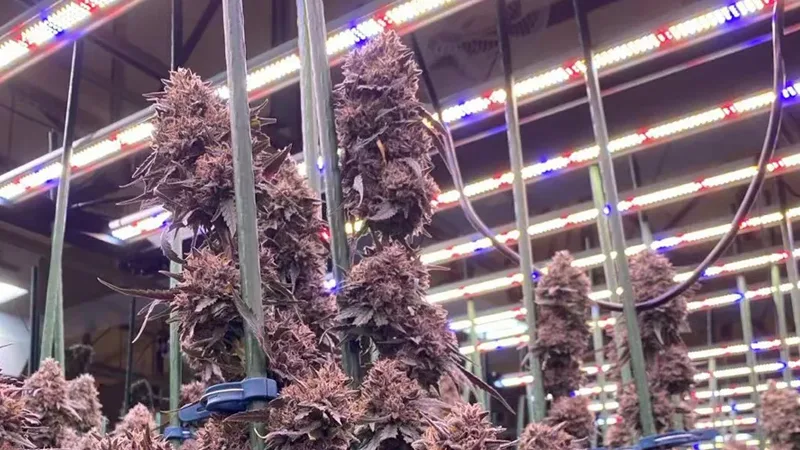
High-light plant species need strong PAR for healthy development. Tomato and cannabis are two prime examples. These plant types use more PAR to support intensive photosynthesis and show much better results when they receive enough light each day. Growers must check PAR requirements for each crop to reach the best yield.
For example, the daily light integral (DLI) for common high-light crops varies heavily. Tomatoes typically require a DLI of 22 to 30 mol/m²/day, while cannabis demands a massive 20 to 45 mol/m²/day. Growers use these numbers to set up lighting for each crop because each plant needs the right PAR to reach its full potential.
Growth Stage Adjustments
Each stage of plant growth needs a different PAR level. Young plants need less PAR, while mature plants need more. Growers must change PAR as the crop grows, which helps each plant use energy well. Too much PAR can slow growth in early stages due to phototoxicity. Conversely, not enough PAR can severely limit yield in later stages. Therefore, growers should check PAR often and adjust LED grow lights for each crop stage.
Shade-Tolerant Plants
Shade-tolerant plant species use less PAR. These plants grow well in low-light spots and do not need strong PAR like high-light crops. Red clover is one example; it does not use high PAR well and actually grows better with less light. In contrast, alfalfa is a high-light crop that uses more PAR and grows faster with more light. Scientific evidence confirms that shade-tolerant plants need less PAR for photosynthesis because they do not use high PAR well. High-light crops use more PAR and show better results. Growers must know the PAR requirements for each plant, which helps each crop get the right amount of light.
Indoor vs. Outdoor Differences
Shade-tolerant plants grow in many places. Indoors, utilizing SLTMAKS lighting systems, growers can perfectly control PAR. Outdoors, PAR changes drastically with the sun. Growers must check PAR in both spots. Indoor crops traditionally need less light due to controlled environments, whereas outdoor crops get more PAR from the sun. Each plant needs the right PAR for its designated spot.
Seedlings and Young Plants
Seedlings and young plants need gentle PAR. These fragile plants do not use strong light well. Growers must keep PAR low to stop cellular stress. The best PAR for seedlings is 100-300 μmol/m²/s. Growers should keep lights 24-36 inches above the plant to help each plant start strong. For clones and older seedlings, the optimal PAR is slightly higher at 200-400 μmol/m²/s. Growers must check PAR often and move lights as plants grow. Start with low PAR for seedlings, and raise PAR as the plant gets bigger to help each crop grow steadily. Growers must know PAR requirements for each plant type since each crop uses PAR in a different way.
The Role of Microalgae in Agricultural Biosystems
While often overlooked in traditional greenhouse setups, microalgae also use PAR for photosynthesis. Much like higher-order plants, microalgae need the right PAR to grow. Each microalgae crop has its own unique PAR needs, meaning growers must check PAR for microalgae often.
Microalgae rely on precise PAR levels to produce energy and synthesize vital sugars. In complex aquaponic or bioponic systems, these microorganisms serve a crucial supporting role. Microalgae help other plants by making oxygen and cleaning water for crops. Because they can grow in water or on land, microalgae crops need the right PAR for each specific spot to survive and thrive.
Beyond oxygenation, microalgae give food to fish and other plants. They use PAR to take in carbon dioxide, effectively cleaning the air and giving out oxygen for surrounding terrestrial plants. When provided with the correct PAR for each stage, microalgae use PAR to grow fast, generating vitamins, producing beneficial oils, and significantly improving soil health.
This symbiotic relationship means that microalgae need PAR to live with other plants, helping crops grow by making roots strong, fighting disease, optimizing water uptake, and utilizing nutrients efficiently. Ultimately, the metabolic byproducts of microalgae help crops by making leaves green, aiding in flower production, ensuring robust seed generation, making stems strong, and keeping crops healthy overall.
Therefore, growers must check PAR for each plant, crop, and microalgae. Each one has its own PAR requirements, and growers must change PAR as each plant grows to help each crop reach its best yield.
Light Spectrum and Plant Growth
Full Spectrum Coverage
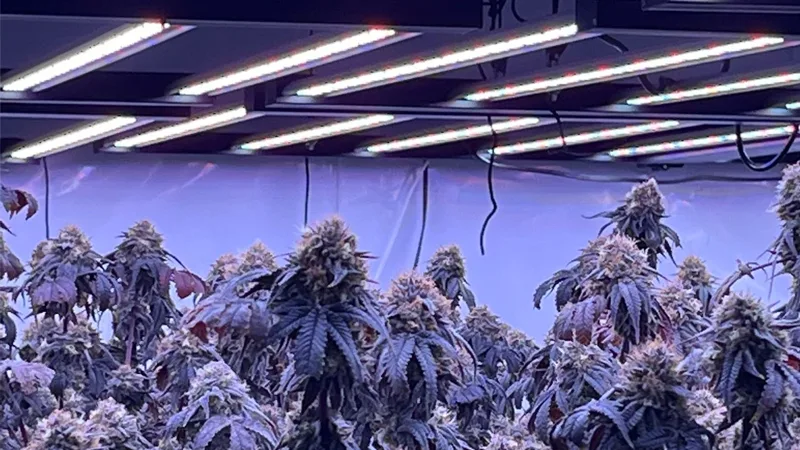
Light quality heavily shapes how plants grow and develop. Each color in the spectrum uniquely affects plant processes. Growers can use this knowledge to improve plant health and yield. Modern lighting systems, particularly SLTMAKS commercial fixtures, now offer full-spectrum coverage, which means plants receive all the wavelengths they need.
Blue Light Effects
Blue light plays a key role in plant growth. It controls many important physiological functions.
Primarily, blue light opens and closes stomata. Stomata help plants exchange gases and manage water loss; high blue light levels make stomata open wider. This supports plant metabolism and growth. Blue light also changes plant shape. Under elevated blue spectra, plants become shorter with smaller, thicker, and darker green leaves. Blue light slows stem growth and reduces apical dominance, which creates a highly desirable, compact plant structure. In crops like peppers, cucumbers, and lettuce, blue light helps leaves expand, which improves light capture and photosynthesis. Growers use blue light to expertly guide plant structure and boost leaf development.
Red Light for Flowering and Fruiting
Red light is incredibly important for flowering and fruiting. It acts as a biological signal that triggers blooming and increases fruit production. The exact effect of red light depends heavily on how growers set up their lighting.
For instance, high-intensity light configurations use red, blue, white, and green light to supplement light for flowering.
Low-intensity configurations require far-red light to induce flowering through the shade avoidance effect. Red light triggers blooming and increases fruit production, which is essential for higher yields. At the phytochrome level, at the end of the photoperiod, red light dominance leads to a high Pfr/Pr ratio, promoting flower-inducing substances. Long-day plants require short dark periods to maintain Pfr levels for flowering, whereas in short-day plants, flowering can be inhibited by red light if the dark period is interrupted. By utilizing precision LED systems, growers adjust red light to match the exact needs of each crop, which helps plants flower and set fruit at the perfect time.
Customizing Spectrum with LED Grow Lights
Modern LED grow lights give growers unprecedented control over the light spectrum. Smart controls let growers meticulously change the ratio of colors and set strict schedules. Many advanced systems allow monitoring and adjustments directly through a smartphone. Pre-programmed settings help growers perfectly match the light spectrum to each growth stage.
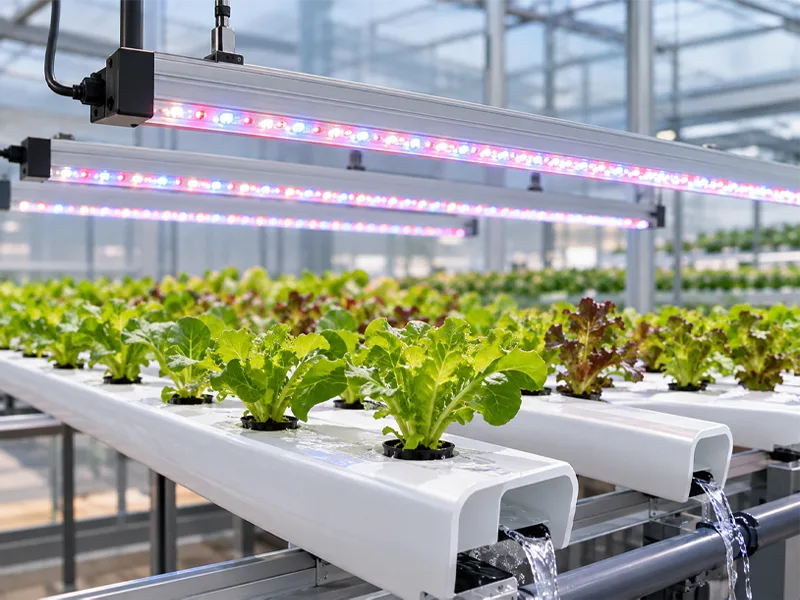
High-quality LED grow lights can meet the needs of plants at every stage. Seedlings, vegetative plants, and flowering crops all need different light. Customizing the spectrum significantly improves plant health and productivity. Advanced LED systems can change light schedules and spectrum automatically, which means growers do not need to adjust settings by hand. The best LED grow lights adjust light intensity and spectrum in real time. This keeps the PAR output right for each plant and dramatically saves energy. Growers who use these systems see better results and more efficient growth.
Choose LED grow lights with spectrum control to help you match light to each plant’s needs and growth stage.
Measuring and Monitoring PAR
Tools for Measuring PAR
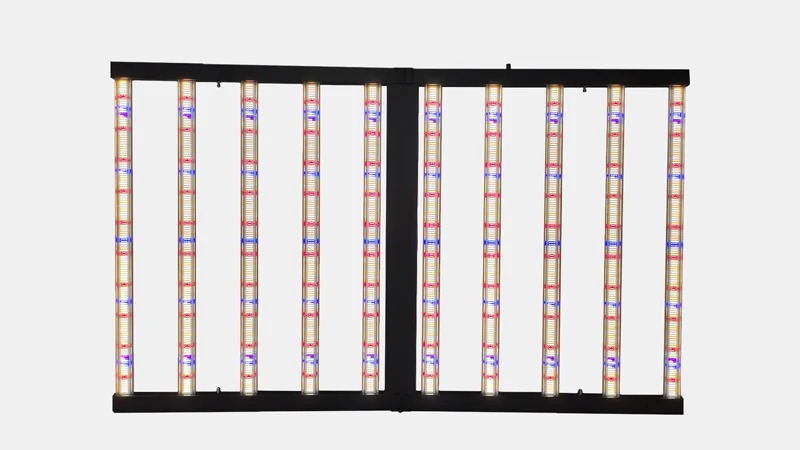
Growers use different high-tech tools to measure PAR in greenhouses and indoor farms. These tools help growers verify how much light plants actually get for photosynthesis. A PAR meter specifically measures light in the 400 to 700 nanometer range. The scientific unit for PAR is micromoles per square meter per second. This exact metric is also called Photosynthetic Photon Flux Density, or PPFD. PAR sensors detect photons and turn the data into electronic signals for analysis.
Various professional sensors exist, such as line quantum sensors that measure below-canopy PAR over a 1-meter length in PPFD units for non-uniform light fields, or data loggers that capture precise temperature, RH, and PAR measurements. Growers can use these sophisticated tools to check PAR at different spots. This helps growers see if plants get enough PAR for growth. PAR sensors are easy to use. Quantum sensors measure PAR in the right waveband, while data loggers help track PAR trends over time.
Taking Accurate Readings
Growers must follow strict best practices to get correct PAR readings. Proper use and care of sensors is incredibly important. Quantum sensors work exceptionally well for measuring PAR, and some forward-thinking growers use extended PAR (ePAR) sensors for extra data.
For the most accurate assessment, growers should place sensors exactly at crop height inside greenhouses. This gives the truest PAR data for plants. You must inspect and clean sensors often. Check for dust or water on the sensor and handle it with extreme care. Avoid blocking the sensor with leaves or equipment. Calibrate sensors every year or two using trusted labs for calibration. Calibrate sensors both indoors and outdoors, and always write down calibration results for permanent records.
Tip: Clean and calibrate PAR sensors often. This keeps PAR readings correct and helps plants get the right light. Calibration accuracy matters. If a PAR sensor is not correct, growers may accidentally give plants too much or too little light. This can severely hurt plant health and lower yield.
Interpreting PAR Data
Data is useless without interpretation. Growers use PAR data to make highly smart choices about their lighting strategies. Two main numbers help growers understand PAR. First, PPFD shows how many photons of PAR light hit a square meter of plants each second. Growers use PPFD to check light intensity specifically for photosynthesis. Second, DLI shows the total PAR light plants get over a full day. DLI is measured in moles per square meter per day. This vital number helps growers see if plants get enough PAR for overall daily growth.
Growers look at PAR data to constantly adjust lights. If PAR is too low, growers add more light. If PAR is too high, growers move lights further away or lower the fixture’s intensity. Tracking PAR helps growers keep plants healthy and improve final yield. Always check PAR data often, and adjust lights to keep PAR in the absolute best range for each specific plant.
Environmental Factors Affecting PAR
Light Intensity and Distance
Light intensity is arguably the most important metric for plant growth. Plants need enough light to synthesize food. If light is too weak, plants simply do not get enough energy, which slows down how fast they grow. If light is too strong, cellular structures can be damaged.
The physical distance from the light source completely changes how much light plants get. When the SLTMAKS LED light is close, plants get more energy, making canopy photosynthesis happen significantly faster. When the light is far away, plants get less energy. Photosynthetically active radiation drops very quickly as the light moves farther away, a concept dictated by the inverse-square law. Because PAR covers 400 to 700 nanometers, less light mathematically means less energy for canopy photosynthesis.
However, remember that too much light can harm plants and aggressively slow canopy photosynthesis. The height of the light immediately changes the Photosynthetic Photon Flux Density. Closer lights give higher PPFD and inevitably raise the Daily Light Integral. Since light drops fast as distance grows (affecting canopy photosynthesis), growers should rigorously check how far lights are from plants. Changing this distance helps keep canopy photosynthesis at the perfect physiological level.
Canopy Density and Shading
Canopy density physically changes how light moves through plants. When the foliage canopy is thick, the top leaves predictably get more light, while the lower leaves get substantially less light. This dynamic changes canopy photosynthesis in each horizontal layer. A dense canopy can entirely block light from reaching the bottom leaves, which lowers canopy photosynthesis in the lower sections.
Studies show that when canopy density goes up, the upper leaves may actually get less light efficiency, while the middle and lower leaves may try to compensate. This internal regulation can help balance canopy photosynthesis across the entire plant structure. Growers should constantly watch canopy density (implementing pruning or defoliation if necessary) to make sure all leaves get enough light for optimal canopy photosynthesis.
Reflective Surfaces
Reflective surfaces help growers use light far better. White paint or special reflective Mylar films on walls and ceilings can bounce stray photons back to the plants. This gives more light to the peripheral leaves. More light naturally means better canopy photosynthesis. Reflective surfaces also help spread light evenly across the grid. This vital practice reduces dark spots and helps all leaves get enough energy for canopy photosynthesis.
By sending stray light back to plants, growers provide more light for canopy photosynthesis. Better light spread guarantees even canopy photosynthesis, and this improved light use helps plants grow incredibly strong. Smart growers leverage reflective surfaces to aggressively boost canopy photosynthesis and make the absolute most of their SLTMAKS lighting systems.
Seasonal and Daily Changes
In greenhouse settings, seasonal and daily changes drastically affect how much PAR reaches plants. The sun moves across the sky each day, and the angle of sunlight changes from morning to evening. This orbital movement inherently changes the amount of PAR that plants receive. In summer, the sun stays higher in the sky, meaning plants get more PAR during the day. In winter, the sun sits much lower, so plants get less PAR.
Cloud cover also acts as a massive variable for PAR. Thick clouds block sunlight, ensuring plants receive far less PAR on cloudy days. Growers can track these dynamic changes with a PAR meter. The meter shows exactly how much light reaches the plants at different times. Many professional greenhouse growers record PAR readings in the morning (usually low), at noon (high), and in the afternoon (medium) to help them see the daily atmospheric pattern.
Because plants need steady PAR for strong growth, sudden drops in PAR can rapidly slow photosynthesis. Growers use supplemental lighting to keep PAR levels steady. Highly efficient LED grow lights from SLTMAKS help seamlessly fill in the gaps when natural sunlight is weak.
Tip: Check PAR levels frequently on cloudy days, and automate your LED grow lights to turn on when natural light drops.
Seasons also dictate the length of daylight. In spring and summer, days last longer, providing plants with more hours of PAR.
In fall and winter, days get shorter, resulting in plants receiving less PAR each day. Professional growers must adjust light schedules to mathematically match the season. This helps plants get enough total light for each growth stage. Some plants heavily rely on more light in certain seasons; for instance, flowering crops almost always need extra supplemental PAR in winter. By setting timers to intelligently control when lights turn on and off, growers keep the light cycle steady. Daily and seasonal changes in PAR directly affect plant health. Growers who meticulously track these changes can seamlessly adjust their lighting plans, helping plants grow all year optimally.
Adjusting Light for Optimal PAR
Choosing the Right Grow Lights
To succeed in modern horticulture, growers need to carefully pick the best lights for their plants. The right LED grow lights help plants get enough photosynthetically active radiation without wasting electricity. When choosing commercial lighting from manufacturers like SLTMAKS, consider these critical metrics:
- PPE (Photosynthetic Photon Efficacy): PPE shows how well a light efficiently turns power into usable light for plants.
- PPFD: PPFD tells exactly how many photons reach the plant surface.
- Spectrum quality: Spectrum quality means the light emits the exact optimal colors for biological growth.
- Thermal management: Good engineering keeps the light physically cool and safe in humid environments.
Furthermore, uniform light spread completely stops uneven growth. Uniformity is arguably the most important metric for consistent commercial results. A light with a high PPE but a bad optical spread can create dangerous hotspots.
This means some plants get too much light, while nearby plants get too little. Growers should check PPFD at the recommended hanging height and compare the specific plant spectrum to regular white light. They also need to holistically look at power use and how well the light functions long-term. High-end LED grow lights with spectrum control are exceptional for most crops. These advanced lights let growers change the exact color and strength of the light, helping to perfectly match the light to each specific stage of growth.
Adjusting Light Placement
Growers must put lights at the exact right mathematical distance from plants. Where the light is permanently placed changes how strong and even the footprint is. If the light is hung too close, some apical plants get too much light. If it is hung too far, the under-canopy plants do not get enough.
Uniform PPFD is absolutely vital in indoor gardening. The spatial gap between the light diode and the plants directly changes PPFD levels.
Poor placement can make some parts of the plant canopy get substantially more light than others, causing uneven growth and dramatically lower yields. Growers must use a PAR sensor to verify if the light footprint is even. They should move the sensor laterally over the plants to help find anomalous spots with too much or too little light. Physically moving the light fixtures or digitally changing their dimming strength can fix these uniformity problems.
Because quality LEDs do not make much ambient heat, they can be positioned closer to plants than traditional HPS lamps. This proximity helps light reach more leaves deeply and massively boosts photosynthesis. Always check PPFD mapping to make sure light is even. When necessary, change the light strength a little at a time and watch how plants visually react to these changes. Raising the light strength slowly (acclimation) helps plants safely get used to it, as fast environmental changes can stress plants and instantly slow their growth.
Scheduling and Automation
In modern facilities, automatic light schedules help growers flawlessly give plants the right amount of light. Timers mean growers absolutely do not have to turn lights on and off manually every single day. This robust automation gives plants steady, predictable light each day. Automation lets growers flawlessly control when lights turn on and off, ensuring schedules exactly match what plants genetically need at each stage.
Timers give plants steady light rhythms. For example, vegetative schedules can be strictly set for 14-18 hours for growing leaves, while flowering plants almost always need exactly 12 hours of light to avoid hermaphroditism. Dynamically changing the light intensity during the day (creating a sunrise/sunset effect) can also help. Growers can digitally change the schedule to fit what plants inherently need, helping plants grow exceptionally well and make more food. Automation stops human mistakes and saves immense amounts of labor time.
Tip: Use industrial timers and SLTMAKS smart controls to keep light strength and schedules incredibly steady. This helps plants grow structurally strong and highly healthy.
Balancing PAR with Other Growth Factors
CO₂ and Photosynthesis
It is vital to understand that PAR does not operate in a vacuum. CO₂ is fundamentally important for how plants use light energy. When atmospheric CO₂ goes up, plants physiologically take in more CO₂ during active photosynthesis. This massive influx helps plants make significantly more sugars from captured light energy.
Plant scientists call this biological phenomenon the CO₂ fertilization effect. It objectively makes plants grow better by actively helping them use more CO₂.
Interestingly, physical changes in leaf size and shape can actually change how much photosynthetically active radiation plants naturally intercept. These structural changes can either help or hinder the beneficial effect of extra CO₂. Sometimes, how plants architecturally catch energy from light matters vastly more than ambient CO₂ alone. For instance, in complex shrublands, plants take in much more CO₂ when both ambient CO₂ and light absorption go up together. This means CO₂ supplementation and LED light intensity need to work rigorously together for the absolute best plant growth.
Nutrient Management
Plants urgently need the right root-zone nutrients to use high light energy well. Nitrogen, for example, is very important for maximizing photosynthetic CO₂ uptake. The exact right amount of nitrogen helps plants grow strong and visibly healthy. Too little or even too much nitrogen heavily slows plant growth and ruins PAR efficiency.
Scientific literature shows how different nitrogen levels distinctly change plant growth and photosynthetic CO₂ uptake. At a low nitrogen level (2.5 mM), total biomass is low, leaf area is high, and the photosynthetic rate change is not significant. At optimal levels (5-15 mM), biomass, leaf area, and photosynthetic rate are perfectly balanced. At toxic levels (>15 mM), biomass may artificially appear high, but leaf area is low and photosynthetic efficiency is compromised. Therefore, plants inherently need balanced nutrients for good photosynthetic CO₂ uptake.
Growers should check runoff nutrients often and precisely change inputs to perfectly fit each plant’s specific needs. This rigorous balancing helps plants use light energy well and safely keeps growth steady.
Temperature and Humidity
Temperature and humidity strongly affect how plants process light energy. These atmospheric factors change photosynthetic CO₂ uptake and overall plant health. High PAR light levels can aggressively make plants lose water faster through transpiration. This naturally cools leaves and subsequently changes how plants use internal energy.
Every single plant species has a biologically “best” temperature specifically for optimal photosynthetic CO₂ uptake. If the environment is too hot or too cold, the enzymes break down, and plants cannot use energy well. Humidity (measured by VPD) also matters immensely. It directly changes how much water plants lose into the air and heavily affects the microclimate around the leaves. Good, balanced humidity helps plants effectively use energy and significantly lowers catastrophic disease risk.
To summarize the triad: PAR helps plants use energy to grow. High PAR can make leaves quickly lose more water and cool down. Temperature biologically controls how well plants use this energy, while humidity dictates water loss and leaf temperature. The right temperature and balanced humidity actively help plants use energy and aggressively grow. Growers should vigilantly watch temperature and humidity, keeping these metrics in the absolute best VPD range for each plant. This holistic management helps plants fully use SLTMAKS light energy and safely supports healthy growth.
Preventing Light Stress
Light stress (photoinhibition) can severely slow plant growth and cause permanent cellular damage. Growers must aggressively protect plants from sudden, violent changes in light intensity. Plants need adequate biological time to physically adjust when light levels increase. Suddenly, massive jumps in light can permanently burn leaves and halt all growth.
Professional growers use several proven methods to prevent light stress:
- Use sophisticated SLTMAKS LED lighting systems with separate digital controls for each light source. This crucial feature lets growers safely change light intensity in incredibly small increments.
- Set up an automated control unit that constantly checks and micro-adjusts the photosynthetic photon flux density. The software system can forcibly stop changes that are happening too fast. For ultimate safety, it will not let the light level abruptly go up or down by more than 50 micromoles per square meter per second in a short five-minute window.
- Increase or carefully decrease light slowly over days. This gentle slope helps plants safely adapt to new conditions. Plants can efficiently use much more energy for photosynthesis when light changes are gentle.
- Watch plants visually for any signs of physical stress. Look closely for curled leaf edges, pale chlorotic color, or necrotic brown spots. These visual cues loudly show that plants urgently need less light or significantly more time to adjust.
- Keep a meticulous, written record of all light changes. Write down the exact time and precise amount of each dimming adjustment. This rigorous logbook helps growers objectively see patterns and carefully avoid future mistakes.
Growers can also use these practical tips to further reduce light stress: Start with much lower PAR light levels when physically moving plants to a completely new area. Raise the light a little tiny bit each day. This slow acclimation helps plants biologically get used to the new environment. Use sensors to check the light at both the very top and the very bottom of the plant canopy. This dual check shows if literally all leaves get the right amount of light.
Remember, a highly stable overall environment heavily helps plants grow well. Good, turbulent airflow and a rock-steady temperature safely support healthy leaves. Water plants on a strict, regular schedule. Absolutely do not let the root zone soil get too desperately dry or dangerously wet. Growers should also check all physical equipment often. Clean light diode covers and sensor nodes to keep them working flawlessly. Replace any old legacy bulbs before they inevitably lose vital PAR strength.
Plants inherently grow their absolute best when they receive the perfect, right amount of light. Careful, data-driven control of light effectively prevents oxidative stress and strongly supports massive growth. Commercial growers who strictly follow these meticulous steps predictably see far better results and much higher harvest yields.
Practical Tips for Everyday PAR Optimization
Regular Monitoring
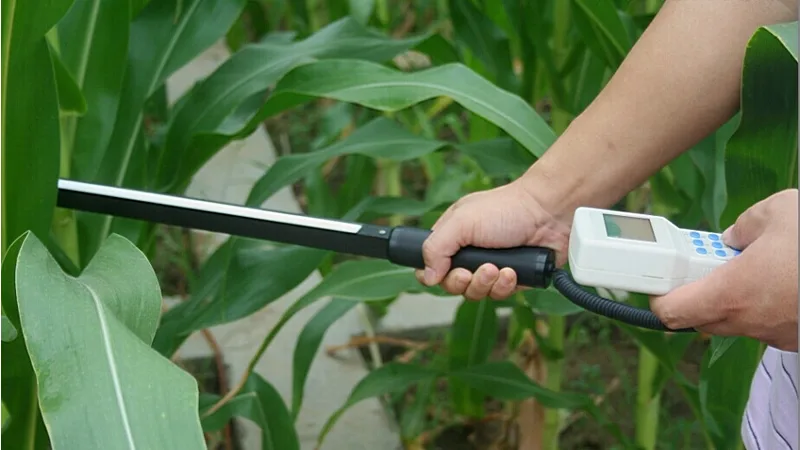
Regular monitoring is the absolute key to helping every single plant get the perfect light. Use a calibrated PAR meter to meticulously check light levels directly above and deep below the foliage leaves. Write down the exact PPFD readings each week. This systematic logging helps you empirically see if plants get enough photons for healthy, vigorous growth.
Move the sensor probe to highly different spots in the grow tent or commercial canopy area. Diligently check the extreme corners and the dead center. Some plants may inadvertently get far less light if fans or structural objects block the diode source. Physically adjust the SLTMAKS fixtures if you find any dark, shadowed spots. Healthy plants will robustly show strong, vibrant color and push steady new leaves. If a plant looks visually weak, immediately check the specific PAR reading exactly at that spot.
Tip: Keep a dedicated, simple logbook on hand. Write the date, exact time, and PAR reading for each distinct plant zone. This fastidious record keeping helps you quickly spot problematic changes early.
Using Timers and Automation
In modern horticulture, timers and digital automation make strict light control incredibly easy. Set digital timers to perfectly turn LED lights on and off at the same time each day. This biological consistency gives plants a highly steady routine. In smaller setups, timers flawlessly help keep the light cycle totally stable for all plants.
Use modern smart plugs or centralized commercial controllers for vastly more precise control. Some advanced lighting systems let you smoothly change light dimming levels throughout the day. This brilliantly matches the shifting metabolic needs of each plant. Automation massively helps when you simply cannot check the facility every single day. It also permanently stops catastrophic human mistakes like accidentally leaving high-intensity lights on way too long. Remember, plants biologically need true dark rest at night to process sugars.
Timers flawlessly help you give each plant the exact right amount of daily light. Set timers for 8-10 hours of light in most vegetative applications, and use smart controllers to precisely adjust light spectrums for radically different plant types. Check these physical timers each month to safely make sure they work correctly.
Troubleshooting PAR Issues
Sometimes, plants stubbornly do not grow well even when equipped with exceptionally good SLTMAKS LED grow lights. Thorough troubleshooting reliably helps you find the actual root cause. Start diagnostics by physically checking the PAR reading directly at the struggling plant’s leaves. If the quantum reading is too dangerously low, safely move the LED fixture closer or dial up the diode strength. If the reading is far too high (causing phototoxicity), safely raise the light fixture higher or add physical shade netting.
In highly humid environments, algae or dust can physically block light from cleanly reaching plants. Clean the diode lenses and remove surface debris very often. If a specific plant still does not look healthy, meticulously check for physical shadows cast from structural decorations, fans, or taller neighboring plants. Move these blocking objects immediately to let much more light directly reach the struggling plant. If you visually see yellowing leaves or severely slow growth, cross-reference the PAR data and physically adjust as needed.
Common problems and solutions:
- Weak plant growth -> Low PAR -> Move the light physically closer.
- Debris on lenses -> Blocks photon light -> Clean the glass often.
- Uneven plant health -> Shadows or blockage -> Move objects or prune plants.
- Burned crispy leaves -> High toxic PAR -> Raise the light or dim the output.
Note: Regular, rigorous checks and small, calculated changes heavily help you reach commercial cultivation success. Healthy, high-yielding plants demand the precise right light every single day.
Maximizing Small Spaces
Boutique growers often work in highly confined, small areas. These difficult spaces include multi-tier shelves, retrofitted closets, and extremely small grow tents. Exceptionally good spatial planning strictly helps plants safely get enough light in these restrictive places. In vertical farming, literally every inch counts when canopy space is tight.
Start your design by choosing the absolutely right SLTMAKS LED grow lights. Compact, low-profile LED panels fit incredibly well in cramped, small spaces. These highly advanced lights mathematically use far less power and simultaneously give off vastly less heat than HPS. Place the cool-running LED lights safely close to the upper plants. This proximity helps each leaf get enough driving PAR. Always rigorously check the spatial distance with a calibrated PAR meter. Move the light fixture physically up or down on its ratchets to perfectly find the absolute best spot.
Use premium reflective materials to aggressively boost ambient light. Flat titanium-white paint or diamond-texture reflective film works incredibly well. Completely cover the side walls and the upper ceiling. This strategic design seamlessly sends much more stray light violently back to the plants. Considerably fewer dark shadows form when photon light aggressively bounces around the enclosed room. Due to this, plants stuck in corners physically get vastly more usable energy.
Carefully arrange your plants in highly geometric rows or tight grids. Give each specific plant just enough physical room for its leaves to fully spread out. Place physically taller plants cautiously in the back, while shorter, squat plants go directly in front. This intelligent staircase setup beautifully lets light cleanly reach every single plant. Rotate the physical plant pots every few days so that each plant gets prime time in the absolute brightest core spot.
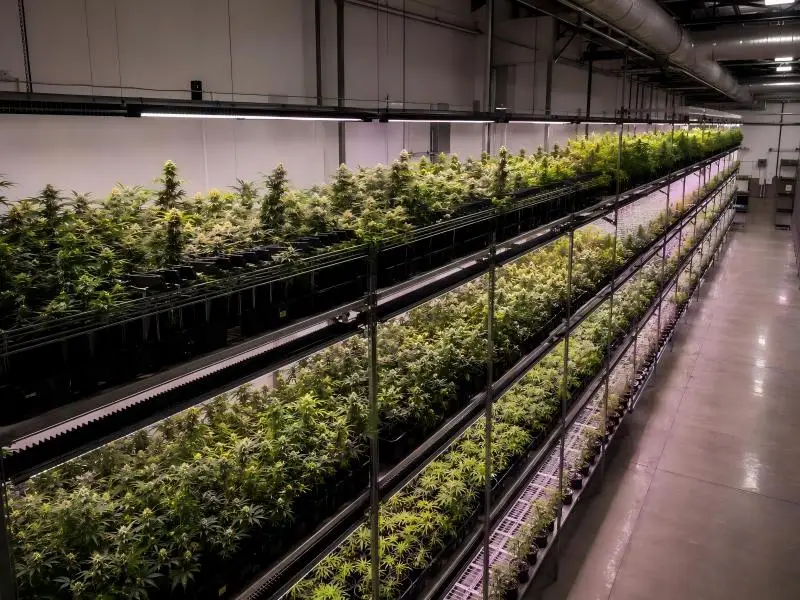
Try intensive vertical gardening if floor space is very severely limited. Stack heavy-duty shelves or ingeniously use hanging tiered planters. Securely place low-profile SLTMAKS LED lights uniformly on each vertical level. Check the PAR mapping precisely at the top canopy and bottom shelves. Adjust the dimming lights so that literally all plants biologically get enough driving energy.
Proven Methods for Maximizing Small Spaces:
- Compact SLTMAKS LED lights: Radically save vertical space and electrical energy.
- Reflective mylar surfaces: Massively increase photon light use efficiency.
- Vertical stacked shelves: Grow significantly more plants in far less square footage.
- Strategic plant rotation: Ensure you give totally equal PAR light to all plants.
Keep your daily cultivation tools incredibly simple. Use a digital timer to flawlessly control daily light hours. Set the timer permanently for the same rigid schedule each day. This consistency reliably keeps plant metabolisms strictly on track. Check PAR readings very often, and religiously write down the hard numbers in a dedicated notebook.
Tip: Deep clean reflective wall surfaces and LED light diodes very often. Settled dust can physically block light and severely lower true PAR. Watch vigilantly for signs of canopy crowding. If wet leaves constantly touch, immediately move plants further apart or selectively prune.
Good, turbulent airflow permanently stops powdery mildew mold and safely keeps plants highly healthy. Use a small oscillating fan if physically needed. Ultimately, small, tight spaces can still grow incredibly strong, high-yielding plants. Careful, methodical planning and highly regular data checks guarantee every plant safely gets enough light. Growers who strictly use these rigorous steps predictably see vastly better harvest results in literally any space.
In conclusion, rigorously check photosynthetically active radiation to help plants grow incredibly strong. Move LED lights intelligently and dynamically change their spectrum color for each specific growth stage. Make sure that PAR intensity, root nutrients, air temperature, and ambient humidity all work seamlessly together in harmony for vastly better growth.
Groundbreaking new agricultural studies definitively say adding specific far-red light seamlessly with baseline PAR genuinely helps plant leaves get much bigger and makes complex photosynthesis work far better. This spectrum trick can make commercial plants grow much faster and ultimately give far more sellable crops. Test vastly different light dimming settings with your SLTMAKS fixtures to empirically find what actually helps your specific plants the most.
Careful daily attention and highly smart, data-driven use of PAR undeniably help every single grower get substantially better plant growth and massively profitable results.
FAQ
What does PAR mean for plant growth?
PAR explicitly stands for Photosynthetically Active Radiation. It objectively measures the exact spectrum of light that plants biologically use for photosynthesis (400-700nm). Tracking PAR expertly helps growers completely understand exactly how much useful, energetic light genuinely reaches their crops’ canopy.
How do I
How do I measure PAR in my grow space?
You must strictly use a calibrated PAR meter or a highly accurate quantum sensor. Place the sensor probe exactly at the top plant canopy height. Methodically move it around the entire grid area and meticulously record all the readings. This mapping accurately shows precisely how much real light your plants physically receive.
Can regular light bulbs provide enough PAR?
Absolutely not. Regular household bulbs mathematically do not give nearly enough concentrated PAR for strong, commercial-grade plant growth. Professional growers instead strictly use purpose-built LED grow lights or highly specialized horticultural lamps from trusted manufacturers like SLTMAKS. These engineered lights perfectly give the exact right biological spectrum and extreme intensity required.
How often should I check PAR levels?
For ultimate precision, check your canopy PAR levels exactly every single week. You must also strictly monitor readings immediately after physically moving lights or changing structural plant positions. Highly regular data checks ensure you flawlessly keep light levels totally steady for all growing plants
Do all LEDs give the same PAR?
No. Due to differing diode quality and driver engineering, some LEDs give vastly more efficient PAR than others. Always rigorously check the product’s technical specifications, specifically looking for high PPE and PPFD ratings. Choose premium SLTMAKS LEDs specifically engineered for high-yield plant growth, as these professional lights undeniably give the absolute best commercial results.