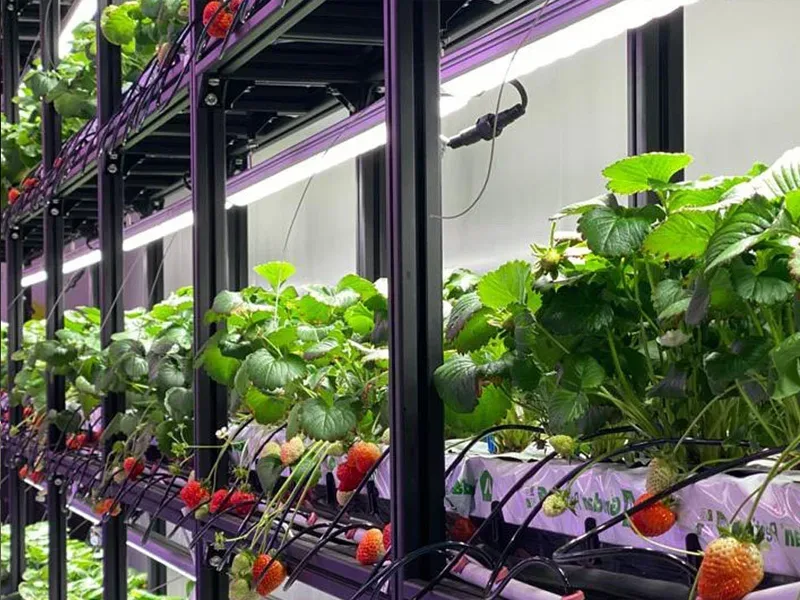
In the rapidly expanding sector of controlled environment agriculture (CEA), commercial berry production has emerged as one of the most lucrative, yet technically demanding, ventures. For commercial farm owners, greenhouse operations directors, and indoor farming facility managers, the ultimate metric of success isn’t just yield—it is quality. When it comes to berries, particularly strawberries, blueberries, and raspberries, quality is overwhelmingly defined by one sensory characteristic: sweetness.
However, achieving the intense, sun-kissed sweetness of field-grown berries within an indoor environment presents a significant botanical challenge. Without the dynamic, intense, and comprehensive spectrum of natural sunlight, indoor berries often suffer from a diluted flavor profile and suboptimal sugar accumulation. This is where advanced horticultural lighting solutions bridge the gap between artificial environments and nature’s perfection.
This comprehensive guide delves into the deep photobiology of sugar accumulation in plants and explores how targeted wavelength intervention strategies, specifically utilizing high-quality full-spectrum LEDs, can dramatically increase the Brix levels of your indoor-grown berries. By understanding the science of light spectra, commercial growers can not only elevate their crop’s market value but also optimize their operational expenditures through energy-efficient grow lights.
Table of Contents
Decoding Brix: Why Sweetness is the Ultimate Commercial Metric
Before manipulating environmental variables, we must understand exactly what we are trying to achieve. In the agricultural industry, sweetness is quantified using the Brix scale.
The Science of the Brix Scale
Degrees Brix (symbol °Bx) is a scientific measurement representing the sugar content of an aqueous solution. One degree Brix equals 1 gram of sucrose in 100 grams of solution. However, in the context of plant sap and fruit juices, a Brix reading is a measure of Total Soluble Solids (TSS). While this is predominantly composed of sugars (fructose, glucose, and sucrose), it also encompasses amino acids, proteins, essential oils, vitamins, and vital minerals.
Therefore, a higher Brix reading does not merely indicate a sweeter berry; it represents a more nutrient-dense, flavorful, and structurally sound fruit.
The Direct Link Between Brix and Commercial Value
For B2B growers and wholesale suppliers, achieving a high Brix level is not a matter of vanity—it is a core business strategy that directly impacts the bottom line.
- Premium pricing and market positioning: High-Brix berries command premium prices in B2B distribution channels, high-end supermarkets, and the culinary sector. Consumers are willing to pay a significant markup for strawberries that consistently deliver a complex, sweet flavor profile rather than a watery, tart experience.
- Extended shelf life: There is a direct, scientifically documented correlation between high Brix levels and cell wall integrity. Berries with higher soluble solids exhibit greater tissue density and lower free water content. This translates to reduced susceptibility to post-harvest fungal infections (like Botrytis cinerea) and a significantly longer shelf life, reducing shrinkage and waste in the supply chain.
- Pest and disease resistance: Plants synthesizing high levels of complex carbohydrates are generally healthier and possess stronger natural defense mechanisms against piercing-sucking insects and foliar diseases.
The Indoor Brix Challenge
Traditional indoor lighting technologies, such as High-Pressure Sodium (HPS) lamps or early-generation “blurple” (red/blue) LEDs, often fail to stimulate the secondary metabolic pathways necessary for maximum sugar production. HPS lights produce excessive radiant heat and a heavily yellow/orange-skewed spectrum that promotes stretching rather than dense, nutrient-rich fruiting. Blurple lights, while efficient for basic vegetative growth, lack the comprehensive spectral data plants need to synthesize complex flavor compounds. This necessitates the shift toward advanced full-spectrum LEDs.
Wavelength Intervention: How Light Spectra Drive Sugar Accumulation
To elevate Brix levels, commercial growers must move beyond simply providing “enough” light and focus on the quality of that light. Plant photoreceptors—such as phytochromes, cryptochromes, and phototropins—act as environmental sensors. When triggered by specific wavelengths of light, they initiate complex biochemical cascades that dictate how a plant allocates its resources, including where and how it stores sugars.
Here is a deep dive into how specific wavelengths within full-spectrum LEDs can be utilized as intervention strategies to boost berry sweetness.
Blue Light (400 nm – 500 nm): The Flavor Catalyst
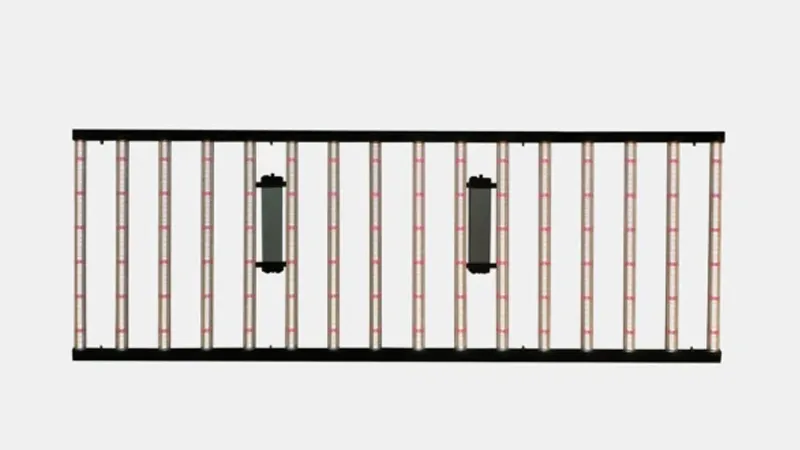
Blue light is primarily absorbed by cryptochromes and phototropins. In commercial berry production, blue light is the critical catalyst for secondary metabolism.
- Stomatal conductance: Blue light is the most effective wavelength for signaling stomatal opening. Optimal stomatal conductance allows for maximum CO2 uptake, which is the foundational building block for carbon assimilation and sugar production.
- Secondary metabolites: Targeted blue light exposure directly stimulates the phenylpropanoid pathway. This pathway is responsible for the biosynthesis of anthocyanins (the pigments that give berries their rich red and blue colors) and flavonoids (key flavor and aroma compounds). A proper ratio of blue light ensures that the sugars being produced are accompanied by the complex organic acids that create a gourmet flavor profile.
Red Light (600 nm – 700 nm): The Photosynthetic Engine
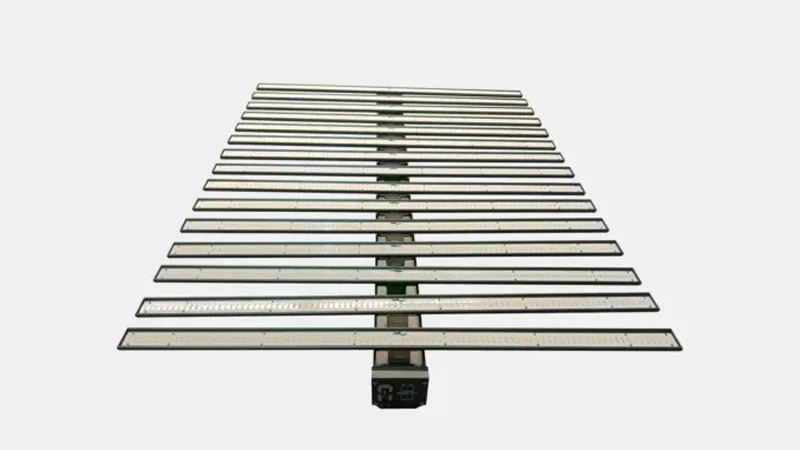
Red light, particularly peaking around the 660 nm wavelength, is the most efficient driver of photosynthesis. It is deeply absorbed by chlorophyll a and b.
- Carbohydrate biosynthesis: By maximizing the efficiency of the photosynthetic electron transport chain, deep red light ensures the plant is generating a massive surplus of Adenosine Triphosphate (ATP) and Nicotinamide Adenine Dinucleotide Phosphate (NADPH). These energy carriers are then used in the Calvin cycle to fix carbon into simple sugars.
- Starch accumulation: Under intense red light, these simple sugars are rapidly converted into starch during the day. At night, this starch is broken down and translocated to the “sink” organs—the developing berries—resulting in a direct increase in measurable Brix.
Far-Red Light (700 nm – 750 nm): The Distribution Master
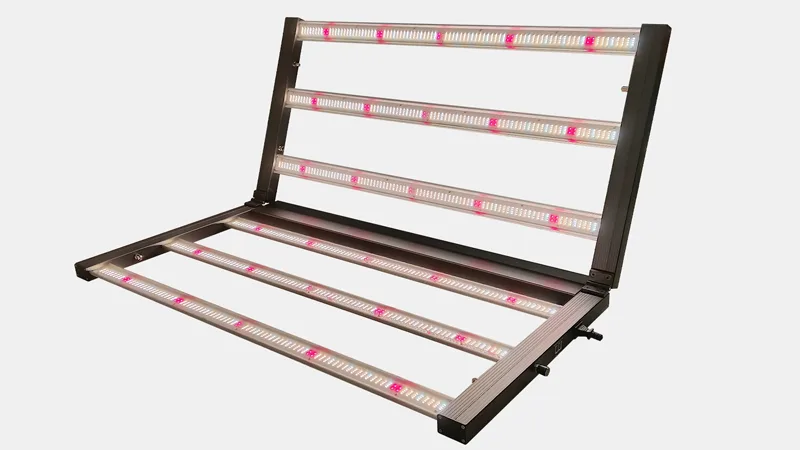
Historically ignored in early LED designs, far-red light is now recognized as a vital component of advanced commercial LED grow lights. It interacts directly with phytochromes (converting Pr to Pfr}).
- The emerson enhancement effect: When red light and far-red light are provided simultaneously, the rate of photosynthesis is greater than the sum of the rates when each wavelength is provided alone. This synergistic effect, scientifically known as the Emerson Enhancement Effect, ensures maximum carbohydrate production and overall canopy quantum yield.
- Resource allocation (source-to-sink): Far-red light influences plant morphology and biomass allocation. Proper implementation of far-red wavelengths encourages the plant to direct its newly synthesized sugars away from excessive vegetative leaf growth (the source) and pump them directly into the developing fruits (the sink), thereby concentrating the Brix levels within the berries.
UV Light (UV-A / UV-B): The Beneficial Stressor
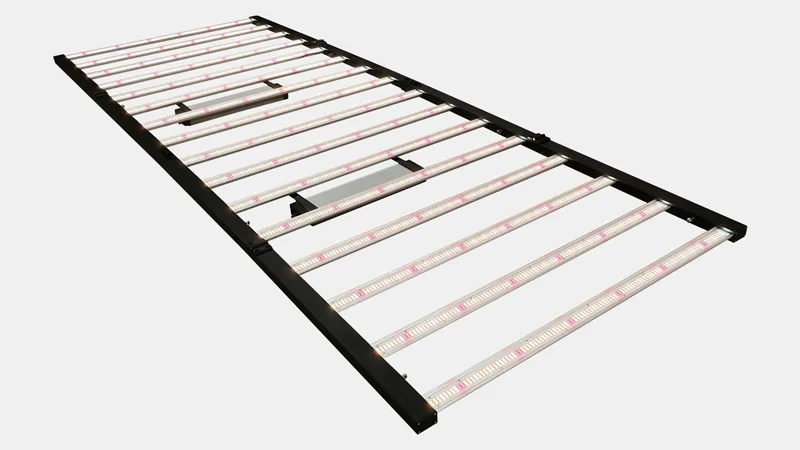
While highly energetic and potentially damaging in massive doses, controlled exposure to UV light induces a eustress (beneficial stress) response in berry plants.
- Protective sugar accumulation: To protect their cellular DNA from UV radiation, plants upregulate the production of protective resins, antioxidants, and—crucially—sugars. Implementing a spectrum that includes subtle UV cues can push a plant to its absolute maximum genetic potential for sweetness.
Why Full-Spectrum LEDs are the Ultimate Solution for Commercial Growers
Understanding the individual wavelengths is only half the battle; the true mastery of horticultural lighting lies in how these wavelengths are combined. This is why full-spectrum LEDs have become the gold standard for commercial berry production.
Mimicking the Sun’s Continuous Spectrum
Plants evolved under the continuous spectrum of the sun. While chlorophyll primarily absorbs red and blue light, the plant’s overall genetic expression relies on the full rainbow of wavelengths. High-quality full-spectrum LEDs provide a continuous white light that closely mimics natural sunlight, triggering a holistic, balanced growth response that isolated narrowband LEDs cannot achieve.
The Hidden Power of Green Light (500 nm – 600 nm)
For years, the industry believed green light was entirely reflected by plants (hence why they look green) and was therefore useless. Modern photobiology has proven this false.
In a dense commercial strawberry canopy, red and blue light are almost completely absorbed by the top layer of leaves. Green light, however, possesses high penetrative power. It passes through the upper canopy to drive photosynthesis in the lower, shaded leaves. By illuminating the entire depth of the plant architecture, full-spectrum LEDs ensure that every leaf is contributing to the overall carbon pool, resulting in massive sugar surpluses that are eventually stored in the berries.
A Comparative Analysis: Technology Impact on Berry Quality
| Feature | High-Pressure Sodium (HPS) | Traditional “Blurple” LEDs | Full-Spectrum LEDs (SLTMAKS) |
| Spectrum Quality | Heavy yellow/orange, lacks blue | Isolated red and blue peaks | Continuous, sun-like white spectrum |
| Canopy Penetration | Poor (relies on sheer intensity) | Very poor | Excellent (due to green light inclusion) |
| Brix Impact | Moderate (heat stress degrades flavor) | Moderate (lacks full flavor profile) | Maximum (triggers all metabolic pathways) |
| Heat Management | High radiant heat (requires heavy HVAC) | Low | Very Low (superior thermal management) |
| Energy Efficiency | Low (≈1.7 ㎛mol/J) | Medium (≈2.0 ㎛mol/J) | Ultra-High (up to 3.0+ ㎛mol/J) |
Economic Impact & Energy Efficiency for B2B Growers
For commercial operators, the transition to full-spectrum LEDs is not merely an agronomic upgrade; it is a profound financial decision. The ROI (Return on Investment) of utilizing high-tier indoor farming equipment hinges on two primary pillars: increasing revenue through crop value and slashing operational expenditures.
Drastic Reductions in HVAC and Electrical Costs
HPS lighting generates massive amounts of infrared radiation (heat). In a closed indoor farming environment, this heat must be aggressively mechanically removed, leading to astronomical HVAC (Heating, Ventilation, and Air Conditioning) costs.
Energy-efficient grow lights based on advanced LED technology emit minimal radiant heat toward the plant canopy. This allows growers to:
- Lower the lights closer to the canopy, maximizing the Photosynthetic Photon Flux Density (PPFD) reaching the fruit without causing heat stress or burning the delicate berry skin.
- Dramatically reduce the electrical load required for cooling and dehumidification.
- Cut lighting electrical consumption by up to 40-50% compared to legacy lighting, as LEDs convert a significantly higher percentage of electricity directly into Photosynthetically Active Radiation (PAR), measured in micromoles per joule (㎛mol/J).
ROI Scenario: The Profitability of Brix
Consider a commercial indoor strawberry facility. By switching to advanced commercial LED grow lights, the facility reduces its lighting energy bill by 40% and its HVAC bill by 30%. However, the true financial victory occurs at harvest.
Because the full-spectrum lighting successfully manipulated the plant’s metabolic pathways, the average Brix level of the crop increases from an industry-standard 7.0 °Bx to a premium 10.0+ °Bx. This exceptional sweetness profile allows the grower to exit the commoditized wholesale market and secure exclusive B2B contracts with high-end culinary distributors and luxury grocers, often resulting in a 20% to 40% premium on the per-pound wholesale price. The combination of slashed OpEx and maximized crop value typically results in an ROI period of 12 to 24 months for commercial retrofits.
SLTMAKS: Your Reliable LED Grow Light Manufacturer
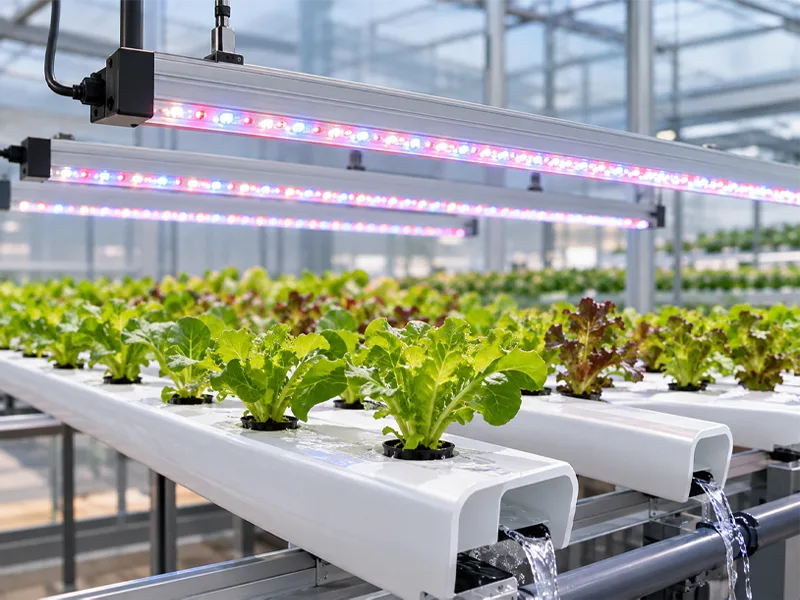
Achieving these exacting photobiological results requires lighting hardware engineered to the highest industrial standards. As a premier LED grow light manufacturer, SLTMAKS is dedicated to providing commercial growers with the precise tools needed to dominate the CEA market.
We do not just sell lights; we engineer horticultural lighting solutions tailored to the specific metabolic needs of high-value crops.
Why Commercial Growers Partner with SLTMAKS:
- Customizable spectrum engineering: We understand that the optimal spectrum for vegetative strawberry runners is different from the spectrum required during the peak fruiting and ripening stages. Our commercial fixtures offer precisely engineered spectrums designed to maximize secondary metabolites and Brix accumulation.
- Industrial-grade durability: Commercial indoor farms and greenhouses are harsh environments characterized by high humidity, chemical foliar sprays, and frequent cleanings. SLTMAKS fixtures feature robust IP65/IP67 waterproof and dustproof ratings, ensuring reliable performance harvest after harvest.
- Advanced thermal management: Our fixtures are designed with aerospace-grade passive cooling technologies. This ensures the LEDs operate at optimal temperatures, guaranteeing minimal light degradation (lumen maintenance) over a lifespan exceeding 50,000 hours.
- Certifications for rebates: Our commercial LED grow lights carry stringent international certifications, including UL, and are officially DesignLights Consortium (DLC) listed. In many regions, utilizing DLC-listed horticultural fixtures qualifies commercial growers for massive energy rebate programs from local utility companies, significantly offsetting the initial CapEx.
- Wholesale & scale capability: Whether you are retrofitting a 5,000-square-foot boutique indoor farm or outfitting a multi-acre commercial greenhouse, SLTMAKS provides stable supply chain logistics and competitive pricing for wholesale plant lights. We support our B2B partners with comprehensive lighting layout designs, ensuring uniform PPFD distribution across every inch of your canopy.
Conclusion
In the competitive landscape of commercial berry production, sweetness is not a luxury—it is the defining metric of profitability. Overcoming the Brix challenge in indoor environments requires moving away from outdated, inefficient lighting and embracing the science of photobiology.
By strategically implementing wavelength intervention strategies utilizing full-spectrum LEDs, growers can unlock the genetic potential of their crops. Blue light drives flavor complexity, red light fuels massive carbohydrate production, and far-red light ensures those sugars are aggressively pumped into the developing fruit.
Investing in high-quality horticultural lighting solutions from a trusted LED grow light manufacturer like SLTMAKS ensures that your facility is operating at maximum energetic efficiency while producing a premium, high-Brix product that commands top market prices.
FAQ
What is the optimal Daily Light Integral (DLI) for indoor strawberries to maximize Brix?
The Daily Light Integral (DLI) is the total amount of photosynthetically active photons delivered to a specific area over 24 hours, measured in mol/m²/d. For commercial indoor strawberries, a DLI between 17 and 25 mol/m²/d is generally recommended for optimal fruiting and sugar accumulation. However, simply pushing higher DLI without the correct full-spectrum balance can lead to photoinhibition rather than increased Brix. It is about the quality of the photons, not just the quantity.
Will simply increasing the light intensity (PPFD) guarantee sweeter berries?
Not necessarily. While adequate Photosynthetic Photon Flux Density (PPFD) is required to drive photosynthesis, every plant has a light saturation point. Once the plant reaches its maximum photosynthetic rate, pumping more light (higher PPFD) will not result in more sugar. In fact, excessive light can cause light stress, forcing the plant to use its energy for cellular repair rather than sugar storage. The key to higher Brix is optimizing the spectrum to improve photosynthetic efficiency and partitioning, rather than just blasting the canopy with raw intensity.
How do I know if my current commercial LED grow lights are providing the right spectrum for high Brix?
You need to review the spectral power distribution (SPD) chart provided by your light manufacturer. If the chart shows massive spikes only in narrow red and blue bands with very little green, yellow, or far-red, your plants are likely missing out on the full photobiological cues needed for complex sugar and flavor development. A true full-spectrum light will display a smooth, continuous curve that covers the entire PAR range (400-700nm) and extends slightly into the far-red (up to 750nm).
As a commercial greenhouse, how do we transition from HPS to wholesale LED grow lights without disrupting our current crop cycles?
Transitioning from HPS to LEDs requires a holistic environmental adjustment. Because LEDs do not produce the massive radiant heat of HPS, your greenhouse will run cooler. You will likely need to adjust your HVAC setpoints, increase your ambient room temperature slightly to maintain optimal leaf surface temperature, and recalibrate your irrigation strategy (as plants will transpire less under LEDs). Partnering with an experienced LED grow light manufacturer like SLTMAKS ensures you receive not just the hardware but the agronomic consultation necessary to make the transition seamless and profitable.