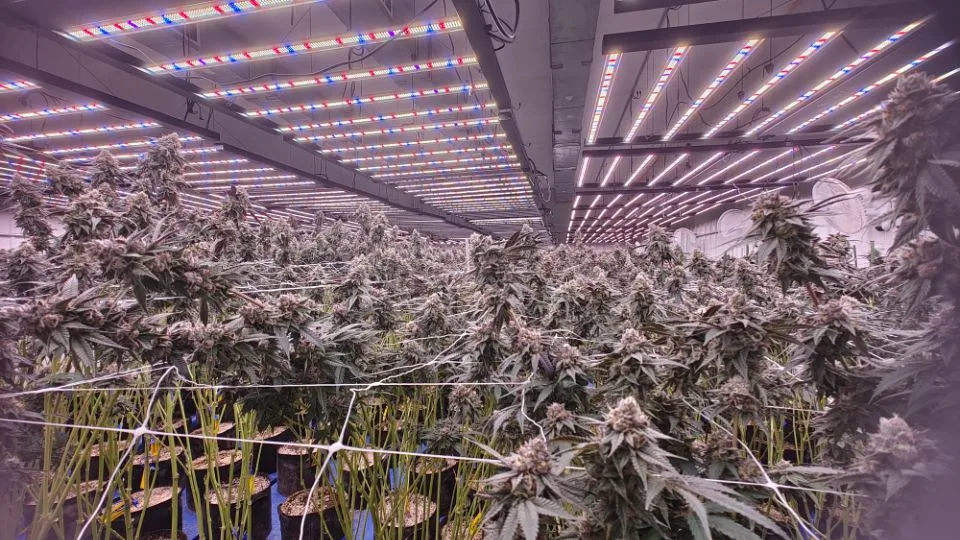
Indoor growers have become very good at managing PAR (400–700 nm), but “sunlight realism” is still missing in many grow rooms. One of the biggest differences between sunlight and typical indoor spectra is ultraviolet (UV)—small in energy compared with PAR, yet powerful in how it influences plant structure, defense chemistry, and product quality. If you are considering a UV LED grow light, the key is not “more UV,” but the right wavelength, at the right dose, at the right time.
This guide explains what UV does, when it helps, when it hurts, and how to apply it in a practical way—especially in modern facilities using full-spectrum fixtures with controllable UV channels.
Table of Contents
Understanding UV Light in Plant Growth
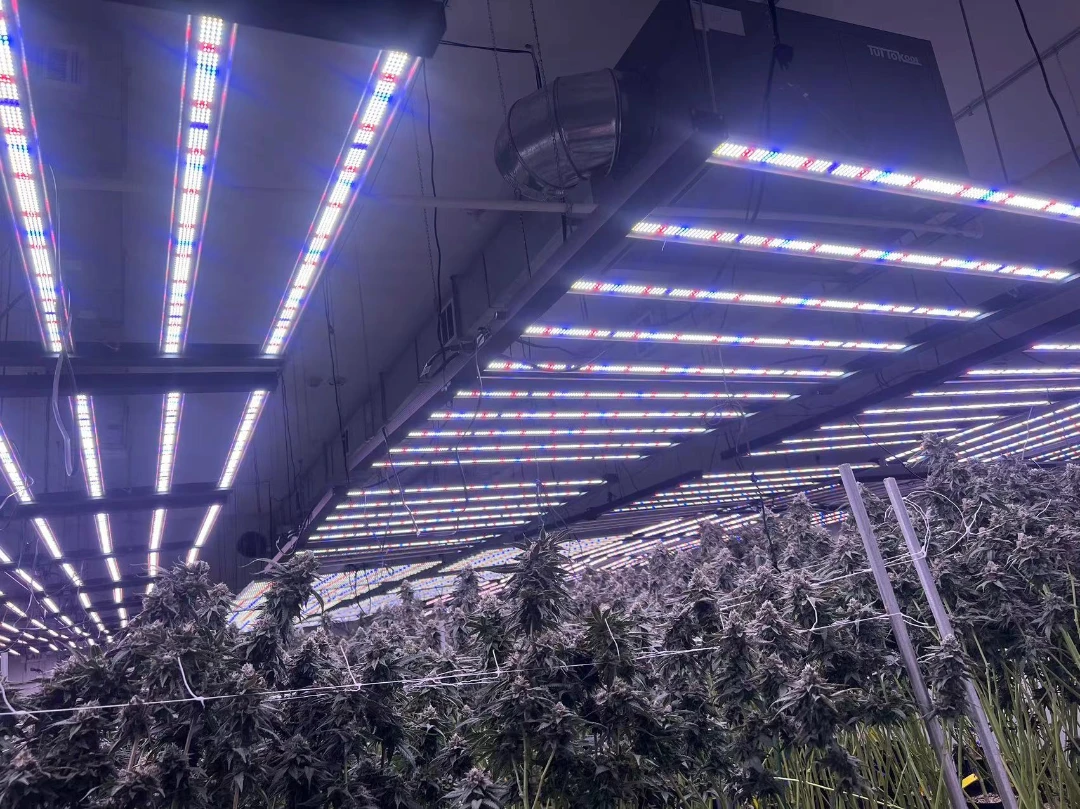
UV is invisible to the human eye, but plants and people both respond to it strongly. In horticulture, UV is usually treated as a “supplemental” input rather than a primary photosynthetic driver, because most UV photons are outside PAR and can be stressful at high doses.
UV-A vs. UV-B vs. UV-C: What matters for growers
UV is commonly divided into three bands:
- UV-A (315–400 nm): Typically the easiest to use in indoor cultivation, with lower risk than UV-B.
- UV-B (280–315 nm): More biologically intense; can trigger protective metabolites and defense pathways, but also causes stress and yield loss if overused.
- UV-C (100–280 nm): Strongly damaging to living tissue and mainly used for disinfection, not routine crop lighting. unr.edu
A practical takeaway is simple: most “UV grow lighting” in commercial environments focuses on UV-A and carefully controlled UV-B, while UV-C is generally not recommended for crop quality lighting. MDPI
How plants sense UV (and why responses look like “stress”)
Plants interpret UV as an environmental signal that often correlates with open-sky conditions and higher radiation load. UV can activate protective pathways that increase compounds such as flavonoids and other phenolics, which function like “sunscreen” and antioxidants in leaf tissue.
For UV-B in particular, plant perception involves the UVR8 photoreceptor and downstream signaling that changes metabolism and defense readiness. This is one reason UV-B is frequently discussed as a tool to influence specialized metabolites and sometimes disease resistance. A widely cited review summarizes these mechanisms and application strategies in crop production. Nature
What a UV LED Grow Light Actually Is
The phrase uv led grow light can mean different designs, so it helps to define what you are buying and how you intend to use it.
UV diodes and common horticultural wavelengths
Most horticultural UV LEDs fall into a few practical wavelength clusters:
- 365 nm and 385 nm (UV-A): Common in plant studies and commercial “tunable spectrum” fixtures.
- 395–405 nm (near-UV / violet edge): Often marketed as UV, but biologically it overlaps the boundary into visible violet. It can still influence pigment and morphology, but it is not the same as 365 nm UV-A.
- ~300–315 nm (UV-B): Used in controlled doses for biochemical responses; requires stronger safety controls.
Research examples often report UV-A supplementation around 365 nm and describe measurable metabolic responses at relatively low intensities (in controlled settings). PMC
Integrated UV channels vs. separate UV fixtures
In modern grow operations, UV is usually implemented in one of two ways:
- Integrated UV channels inside full-spectrum fixtures (preferred for consistency). This approach makes it easier to schedule UV precisely and maintain uniformity across the canopy.
- Dedicated UV bars or modules added to an existing lighting plan. This can be cost-effective for retrofits, but it increases the risk of uneven distribution and accidental overexposure hotspots.
If your goal is predictable results, you typically want controllability, repeatability, and uniform coverage more than peak UV power.
Benefits of Adding UV to Your Grow
UV is not a universal “yield booster,” and it should not be marketed that way. In practice, UV is best viewed as a quality and morphology tool—and sometimes a defense priming tool—when managed carefully.
Better color, aroma, and “secondary metabolite” profiles
Many growers explore UV to influence compounds tied to color, flavor, aroma, and functional nutrition. Studies in leafy greens frequently report changes in phenolics and antioxidant-related metrics after UV-A or UV-B treatments, including short-duration or preharvest strategies. MDPI
A useful starting point is this review of UV lighting as a tool for production quality and stress responses in horticulture:
UV Lighting in Horticulture: A Sustainable Tool for Improving Production Quality and Food Safety (MDPI, 2021). MDPI
Photomorphogenesis: compact structure and leaf “toughening”
UV can contribute to short internodes, thicker leaves, and changes in cuticle and epidermal properties. Whether those changes are “good” depends on your crop and target market, but for many controlled-environment systems, modest structural tightening can improve handling and reduce physiological stress later in the cycle.
Because UV effects are highly dose-dependent, the same tool that improves robustness at low exposure can reduce growth at high exposure.
Disease resistance and defense priming (context-dependent)
UV-B has been studied for its potential role in reducing disease pressure by influencing plant defense and pathogen interactions. The most responsible way to interpret the data is: UV-B may support an integrated crop management strategy, but it is not a substitute for sanitation, airflow control, and sound IPM.
If you want a research-grounded overview of UV-B application strategies focused on disease resistance, this paper is a strong reference:
UV-B light and its application potential to reduce disease and pest incidence (Nature, 2021). Nature
Risks and Common Misconceptions

UV is powerful, and the two biggest operational mistakes are (1) treating UV like PAR, and (2) assuming “UV equals better quality” without measuring outcomes.
Too much UV can reduce yield and marketability
Plants can tolerate—and sometimes benefit from—small UV doses. However, excessive UV-B can reduce leaf expansion, increase photodamage risk, and lead to slower growth or reduced biomass. This is one reason many UV protocols emphasize short daily exposures, preharvest windows, or very conservative ramping. ScienceDirect
“UV-C for potency” is not a commercial lighting plan
UV-C is primarily a germicidal band used for disinfection. While UV-C can trigger stress responses, it also has a high probability of damaging crop tissue and degrading market quality. Studies in lettuce supplementation, for example, have reported UV-B as effective for phytochemical biofortification while cautioning against UV-C due to negative quality impacts. MDPI
Human safety is not optional—especially with UV-B
Even if your plants tolerate a UV protocol, worker exposure must be controlled. In the U.S., OSHA notes there are no OSHA-mandated employee exposure limits specifically for UV light, but occupational guidance often references professional exposure guidelines (for example, ACGIH TLVs) and institutional EHS recommendations. OSHA
Practical safety references include:
- Stanford University: Ultraviolet Light Safety Awareness. ehs.stanford.edu
- University of Nevada, Reno: Ultraviolet (UV) Radiation Safety. unr.edu
- OSHA: Workplace exposure limits for UV radiation (interpretation)
When to Use UV in Each Growth Stage
A good UV strategy is staged, conservative, and measured. You are managing plant signaling, not “feeding light,” so timing matters.
Seedling stage: usually minimal or none
Seedlings have limited leaf area and lower stress tolerance, so UV is rarely a priority. If UV is used at all, it is typically low-intensity UV-A and only after seedlings are well-established, because early stress can slow development and complicate uniformity.
If your operation values maximum predictability, most of your early-stage gains will come from stable VPD, gentle PAR ramping, and good root-zone management rather than UV.
Vegetative stage: introduce UV-A first, then evaluate
Vegetative growth is where many growers begin small UV-A additions, because UV-A is generally easier to manage and can influence morphology and antioxidant-related pathways with lower injury risk than UV-B.
Scientific literature includes UV-A treatments around 365 nm with reported physiological and biochemical responses in controlled environments, supporting the idea that UV-A can be an effective “low-risk entry point” for a uv led grow light strategy. PMC
Transition and flowering/fruiting: the most common “quality window”
If your goal is quality attributes—aroma profiles, pigment development, or stress-conditioned metabolite shifts—late vegetative through flowering/fruiting is commonly chosen for UV experimentation. This is where some facilities carefully test small UV-B doses, because UV-B can be a stronger biochemical trigger, but it must be controlled to avoid yield penalties.
For leafy greens, preharvest UV strategies are also common in the research literature, including studies that report measurable changes in phytochemical profiles with UV-B protocols that did not visibly damage plants under those conditions. ScienceDirect
Preharvest and postharvest UV are different tools
It is important not to mix concepts: preharvest UV influences living crop physiology, while postharvest UV is applied after harvest to influence shelf-life and phytochemical retention. Some research explores short UV-A/UV-B postharvest treatments for leafy vegetables to enhance antioxidant-related compounds, but these findings are not automatically transferable to a living-canopy lighting plan. ScienceDirect
How to Dose UV Safely and Effectively
Dosing is where most UV programs succeed or fail. The best results come from disciplined testing rather than aggressive settings.
Start low, ramp slowly, and track outcomes
A practical approach is to begin with UV-A only, confirm that canopy stress markers are stable (no bleaching, no stalled growth, no abnormal leaf thickening), and then decide whether UV-B testing is justified for your crop and market goals.
When you test UV-B, you should treat it like a “micro-dose input” and evaluate quality metrics, not just visual changes.
Use research protocols as guardrails—not as copy-and-paste recipes
Published studies often report UV dose using units such as kJ·m⁻²·day⁻¹ or UV photon flux for specific wavelengths. For example, one controlled study reported UV-B LED treatment around 4.51 kJ·m⁻² per day over multiple days without damaging leafy vegetables in that context. ScienceDirect
Other literature discusses mild daily UV-B exposures (often delivered in short time windows) to influence health-promoting compounds before harvest. ResearchGate
These are helpful reference points, but every facility differs in canopy distance, fixture optics, reflective surfaces, and total PAR load. Your safest operational posture is to treat literature values as boundaries and validate with your own measurements.
Measure UV properly (and do not confuse PAR meters with UV dose)
Most PAR meters cannot quantify UV. If you are serious about UV repeatability, use a UV sensor rated for the relevant band (UV-A vs UV-B) and measure at multiple canopy points.
Uniformity matters as much as intensity, because UV hotspots can cause localized damage that looks like nutrient deficiency or heat stress.
Scheduling: short exposures often outperform continuous UV
Many growers schedule UV in short daily periods rather than continuous delivery. This reduces the chance of chronic stress, and it aligns with how many studies structure UV treatments (short-term supplementation or defined preharvest windows). MDPI
A common operational pattern is to run UV when staff are not in the room, then lock out UV channels during working hours for safety.
Choosing the Right UV LED Grow Light for Your Facility

Not all UV implementations are equal. Selecting a uv led grow light should be treated as both an agronomic and an engineering decision.
Wavelength transparency and controllability
A serious horticultural UV product should clearly state:
- UV band and peak wavelength (for example, 365 nm UV-A or 310 nm UV-B)
- Independent channel control (on/off, dimming, scheduling)
- Optical design and recommended mounting height for uniformity
If a supplier cannot specify wavelength and expected irradiance at distance, you do not have a controllable UV program—you have a guessing game.
Photobiological safety: UL 8800 and IEC 62471 alignment
UV brings photobiological safety considerations that high-PAR-only fixtures may not. In horticultural lighting, UL 8800 addresses safety considerations, including photobiological effects and consistency with IEC 62471 risk group evaluation. UL Solutions
Helpful references include:
- UL 8800 Brief (PDF). UL Solutions
- IES: Safety—Assessing Horticultural Lighting. Illuminating Engineering Society
Even when UV is “only supplemental,” you should still implement labeling, SOPs, and access controls appropriate to the evaluated risk group.
Durability and materials: UV can degrade polymers
UV can accelerate aging in some plastics, gaskets, lenses, wire insulation, and coatings. This is one reason horticultural standards and product design discussions include UV exposure effects on polymeric materials in grow environments. marketdirectory.messefrankfurt.com
From a buyer’s standpoint, you want fixtures designed with UV-stable materials and validated thermal management, because UV diodes are sensitive to junction temperature and long-term stability.
Practical UV Use Cases by Crop Type
UV outcomes depend heavily on crop genetics, baseline spectrum, and environmental management. The most reliable way to proceed is to set a measurable goal, then test.
Leafy greens (lettuce, microgreens, brassicas)
Leafy greens are a common testing ground for UV because the “quality output” can be measured in color, phenolics, and antioxidant-linked indicators. Multiple studies and reviews discuss UV-A/UV-B treatments in leafy vegetables for phytochemical enhancement and postharvest quality considerations. ScienceDirect
If you want an open-access UV-A reference point, this paper is a useful read:
Short-Term UV-A LED radiation and plant responses (PMC). PMC
Culinary herbs (basil, mint, medicinal aromatics)
Herbs are often grown for volatile compounds and sensory value, so UV experiments sometimes focus on aroma intensity and leaf robustness. The correct approach is to quantify outcomes (sensory panels, GC/MS if available, or at least standardized brix/aroma scoring) rather than relying on anecdotal impressions.
A broader “light spectrum and metabolite” perspective is summarized in plant-light reviews that highlight how spectrum shapes metabolism beyond biomass. Wiley Online Library
Fruiting crops (tomato, pepper, strawberry)
For fruiting crops, UV is usually a secondary lever after you have already optimized DLI, temperature, CO₂, pollination, and nutrient strategy. UV-A is more commonly tested than UV-B for these crops in production contexts, because fruiting crops already operate at high energy loads and can be sensitive to added stress. Frontiers
Regulated crops (where legally grown)
For regulated crops, growers often explore UV as a quality input, but results are inconsistent without tight environmental control and chemistry-based measurement. The operational message remains the same: start low, measure, and treat UV as a controlled signal rather than a blanket setting.
Implementing UV in Commercial Operations
To make UV pay off, you need process control. The lighting decision is only one part of a successful uv led grow light program.
Build SOPs: access control, scheduling, PPE, signage
A credible UV program includes:
- UV scheduling that avoids worker exposure
- Protective eyewear and skin protection where needed
- Training on what UV is, why it is used, and what “overexposure” looks like in plants and humans
- Simple lockout rules during maintenance
University EHS guidance documents emphasize that UV can injure eyes and skin and should be treated as a managed hazard, not a casual feature. unr.edu
Run trials like a manufacturer, not like a hobbyist
Commercially, the fastest path to clarity is a structured A/B trial:
- Same cultivar, same PAR/DLI, same environmental setpoints
- UV-A only vs UV-A + small UV-B window (or UV vs no UV)
- Track yield, morphology, time-to-harvest, and at least one quality marker relevant to your market
Research consistently shows UV responses are dose- and context-dependent, which is why disciplined trial design matters. MDPI
ROI thinking: UV is usually a quality lever
For many facilities, UV ROI is earned through:
- Quality differentiation (color, sensory attributes, functional claims where allowed)
- Reduced waste (if leaf toughness and stress resilience improve in your system)
- Stronger brand positioning (“spectrum engineered” rather than generic lighting)
It is rarely earned by raw yield increases alone, and framing it that way usually leads to disappointment.
Why SLTMAKS UV LED Grow Lights Fit Modern Growers
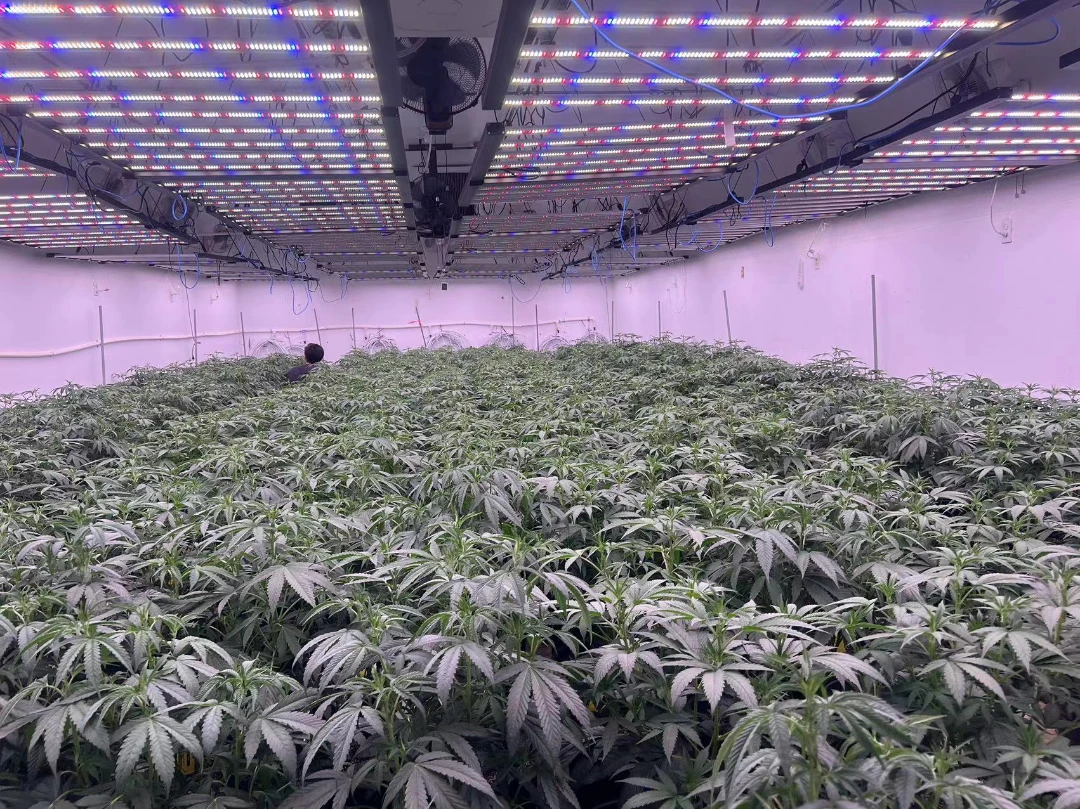
A uv led grow light is only valuable if it is controllable, uniform, and safe. SLTMAKS designs lighting for professional growers who want repeatability, not “mystery spectrum.”
Tunable UV as a controlled tool, not a fixed gamble
A strong UV solution should support:
- Dedicated UV channels (UV-A and, where appropriate, carefully managed UV-B)
- Reliable dimming and scheduling so you can implement conservative ramp protocols
- Consistent canopy distribution to prevent hotspots and leaf injury
This lets you treat UV as an agronomic variable you can optimize—just like DLI or CO₂—rather than a one-time guess.
Engineering built for harsh grow environments
Grow rooms are tough on equipment. UV-capable fixtures must manage heat, humidity, and material aging while maintaining stable output. Standards discussions around horticultural lighting also consider environmental exposure, ingress, and long-term reliability factors. marketdirectory.messefrankfurt.com
Support that matches commercial decision-making
The fastest way to succeed with UV is to align spectrum, distance, and schedule to your crop goals. A supplier that can discuss UV in practical operating terms—dose control, measurement strategy, and safety SOPs—adds real value beyond the hardware.
Quick UV Checklist for Growers
If you want a simple, low-risk starting path, use this checklist to structure your first UV implementation.
Step 1: Define the goal in one sentence
Examples include improving leaf color uniformity, increasing a specific quality marker, or improving stress resilience. Keep the goal measurable, because UV is not a “set-and-forget” input.
Step 2: Start with UV-A before UV-B
UV-A is typically easier to integrate and has a wider operational safety margin. Use published UV-A work as conceptual guidance, but confirm dose at your canopy with appropriate sensors. PMC
Step 3: If testing UV-B, keep it conservative and time-windowed
UV-B can be effective, but it is also where yield loss and safety risk rise quickly. Follow a disciplined trial design, and use standards-aware safety practices that reflect photobiological risk group concepts. Illuminating Engineering Society
Step 4: Protect people while you optimize plants
Control room access, schedule UV during unoccupied periods, and follow credible EHS guidance for UV exposure control. Even without a single “OSHA UV limit,” professional operations treat UV as a managed hazard.
Conclusion
A UV LED grow light is not a magic switch for higher yield. It is a precise spectral tool that can help shape plant structure, quality traits, and defense-related chemistry—when applied conservatively and measured properly. The most successful UV programs focus on UV-A first, treat UV-B as a micro-dose experiment, and build safety and repeatability into the lighting plan from day one.
If you want SLTMAKS to help you design a UV strategy around your crop, facility layout, and target quality outcomes, the best next step is a controlled trial plan with clear metrics and a safe, tunable UV implementation.