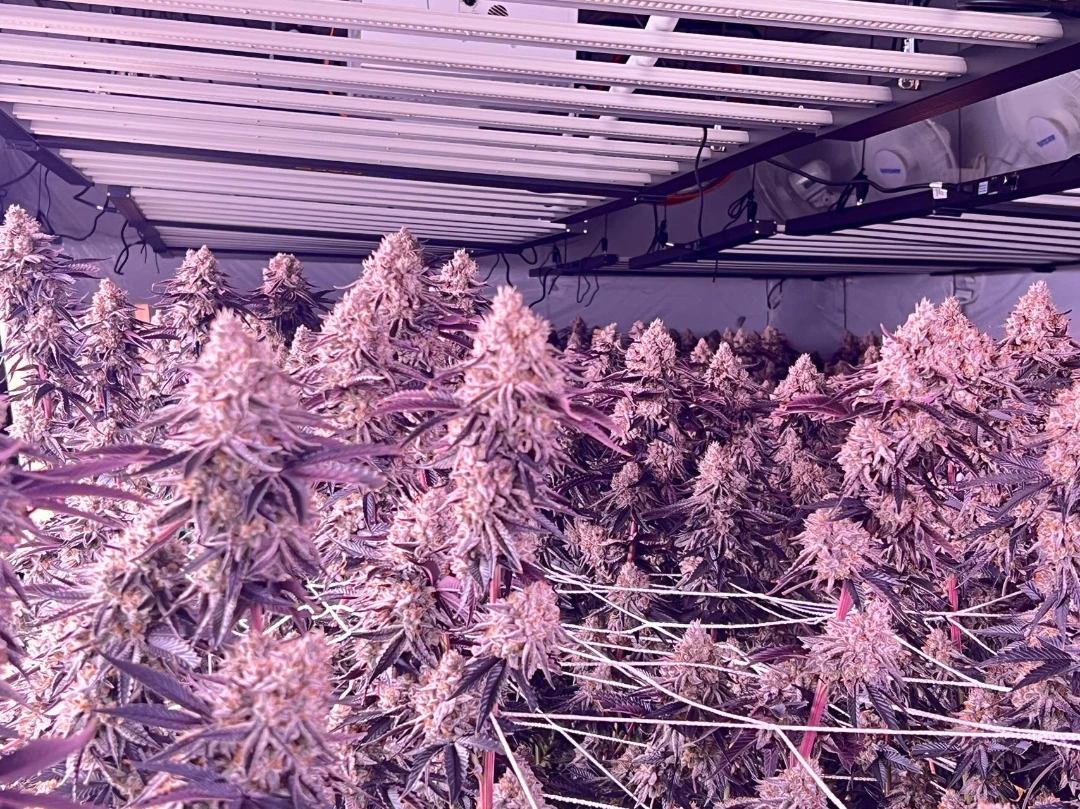
Far-red is one of the most misunderstood parts of horticultural lighting. A far red LED grow light (typically peaking around 730nm) can change how plants “interpret” their environment—sometimes improving canopy photosynthesis and sometimes triggering stretch, earlier flowering, or shade-avoidance behaviors.
This article explains, in practical terms, what 730nm far-red does, why it works, and how to use it safely and effectively in controlled-environment agriculture (CEA), greenhouses, vertical farms, and indoor grow rooms.
Table of Contents
What “Far-Red” Means and Why 730nm Is the Spotlight

Far-red light usually refers to photons in the ~700–750nm range, sitting just beyond the traditional PAR (400–700nm) definition. In sunlight and under canopy shade, far-red is common, and plants evolved to treat it as meaningful information rather than “extra brightness.” nph.onlinelibrary.wiley.com
In LED grow lighting, 730nm is popular because it aligns closely with the absorption characteristics of plant phytochromes (the red/far-red sensing system). In simplified terms, 730nm is a “language” plants already understand—so a small dose can produce a big response. PMC
Where 730nm Sits Compared With Red, Deep Red, and Near-Infrared
Red is usually centered near 660nm, while far-red is often centered near 730nm. These are not interchangeable, because plants use them to control different photochemical and developmental switches. PMC
Near-infrared (NIR) is longer than far-red and quickly becomes more “heat-like” in practical applications, while 730nm far-red is still primarily used as a signal (and, under the right conditions, as a contributor to photosynthesis at the canopy level). Treat 730nm as “plant signaling + synergy,” not as a heater. life.illinois.edu
The Two Big Reasons Growers Add Far-Red
First, far-red changes plant morphology and timing (elongation, leaf angle, flowering responses) through phytochrome regulation. Second, far-red can improve canopy photosynthesis when combined with shorter wavelengths, which is why the industry increasingly discusses ePAR (400–750nm) instead of classic PAR.
The Phytochrome Switch: How 730nm Changes Plant Decisions
Plants don’t just measure “how much light.” They measure what kind of light, and phytochromes are core to that sensing system. Phytochromes exist in two photoreversible forms: a red-absorbing form (often described as Pr) and a far-red-absorbing form (Pfr), with absorption maxima near ~670nm and ~730nm, respectively. PMC
A useful mental model is that plants use the red : far-red ratio (R:FR) as a “neighbor and shade” signal. When R:FR drops (more far-red relative to red), many plants interpret that as vegetation shade or competition, and they shift growth strategies accordingly.
What Low R:FR Typically Triggers
A lower R:FR commonly promotes a package of responses called shade avoidance syndrome (SAS). It often includes stem or internode elongation, more upright leaves, and other architectural changes that can help plants reach light but can reduce compactness and sometimes affect quality targets in controlled production.
This is why a far red LED grow light is powerful: it can be used to steer architecture intentionally, but it can also accidentally cause stretching if applied without a plan.
The Growth–Defense Trade-Off Matters
One practical caution is that shade signaling can shift resource allocation. Some research links low R: FR perception with changes that increase susceptibility to pathogens in certain contexts (a “growth–defense tradeoff”). That does not mean far-red is “bad,” but it does mean you should treat far-red as a management lever rather than a default always-on channel. OUP Academic
Far-Red and Photosynthesis: From the “Red Drop” to ePAR (400–750nm)
Many growers learned that “plants don’t use light above 700nm for photosynthesis.” That statement is outdated in the way it is commonly interpreted. The modern view is more nuanced: far-red alone is weak, but far-red combined with shorter wavelengths can significantly enhance photosynthesis—especially at the canopy level. PubMed
The Emerson Enhancement Effect in Plain English
Photosynthesis relies on two cooperating photosystems. Classic work on the “red drop” and the Emerson enhancement effect demonstrated that far-red by itself is insufficient for high efficiency, but far-red can increase overall performance when paired with light that excites the other photosystem. life.illinois.edu
Modern experiments continue to revisit and confirm this concept in more realistic light mixtures. The key takeaway for growers is simple: far-red is not a replacement for your main spectrum, but it can be a multiplier when used correctly. PMC
Evidence That Far-Red Photons Can Be “Equally Efficient” in Canopy Photosynthesis
A highly cited study found that adding far-red photons (within 700–750nm) to a background of traditional wavelengths increased canopy photosynthesis in a way comparable to adding more 400–700nm photons, up to substantial fractions in tested conditions. This supports the argument that fixtures and efficacy metrics should consider ePAR (400–750nm) rather than only PAR. PubMed
A complementary perspective in New Phytologist highlights how far-red photons in sunlight—especially within plant canopies—can be used efficiently, reinforcing that excluding them can underestimate true photosynthetic photon availability in real crop environments.
What You Can Expect a Far Red LED Grow Light to Do in Real Crops
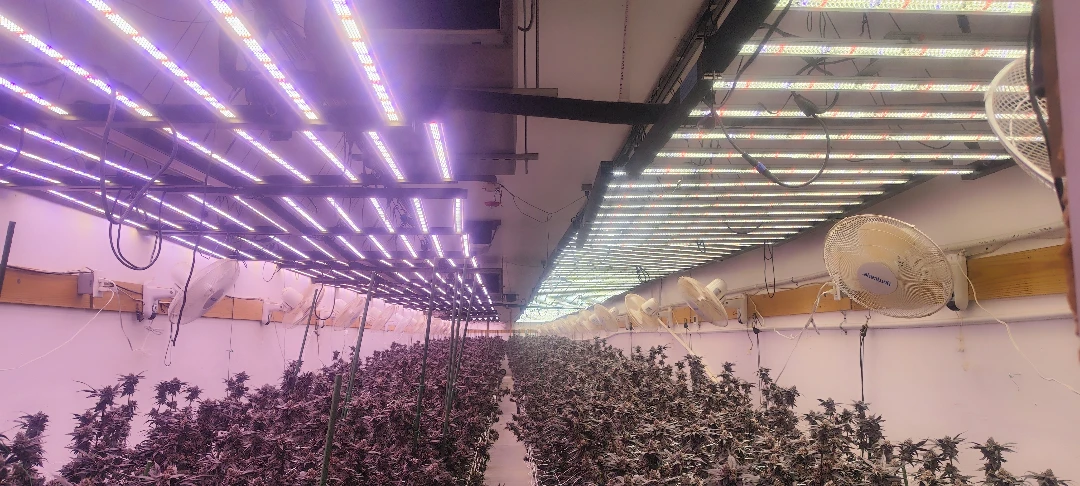
Because far-red affects both developmental signaling and canopy photosynthesis synergy, outcomes depend on intensity, duration, crop species, and how much blue/red you provide alongside it. You should evaluate far-red like you evaluate CO₂ enrichment: it can help, but only when the rest of the system supports it.
Architecture: Stretch, Leaf Expansion, and Canopy Shape
Low R:FR conditions frequently lead to elongation. That can be useful for some goals (certain vine crops, certain canopy strategies, some transplant size targets), but it can also reduce compactness in ornamentals and leafy greens when tight internodes are part of quality grading.
End-of-day (EOD) spectral treatments demonstrate how sensitive plants can be to red vs far-red signaling. For example, EOD red versus EOD far-red exposures have been shown to produce major differences in elongation and hormone-related responses in poinsettia, illustrating the “switch-like” nature of phytochrome manipulation. ScienceDirect
Flowering and Crop Timing: When Far-Red Can Accelerate (and When It Won’t)
Far-red is frequently discussed in flowering control because phytochrome is tied to photoperiodic signaling pathways. In some crops, far-red supplementation timing influences flowering and harvest timing, including work reported for strawberry where far-red exposure timing affected growth and fruit outcomes. journals.ashs.org
In long-day and ornamental contexts, studies using LED combinations (including far-red) show measurable impacts on flowering and budding in specific species and cultivars. The practical message is that far-red can be a photoperiod tool, but it is species- and cultivar-dependent, so you should validate on your genetics rather than assuming universal acceleration. J-STAGE
Photosynthesis and Biomass: Why Far-Red Can Improve “Whole-Canopy” Results
If your crop is dense (high LAI), far-red can help photons penetrate and can alter leaf angle and expansion, sometimes improving total light interception. NASA-related controlled environment work has also examined supplemental far-red effects on leafy greens for specialized production contexts, reinforcing that far-red is an active variable worth engineering rather than ignoring. NASA Technical Reports Server
At the same time, remember the boundary condition: far-red performs best as a partner to the main spectrum. If you simply add far-red without sufficient blue/red/white intensity, you may see stretch without meaningful productivity gains. PubMed
When to Use 730nm: Practical Scheduling Patterns That Growers Actually Deploy
There is no single universal far-red recipe. However, most successful strategies fall into a few repeatable patterns that are easy to test.
Strategy 1: Add Far-Red as a Small Fraction During the Photoperiod
This approach aims to improve canopy photosynthesis synergy while managing morphology. You keep far-red present during the “day” at a controlled fraction of total photons, rather than using it as a short pulse. PubMed
A practical way to start is to treat far-red as a tunable channel and evaluate outcomes across a small range while keeping DLI, CO₂, temperature, and nutrition constant. Your KPIs should include compactness metrics, leaf area, and yield/quality—not just “faster growth.”
Strategy 2: End-of-Day Far-Red (EOD-FR) Pulses
EOD-FR is a classic technique to manipulate phytochrome state at “night onset.” Research using LED-based EOD treatments (often on the order of tens of minutes in experiments) shows it can meaningfully shift elongation outcomes.
In commercial practice, growers often trial shorter pulses first and scale carefully, because EOD-FR can quickly overshoot into unwanted stretch. The correct duration depends on fixture intensity at canopy, crop sensitivity, and whether you also use EOD red as a counterbalance.
Strategy 3: Photoperiod Manipulation and Night Interruption Concepts
Some production systems use red and far-red strategically in night interruption or long-day treatments to influence flowering responses in ornamentals. Published studies continue to explore red vs far-red night interruption effects with LED peaks near 660nm and 730nm in specific crops. PMC
This is an advanced use case because it mixes photoperiod biology with spectral engineering. If flowering control is your primary goal, you should treat the far-red channel like a photoperiod actuator and document results carefully by cultivar.
How to Balance Far-Red With Blue, Red, and White Light
Far-red rarely works best when it is isolated. Think of it as one component in a “spectrum budget” that must balance photosynthesis, morphology, and crop quality.
Use Blue Light to Keep Structure Under Control
If far-red pushes plants toward shade-avoidance elongation, blue light often pushes back toward compactness and stronger leaf/stem traits in many species. This is one reason full-spectrum or mixed-channel fixtures are easier to tune than single-color solutions.
A practical management habit is to treat morphology as a response to ratios, not single wavelengths. R: FR and blue fraction both matter, and the “right” balance depends on crop and stage.
Don’t Confuse “More Far-Red” With “More Productive”
Far-red is not a magic productivity dial. It can increase canopy photosynthesis when paired correctly, but it can also produce taller plants with lower structural quality or altered resource allocation if pushed too far.
For this reason, many leading discussions emphasize expanding measurement frameworks (ePAR) and treating far-red as a legitimate photosynthetic contributor in combination, rather than using it as a standalone intensity substitute. Frontiers
Measurement: Why Your PAR Meter May Mislead You With Far-Red
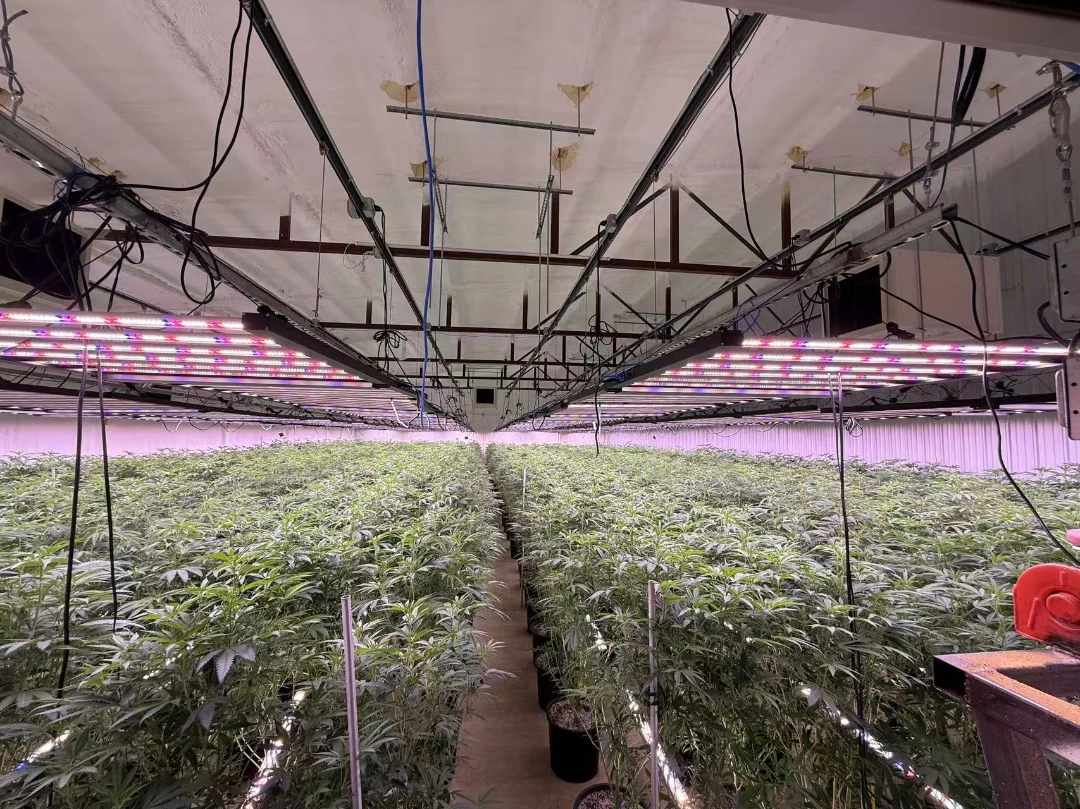
A common operational mistake is assuming your quantum sensor tells the full story. Most standard PAR meters are designed for 400–700nm and will under-report or ignore the far-red photons your far red LED grow light emits.
What to Use Instead of “PAR-Only” Thinking
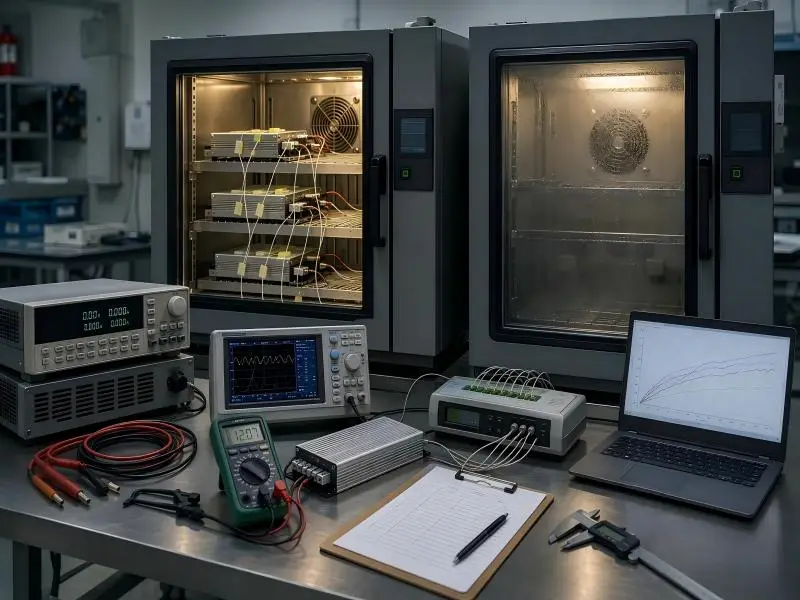
If far-red is a major part of your lighting strategy, you should consider a spectrometer or sensors designed to quantify photons beyond 700nm. That does not mean you need to overcomplicate your workflow, but you do need consistent measurement to avoid “mystery stretch” and inconsistent results.
When you track results, combine light measurements with plant measurements. Internode length, leaf angle, leaf area, and days-to-flower are often more sensitive to far-red than a PPFD number on a PAR-only meter.
A Simple KPI System for Far-Red Trials
Track DLI (daily light integral) for the 400–700nm portion and separately document your far-red strategy (fraction during photoperiod, EOD pulse duration, or night interruption schedule). Then record morphology and yield outcomes on a fixed sampling schedule.
This is the fastest way to determine whether far-red is helping your specific genetics under your exact temperature, CO₂, irrigation, and nutrition regime. It also produces clean internal data you can reuse when you scale to new rooms.
Buying Checklist: What to Look for in a Far Red LED Grow Light
A far red LED grow light is most valuable when it is controllable and repeatable. The “best” choice is rarely the most powerful far-red bar; it is the option that integrates cleanly into your spectrum strategy.
1) Peak Wavelength and Spectral Width
Look for a far-red channel that clearly targets the ~730nm region with stable output. The goal is consistent phytochrome signaling and predictable interactions with your primary spectrum. PMC
A fixture with a defined far-red peak is easier to standardize across rooms and crop cycles. That matters more than chasing tiny theoretical differences between 730nm and 735nm if you cannot control intensity and timing precisely.
2) Independent Control and Dimming
You will get more value if far-red can be dimmed or scheduled independently. Far-red is highly stage-dependent, and you should be able to reduce it during early vegetative phases if stretch is a risk, then increase or pulse it later if your trials show benefit.
Independent control also makes it easier to test strategies like EOD-FR without disturbing your main photoperiod lighting plan. This saves energy and simplifies SOPs.
3) Uniformity and Placement
Far-red effects can be inconsistent if the distribution is uneven. Ensure your far-red channel provides uniform coverage at canopy or use multiple smaller fixtures to reduce hotspots.
Placement also matters because far-red is often used either as a canopy-wide signal (uniform) or as a canopy-penetration helper (integrated with main fixtures). Decide which you want before you buy.
4) Electrical and Safety Considerations
Far-red is less visible to the human eye than many wavelengths, which can create a false sense of low intensity. You should still follow lighting safety practices, use appropriate eyewear when required by your facility rules, and ensure proper thermal management and compliance-grade drivers.
A professionally engineered system is not just about photons. It is about stable output over time, predictable dimming behavior, and reduced maintenance disruptions.
Common Mistakes and Myths About 730nm Far-Red
Far-red becomes easy to use once you stop treating it as a “brightness add-on” and start treating it as a biological signal plus a photosynthesis partner.
Myth 1: “Far-Red Doesn’t Count for Photosynthesis”
Far-red alone is typically inefficient, but far-red can contribute meaningfully at the canopy level when combined with shorter wavelengths. Modern peer-reviewed work supports the idea that far-red photons can be effectively used in canopy photosynthesis under realistic mixtures. PubMed
If you ignore far-red entirely, you may misjudge fixture performance in dense canopies. That is one reason the ePAR discussion exists and continues to grow. Frontiers
Myth 2: “Far-Red Always Increases Yield”
Far-red can increase canopy photon capture and alter morphology in ways that sometimes improve biomass. However, it can also trigger shade-avoidance responses and quality tradeoffs, depending on crop, cultivar, and management targets.
Treat far-red as an optimization variable, not a universal booster. The best results usually come from measured trials and tight control of ratios.
Myth 3: “More Far-Red Is Always Better for Flowering”
Far-red can influence flowering pathways in certain crops, but the effect is not universal. Photoperiod responses are species- and cultivar-specific, and far-red can interact with daylength treatments in complex ways.
If flowering acceleration is your goal, build a test plan that includes a control group, consistent DLI, and clear time-to-flower metrics. That approach produces actionable data rather than anecdotes.
How SLTMAKS Thinks About Far-Red in Practical Grow Lighting

At SLTMAKS, the goal is not to “add a trendy wavelength.” The goal is to provide growers with predictable control over plant responses, using far-red as one part of a complete lighting system.
A well-designed SLTMAKS far-red strategy focuses on three things: stable spectral output, controllable scheduling (including EOD and stage-based tuning), and integration with full-spectrum or mixed-channel solutions so you can balance photosynthesis and morphology rather than sacrificing one for the other. The result is a lighting plan that is easier to standardize across cycles, facilities, and crop varieties.
Quick-Start Reference: Sensible Ways to Trial Far-Red Without Losing Control
Below is a simple starting framework you can adapt. It is intentionally conservative, because far-red effects can be strong and crop-dependent.
| Crop stage | Conservative far-red approach | What to watch |
|---|---|---|
| Seedling / liner | Minimal far-red or very low fraction during photoperiod | Internode stretch, stem strength |
| Vegetative canopy build | Small controlled far-red fraction during photoperiod | Leaf area vs leggy growth |
| Pre-flower / transition | Trial EOD-FR pulses on a subset | Stretch, days-to-flower |
| Flowering / finishing | Use only if trials show benefit; keep ratios stable | Quality metrics, uniformity |
This framework works best when you run side-by-side comparisons and keep everything else constant. It also helps you avoid the most common failure mode: adding far-red, seeing stretch, and not knowing whether it was spectrum, DLI, temperature, or genetics.
730nm Is a Precision Tool, Not a Decoration
A far red LED grow light can be one of the highest-leverage spectrum channels you add—because plants respond to it quickly and measurably. When used intentionally, 730nm can help you tune architecture, influence photoperiod signaling in certain crops, and improve canopy-level photosynthesis synergy under mixed spectra. PubMed
If you want, tell me your target crop (for example: leafy greens, ornamentals, strawberries, tomatoes) and your grow style (vertical rack vs greenhouse vs tent). I will propose a practical far-red trial plan with measurable KPIs and a tuning workflow that minimizes risk while capturing the upside.