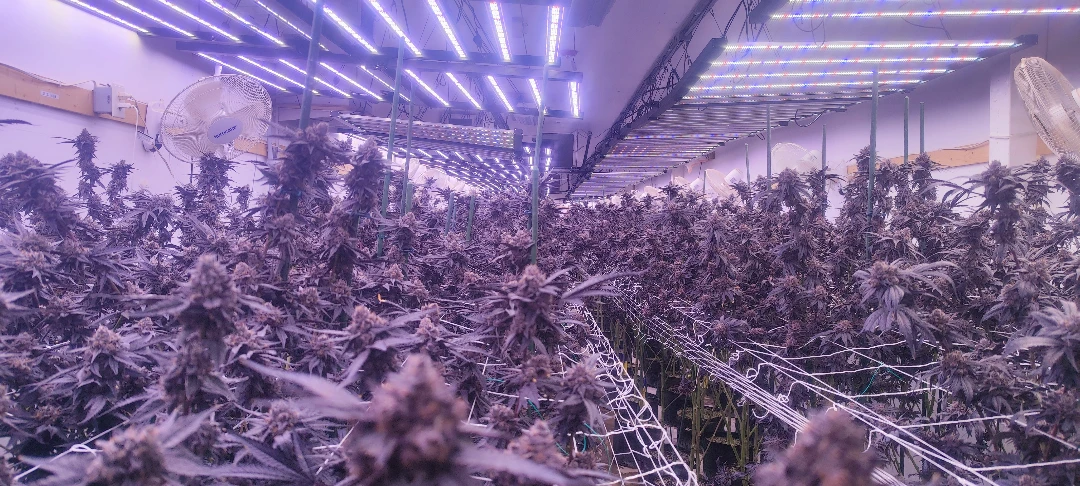
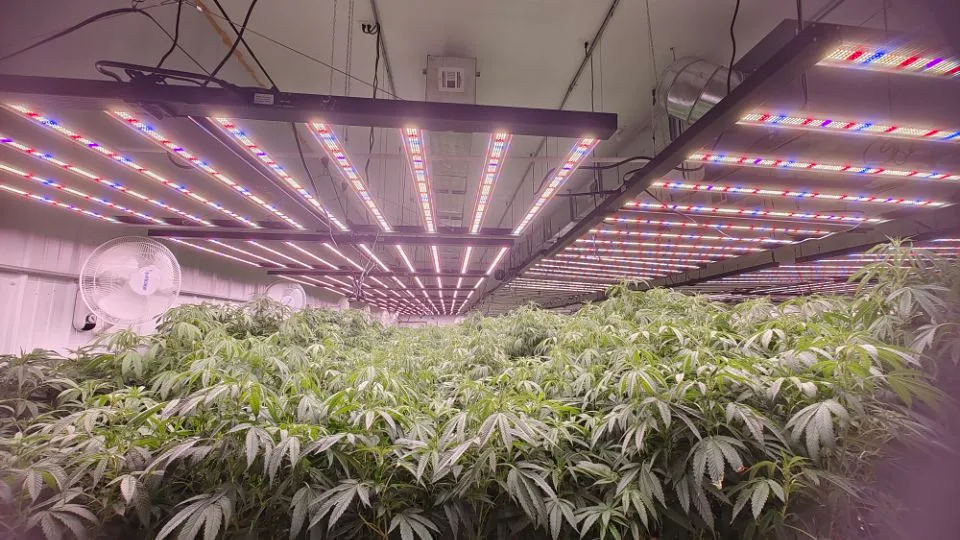
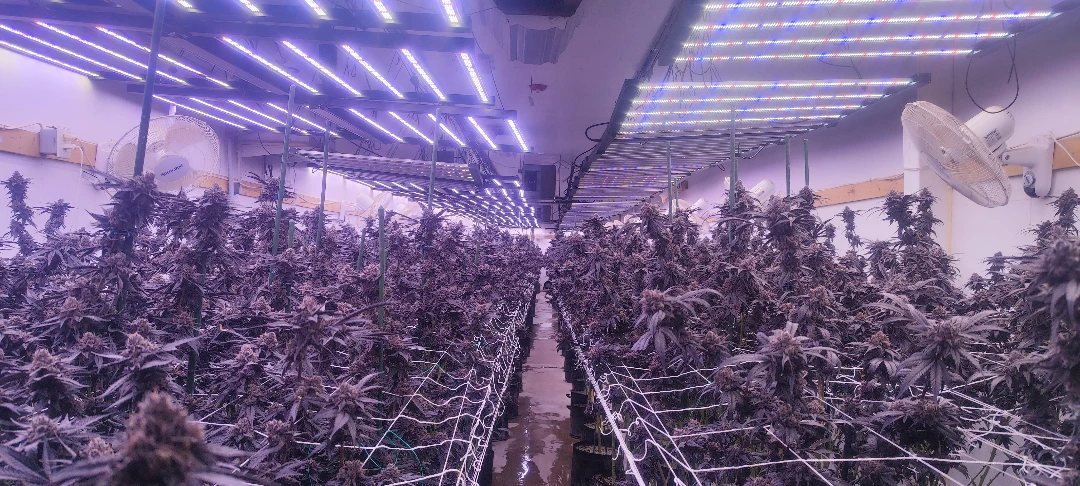
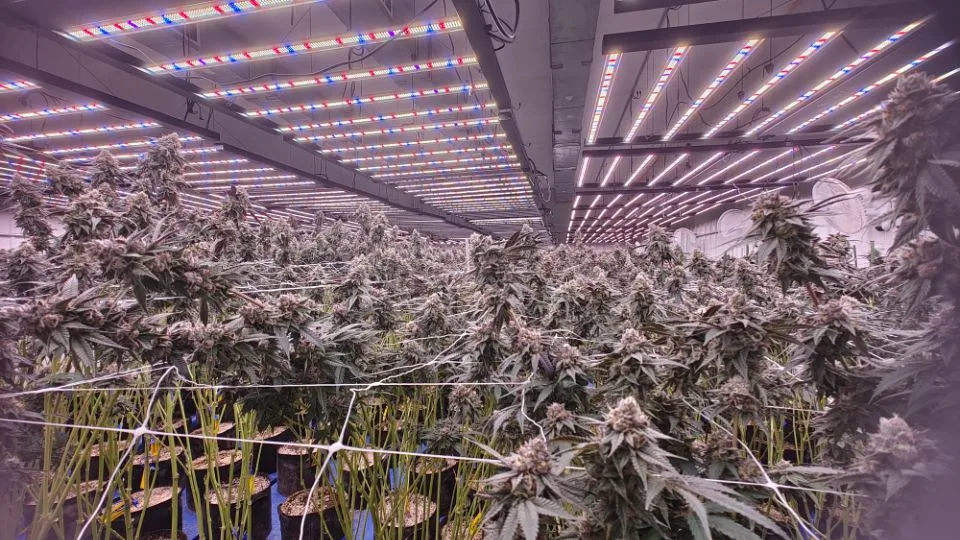
Engineer the perfect light spectrum for optimal plant growth. Boost your yields and cultivate year-round with our energy-efficient LED solutions. Tell us your needs for a customized lighting strategy and quote.
Growing “weed” at home (where it’s legal) can be a rewarding hobby, but lighting is where most home growers either overspend or run into avoidable problems. A good led grow light weed setup is not just about “more watts” or a fancy spectrum chart—it’s about safety, consistency, efficiency, and realistic coverage in a small space. If you choose the right fixture once, you’ll spend less time troubleshooting heat, noise, and electrical issues, and more time enjoying a stable, repeatable grow environment.
This guide is written for everyday home growers who want to understand what actually matters when shopping for cannabis-capable LED fixtures. It focuses on how to read specifications, how to avoid marketing traps, and how to build a setup that is safe and energy-smart for a bedroom grow tent, closet grow, or small grow room. Nothing here is legal advice, and you should always follow your local regulations and building/electrical codes.
Table of Contents
What “LED Grow Light Weed” Really Means for Home Setups
Home cannabis grows are different from general houseplant lighting, and the difference is not subtle. Cannabis is typically treated as a high-light crop, meaning many growers aim for strong, uniform lighting over a defined canopy area, especially during the flowering period. That high-light demand makes fixture quality, thermal design, and electrical safety more important than they would be for low-light herbs or decorative plants.
Another key difference is that home spaces are usually shared with people. You may be sleeping in the same building, running other appliances, and living with limited outlets and circuits. That’s why “best led grow light weed” should really translate into: stable output, predictable coverage, safe wiring, and manageable heat.
Finally, cannabis lighting conversations often get noisy because people mix goals. Some are chasing maximum production, while others just want a clean, odor-controlled, low-risk hobby grow. Your light choice should match your intent, because a “bigger” fixture is not automatically a “better” fixture when the real limit is heat, circuit capacity, or tent size.
The Light Metrics That Actually Matter (And the Ones That Mislead)
If you’ve ever shopped for an LED grow light, you’ve seen a wall of acronyms. Some are truly useful, and others are just repackaged marketing. Understanding a few core terms will make your buying decision much easier and prevent you from paying for meaningless specs.
PPFD: The canopy-level number growers talk about most
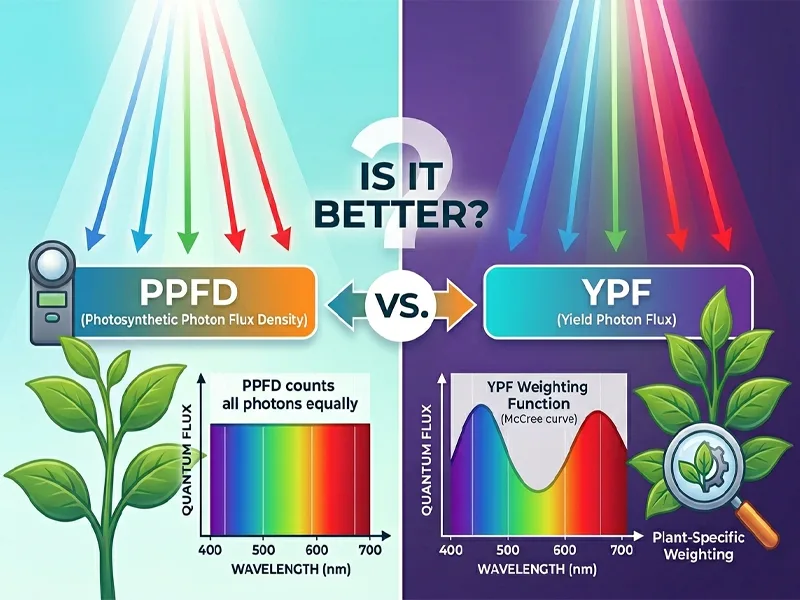
PPFD (photosynthetic photon flux density) is the number of photons in the 400–700 nm range landing on a surface per second, per square meter. In plain English, PPFD describes how much “plant-usable light” is hitting your canopy right now, and it’s typically shown as a map or grid. The Illuminating Engineering Society definition notes PPFD is photon-based, in the 400–700 nm band, with units of μmol·s⁻¹·m⁻². Illuminating Engineering Society
For home growers, PPFD matters because it helps you compare real performance across different fixture styles. A fixture that looks bright to your eyes might not deliver strong PPFD in the red/blue regions plants use most, so “looks bright” is not a reliable buying method.
DLI: The “total daily light” concept that keeps you from overdriving
DLI (daily light integral) turns lighting into a daily total by combining intensity and time. Purdue Extension explains DLI as the amount of PAR received each day, expressed in mol·m⁻²·d⁻¹, and it’s essentially the “rain gauge” concept for light. Purdue University – Extension Another widely used explanation from Michigan State University also describes DLI with the same unit logic and photon totals. Ag & Natural Resources College
For a home weed grow light, DLI is useful because it reminds you that photons add up. If you can’t run very high intensity safely (heat or circuit limits), you can sometimes reach a reasonable daily total by adjusting photoperiod—while still staying within safe operating and plant-stress limits.
PPE: The single best efficiency number on a spec sheet
PPE (photosynthetic photon efficacy) describes how efficiently a fixture converts electrical power into photosynthetic photons. DLC technical documents commonly use μmol/J (micromoles per joule) for photosynthetic photon efficacy requirements and reporting. Design Lights Consortium The practical meaning is simple: higher PPE generally means lower electricity cost for the same photon delivery, assuming you’re comparing honest, apples-to-apples data.
PPE is the metric that helps you separate modern efficient fixtures from older “hot and hungry” designs. It is also the metric that tends to improve over time as LED chips and drivers advance, which is why older models can look cheap upfront but cost more to run long term.
Lux and lumens: fine for humans, unreliable for plants
Lux and lumens are human-vision metrics, and they can mislead when you’re buying a weed LED grow light. A fixture can score well in lumens while underperforming in the wavelengths plants use most, so it’s safer to shop using PPFD maps, PPF, and PPE whenever possible.
If a brand only advertises “equivalent watts” or “lumens,” treat that like a red flag rather than a feature. You are not buying a living-room bulb, and the performance goal is plant photons, not human brightness.
Spectrum Basics for Cannabis-Friendly LED Fixtures
Spectrum discussions can become overly complicated, but you can make good decisions with a practical approach. For home grows, the goal is typically a balanced, plant-appropriate spectrum that supports the full grow cycle without needing multiple specialized fixtures.
Full spectrum: what it should mean in practice
“Full spectrum” is not a regulated label in the way many consumers assume. In practical grow-light shopping, it usually means a broad white-light base (often from high-efficiency white diodes) plus targeted additions in deep red, and sometimes far-red. A well-designed broad spectrum helps you see your plants more naturally and supports normal plant development without the harsh “blurple” look older fixtures used.
The easiest way to judge spectrum claims is to ask for a spectral distribution chart from testing. DLC reporting frameworks also emphasize spectral and photon reporting formats used in horticultural lighting evaluation. Design Lights Consortium+1
Red, deep red, and the “flower” conversation
Red photons are strongly used in photosynthesis, and many fixtures add deep red to improve photon balance and canopy penetration. However, more red is not automatically better if it comes with poor uniformity or excess heat at the canopy. In home spaces, uniform distribution and manageable leaf temperature often matter more than adding yet another red channel.
Far-red: potentially useful, but only when controlled
Far-red (700–800 nm) is often discussed in modern horticultural lighting because it can influence plant morphology and canopy behavior. It is also easy for brands to hype far-red without explaining tradeoffs, so you should treat it as a “nice-to-have” rather than a must-have. If a fixture includes far-red, look for a design that lets you control it, because uncontrolled far-red can shift plant structure in ways you may not want in a small tent.
UV: proceed carefully and prioritize safety
Some products add UVA, but safety and eye exposure considerations become more important when UV enters the picture. Photobiological safety standards such as IEC 62471 are used to evaluate potential hazards from optical radiation, including LED sources. UL Japan’s overview notes IEC 62471 is used to assess potential photobiological hazards from LED radiation. UL Solutions Japan
For a home weed grow light, UV should never be a reason to buy a fixture if the product cannot clearly document testing and risk controls. Your eyes and skin are not experimental equipment, and you do not want to “learn” UV safety the hard way.
Fixture Styles: Boards, Bars, and Bulbs for Home Weed Grows
The fixture form factor affects uniformity, heat, and how easily you can manage distance from canopy. For home growers, these practical factors often matter more than marginal differences in spectrum.
Quantum boards: simple and effective for small tents
Board-style fixtures are popular because they are compact and easy to mount. They can provide strong central intensity, but in wider tents they may deliver less uniformity at the edges unless the board is large enough or uses an optimized diode layout. If you choose a board light, pay close attention to PPFD maps at your exact tent footprint.
Boards can also run warm because the heat is concentrated in one plane. In a tight tent, that can be fine if ventilation is planned, but it becomes stressful if your room is already warm or if airflow is limited.
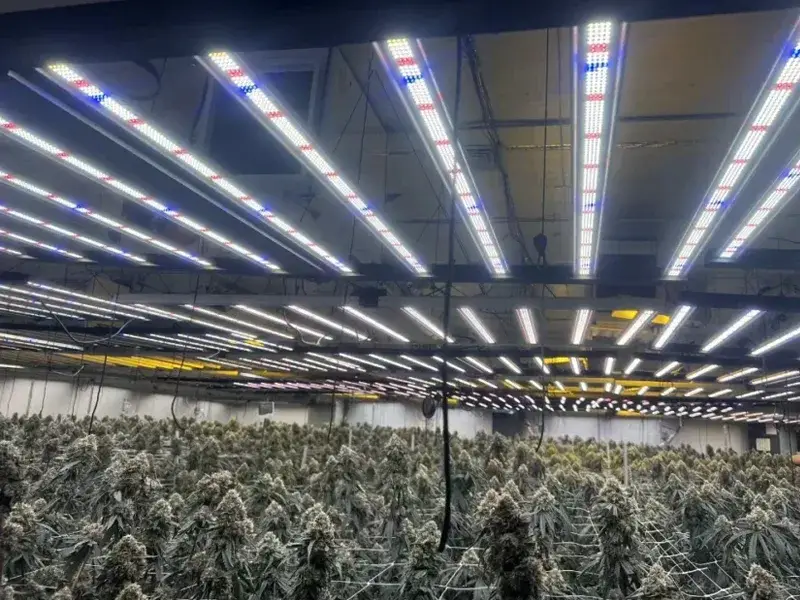
Bar-style fixtures: excellent uniformity and better canopy spread
Bar fixtures distribute diodes across multiple rails, which often improves PPFD uniformity and reduces hot spots. Many home growers like bar designs because they keep leaf temperature more even across the canopy, which can reduce stress and improve consistency. A bar fixture can also make height management easier because you don’t have one intense “center beam” forcing you to hang higher than your tent allows.
The tradeoff is that bar fixtures can be more expensive upfront and may require a slightly more thoughtful installation. For many serious home setups, the uniformity advantage is worth it because it reduces the temptation to overdrive the center just to brighten the corners.
Bulb or clamp lights: okay for seedlings or low-light starts, not ideal for full grows
Screw-in LED bulbs and clamp fixtures can be useful for early-stage plants or small experiments, but they rarely deliver uniform, high-level PPFD over a canopy. They are also easier to misuse, because people hang them too close or use untested sockets and adapters. For a complete home weed grow, these are typically better treated as supplemental tools rather than the primary light engine.
Safety First: Certifications, Electrical Design, and Fire-Prevention Reality
A home grow is not just a hobby project; it’s an electrical load running for long hours, often in humid conditions. This is where “cheap deals” can turn into real risk, and where the smartest growers become extremely boring—in a good way.
Look for proper safety evaluation in horticultural environments
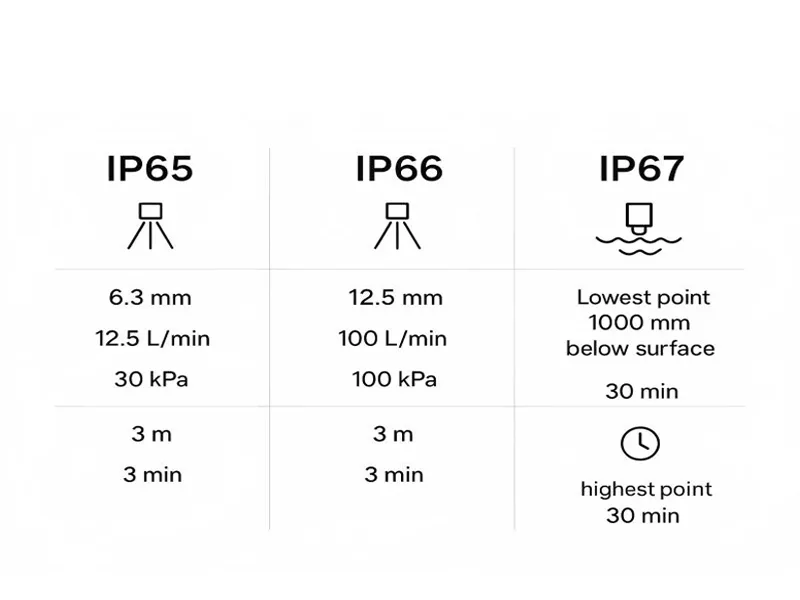
Horticultural spaces are different from dry living rooms. UL explains that UL 8800 was developed specifically for horticultural lighting systems, addressing safety issues that general luminaire standards may not cover. UL Solutions+1 UL 8800 also considers suitability for damp/wet environments and elevated temperatures, which are common in grow tents and grow rooms. UL Solutions
Even if you are not buying a DLC-listed fixture, understanding these standards helps you ask better questions. When a seller can’t provide credible safety documentation, that’s a signal you shouldn’t gamble with your home.
Power strips and extension cords: the hidden weak point in home grows
Many home growers focus on LED quality but ignore the most common failure point: cheap cords, overloaded strips, and daisy-chained adapters. NFPA explicitly warns against using extension cords as permanent wiring and against running them through walls, doorways, ceilings, or floors because heat and damage risk increases. NFPA The U.S. Consumer Product Safety Commission has also warned consumers about faulty extension cords, power strips, and surge protectors that can overload easily and create fire hazards. U.S. Consumer Product Safety Commission
If your light draw is significant, a safer approach is to install proper outlets or use correctly rated, listed equipment rather than stacking accessories. This is not about being paranoid; it’s about recognizing that continuous loads expose weaknesses that “normal household use” might never reveal.
Inspect cords, connectors, and strain relief like it’s part of your grow routine
OSHA’s electrical safety rules include visual inspection expectations for cord- and plug-connected equipment and flexible cord sets, looking for defects and damage. OSHA Even if you’re not operating under workplace regulations, the mindset is useful: cords are consumables, and you should replace them when they show wear. A “still works” cord is not the same as a “safe” cord.
Moisture makes everything worse, so keep drivers and power connections away from standing water, runoff trays, or humidifier output streams. A small drip in the wrong spot can be a big problem over weeks of operation.
Eye safety and blue-light hazard awareness
High-output grow lights can be uncomfortable and potentially risky for eyes if you stare directly at the emitters. The CIE has discussed blue-light hazard terminology and clarifies that risk depends on brightness, spectral content, and exposure conditions rather than simplistic “blue light is bad” headlines. jlma.or.jp
For home growers, the practical rule is simple: avoid looking directly into high-power LEDs, use protective eyewear if you work under intense light for long periods, and turn lights down or off when doing close canopy work. Your comfort and long-term safety matter more than “toughing it out.”
Efficiency and Operating Cost: How to Think Beyond Sticker Price
A weed grow light runs for many hours, and electricity costs can become the real “price tag.” This is why comparing fixtures using PPE and realistic usage is so important.
Calculate energy in a way that matches real life
A simple method helps you estimate cost: kWh per day = (fixture watts ÷ 1000) × hours/day. If your light draws 320 W and you run it 12 hours, that’s 0.320 × 12 = 3.84 kWh/day, and you multiply by your electricity rate to get daily cost. This kind of math keeps you grounded when a “cheap” fixture actually costs more to run.
Efficient fixtures often pay back through lower energy cost and less heat load, which can also reduce fan use and cooling needs. In small spaces, heat you don’t create is heat you don’t have to remove.
PPE is efficiency, but uniformity is “efficiency you can actually use”
Even a high-PPE fixture wastes your money if you can’t use its output evenly. Hot spots force you to hang higher or dim down to protect the canopy center, which means your edges get less useful light. A slightly less efficient fixture with excellent uniformity can outperform a “lab-efficient” product that produces uneven PPFD in real tents.
This is why PPFD maps matter as much as PPE numbers. Look for maps taken at realistic hanging heights, and be skeptical of maps that don’t show scale, measurement grid spacing, or test conditions.
Coverage and Sizing: Matching the Fixture to Your Tent or Grow Corner
The most common home grow mistake is buying a fixture that is “too much light” for the space in a way that forces compromises. The second most common mistake is buying too little and then trying to compensate with unsafe proximity or long photoperiods.
Start with your canopy footprint, not your room size
A grow light should match your canopy area. If you have a 2×2 tent, you need even coverage across that square, not a fixture designed for 4×4 that you’ll end up dimming to 30% just to avoid bleaching the center. If you have a 2×4 tent, a bar fixture or elongated layout often makes the job easier than a small square board trying to “throw” light sideways.
If you grow in an open room corner, you should think about reflectivity and spill. Walls and tent liners help recycle photons; open rooms waste light and can cause glare for anyone sharing the home.
Use dimming as a control tool, not as a band-aid
A dimmable driver is one of the best features for a home weed grow light, because it lets you adapt to plant size, canopy shape, and seasonal room temperatures. Dimming also helps you avoid the “too intense too soon” pattern that causes stress and forces you to raise the light until uniformity gets worse.
A good dimmer should feel stable and predictable. If the fixture flickers, buzzes, or jumps output when you adjust it, treat that as a quality warning.
Heat, Ventilation, and Noise: The Comfort Side of “Safe and Efficient”
Heat is not just a plant issue; it’s a quality-of-life issue for home growers. A fixture that adds too much heat can force you into louder fans, higher humidity swings, and constant adjustments.
Passive cooling vs. active fans
Many modern LED fixtures use passive cooling with large heat sinks, which reduces noise and eliminates fan failures. Active cooling can be effective, but it introduces a moving part that can clog with dust or fail over time. In a home setting, quieter is usually better, especially if the grow is near a bedroom.
Heat also changes how close you can safely hang the light. Even if PPFD is acceptable, excessive radiant and convective heat at the canopy can stress plants, which then makes growers chase problems with more fans, more watering changes, and more instability.
Driver placement and tent temperature control
Some fixtures allow remote driver placement, which can reduce tent heat load. In a small home tent, that design choice can be surprisingly valuable because it reduces peak temperature and can make humidity control easier. Even if you can’t mount the driver outside, a well-designed driver with stable efficiency will generally add less heat for the same photon output.
How to Compare Spec Sheets Without Getting Tricked
Marketing in the grow light world is loud. The goal here is to shop like a calm engineer rather than an excited consumer.
Ask for standardized reporting and real test context
DLC horticultural lighting programs rely on standardized testing and reporting requirements for LED-based horticultural products. Design Lights Consortium+1 The IES also discusses the use of standardized formats like ANSI/IES TM-33 for horticultural luminaire data reporting, including PPID and SQD formats required for certain qualification workflows. Illuminating Engineering Society
You don’t need to be a standards expert to benefit from this. You just need to prefer products that can show consistent, test-backed data over products that rely on slogans.
Beware “watt equivalence” and unrealistic coverage claims
Claims like “1000W equivalent” are often meaningless in LED horticulture. What matters is actual power draw, photon output, and how that photon output is distributed in your grow footprint. If a product claims it covers a large area at very high intensity with very low wattage, assume the claim is inflated until proven by credible mapping.
Also beware “maximum PPFD” quotes without uniformity context. A single hot spot number doesn’t tell you what most of your canopy experiences.
Quality components matter more than hype features
A reliable driver, stable connectors, proper strain relief, and good thermal design are the boring features that protect your home and keep your grow consistent. Fancy spectrum marketing is secondary if the fixture has weak wiring, poor heat handling, or inconsistent output. If you can’t verify build quality, you can’t trust performance over months of continuous operation.
A Practical Home Grow Checklist for Buying a Weed LED Grow Light
If you want a simple way to evaluate options, use this checklist as your filter. A strong candidate should satisfy most of these points, and a weak product will usually fail several.
Documentation you should be able to request
Ask for PPFD maps at realistic hanging heights, not just one distance. Ask for power draw, PPE, and testing context, because credible sellers understand that serious growers shop using photons and watts. If the seller cannot provide basic documentation or becomes evasive, that is information too.
Also ask about safety evaluation for horticultural environments, especially if you grow in humid tents. UL 8800 exists because horticultural conditions are different, and your home setup benefits when products are designed with that reality in mind. UL Solutions+1
Electrical and safety setup rules you should follow at home
Avoid daisy-chaining power strips or using cheap extension cords as permanent wiring, because fire risk rises as continuous load exposes weak connections. NFPA’s extension cord guidance emphasizes not substituting cords for permanent wiring and avoiding routes where cords can be damaged or overheated. NFPA If your setup requires multiple adapters to “make it work,” that’s a signal your electrical plan needs improvement, not another accessory.
Inspect cords and plugs regularly, because small damage becomes big risk when used daily. OSHA’s guidance on inspecting cord-connected equipment reinforces the value of routine checks for external defects and damage. OSHA
Comfort and usability features worth paying for
Choose dimming, stable mounting hardware, and a form factor that matches your canopy. Favor uniformity and predictable control over maximum headline intensity. In a home grow, a quieter, cooler fixture often creates better long-term results simply because it’s easier to live with and easier to keep stable.
Using Research Responsibly: What Science Suggests Without Turning It Into Hype
Cannabis lighting research has expanded rapidly in recent years, and it supports the idea that cannabis responds strongly to light intensity. Peer-reviewed work in Frontiers in Plant Science investigated relationships between light intensity, photosynthesis, yield, and quality metrics in indoor-grown cannabis, reflecting how central lighting is to outcomes. Frontiers More recent published research continues to explore how supplemental LED lighting influences yield, water use, and efficiency in cannabis systems. Nature
The key takeaway for home growers is not “blast as much light as possible.” The more reliable takeaway is that there are diminishing returns, and at some point you may pay more in heat, electricity, and stress than you gain in performance. A well-built, efficient, dimmable fixture that delivers uniform PPFD is usually a smarter investment than chasing extreme intensity.
Why Many Home Growers Choose SLTMAKS-Style Fixtures and Support
At SLTMAKS, the goal is to help growers and small commercial users choose lighting that’s practical, safe, and efficient—not just impressive on paper. A good home weed grow light should make your grow simpler, with stable output, manageable heat, and clear documentation that helps you size and hang the fixture correctly. It should also be backed by real support, because the best fixture is the one that fits your space, your airflow, and your electrical limits.
When you compare options, prioritize brands that can discuss PPFD mapping, PPE, driver quality, and safety evaluation in a straightforward way. If you want a calmer, more repeatable home grow, you’ll almost always be happier buying based on verified data and safe design instead of influencer hype.
The “Best” LED Grow Light for Weed Is the One You Can Run Safely Every Day
The smartest way to buy an led grow light weed fixture is to think like a system builder. Your goal is not only strong light, but safe power delivery, manageable heat, good uniformity, and efficient photons per watt. If you get those right, everything else becomes easier.
Choose a fixture that matches your canopy footprint, includes reliable dimming, shows credible PPFD maps, and supports your home’s electrical reality without risky wiring tricks. A safe, efficient light run consistently will outperform an overpowered, poorly managed setup almost every time.