
Indoor gardening is no longer just a winter hobby—it’s a reliable way to keep herbs, leafy greens, and houseplants thriving year-round. But when you search for the best LED grow lights for indoor plants, it’s easy to get overwhelmed by wattage claims, “full spectrum” labels, and confusing charts. The good news is that once you understand a few practical lighting concepts, choosing the right fixture becomes straightforward—and your plants will show the difference in stronger stems, richer leaf color, and steadier growth.
In this guide, you’ll learn how to match light intensity, spectrum, and coverage to real indoor plant goals—from basil on a kitchen shelf to pothos in a living room corner. You’ll also see what to look for on spec sheets so you can compare options confidently, and you’ll get setup tips to avoid common issues like legginess and leaf bleaching.
Table of Contents
1) What “Best” Really Means for Indoor Grow Lights
The “best” LED grow light is the one that delivers the right amount of usable plant light to your specific plants, at the right distance, with reasonable energy use. That’s why serious growers focus on plant-light metrics rather than marketing wattage alone. Once you know what to measure, you can make informed decisions and avoid under-lighting (slow, weak growth) or over-lighting (stress and wasted electricity).
PPFD and DLI: The Two Numbers That Matter Most
If you learn only two lighting terms, make them PPFD and DLI. PPFD describes how much photosynthetic light hits a surface each second, while DLI describes how much your plant receives over a full day based on intensity and duration. Purdue Extension explains DLI clearly and why it matters for growth quality, not just speed.
DLI is especially helpful indoors because it connects lighting to a daily routine. Virginia Tech Extension provides a clear explanation of how DLI can guide plant selection and lighting schedules in plain language.
Spectrum: “Full Spectrum” Is Useful—But Not Magic
Most indoor plants do well under broad “white + supplemental” style spectra because it’s comfortable for people and effective for plants. The key is ensuring the fixture is designed for plant photosynthesis, not just human brightness. Michigan State University’s floriculture resources provide practical plant-light terminology and explain PAR (the classic 400–700 nm band) in an easy-to-reference format.
Spectrum influences how plants look and how they grow, but it can’t compensate for insufficient intensity. In other words, a perfect spectrum with weak PPFD still produces weak results, especially for herbs and higher-light plants.
2) Match the Light to the Plant: Herbs vs. Houseplants vs. High-Light Crops
Indoor plants are not “one light fits all.” A pothos can stay alive in low light, but basil will become thin and disappointing if you treat it the same way. The easiest method is to group plants into low-, medium-, and high-light needs, then choose a light that can deliver that level consistently across your growing area.
Low-Light Houseplants: Beautiful, Forgiving, and Efficient
Many foliage houseplants—like pothos, philodendron, and some dracaena varieties—can perform well at lower DLI targets. Iowa State University Extension provides a simple DLI grouping for indoor plants, including a low-light range suitable for foliage houseplants. This is why a modest bar light on a shelf can dramatically improve leaf size and color compared with a dim room corner.
For low-light plants, uniform coverage often matters more than extreme intensity. A light with smooth distribution prevents one side from stretching toward the lamp while the other side stays sparse.
Medium-Light Plants: The Sweet Spot for Many Indoor Gardens
Medium-light targets work for many “bright indirect light” favorites and some herbs that you harvest lightly. This is also the range where better fixtures start to show their value, because stable intensity and consistent spectrum deliver more predictable growth. If your plants look healthy but not vigorous, you’re often close to the right range—just missing consistency, coverage, or photoperiod.
In practical terms, medium-light indoor setups benefit from dimming because your needs will change as plants mature or seasons change. Being able to raise intensity gradually is one of the easiest ways to avoid plant stress.
High-Light Herbs, Succulents, and Fruiting Plants: Where Spec Sheets Matter
Herbs like basil, mint, and many leafy greens can handle (and often prefer) higher light than typical decorative houseplants. Succulents also tend to demand higher intensity to maintain compact growth and avoid stretching. Fruiting crops (like peppers or tomatoes) indoors usually require high intensity plus longer photoperiods, which is where true plant-focused LEDs become important.
If you’re targeting this category, don’t guess. Choose a light with a real PPFD map, clear coverage claims, and a driver designed for long daily runtimes.
3) Fixture Types: Which Style Works Best Indoors?
The “best LED grow lights for indoor plants” can look very different depending on where you’re growing. The right form factor makes setup easier, improves uniformity, and often reduces wasted light. When the fixture fits the space, you get better results without pushing power unnecessarily.
Bar Lights for Shelves and Seedling Racks
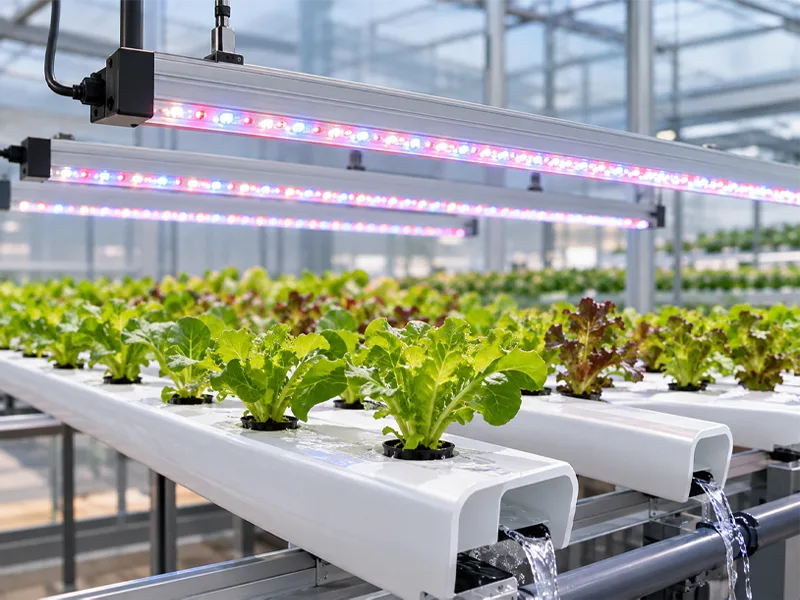
For seed-start racks and multi-tier shelves, bar-style LEDs are usually the most practical choice. They spread light evenly across trays and reduce harsh hotspots, which is important when plants are only a few inches tall. Even coverage also makes watering and growth more consistent from corner to corner.
Bar lights are ideal when you want a clean, organized indoor garden. They’re especially popular for herbs and leafy greens, where uniformity matters more than deep canopy penetration.
Panel Lights for General Indoor Plant Zones
Panels are a great “all-purpose” solution for a plant corner, a hobby grow area, or a mixed collection of houseplants. The benefit is broader coverage in a compact package, which helps when you don’t want multiple small lights. A quality panel also tends to have better thermal design than many consumer bulb-style options, which supports long-term stability.
If you want to light several medium-sized pots at once, panels are often a simpler path than juggling many clamp lamps. Look for units that publish coverage at specific hanging heights.
Bulbs and Clip Lights for One Pot at a Time
Bulbs can work well when you’re lighting a single plant or a small cluster, especially in apartments where you need a small footprint. But bulb setups often create uneven intensity—very bright in the center and weak on the edges—so you may need to rotate plants. That rotation is not “wrong,” but it’s a sign you’re trading convenience for uniform coverage.
If you use bulbs, keep expectations realistic and prioritize plants that tolerate a bit of variation. For serious herb harvests, you’ll usually outgrow bulb lighting quickly.
4) How to Compare Grow Light Specs Without Getting Tricked

A lot of indoor growers buy based on watts or “equivalent watts,” then wonder why results disappoint. The better approach is to compare plant-light performance, not just power draw. When you compare the right numbers, your purchase becomes predictable instead of hopeful.
PPE, PPF, PPFD: The Specs That Tell the Truth
For horticulture lighting, PPE (photosynthetic photon efficacy) and PPF (photosynthetic photon flux) are more meaningful than lumens. Lumens describe how bright a light looks to humans, but plants “care” about photons in the photosynthetic range. That’s why many serious horticulture programs and standards focus on photon metrics rather than lumen output.
If you’re also thinking about energy efficiency, it helps to understand how LEDs are evaluated in general. The U.S. Department of Energy provides a straightforward overview of LED efficiency and why LED technology leads in energy performance
Coverage Maps Beat “Coverage Claims”
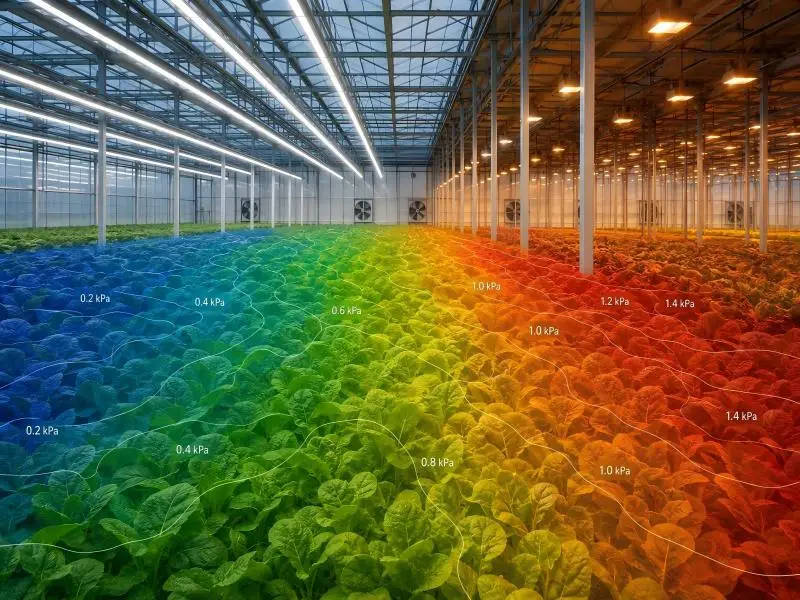
A strong grow light should come with a PPFD map at a defined hanging height and area. That map is your best clue for real-world results, because it reveals whether the fixture has hot spots, weak corners, or balanced distribution. If a brand can’t provide maps or data, you’re buying blind.
Coverage also depends on reflective surfaces and room layout. A bright white wall can improve usable light in a small plant corner, while a dark room can reduce overall efficiency.
Safety and Certification: Don’t Ignore It Indoors
Because these lights run for many hours and are often near water, safety matters. In North America, horticultural lighting safety is commonly evaluated against ANSI/CAN/UL 8800, a standard specific to horticultural lighting equipment. The Illuminating Engineering Society also discusses safety assessment considerations for horticultural lighting in an accessible way.
Even if you’re buying a small indoor unit, you should still look for credible safety testing and sensible build quality. A stable driver, proper strain relief, and good thermal design are not “extras”—they’re what keep long photoperiods safe and consistent.
5) Setup That Works: Distance, Photoperiod, and a Simple DLI Method
Buying a great light doesn’t guarantee great growth. Indoor results often come down to setup details: how far the lamp is from leaves, how long it runs, and whether coverage is uniform. A few small adjustments can produce noticeably thicker stems and more compact plant structure.
Hanging Height: Start Conservative and Adjust by Plant Response
If you start too far away, plants stretch and become weak. If you start too close, sensitive leaves may bleach or curl even if the light is technically “full spectrum.” The safest approach is to begin at a moderate height, watch plant response for a week, and adjust gradually while tracking changes in leaf color and growth pattern.
Uniformity matters here as well. If the center plants look great but the edge plants stretch, raise the fixture slightly or expand coverage with a wider light.
Photoperiod: More Hours Can Replace Some Intensity—But Not All
Many indoor growers succeed by running lights longer at moderate intensity rather than pushing extreme brightness. Research and controlled-environment practice often use DLI to compare light strategies, including how photoperiod changes outcomes even at the same daily total. You can read an open-access example discussing photoperiod and DLI considerations here.
That said, very high-light plants still need strong PPFD at the leaf level. Long hours can help, but they won’t fully replace intensity for fruiting or dense herb production.
A Practical DLI Shortcut for Indoor Growers
If you have a PPFD estimate (from a map or a meter), you can approximate DLI quickly. Michigan State University provides an example calculation approach that shows how DLI, hours, and PPFD relate. This helps you plan whether you should increase intensity, extend runtime, or improve coverage.
You don’t need to become a lighting engineer to use this effectively. Just track one plant group at a time and adjust slowly until you see compact growth, steady new leaves, and stronger color.
6) Common Indoor Grow-Light Problems (and How to Fix Them)
Most “grow light failures” are actually setup mismatches. Plants are honest feedback machines: they show you when intensity is too low, when light is too harsh, or when coverage is uneven. If you learn the common patterns, troubleshooting becomes fast.
Leggy Growth and Weak Stems
Leggy seedlings and stretched houseplants usually mean the plant is hunting for more light. This often happens when the fixture is too far away or when the corners of the growing area are under-lit. Bring the light closer in small increments, or switch to a wider fixture that provides more even coverage.
Also consider photoperiod consistency. Indoor plants respond well to stable routines, so erratic schedules can amplify weak growth.
Leaf Bleaching, Curling, or “Crispy” Spots
If leaves lighten dramatically, curl upward, or develop dry patches, the plant may be receiving too much intensity too close to the canopy. Raise the fixture, reduce intensity with a dimmer, or shorten the photoperiod temporarily. This is especially common when you upgrade to a stronger light and don’t transition gradually.
Remember that indoor temperature and airflow matter too. Strong light plus stagnant air can stress leaves faster than you’d expect.
Uneven Growth Across Pots
When one side grows fast and the other side stalls, coverage is the real issue. Adjust spacing, raise the fixture to widen distribution, or add a secondary bar light to fill the dim side. Rotating plants is a workable short-term fix, but improving uniformity is the long-term solution.
Uneven growth is also a clue that marketing “coverage” claims were optimistic. That’s why PPFD maps are so valuable when choosing the best fixture.
7) Energy and Heat: How to Get Strong Results Without Overpaying

One reason LEDs dominate indoor growing is efficiency. But “efficient” still depends on using the right intensity for your plants, not blasting maximum power out of habit. Smart setup can save electricity while improving plant quality.
Why LEDs Win Indoors
LED technology leads in energy efficiency compared with older lighting options, and it produces less radiant heat at the plant surface in many setups. The U.S. DOE overview of LED performance gives a clear picture of how efficacies have improved and why high-performance LEDs matter. For indoor growers, that typically translates into more usable plant light per watt and better control of room temperature.
Even so, any light creates some heat, especially at the driver and the heat sink. Give your fixtures breathing room, keep cords tidy, and avoid trapping heat against ceilings or shelves.
A Simple Operating Cost Habit
Instead of guessing, track your runtime and power draw. If a light draws 200W and runs 12 hours per day, that’s 2.4 kWh per day, which you can multiply by your local electricity rate. This quick habit helps you decide whether you should dim slightly and run longer, or run stronger for fewer hours, depending on your plant category.
Efficiency also improves when light is not wasted. Using reflective surfaces responsibly and matching fixture size to your plant footprint can make a surprisingly big difference.
8) Choosing SLTMAKS: Built for Real Indoor Growth, Not Just Brightness
The best LED grow lights for indoor plants should make your routine easier, not more complicated. At SLTMAKS, we focus on practical indoor performance: consistent output, stable drivers for long photoperiods, and plant-friendly distribution designed for real shelves, corners, and indoor gardens. We also believe that indoor growers deserve transparent information, so you can request lighting guidance based on coverage goals rather than vague wattage claims.
If you’re building an indoor herb shelf, a houseplant corner, or a larger hobby setup, our team can help you choose a fixture style and a target intensity strategy that fits your plant mix. You can explore our brand and product direction on the official site (SLTMAKS), and if you’re targeting the U.S. West market, ask about availability and shipping options from our Los Angeles warehouse inventory for faster delivery.
How to Get a Recommendation That Actually Fits Your Plants
A good recommendation starts with three details: your plant types, your growing footprint (length × width), and your preferred schedule (hours per day). Once those are clear, selecting the right size and style becomes simple, and you avoid the most common mistake—buying a light that’s either too weak for herbs or unnecessarily intense for low-light houseplants. When you’re ready, contact SLTMAKS through the website and tell us what you’re growing, and we’ll suggest a practical setup that aligns with your goals and your space.
Final Takeaway: “Best” Is the Light That Matches Your Indoor Reality
When you search for the best LED grow lights for indoor plants, don’t chase hype—chase fit. Match intensity (PPFD/DLI) to plant type, prioritize uniform coverage, and choose fixtures with clear data and safe design. With the right light and a sensible schedule, indoor herbs become thicker and more flavorful, and houseplants become fuller, steadier, and easier to maintain.
FAQ
What should I look for when choosing an LED grow light?
When selecting an LED grow light, focus on how much usable light it provides for your specific plants, not just the wattage. Important terms to know include PPFD (Photosynthetic Photon Flux Density) and DLI (Daily Light Integral). Essentially, PPFD tells you how much light reaches your plants each second, while DLI tracks the total light your plants get over an entire day. For best results, ensure the light matches your plants’ specific needs, considering their light requirements, distance from the light, and energy efficiency.
Do all indoor plants need the same light?
No, different indoor plants have varying light needs. Some, like pothos, can thrive in low light, while herbs such as basil require more intense light to grow well. It’s best to group your plants by their light needs—low, medium, or high—and choose a light that delivers the appropriate level for each group. This helps ensure all your plants receive the right amount of light for strong and healthy growth.
What type of LED grow light is best for small spaces?
For small indoor spaces, bar lights or panel lights are a great choice. Bar lights can be placed on shelves or seed-start racks to spread light evenly across smaller trays, preventing hotspots. Panel lights are excellent for general lighting needs in a compact area, providing broader coverage and stability. Choose a fixture that fits your space well to maximize growth without wasting energy.
How can I avoid common problems with indoor grow lights?
To prevent issues like leggy plants or leaf curling, ensure your grow light is at the right height and provides consistent light. If plants are stretching, the light might be too far away, while burnt leaves can indicate it’s too close. Maintaining a consistent schedule for lighting can also help plants thrive. Always check for even light distribution, adjusting fixtures or using wider lights if necessary.
How long should I have my lights on each day?
The duration your lights should be on can vary depending on the plants. Generally, most indoor plants benefit from 12 to 16 hours of light each day. High-light plants may thrive better with longer light periods, while low-light plants may not need as much. Track plant responses and adjust the lighting schedule as needed to find the right balance for healthy growth.
How do I know if I’m using the right intensity of light?
You can gauge whether you’re using the proper light intensity by observing your plants. If they’re growing too tall or leggy, they may need more light. If leaves are getting bleached or crispy, the light may be too strong. Measuring PPFD can also provide concrete readings about the intensity your plants are receiving, helping you make adjustments as needed.
What are the energy costs of using LED grow lights?
LED grow lights are generally energy-efficient compared to other types of grow lights. To estimate their costs, calculate the power usage by multiplying the light’s wattage by the number of hours it is on each day. For example, a 200W light running for 12 hours uses about 2.4 kWh per day. Check your local electricity rates to find out how this translates to costs, and adjust usage based on your plants’ needs.
Can I grow herbs indoors year-round?
Yes, with the right LED grow lights, you can successfully grow herbs indoors throughout the year. Indoor gardening allows you to provide a consistent environment in terms of light and temperature. Ensure you select lights that cater to the specific light requirements of the herbs you want to grow, and with proper care, you’ll be able to enjoy fresh herbs regardless of the season.
What does ‘full spectrum’ mean for grow lights?
‘Full spectrum’ in grow lights refers to the light output that includes all wavelengths that plants need for photosynthesis. However, not all ‘full spectrum’ lights are equal. It’s essential to ensure that the spectrum provided is designed specifically for plants, not just bright for human comfort. Look for terms like PAR (Photosynthetically Active Radiation) when evaluating the effectiveness of a light, as this pertains directly to plant growth.
How can SLTMAKS help with my indoor gardening?
SLTMAKS specializes in grow lights that are designed to meet the specific needs of indoor plants, improving growth and health. We provide transparent information about our products, offering guidance based on your unique plant needs and growing conditions. Whether you’re setting up a small herb shelf or a larger garden, our team can help recommend the best light fixtures and strategies to ensure your plants thrive indoors.