
In the world of controlled environment agriculture, whether you are managing a multi-tiered commercial facility or a dedicated home grow tent, the vegetative stage is arguably the most critical period of plant development. It is the foundation upon which your eventual harvest is built. If the foundation is weak, the structure—in this case, the flowering potential and yield—will inevitably suffer.
As someone who has spent years in the R&D labs and on the production floors of the LED industry, I have witnessed the dramatic shift from Metal Halide (MH) and T5 fluorescents to the precision technology of modern light-emitting diodes. Today, finding the right grow lights veg LED light is not just about buying a fixture; it is about understanding the science of photon flux, spectrum manipulation, and plant morphology.
At SLTMAKS, we understand that our global clients require more than just hardware; they require knowledge. The vegetative stage (“veg”) requires a specific set of environmental parameters to encourage robust root development, thick stems, and lush foliage. While flowering often gets the glory because that is when the fruit or buds appear, the vegetative stage is the engine that powers that production. In this comprehensive guide, we will explore the deep science behind vegetative lighting, how to read spectrum charts, and how to select the absolute best LED solutions for your specific growing space.
Table of Contents
The Biology of the Vegetative Stage

To understand why we build our LEDs the way we do, we must first understand what the plant is trying to achieve during the vegetative cycle. Unlike the flowering stage, where the plant’s energy is focused on reproduction, the veg stage is purely about structural growth.
The Role of Photoreceptors
Plants do not “see” light the way humans do; they sense it through complex chemical receptors called photoreceptors. During the vegetative stage, the most critical photoreceptors are cryptochromes and phototropins. These receptors are highly sensitive to the blue end of the light spectrum (approximately 400nm to 500nm). When these receptors are activated by a high-quality grow light, such as a veg LED light, they trigger specific hormonal responses within the plant.
One of the primary responses is the suppression of stem elongation. If you have ever seen a plant that looks “stretchy” or spindly, with large gaps between the nodes (internodal spacing), it is often suffering from a lack of sufficient blue light intensity. The plant is essentially “reaching” for the sun. By providing a spectrum rich in blue wavelengths, we signal the plant to remain compact and bushy. This compactness is vital because shorter stems are sturdier and can support heavier fruits and flowers later in the lifecycle without snapping.
Photosynthesis and Chlorophyll Production
While morphology (shape) is important, energy production is even more critical. Chlorophyll A and Chlorophyll B are the primary pigments responsible for photosynthesis. While they absorb light in both the blue and red spectrums, the vegetative stage benefits immensely from a balanced approach.
During this phase, the plant is building its “solar panels”—the fan leaves. The larger and healthier the surface area of the leaves, the more light energy the plant can absorb and convert into sugars. A dedicated veg LED light ensures that the plant has the photonic energy required to maximize the size and efficiency of these leaves. According to research from Utah State University’s Crop Physiology Laboratory, maximizing photon capture during the early stages of growth directly correlates to the final biomass of the crop.
Decoding the Spectrum: Why “Veg” LEDs are Different
For decades, the industry standard for vegetative growth was the Metal Halide (MH) bulb. These bulbs naturally emitted a cool white light with a heavy spike in the blue spectrum. However, they were inefficient, ran incredibly hot, and degraded quickly. Modern LED technology allows us to replicate and improve upon this spectrum without the massive energy waste.
The Importance of Blue Light (400-500nm)
When we engineer a grow light veg LED light, we prioritize the blue wavelengths. Blue light serves as a regulatory signal. It governs stomatal opening (which controls gas exchange and transpiration) and mediates phototropism (growth towards the light).
However, a common misconception is that veg lights should be only blue. This was the error of early “blurple” (blue + red) LED fixtures. While plants grew, they often lacked vigor. We now know that while blue is the dominant requirement for structure, plants still require a full-spectrum diet. A “white” full-spectrum LED that has a localized peak in the blue region (often referred to as 5000K or 6500K CCT) provides the blue light needed for compactness while offering the red and green wavelengths needed to penetrate the canopy and drive deep-tissue photosynthesis.
The Role of Green and Far-Red in Veg
It might seem counterintuitive to discuss Green (500-600nm) and Far-Red (700-750nm) in a vegetative article, but modern research has changed our approach at SLTMAKS.
- Green Light: Green light is often thought to be reflected by plants, but it actually penetrates deeper into the canopy than blue or red light. In a dense vegetative canopy, green light drives photosynthesis in the lower leaves that would otherwise die off.
- Far-Red Light: In the vegetative stage, too much Far-Red can cause stretching (the Shade Avoidance Syndrome). However, a trace amount is necessary for the Emerson Effect, which enhances the overall photosynthetic rate.
Table 1: Spectrum Comparison for Vegetative Growth
| Light Technology | Spectrum Characteristic | Efficiency (µmol/J) | Heat Output | Lifespan (Hours) | Suitability for Veg |
| Metal Halide (MH) | High Blue, UV spikes | 1.1 – 1.3 | Very High | 10,000 – 15,000 | Good spectrum, poor efficiency |
| T5 Fluorescent | Cool White (6500K) | 0.9 – 1.1 | Medium | 20,000 | Good for clones/seedlings only |
| SLTMAKS Full Spectrum LED | Balanced White + Blue Peak | 2.7 – 3.2 | Low | 50,000+ | Excellent (All stages) |
| Old “Blurple” LED | Narrow Blue/Red bands | 1.5 – 1.9 | Medium | 30,000 | Moderate (lacks canopy penetration) |
Mastering Light Intensity: PPFD and DLI

Selecting the right spectrum is only half the battle; you must also deliver the correct amount of light. This is where many growers get confused by terms like Watts, Lumens, and PAR. As a professional, I advise you to ignore Lumens entirely—they measure brightness for human eyes, not plants. Instead, we focus on PPFD and DLI.
Understanding PPFD (Photosynthetic Photon Flux Density)
PPFD measures how many photons within the PAR range (400-700nm) actually hit a specific spot on your canopy each second. It is measured in micromoles per square meter per second (µmol/m²/s).
For a grow light veg LED light, the requirements change as the plant matures:
- Seedlings/Clones: These are delicate. They need high humidity and gentle light. A PPFD of 100-300 µmol/m²/s is ideal. Anything higher risks light bleaching or drying out the fragile rooting medium.
- Early Vegetative: As the plant establishes a root system and grows its first true leaves, you can increase intensity. We aim for 300-450 µmol/m²/s.
- Late Vegetative: Just before flipping to flower, the plant should be growing aggressively. You want to push the metabolism hard. A PPFD of 450-600 µmol/m²/s is the standard target.
The Daily Light Integral (DLI)
DLI is effectively the “total daily dose” of light your plant receives. Think of PPFD as the intensity of rain, and DLI as the amount of water in the bucket at the end of the day. Since vegetative plants usually run on longer photoperiods (18 hours or 24 hours of light), they accumulate DLI faster than flowering plants.
Formula: $DLI = PPFD \times 0.0036 \times Hours of Light$
For most high-light crops (like tomatoes, peppers, or medical cannabis), the target DLI for the vegetative stage is between 15 and 30 moles/day. If your DLI is too low, growth stalls. If it is too high (without adding CO2), you waste electricity and risk light stress.
Key Features to Look for in Vegetative LED Fixtures
When you browse the catalog at www.sltmaks.com, or any other high-end supplier, you will notice distinct differences between a dedicated veg light and a flowering light. If you are retrofitting a facility or building a new one, here are the critical technical specifications you must verify.
1. Diode Efficiency and Brands
Not all LEDs are created equal. The efficiency of a grow light’s veg LED light is determined by the quality of the diodes (chips). At SLTMAKS, we utilize top-tier diodes from manufacturers like Samsung (LM301H or LM301B) and Osram. High-efficiency diodes convert more electricity into photons and less into heat.
Look for a fixture efficacy of at least 2.5 µmol/J. This number tells you how many micromoles of light are produced for every Joule of electricity consumed. A higher number means a lower electric bill for the same amount of growth.
2. Spectral Tuning and Dimming
A quality veg light must have a dimmer. As mentioned in the PPFD section, seedlings need a fraction of the power that a 4-week-old plant needs. Without a dimmer (0-10V is the industry standard), you are forced to physically raise and lower the light constantly to adjust intensity, which is labor-intensive and imprecise.
Some advanced models also offer “Spectral Tuning.” This allows you to adjust the ratio of blue to red light. While not strictly necessary for all growers, it provides a powerful tool for commercial cultivators who want to manipulate plant morphology—for example, inducing stretching in a strain that is too compact, or suppressing height in a strain that grows too tall.
3. Thermal Management
Heat is the enemy of electronics. In the past, grow lights used loud, heavy fans to cool the heat sinks. Modern engineering prefers passive cooling. We design our fixtures with substantial aluminum heat sinks that dissipate heat naturally via convection.
Passive cooling has two massive benefits:
- Reliability: No moving parts (fans) means nothing to break.
- Silence: For home growers or researchers working in the grow room, the silence is a significant quality-of-life improvement.
4. Form Factor: Bar vs. Quantum Board
For the vegetative stage, uniform light distribution is vital. You want every plant in the tray to receive the same amount of light so they grow at the same speed.
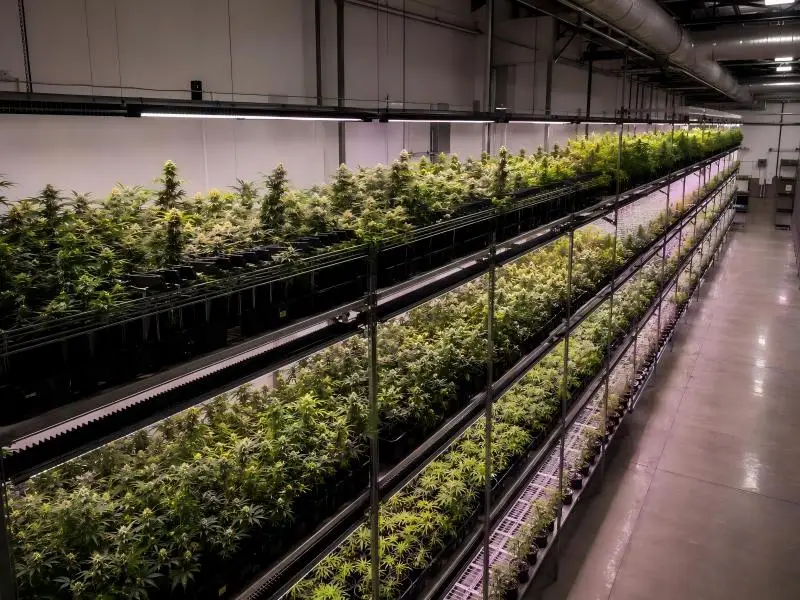
- Multi-Bar Styles: These are excellent for commercial racks. The bars spread the light out over a large area, reducing “hot spots” in the center and “shadow zones” on the edges.
- Quantum Boards: These are flat panels. They are excellent for smaller tents (e.g., 4×4 ft) but can sometimes create a hotspot directly in the center if not hung high enough.
Operational Strategies for Maximum Vegetative Growth

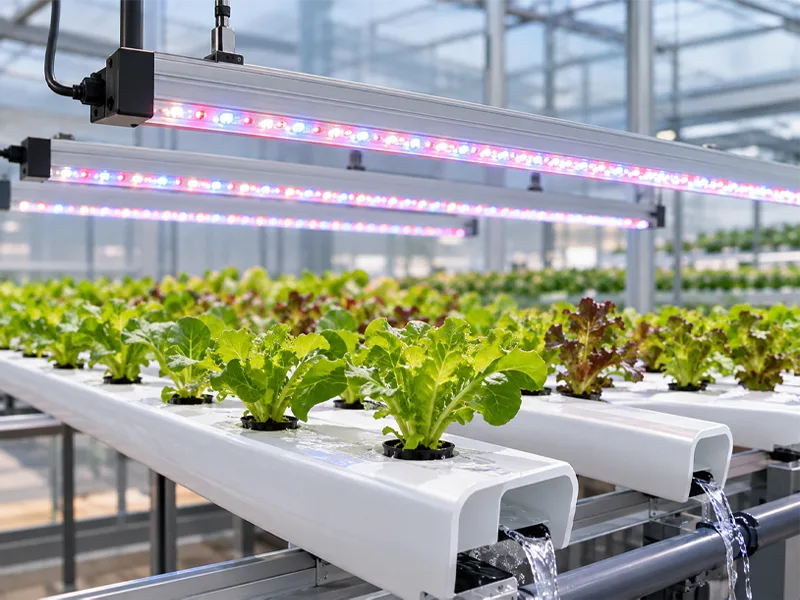
Owning the best grow lights veg LED light is only the first step; operating it correctly is where the skill comes in. Based on my years of experience helping clients optimize their setups, here are the operational protocols that yield the best results.
Hanging Height Management
One of the most frequent questions we receive at SLTMAKS is, “How high should I hang my light?” The answer depends on the Inverse Square Law of light, which states that intensity is inversely proportional to the square of the distance.
- Seedling Stage: Hang the light high (24-30 inches) and dim it down to 40-50%. This provides a gentle, wide spread.
- Vegetative Stage: Lower the light to 18-24 inches and increase the power to 75-100%. Monitor the top leaves. If the serrated edges of the leaves start to curl upwards (praying) too aggressively, or if you see yellowing tips, back the light off.
The Photoperiod Debate: 18/6 vs. 24/0
Vegetative plants (that are photoperiod sensitive) need long days to stay in the vegetative state. The two common schedules are 18 hours on/6 hours off, or 24 hours on.
- The 18/6 Schedule: This is the most common recommendation. Plants, like humans, have circadian rhythms. Many researchers argue that the “dark cycle” allows the plant to translocate sugars from the leaves to the roots and perform essential metabolic repairs. It also saves 25% on your electricity bill compared to 24/0.
- The 24/0 Schedule: Some growers prefer leaving the lights on 24/7 to maximize DLI and push growth speed to the absolute limit. While this can result in slightly faster growth, it yields diminishing returns. The plant can only process so much light per day before hitting a “saturation point.”
Recommendation: Stick to 18/6 for the best balance of growth rate, electrical efficiency, and plant health.
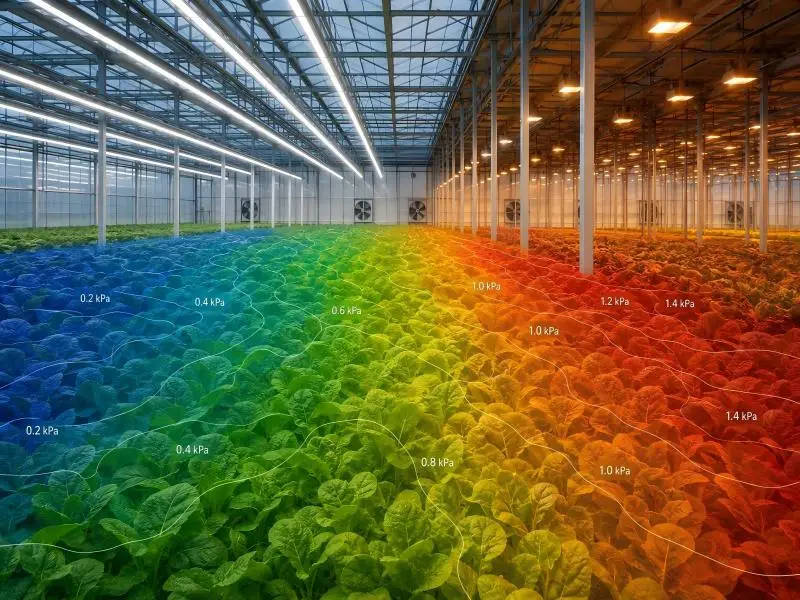
Environmental Synergy (VPD)
Your grow lights veg LED light is part of a system. As you increase light intensity, you increase the rate of photosynthesis. This increases the plant’s demand for water and nutrients. It also raises the leaf surface temperature.
You must manage your Vapor Pressure Deficit (VPD). LED lights run cooler than HPS, which means your grow room might be naturally cooler. You may need to raise the ambient room temperature to 78°F – 82°F (25°C – 28°C) to maintain the optimal transpiration rate. If the room is too cold under LEDs, the plants’ metabolism will slow down, negating the benefits of your high-tech lighting.
Commercial Applications and ROI
For our B2B clients, the transition to specialized vegetative LED lighting is a financial decision. The Return on Investment (ROI) comes from three distinct areas.
1. Energy Reduction
Replacing a 400W Metal Halide fixture with a 200W Full Spectrum Veg LED cuts lighting energy consumption by 50% instantly. In a facility with 100 fixtures running 18 hours a day, the savings are astronomical.
2. HVAC Savings
Because LEDs produce significantly less radiant heat than MH bulbs, the load on your air conditioning system drops. Calculations by organizations like the DesignLights Consortium (DLC) suggest that for every watt of lighting energy saved, you save an additional 0.3 to 0.5 watts in cooling costs.
3. Cycle Time Reduction
A properly tuned spectrum can shave days off the vegetative cycle. If you can get your plants to the desired size in 21 days instead of 25 days, you can squeeze in an extra harvest rotation per year. In a large commercial operation, one extra harvest can equate to hundreds of thousands of dollars in increased revenue.
Table 2: Estimated Annual Savings (100 Fixture Facility)
| Cost Factor | Metal Halide (400W) | SLTMAKS LED (200W) | Annual Savings |
| Lighting Electricity | $15,768 | $7,884 | $7,884 |
| Bulb Replacement | $2,000 (2 changes/yr) | $0 | $2,000 |
| HVAC Load | High | Low | ~$3,000 |
| Total Savings | ~$12,884 | ||
| (Note: Calculations based on $0.15/kWh and 18 hours/day operation) |
Common Mistakes When Switching to LED for Veg

I have seen many experienced growers struggle when they first switch from HPS/MH to LEDs. They often treat the new technology like the old technology. Here are the pitfalls to avoid.
Overwatering
Because LEDs emit less infrared heat (IR), they do not dry out the soil or growing medium as quickly as HID lights. Growers often continue their old watering schedule and end up drowning their plants (hypoxia in the root zone). When you switch to a grow light veg LED light, check your soil moisture daily and adjust your irrigation events accordingly.
Magnesium Deficiency
High-intensity LED light drives photosynthesis very fast. Magnesium is the central atom in the chlorophyll molecule. Under powerful LEDs, plants can consume Magnesium faster than the roots can uptake it, leading to interveinal chlorosis (yellowing between veins). We recommend commercial growers use high-performance LEDs to slightly increase their Cal-Mag supplementation during the vegetative phase.
“Shocking” the Plants
Bringing young plants from a low-light nursery into a room with high-powered LEDs running at 100% is a recipe for disaster. The plants will suffer photo-inhibition. Always start with the dimmer at 50% and slowly ramp up over the course of 3-5 days to acclimate the plants to the new photon flux.
Why Choose SLTMAKS for Your Vegetative Needs?
At SLTMAKS, we are not just assembling parts; we are engineering solutions. Our background in the industry means we understand the pain points of the grower. We know that a driver failure in week 3 is not just an annoyance; it is a disruption to your production schedule.
Our vegetative series lights feature:
- Customized Spectrum: Tuned specifically to suppress stretching and promote lateral branching.
- IP65 Water Resistance: Because veg rooms are humid environments, our lights are sealed against moisture and dust.
- Daisy-Chain Connectivity: Connect up to 50 lights in series for easy control via a master controller.
- 5-Year Warranty: We stand behind our build quality because we use industrial-grade components.
We rigorously test our lights using integrating spheres and goniophotometers to ensure that the PAR maps we publish are accurate. When you buy from us, you get exactly the photon output stated on the spec sheet.
Conclusion
The vegetative stage is a race. It is a race to build the biggest, strongest, healthiest root and shoot system possible in the shortest amount of time. To win this race, you cannot rely on outdated lighting technology. You need precision. You need efficiency. You need the right grow lights, veg LED lights.
By optimizing your spectrum with a blue-dominant yet full-spectrum profile, managing your PPFD carefully, and monitoring your DLI, you set the stage for explosive flowering and record-breaking yields. Whether you are outfitting a 10,000-square-foot warehouse or upgrading your personal grow cabinet, the principles remain the same: give the plant the light it evolved to use.
At SLTMAKS, we are committed to helping you achieve that optimization. Browse our catalog of vegetative LED solutions today, and let’s grow together.
FAQ
Why is the blue light spectrum so critical during the vegetative stage?
During the vegetative stage, plants rely on blue light (400-500nm) to activate cryptochromes and phototropins. A high-quality Grow lights veg LED light with rich blue wavelengths suppresses stem elongation (stretching), resulting in compact, sturdy plants with thick stems that can support heavier yields later.
What are the recommended PPFD levels for vegetative growth?
PPFD requirements increase as the plant matures:
Seedlings/Clones: 100-300 µmol/m²/s.
Early Vegetative: 300-450 µmol/m²/s.
Late Vegetative: 450-600 µmol/m²/s.
How do I calculate the Daily Light Integral (DLI) for my plants?
You can use the formula provided in the article: DLI = PPFD × 0.0036 × Hours of Light. For most high-light crops, the target DLI for the vegetative stage is between 15 and 30 moles/day. Since veg cycles often run for 18 hours, plants accumulate DLI faster than in the flowering stage.
Does a “Veg” LED need more than just blue light?
Yes. While blue light is the priority for structure, a “Full Spectrum” approach is used. Green light is necessary to penetrate deep into the dense canopy, and trace amounts of far-red light are needed to trigger the Emerson Effect, which enhances the overall photosynthetic rate.
What is the commercial ROI of switching to specialized Veg LEDs?
The Return on Investment comes from three areas: a 50% reduction in lighting energy compared to Metal Halide (MH), lower HVAC cooling costs due to reduced radiant heat, and a shorter vegetative cycle, which can lead to extra harvest rotations per year.