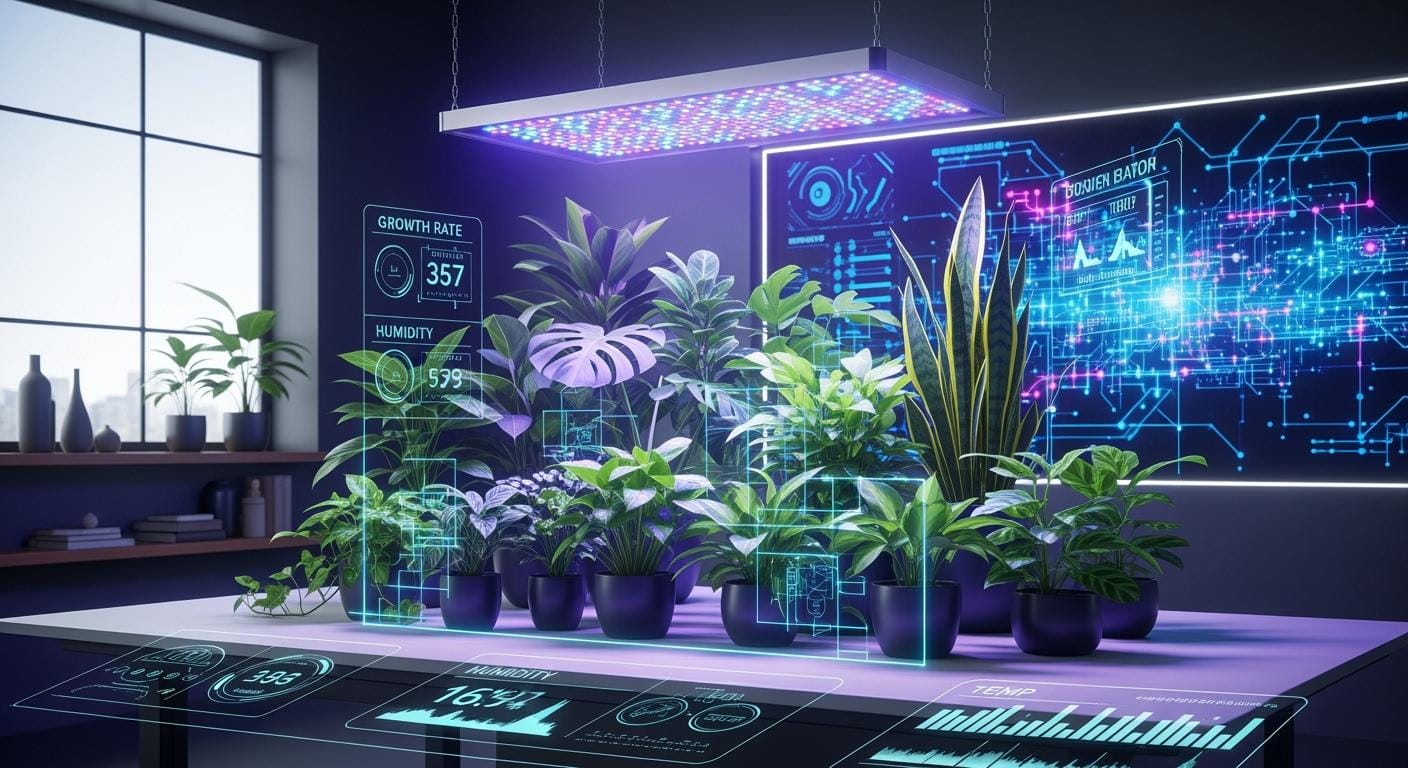
Have you ever watched your indoor plants wilt in a dim room and wondered how to help them thrive? Ultra violet light for plants plays a key role in boosting growth and health, especially when sunlight is scarce. Full-spectrum grow lights give your plants the blue and red wavelengths they need for photosynthesis, while staying energy efficient and cool. You can customize the light to match your plant’s needs, which means happier leaves and more blooms.
SLTMAKS offers reliable ultra violet light solutions so you can turn any space into a lush garden.
Table of Contents
Key Takeaways
UV grow lights help plants grow well indoors. They are useful when there is not much light.
Full-spectrum lights give blue, red, and UV light. This mix helps plants at every stage. It is important to know what light your plant needs. This helps your plant grow strong and bloom. LED grow lights use less energy. They help you save money on your electric bill. Put grow lights in the right spot to stop leaf burn. Good placement also helps all parts of the plant grow evenly. Clean and check your grow lights often. This helps them work well and last longer. Timers can turn lights on and off like the sun. This helps keep your plants healthy. Picking the best grow light can give you more and better plants.
Ultra Violet Light for Plants: What You Need to Know
Light Spectrum and Plant Growth
You might wonder why your houseplants need more than just sunlight from a window. Ultra violet light for plants is a game-changer. It helps your plants grow stronger and healthier, especially when natural light is limited. Scientists have found that UV radiation, especially UV-B, affects proteins and other important parts inside plants. Plants use UV as a signal to change how they grow. Sometimes, UV can stress plants, but most houseplants adapt and use it to build thicker leaves and better colors.
PAR Range Explained
When you shop for grow lights, you’ll see the term PAR. PAR stands for Photosynthetically Active Radiation. This is the range of light that plants use for photosynthesis. You want your grow lights to cover the PAR range so your plants get the best chance to thrive. The PAR range includes blue, red, and some ultra violet light for plants. These colors help your plants make food, grow leaves, and bloom.
UV, Red, and IR Benefits
Let’s break down what each part of the light spectrum does for your plants. Check out this table:
| Light Spectrum | Effect on Photosynthesis and Growth |
|---|---|
| UV Light | Increases essential oil production, boosts flavor and aroma, acts as sunblock |
| Red Light | Encourages stem growth, flowering, and chlorophyll production |
| Far-Red/IR Light | Promotes stem growth and proper node spacing, helps with flowering |
Ultra violet light for plants can also help your crops make more flavonoids. These are healthy compounds that make fruits and veggies taste better and last longer. Red light is key for photosynthesis and helps your plants grow tall and strong. IR light helps with spacing between leaves and flowers.
Why Full Spectrum Matters
You want your plants to get all the light they need, not just one color. Full spectrum grow lights give your plants a mix of blue, red, ultra violet, and IR light. This mix helps your plants at every stage, from seedling to flowering. Studies show that full spectrum lighting can boost yield and improve the quality of your harvest. For example, dynamic spectrum lighting increased cannabis yields by 33%. Moderate UV exposure also helps fruits and vegetables stay fresh longer.
| Finding | Description |
|---|---|
| Dynamic Spectrum Lighting | 33% higher yield and better cannabinoid content in cannabis plants |
| Moderate UV Exposure | Improves fruit and veggie quality and storage time |
| Far-Red Light | Promotes plant height and radiation use efficiency |
Full spectrum is important because your plants’ needs change as they grow. Seedlings need more blue light, while flowering plants need more red and IR. Ultra violet light for plants helps with leaf thickness and color.
SLTMAKS LED Grow Lights Overview
If you want to make sure your plants get the right light, SLTMAKS led grow lights are a smart choice. SLTMAKS uses advanced Samsung diodes to create plant usable light that covers the full spectrum. You get energy savings, strong growth, and reliable results. SLTMAKS led grow lights work for hemp, vegetables, and fruits. The brand focuses on eco-friendly solutions and offers a 3-year warranty, so you can garden with confidence. You’ll find SLTMAKS grow lights easy to install and safe to use, thanks to international certifications.
Tip: Choose full spectrum grow lights from SLTMAKS if you want your indoor garden to look and feel like it’s growing under real sunlight.
Key Factors When Buying Grow Lights
Intensity and Wattage
When you start buying grow lights, you need to think about how much light your plants actually need. Each plant type has its own favorite light intensity. If you give a Jade Plant too little light, it stretches out and looks weak. Succulents love bright light, but too much can scorch them. You want to match the light intensity to your plant’s needs for the best results.
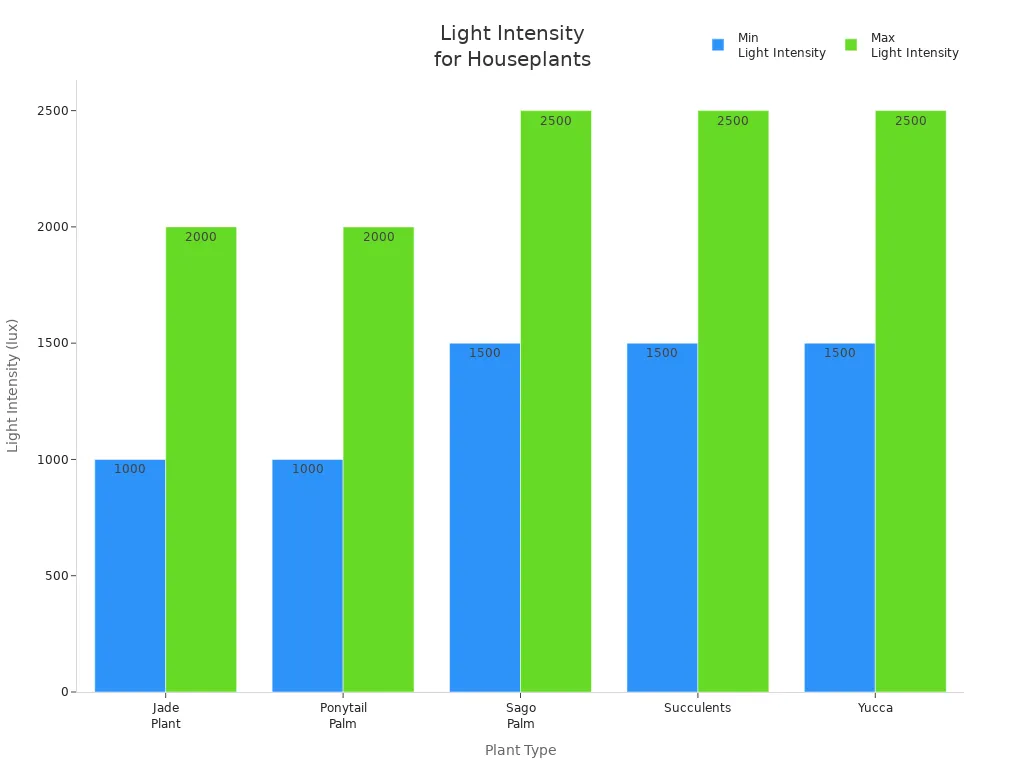
Here’s a quick look at how much light some popular houseplants need:
| Plant Type | Light Intensity (lux) | Notes |
|---|---|---|
| Jade Plant | 1,000-2,000 | Needs bright light for strong growth and to avoid stretching. |
| Ponytail Palm | 1,000-2,000 | Bright light keeps its trunk healthy and water-storing. |
| Sago Palm | 1,500-2,500 | Likes bright, indirect light but can handle higher intensities. |
| Succulents | 1,500-2,500 | Thrives in direct sunlight; some prefer less to avoid burning. |
| Yucca | 1,500-2,500 | Grows best in bright, direct light for thick stems and leaves. |
PPF, PPFD, and Coverage
You might see terms like PPF and PPFD when you look at grow light specs. PPF stands for Photosynthetic Photon Flux. It measures how much light your grow lights produce for your plants to use. PPFD means Photosynthetic Photon Flux Density. It tells you how much light actually reaches your plant leaves. You want to check both numbers to make sure your plants get enough light.
Coverage is also important. If you have a big plant collection, you need grow lights that cover the whole area. Some lights work best for small spaces, while others can handle a 5ft by 5ft garden. Always check the specs before you buy.
Tip: Place your grow lights close to your plants, but not too close. You want to avoid burning the leaves. Most lights work best when mounted about 6 inches above the canopy.
Efficiency and Energy Savings
You want your indoor garden to thrive, but you also want to save money. Modern led grow lights are the most energy efficient option. They use less electricity than older lights like HID or incandescent bulbs. You can cut your energy use by up to 75% compared to old bulbs and about 40% compared to HID lights.
Here’s why LED grow lights are a smart choice:
- They use about 30% less electricity than HID lights.
- You don’t need extra cooling equipment, which saves you up to $500 in setup costs.
- They last up to 50,000 hours, so you won’t need to replace them often.
- You can recover the cost of buying grow lights in about 18 months compared to older systems.
If you want a full spectrum light that saves energy and lasts a long time, led grow lights are the way to go.
Safety and Certifications
Safety matters when you set up your indoor garden. You want grow lights that meet international safety standards. Look for certifications like ETL and CE. These show that your lights are tested and safe to use in your home.
Here’s what you should check before you buy:
- Make sure your grow lights have safety certifications.
- Look for lights with sturdy construction and good heat dissipation.
- Choose lights with instant start and no flickering or humming.
- Pick lights with a warranty for peace of mind.
Note: SLTMAKS grow lights come with patented safety technology and a 3-year warranty. You can garden with confidence knowing your lights are safe and reliable.
Dimming and Customization Features
You want your plants to get just the right amount of light, not too much and not too little. Dimming and customization features in grow lights make this possible. You can adjust the brightness to match your plant’s needs at every stage. Young seedlings need gentle light, while mature plants can handle more intensity. With dimming, you control how much light your plants get, so you avoid stressing them out.
Many LED grow lights come with programmable timers and presets. You can set them to mimic sunrise and sunset, which helps your plants feel like they’re growing outdoors. This gradual change in light prevents shock and keeps your plants healthy. Some systems let you pick the exact light spectrum, so you can give your plants more blue light for growth or more red light for flowering. This flexibility means you get better results and higher yields.
Here’s what you can do with advanced customization features:
- Set pre-programmed growth stage presets for easy use.
- Use sunrise/sunset technology to gently wake up or put your plants to sleep.
- Adjust the spectrum to match your plant’s growth stage.
- Control light cycles with timers for perfect day and night patterns.
Tip: If you want to save energy, use dimming features to lower the light when your plants don’t need full power. This helps you cut costs and keeps your indoor garden eco-friendly.
SLTMAKS STG-1200W-D Series Highlights
If you’re looking for a powerful and flexible grow light, the SLTMAKS STG-1200W-D Series stands out. This model is designed for serious indoor gardeners who want to get the most from their plants. It covers a large area, so you can grow more without needing extra lights.
Check out what makes the STG-1200W-D Series special:
| Feature | Benefit |
|---|---|
| Full spectrum lighting | Gives your plants everything they need for every growth stage |
| Dimmable options | Lets you adjust brightness for seedlings, growth, or flowering |
| Samsung diodes | Delivers strong, reliable light for better plant health |
| 12-bar design | Covers a 5ft x 5ft area, perfect for bigger gardens |
| Advanced cooling | Keeps the light running cool and quiet |
| SOSEN UL/CUL driver | Ensures safe and stable performance |
| Easy installation | Simple setup for beginners and pros |
| 3-year warranty | Gives you peace of mind and long-term support |
You get a light that works for hemp, vegetables, and fruits. The STG-1200W-D Series uses full spectrum technology, so your plants get the best mix of light. You can dim the light to match your plant’s needs, which helps you avoid problems like leaf burn or weak growth. The advanced cooling system means you don’t need extra fans, unlike old hid lights. You save energy and keep your garden quiet.
SLTMAKS makes sure you get safe, certified grow lights. The STG-1200W-D Series comes with ETL and CE certifications, so you know it’s tested and reliable. You can trust this light to help your plants thrive, whether you’re just starting out or you’ve been growing for years.
Note: If you want to learn more about the STG-1200W-D Series, visit the official SLTMAKS website for details and support.
Matching LED Grow Lights to Your Plants
Choosing the right grow lights for your indoor plants can feel tricky, but you can make it simple by understanding what your plants need. Every plant is a little different. Some love bright light all day, while others prefer a cozy, shady spot. Let’s break down how you can figure out what works best for your green friends.
Assessing Plant Light Needs
You don’t need fancy equipment to start. You can use a few easy methods to check if your plants are getting enough light. Here’s a quick guide:
| Method | Description |
|---|---|
| Simple Eye Test | Look at the shadow your plant casts at noon. A crisp shadow means high light. A faint shadow means low light. |
| Light Meter App | Download a light meter app on your phone. It measures light in foot candles or LUX. This helps you decide where to place your plants. |
| Physical Light Meter Tool | Use a handheld light meter for the most accurate results. This tool is great if you want to check light levels often. |
Tip: Try the eye test first. If you want more accuracy, use a light meter app or tool. This helps you match the right grow lights to your plant’s needs.
Low-Light vs. High-Light Plants
Some indoor plants, like snake plants or pothos, do well in low light. They don’t need much sun and can survive in darker rooms. Other plants, like succulents or fiddle leaf figs, love bright light. They need more intense grow lights to stay healthy.
- Low-light plants: Snake plant, pothos, peace lily
- High-light plants: Succulents, fiddle leaf fig, hibiscus
If you notice your plant stretching toward the window or its leaves turning pale, it probably needs more light. On the other hand, if the leaves look scorched or faded, the light might be too strong.
Flowering, Foliage, and Hemp
Different types of plants have different needs. Flowering plants need more red light to bloom. Foliage plants, like ferns, want a balanced spectrum for lush leaves. Hemp plants need a strong, full spectrum to grow thick and produce flowers.
| Plant Type | What They Need from Grow Lights |
|---|---|
| Flowering | Extra red light for big, colorful blooms |
| Foliage | Balanced spectrum for healthy, green leaves |
| Hemp | Full spectrum with UV and IR for strong growth |
Note: If you grow hemp, you want a light that covers the full spectrum, including UV and IR. This helps your plants grow thick and produce more flowers.
Choosing the Best Grow Lights for Different Plants
You want to pick grow lights that match your plant’s needs. Here are some things to look for:
| Criteria | Description |
|---|---|
| Light Spectrum | Full-spectrum lights act like sunlight. They give your plants red, blue, and green light. |
| Beam Angle | A narrow beam works for tall plants. A wide beam spreads light for groups of plants. |
| Color Temperature | A warm-white color (around 3000K) helps plants and looks nice in your room. |
| CRI | High CRI (97-98) makes your plant’s colors look rich and natural. |
| Lifespan | Long-lasting lights (about 50,000 hours) save you money and time. |
| Dimming/Adjustable | Adjustable lights let you change brightness for each plant. |
| Duration | Most plants need 10-14 hours of light each day. |
| Spectrum & Beam | Avoid cheap lights that don’t give the right spectrum or beam angle. |
If you want your indoor plants to look their best, choose full spectrum grow lights with adjustable brightness. This way, you can help your plants grow strong, bloom, or stay leafy and green.
SLTMAKS Product Range
SLTMAKS offers a range of grow lights for every type of indoor plant. Whether you grow hemp, vegetables, or fruits, you can find a light that fits your needs.
| Product | Light Output | Spectrum | Ideal for |
|---|---|---|---|
| SLTMAKS STG Series | Multiple wattages | Full spectrum with Samsung diodes | Hemp, Vegetables, Fruits |
| SLT STG-150W-U Series | 150W | Full spectrum (white, blue, red, infrared) | Hemp, Vegetables, Fruits |
The SLTMAKS STG Series gives you options for small or large gardens. These lights use Samsung diodes for strong, even light. You get a full spectrum, so your plants get everything they need. The SLT STG-150W-U Series is great for smaller spaces or single plants. It still gives you the full spectrum, so your plants grow healthy and strong.
Tip: If you want to grow hemp, look for a light with UV and IR. For vegetables and fruits, a balanced spectrum helps you get bigger harvests and better taste.
SLTMAKS makes it easy to find the right grow lights for your indoor plants. You can pick the size and spectrum that matches your space and your plant’s needs. With SLTMAKS, you get reliable, energy-saving lights that help your plants thrive, no matter where you live.
Setting Up and Using Grow Lights Effectively
Placement and Distance
Getting the placement right makes a big difference for your plants. If you hang your lights too close, you risk burning the leaves. If you place them too far, your plants might stretch and look weak. Here’s a simple guide to help you:
| Growth Stage | Distance from Plants (inches) |
|---|---|
| Germination | 24 – 36 |
| Seedling | 18 – 24 |
| Vegetative | 12 – 18 |
| Pre-flowering | 8 – 12 |
| Flowering | 6 – 10 |
| Fruiting | 6 – 12 |
You can use a light meter to check how much light reaches your plants. Adjust the height as your plants grow. Always check for signs of stress, like yellow leaves or burnt edges.
Preventing Light Burn
Light burn happens when your grow lights are too close. You might see brown spots or crispy leaves. To prevent this:
- Start with lights 18 to 36 inches above your plants.
- Lower the lights slowly as your plants get bigger.
- Watch your plants every day for changes.
If you see any problems, raise the lights a few inches. Plants will thank you with healthy growth.
Maximizing Coverage
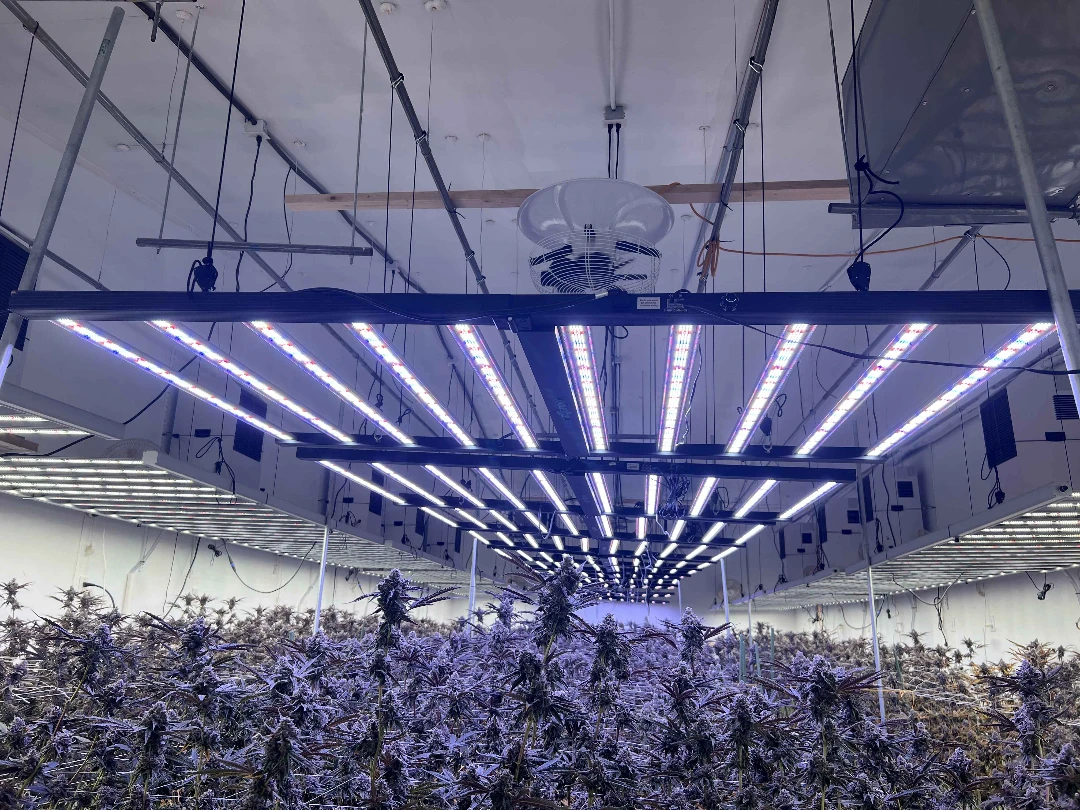
You want every plant to get enough light. Spread your grow lights evenly over your garden. For a big setup, use a 12-bar light like the SLTMAKS STG-1200W-D Series. This covers a 5ft by 5ft area. Move your plants around if you notice some getting less light. Rotate pots every week for even growth.
Duration and Timing
Plants need the right amount of light and darkness. Too much light can stress them. Too little light can slow growth. Most houseplants do best with 12 to 18 hours of light each day.
Mimicking Day/Night Cycles
Set a timer for your lights. Give your plants a regular schedule. For leafy growth, use 18 hours of light and 6 hours of darkness. When you want flowers, switch to 12 hours of light and 12 hours of darkness. This helps plants rest and bloom.
Adjusting for Growth Stages
Change the light duration as your plants grow. Seedlings need more light. Flowering plants need less. If you grow vegetables, keep the lights on for 14 to 16 hours. For blooming or fruiting, drop to 12 hours. Consistency helps your plants stay healthy.
Safety Tips for Indoor Gardening
Keeping your setup safe is important. Here are some easy tips:
- Clean your lights with a soft cloth to remove dust.
- Make sure your grow space has good airflow.
- Check all wires and plugs for damage.
- Use the right power cord for your lights.
- Pick lights with the right wattage for your room.
- Never block vents or fans.
Tip: A safe setup means happy plants and peace of mind for you. Always follow the manufacturer’s instructions for your grow lights.
Common Mistakes with Grow Lights
Overexposure and Underexposure
You want your plants to get just the right amount of light, but it’s easy to go overboard or not give enough. If you place lights too close, your plants can get light burn. You might see yellow leaves, brown spots, or crispy edges. When this happens, your plants feel stressed and stop growing well. On the other hand, if your lights are too far away or not bright enough, your plants may stretch out, look pale, and grow slowly.
Here’s what can happen if you don’t get the balance right:
- Too much light causes leaf burn and stress.
- Not enough light leads to weak, leggy plants.
- Irregular lighting schedules confuse your plants and mess up their natural growth patterns.
- Uneven light distribution means some plants thrive while others struggle.
Plants need darkness, too. If you leave your lights on all night, you disrupt their natural day and night cycle. This can cause problems inside the plant, like less energy for growth and repair. Plants use the dark to recover, so always give them a break from the light.
| Problem | What Happens to Plants |
|---|---|
| Too much light | Burned leaves, stress, slow growth |
| Too little light | Pale, stretched plants, poor health |
| No dark period | Disrupted repair, less energy, lower photosynthesis |
Tip: Set your lights on a timer. Most houseplants do best with 12 to 16 hours of light and at least 8 hours of darkness.
Wrong Spectrum or Intensity
Not all light is the same for your plants. If you use the wrong spectrum, your plants might not grow as you expect. For example, lettuce grows best under a mix of red and blue light. If you use only red or only blue, you get weak plants with poor color and less food value. Plants need a balance of colors to make food and grow strong.
If the intensity is too high, you risk burning your plants. If it’s too low, they won’t get enough energy to grow. You want to match the light spectrum and intensity to what your plant likes.
- Red and blue together help most plants grow best.
- Only red or only blue can cause poor growth and weak leaves.
- Too much intensity burns leaves; too little makes plants stretch and fade.
Ignoring Plant-Specific Needs
Every plant is different. Some love bright light all day, while others prefer shade. If you treat all your plants the same, some will suffer. For example, seedlings need more hours of gentle light, while herbs and greens do well with about 12 hours. Houseplants like snake plants may only need 6 to 12 hours.
You also need to think about how far the light is from your plant. Some plants want the light close, others need it farther away. If you ignore these needs, your plants might not grow well.
- Place lights about 12 inches from most plants, but check what your plant likes.
- Adjust the distance for stronger or weaker light.
- Remember, LED lights are stronger than old bulbs, so you may need to hang them higher.
Note: Always check what your specific plant needs before setting up your grow lights. This helps you avoid common mistakes and keeps your indoor garden healthy.
Poor Setup and Maintenance
You might have the best grow lights, but if you set them up wrong or skip maintenance, your plants won’t get the results you want. Many indoor gardeners make simple mistakes that can slow down growth or even damage their lights. Let’s talk about how you can avoid these problems and keep your indoor garden thriving.
First, think about how you install your grow lights. If you hang them too close together, some plants get too much light while others get too little. If you don’t space them out, you’ll see uneven growth. Always check the coverage area for your lights. For example, the SLTMAKS STG-1200W-D Series covers a 5ft by 5ft space. Make sure you spread your lights so every plant gets enough light.
Next, don’t forget about airflow. Grow lights can get warm, even the energy-efficient ones. If you block vents or crowd your lights, heat builds up. This can shorten the life of your lights and stress your plants. You want to keep air moving around your setup. Use a small fan or open a window to help with ventilation. Good airflow keeps your lights cool and your plants happy.
Cleaning is another step many people skip. Dust and dirt can build up on the light’s surface. This blocks light and makes your grow lights work harder. You should wipe your lights with a dry, soft cloth. Avoid using water or harsh cleaners. Clean lenses help your lights shine bright and last longer.
Here’s a quick checklist to help you remember:
- Clean your lights regularly. Use a dry, nonabrasive cloth to keep lenses clear.
- Install lights with enough space. Make sure every plant gets even coverage.
- Keep air moving. Use fans or open windows to prevent overheating.
Tip: Set a reminder to check your grow lights every week. A little care goes a long way!
If you notice flickering, dimming, or strange noises, check your setup right away. Loose wires or blocked vents can cause problems. Fixing small issues early helps you avoid bigger headaches later.
When you take care of your grow lights, you help your plants grow strong and healthy. You also save money because your lights last longer. With good setup and regular maintenance, your indoor garden will look its best all year round.
Buying Grow Lights: Tips and Recommendations
What to Look For
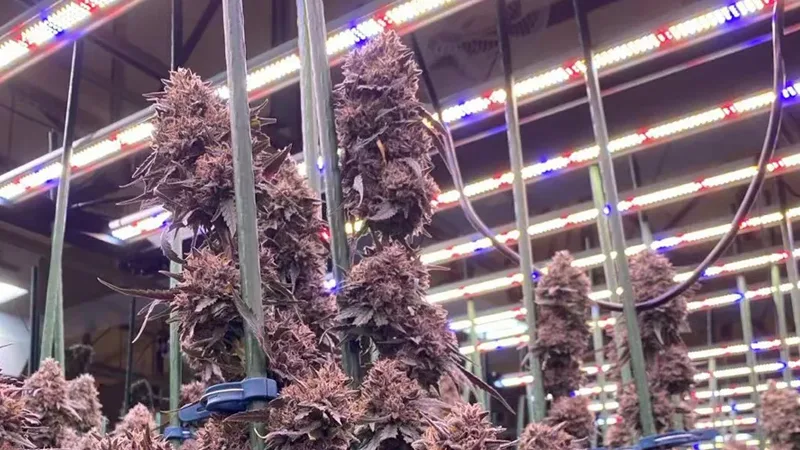
Shopping for the best grow lights can feel confusing, but you can make it easier by focusing on a few key features. You want your plants to get the right amount of light, so check these things before you buy:
- Light Intensity: Look for PPFD values. Higher numbers mean your plants get more usable light, which helps them grow faster and stronger.
- Light Coverage Area: Make sure the light covers all your plants. If you have a big shelf or garden, pick a light that matches the size of your space.
- Light Spectrum: Full-spectrum lights work best. They give your plants the colors they need for every stage, from seedlings to flowering.
You’ll find many types of grow lights on the market, but full-spectrum models are the most popular for houseplants. They help you grow healthy leaves, bright flowers, and tasty fruits.
Tip: Always match the light’s coverage area to your plant setup. This helps every plant get enough light and prevents weak growth.
SLTMAKS STG-1200W-D Series Review
If you want a reliable grow light, the SLTMAKS STG-1200W-D Series stands out. Many users and experts praise its performance. Here’s a quick look at what makes it special:
| Feature | Description |
|---|---|
| Full-Spectrum | Supports all plant stages, boosting growth and flowering. |
| Energy Efficiency | Uses power wisely, saving you money over time. |
| Build Quality | Strong design means it lasts a long time. |
| Quiet Operation | Runs silently, so you can enjoy a peaceful space. |
| Heat Management | Keeps cool, so your plants stay safe and healthy. |
| Warranty | Comes with a 3-year warranty for extra peace of mind. |
You get a light that works for many plants, including hemp, vegetables, and fruits. The advanced cooling system keeps the light running smoothly. The quiet operation means you won’t hear any buzzing or humming. If you want to learn more, you can visit the official SLTMAKS website for details.
Where to Buy and What to Avoid
You want to buy your grow lights from trusted sources. SLTMAKS offers fast delivery through local distributors in Europe and North America. Always check for safety certifications and a good warranty.
Here are some common mistakes to avoid when setting up your lights:
- Placing lights too close or too far can burn leaves or make plants weak.
- Not using enough lights for your space can lead to poor plant health.
- Overwatering happens when soil dries slower under lights, which can cause root rot.
- Ignoring light schedules can mess up plant growth.
- Skipping regular maintenance can lower light efficiency.
- Not adjusting for plant growth can stop your plants from reaching their best.
Note: Regularly check your setup and adjust as your plants grow. This helps you get the most from your lights and keeps your plants happy.
Budget vs. Premium Options
Shopping for grow lights can feel overwhelming when you see so many choices and price tags. You might wonder if you should save money with a budget option or invest in a premium model. Let’s break down what you get with each type so you can make the best decision for your plants and your wallet.
Budget grow lights usually cost less up front. You can find them for $100 to $300. These lights often use generic parts and basic plastic housing. They might work for a short time, but you may notice problems like weak light, poor heat control, or even flickering. Most budget lights last for only one or two harvests. If you want to grow a few herbs or small houseplants, a budget light might be enough for a season.
Premium grow lights, like those from SLTMAKS, cost more at first—usually $300 to $600. You get high-quality components, such as Samsung or OSRAM diodes, and strong aluminum frames. These lights manage heat well, so your plants stay safe and healthy. Premium lights last for three to five years and come with longer warranties. You’ll see bigger yields, brighter blooms, and healthier leaves. If you want to grow hemp, vegetables, or fruits indoors, a premium light helps you get the most from your garden.
Here’s a quick table to help you compare:
| Feature | Budget LED Grow Lights | Premium LED Grow Lights |
|---|---|---|
| Initial Cost | $100-300 | $300-600 |
| Component Quality | Generic | Samsung/OSRAM |
| Heat Management | Poor | Efficient (Aluminum) |
| Lifespan | 1-2 harvests | 3-5 years |
| Yield Increase | Smaller yields | 20-40% higher yields |
| Warranty Coverage | 6-12 months | 3-5 years |
| Build Quality | Cheap plastic | Durable aluminum/steel |
| Moisture Resistance | Unrated | IP65 or higher |
Tip: If you want your indoor garden to last and produce more, consider investing in premium grow lights. You’ll save money over time because you won’t need to replace them as often.
You don’t have to buy the most expensive light to start growing. If you’re new to indoor gardening or just want to try a few plants, a budget light can help you learn. As you get more serious, upgrading to a premium model gives you better results and peace of mind. Premium lights also come with better support and safety features, so you can focus on growing instead of fixing problems.
Choosing between budget and premium options depends on your goals. Think about how many plants you want to grow, how long you want your setup to last, and how much effort you want to put into maintenance. Premium lights like SLTMAKS offer reliability, strong performance, and long-term savings.
You can turn any room into a thriving garden with the right LED grow lights. Start by matching your plant type, light spectrum, and intensity. Check out this quick table to help you:
| Step | What to Do |
|---|---|
| Plant Type | Know what each plant needs |
| Light Spectrum | Pick blue for growth, red for blooms |
| Intensity & Coverage | Match light to your space |
| Energy Efficiency | Choose LEDs for savings |
Make a checklist before you buy. Compare SLTMAKS products, read reviews, and think about your space. With smart choices, you’ll watch your plants grow strong and green—even in places the sun never saw! 🌱
FAQ
How do you know if your plants need more light?
Look for pale leaves or long, thin stems. Your plants may stretch toward windows. If you see slow growth, try adding a grow light.
Can you leave LED grow lights on all night?
No, plants need darkness to rest. Set a timer for 12 to 16 hours of light each day. Give your plants at least 8 hours of darkness.
What is the best distance for placing grow lights?
Most plants like lights 6 to 18 inches above their leaves. Start higher for seedlings. Lower the lights as your plants grow bigger.
Do SLTMAKS grow lights work for all houseplants?
Yes! SLTMAKS lights support hemp, vegetables, fruits, and common houseplants. You can adjust the spectrum and brightness for each plant type.
How long do SLTMAKS LED grow lights last?
SLTMAKS LED grow lights last over 50,000 hours. You get years of reliable use before needing a replacement.
Are SLTMAKS grow lights safe to use indoors?
Absolutely. SLTMAKS lights have ETL and CE certifications. You get safe, tested products for your home.
Can you use SLTMAKS grow lights in any room?
Yes, you can use them in basements, bedrooms, or windowless spaces. SLTMAKS lights turn any room into a thriving garden. 🌱