You want the best light for your plants that is not too expensive. We tested and compared many choices. These are the best ones for houseplants:
- SLTMAKS STG-1000W-F Series: This one is strong, saves energy, and is great for people who grow a lot of plants.
- Spiderfarmer SF Series: It has a good light spectrum and smart controls.
- LEOTER Grow Light: It is easy to use and good for beginners.
- Barrina LED Grow Light: It does not cost much and works for bigger setups.
- GooingTop LED Grow Light: It is small and simple for tiny spaces.
- Sansi LED Grow Light: It is tough and works well every day.
To pick the best light for plants, look at the light spectrum, how much energy it uses, how strong it is, smart features, price, help from the company, if you can add more lights, and safety. You should get a plant light that fits your space, your plants, and your budget.
Are you ready to see which grow light helps your plants do well? Let’s get started with SLTMAKS!
Table of Contents
Key Takeaways
- Pick grow lights that fit your plant’s needs and space. Full spectrum lights act like sunlight and help plants grow better.
- LED grow lights use less energy and last longer than old bulbs. They help you save money on your electric bill.
- The SLTMAKS STG-1000W-F Series is strong and good for big gardens. It gives full spectrum light and lasts a long time.
- Spiderfarmer SF Series has smart controls and daisy-chain features. This makes it simple to add more lights to your setup.
- LEOTER Grow Light is great for beginners. It has timers and bendable arms so you can move it easily.
- Barrina LED Grow Light costs less and works well for big setups. It gives full spectrum light and does not get too hot.
- GooingTop LED Grow Light is small and saves energy. It is best for little spaces like desks or shelves.
- Sansi LED Grow Light uses new technology to last long and stay safe. It is good for using every day.
Top Picks Overview
Best Light for Plants: Quick List
You want the best for houseplants, but you also want something that fits your budget. Here’s a quick look at the best grow lights you can use right now:
- SLTMAKS STG-1000W-F Series
Powerful, energy-saving, and perfect for bigger plant collections. - Spiderfarmer SF Series
Smart controls and a balanced light spectrum for healthy growth. - LEOTER Grow Light
Simple setup and easy controls for beginners. - Barrina LED Grow Light
Affordable and great for larger spaces. - GooingTop LED Grow Light
Compact and ideal for small corners or shelves. - Sansi LED Grow Light
Durable and reliable for everyday use.
You can find a light for every space and every plant. Each one brings something special to your indoor garden.
Why These Grow Lights Stand Out
You might wonder why these models made the list. The answer comes down to what you get for your money. Most of these lights use LED technology. LEDs use about half the energy of old HID lamps. You save money on your electric bill, and your lights last much longer. Here’s a quick table to show the difference:
| Grow Light Type | Energy Consumption | Lifespan |
|---|---|---|
| LED | Low | Long |
| HID | High | Short |
LED grow lights cost more at first, but you spend less over time because they use less power. You also don’t have to replace them as often.
What makes each pick special? You get features that help your plants grow strong. Some lights, like the SLTMAKS STG-1000W-F Series, use advanced Samsung diodes and full-spectrum light. Others, like Spiderfarmer SF Series, offer smart controls and daisy-chain options. Barrina and Sansi lights work well for bigger setups or daily use. LEOTER and GooingTop are easy for anyone to use.
Take a look at how different models compare in power and light output:
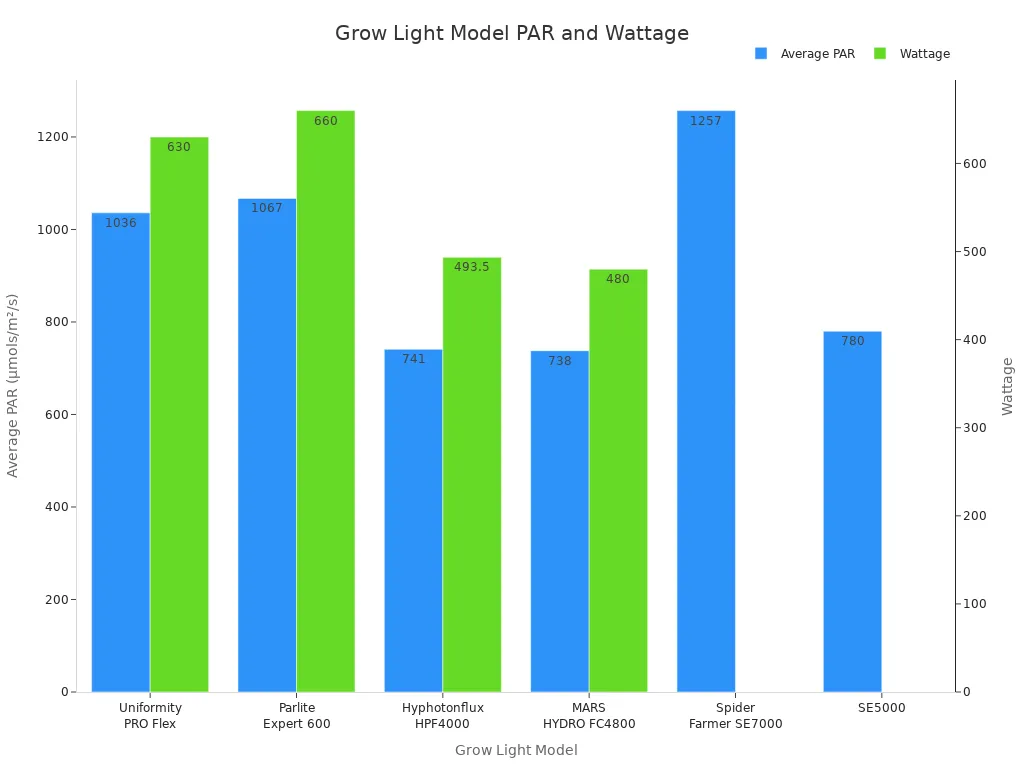
You see that some lights give you more light for less energy. That means healthier plants and lower bills. If you want the best light for plants, these picks give you great value and strong results.
Grow Light Reviews
SLTMAKS STG-1000W-F Series Review
Key Features
You want a grow light that brings out the best in your plants. The SLTMAKS STG-1000W-F Series stands out for its power and smart design. You get a full spectrum of light, thanks to Samsung and Osram LEDs. This means your plants get the right light for every stage, from seedling to harvest. The light covers a large area, up to 6ft by 6ft, so you can grow more plants at once. You can adjust the brightness with the dimmable function. The wide voltage range fits many setups, and the advanced cooling system keeps the temperature steady. You also get a long lifespan—over 50,000 hours—so you don’t have to worry about replacing it often. Safety matters, and this light comes with ETL and CE certifications. You get a 3-year warranty for peace of mind.
Here’s a quick look at the most mentioned benefits:
| Feature | Benefit |
|---|---|
| 1000W Power Output | Covers large grow areas |
| Samsung & Osram LEDs | Delivers strong, full spectrum light |
| Dimmable Function | Lets you adjust brightness |
| Wide Voltage Range | Fits many setups |
| 50,000+ Hour Lifespan | Reduces replacement costs |
| ETL & CE Certified | Ensures safety and quality |
| 3-Year Warranty | Gives you peace of mind |
Pros and Ideal Use Cases
You get high power output for faster growth and bigger yields. The full spectrum light helps your plants thrive, no matter the stage. The coverage area is perfect for large grow rooms or if you want to grow many houseplants together. You save energy because the advanced LEDs use less electricity. The dimmable function lets you control the light for seedlings, mature plants, or flowering. The cooling system keeps everything running smoothly. You can set it up quickly, even if you’re new to indoor gardening. The safety certifications and warranty make it a smart investment.
- Use this light if you have a big indoor garden or want to grow hemp, vegetables, or fruits.
- It works well for both beginners and experts.
- If you want the best grow lights for large spaces, this model gives you strong results and reliability.
The SLTMAKS STG-1000W-F Series gives you full spectrum coverage and high efficiency. You see better yields and healthier plants. Compared to other brands, it matches or beats them in light output and energy savings.
Spiderfarmer SF Series Review
Key Features
You want a light that’s easy to use and gives you control. The Spiderfarmer SF Series offers a simple control module, so you can adjust light color and intensity. You don’t need much assembly. You can connect several lights with the daisy-chain feature, making it easy to expand your setup. The build quality is solid, and shipping is compact. You get fully dimmable controls, which help beginners and experts alike. The lights run silently and don’t create hot spots, so your plants stay comfortable. Customer service is fast, and you get a 5-year warranty.
| Advantages | Disadvantages |
|---|---|
| Easy to use with minimal assembly required. | Needs remote/display for better visibility. |
| Simple control module for adjusting light color and intensity. | |
| Daisy-chain compatible for easy connection with other systems. | |
| Excellent customer service with fast shipping and a 5-year warranty. | |
| No hot spots and silent operation, maintaining optimal growing conditions. | |
| Fully dimmable controls suitable for beginners. | |
| High-quality build and compact shipping. | |
| Maximizes yield while keeping power draw in check. |
Pros and Ideal Use Cases
You save energy with the Spiderfarmer SF1000, which uses only 100W. You get an average yield of about 2.5 grams per watt, so your plants grow well without high power bills. The SF Series works better than old HID or MH lights. You can use these lights for small to medium grow spaces. If you want to expand, just connect more lights with the daisy-chain feature. The controls are easy, so you can adjust the light for different plant needs. The silent operation and no hot spots keep your plants healthy.
- Choose this series if you want energy savings and easy setup.
- It’s great for beginners who want the best light for plants without fuss.
- You get full spectrum light and reliable results for many houseplants.
LEOTER Grow Light Review
Key Features
You want a light that’s simple and flexible. The LEOTER Grow Light comes with built-in timers, so you can set it for 3, 9, or 12 hours. You don’t have to remember to turn it on or off. The four flexible arms let you position the light around your plants. The space-saving design fits on shelves or small tables. You can choose from three light modes: warm light, red and blue, or a combination. This helps your plants get the right full spectrum for growth.
- Built-in timers make plant care easy.
- Four flexible arms let you adjust the light for each plant.
- Space-saving design fits anywhere.
- Three light modes boost plant growth.
Pros and Ideal Use Cases
You can set up the LEOTER Grow Light in minutes. Just clip it on a shelf and plug it in. The flexible arms help you reach different houseplants, so each one gets enough light. The timer settings make plant maintenance simple. You don’t need to worry about forgetting your plants. The adjustable modes give you full spectrum options, so you can help your plants grow strong.
- Use this light for small spaces, shelves, or desks.
- It’s perfect for beginners who want easy controls and flexible placement.
- If you want the best grow lights for a few houseplants, this model gives you full spectrum coverage and simple operation.
Barrina LED Grow Light Review
Key Features
You want a grow light that works well and costs less. Barrina LED Grow Light saves energy and gives full spectrum light. It shines red, blue, and white light for all plant stages. The light does not get hot, so plants stay safe. You do not need extra fans or cooling. Barrina lights last over 20,000 hours, so you change them less often. You can change the light settings for your plants. This makes Barrina popular with indoor gardeners.
Here is what makes Barrina special:
| Feature | Description |
|---|---|
| Energy Efficiency | Gives lots of light but uses little energy, saving money. |
| Full Spectrum Lighting | Shines red, blue, and white light for every growth stage. |
| Low Heat Output | Stays cool, so plants do not get stressed or need more cooling. |
| Durability | Lasts over 20,000 hours, so you do not replace it much. |
| Customizability | Lets you change light settings for different plants. |
Pros and Ideal Use Cases
You get a light that helps many houseplants grow. Barrina’s full spectrum helps seedlings, big plants, and flowers. You save money because it uses less power. The light stays cool, so you can put it close to plants. Barrina works for big grow rooms or shelf gardens. You can change the settings for herbs, veggies, or flowers. If you want a good, cheap light for a big setup, Barrina is a great choice.
Tip: If you want to grow more plants, Barrina lets you connect many lights for better coverage.
GooingTop LED Grow Light Review
Key Features
You need a small grow light for tight spaces. GooingTop LED Grow Light is bright and gives full spectrum light. It uses little energy, so your bill stays low. GooingTop does not get hot, so plants stay safe. The light fits small shelves or desks, so it is good for small areas. It helps plants grow from seedling to flower.
See how GooingTop works:
| Feature | Description |
|---|---|
| Light Spectrum | GooingTop LED Grow Light gives good light for many plants. |
| Power Consumption | Uses less energy, so you save money. |
| Coverage Area | Fits the size of your growing space for enough light. |
Pros and Ideal Use Cases
You get bright light that helps plants grow fast. GooingTop’s full spectrum helps leaves and flowers. You save money because it uses less power. The light does not get hot, so you can put it close to plants. GooingTop is best for small setups like one shelf or a desk garden. If you want a simple, cheap light for a few plants, GooingTop is a smart pick.
Here is what people like and dislike:
| Aspect | Positive Feedback | Negative Feedback |
|---|---|---|
| Brightness | Very bright, helps plants grow | N/A |
| Energy Efficiency | Saves money on electricity | N/A |
| Heat Output | Does not get hot | N/A |
| Assembly | N/A | Hard to set up |
| Durability | N/A | Some worry about long-term use |
Note: GooingTop works best if you match the light area to your plants. If you need more light, you can add another unit.
Sansi LED Grow Light Review
Key Features
You want a grow light that lasts and keeps plants healthy. Sansi LED Grow Light uses special Chip on Ceramic (COC) technology. This makes the light work better and last 25,000 hours. The light is strong and gives full spectrum for plants. Sansi’s ceramic material does not get hot or catch fire, so it is safe. The IC driver chip keeps the light cool, so no overheating. Sansi helps plants at every stage, from seedling to big plant.
Here are Sansi’s best features:
| Feature | Benefit |
|---|---|
| Advanced Technology | Uses Chip on Ceramic (COC) for better light and long life (25,000 hours). |
| Energy Efficiency | Gives strong light and saves energy with good cooling. |
| Safety | IC driver chip keeps it cool and safe for closed spaces. |
| Versatility in Plant Growth | Full spectrum helps all plant stages, so it works for many plants. |
| Durability | Made with ceramic that does not burn, so it lasts long. |
| Long Lifespan | Lasts 25,000 hours, so you do not replace it often. |
| High CRI | Ra >90 shows true colors, like sunlight, for better growth. |
Pros and Ideal Use Cases
You get a light that helps every plant at every stage. Sansi’s full spectrum is like sunlight, so plants look bright and grow strong. The new technology saves money on power and replacements. You can use Sansi in any room, even closed spaces, because it stays cool and safe. The high CRI helps plants show real colors, which is good for pretty plants. If you want a tough, useful light for daily use, Sansi is a great choice.
- Sansi works for all plants and all growth stages.
- The light makes plants look nice and grow well.
- You get balanced light and less blue light problems.
If you want a grow light that lasts years and keeps plants healthy, Sansi LED Grow Light is a good pick.
Testing Process
Testing Criteria
When you look for the best grow lights, you want to know how we tested each one. We focused on what matters most for your plants and your wallet. Here’s what we checked:
- Brightness: We measured how much light each lamp gives off. Plants need strong light to grow well.
- Full spectrum: We checked if the light covers all the colors plants need, from blue for leaves to red for flowers.
- Energy efficiency: We looked at how much power each light uses. Lower energy use means lower bills.
- Ease of use: We tried out the controls, timers, and setup. You want something simple, not confusing.
- Coverage area: We checked how much space each light covers. Some lights work for one plant, others for a whole shelf.
- Safety and build quality: We made sure the lights stay cool and safe, even after hours of use.
Tip: Always check for a full spectrum label when you shop. This means your plants get the right light for every stage.
Methods and Environment
You might wonder how we tested these lights. We set up a real indoor garden with different houseplants. We picked popular plants like pothos, snake plant, spider plant, and some herbs. Each plant got its own spot under a different grow light.
We used soil moisture meters to track plant health and soil conditions. Here’s a quick look at the tools we used:
| Soil Moisture Meter | Specifications | Reasons to BUY | Reasons to AVOID |
|---|---|---|---|
| iPower Soil Moisture Meter | 13 x 4.1 x 1.7 in, Triple Function, No battery | pH and light testing, User-friendly, Accurate, Double-needle technology | Cramped Display |
| SZHLUX Soil Moisture Meter | 10.3 x 2.3 x 1.4 in, Corrosion resistant | Corrosion resistant, User-friendly, Accurate, Less harmful for roots | Not suited for hard soil |
We ran the tests for four weeks. We checked plant growth, leaf color, and soil moisture every few days. We also measured the light at the plant’s canopy to see if each lamp gave enough full spectrum light.
Comparing Performance
You want to know which light works best. We compared each model using these steps:
- We checked the actual wattage, not just what the box said. This shows how much power the light really uses.
- We measured PPFD (photosynthetic photon flux density) at the plant canopy. This tells you how much useful light your plants get.
- We looked at efficacy ratings (µmol/J). This shows how well the light turns electricity into plant-friendly light.
- We compared the quality of the full spectrum. Some lights give better results for leaves and flowers.
- We added up the cost of ownership, including power use and how often you need to replace the light.
By looking at all these things, we found out which lights give you the most value and help your plants thrive. You can trust these results when you pick your next grow light.
Buying Guide
Choosing the Best Light for Plants
You want your houseplants to thrive, so picking the best light for plants is important. Start by thinking about your space and the types of plants you grow. If you have a few succulents on a windowsill, you need a different setup than someone with a big indoor garden. Look for lights that match your plant’s needs and your room size. Full spectrum lights work well for most houseplants because they mimic natural sunlight. You get better growth and healthier leaves when your plants receive the right mix of light.
Key Factors to Consider
Size and Coverage
Check the size of your growing area before you buy. A small shelf needs a compact light, while a large room calls for a powerful fixture. You want the light to cover all your plants evenly. Place the light above your plants to copy how the sun shines. LEDs can sit close—about 6 inches above the canopy—while fluorescent lights need about 12 inches. If you use incandescent bulbs, keep them at least 24 inches away to avoid burning leaves.
Bulb Type and Spectrum
The type of bulb makes a big difference. Here’s a quick table to help you compare:
| Type of Light | Efficiency | Heat Output | Spectrum Coverage |
|---|---|---|---|
| Incandescent | Low | High | Limited |
| Fluorescent | Moderate | Low | Wide |
| LED | High | Very Low | Full Spectrum |
Full spectrum LED grow lights give you the best results for houseplants. Blue light helps leaves and roots grow strong. Red light boosts flowering and fruiting. Green and yellow light help with germination, but they matter less. You want a light that covers all these colors for balanced growth.
Different wavelengths affect your plants in unique ways. Blue light helps early growth and root strength. Red light triggers flowering and fruiting. Far-red light can make plants taller. UV light boosts metabolism and helps plants defend themselves.
Special Features
Some grow lights come with extra features that make your life easier. Look for dimmable settings, timers, and smart controls. These let you adjust brightness and set schedules, so your plants get the right amount of light every day. Daisy-chain options help you connect more lights for bigger setups. Safety certifications and warranties give you peace of mind.
Tip: Always check for a full spectrum label and safety certifications before you buy. These features help you get the best grow lights for your space.
Matching Grow Lights to Houseplants
Not all houseplants need the same amount of light. Match your grow light to your plant’s needs. Here’s a table to guide you:
| Light Requirement Category | Houseplants Examples | Recommended Foot-Candles |
|---|---|---|
| Low-Light | Snake plants, ZZ plants, Cast iron plants | 50-100 |
| Pothos, Philodendrons, Dracaenas | 100-250 | |
| Medium-Light | Monsteras, Prayer plants, Calatheas, Ferns | 250-500 |
| Spider plants, Peace lilies, Rubber trees | 400-800 | |
| High-Light | Fiddle leaf figs, Crotons, Succulents | 800-1,500+ |
| Cacti, Jade plants, Flowering houseplants | 1,500-2,500+ |
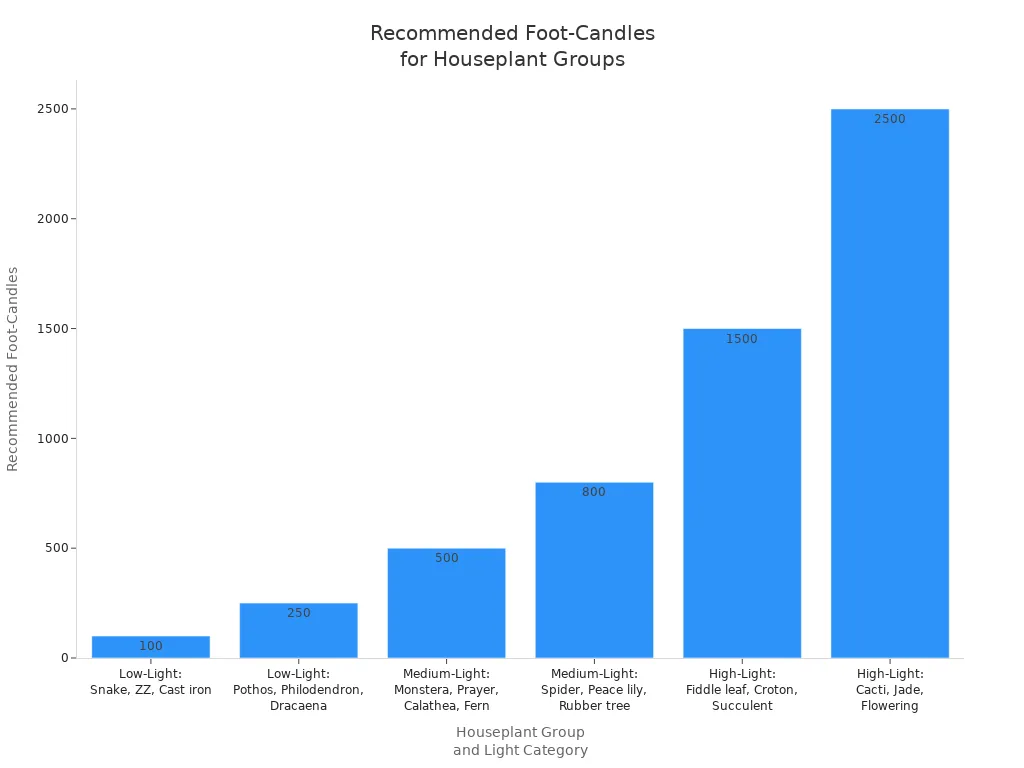
If you grow low-light plants, you don’t need a super bright light. Medium-light plants do best with full spectrum LEDs. High-light plants, like succulents and cacti, need strong light and higher foot-candle levels. Pick the best for houseplants by matching the light output to your plant’s needs.
Common Mistakes to Avoid
You want your houseplants to thrive, so picking the right grow light matters. Many people make simple mistakes when buying grow lights. If you know what to watch out for, you can save money and help your plants grow strong.
Here are some common mistakes you should avoid:
- Buying too few fixtures
You might think one light is enough for all your plants. If you use the bare minimum, your lights can wear out faster. They may not last as long as you hope. Your plants might not get enough light, and you could end up replacing your lights sooner than you want. - Ignoring the light spectrum
Some buyers only look at the red and blue parts of the spectrum. If you forget about the far-red range, you might pick a light that gives off too much infrared heat. Too much heat can hurt your plants and dry out the soil. Always check for a balanced, full spectrum. - Skipping the IP rating
The IP rating tells you how well the light handles dust and water. If you ignore this, your light could get damaged by humidity or spills in your grow area. Look for a light with a good IP rating, especially if you grow plants in damp rooms. - Not checking for quality certifications
Some lights do not meet important standards. If you skip the Design Lights Consortium (DLC) listing, you might buy a light that uses more energy and gives less light. Certified lights usually work better and last longer. - Choosing the cheapest option
Cheap lights can seem like a good deal. In reality, they often break down faster and give you lower yields. You might spend more money in the long run because you have to replace them or deal with poor plant growth.
Tip: Always read the product details and reviews before you buy. Look for lights with strong warranties, safety certifications, and a good reputation.
If you avoid these mistakes, you set yourself up for success. Your plants will thank you with healthy leaves and steady growth. Take your time, do your research, and pick a grow light that fits your space and your plant’s needs. 🌱
Comparison Table
Quick Reference of Top Picks
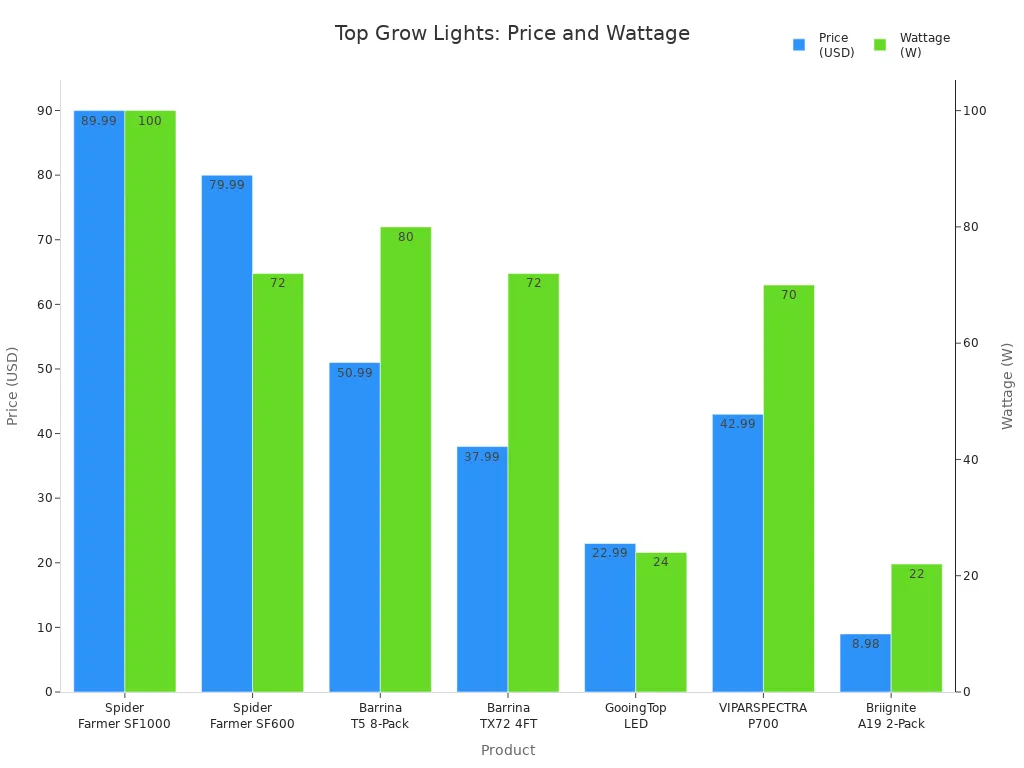
You want to know how the best affordable grow lights compare. This table lets you see features, price, coverage, and energy use. You can quickly spot what is different and choose what fits your space and budget.
| Grow Light | Power (W) | Coverage Area | Key Features | Price | Best For |
|---|---|---|---|---|---|
| SLTMAKS STG-1000W-F | 1000 | 6×6 ft | Samsung & Osram LEDs, Dimmable, Full Spectrum, Advanced Cooling, 3-Year Warranty | Varies | Large gardens, hemp, veggies, fruits |
| Spider Farmer SF1000 | 100 | 2×2/3×3 ft | Samsung LEDs, Dimmable, Daisy-chain, Silent | $89.99 | Small/medium setups |
| Barrina T5 8-Pack | 80 total | Flexible | Linkable strips, Full Spectrum, Low Heat | $50.99 | Shelves, big rooms |
| GooingTop LED | 24 | Clip-on, small | Timer, Full Spectrum, Compact | $22.99 | Desks, small corners |
| Sansi LED Grow Light | 10 | Small pots | Chip on Ceramic, High CRI, Long Life | Varies | Everyday use, small plants |
| LEOTER Grow Light | 40 | Flexible arms | Timer, 3 Modes, Adjustable arms | Varies | Beginners, small spaces |
Each light has something special. SLTMAKS is strong and covers big gardens. Spider Farmer is good for small rooms and can connect with more lights. Barrina is cheap and covers shelves or big spaces. GooingTop fits in small places and is easy to use. Sansi lasts a long time and helps small plants. LEOTER is simple for beginners and fits small spaces.
Tip: To save money, look at wattage and coverage. Lower wattage uses less energy, but you still need enough light for your plants.
Here is a chart that shows price and wattage for the top picks. You can see which lights give you more power for your money.
Let’s look at some feature differences:
| Grow Light | Special Features | Downsides |
|---|---|---|
| Vita | Good efficacy, optics, versatility, Made in US | Costs more than others |
| 32W GE | Strong output, impressive performance | Bulky, heavy |
| Sansi 10W | Superior optics, lightweight, versatile | None reported |
There are many choices. Some lights are strong and cover more space. Others are flexible and easy to use. You can pick what your plants need and what fits your room.
If you want a fast answer, check the table above. You will find the best grow light for your houseplants. Your plants will grow healthy and look great.
You have many great options for the best light for plants, whether you grow a few succulents or a big indoor garden. LED lights work well for both small spaces and larger collections, as shown below:
| Type of Light | Small Spaces | Large Collections |
|---|---|---|
| Incandescent Lights | No | No |
| Fluorescent Lights | Yes | Moderate |
| Compact Fluorescent Lights | Yes | Moderate |
| LED Lights | Yes | Yes |
When you choose a grow light, think about wattage, spectrum, heat, and your budget. Want to learn more? Check out these helpful links:
- Light for Houseplants
- your county Extension office
- Houseplants
- Indoor Gardens
- Lighting for indoor plants and starting seeds
Pick the right light, and your houseplants will thrive. Happy growing! 🌱
FAQ
How do you know if your houseplants need a grow light?
Look for slow growth, pale leaves, or long stems reaching for light. If your plants seem weak or stop growing, they probably need more light.
Can you leave grow lights on all day?
No, you should not. Most houseplants need 12 to 16 hours of light each day. Turn off the lights at night to let your plants rest.
What is the best distance between grow lights and plants?
Keep LED grow lights about 6 to 12 inches above your plants. If you use other types, check the instructions. Too close can burn leaves. Too far gives weak light.
Do grow lights use a lot of electricity?
LED grow lights use less electricity than old bulbs. You save money on your power bill. Always check the wattage before you buy.
Can you use regular LED bulbs for plants?
Regular LED bulbs do not give the full spectrum your plants need. Choose grow lights made for plants. These help your houseplants grow strong and healthy.
How do you pick the right grow light for your space?
Measure your growing area. Check how many plants you have. Pick a light that covers your space and matches your plant’s needs. Full spectrum LEDs work for most houseplants.
Are grow lights safe for pets and kids?
Most LED grow lights are safe. They do not get hot or break easily. Always keep cords and fixtures out of reach to avoid accidents.