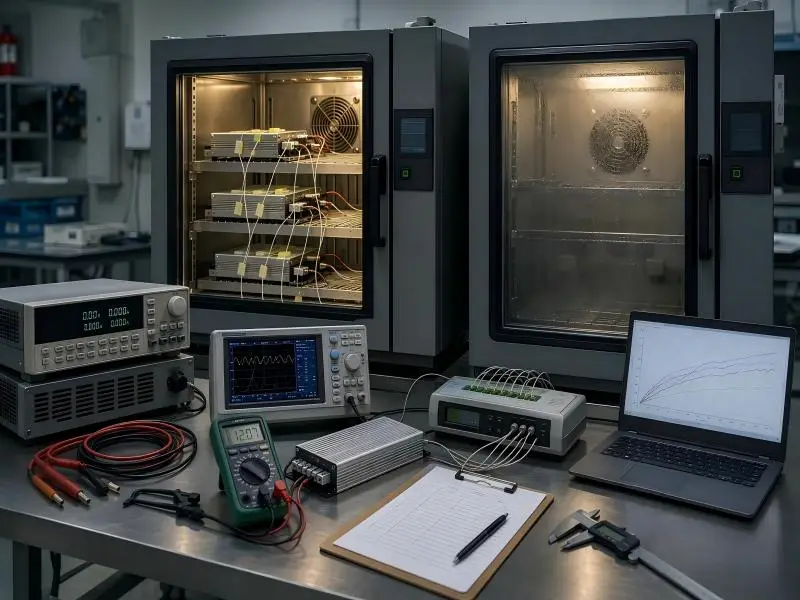
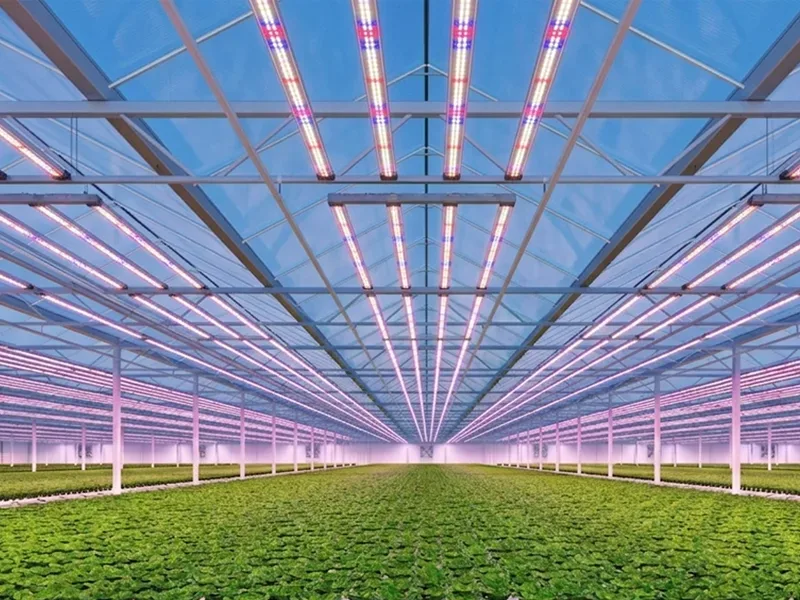
An Industrial-Grade LED Grow Light System Selection, Design & Deployment Guide for SLTMAKS.
Document Scope: This Commercial Greenhouse & Agricultural Supplemental Lighting Engineering White Paper is directed at commercial greenhouse engineering contractors, agri-tech investment institutions, large-scale commercial cultivation facility procurement decision-makers, and global bulk lighting distributors. Content covers photobiological fundamentals, engineering selection logic, system design frameworks, and industrial-grade product deployment standards — providing independent, objective technical reference for high-value procurement decisions.
Published by: sltmaks.com Technical Documentation Division
Document Version: v2.1
Applicable Sectors: Commercial glass greenhouses, multi-span plastic film greenhouses, closed-type vertical farms (PFAL), plant factories, cannabis compliance cultivation facilities
Table of Contents
Core Value Proposition & ROI Logic
The Commercial Supplemental Lighting Engineering
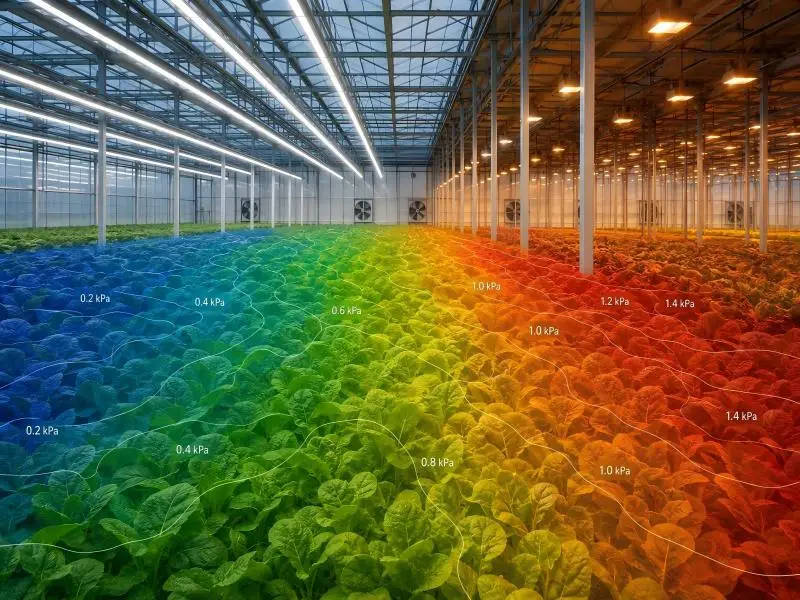
At latitudes above 45°N or below 45°S, winter natural daylight duration commonly falls below 8 hours, and PAR-range radiation intensity frequently drops to 40%–60% below the light saturation point of major commercial crops. For commercial greenhouse operators, seasonal natural light deficiency generates the following quantifiable economic losses:
Yield gaps: Leafy vegetable yields in winter typically decline 30%–55% relative to summer output; dry matter accumulation rates in fruiting crops such as tomatoes decrease by 20%–40%.
Quality inconsistency: Insufficient light leads to imbalanced sugar-to-acid ratios and suppressed anthocyanin synthesis, directly undermining premium market positioning.
Reduced asset utilization: Fixed capital depreciation continues regardless of output, increasing per-unit-area operating costs when productive capacity remains underutilized.
The core commercial value of industrial-grade LED supplemental lighting lies in converting light conditions from an uncontrollable natural variable into a precisely managed agronomic parameter, enabling uniform annual production output.
ROI Quantification Model: Typical Commercial Scenario Benchmarks
The following economic model reflects industry-published data and engineering case study ranges for commercial greenhouse operators following deployment of high-efficiency LED supplemental lighting systems:
| Parameter | Traditional HPS Systems | Industrial-Grade LED Systems | Notes |
| Fixture Efficacy (PPE) | 1.7 – 2.0 μmol/J | 2.6 – 3.2 μmol/J | LED | leads by approximately 50%–60% |
| Annual Power Consumption (per 1,000 m²) | ~450,000 kWh | ~270,000 kWh | ~40% electricity reduction |
| Radiant Heat Output | High (additional cooling required) | Low (close-proximity deployment possible) | LED reduces cooling overhead |
| Fixture Lifespan | 10,000 – 16,000 hours | 50,000 – 80,000 hours | Fewer replacements; reduced labor costs |
| Spectral Adjustability | Fixed (broad yellow-dominant spectrum) | Customizable (R:B:FR ratios adjustable) | LED enables crop-stage optimization |
| Typical Payback Period | — | 2.5 – 4.5 years | Varies by local electricity tariffs and crop value |
Note: The data ranges above represent industry-standard reference intervals. Project-specific ROI requires dedicated analysis incorporating local electricity rates, crop category, supplemental lighting duration, and facility scale. sltmaks.com technical staff can provide customized energy efficiency assessment reports for bulk procurement parties.
Global Market Trends: Macro Drivers Behind Engineering Procurement Upgrades
Rising energy costs: EU industrial electricity prices increased approximately 35%–50% on average between 2020 and 2024, making the energy-saving attributes of high-efficiency LED systems a direct competitive advantage.
Carbon footprint compliance pressure: The Netherlands, Canada, and other major agricultural export nations have introduced increasingly stringent regulations governing greenhouse gas emissions and carbon emissions.
Food security and localized supply chains: Post-pandemic supply chain restructuring has accelerated capital investment in peri-urban vertical farms and closed-environment plant factories.
Maturation of compliant cannabis cultivation markets: Legalization processes in North America, Germany, and other markets are driving large-scale procurement demand for high-intensity, precision-spectrum fixtures.
Key Supplemental Lighting Metrics & Spectrum Selection
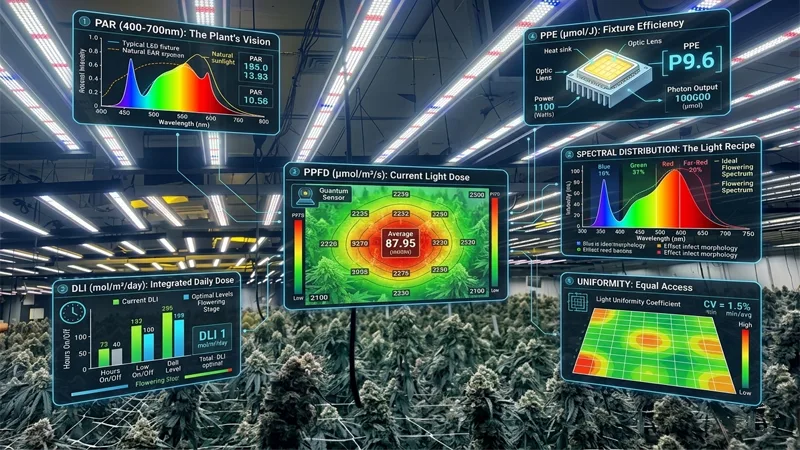
Photobiological Fundamentals: Six Critical Engineering Parameters
Supplemental lighting procurement decisions must be grounded in an accurate understanding of the following six core parameters. Misinterpretation of any single metric may result in system design errors, wasted investment, or failure to meet agronomic performance targets.
PAR (Photosynthetically Active Radiation)
Definition: Radiation within the 400–700 nm wavelength range; the photon band available for plant photosynthesis.
Engineering Significance: The primary screening dimension in fixture selection.
PPFD (Photosynthetic Photon Flux Density)
Definition: The number of PAR photons arriving at the crop canopy per unit area per unit time.
Unit: μmol/m²/s
Engineering Significance: Measures “actual light intensity delivered to the crop surface” — the core input value for agronomic design.
DLI (Daily Light Integral)
Definition: Total PAR photons received at the crop canopy over 24 hours.
Unit: mol/m²/day
Calculation: DLI = PPFD × photoperiod (seconds) ÷ 1,000,000
Engineering Significance: The definitive verification metric for confirming whether supplemental lighting meets crop growth requirements.
PPE (Photon Efficacy)
Definition: The number of PAR photons produced per joule of electrical energy consumed by the fixture.
Unit: μmol/J
Engineering Significance: The core B2B procurement metric for fixture energy efficiency, directly determining long-term operating costs. Current best-in-class industrial LED fixtures have reached up to 3.4 μmol/J using high-efficiency driver and chip combinations.
Spectral Distribution
Definition: The proportion of photon energy output distributed across individual wavelength bands.
Engineering Significance: Different crops and growth stages exhibit significantly different requirements for red light (R, 630–680 nm), blue light (B, 400–450 nm), and far-red light (FR, 700–800 nm); a targeted configuration is required.
Uniformity
Definition: The ratio of minimum PPFD to average PPFD across the crop canopy plane (min/avg).
Engineering Significance: When uniformity falls below 0.7, low-light zones become yield bottlenecks, constraining total facility output. High-quality engineering design should target uniformity ≥ 0.8.
Target PPFD & DLI Reference Table for Major Commercial Crops
| Crop Category | Target PPFD (μmol/m²/s) | Target DLI (mol/m²/day) | Photoperiod Sensitivity |
| Lettuce / Arugula | 150 – 250 | 12 – 17 | Low (note: long-day bolting risk) |
| Spinach / Baby Greens | 200 – 300 | 14 – 20 | Low |
| Tomato (Fruiting Stage) | 400 – 600 | 22 – 30 | Moderate |
| Cucumber (Vegetative Stage) | 300 – 500 | 20 – 26 | Low |
| Bell Pepper | 350 – 500 | 18 – 25 | Moderate |
| Strawberry (Flowering Stage) | 200 – 350 | 12 – 17 | High (short-day flower induction) |
| Cannabis (Vegetative Stage) | 400 – 600 | 25 – 35 | Extremely High (photoperiod governs flowering) |
| Cannabis (Flowering Stage) | 600 – 1,000 | 30 – 45 | Extremely High |
| Microgreens / Sprouts | 100 – 200 | 8 – 14 | Low |
Spectrum Recipe Selection Logic
Spectrum configuration is not a matter of “broader is better.” Selection must be based on directed crop biological responses. The following represent mainstream spectral strategies in industrial practice:
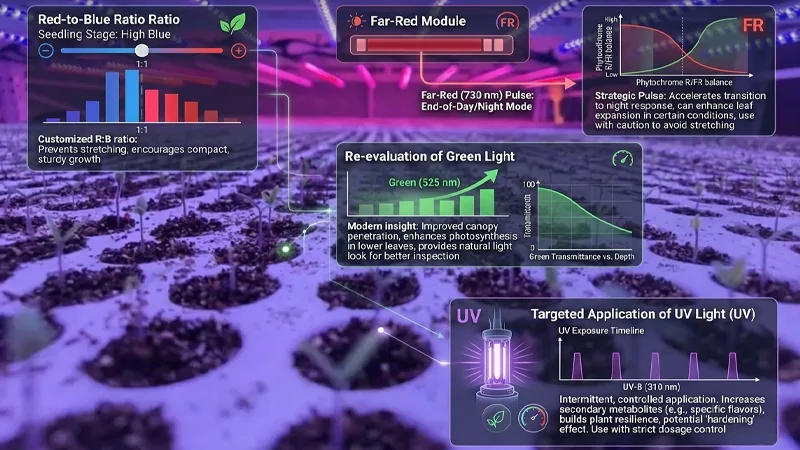
Red-to-Blue Ratio (R: B Ratio)
High blue content (R: B = 1:1 to 3:1): Promotes compact stem structure and thick leaf tissue; suited for leafy vegetable seedling stages and quality-oriented production.
High red content (R: B = 5:1 to 8:1): Maximizes photosynthetic rate; suited for high-yield-oriented vegetative growth in fruiting crops.
Strategic Application of Far-Red Light (700–750 nm)
Emerson Enhancement Effect: Far-red and red light synergy can increase photosynthetic quantum yield by approximately 10%–20%.
Morphological effects: Far-red promotes leaf area expansion (shade-avoidance elongation response), accelerating biomass accumulation in leafy crop production.
Cannabis flowering regulation: Precise far-red integration during 12-hour short-day cycles can accelerate flowering initiation.
Re-evaluation of Green Light (500–560 nm)
Green light is not “inactive.” Research indicates that green photons penetrate canopy layers to reach lower leaves. For dense-planted crops, the contribution of green light to whole-canopy photosynthesis is not negligible. Broad-spectrum (white-based) fixtures, therefore, carry an engineering advantage in densely planted leafy crop scenarios.
Targeted Application of UV Light (280–400 nm)
UV-A (315–400 nm): Significantly increases anthocyanin and flavonoid content in strawberries, tomatoes, and other crops; applied in quality-enhancement production.
Risk note: High-intensity UV exposure over extended periods accelerates degradation of fixture sealing materials. Selecting industrial-grade fixtures with UV-resistant sealing compounds is a critical procurement consideration.
Classified System Design — Greenhouses & Vertical Farms
Pre-Design Site Assessment Framework
Before any fixture selection or layout design, system design engineers must complete the following site parameter survey:
| Assessment Dimension | Data to Collect | Impact on Design |
| Geographic Location & Latitude | GPS coordinates; annual DLI distribution data | Determines supplemental lighting duration and intensity requirements |
| Facility Type & Structure | Roof transmittance; ridge height; span; column layout | Determines mounting points, hanging method, and fixture wattage |
| Target Crop & Cultivation System | Variety, planting density, crop rotation schedule | Defines target PPFD/DLI and spectrum recipe |
| Available Electrical Capacity | Main supply capacity (kVA); distribution circuit plan | Sets total fixture wattage, ceiling, and zoned control architecture |
| Environmental Control Integration | Existing HVAC, CO₂, and nutrient dosing system interface protocols | Determines dimming controller compatibility requirements |
| IP Protection Requirements | Irrigation method (overhead, aeroponic, NFT, etc.); cleaning frequency | Determines the required fixture IP rating |
Design Type 1: Single-Span & Multi-Span Glass Greenhouse Supplemental Lighting
Typical Scale: 500 m² – 10 ha
Primary Challenges: Dynamic coordination of natural and artificial light; roof steel structure mounting load limitations; high-humidity and irrigation misting environments
Recommended Design Elements:
Fixture Type: Overhead high-power LED toplighting units, single-fixture wattage 600W – 1,000W.
Mounting Height: 2.0 – 4.0 m above crop canopy (depending on rated wattage and target PPFD).
Control Strategy: Closed-loop supplemental lighting control based on outdoor PAR sensor readings; system activates automatically when natural PPFD falls below the configured threshold, minimizing unnecessary supplemental energy consumption.
IP Protection: Glass greenhouse overhead irrigation environments require a minimum fixture IP rating of IP65.
Design Target: Annual cumulative DLI ≥ 22 mol/m²/day for high-light-demand crops such as tomatoes.
Design Type 2: Multi-Span Plastic Film / Shade Net Greenhouse
Typical Scale: 1 ha – 50 ha
Primary Challenges: Film transmittance degradation over time; lower structural load capacity; significant climate variation across northern and southern regional deployments
Recommended Design Elements:
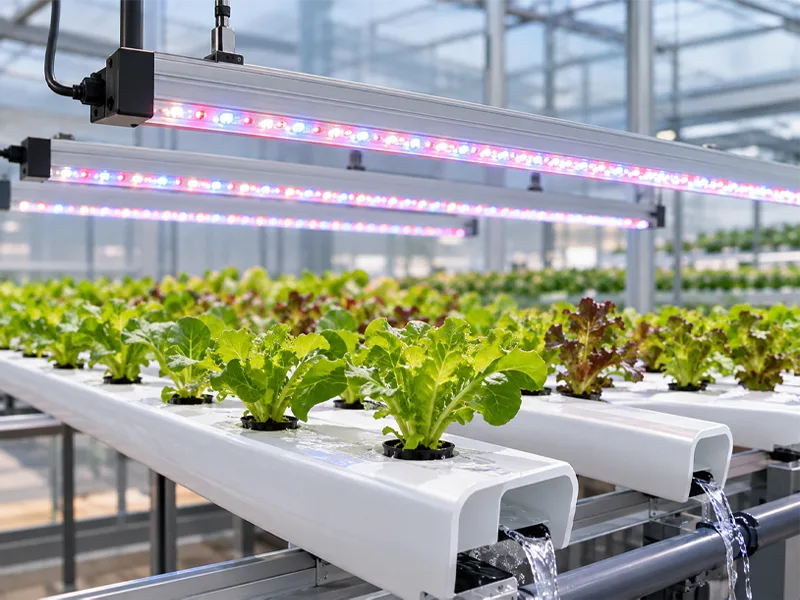
Fixture Type: Mid-power linear LED grow bars, single-unit wattage 200W – 600W, enabling more flexible layout spacing.
Array Layout: Row spacing 1.2 – 2.0 m; fixture spacing 0.8 – 1.5 m; confirmed via optical simulation software (DIALux, AGi32) against target PPFD.
IP Requirement: Internal humidity in film greenhouses typically exceeds that of glass structures, and fixtures are frequently exposed to high-pressure cleaning. IP66 or higher is recommended.
Thermal Design: Internal summer temperatures in film greenhouses can exceed 40°C. Fixtures must maintain a thermal design margin enabling continuous operation at 50°C ambient temperature.
Design Type 3: Closed Vertical Farms / Plant Factories (PFAL)
Typical Scale: 200 m² – 5,000 m² (multi-tier stacking)
Primary Characteristics: 100% artificial lighting; multi-layer vertical cultivation racks; precision environmental control; high capital density
Recommended Design Parameters:
| Design Dimension | Recommended Specification | Notes |
| Fixture Type | Ultra-slim linear LED bars (for inter-tier heights ≤ 40 cm) | Profile thickness ≤ 35 mm to preserve adequate growing layer headroom |
| Mounting Height Above Canopy | 15 – 30 cm | Requires a precise optical design to avoid center hotspots and edge underexposure |
| Target PPFD (Leafy Vegetables) | 150 – 300 μmol/m²/s | Yield gains above this threshold are minimal for leafy crops; energy costs increase linearly |
| Uniformity Target | ≥ 0.85 (min/avg) | Dense-planted leafy crops are highly sensitive to uniformity variation |
| Spectrum Recipe | Custom broad spectrum (including green) or R: B = 4:1 to 6:1 | Custom broad spectrum (including green) or R: B = 4:1 to 6:1 |
| Cooling Solution | Water-cooled or forced-air LED modules | Enclosed spaces require strict control of fixture heat input |
| Control Protocol | 0-10V / DALI / RS485 Modbus | Supports independent per-zone dimming across multiple cultivation tiers |
Vertical Farm Energy Benchmark: The electricity consumption baseline for producing 1 kg of leaf lettuce ranges from 10 – 25 kWh. High-PPE fixtures (≥ 2.8 μmol/J) represent the primary engineering lever for driving this figure into a commercially competitive range.
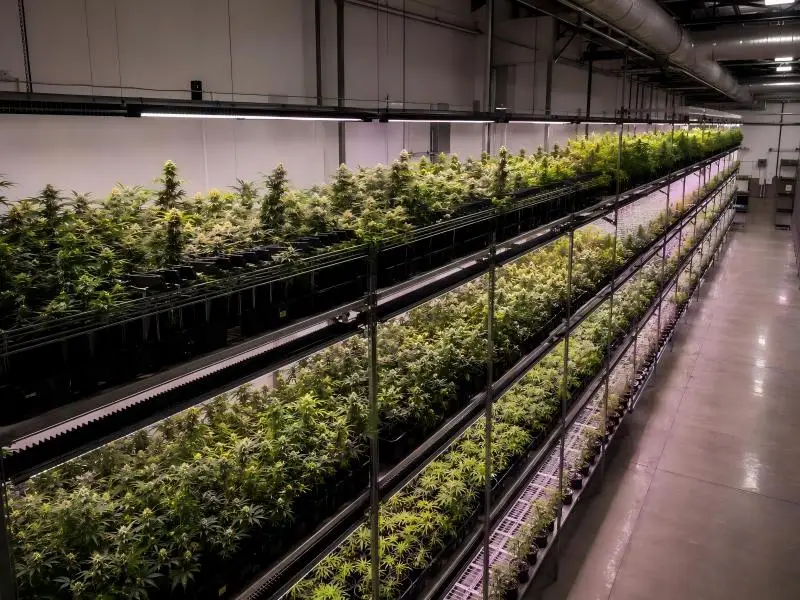
Design Type 4: Compliant Cannabis Cultivation Facilities
Commercial cannabis cultivation imposes the most demanding requirements on supplemental lighting systems among all crop categories, principally across three dimensions:
High Light Intensity Requirements
Flowering-stage PPFD targets typically range from 800 – 1,200 μmol/m²/s. Certain high-yield cultivars, when provided with adequate CO₂ supplementation (1,000 – 1,500 ppm), can sustain PPFD levels up to 1,500 μmol/m²/s without exhibiting photoinhibition.
Precision Photoperiod Control
Cannabis is a classic short-day plant. The transition from an 18-hour photoperiod (vegetative stage) to a 12-hour photoperiod (flowering stage) requires complete dark period integrity. Fixture light leakage and timing errors in control systems must be maintained within compliance-defined tolerances.
Sealing & Regulatory Compliance
Numerous North American compliant cultivation facilities require periodic facility sanitation and pressure washing. Fixture IP protection must meet **IP65 or higher**. High-humidity aeroponic facilities frequently require IP66 ratings.
SLTMAKS Industrial-Grade Product Advantages
Supply Chain Manufacturing Capabilities
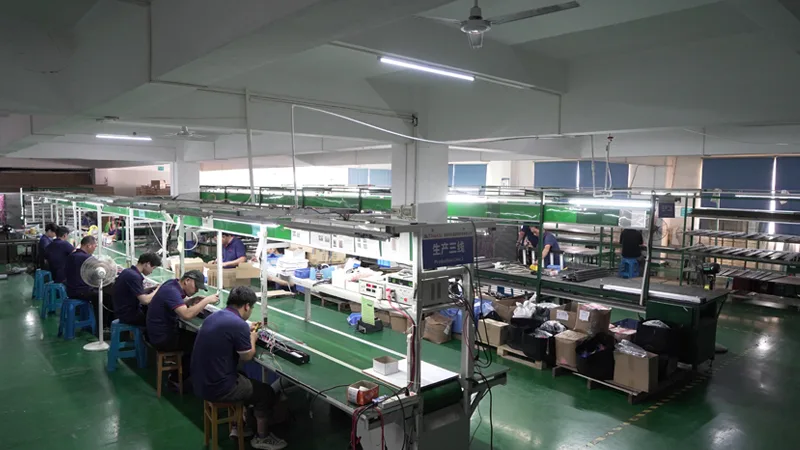
As a vertically integrated industrial-grade LED grow light manufacturer, sltmaks.com maintains the following verifiable structural capabilities at the supply chain level:
Chip-Level Sourcing Advantage
Stable direct-procurement relationships with Tier-1 packaging suppliers, including Samsung LM301 series, Osram Duris series, and Lumileds, ensure chip consistency and source traceability for bulk order batches. When greenhouse engineering contractors conduct technical specification comparisons, chip supplier qualification is a critical verification item.
In-House PCB & Thermal Module Fabrication
Internal design and production capability for Metal Core PCBs (MCPCB) ensures thermal system optimization through thermal simulation. This maintains chip junction temperatures (Tj) below 75°C under rated operating conditions, enabling an L90 lifespan target exceeding 50,000 hours.
Driver Selection & Integration
Standard configuration uses Meanwell, Inventronics, or equivalent Tier-1 brand drivers. Driver efficiency ≥ 92%; wide input voltage range (100V – 277V AC) ensures compatibility with power grid standards across North America, the EU, Southeast Asia, the Middle East, and Australia without modification.
Scalable Production Capacity
Monthly production capacity supports batch delivery of 10,000+ industrial-grade LED grow light units, meeting the lead-time requirements of large-scale multi-span greenhouse projects. Batch Quality Control Reports (Batch QC Reports) are available per order.
Custom Spectrum Services
Standardized spectrum products cannot satisfy the differentiated needs of all commercial cultivation scenarios. sltmaks.com provides the following tiered spectrum customization services:
| Service Tier | Description | Minimum Order Quantity |
| Standard Spectrum Selection | Selection from existing spectrum library (broad-spectrum white, R: B 4:1, R: B 6:1, with FR) | No minimum |
| Ratio-Adjusted Customization | Adjusting red/blue/far-red ratios within existing chip configurations | ≥ 200 units |
| Dedicated Spectrum Development | Custom SPD (Spectral Power Distribution) development for specific crops or research institutions, with laboratory test reports | ≥ 500 units |
| Tunable Spectrum | Multi-channel (R/B/W/FR) independent control within a single fixture | ≥ 100 units |
All custom spectrum products are accompanied by PPF (Photosynthetic Photon Flux) measurement reports issued by third-party laboratories, along with complete Spectral Power Distribution (SPD) curve data files.
High PPE Metrics: Industrial Energy Efficiency Benchmarks
PPE (Photon Efficacy) is the single most critical technical specification parameter in B2B bulk procurement. The following reflects the energy efficiency positioning of sltmaks.com’s primary product lines:
| Product Series Level | PPE Range | Applicable Scenarios |
| Standard Industrial Grade | 2.6 – 2.8 μmol/J | Multi-span film greenhouses; entry-level vertical farms |
| High-Efficiency Grade | 2.8 – 3.0 μmol/J | Commercial glass greenhouse toplighting; cannabis cultivation |
| Flagship High-Efficiency Grade | 3.0 – 3.2 μmol/J | Large-scale commercial plant factories; high-operating-hour facilities |
Procurement Verification Note: PPE data is only comparable when measured by a third-party NVLAP or DAkkS accredited laboratory under specified test temperatures (typically 25°C or 35°C driver board temperature). Procurement parties should require complete IES LM-79 measurement reports from suppliers rather than relying solely on specification sheet comparisons.
IP65 / IP66 Protection Ratings: Industrial Environment Compliance Standards
LED grow lights in commercial greenhouse environments face physical challenges substantially exceeding those of standard lighting applications:
– High-pressure water jet cleaning cycles (cleaning pressures reaching 100 – 300 bar)
– Nutrient solution mist spray (containing dissolved salts, creating corrosion risk for aluminum alloy housings)
– Sulfur fumigation in powdery mildew treatment (causing swelling risk in silicone sealing materials)
– Thermal fatigue in sealing components from summer high temperatures to winter rapid cooling cycles
IP Protection Rating Reference Guide
| IP Rating | Dust Protection | Water Protection | Recommended Application |
| IP54 | Partial dust ingress prevention | Splash water (any direction) | Dry greenhouses; seedling nurseries |
| IP65 | Complete dust ingress prevention | Low-pressure water jets (6.3 mm nozzle) | Overhead-irrigated glass greenhouses; standard vertical farms |
| IP66 | Complete dust ingress prevention | High-pressure water jets (12.5 mm nozzle, 100 kPa) | High-pressure wash facilities; aeroponic systems; cannabis facilities |
| IP67 | Complete dust ingress prevention | Short-term submersion (1 m, 30 min) | Specialized applications (non-standard greenhouse use) |
The sltmaks.com primary greenhouse product line is fully standardized at IP65 protection, with high-humidity specialty series reaching IP66 standard. Sealing employs a dual-component Liquid Silicone Rubber (LSR) injection molding process, providing long-term sealing reliability across an operating temperature range of -40°C to +60°C, certified to IEC 60529 standard.
Additional Engineering Specifications for B2B Procurement Reference
| Specification | sltmaks.com Standard | Engineering Value |
| Safety Certifications | CE / ETL / UL / FCC | Covers market access requirements for the EU and North American primary markets |
| Fixture Lifespan (L90) | ≥ 50,000 hours | Reduces replacement costs within a 10-year lifecycle |
| Dimming Range | 0 – 100% (flicker-free) | Supports precision control across all growth stages |
| Input Voltage Compatibility | 100V – 277V AC / 347V AC (optional) | Supports North American 347V high-voltage distribution systems |
| Operating Temperature Range | -20°C to +50°C | Covers Northern European winter lows and Middle Eastern summer highs |
| Warranty Policy | 5-year limited warranty | Aligned with fixture L90 lifespan, reduces long-term maintenance risk for bulk procurement |
| OEM / ODM Services | Brand and packaging customization supported | Meets the brand operation requirements of global bulk distributors |
Engineering Installation, Dimming Integration & Maintenance
Pre-Installation Engineering Planning: Critical Steps & Common Errors
Optical Simulation Modeling
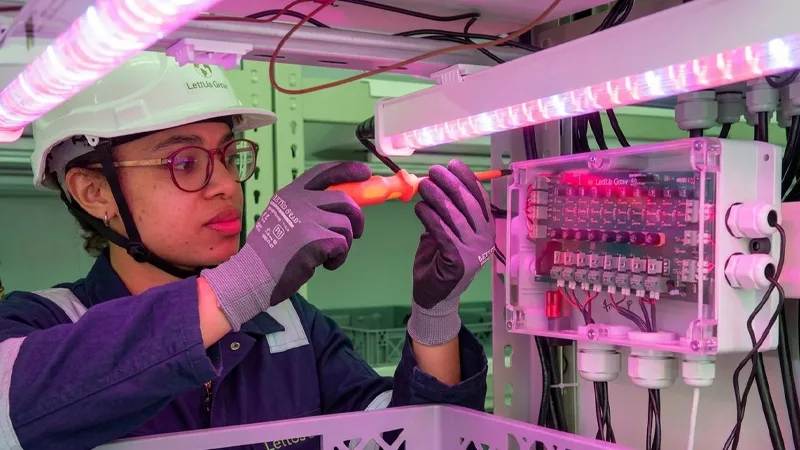
Before physical installation, system design engineers use professional lighting simulation software (DIALux Evo, AGi32, or Relux) to construct a three-dimensional greenhouse model. Target fixture IES photometric data files are imported to simulate PPFD distribution maps and uniformity values across the canopy plane. This step identifies layout feasibility before hardware procurement, eliminating costly rework.
Suspension System Selection
Fixed mounting: Suitable for single-tier cultivation, simple installation, and low cost.
Adjustable-height suspension (wire rope + chain block): Appropriate for scenarios where crop canopy height changes with growth stage (tomatoes, cucumbers); allows fixture height adjustment as crops grow, maintaining constant PPFD.
Rail-mounted mobile systems: Suitable for large glass greenhouses; enables fixture movement along cultivation rows, increasing system flexibility.
Common Installation Errors and Mitigation Measures
| Error Type | Observed Manifestation | Mitigation Measure |
| Over-reliance on theoretical calculation | Actual PPFD deviates > 15% from simulated values | Conduct on-site verification using quantum sensors after installation |
| Insufficient uniformity | PPFD in aisle zones is significantly lower than in cultivation zones | Optimize fixture spacing; add supplemental side-lighting in edge zones |
| Undersized wiring | Conductor heating; voltage drop exceeding specifications | Calculate conductor cross-section at 125% of rated current; increase wire gauge for long runs |
| Neglected ventilation and thermal management | Excessive temperature rise in high-fixture-density zones | Ensure adequate air circulation clearance around fixtures; verify HVAC cooling headroom |
Dimming Control Architecture: Three-Tier Control Framework
Fixture-Level Dimming Interface
Industrial-grade LED grow lights are standardized with one of the following dimming interfaces:
0-10V Analog Signal: Low cost; broad compatibility; appropriate for small-to-medium scale projects.
DALI-2 (Digital Addressable Lighting Interface): Supports individual fixture addressing and status feedback; suited for large multi-zone control deployments.
RS485 Modbus RTU/TCP: Suited for integration with existing agricultural PLCs or SCADA systems.
PWM (Pulse Width Modulation): Applicable to specific driver configurations; high-frequency PWM (≥ 1 kHz) prevents disruption to crop photoperiod physiological responses.
Zone Controller Layer
The greenhouse is divided into multiple lighting zones, each managed by an independent controller to achieve:
– Closed-loop adaptive supplemental lighting based on PAR sensor readings
– DLI integral management with presets per crop growth stage
– Sequence control (photoperiod on/off timing)
Central Farm Management System (FMS)
Integration with greenhouse climate computers (Priva, Ridder, Argus, etc.) enables coordinated control of supplemental lighting alongside temperature, CO₂, humidity, and nutrient dosing systems. Typical integration logic examples:
– When the outdoor radiation sensor detects clear-sky PAR > 400 μmol/m²/s, the supplemental lighting system automatically reduces output to 30% power.
– When CO₂ concentration falls below 600 ppm, supplemental lighting power is automatically reduced (additional light provides no photosynthetic benefit when CO₂ is the limiting factor).
– During high-temperature alert periods (internal temperature > 28°C), supplemental lighting power is automatically de-rated to reduce thermal load.
Routine Maintenance Standards: Sustaining Full-Lifecycle Energy Efficiency
Although LED grow lights are solid-state light sources, two primary performance degradation mechanisms occur during extended service: lumen depreciation and spectral shift. A scientifically structured maintenance program effectively decelerates degradation and safeguards ROI target achievement.
| Maintenance Task | Recommended Frequency | Execution Guidelines |
| Fixture surface cleaning (outer lens/diffuser) | Every 4 – 8 weeks | Use a soft cloth with clean water or dilute neutral detergent; avoid corrosive chemicals |
| On-site PPFD spot measurement (quantum sensor) | Every 6 months | Compare against initial post-installation measurements; investigate causes when deviation exceeds 10% |
| Driver operating temperature inspection | Every 6 months | Use infrared thermal imaging to inspect driver units and PCB hot spots; abnormal hot spots indicate latent failure risk |
| Sealing component visual inspection | Every 12 months | Check silicone gaskets for aging, cracking, or deformation; initiate warranty replacement as required |
| Control system firmware updates | Per the manufacturer’s release schedule | Update dimming control protocol firmware; address known communication compatibility issues |
| Full-facility PPFD system mapping | Every 2 years | Cross-reference with crop performance data to assess whether fixture layout spacing adjustment is warranted |
Lumen Depreciation Reference Benchmarks
(Industrial-grade LED, under normal maintenance conditions):
– At 10,000 operating hours: Lumen maintenance approximately 97% – 99% (L97 – L99)
– At 25,000 operating hours: Lumen maintenance approximately 93% – 96%
– At 50,000 operating hours: Lumen maintenance approximately 90% (L90 design target)
Beyond the L90 threshold, fixtures do not fail immediately but enter an accelerated depreciation phase, at which point a full-batch replacement evaluation is warranted. Industrial-grade products utilizing high-quality chip packages and optimized thermal design consistently demonstrate real-world L90 lifespans that meet or exceed rated specifications.
Engineering Support & Service Interface for Bulk Procurement Parties
For greenhouse engineering contractors, bulk distributors, and large-scale commercial cultivation facilities, sltmaks.com provides the following technical support services:
Custom optical simulation reports: DIALux simulation reports based on project site parameters, including PPFD distribution maps, uniformity analysis, and DLI estimation.
Sample validation batches: Small-quantity sample batches available before bulk orders, supporting third-party laboratory testing to verify PPE, spectrum, and IP protection specifications.
Batch quality documentation packages: Each order batch includes LM-79 measurement reports, IP protection certification documents, and driver compliance documentation.
OEM/ODM technical interface: Supports branded product development for global bulk distributors, with NDA-protected technical specification sharing.
Complete technical documentation library: Full installation manuals, dimming controller wiring diagrams, control protocol parameter sheets, and IES photometric data files available for direct use by engineering design teams.
Appendix: Key Terms & Abbreviations Reference
| Term / Abbreviation | Full Form | Definition |
| PAR | Photosynthetically Active Radiation | Light usable for photosynthesis (400–700 nm) |
| PPFD | Photosynthetic Photon Flux Density | PAR photon density at canopy level (μmol/m²/s) |
| DLI | Daily Light Integral | Total daily PAR accumulation (mol/m²/day) |
| PPE | Photon Efficacy | PAR photons produced per joule of electricity (μmol/J) |
| SPD | Spectral Power Distribution | Photon energy distribution across wavelengths |
| R: B Ratio | Red-to-Blue Ratio | Ratio of red to blue photon output |
| FR | Far-Red | Far-red light band (700–800 nm) |
| PFAL | Plant Factory with Artificial Lighting | Fully enclosed artificial-light plant factory |
| IP | Ingress Protection | Protection rating standard (IEC 60529) |
| LM-79 | IESNA LM-79 | Standard for LED fixture photometric measurement |
| L90 | Lumen Maintenance L90 | Operating lifespan at which the lumen output = 90% of the initial |
| DALI | Digital Addressable Lighting Interface | Digital addressable lighting control protocol |
| HPS | High-Pressure Sodium | High-pressure sodium lamp |
| MCPCB | Metal Core PCB | Aluminum-substrate printed circuit board |
| OEM/ODM | Original Equipment/Design Manufacturer | Contract manufacturing / original design manufacturing |
Content in this white paper is compiled from publicly available academic literature, industry engineering practices, and manufacturer technical documentation. Data ranges reflect current industry-standard benchmarks. Parameters for specific engineering projects must be calculated and verified by qualified professional engineers based on actual site conditions.
© sltmaks.com. All rights reserved. Citation or reproduction requires attribution.
FAQ
What is the core ROI logic for replacing traditional HPS with industrial-grade LED systems?
The transition is driven by quantifiable economic gains in three areas:u003cbru003eu003cstrongu003eEnergy Efficiency:u003c/strongu003e Industrial LEDs offer a Photon Efficacy (PPE) of u003cstrongu003e2.6 – 3.2 μmol/Ju003c/strongu003e, reducing electricity consumption by approximately u003cstrongu003e40%u003c/strongu003e compared to HPS.u003cbru003eu003cstrongu003eOperational Lifespan:u003c/strongu003e LEDs last u003cstrongu003e50,000 – 80,000 hoursu003c/strongu003e (L90), significantly higher than the 10,000 – 16,000 hours of HPS, which slashes replacement and labor costs.u003cbru003eu003cstrongu003eYield Consistency:u003c/strongu003e LEDs convert light from an uncontrollable natural variable into a precise parameter, preventing the u003cstrongu003e30%–55% yield dropsu003c/strongu003e typically seen in winter.
Which technical metrics are most critical for bulk procurement decisions?
Beyond simple wattage, procurement parties should focus on:u003cbru003eu003cstrongu003ePPFD (Photosynthetic Photon Flux Density):u003c/strongu003e The actual light intensity reaching the crop canopy.u003cbru003eu003cstrongu003eDLI (Daily Light Integral):u003c/strongu003e The total photons delivered over 24 hours; this is the primary metric for meeting biological growth targets.u003cbru003eu003cstrongu003ePPE (Photon Efficacy):u003c/strongu003e The efficiency of converting Joules to photons (target u003cstrongu003e≥ 2.8 μmol/Ju003c/strongu003e for high-efficiency grades).u003cbru003eu003cstrongu003eUniformity:u003c/strongu003e A ratio of u003cstrongu003e≥ 0.8u003c/strongu003e is recommended to prevent yield bottlenecks in low-light zones.
How do IP protection requirements differ across cultivation environments?
Industrial environments impose heavy stress on fixtures. The white paper recommends:u003cbru003eu003cstrongu003eIP65:u003c/strongu003e Standard for overhead-irrigated glass greenhouses and vertical farms (dust-tight and protected against low-pressure water jets).u003cbru003eu003cstrongu003eIP66:u003c/strongu003e Required for facilities using u003cstrongu003ehigh-pressure wash-downsu003c/strongu003e, aeroponic systems, or cannabis cultivation where humidity and cleaning frequency are high.u003cbru003eu003cstrongu003eMaterial Integrity:u003c/strongu003e Fixtures must use high-quality seals (like LSR) to resist degradation from u003cstrongu003esulfur fumigationu003c/strongu003e and nutrient solution corrosion.
Can the spectrum be customized for specific commercial crops?
u003cstrongu003eHigh Blue (R: B 1:1 – 3:1):u003c/strongu003e For compact stem structure and leafy vegetable seedling stages.u003cbru003eu003cstrongu003eHigh Red (R: B 5:1 – 8:1):u003c/strongu003e For maximizing photosynthetic rates in high-yield vegetative growth.u003cbru003eu003cstrongu003eFar-Red (700–750 nm):u003c/strongu003e Used to trigger the u003cstrongu003eEmerson Enhancement Effectu003c/strongu003e (increasing yield by 10–20%) or to accelerate flowering in cannabis.
How does the lighting system integrate with existing Greenhouse Management Systems?
Modern industrial LED systems utilize a three-tier control framework:u003cbru003eu003cstrongu003eInterface Level:u003c/strongu003e Standardized 0-10V, DALI-2, or RS485 Modbus protocols.u003cbru003eu003cstrongu003eAdaptive Dimming:u003c/strongu003e Systems can use u003cstrongu003ePAR sensorsu003c/strongu003e to automatically dim LEDs when natural sunlight is sufficient, minimizing energy waste.u003cbru003eu003cstrongu003eClimate Integration:u003c/strongu003e Lighting can be linked to climate computers (e.g., Priva, Ridder). For example, if CO₂ levels drop or temperatures exceed thresholds, the lights automatically de-rate to maintain biological balance and reduce thermal load.u003cbru003eu003cbru003eu003cbru003eu003cbru003e