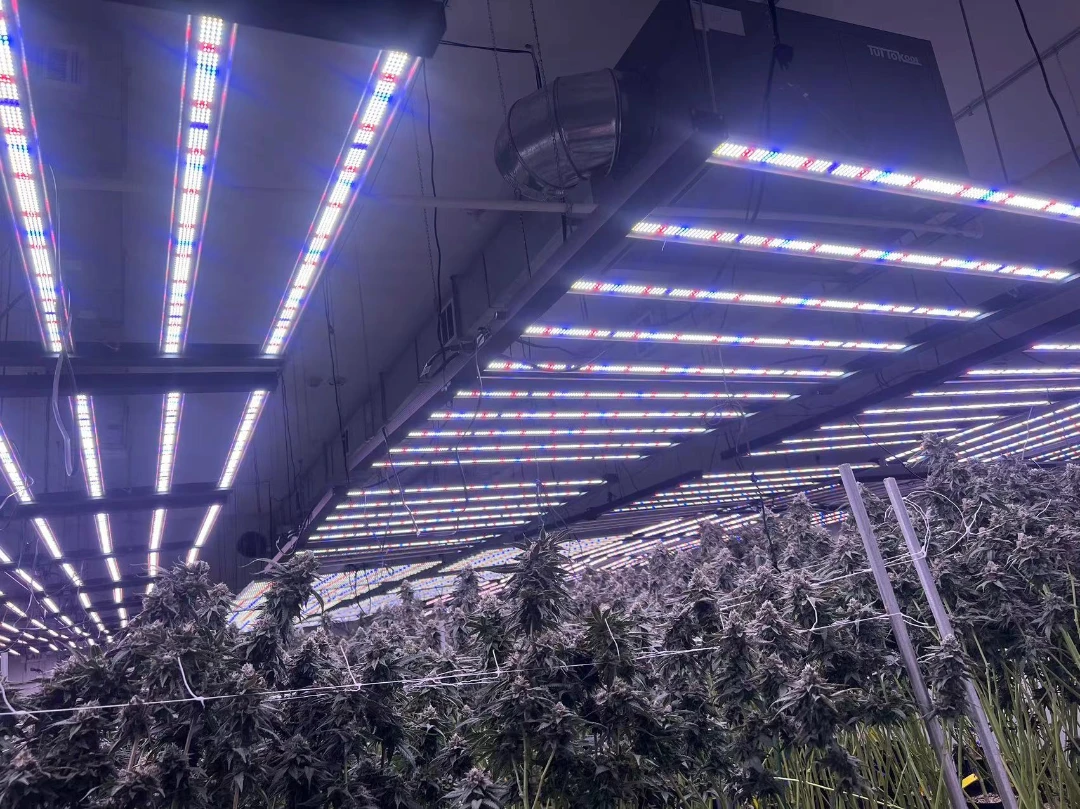
Whether you’re growing herbs on a windowsill, running a 4×4 grow tent, or managing a small vertical farm, the indoor LED plant grow light is now the heart of your setup. Done right, it lets you grow fresh food, flowers, and lush houseplants all year round—no matter how dark your climate or how small your space is.
In this guide, we’ll walk through coverage, hanging height, and practical tips so you can get the most out of your indoor LED plant grow light. We’ll combine scientific best practices from leading horticulture research with the real-world experience behind SLTMAKS professional LED grow lights, giving you a clear, actionable framework instead of guesswork.
Table of Contents
Understanding Indoor LED Plant Grow Light Basics
PAR, PPFD, and DLI in Simple Terms
Before talking about coverage and hanging height, it helps to understand a few key lighting concepts you’ll see in professional specs:
- PAR (Photosynthetically Active Radiation) – The range of light (400–700 nm) plants use for photosynthesis.
- PPFD (Photosynthetic Photon Flux Density) – How many useful light particles (photons) hit each square meter every second, measured in µmol/m²/s. Think of this as instant brightness for plants.
- DLI (Daily Light Integral) – The total amount of PAR your plants receive in a full day, measured in mol/m²/day. It combines intensity + hours of light.
University and extension resources now commonly recommend designing grow setups based on PPFD and DLI, not just watts or lumens, because those metrics describe how much light your plants actually use instead of how bright it looks to human eyes.
When you choose an indoor LED plant grow light from SLTMAKS, you’ll see values like PPF, PPFD maps, and recommended hanging heights—these numbers are your roadmap for dialing in coverage.
Spectrum: Why Full Spectrum Matters
Plants don’t just need “bright” light; they respond differently to each color:
- Blue light (around 400–500 nm) encourages compact growth and strong leaves.
- Red light (around 600–700 nm) drives flowering and fruiting.
- Far-red and a bit of UV can influence morphology and secondary metabolites (aroma, color, etc.).
Research from NASA and other groups has shown that carefully tuned red + blue + white LED combinations can grow plants efficiently even in space, proving how effective LED technology is for plant growth.
Modern SLTMAKS indoor LED plant grow lights use full-spectrum LEDs with enhanced red and optional UV/IR channels, giving your plants the same kind of broad, balanced spectrum they’d see under natural sunlight—optimized for yield and quality.
Wattage, Efficacy, and Real-World Performance
In the HID era, growers often judged fixtures by watts. With LEDs, wattage alone is no longer a good indicator of performance. What matters more is:
- Efficacy (µmol/J) – How many plant-useable photons you get per watt.
- Total PPF (µmol/s) – Total output.
- PPFD map – How evenly the light is distributed over your grow area.
A 600–800 W high-efficiency SLTMAKS bar-style fixture can comfortably replace a much higher-wattage HID while using less power and producing less heat, thanks to high-efficiency diodes (such as Samsung chips) and optimized optics.
Coverage: How Much Area Can One Indoor LED Plant Grow Light Cover?
Step 1 – Match Light Size to Grow Area
When planning coverage, always start with the footprint of your grow space:
- Small hobby grow: 2×2 ft or 2×3 ft
- Standard tent: 3×3 ft or 4×4 ft
- Larger tent / grow room: 4×8 ft, multiple racks, or vertical shelves
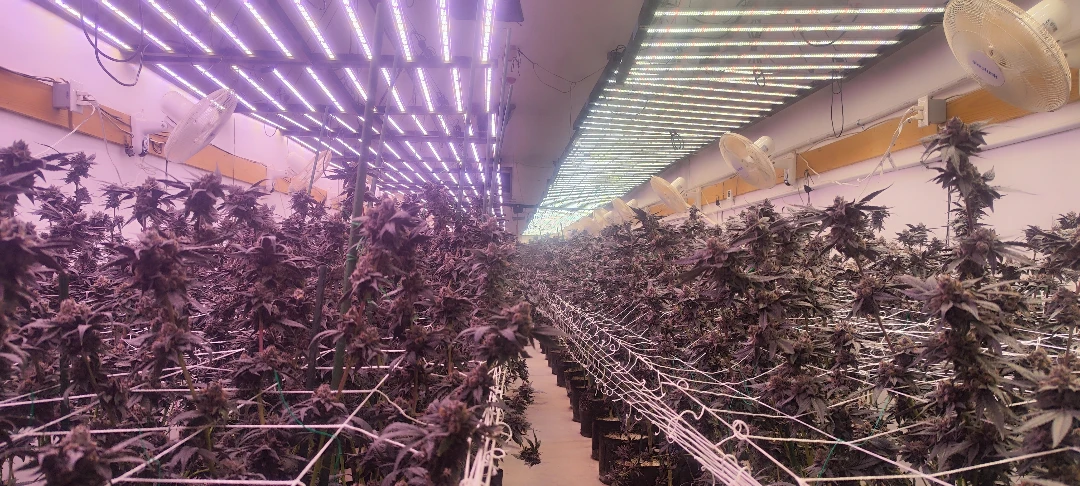
Most indoor LED plant grow lights are designed around these standard footprints. For example, SLTMAKS bar fixtures are optimized for 4×4, 4×6, and 4×8 ft areas, with bar spacing and optics tuned to spread light evenly across the full canopy.
As a simple rule of thumb:
- Leafy greens/herbs/houseplants
- 2×2 ft: 100–200 W high-efficiency LED
- 3×3 ft: 200–300 W
- 4×4 ft: ~400–500 W
- Highlight fruiting crops (tomatoes, peppers, cannabis)
- 2×2 ft: ~200 W+
- 3×3 ft: ~300–400 W
- 4×4 ft: ~500–700 W
These numbers assume modern LED efficacy (2.5–3.0 µmol/J). Always check the manufacturer’s recommended coverage and PPFD map for your specific indoor LED plant grow light.
Step 2 – Use PPFD and DLI Targets, Not Watts Alone
Different plants need different PPFD and DLI levels:
- Low-light foliage houseplants:
- DLI: ~3–6 mol/m²/day
- Typically modest PPFD, long hours (12–16 h).
- Leafy greens & herbs:
- Research suggests PPFD around 200–300 µmol/m²/s can produce good yields with efficient resource use.
- Fruiting crops / high-light plants:
- Often aim for 400–800 µmol/m²/s PPFD for strong growth and yield.
Once you know your target PPFD range, look at the PPFD maps provided by SLTMAKS for each model. Those maps show how much light reaches each point in a 2×2, 3×3, or 4×4 ft area at a specific hanging height.
That’s why a well-designed indoor LED plant grow light from SLTMAKS will include:
- PPFD at multiple hanging heights
- Coverage recommendations for veg and bloom
- Suggested dimming levels to fine-tune DLI
Step 3 – Example Coverage Plans for Common Grow Spaces
Example 1 – 2×2 ft herb and salad garden
- Target PPFD: 200–300 µmol/m²/s
- Setup: 150–200 W SLTMAKS full-spectrum fixture
- Hanging height: 14–18 in above canopy, dimmed as needed
- Photoperiod: 14–18 h/day (to reach target DLI)
Example 2 – 4×4 ft mixed vegetable garden
- Target PPFD: 300–500 µmol/m²/s
- Setup: 480–720 W SLTMAKS bar-style indoor LED plant grow light
- Hanging height: 12–18 in for veg, 8–14 in for fruiting plants (with proper dimming)
- Photoperiod: 14–16 h/day for leafy greens, 12–16 h/day for fruiting crops
Example 3 – 4×8 ft high-intensity flowering space
- Target PPFD: 600–900 µmol/m²/s (advanced growers)
- Setup: Two high-power SLTMAKS fixtures (e.g., 1000–1300 W class) spaced over the 4×8 area
- Hanging height: 8–14 in, dimmed to maintain target PPFD and avoid light stress
- Photoperiod: 12/12 for flowering crops
In every case, you balance fixture size, hanging height, dimming level, and photoperiod to hit your PPFD and DLI targets.
Hanging Height: Getting the Distance Right
How Distance Changes Intensity and Coverage
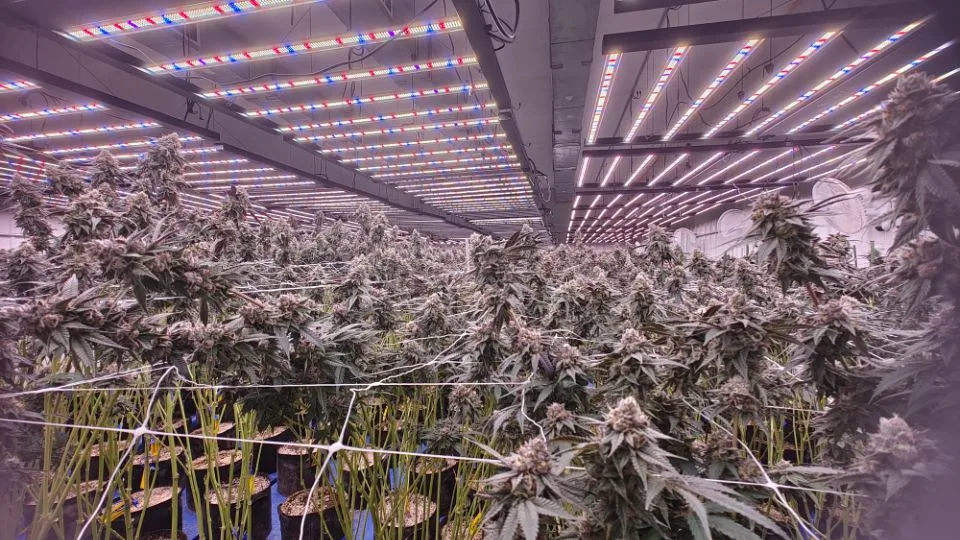
With any indoor LED plant grow light, the height above the canopy affects:
- Intensity – Closer = higher PPFD; farther = lower PPFD
- Uniformity – Closer = more “hot spots”; farther = more even, but weaker coverage
In simple terms, when you double the distance, intensity drops dramatically. For bar-style SLTMAKS fixtures, we typically recommend starting higher and lowering the light gradually as plants grow and adapt.
Recommended Hanging Heights by Growth Stage
Every plant and fixture is slightly different, but here’s a practical starting point for a modern full-spectrum SLTMAKS indoor LED plant grow light:
- Seedlings & clones
- Height: 20–30 in (50–75 cm) above the canopy
- PPFD: ~100–200 µmol/m²/s
- Photoperiod: 16–20 hours per day
- Vegetative growth
- Height: 14–24 in (35–60 cm)
- PPFD: ~200–400 µmol/m²/s for most veggies and houseplants
- Photoperiod: 14–18 hours per day
- Flowering/fruiting
- Height: 8–16 in (20–40 cm), adjusted with dimming
- PPFD: ~400–800+ µmol/m²/s (depending on crop and experience level)
- Photoperiod: typically 12 hours per day for photoperiod-sensitive crops
Always watch your plants: drooping, bleaching, and crisp leaves usually mean too much light or too close; stretching and pale leaves often indicate too little light or too far.
Adjusting Height with Dimming for Finer Control
SLTMAKS fixtures include 0–100% dimming, so you don’t have to rely on height adjustment alone. A good approach is:
- Set a safe starting height (e.g., 24 in / 60 cm).
- Measure or estimate PPFD using a meter or the manufacturer’s PPFD map.
- Use the dimmer to bring PPFD into the right range for your plant stage.
- As plants grow closer to the light, lower intensity or raise the fixture slightly to keep PPFD stable.
Using both height and dimming gives you much smoother control over plant response and helps you avoid stress.
Light Schedules and Intensities for Common Indoor Plants
Leafy Greens and Herbs
Leafy greens like lettuce, kale, basil, and cilantro love consistent, moderate light:
- PPFD: ~200–300 µmol/m²/s
- Photoperiod: 14–18 hours per day
- DLI target: Roughly 10–17 mol/m²/day
Research on indoor leafy vegetables shows that moderate PPFD with long photoperiods can optimize yield while using energy efficiently—exactly the kind of environment SLTMAKS indoor LED plant grow lights can create in small spaces and vertical farms.
Fruiting and Flowering Crops
Tomatoes, peppers, strawberries, and flowering ornamentals usually need more light:
- PPFD: 400–800 µmol/m²/s (sometimes higher for advanced growers)
- Photoperiod:
- Veg stage: 16–18 hours
- Flowering/fruiting: 12–16 hours, depending on crop
- DLI target: Often 20+ mol/m²/day
SLTMAKS high-power bar fixtures are designed for this kind of demanding use, with strong red output and optional UV/IR channels to support flowering, color, and taste.
Houseplants and Ornamentals
Most common houseplants are foliage plants adapted to understory or indirect light in nature:
- PPFD: Often, 50–150 µmol/m²/s is enough
- Photoperiod: 10–14 hours
- DLI: Around 3–10 mol/m²/day for most foliage types
For houseplants, your indoor LED plant grow light doesn’t need to run at full power. You can dim SLTMAKS fixtures or hang them higher to create gentle, even light that keeps plants compact and healthy without burning them.
Practical Setup Tips for Your Indoor LED Plant Grow Light
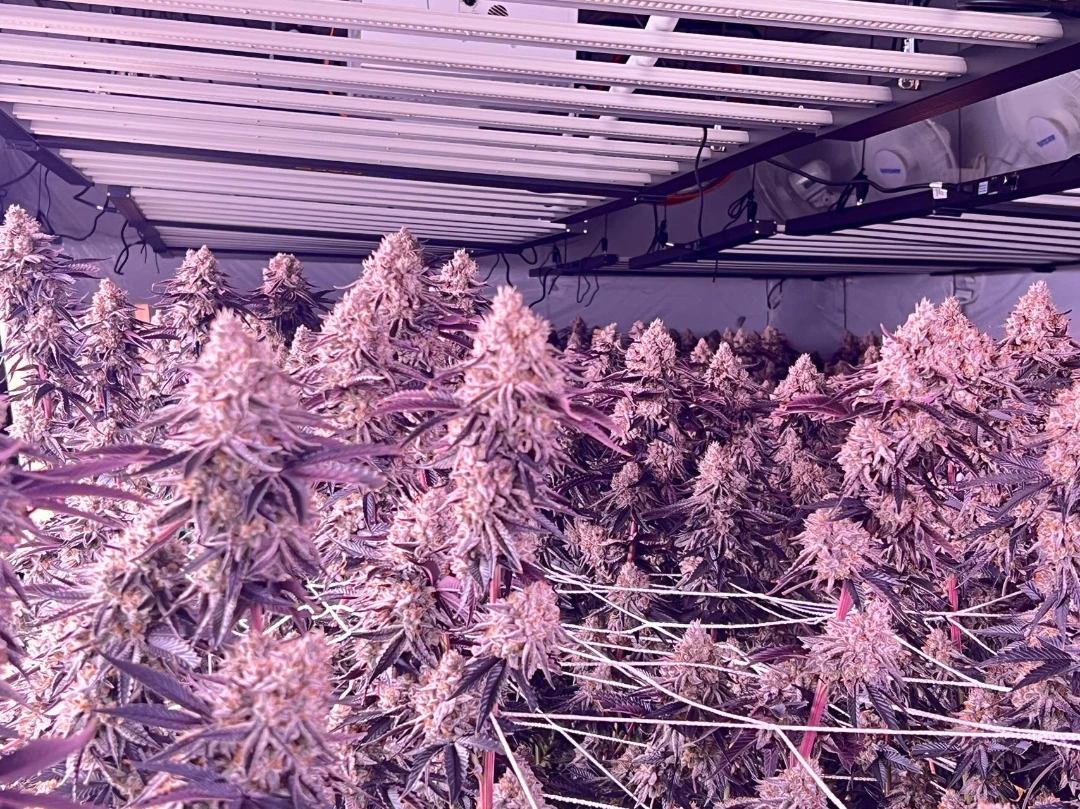
Choose the Right Room and Environment
Light is critical, but it isn’t the only factor:
- Temperature – Most indoor crops like 18–26 °C (64–79 °F).
- Humidity – Leafy greens often like 50–70% RH; houseplants can tolerate wider ranges.
- Airflow – Gentle circulation prevents hot spots, disease, and weak stems.
LEDs like SLTMAKS produce far less radiant heat than HID lights, so leaf surfaces stay cooler—but you still need good airflow and basic environmental control for best results.
Optimize Reflection and Uniformity
To get the most from your indoor LED plant grow light:
- Use white or reflective walls, Mylar, or grow tents to bounce stray photons back to the canopy.
- Avoid dark surfaces that absorb light.
- Position fixtures so the bars are perpendicular to the longest side of your grow area for better uniformity.
These simple steps can significantly boost your effective DLI without increasing power consumption.
Safety, Heat, and Noise
Quality indoor LED plant grow lights like SLTMAKS are designed for safe, continuous operation, but good practice includes:
- Mounting fixtures securely to stable supports.
- Keeping drivers and power supplies away from standing water.
- Ensuring adequate ventilation around the light and driver.
SLTMAKS bar fixtures are fanless and low-noise, making them suitable even for grow rooms adjacent to living spaces.
Common Mistakes to Avoid with Indoor LED Plant Grow Lights
Mistake 1 – Relying on Watts and Ignoring PPFD
Two 600 W lights can be completely different in real-world performance. Lower-quality fixtures may waste much of their power as heat or poorly directed light. Instead of shopping by watts, compare:
- PPFD maps
- Efficacy (µmol/J)
- Spectrum and coverage recommendations
SLTMAKS publishes detailed specs so you can design your grow around real, plant-relevant numbers.
Mistake 2 – Mounting Too High or Too Low
Hanging your indoor LED plant grow light too high leads to:
- Weak PPFD
- Stretchy plants
- Lower yields
Hanging too low leads to:
- Light burn
- Bleached leaves
- Stress and reduced growth
Always start with the manufacturer’s suggested height and adjust based on plant feedback and, ideally, PPFD measurements.
Mistake 3 – Ignoring Photoperiod and DLI
Even with perfect PPFD, your plants may struggle if the daily light integral is off. Too short a photoperiod = not enough total light; too long can waste energy or stress photoperiod-sensitive crops.
Universities and horticultural experts increasingly recommend designing indoor lighting using DLI as the key metric, ensuring crops receive enough cumulative light each day.
SLTMAKS fixtures make DLI management easy: combine dimming + timers to deliver precise light “recipes” for different crops.
Mistake 4 – Forgetting the Rest of the Environment
Light is powerful, but:
- If nutrients are off, plants can’t use all that energy.
- If CO₂, temperature, or water are limiting, extra light may not improve yield and might cause stress.
Think holistically: your indoor LED plant grow light is the engine, but it still needs fuel (nutrients), air (CO₂ and airflow), and comfort (temperature/humidity) to run at full potential.
Why Choose SLTMAKS Indoor LED Plant Grow Light Solutions
Professional Full-Spectrum Design
SLTMAKS focuses solely on LED grow lights for plants, combining years of R&D with real-world grower feedback. Our fixtures use:
- High-efficacy Samsung and other top-tier diodes
- Full-spectrum white with enhanced 660 nm red, optional UV, and IR
- Tuned spectrums for vegetables, fruit, and specialty crops
This means your indoor LED plant grow light isn’t just bright—it’s optimized for fast growth, strong morphology, and high-quality harvests.
Coverage-Optimized Designs for Real Grow Spaces
SLTMAKS bar lights are engineered for real-world coverage:
- 4×4 ft, 4×6 ft, 4×8 ft and other footprints
- Even PPFD distribution across the entire canopy
- Foldable designs for easy shipping, installation, and storage
PPFD maps are provided so you can confidently plan how many fixtures you need and what hanging heights will work best.
Global Support, Fast Delivery, and OEM/ODM
From a small hobby grows to commercial projects, SLTMAKS offers:
- Wholesale pricing and OEM/ODM customization
- Fast delivery from local warehouses and international logistics hubs
- A 3-year warranty and responsive technical support
If you’re planning a new grow room or upgrading from older lighting technologies, our team can help you translate your coverage and yield goals into a specific indoor LED plant grow light solution.
How to Choose the Right SLTMAKS Indoor LED Plant Grow Light
Step-by-Step Selection Checklist
Use this simple checklist to narrow down the right fixture:
- Define your grow area
- Length × width of your tent, rack, or room.
- List your crops and goals
- Leafy greens, herbs, houseplants, or high-light fruiting crops?
- Choose your intensity range
- Houseplants: low to medium PPFD
- Greens/herbs: medium PPFD
- Fruiting crops: medium to high PPFD
- Match an SLTMAKS model to your footprint
- For example, a SLTMAKS bar fixture tailored for a 4×4 or 4×8 area.
- Plan hanging height and dimming
- Use manufacturer recommendations as your starting point.
- Set your schedule (photoperiod)
- Use timers to lock in consistent light hours.
- Check your power and heat budget
- Ensure your circuit and ventilation can handle the total load.
Example Buying Scenarios
Scenario A – Beginner balcony grower
- Space: 2×2 ft rack
- Crops: Herbs and salad greens
- Choice: Compact SLTMAKS indoor LED plant grow light ~150–200 W
- Setup: 16 h/day, moderate PPFD, hanging 18–24 in above canopy
Scenario B – Houseplant collector
- Space: 3×6 ft shelf with multiple levels
- Crops: Foliage houseplants and rare tropicals
- Choice: Several slim SLTMAKS bars or under-canopy lights per shelf
- Setup: Low to moderate PPFD, higher mounting, 12–14 h/day
Scenario C – Advanced 4×8 ft vegetable & fruit grower
- Space: 4×8 ft tent
- Crops: Tomatoes, peppers, leafy greens
- Choice: Two high-power SLTMAKS bar fixtures designed for 4×4 or 4×6 coverage each
- Setup: 14–18 h/day veg, 12–16 h/day fruiting, PPFD tailored per zone
When to Contact the SLTMAKS Team
If you’re unsure about:
- How many fixtures do you need
- Which model will hit your target PPFD and DLI
- How to design a multi-tier or vertical system
…simply reach out to the SLTMAKS team with your room dimensions, crop list, and goals. We’ll help you build a customized indoor LED plant grow light plan that balances performance, budget, and long-term scalability.
Final Thoughts: Turn Any Space into a Productive Indoor Garden
A well-chosen indoor LED plant grow light turns almost any space—spare room, basement, garage, or corner of your living room—into a reliable, year-round garden.
By understanding:
- How coverage relates to your grow area
- How hanging height and dimming shape PPFD and DLI
- How to set light schedules for different crops
- And how to avoid common mistakes
…you can grow healthier plants, bigger yields, and better quality with less trial and error.
SLTMAKS brings together high-efficiency hardware, carefully tuned spectra, and real-world horticulture know-how to give you indoor LED plant grow light solutions you can trust—whether you’re a beginner grower or running a serious operation.
Ready to upgrade your lighting and unlock your plants’ full potential?
Explore SLTMAKS indoor LED plant grow lights, choose the model that matches your space, and start growing smarter, brighter, and more sustainably today.
FAQ
What is an Indoor LED Plant Grow Light?
An indoor LED plant grow light is a special kind of light that helps plants grow indoors. It provides the right type of light that plants need to make food through a process called photosynthesis. These lights come in different styles and sizes to fit various spaces, helping you grow vegetables, herbs, and flowers even when there isn’t enough sunlight.
How do I know how high to hang my grow light?
The height at which you hang your grow light can greatly affect how well your plants grow. A good starting point is about 20 to 30 inches above the plants for seedlings and around 8 to 16 inches for flowering plants. If your plants seem to be stretching or getting yellow leaves, you might need to adjust the light higher or lower.
What is PPFD, and why is it important?
PPFD stands for Photosynthetic Photon Flux Density. It’s a measure of how much light is available to your plants at a given distance. Understanding PPFD helps you choose the right light for your plants. Different plants need different levels of light, so knowing this helps ensure your plants grow strong and healthy.
How much coverage does one indoor LED grow light provide?
The coverage area of your grow light depends on its size and power. For example, a small light might cover a space of about 2×2 feet, while a larger light could cover an area of 4×4 feet or more. It’s essential to check the light’s specifications to see how much area it can effectively illuminate for your plants.
What types of plants can I grow with LED lights?
Indoor LED grow lights can be used for a wide variety of plants, including herbs like basil and cilantro, leafy greens like lettuce, and even fruiting plants like tomatoes or strawberries. Each type of plant has its own light needs, so you’ll want to adjust the height and duration of the light accordingly.
What is the best light schedule for indoor plants?
Most indoor plants thrive on a light schedule of 12 to 18 hours of light per day, depending on the type of plant. For instance, leafy greens generally enjoy about 14 to 16 hours of light, while flowering plants may need slightly less. Using a timer can help you maintain a consistent light schedule.
Can I set up my grow light in any room?
Yes, you can set up your grow light in any room, as long as it has enough space, ventilation, and keeps a suitable temperature for the plants. It’s also helpful to have reflective surfaces around to maximize the light that reaches your plants. Make sure to monitor the humidity and temperature to ensure a healthy growing environment.
What common mistakes should I avoid when using grow lights?
Some common mistakes include hanging the light too high or too low, not adjusting the timing or intensity of the light based on plant needs, and overlooking other environmental factors like temperature and humidity. It’s important to keep an eye on your plants and adjust your setup as needed.
Why should I choose SLTMAKS grow lights?
SLTMAKS grow lights are designed specifically for plants and use advanced technology to provide full-spectrum light. This means your plants will get the right light for growth. They also offer features like adjustable heights and dimming options, making them suitable for both beginners and experienced growers alike.
How do I select the right grow light for my needs?
To choose the right grow light, first measure your growing space and identify the types of plants you want to grow. Then match your plant’s light requirements (like PPFD and DLI levels) with a suitable SLTMAKS model. Consider mounting height and power needs to ensure you’re providing the best conditions for your plants.