
You might wonder if grow lights for houseplants really make a difference. In many cases, they do. With advanced systems like SLTMAKS, you can give your plants the exact light they crave, even in a dark corner. Many people love how LED grow lights let them grow tomatoes or herbs anywhere and even help save water compared to outdoor gardening. Still, some studies show that certain types of grow lights can lower water use efficiency in specific plants. Think about your space, your goals, and your favorite plants—this will help you decide if grow lights fit your home.
Table of Contents
Key Takeaways
- Grow lights let you grow plants in dark rooms at home. You can turn any spot into a nice garden.
- LED grow lights use less energy than old bulbs. They use 50-70% less power. This can help you save money on your electric bill.
- You can change how long and how bright the grow lights are. This helps your plants get the right light all year.
- Grow lights can make your plants healthier. They help plants flower and make fruit by giving the right kind of light.
- Think about what plants you have and what light they need. This helps you pick the best grow lights for your plants.
- LED grow lights cost more at first. But they last a long time and save energy. This makes them a good buy in the long run.
- You need to put grow lights in the right place and watch them. This stops problems like weak stems or burned leaves.
- Plan where you put your plants and grow lights. This helps you keep cords neat and your plant area looking nice.
Why Use Grow Lights for Houseplants?
Common Indoor Light Challenges
It can be hard to keep houseplants happy. Sunlight does not reach every part of your home. Many people have trouble with indoor lighting for plants.
- Plants may not get enough light. This can make them look weak or pale.
- Putting plants in the wrong spot can hurt their growth. Leaves may droop or stop growing.
- Each plant needs a different amount of light. Some plants do well, but others may not.
If you see your fern or succulent leaning toward a window, it wants more light. Even bright rooms sometimes do not give plants enough light.
When Natural Light Falls Short
Homes have different light levels. Not every place is good for growing plants. Here is how spots in your home compare:
| Light Level | Description |
|---|---|
| Low | Far from windows, little natural light, often just overhead lights. |
| Medium | Near windows, but no direct sun. North-facing or shaded east/west windows. |
| High | Close to windows, some direct light, but softened by curtains or outdoor shade. |
| Direct sunlight | Right in front of unshaded south or southwest windows, four or more hours of sun each day. |
Your kitchen window might be sunny. But your living room or bedroom could be dark all day. South-facing windows are the brightest. North-facing windows are cool and dim. East-facing windows get soft morning sun. West-facing windows get strong afternoon sun. If your plant needs more light than your room has, it may not grow well.
Grow lights can help with this problem. The right grow lights can turn any room into a good place for plants. SLTMAKS LED grow lights help you make the best space for your plants. You can use them in a basement or a dark apartment.
Who Should Consider Grow Lights?
Not everyone needs grow lights. But you might want them if you:
| Plant Type | Light Requirement | Best Environment |
|---|---|---|
| African violet | 500 to 1,000 foot-candles | Under grow lights for optimal growth |
| Chinese evergreen | Tolerates as low as 10 foot-candles | Low-light areas |
| Dieffenbachia | Benefits from supplementary lighting | Poorly lit areas |
| Home Gardeners | Year-round indoor gardening | Indoor spaces without natural sunlight |
| Hydroponics Enthusiasts | High-yield, soil-free growth | Controlled environments |
| Apartment Dwellers | Indoor gardening | Spaces without natural sunlight |
| Farmers & Greenhouse Owners | Enhanced plant health | Controlled environments |
| Succulent & Orchid Lovers | Extra light for slow-growing plants | Indoor spaces |
If you like indoor gardening or live in an apartment, grow lights can help. They let you grow healthy plants anywhere and anytime. SLTMAKS LED grow lights make it easy to improve your indoor garden. You do not have to worry about cloudy days or dark rooms. With good light, you can have green plants and fresh herbs or flowers all year.
Benefits of Grow Lights for Houseplants
Grow Plants Anywhere
Overcoming Low-Light Spaces
You might love plants, but your home does not always have the perfect spot for them. Maybe you have a basement, a windowless office, or a bedroom that never gets enough sun. With grow lights, you can turn any space into a thriving indoor grow area. You do not have to worry about the direction your windows face or the weather outside.
Here’s a quick look at how grow lights compare to sunlight in different ways:
| Feature | Grow Lights | Sunlight |
|---|---|---|
| Light Duration | 12–16 hours for maximum growth | 10–12 hours |
| Consistency | Year-round, unaffected by seasons | Varies with seasons and weather |
| Adjustability | High degree of customization | Fixed position |
| Intensity | Can match or exceed sunlight | Natural variability |
| Spectrum | Customized for growth stages | Natural spectrum |
You can see that grow lights give you more control. You can set the hours, adjust the brightness, and even pick the right color of light for your plants. This means you can grow healthy plants in places where sunlight never reaches.
Flexibility for Any Room
Grow lights let you design your plant setup anywhere you want. Want a lush green corner in your living room? Dreaming of fresh herbs in your kitchen? You can do it. You do not need to move your plants around to chase the sun. Instead, you bring the light to them.
You can use LED grow lights on shelves, in plant cabinets, or even in closets. This flexibility makes it easy to fit plants into your lifestyle. You can create a cozy reading nook with ferns or a bright spot for succulents on your desk. The possibilities are endless.
Consistent Light Supply
Control Over Intensity and Timing
You control how much light your plants get with grow lights. You can set timers to turn the lights on and off at the same time every day. You can adjust the intensity to match what your plants need. Some plants like bright light all day. Others prefer a softer glow.
Indoor plants often struggle to get the same natural light they’d enjoy outdoors. Even if you place them near a window, factors like seasonal changes, window tinting, and shadows from nearby buildings can limit the light they receive.
With LED grow lights, you do not have to worry about cloudy days or short winter afternoons. Your plants get the same amount of light every day, no matter what the weather does outside.
Year-Round Growth
Grow lights make it possible to grow plants all year round. You do not have to wait for spring or summer. You can start seeds in the winter or keep your favorite flowers blooming even when it’s cold outside.
- Natural sunlight is unpredictable and can vary in intensity throughout the day.
- Seasonal changes can limit the amount of light available to plants.
- Factors like window tinting and nearby structures can obstruct light for indoor plants.
Grow lights offer a reliable and steady light source, which is crucial for plant growth. In contrast, natural light can fluctuate significantly due to various factors such as weather conditions and seasonal changes, leading to inconsistent light exposure for plants.
Healthier, Stronger Plants
Better Flowering and Fruiting
When you use LED grow lights, your plants can reach their full potential. You can help your flowers bloom brighter, and your fruits grow sweeter. Many studies show that the right mix of blue and red light helps plants grow better and produce more flowers and fruit.
| Evidence Description | Findings |
|---|---|
| Light quality effects on plant performance | Studies indicate that different proportions of blue and red light can significantly affect plant growth, morphology, and physiological traits. |
| R: FR ratio impact | Indoor cultivation typically has a higher R: FR ratio compared to sunlight, affecting photosynthesis and development. Correcting this ratio can lead to more natural-like growth. |
| Species dependency | The effects of light quality on plant performance are highly species dependent, suggesting that adjusting light spectra can promote more natural growth. |
You can use LED grow lights to match the needs of each plant. This helps you get bigger blooms and better harvests, even indoors.
Preventing Leggy Growth
Plants stretch and become “leggy” when they do not get enough light. Their stems grow long and thin as they reach for the sun. With LED grow lights, you can prevent this problem. Your plants get the right amount of light from every angle. They grow strong and sturdy, with thick stems and healthy leaves.
You will notice your plants look fuller and healthier. They will not lean toward the window or drop leaves due to a lack of light. This is one of the biggest advantages of LED grow lights for houseplants. You get to enjoy beautiful, robust plants no matter where you live.
LED Grow Lights Advantages
Energy Efficiency and Longevity
You want your indoor garden to thrive without wasting energy or money. That’s where LED grow lights really shine. These lights use advanced technology to give your plants the light they need while using much less electricity than older types of grow lights. You can expect to save money on your power bill every month.
Research shows that led grow lights not only lower power consumption and protect the environment but also help your plants grow better by providing more efficient light. This makes them a smart choice for anyone who wants a modern, eco-friendly indoor garden.
Let’s break down why LED grow lights stand out:
- LED grow lights use about 50-70% less energy than traditional bulbs. You get more light for less power.
- They last a long time—over 50,000 hours in many cases. You won’t need to replace them often.
- Many LED grow lights are made from recyclable materials, so you help the planet while you grow your plants.
You also get less heat from LED grow lights. This means you can place them closer to your plants without worrying about burning the leaves. Your plants get the right amount of light, and you get peace of mind.
Here’s a quick table to show how LED grow lights compare to older types:
| Feature | LED Grow Lights | Traditional Grow Lights |
|---|---|---|
| Energy Use | 50-70% less | Higher |
| Lifespan | 50,000+ hours | 10,000-20,000 hours |
| Heat Output | Low | High |
| Environmental Impact | Eco-friendly | More waste |
If you want to grow healthy plants and save money, LED grow lights are a great choice.
SLTMAKS Features and Warranty
When you pick a grow light, you want something reliable and packed with features. SLTMAKS led grow lights give you both. You get a full spectrum of light, which means your plants get everything they need to grow strong and healthy. SLTMAKS uses top-quality Samsung diodes, so you know you’re getting the best technology.
Here’s what makes SLTMAKS stand out:
- SLTMAKS-LED grow lights come with a 3-year warranty. You can trust your investment will last.
- The lights use advanced cooling technology with a fanless design. This keeps them quiet and helps them last even longer.
- SLTMAKS holds important safety certifications like ETL and CE. You can feel safe using them in your home.
- You can choose from different models for hemp, vegetables, or fruit. Each one is made to help your specific plants grow their best.
You don’t have to worry about noisy fans or complicated setups. SLTMAKS LED grow lights are easy to use and built to last.
If you want a worry-free indoor garden, SLTMAKS gives you the features and support you need. You get fast delivery, strong customer service, and a product that helps your plants shine all year.
Drawbacks of Grow Lights
Even though grow lights for houseplants can make your indoor garden thrive, you should know about some challenges before you set them up. Let’s look at the main disadvantages of LED grow lights and other types, so you can decide what works best for you.
Upfront and Ongoing Costs
Equipment Investment
When you first buy grow lights, you might notice the price tag. LED grow lights often cost more than other types, like fluorescent bulbs. You pay more at the start, but they last longer and use less energy over time. Here’s a quick comparison:
| Light Type | Initial Cost | Lifespan | Replacement Frequency |
|---|---|---|---|
| Fluorescent | $10-$30 | 2 years | Every 2 years |
| LED | $150-$200 | Up to 10 years | After 5 years |
You might wonder if the higher price is worth it. Many people find that LED grow lights pay off after a few years, especially if you use them every day. Still, the upfront cost can be a hurdle if you’re just starting.
- LED grow lights have lower energy use than fluorescent lights.
- It takes about 475 days of use at 12 hours a day for LEDs to start saving you money.
- Most home gardeners see the payoff in 5 to 10 years.
Electricity Use
Grow lights need power to run, and that means higher electricity bills. The amount you pay depends on the type and size of your lights. Here’s a table to help you see the difference:
| Type of Grow Light | Wattage | Daily Cost (12 hours) | Monthly Cost |
|---|---|---|---|
| LED (Spider Farmer SF4000) | 404 watts | $0.622 | $18.66 |
| HPS (800 watts) | 800 watts | N/A | $36.95 |
| CFL (14 watts) | 14 watts | N/A | $6.13 |
| LED (600 watts) | 600 watts | N/A | $40.00 |
| LED (1200 watts) | 1200 watts | N/A | $525.66 |
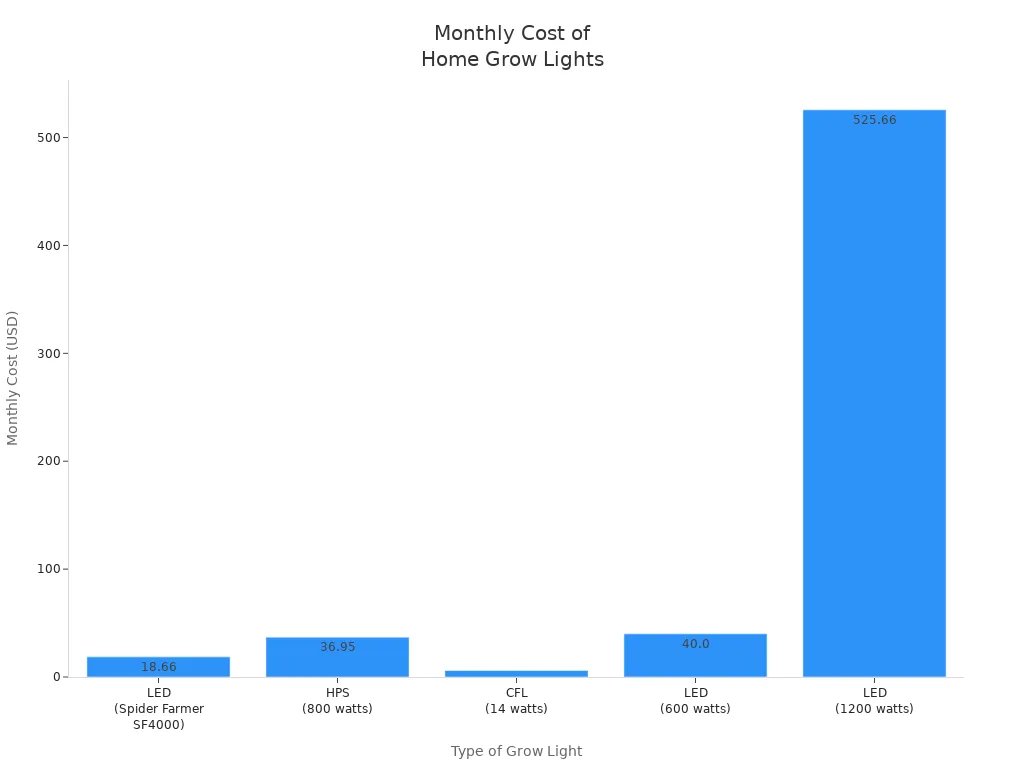
If you use several lights or run them for long hours, your costs can add up. Some people find this to be one of the biggest disadvantages of LED grow lights, especially with larger setups.
Setup and Maintenance
Choosing the Right Light
Picking the right grow lights can feel confusing. You need to match the light spectrum to your plants. Some plants need more blue light, while others need more red. If you choose the wrong type, your plants might not grow well. Many people struggle with this step, especially if they are new to indoor gardening.
Here are some common setup challenges:
- Making sure your lights give off the right wavelengths for your plants.
- Balancing energy use with the amount of light your plants need.
- Check that your power supply can handle your lights.
Timers and Placement Issues
You also need to think about where to put your grow lights. If you place them too far away, your plants might get leggy. If you put them too close, you risk burning the leaves. Setting up timers helps, but it adds another step to your routine. Some people find it tricky to get the timing and placement just right.
Other maintenance challenges include:
- Integrating smart controls or timers for automatic on/off cycles.
- Managing cords and making sure everything is safe.
- Keeping up with regular cleaning and checking for dust on the lights.
Potential Plant Issues
Overheating and Light Burn
If you use grow lights the wrong way, your plants can suffer. Too much heat or light can damage leaves and slow down growth. This is a common problem with older or poorly designed lights.
Overheated lights are a common cause of plant scorching, particularly with older or poorly designed lights. Excessive heat can lead to yellow scorch marks on leaves, wilting, dehydration, and stunted growth. Plants like tomatoes and peppers are especially vulnerable to these issues.
You need to watch your plants for signs of stress. If you see yellow spots or wilting, move the lights farther away or lower the intensity.
Uneven Light Distribution
Another disadvantage of LED grow lights is uneven coverage. If your lights do not reach every part of your plant, some leaves may not get enough light. This can lead to uneven growth. You might see some leaves looking healthy while others look weak or pale. You may need to adjust your setup or add more lights to fix this problem.
Some people find that managing these issues takes extra time and effort. You need to check your plants often and make changes as needed. This can be a challenge if you have a busy schedule.
Aesthetic and Space Concerns
Visual Impact
When you add grow lights to your home, you change the way your space looks and feels. Some people worry that grow lights will make their rooms look cluttered or too technical. But you can actually use them to create a beautiful, inviting atmosphere.
- Grow lights with sleek designs blend right into your home decor. You can find models that look modern and stylish.
- When you place grow lights around your plants, you turn ordinary corners into vibrant green sanctuaries. Your living room or office can feel more alive and welcoming.
- You control the color and intensity of the light. This means you can highlight certain plants or create a cozy mood in the evening.
- Many people use grow lights to mimic natural sunlight. This helps your plants look their best and makes your space feel fresh and bright.
A well-lit plant area can even become a focal point in your home. Guests might notice your healthy plants and ask how you keep them looking so good. You get to enjoy a little piece of nature indoors, no matter the weather outside.
Managing Cords and Fixtures
Setting up grow lights does come with a few challenges. You need to think about where to put the lights and how to keep everything tidy.
- Cords can pile up quickly, especially if you have several lights. You might need to use cord organizers or clips to keep things neat.
- Some fixtures hang from the ceiling or attach to shelves. You want to make sure they stay secure and do not block your view or get in the way.
- If you use timers or smart plugs, you need to find places to plug them in. Sometimes outlets are far from your plant setup, so you may need extension cords.
- Cleaning around your grow lights takes a little extra effort. Dust can build up on the lights and cords, so you should check them every week.
Tip: Try to plan your plant area before you buy new lights. Think about where you want your plants, how much space you have, and where your outlets are. This helps you avoid a messy look and keeps your space feeling open and organized.
Grow lights can make your home look amazing, but you need to manage the setup. With a little planning, you can enjoy healthy plants and a beautiful space without the clutter.
Comparing Grow Light Types
Picking the best grow lights for your houseplants can be confusing. You might not know if you should get LED grow lights or use fluorescent ones. Let’s look at how they are different so you can choose what works for you and your plants.
LED Grow Lights vs. Fluorescent
Efficiency and Lifespan
You want lights that last a long time and save energy. LED grow lights are great for this. They use less power but give off more light. This helps you save money on your electric bill over time. Fluorescent lights use more energy and are not as bright for the same amount of power.
Here’s a table to show how long each type lasts:
| Light Type | Lifespan (Hours) | Power Consumption | Light Output |
|---|---|---|---|
| LED | 50,000 – 100,000 | Lower | Higher |
| Fluorescent | 30,000 – 50,000 | Higher | Lower |
LED grow lights last longer and use less energy. You will not have to buy new ones as often, which saves you money and time.
Cost and Suitability
LED grow lights cost more when you first buy them. But they last longer and use less electricity, so you save money later. Fluorescent lights are cheaper to buy, but you need to replace them more often.
Look at this table to compare them:
| Feature | LED Grow Lights | Fluorescent Grow Lights |
|---|---|---|
| Energy Efficiency | Uses less power for the same amount of light | Uses more power than LEDs |
| Heat Output | Makes less heat, so rooms stay cooler | Makes more heat, may need extra cooling |
| Lifespan | Lasts thousands of hours longer | Needs to be replaced more often |
| Suitability | Works for many types of plants | Best for seedlings and plants needing less light |
Fluorescent lights are good for seedlings and leafy greens. LED grow lights work for more kinds of plants, even ones that flower or make fruit. Many LED models let you change the color of the light for your plants.
- Fluorescent lights: Good for seedlings, greens, and plants that like less light.
- LED lights: Good for many plants, from seedlings to flowering ones.
SLTMAKS LED Grow Lights Overview
Product Range and Specialization
SLTMAKS has many LED grow lights for all skill levels. If you are new, you can get a simple full-spectrum panel. If you know more, you can pick special lights for hemp, vegetables, or fruit. You can change the color and brightness of these lights. Give your plants more blue light for leaves or more red light for flowers and fruit.
| Experience Level | Best Light Features | SLTMAKS Options |
|---|---|---|
| Beginner | Easy to use, full spectrum, low heat, lasts long | Basic LED panels, full-spectrum models |
| Advanced Gardener | Changeable color, bright light, can add more lights | Special hemp, vegetable, fruit LEDs |
SLTMAKS helps you find the right light for your plants, no matter how much you know.
Warranty and Support
You want to feel safe when you buy grow lights. SLTMAKS gives you a 3-year warranty, which is very good. If you have questions, their support team answers fast—usually in four hours or less. This means you can start growing without worry.
- 3-year warranty for peace of mind
- Fast help from customer support, often in hours
Environmental Impact
Energy Use and Sustainability
LED grow lights help you save energy and are better for the planet. They turn almost all the energy they use into light. Fluorescent lights waste more power and produce more heat. LEDs do not have mercury, so they are safer to throw away. Fluorescent bulbs have mercury, which can hurt the environment.
The U.S. Department of Energy says LEDs use 75% less energy and last much longer than old lights. Using LEDs lowers your carbon footprint. This is like taking lots of cars off the road.
| Grow Light Type | Environmental Impact | Cost Efficiency | Longevity |
|---|---|---|---|
| LED | Makes less pollution because it uses less power | Lower energy bills | Lasts longer, so less waste |
| CFLs/Fluorescent | Better than old bulbs but not as good as LEDs | Some savings | Does not last as long as LEDs, but better than old bulbs |
If you want healthy plants and want to help the earth, LED grow lights are a smart pick. You also avoid the problems with HID grow lights, which use even more energy and make more heat.
Choosing the Right Grow Lights
Assessing Your Space and Plants
Before you buy grow lights, take a good look at your space and your plants. Start by picking a spot in your home where you want your plants to grow. Measure the area so you know how many plants you can fit and what kind of equipment you need. Plan your layout so you can reach every plant easily.
Think about these points when you set up your indoor garden:
- Plant type: Each plant has its own light needs. Some love bright light, while others do better with less.
- Available space: The size of your growing area will help you decide how strong your lights should be and what kind of fixtures you can use.
- Budget: Figure out how much you want to spend. Remember to think about both the price of the lights and the cost to run them.
If you match your grow lights to your space and plant needs, you set yourself up for success.
Budget and Maintenance Needs
Grow lights come in many price ranges. Some high-end models cost a lot because they have features like adjustable colors and brightness. You can also find affordable options that work well for most houseplants.
When you plan your budget, keep these things in mind:
- Expensive lights often have more features, but basic models can still help your plants grow.
- Energy efficiency and how long the lights last will affect your bills over time.
- Many budget-friendly lights have timers and dimming, which are great for beginners.
You do not have to spend a fortune to get good results. Just pick the lights that fit your needs and wallet.
Practical Tips for Setup
Placement and Distance
Where you put your grow lights matters a lot. Place them so every plant gets enough light. Measure your space to make sure the light covers all your plants. Keep the lights at the right distance—too close can burn leaves, too far can make plants stretch and get weak.
Here are some tips for setup:
- Use high-quality LED grow lights for the best results.
- Reflective surfaces, like white walls or foil, help spread light evenly.
- Use timers to give your plants the right amount of light each day.
Tip: Seedlings and young plants need 16-18 hours of light. Flowering plants do better with about 12 hours.
Monitoring Plant Health
Keep an eye on your plants after you set up your grow lights. Healthy plants have strong stems and bright leaves. If you see yellow spots or droopy leaves, check your light distance and settings.
Try these strategies to keep your plants happy:
- Use timers or smart plugs to keep light schedules steady.
- Clean your lights often so dust does not block the light.
- Watch your plants and adjust the light if you see signs of stress.
You can also use apps or smart devices to check your lights from anywhere. This helps you catch problems early and keep your indoor garden thriving.
You have many reasons to try grow lights for houseplants. LED grow lights give you energy savings, easy setup, and long life, but you might notice higher upfront costs or less coverage in some cases. Here’s a quick look:
| Upsides | Downsides |
|---|---|
| Energy efficient | Higher initial cost |
| Low heat | Smaller coverage area |
| Long lifespan | Heavier with some models |
Think about your plants, your space, and your budget. If you want healthy plants all year, grow lights can help. Always match your light choice to your plant’s needs for the best results.
FAQ
How many hours a day should I run my grow lights?
Most houseplants do well with 12 to 16 hours of light each day. Use a timer to keep the schedule steady. Your plants will thank you for the routine!
Can I use regular LED bulbs for my plants?
Regular LED bulbs do not give your plants the right spectrum. Choose LED grow lights because they provide the full spectrum your plants need to grow strong and healthy.
Will grow lights make my room hot?
LED grow lights stay cool. You can place them close to your plants without worrying about heat. Your room should not get much warmer.
Do grow lights use a lot of electricity?
LED grow lights use less power than old-style bulbs. You will see only a small change in your electric bill, especially if you use energy-efficient models.
Can I leave my grow lights on all night?
Plants need darkness to rest. Turn off your grow lights at night. Use a timer to help your plants get a good day-night cycle.
What color light is best for houseplants?
Plants love a mix of blue and red light. Blue helps leaves grow. Red helps flowers and fruit. Full-spectrum LED grow lights give your plants both.
How close should I put grow lights to my plants?
Keep LED grow lights 6 to 12 inches above your plants. Check your plants often. If leaves look pale or burned, move the light higher.
Do I need to water my plants more with grow lights?
Your plants may dry out faster under grow lights. Check the soil often. Water when the top inch feels dry.