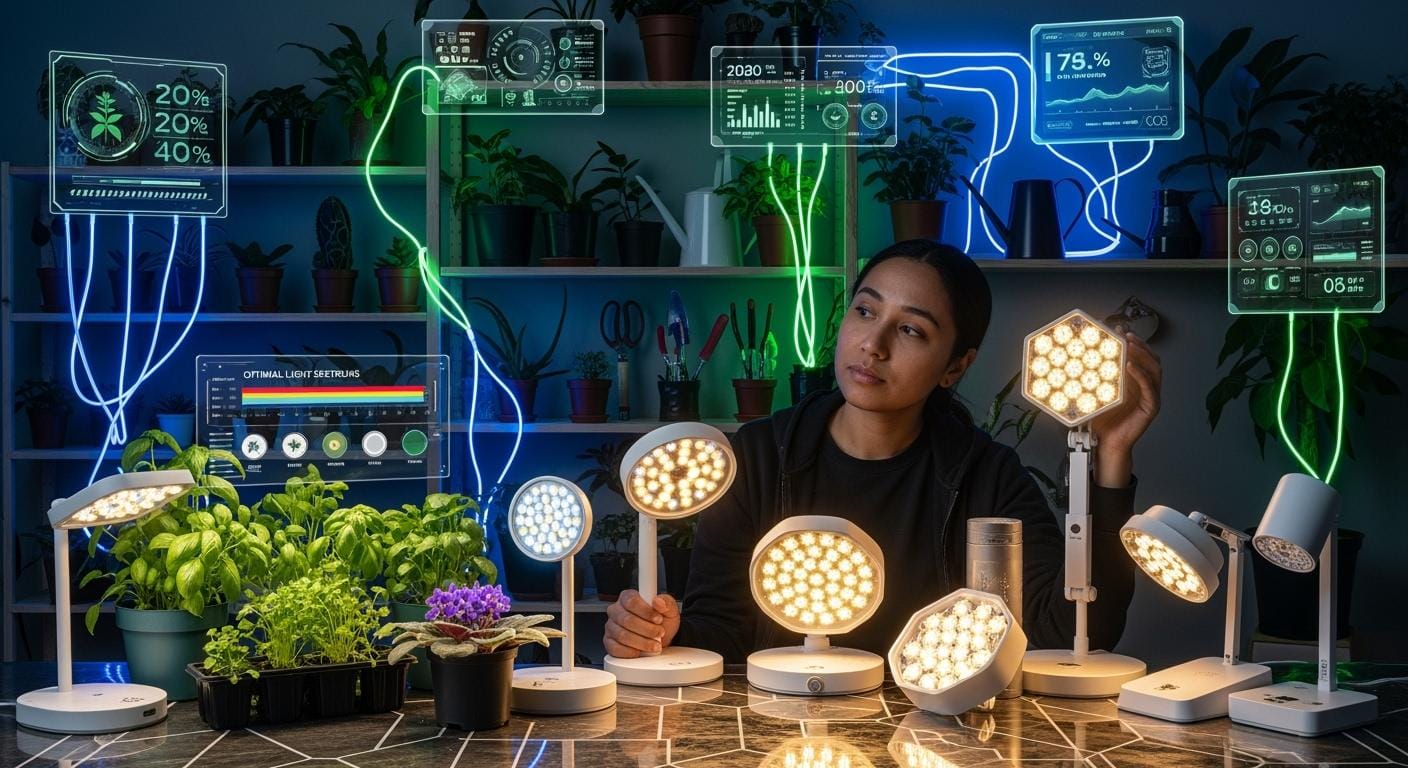
You bring home a new houseplant, set it by the window, and hope for the best. Days pass, but your plant just won’t perk up. Maybe the leaves turn yellow or growth stalls. Many indoor gardeners face this struggle, often because their plants don’t get enough light, get too much, or receive the wrong spectrum. Picking the right grow lamps for indoor plants really matters.
When you match the right lamp—like those from SLTMAKS—to your plant’s needs, you give it the best shot at thriving, even when sunlight is scarce.
Table of Contents
Key Takeaways
Pick a grow lamp that fits your plant’s light needs. This helps your plant grow well. Use blue light for seedlings. Use red light for flowering plants. This helps your plants develop better. Choose LED grow lights to save energy. LEDs also help you spend less on electricity.
They last longer, so you replace them less often. Put the lamp in the right spot. Keep LEDs 12 to 40 inches above your plants. This stops your plants from getting burned. Clean your grow lights often. This keeps them bright and working well. Set a timer for 12 to 16 hours of light each day. Make sure your plants get at least 8 hours of darkness. This helps your plants stay healthy.
Look for safety certifications when you buy grow lamps. This makes sure they are safe to use at home. Watch your plants for problems with light. Look for leggy growth or yellow leaves. Change the light if you see these signs.
Key Factors for Grow Lamps
Plant Needs and Growth Stage
You want your plants to grow strong and healthy, so you need to match your grow lamp to their specific needs. Each plant has its own light requirements, and these change as the plant grows. Seedlings and young plants love blue light because it helps them stay compact and sturdy. When your plants move into the vegetative stage, blue light continues to support leafy growth. Once flowering starts, red light becomes important. It boosts blooms and helps your plants produce bigger yields.
Here’s a quick look at how light affects different growth stages:
| Growth Stage | Recommended Light Spectrum | Effect on Plants |
|---|---|---|
| Seedling | Blue Light | Promotes compact and stocky growth |
| Vegetative | Blue Light | Encourages strong vegetative growth |
| Flowering | Red Light | Increases growth rate and results in larger yields |
If you grow a mix of plants, consider a full-spectrum LED lamp. It covers all the bases and keeps your garden thriving from seed to harvest.
Space and Placement
Your indoor garden space matters when you pick a grow lamp. Small spaces like shelves or countertops need compact lights that fit easily and don’t overwhelm your plants. T5 LED lights work well for these areas. They give off a pleasant white glow and cover small zones without wasting energy. If you grow succulents or cacti, a SANSI 70W DaylightLED Grow Light packs a punch in tight spots.
For bigger rooms or large plant collections, you need more powerful lamps. Soltech Solutions Large Aspect lights can handle wide spaces and deliver strong light output. Always check how far your lamp sits from your plants. Some lights work best at 6-12 inches away, while others need more distance. Lower heat output lets you place lights closer, which helps your plants soak up more energy without getting scorched.
Budget and Efficiency
You want great results without breaking the bank. Grow lamps come in all price ranges, but energy efficiency makes a big difference in long-term costs. LED grow lamps use much less power than old-school fluorescent or HID lights. This means you save money on your electricity bill every month. LEDs also last longer—often over 50,000 hours—so you won’t need to replace them often.
Here are some things to keep in mind:
- The number of hours you run your lights each day affects your energy use.
- The wattage of your lamp tells you how much power it draws.
- Local electricity rates change your total cost.
LEDs help you cut costs and support the environment. You get bright, effective light for your plants and keep your wallet happy.
Safety and Ease
When you pick a grow lamp for your indoor plants, safety should always come first. You want to create a healthy environment for your plants and your home. Let’s talk about what makes a grow lamp safe and easy to use.
First, check for safety certifications. These labels show that the lamp meets strict standards and has passed important tests. Look for these certifications when you shop:
- ETL: This mark means the lamp meets North American safety standards.
- CE: This certification shows the lamp follows European safety rules.
- RoHS: This label means the lamp does not contain dangerous substances.
You can trust lamps with these certifications to work safely in your home. SLTMAKS LED Grow Lights come with these certifications, so you know you’re making a smart choice.
Next, think about the materials and design. LED grow lights use sturdy parts and don’t break easily. Fluorescent tubes and HPS lamps can shatter if you drop them. LEDs also avoid using mercury, which can harm your health if a bulb breaks. You don’t want to worry about cleaning up toxic materials.
Electrical safety matters, too. Always plug your lamp into a proper outlet. Overloading outlets can cause fires. Make sure your lamp has a strong power cord and a safe plug. If you use extension cords, pick ones that handle the lamp’s wattage.
Moisture can change quickly in indoor gardens. Sometimes, too much humidity leads to mold. You want a lamp that stays cool and doesn’t add extra heat to your space. LEDs run cooler than other lights, so they help keep mold away. You also avoid burning your plants or damaging your furniture.
Here’s a quick checklist for safe grow lamp use:
- Check for safety certifications.
- Use lamps made from strong, non-toxic materials.
- Plug lamps into safe outlets.
- Watch for moisture and mold.
- Choose LEDs for cooler operation.
Ease of use makes your gardening life simpler. You want a lamp that’s easy to install and adjust. SLTMAKS LED Grow Lights offer simple mounting options and lightweight designs. You can hang them over your plants or set them on a shelf. Adjusting the height or angle takes just a minute.
Cleaning your lamp should be quick. Wipe the surface with a dry cloth to keep dust away. LEDs need less maintenance than other lights. You spend more time enjoying your plants and less time fixing your setup.
Tip: Always read the user manual before you install your grow lamp. You’ll find helpful advice on placement and safety.
When you choose a safe and easy-to-use grow lamp, you protect your plants and your home. You also make indoor gardening more fun and stress-free. Pick a lamp that gives you peace of mind and lets your plants shine!
Types of Grow Lamps for Indoor Plants
When you start shopping for grow lamps for indoor plants, you’ll see several options. Each type works differently and fits certain needs. Let’s break down the main types of grow lights so you can pick the best one for your space.
Incandescent Lamps
Incandescent lamps are the classic bulbs you might find in old desk lamps. You can use them for plants, but they have some big drawbacks.
Pros and Cons
- Incandescent bulbs cost less up front.
- You can find them almost anywhere.
- They have a short lifespan compared to other types.
- These bulbs produce a lot of heat, which can burn your plants if you place them too close.
- You need to replace them often because they burn out quickly.
If you want a quick fix for a small plant, you might try an incandescent bulb. For long-term indoor gardening, you’ll want something better.
Fluorescent Lamps
Fluorescent lamps are popular with beginners. You see them in kitchens and offices, but special versions work for plants.
Pros and Cons
| Application/Advantage | Limitation/Disadvantage |
|---|---|
| Energy efficiency | Restricted light spectrum |
| Easy to set up | No intensity control |
| Good for novices | Not suitable for all plants |
- Fluorescent lamps use less energy than incandescent bulbs.
- They stay cooler, so you can place them closer to your plants.
- The light spectrum is limited, so they don’t work well for flowering or high-light plants.
- You can’t adjust the intensity, which means some plants won’t get enough light.
Fluorescent grow lights work best for leafy greens and herbs. If you want to grow fruit or flowers, you’ll need a stronger lamp.
LED Grow Lights
LED grow lights have changed indoor gardening. You get bright light, low heat, and long life. Many gardeners choose LEDs because they save energy and help plants thrive.
Pros and Cons
| Type of Grow Lamp | Energy Efficiency | Lifespan | Heat Output | Cost |
|---|---|---|---|---|
| LED | High | Long | Low | High |
| Fluorescent | Moderate | Moderate | High | Low |
| Incandescent | Low | Short | High | Low |
- LEDs use less electricity and last much longer than other types.
- They produce very little heat, so you can place them close to your plants.
- You pay more up front, but you save money over time.
- LEDs offer full spectrum light, which means your plants get everything they need from seedling to harvest.
SLTMAKS LED Features
SLTMAKS LED Grow Lights stand out in the world of grow lights. You get full-spectrum coverage, so your plants receive the right light for every growth stage. SLTMAKS uses advanced Samsung diodes, which boost energy efficiency and keep your electricity bills low. The lights run quietly and stay cool, thanks to strong aluminum heat sinks. You can choose from a wide product range, including lights for hemp, vegetables, and fruit. Each lamp comes with safety certifications like ETL and CE, so you know you’re getting a reliable product.
SLTMAKS also offers a 3-year warranty and fast delivery, making your indoor gardening journey smooth and worry-free.
Tip: If you want the best results for your indoor garden, try LED grow lights with full spectrum technology. Your plants will thank you!
Light Spectrum and Intensity
Understanding Spectrum
When you look at light, you see colors like red, blue, and green. Plants see these colors too, but they use them in special ways. Different wavelengths of light trigger different responses in your plants. Blue light helps your plants grow strong leaves and stems. Red light encourages flowers and fruit. Full-spectrum grow lights mimic sunlight, giving your plants all the colors they need to stay healthy.
Here’s what matters most about the light spectrum for indoor gardening:
- Blue light keeps plants compact and sturdy during early growth.
- Red light boosts flowering and fruiting.
- Green light can reach deeper into thick leaves, helping plants in dense spaces.
- Full-spectrum lights combine all these colors, supporting every stage of growth.
Best Spectrum for Growth
Blue vs. Red Light
You might wonder why blue and red light matter so much. Blue light (400-500 nm) helps your plants make chlorophyll and open their stomata. This means your plants breathe better and grow lush leaves. Red light (600-700 nm) tells your plants to start flowering and making fruit. If you want leafy greens, focus on blue light. If you want blooms or tomatoes, red light is key.
Check out this table to see how each color helps your plants:
| Light Spectrum Range | Effect on Plant Growth |
|---|---|
| Blue (400-500 nm) | Promotes vegetative growth and leaf development |
| Red (600-700 nm) | Stimulates flowering and fruit production |
Full Spectrum Benefits
Full-spectrum grow lights give your plants the best of both worlds. You don’t have to guess which color to use. These lights cover blue, red, and even green wavelengths. Your plants get everything they need from seedling to harvest. Recent studies show that adding green light can help crops grow bigger by reaching leaves deep in the canopy. You get healthier plants and better yields.
Tip: If you grow a mix of plants, full-spectrum grow lights make your setup simple and effective.
Intensity and Coverage
Light intensity tells you how much energy your plants get. You measure this with PPFD (Photosynthetic Photon Flux Density). PPFD shows how many light photons hit your plant’s leaves every second. If you place your grow lights closer to your plants, they get more light, just like standing near a sprinkler gives you more water.
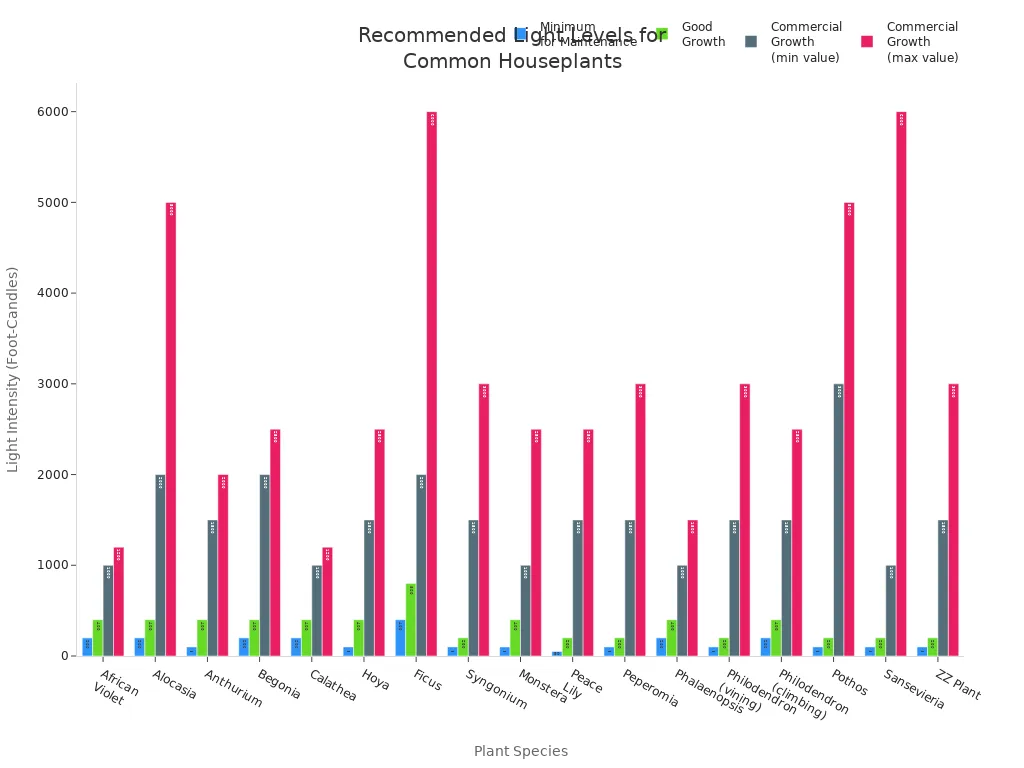
You also want to match light intensity to your plant type. Some plants need lots of light, while others do fine with less. Here’s a table with recommended light levels for popular houseplants:
| Plant Species | Minimum for Maintenance (FC) | Good Growth (FC) | Commercial Growth (FC) |
|---|---|---|---|
| African Violet | 200 | 400 | 1000 to 1200 |
| Ficus | 400 | 800 | 2000 to 6000 |
| Monstera | 100 | 400 | 1000 to 2500 |
| Peace Lily | 50 | 200 | 1500 to 2500 |
| ZZ Plant | 100 | 200 | 1500 to 3000 |
When you choose grow lights, look for these measurements:
- PAR (Photosynthetically Active Radiation): Shows the light plants use for photosynthesis.
- PPFD: Tells you how much light reaches your plant’s leaves.
- DLI (Daily Light Integral): Measures the total light your plant gets each day.
If you match the right spectrum and intensity, your plants will thrive indoors. You’ll see stronger leaves, brighter flowers, and better harvests.
Choosing the Right Grow Lamp
Assessing Plant Light Needs
You want your plants to thrive, so you need to know how much light they really get. Sometimes, your eyes can trick you. A room might look bright, but your plants may not receive enough energy. You can use a quick eye test, but that only gives you a rough idea. For better results, try a light meter app on your phone or use a physical light meter. A digital light meter shows readings in foot-candles or lux. These numbers help you understand the true brightness in your space.
Measuring light intensity is important because guessing can lead to mistakes. If you rely only on your eyes, you might choose the wrong lamp or place it in the wrong spot. When you use a meter, you get accurate numbers. This helps you match your grow lamps for indoor plants to the actual light requirements of each species. You can check the needs of popular houseplants and adjust your setup for the best results.
Tip: Place your meter at leaf level to see what your plants really experience. Write down the readings and compare them to recommended levels for your plant type.
Calculating Wattage and Area
You need to figure out how much power your grow lamp should have and how much space it will cover. Start by deciding how many hours you want your lights on each day. This helps you calculate the Daily Light Integral (DLI) your plants need. Next, use the formula below to find the Photosynthetic Photon Flux Density (PPFD):
PPFD = DLI / (# hrs × 0.0036)
Once you know the PPFD, check the Photosynthetic Photon Flux (PPF) value from the lamp manufacturer. Measure your growing area in square meters. Use this formula to see how many fixtures you need:
# of fixtures = (PPFD x growing area) / (PPF per fixture x CU)
CU stands for “coefficient of utilization,” which means how much light actually reaches your plants. Most setups use 0.80 for CU.
Here’s a simple table to help you plan:
| Step | What to Do | Why It Matters |
|---|---|---|
| Measure area | Use a tape measure | Know your coverage |
| Check DLI | Decide hours of light per day | Match plant needs |
| Calculate PPFD | Use the formula above | Find right intensity |
| Count fixtures | Use the second formula | Avoid dark corners |
If you follow these steps, you will make sure every plant gets enough light. You also avoid wasting energy or buying too many lamps.
Matching Lamp to Space
You want your grow lamp to fit your space and your plants. Look at the size of your growing area and count your plants. In a small room or on a shelf, one LED lamp might be enough. For bigger spaces with lots of plants, you may need several lamps or a stronger fixture.
Think about how the light spreads. Your lamp should cover the whole plant canopy, not just the center. If you see shadows or dim spots, move your lamp or add another one. LEDs work well because they give strong light with less heat. You can place them close to your plants without worrying about burning leaves. If you use HID bulbs, remember they get hot and need more distance.
Here’s a checklist to help you match your lamp to your space:
- Measure your grow area.
- Count your plants.
- Choose a lamp that covers the whole canopy.
- Check heat output and adjust placement.
- Add more lamps for larger setups.
Note: Always check the manufacturer’s guide for coverage area and recommended distance. This helps you avoid mistakes and keeps your plants healthy.
When you match your lamp to your space, you create the perfect environment for growth. Your plants get even light, stay healthy, and look their best.
Setting Up Grow Lights
Placement and Distance
Getting the placement right makes a huge difference for your indoor plants. If you set your grow lights too close, you risk burning leaves. Too far, and your plants might stretch and look weak. For most LED grow lights, like SLTMAKS, keep them about 12 to 40 inches (30–100 cm) above your plants. Fluorescent lamps work best at around 12 inches, while incandescent bulbs need at least 24 inches to avoid overheating.
You want even light across your whole garden. Try these steps for the best results:
- Check your plant’s light needs and growth stage.
- Use LED strips or extra lamps for shadowy spots.
- Stagger your lights or use a triangle pattern for even coverage.
- Adjust the height as your plants grow taller.
- Rotate your plants every few days so all sides get light.
- Clean your lights often to keep them bright.
- Use light diffusers if you see harsh shadows.
Tip: Invest in a simple light meter. It helps you spot dark corners and adjust your setup for perfect coverage.
Light Duration
How long should you keep your grow lights on? Most houseplants need 12 to 16 hours of light each day. If your room gets some sunlight, aim for 12 to 14 hours. In spaces with little or no natural light, go for 16 hours or more. Always give your plants at least 8 hours of darkness so they can rest.
Here’s a quick table to help you plan:
| Plant Type/Condition | Recommended Hours of Light |
|---|---|
| Most houseplants | 12–16 hours |
| Some natural light available | 12–14 hours |
| Little natural light | Over 16 hours |
| Bright, indirect light plants | 6–8 hours |
Set up a timer to make things easy. Timers keep your schedule consistent, so your plants never miss their daily dose of light.
Maximizing Growth
You want your plants to grow strong and healthy. Here are some simple ways to boost growth under your grow lights:
- Keep the room temperature between 83–85 °F when the lights are on.
- Use fabric pots for better root health.
- Place reflective material (like mylar or white boards) around your grow area to bounce light back onto your plants.
- Move your lights or use light movers to cover every part of your garden.
- Feed your plants the right nutrients for their type and stage.
- Watch for pests and diseases. Healthy plants grow faster.
- Water only when needed and check that the water is not too cold.
- Try plant training methods, like gently bending stems, to let more light reach lower leaves.
Note: Consistency is key. Keep your environment steady, and your plants will reward you with lush growth and bigger yields.
With the right setup, you can turn any room into a thriving indoor garden. Just remember to check your lights, adjust as your plants grow, and enjoy watching your plants flourish!
Common Mistakes
You want your indoor plants to thrive, but sometimes small mistakes can slow their growth or even harm them. Let’s look at the most frequent errors people make when setting up grow lamps and how you can avoid them.
- Ignoring Plant Needs
You might think all plants need the same amount of light, but that’s not true. Each plant has its own requirements. Some love bright light for hours, while others prefer shade. If you skip research, your plants may not get what they need. Always check the light needs for each plant, especially during different growth stages. - Choosing Low-Quality Lights
Cheap bulbs seem like a good deal, but they often waste energy and burn out fast. Low-quality lights can also give off the wrong spectrum, which means your plants won’t grow well. You should invest in energy-efficient LED grow lights. These lights last longer and help your plants stay healthy. - Setting the Wrong Light Cycle
Plants need a regular schedule. If you leave your lights on all day or forget to turn them off, your plants can get stressed. Most houseplants do best with 12 to 16 hours of light and at least 8 hours of darkness. Use a timer to keep the cycle steady. Timers make your life easier and help your plants grow strong. - Placing Lights Too Close or Too Far
If you put your lamp too close, you might burn the leaves. If it’s too far, your plants can stretch and look weak. Always follow the recommended distance for your lamp type. For example, keep LED lights about 12 to 40 inches above your plants. Adjust the height as your plants grow. - Forgetting to Clean and Maintain Lights
Dust and dirt can block light and lower efficiency. If you forget to clean your lamps, your plants may not get enough energy. Wipe your lights with a dry cloth every few weeks. Check for loose wires or broken parts to keep everything safe. - Not Checking for Even Coverage
Sometimes, one side of your garden gets more light than the other. Uneven coverage leads to weak or lopsided growth. Move your lamps or add extra lights to cover every plant. Rotate your pots so all sides get a fair share.
Tip: Write down your setup and make a checklist. Review it every month to catch problems early.
Here’s a quick table to help you spot and fix common mistakes:
| Mistake | What Happens | How to Fix It |
|---|---|---|
| Wrong light cycle | Stressed plants | Use a timer |
| Poor lamp placement | Burnt or weak leaves | Adjust lamp height |
| Dirty lamps | Less light for plants | Clean regularly |
| Uneven coverage | Lopsided growth | Move lamps, rotate plants |
If you avoid these mistakes, you give your plants the best chance to grow strong and healthy. You’ll see greener leaves, brighter flowers, and bigger harvests.
Best Grow Lights: SLTMAKS Review
SLTMAKS LED Overview
If you want your indoor plants to do well, you need good grow lights. SLTMAKS LED grow lights are special because they use new technology and work really well. These lights give off a full spectrum, which is like real sunlight. Your plants get the energy they need at every stage. SLTMAKS uses Samsung diodes, so your plants grow faster and look healthier. You also save money because these lights use less electricity. The strong aluminum heat sink keeps the lights cool and quiet. You do not have to worry about them getting too hot or making noise.
Here’s a quick look at what makes SLTMAKS stand out:
| Unique Benefit | Description |
|---|---|
| Advanced Lighting Technology | Uses Samsung diodes to give a full spectrum that is close to real sunlight. |
| Energy Efficiency | Helps plants grow while using less power, so you save money. |
| 3 Years Warranty | Gives you a 3-year warranty for peace of mind. |
| Fast Delivery | Local distributors in Europe and North America ship quickly. |
| Advanced Cooling & Durability | Has a strong aluminum heat sink for cooling and quiet use. |
| Certified Safe & Patented Technology | Has many safety certifications and special technology for the best results. |
Product Range and Uses
has many grow lights for different indoor gardens. You can pick lights for hemp, vegetables, or fruit. Each light has the right power and size for your space. If you grow hemp, you get strong lights for big flowers. For vegetables, you get healthy greens all year. If you grow fruit, you get sweet harvests, even in winter.
Check out the main products below:
| Product Name | Power | Size |
|---|---|---|
| STG-1000W-D Series 10Bar LED Grow Light | 1000W | N/A |
| STG-1000W-F Series 4x4ft. 8Bar LED Grow Light | 1000W | 4×4 ft |
| STG-1000W-F Series 4x6ft. 10Bar LED Grow Light | 1000W | 4×6 ft |
| STG-1000W-F Series 4x6ft. 12Bar LED Grow Light | 1000W | 4×6 ft |
| STG-1200W-D Series 12Bar LED Grow Light | 1200W | N/A |
| STG-1300W-F Series 4x6ft. 12Bar LED Grow Light | 1300W | 4×6 ft |
| STG-1400W-D Series 15Bar LED Grow Light | 1400W | N/A |
| STG-1500W-F Series 4x8ft. 15Bar LED Grow Light | 1500W | 4×8 ft |
You can see how the power ratings compare in this chart:
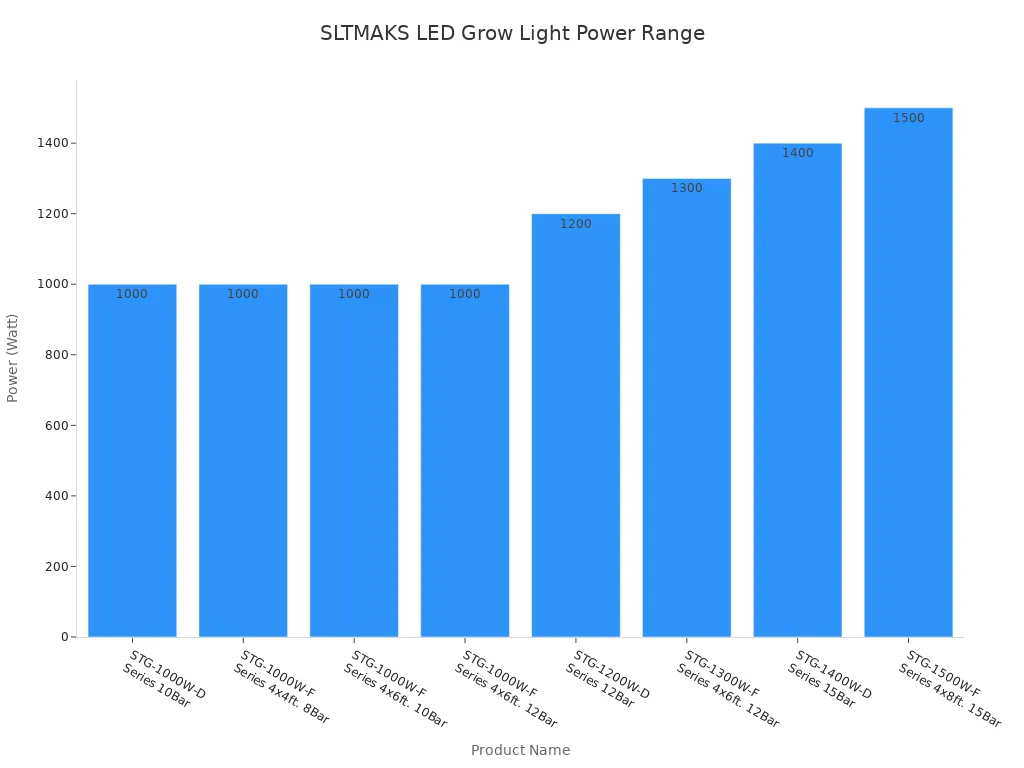
No matter what you grow, SLTMAKS has a light that fits your needs and space.
Key Features and Benefits
SLTMAKS grow lights have many good things that help you grow plants indoors. You get full-spectrum lighting, so your plants get the right light for every stage. The Samsung diodes help your plants grow better and give you more crops. You save money because these lights use less energy and last longer than old lights. The aluminum heat sink keeps the lights cool and quiet, so you can enjoy your plants.
You also feel safe because of certifications like ETL and CE. The special technology means you get good results every time. If you need help, the 3-year warranty and fast shipping make things easy. You do not have to wait long to start growing. SLTMAKS helps you grow healthy plants, tasty vegetables, and pretty flowers indoors.
Tip: Pick SLTMAKS grow lights if you want strong, safe, and energy-saving lights for any indoor garden.
Warranty and Safety
When you invest in indoor gardening, you want peace of mind. SLTMAKS makes sure you feel confident about your purchase. You get a strong warranty and top safety features with every light.
Let’s start with the warranty. SLTMAKS offers a 3-year warranty on all its LED lights. If something goes wrong, you can reach out for support. You do not have to worry about unexpected problems or repairs. This warranty covers you for a long time, so you can focus on growing healthy plants.
Safety matters just as much as performance. SLTMAKS LED lights come with important certifications. These show that the lights meet strict safety standards in different countries. You can use them at home without stress. Here’s a quick look at what you get:
| Warranty | Certifications |
|---|---|
| 3 years | ETL, CE, RoHS |
- ETL: This mark means the lights meet North American safety rules.
- CE: This certification shows the lights follow European safety standards.
- RoHS: This label means the lights do not contain harmful substances.
You can trust these certifications. They prove that SLTMAKS cares about your safety and the environment. The lights use sturdy materials and advanced technology. You do not have to worry about overheating or electrical issues. The aluminum heat sink keeps the lights cool and quiet. You can place them close to your plants without risk.
SLTMAKS also makes installation easy. You get clear instructions and simple mounting options. You can hang the lights or set them on a shelf. If you need help, customer support responds quickly. Fast delivery means you start your garden without delay.
Here are some tips for safe use:
- Always check the user manual before setting up your lights.
- Plug the lights into a safe outlet.
- Keep the area dry and clean.
- Wipe the lights with a dry cloth to remove dust.
Note: Safety certifications and a long warranty make SLTMAKS a smart choice for any indoor gardener.
You want your plants to thrive under full-spectrum light. You also want to protect your home and family. SLTMAKS gives you both. You get reliable lights, strong safety features, and support when you need it. Enjoy your indoor garden with confidence!
Troubleshooting and Maintenance
Signs of Light Issues
You want your plants to look healthy and vibrant. Sometimes, they show signs that something’s wrong with their light. Here are the most common clues that your grow lamp isn’t giving your plants what they need:
- Leggy Growth: Your plants stretch out and look thin. They reach for more light, making stems long and weak.
- Yellowing Leaves: Leaves lose their green color. This means your plant struggles to make food.
- Leaf Drop: You notice leaves falling off, starting from the bottom. Plants do this to save energy.
- Slow Growth: Your plant stops growing or grows very slowly. It needs more light to thrive.
- Lack of Flowering: Flowers don’t appear, even when you expect them. Many plants need strong light to bloom.
Tip: If you spot these problems, check your lamp’s placement and brightness. Sometimes, moving the lamp closer or switching to a full-spectrum LED like SLTMAKS can help.
Cleaning and Care
Keeping your grow lamp clean helps your plants get the best light. Dust and dirt block light and make your lamp work harder. You can follow these steps to keep your lamp in top shape:
- Unplug your lamp before you start cleaning. Safety comes first!
- Remove the lamp from its hood and look for any damage.
- Wipe the lamp and housing with a non-abrasive cloth. Skip cleaning solutions on the base or socket.
- Clean LED surfaces every 1–2 weeks to stop dust from building up.
- Use low-pressure compressed air to blow dust off the driver housing.
- Check wires and connections for wear or damage.
- Make sure the airflow around the lamp is clear for cooling.
- Clean the LED lens with a mix of vinegar and water. Let everything dry before you plug it back in.
| Cleaning Task | How Often | Why It Matters |
|---|---|---|
| Wipe lamp surfaces | Every 1–2 weeks | Keeps light bright |
| Inspect for damage | Monthly | Prevents problems |
| Check connections | Monthly | Ensures safety |
| Clean LED lens | Monthly | Improves light quality |
Note: Regular cleaning helps your lamp last longer and keeps your plants happy.
When to Replace
Grow lamps don’t last forever. You want to know when it’s time for a new one. LED grow lights usually work well for 5–7 years. If you notice a dimmer light or your plants start showing signs of trouble, it might be time to replace your lamp. You can use a light meter to check if your lamp still gives enough brightness.
Here are some signs you need a new lamp:
- The lamp looks dim, even after cleaning.
- Plants show leggy growth or yellow leaves.
- You see black marks or burn spots on the lamp.
- The lamp flickers or doesn’t turn on reliably.
Tip: Schedule a lamp check every year. Write down the date you installed your lamp so you can track its age.
Taking care of your grow lamp means your indoor garden stays strong. Clean your lamp, watch for signs of trouble, and replace it when needed. Your plants will thank you with healthy leaves and bright blooms! 🌱
You want your plants to thrive, so follow these simple steps when picking and using grow lamps for indoor plants:
- Choose a full-spectrum lamp for healthy growth.
- Pick cool light for seedlings and warm light for flowers.
- Select the right type—LEDs save energy.
- Set a timer for 12–14 hours of light each day.
- Adjust lamp height as your plants grow.
- Clean your lights every month.
Use this checklist before you buy. The right lamp can turn any room into a lush, green oasis. You’ll see your plants grow stronger and brighter every day!
FAQ
How long should I leave my grow lights on each day?
Most indoor plants need 12 to 16 hours of light daily. Use a timer to keep the schedule steady. Give your plants at least 8 hours of darkness so they can rest and grow strong.
Can I use regular LED bulbs for my plants?
Regular LED bulbs do not give your plants the right spectrum. Grow lights, like SLTMAKS, provide full-spectrum light that helps your plants grow healthy leaves, flowers, and fruit.
How close should I place my grow lamp to my plants?
Keep LED grow lights 12 to 40 inches above your plants. Move the lamp closer for seedlings and farther away for mature plants. Always check for signs of burning or stretching.
Do grow lights use a lot of electricity?
LED grow lights use much less electricity than old bulbs. You save money on your power bill. They also last longer, so you do not need to replace them often.
What is the best color light for plant growth?
Blue light helps plants grow strong leaves. Red light helps them bloom and make fruit. Full-spectrum lights give both, so your plants get everything they need at every stage.
How do I know if my plant needs more light?
Look for signs like long, thin stems, yellow leaves, or slow growth. If you see these, move your lamp closer or use a stronger grow light.
Can I use grow lights for any type of plant?
Yes! You can use grow lights for flowers, vegetables, herbs, and even fruit. Just match the lamp’s strength and spectrum to your plant’s needs for the best results.
How do I clean my grow lights?
Unplug your lamp first. Wipe the surface with a dry cloth every week or two. Check for dust and keep the area around the lamp clear for good airflow.